Art Profile picture
Art
MAGA. Election researcher. Artist. In God we trust. Buy me a coffee to support my work: https://t.co/rnk59k0ggg
May 1 β€’ 7 tweets β€’ 2 min read
When New York Citizens Audit brought evidence of problems in New York's voter rolls to state officials, the State Board of Elections called them "wack jobs."
That word came from a board member. In an official meeting. On the record.
Here is what else happened in that room. 🧡 Image Board co-chair Peter Kosinski asked a reasonable question: if NYCA has made errors, why not meet with them and explain where they went wrong?
His own staff shot it down.
The reason they gave: NYCA "willfully misconstrues the truth."
No meeting. No rebuttal. No explanation.
May 1 β€’ 9 tweets β€’ 4 min read
A former NYPD detective looked at what I found hidden in New York's voter rolls and said one word:
"Plutonium."
The NY State Police Special Investigations Unit agreed.
Law enforcement and military intelligence both gave me the same instruction: publish fast.
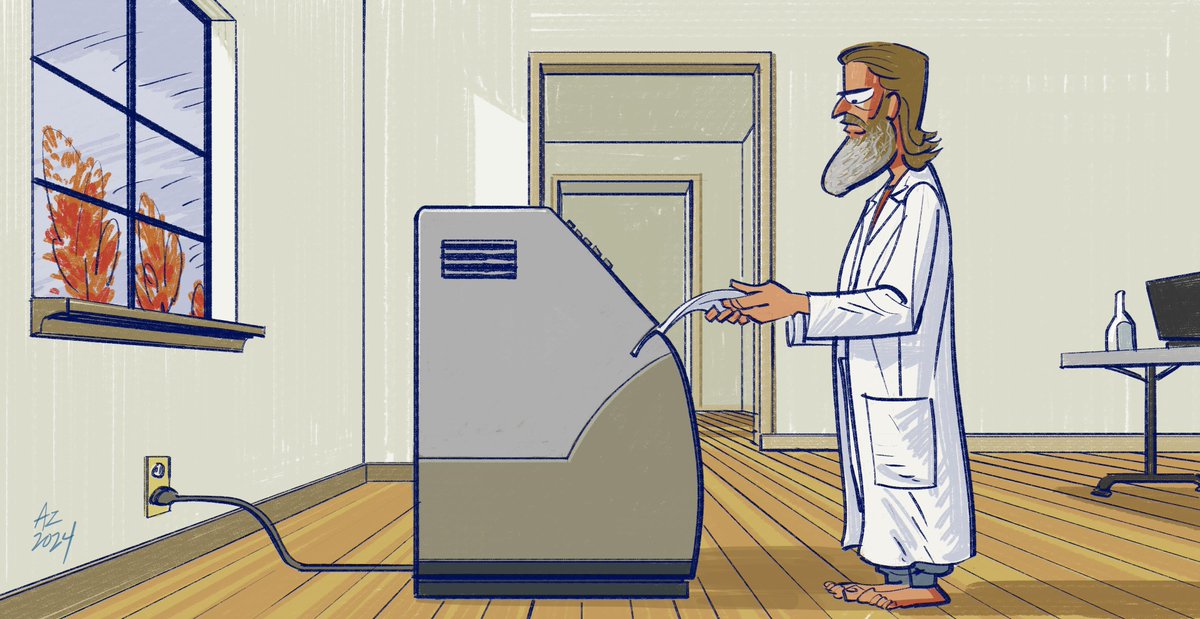
This thread is why. 🧡Image Every New York voter has a State Board of Elections ID β€” a 20-character number that is supposed to be a meaningless serial number.
999 quadrillion possible unique values per state.
It is not meaningless.
Someone engineered four hidden algorithms into New York's SBOEID number space. I found them.Image
Apr 30 β€’ 5 tweets β€’ 3 min read
1/4 Where are the dead voters hiding?
In New York, ask for their address. It's any voter ID assigned by the Shingle algorithm.
99.9% of Shingle records belong to purged voters β€” people who are deceased, moved away, or otherwise no longer eligible.
That is roughly 294,000 records. Over a quarter million voters who cannot vote, all concentrated in one algorithmic zone.
Purged records don't get audited. Nobody checks on dead voters.
A quarter million is enough to decide any election that isn't a landslide.
That's the point.Image New York's voter database uses 4 algorithms to assign ID numbers.

Spiral: 48.86% purged Metronome: 48.98% purged Tartan: 35.68% purged Shingle: 99.9% purged
One of these is not like the others. 2/4 Image
Apr 28 β€’ 4 tweets β€’ 5 min read
I can look at a voter ID number in New York's database and tell you the record is purged β€” without looking at the status field.
I can tell you it carries a registration date inconsistent with its algorithmic placement. I can tell you it is almost certainly a clone β€” a duplicate registration capable of functioning independently in the system. And I can tell you it was assigned a brand new state ID number despite being ineligible to vote at the moment that number was assigned.
In a legitimate database, an ID number is administrative. It tells you nothing about status or authenticity. You check those things by looking at the relevant fields.
Unless someone built the status into the numbers themselves.

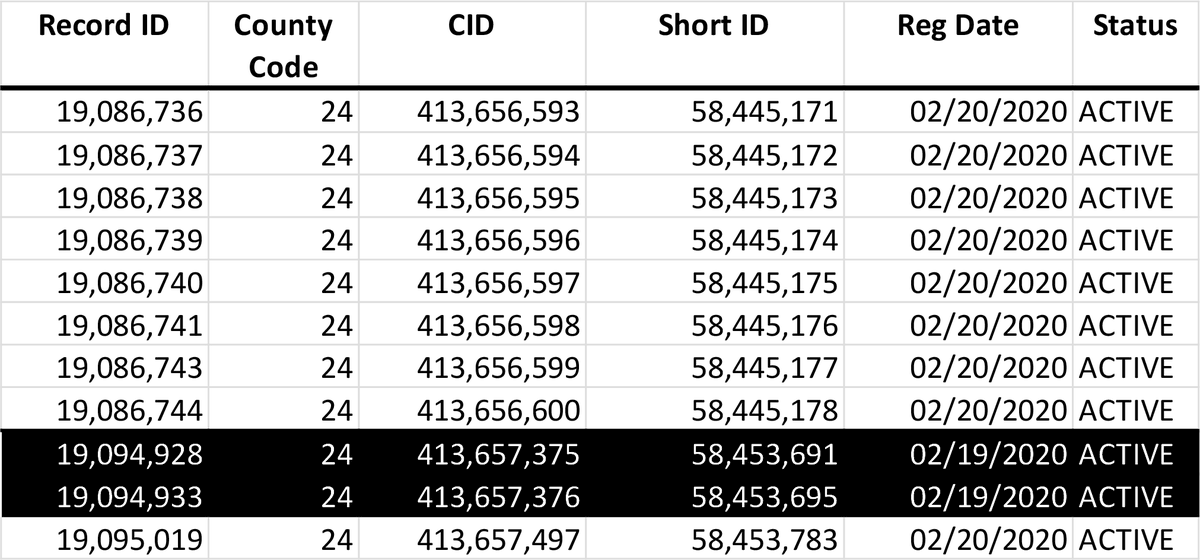
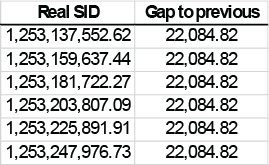
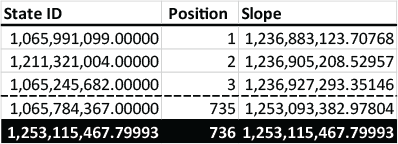
New York assigns voters two ID numbers: a County ID (CID) and a State Board of Elections ID (SBOEID). A collaborator β€” a programmer who has asked not to be named β€” flagged an unusual geometric pattern in Nassau County's ID structure and brought it to my attention before leaving the project. The analysis that follows is entirely my own.
When I plotted Nassau County's out-of-range SBOEID numbers against their CIDs, I found something that has no business in a voter registration database.
Geometry.
Not scatter. Not noise. Overlapping rectangular bands ascending in a precise staircase formation, each block stepping up and to the right like shingles on a roof. I named it the Shingle algorithm.
Real voter data does not produce geometry. When you see a pattern this clean in a dataset this large, you are no longer looking at registrations. You are looking at generation.

Nassau County's Shingle section contains approximately 176,090 records in the 2021 database. Nassau is not unique. The Shingle algorithm appears in all of the counties that use the Metronome algorithm for their in-range records β€” Nassau, Erie, and Westchester β€” plus at least two others including Onondaga, for a statewide total of approximately 700,000 Shingle records. Nassau simply has the largest concentration and is where the pattern was first identified. Here is what all of these records have in common.
Essentially 100% are purged. Not inactive β€” purged. Permanently removed from the rolls, ineligible to vote. And here is the critical point: every State Board of Elections ID number in this database was newly created when New York implemented the Help America Vote Act around June 2007. Before that, only county ID numbers existed. No one had a state ID. These were not legacy numbers carried over from a prior system. They were freshly assigned.
Which means someone made a deliberate decision to assign brand new, algorithmically structured state IDs to records that were already purged β€” or were purged at the exact moment of assignment. I call them born purged.
The Shingle records are not all of the pre-2007 purged records. They are a minority of them. That matters enormously. If the algorithm had simply swept up every old purged record, you might construct an administrative explanation. Instead it selected a specific subset, gave them a specific mathematical identity, and left the rest alone. That is not maintenance. That is classification.
They carry pre-2007 registration dates β€” making them appear to be historical registrations predating the algorithm that assigned their IDs. They are the only out-of-range records with pre-2007 dates. Every other out-of-range record, across all algorithms, carries a post-2007 date. The inference that these dates are inconsistent with the records' actual origin is difficult to avoid.
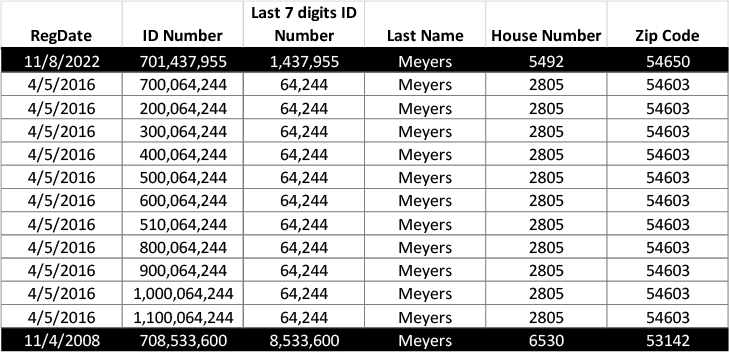
In the upper half of the CID range, nearly 100% are also clones β€” duplicate registrations with different ID numbers, each capable of operating independently in the system. A clone is not an administrative error. An error produces a duplicate with the same ID, which is immediately visible and non-functional. A clone has a different ID and can, in principle, vote.
Their purge status, clone relationship, and algorithmic identity can all be read from their ID numbers alone β€” before you look at any other field.

The Shingle records share ID space with a second algorithm I named the Tartan, which governs the majority of New York's out-of-range records. The two populations occupy the same numerical territory without overlapping. Whether that reflects deliberate coordination or simply the Tartan working around numbers that were already assigned, the result is the same: the Shingle records sit in a mathematically distinct space of their own, identifiable by algorithm alone.

I don't know the operational purpose of these records. The data does not settle that question and I will not speculate beyond what it supports.
What the data does establish: Nassau County's voter database contains approximately 176,090 records that were assigned fresh state ID numbers under a specific algorithm, carry purge status that appears to have been present from the moment of assignment, hold registration dates inconsistent with the algorithmic structure they occupy, and correlate heavily with clone status in the upper ID range. They represent a minority of all pre-2007 purged records, meaning they were specifically selected for this treatment.
No legitimate database process produces this. No administrative explanation accounts for assigning new, structured state IDs to records that cannot vote.
Which leaves one question the data cannot answer.
Why would you assign a new state ID number β€” one embedded in a sophisticated, hidden algorithm β€” to a record that is already ineligible to vote? A record that should, by any normal administrative standard, have been deleted or left with its county ID and nothing more?
That question has no innocent answer I have been able to find. It is a question someone with subpoena power should be directing at the people who built this system.Image This research is part of a multi-state forensic analysis of voter registration databases published in the Journal of Information Warfare. Full methodology, data, and citations are available at zarkfiles.substack.com and researchgate.net/profile/Andrew…
Check out my Kickstarter election fraud card game here: kickstarter.com/projects/paqph…