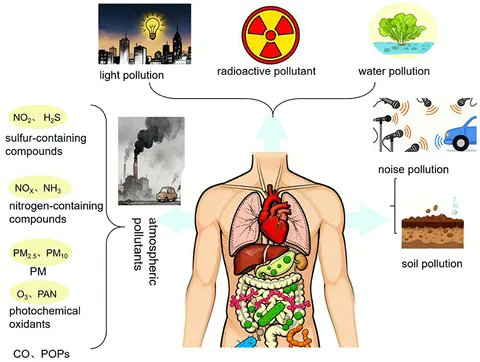
 Schematic representation of major environmental pollutants and their entry pathways affecting human health, particularly via gut microbiota. Diverse pollutants including atmospheric (e.g., PM2.5, NOx, O3), waterborne, soil-based, radioactive, light, and noise pollution can influence host physiology. Airborne pollutants such as sulfur-containing compounds (NO2, H2S), nitrogen-containing gases (NH3, NOx), photochemical oxidants (O3, PAN), particulate matter (PM2.5, PM10), carbon monoxide (CO), and persistent organic pollutants (POPs) enter primarily through inhalation and systemic absorption. These exposures disrupt multiple organs, particularly the lungs, liver, and gastrointestinal tract, where they may perturb gut microbial homeostasis.