g🍌 Profile picture
An objective thinker who’s passionate about democracy, economics, and philosophy, with a deep interest in geopolitics.
Apr 23 8 tweets 35 min read
A Study on the Cognitive Efficacy of International Communication of Chinese National Promotional Videos — Multimodal Decoding Based on Eye-Tracking Experiments

Authors: Mao Haoran & Huang Siqi
Date: 2025-08-14
Link: archive.ph/unv3W#selectio…

introduction
1. Theoretical Basis: Multimodal Cognitive Analysis Framework
2. Research Methods: A hybrid approach combining eye-tracking experiments and semi-structured interviews
3. Experimental Results
4. Analysis and Discussion
5. Innovation in International Communication Strategies for Chinese Elements Driven by Cognitive Science
6 Conclusion

summary

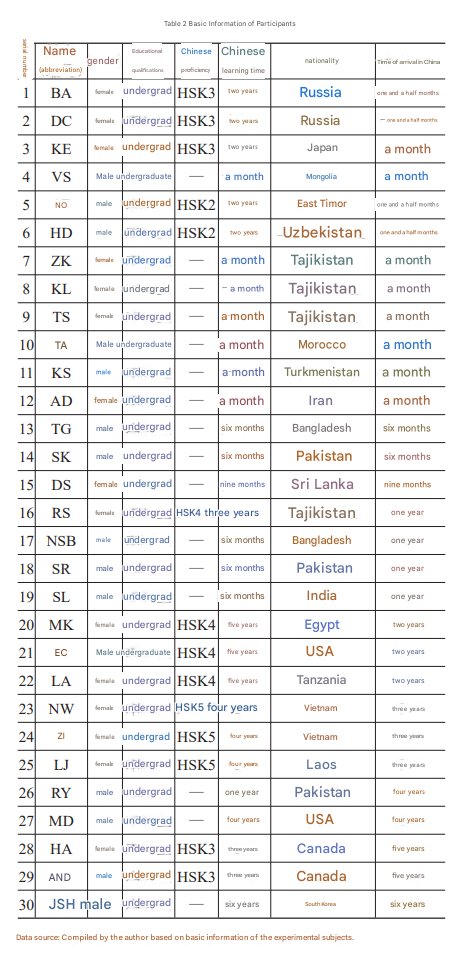
Enhancing the cognitive effectiveness of national promotional videos is key to breaking through the bottlenecks in international communication. This study integrates visual grammar and metafunctional theory to construct a three-dimensional assessment model of "visual-language-auditory." Through eye-tracking experiments and semi-structured interviews, it empirically analyzes the cross-modal cognitive patterns and effectiveness of 30 international students in China during their viewing of the multilingual national image promotional video of the PRC. The study found that: 1) In the visual dimension, the total fixation time for heterogeneous cultural symbols was significantly longer than that for universal symbols, but some distinctive symbols showed decoding bias; pupil dilation was most significant when the angle between the gaze and the camera was 30°-45°, which helped strengthen emotional arousal. 2) In the linguistic dimension, high modal expressions (such as "must") enhanced the persuasiveness of authoritative narratives, but triggered peak cognitive load (pupil constriction); the use of personal pronouns "I/we" enhanced affinity, but in individualistic cultures, it easily triggered perception of manipulation. 3) In the auditory dimension, original Chinese audio enhanced cultural memory anchors, but easily led to subtitle dependence; highly arousing music triggered maximum pupil dilation, helping to activate emotional resonance. 4) Communication effectiveness assessment shows that groups living in China for longer periods exhibit significantly higher attention concentration and convergent attention trajectories, indicating they have entered the mid-to-late stage of cultural adaptation. Based on this, this study proposes a "dual-track collaborative communication matrix" and constructs a "Culture Adaptability Index (CAI)" model. Based on three core indicators—symbol recognition rate, proportion of dynamic images, and cultural discount coefficient—this study promotes a shift in international communication from experience-driven to a scientific paradigm supported by neuro-behavioral data, providing precise communication paths and quantitative optimization basis for the construction of China's national image.

Introduction

1. Core Concepts and Research Fields

National image, as "the international community's holistic perception of the material strength and cultural characteristics of a specific sovereign state" (Boulding, 1956: 120), is essentially a cognitive game involving cross-cultural symbol systems. In the era of digital communication, as a cognitive projection of a systemic process of mutual construction, national image exhibits characteristics of a relational network linked by subjective perception (Zhou Honggang, 2025: 6), and its construction is essentially a dynamic game between neural coding advantages and cultural discounts. According to the "Global Survey Report on China's National Image" (2019), as many as 67% of overseas publics access Chinese information through their own media, while the direct reach rate of Chinese media is less than 21%. This information filtering mechanism has led to the long-term "othering" reconstruction of China's image, specifically manifested as "development paradox" and "cultural discount."

2. Paradigm Evolution in International Communication Research of National Promotional Videos

Early international research focused on the power narrative function of propaganda videos. National promotional videos are defined as "strategic communication tools that systematically present a nation's comprehensive image through audiovisual language, aiming to enhance international recognition" (Kunczik, 1997: 47), and their effectiveness directly affects the global projection of a nation's soft power. Gilpin's prestige theory emphasizes that great powers construct hegemonic discourse through images, arguing that propaganda videos are "tools of prestige politics" (Gilpin, 1981: 31); Rusi (1988) proposed the "belief accumulation" hypothesis of national image from a cognitive psychology perspective, pointing out that audiences' perception of heterogeneous cultures is path-dependent. With the paradigm shift in visual communication research, Kress & van Leeuwen (2006) proposed the visual grammar theory, which deconstructs the image analysis system into three dimensions: representational meaning, interactive meaning, and compositional meaning, thus pioneering a new path for multimodal analysis. Subsequently, more and more scholars have used the visual grammar theory to conduct relevant research on promotional videos. For example, Fan Li (2023) used her research on the promotional materials for the "National Low Carbon Day" over the past four years.

Since the overseas release of the "Made in China" promotional video in 2009, Chinese academia has initiated systematic research, forming three main paths: First, the semiotic analysis path, such as Qi Zhihui and Lei Shuyu (2024), who systematically reviewed the performance characteristics of different symbolic modalities in the past three years. However, their research stopped at the static semiotic analysis paradigm. Given that the construction of national image is essentially governed by the ideological coding mechanism (Boulding, 1959), the research on the cognitive bias generation mechanism and neural coordination mechanism in dynamic communication urgently needs to be deepened. Second, the narratological path, such as Qi Yongguang and Zhang Chaoyuan (2024), who found through a 20-year case database analysis that "individual narratives" have a greater emotional penetration than "grand narratives". However, their conclusions rely on subjective coding and lack physiological data support. Third, the technology dissemination path, such as Fan Hong and Shi Xinnan (2024), who demonstrated the revolutionary impact of AIGC technology on image production. However, they did not solve the problem of the "cultural adaptation trap" caused by algorithmic bias. Gradually, promotional videos have become an important subject of cross-cultural new media research. "They are not simply understood as tools, but rather delve into the cultural exchange scenarios built by digital technology, recognize new cultural communication subjects, explore new cultural relationships, and improve existing cross-cultural communication theories" (Lu Di & Wang Wei, 2024).

3 Research gaps and paradigm limitations

Despite the progress made in existing research, limitations remain. Future research should strengthen the objective measurement of audience cognitive processes, especially through experimental methods such as electroencephalography (EEG) and physiological feedback, to compensate for the shortcomings of subjective report methods. Simultaneously, combining cross-cultural data and cognitive neuroscience perspectives can provide more reliable empirical support for national image construction and symbol interpretation, promoting innovative development in communication theory and practice. Specifically:

(1) Methodological black box: Past studies have mostly approached the issue from the perspective of communicators (such as content production and symbol design) or evaluated the effects through subjective reporting methods such as questionnaires, lacking objective measurement of the audience's real-time cognitive process. For example, although Cui Xiao and Zhang Qian (2020) conducted a detailed investigation on the cognition of cultural symbols in the Winter Olympics promotional video through questionnaires and interviews, they failed to explain the specific reasons for the different cognitions of the audience. Zilin (2025) based her work on the theory of online agenda setting and used two case studies on social media platforms to reveal the multi-faceted influence mechanism of national image construction in the algorithm era. However, the sample selection was limited to Twitter data on a single theme and lacked cognitive neuroscience verification from cross-cultural audiences. The operational analysis of the algorithm black box still needs to be deepened.

(2) Strategic Empiricism: Existing research is deeply mired in the "interpretive involution" dilemma. The semiotic approach stops at modal classification, and narratology relies on subjective coding, lacking cross-validation of communication effectiveness and objective experimental data. For example, the interpretation of the symbolic meaning and visual metaphor of the "national image" symbol in the propaganda video is mostly based on the researcher's subjective interpretation, lacking objective scientific data support, resulting in a disconnect between academic inference and real cognitive scenarios, and even producing theoretical deviations of "over-interpretation". Mao & Shan (2024) proposed the "weak communication" paradigm based on the fluidity theory framework, providing an innovative perspective for asymmetric international communication research, but the empirical link lacks cross-cultural audience survey data. Guoyu (2024) integrated algorithmic power and national image research. Although there was cross-cultural audience survey, it mainly used content analysis and lacked user behavior data or experimental methods, which may affect the credibility of the conclusions.

4. Breakthroughs and Theoretical Innovations in Cognitive Science

Effectiveness assessment research is undergoing a paradigm shift from "effect description" to "mechanism decoding." Eye-tracking technology, by recording physiological indicators such as total fixation duration and pupil diameter, opens an empirical window into the cognitive black box. However, existing research has two major limitations: first, experimental designs often use isolated visual stimuli, detached from real-world communication scenarios; second, they fail to integrate visual grammar and linguistic theories, resulting in insufficient data interpretability.

This study proposes a three-pronged innovation approach:

(1) Methodological innovation: By capturing physiological indicators such as the gaze trajectory and pupil diameter of the subjects through eye-tracking experiments, a communication effectiveness evaluation model based on objective behavioral data is constructed to reveal the dynamic guidance mechanism of multimodal elements on audience attention.
(2) Theoretical integration: Deeply integrate visual grammar (Kress & van Leeuwen, 2006) and metafunctional theory (Halliday & Matthiessen, 2014) to achieve cross-modal theoretical dialogue between communicator modal design strategies and audience meaning interpretation process.
(3) Quantitative analysis of strategies: Based on objective data from eye-tracking experiments, the system analyzes the audience’s cognitive investment, emotional investment and information integration efficiency in relation to national image symbols, and realizes closed-loop verification from communication strategy pre-setting to audience cognitive feedback.

Based on the aforementioned breakthrough approach, this study uses the multilingual national image promotional video of the PRC (2 minutes and 31 seconds long) released during the 2023 National People's Congress and the Chinese People's Political Consultative Conference as a case study. Eye-tracking experiments and semi-structured interviews were conducted with 30 international students to answer two core questions:
① How do multimodal elements (visual/textual/auditory) in promotional videos affect the audience's attention allocation and cognitive engagement?
② How to build a culturally adapted promotional video optimization strategy based on the audience's cognitive patterns and multimodal feedback data?

1. Theoretical Basis: Multimodal Cognitive Analysis Framework

1.1 Metafunctional Theory: Decoding Mechanisms of Language Modalities
Halliday (2014) proposed that language has three major metafunctions in his systemic functional linguistics:

1.1.1 Conceptual Functions
Transitivity systems are used to describe concrete experiences and real-world behaviors, states, and relationships. These systems include six types of transitivity systems, such as material processes and mental processes, to construct representations of the objective world. For example, the scene of a high-speed train passing through a sea of ​​clouds in a promotional video belongs to a material process, while the emotions conveyed through facial expressions or narration belong to a mental process.
1.1.2 Interpersonal Functions
The modality system and mood system are used to convey attitudes and values, thereby constructing power relations, emotional attitudes, and communicative intentions in social interactions. The mood system realizes different communicative roles through grammatical structures (declarative, interrogative, and imperative sentences), while the modality system reflects the speaker's position on the proposition by expressing possibility and obligation.
1.1.3 Discourse Functions
Information is organized by using thematic structure, information structure, and cohesion to make discourse or text coherent and logical in a specific context.

1.2 Visual Grammar: A Cognitive Map of Image Modalities

Kress & Van Leeuwen (2006)'s visual grammar theory deconstructs the meaning of images into three dimensions:

1.2.1 Representational Meaning
It is divided into narrative representation and conceptual representation. The former uses dynamic elements to show "actions" or "events" and reflect "what happened," while the latter uses the static relationship of visual symbols to express the category, attributes, or symbolic meaning of things and reflect "what it means." For example, close-ups of Dunhuang murals belong to conceptual representation.
1.2.2 Interactive Significance
By adjusting audience engagement through elements such as contact and social distance, social relationships can be established with the audience, influencing their emotional attitudes.
1.2.3 Compositional Significance
It encompasses information value, salience, and framing, enhancing the audience's recall during the viewing process through information layout and focus reinforcement.

1.3 Theoretical Integration: Cross-modal Cognitive Model
Metafunctional theory and visual grammar theory reveal the organizational logic and cognitive mechanisms of symbols in multimodal communication from the perspectives of language and image, respectively. The former focuses on the meaning-constructing function of the language system, while the latter deconstructs the encoding strategies of image meaning at the levels of representation, interaction, and composition. The two theories are theoretically complementary, jointly laying the theoretical foundation for this study's visual-text modality analysis. However, when faced with the complex context of language, image, and sound intertwined and interacting in dynamic promotional videos, a single theoretical approach is insufficient to fully reveal the audience's overall cognitive patterns and attentional shifts. Therefore, this study introduces the grounded theory's three-level coding paradigm (open coding → axial coding → selective coding) to construct a data- driven "visual-text-auditory" triangular integration model of cross-modal cognition (see Figure 1). This model systematically integrates visual grammar, metafunctional theory, and auditory cognitive cues from physiological data dimensions, thereby achieving in-depth analysis of the audience's cognitive responses to multimodal promotional videos.

The synergistic collaboration of visual, textual, and auditory elements constructs a multi-dimensional and comprehensive set of factors influencing national image communication: the visual element captures attention and creates scenes through intuitive graphics, colors, and dynamics; the linguistic element accurately conveys abstract concepts and cultural connotations through logical text; and the auditory element enhances atmosphere and rhythm through the immediacy and emotional appeal of sound. Through content complementarity, reinforcement of memorable points, and rhythmic coordination, these three elements overcome the limitations of a single sensory experience while reducing cognitive load through consistent design. This achieves efficient, immersive, and inclusive expression of the national image, making complex content easier to understand and evoking deeper emotional resonance.

2. Research Methods:A hybrid approach combining eye-tracking experiments and semi-structured interviews

2.1 Eye-tracking Experiment Design: Visual Decoding of Cross-modal Cognitive Mechanisms

2.1.1 Experimental Equipment and Materials
This study used the Tobii Pro Lab system to accurately capture participants' gaze trajectories and pupil states. The experimental material was a 2-minute 31-second multilingual national image promotional video for the PRC, released during the 2023 National People's Congress and Chinese People's Political Consultative Conference (NPC & CPPCC). This video covered five categories of scenes, including culture, technology, and nature. The Time of Interest (TOI) tool was used to analyze and locate different themes, as shown in Table 1. The video exhibited high visual information complexity and cross-cultural symbol density. Visual complexity was assessed based on the information entropy of the image brightness histogram, with an average information entropy of 4.7 bits per frame, indicating high information density. Cross-cultural symbol density was determined by content encoding based on visual grammar theory by three researchers. The results showed that an average of 3.2 culturally symbolic images or language elements appeared every 10 seconds, reflecting typical multimodal communication characteristics. The video was available in 15 languages, including English and French. During the experiment, playback was matched to the participants' native language to avoid interference from language barriers in cognition.Image
Image
Image
3. Experimental Results

3.1 Multimodal Decoding of Visual Cognition3.1.1 Cultural Cognitive Mechanisms of Representational Meaning
The scans show that during the presentation of stimulus materials, the audience exhibits a significant visual preference for concrete scene elements and culturally specific symbols. Taking the ethnic minority scenes in the promotional video as an example (see Figure 2), the participants' gaze paths show a typical three-stage pattern: the initial gaze point quickly locks onto the facial area of ​​the main character, followed by a saccade that shifts to the Uyghur traditional musical instrument held by the character, and finally, a radial path is used to explore the environmental background elements. This phenomenon verifies the priority effect of cultural symbols in cross-modal attention capture (Deng Xiaohong, 2004).

When the symbolic system of visual stimuli tends towards cross-cultural universality (such as the Winter Olympics), the visual salience differences based on cultural recognizability dissipate. Taking the Winter Olympics scene as an example (see Figure 3), spatial overlap analysis based on heatmaps shows that the gaze distribution of the video group and the subtitle group tends to be consistent, with a Jaccard similarity index of 0.65, confirming the high similarity of universal symbols in visual attention distribution. This phenomenon can be attributed to the fact that, in the context of globalization, highly consensual symbols have been internalized into pancultural cognitive schemas through media exposure. Their visual appeal no longer depends on the driving force of a specific cultural background, but is dominated by the public attention to the event itself and individual interest preferences, thus weakening the visual priority effect of symbol selection.

However, the effectiveness of using distinctive cultural elements varied in terms of audience perception. Respondents reported difficulty understanding the cultural connotations of some symbols in the videos—for example, describing the aerial view of Beijing Daxing International Airport as an "orange octopus-like building," and regarding the opening scene of Dunhuang mural restoration, they stated they "could only identify it as ancient Chinese culture but didn't know its specific meaning." Furthermore, documentary footage such as the Chongqing wildfire rescue also lacked background explanation, leading to comprehension difficulties for viewers. This reflects the need to build a more effective communication bridge between the visual transformation of cultural symbols and audience cognition.

3.1.2 Pupil Response Mechanism of Interactive Meaning
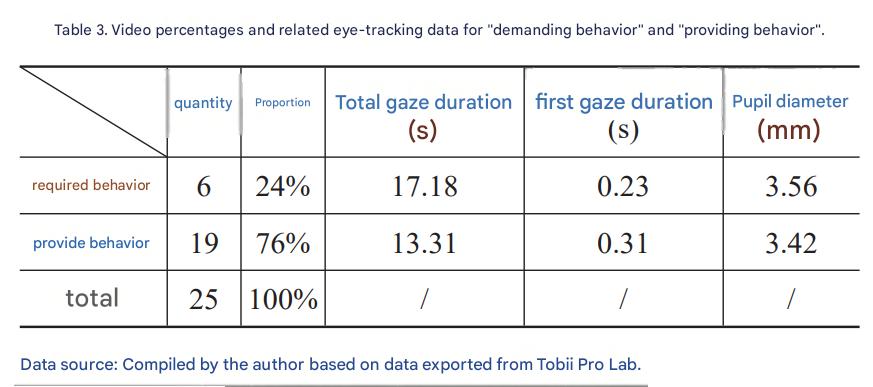
Emotional resonance is key to engaging audiences in promotional videos. Research shows that the use of "demanded behavior" (such as a person gazing into a shot) produces a stronger emotional arousal effect than "provided behavior" (passive presentation), and this strategy can effectively strengthen the emotional connection within cultural contexts (see Table 3). For example, during the Water Festival, participants splash water at the camera or smile and wave, creating "a sense of invitation." Similarly, integrating "demanded behavior" into a serious political narrative framework establishes a two-way emotional channel, transforming viewers from bystanders into emotional participants, achieving a deeper level of ideological immersion.

Eye-tracking experiments reveal cognitive differences in visual presentation across shots taken at different social distances. Gaze diagrams show that as the shot transitions from intimate to personal and then public distance, the observer's visual scanning path exhibits progressively more complex characteristics. In intimate shots, close-ups of faces account for over 80%, using these close-ups to enhance micro-expressions and demonstrating a significant advantage in conveying emotion. Experimental data shows that in this type of composition, the visual focus is highly concentrated in the peri-ocular triangle (see Figure 4), accompanied by a significant expansion of the pupil diameter, enhancing the character's micro-emotional impact and creating an emotional resonance effect at the embodied cognitive level.

However, it is worth noting that public distance exhibits a completely opposite communication mechanism. While panoramic compositions can construct narrative fields through the spatial relationship between characters and their environment, possessing an interpretive advantage in showcasing the grandeur of social landscapes, the increased dispersion of gaze points and shortened visual dwell time, along with pupil constriction, indicate that while this visual cognitive characteristic facilitates the collection of environmental information, it reduces the efficiency of emotional communication between characters.

Empirical analysis of Chinese propaganda videos reveals that: top-down perspectives are concentrated in panoramic bird's-eye views of national projects such as the high-speed rail network and the Hong Kong-Zhuhai-Macau Bridge; eye-level perspectives focus on concrete humanistic narratives such as urban life and ethnic celebrations; and top-down perspectives, as ritualistic rhetoric, are only presented in symbolic scenes such as the Dunhuang Mogao Grottoes, border guards, and J-20 formations. This viewpoint encoding mechanism constitutes the visual topology of ideology: top-down shots construct an image of power worship through vertical spatial relationships, eye-level shots create a field of equal dialogue, and top-down shots form cognitive deterrence with their dense information volume.Image
Image
Image
Image
Oct 7, 2025 7 tweets 41 min read
I had a breakthrough yesterday. In the following posts in this thread, I will share the most influential/cited piece of Chinese literature on Cognitive Domain Operations.

I've been searching for a way to find access to this article for months. China attempted to block my access to it. They failed so you get to read it too! A lot of man hours were spent looking for this. I probably earned myself a few gray hairs.

This paper was a part of a big national social science research project on Cognitive Domain Operations [National Social Science Fund Military Science Project “Cognitive Domain Operations in Media Space” (2021-SKJJ-C-081)].

This paper was published in 思想理论战线[Ideological and Theoretical Front] which is the political journal for the PLA.

Yu Yuanlai and Chen Qian are titans in the Cognitive Domain Operations world. They are up their with people such as Yang Cushe, Chen Dongheng, and a few others.

I just posted one of Yu & Chen's other collaboration which was part of the same national research project ( title of that paper: Research on Guiding International Public Opinion Regarding China from the Perspective of Computational Propaganda).
x.com/a_logical_man/…

Here are some other pieces written by Yu and Chen:

1. Multi-dimensional shaping: guiding the world to establish a correct view of China - thinking on responding to the international public opinion struggle of anti-China think tanks in the United States
x.com/a_logical_man/…

2. Social Cognition: an important tool for cognitive domain operations
x.com/a_logical_man/…

3. Virtual social warfare from the perspective of cognitive domain warfare
x.com/a_logical_man/…

4. Analysis of the effectiveness mechanism and key technologies of algorithmic cognitive warfare
x.com/a_logical_man/…

Picture of the paper's first page:Image Effectiveness Mechanisms and Strategic Selection in Cognitive Domain Operations

Authors: Yu Yuanlai & Chen Qian

(Political Academy, National Defense University, Shanghai 200433)

The effectiveness mechanism of cognitive domain operations refers to the fundamental principles and implementation mechanisms for influencing and changing the target's emotions, will, cognition, and behavior in the intended manner and direction, fully mobilizing all elements to maximize their effectiveness. The effectiveness of cognitive domain operations relies on a deep understanding of cognitive thinking, cognitive thought, and its underlying principles. Based on the practical development of modern cognitive technology, we coordinate the internal contradictions of the various elements influencing the subject and object, and flexibly employ appropriate strategic means to achieve fundamental, fundamental, and long-term improvements. The effectiveness mechanism of cognitive domain operations serves as a fundamental logical framework for studying cognitive domain operations and is crucial for strengthening cognitive domain operations preparation, strategic selection, and optimization.

1. Research Progress on Cognitive Domain Operations

With the development of the internet and artificial intelligence, humanity has entered an era of information warfare characterized by intelligentization. Cognitive warfare and cognitive domain operations have become hot research areas worldwide. However, research on cognitive domain operations and its mechanisms is relatively rare, and considerable controversy remains regarding its conceptual definition, theoretical scope, and technological orientation.

Foreign scholars more often use the term "cognitive warfare," while domestic scholars prefer the term "cognitive domain operations". While these two concepts differ, they share common objectives, with similar operational objectives, methods and means, strategic choices, and effectiveness mechanisms.

Cognitive domain, as a military term, originated from the term "cognitive domain" used by the US military in the theory of network-centric warfare. On July 27, 2001, the US Department of Defense submitted a report on "network-centric warfare" to Congress, which first proposed the concept of "cognitive domain". The report believes that "cognitive domain exists in the minds of participants. It is the domain where perception, perception, understanding, belief and values ​​exist. It is the domain where decisions are made through reasoning... cognitive domain is the domain where intangible factors exist, including leadership, military morale, troop cohesion, training level and experience, situational awareness and public opinion". Since then, the US military has divided the combat environment into physical domain (Physical Dimension), information domain (Informational Dimension) and cognitive domain (Cognitive Dimension) in its early "Information Warfare Regulations" [2] 37, or translated as physical dimension, information dimension and cognitive dimension.

After the US military proposed the concept of "cognitive domain" in the military field, the concept of "cognitive warfare" came into being. Foreign military articles on cognitive warfare often begin with quotes from Sun Tzu and Clausewitz to highlight the core thrust of the text. Clausewitz emphasized that war is the continuation of politics, and that the fundamental purpose of war is to use violence to break the opponent's will to resist and impose one's own will on the enemy. This is similar to the concept of "subduing the enemy without fighting" emphasized in Sun Tzu's Art of War. In the 1970s, American strategist John Boyd, in his study of Clausewitz's thought, On this basis, he summarized all human conflicts into three types: war of attrition, maneuver war and psychological war, and thus proposed the famous "OO-DA" (Observation-Judgment-Decision-Action) theory. Among them, as the core of "cognitive warfare", the basic connotation of "psychic warfare" emphasized by Boyd mainly refers to creating, utilizing and amplifying the anxiety, suspicion and fear of enemy individuals or groups through direct or indirect, violent or non-violent means, creating an insecure, uncertain and distrustful political atmosphere within them, thereby effectively weakening, destroying and disintegrating the opponent's will to fight, causing it to collapse completely [3].

In September 2017, David Goldfein, former Chief of Staff of the US Air Force, first proposed the concept of "cognitive warfare" in the military, emphasizing that "the form of war is changing from war of attrition to cognitive warfare" [3]. This marked that "cognitive warfare" officially entered the US military's theoretical system and became the core of its new round of combat concept innovation. In December 2018, the U.S. Army Training and Doctrine Command issued the document “The U.S. Army in Multi-Domain Battle 2028”, outlining how the U.S. Army will use cognitive warfare to “compete, penetrate, disrupt, and exploit” its adversaries in future conflicts [4]. In his 2018 book “The Attack on Intelligence”, Michael Hayden proposed that the positioning of multi-domain battle is still to solve military problems through force, with political success seen as a subsequent stage, and cyber and Influence operations in the humanities are seen as ancillary means. It is becoming increasingly clear that the era of cognitive warfare is highlighting the nodes and gaps in this basic concept to an unprecedented degree.

In his article, Otwell, a senior British Royal Navy officer, listed the research results of his predecessors. For example, Rosner and Simon Tove believe that cognitive warfare is defined as the manipulation of public discourse by external factors, which attempt to undermine social unity or undermine public trust in the political system; Mazkiewicz regards cognitive warfare as a process of spreading false information, intended to psychologically weaken the recipient of information. Otwell believes that both definitions have a negative bias and do not consider the possible results of defensive cognitive warfare. He then proposed the definition of cognitive warfare as: in the cognitive domain, one party uses mind manipulation to establish pre-set ideas in the minds of the target audience in order to gain a competitive advantage. When one party launches a fierce cognitive attack, it is actually using tools that can reflect its hard power to force the other party to take action.

Canadian scholars Benner, Carter, and Singer believe that cognitive warfare, unlike traditional warfare, is not primarily materialistic. It does not use tangible force to compel the enemy to submit, but rather has two independent but complementary goals: destabilization and influence. Cognitive warfare can target as large as an entire nation. It can be applied to the public, or to individual leaders in the political, economic, religious and academic fields [6] 127-145. Oliver Becks and Andrew Schwab believe that cognitive warfare is a strategy that focuses on changing the target group's way of thinking and thus changing their behavior through information means [7]. Ukrainian media expert Georgy Potchepsov believes that the purpose of cognitive warfare is to change the understanding and perception of the situation by individuals and the public consciousness, and it uses emotional pressure to reduce the rational thinking of the affected objects [8]. A report released by the Israeli National Security Institute in 2019 stated that cognitive warfare refers to certain entities using certain behaviors and tools to influence the cognition of the target audience, or to prevent the target audience from being affected in a certain way. The purpose of cognitive warfare is to make the target audience accept the views of the initiator of cognitive warfare, and then promote the realization of the strategic and operational goals of the initiator of cognitive warfare. The purpose of cognitive warfare can be negative, that is, to prevent the development of the audience's bad cognitive state, or positive, that is, to try to make the audience have the desired cognition [9].

In summary, the concept of cognitive warfare has only been proposed by foreign militaries for a short time, primarily since 2017, and has become an increasingly popular research topic.

The concept of "cognitive domain warfare" was first proposed by Chinese scholars Zhu Kangyou and Lu Fei of the National Defense University in a paper published on November 18, 2010, in the Chinese Social Science Journal. The journal published an article entitled "Virtual Communication on the Military Network and "Cognitive Domain" Operations". They believe that as people's communication methods become increasingly dependent on the Internet, network "cognitive domain" operations have become the main battlefield for ideological infiltration of other countries. In the information age, the Internet is a major place for competing for people's hearts and minds, and the basic method of operation is to dominate and deconstruct people's thoughts in the virtual space [10]. However, in this article, they did not put forward a clear concept of cognitive domain operations.

In 2012, Lu Jixuan and Wu Hui first proposed the concept of cognitive domain warfare in their book “The Light at the Summit of Psychological Warfare: Research on Cognitive Domain Warfare in Modern Warfare”. “Cognitive domain warfare is to interfere with or attack the cognition, emotions, will, ideals, beliefs and values ​​of the other party within a certain time and space, so as to gain control of the political situation and psychological trend of the entire war. It is the highest level of human warfare so far” [11]10. With the rise of research on “multi-domain warfare” and “cognitive warfare”, a new understanding and definition of cognitive domain warfare has emerged. Li Minghai of the National Defense University believes that cognitive domain warfare is a cognitive confrontation action that integrates military, political, economic, public opinion, psychological, legal and other means to achieve national security strategic goals, influence the target object’s cognition, and then change its decision-making and behavior. It is a new form of combat style and advanced warfare method.[12]. Wang Jinxia of the Academy of Military Sciences believes that cognitive domain warfare refers to the offensive and defensive actions carried out by actors such as countries and the military against the target's values, beliefs, ways of thinking, mental will, attitudes, behavioral tendencies and other cognitive elements through specific strategies, information, technologies and carriers [13]. Guo Yunfei of the University of Information Engineering believes that cognitive domain warfare directly affects the brain's cognition through special means to influence its emotions, motivations, judgments and behaviors, and even achieve the purpose of controlling the brain [14].

Sorting out and analyzing the relevant literature on cognitive warfare and cognitive domain warfare at home and abroad, it can be seen that although the results have been explosive in recent years and have gradually entered the military combat system and been accepted by countries around the world, there are few systematic studies on the basic principles and mechanisms of cognitive domain warfare. Scholars both domestically and internationally have generally recognized this reality: cognitive domain operations differ from traditional media and psychological warfare in that their principle of operation focuses more on disrupting audience cognition, altering the social psychology of the target nation, and breaching its psychological, cognitive, and ethical defenses from within to undermine stability, exert influence, and manipulate cognition. Media and psychological warfare, on the other hand, focus more on cultivating and shaping a favorable cognitive landscape, laying a solid foundation for victory. Therefore, it can be said that disrupting the target's cognition is the underlying logic of cognitive domain operations, and its mechanisms and effectiveness strategies essentially revolve around this principle.
Aug 14, 2025 11 tweets 15 min read
China has chatbot agents focused on military theoretical research. I got access and asked it a few questions on cognitive domain operations 👇 The concept of Cognitive Domain Operations

The concept of cognitive domain combat is an operational concept guided by modern cognitive theory and science. It invokes public opinion, psychology, law and other multi-domain means, and uses modern networks, media, text, pictures, videos, digital and other multi-dimensional technologies to carry out a series of activities such as public opinion propaganda, psychological attack and defense, people's hearts fighting, confidence subversion, belief influence, thinking competition, and ideological struggle. These actions are designed to compete for people's initiative in thinking, beliefs, values, personal attitudes, emotions, and tendencies to identify and judge.

1. Composite aggregates : Cognitive domain warfare is a composite collection of traditional public opinion warfare, psychological warfare, legal warfare, trade warfare, diplomatic warfare, scientific and technological warfare, ideological warfare and other multi-domain warfare, reflecting the development results of contemporary cognitive scientific research.

2. Information-action-object : From the perspective of the objects of information, cognitive domain operations target the deep cognitive aspects of the opponent's audience's brain, including its people, military, military commanders, etc.

3. Information dropper and content : From the perspective of information placement and content, cognitive domain operations inject the cognitive design and arrangement of information producers, including text discourse patterns, narrative patterns, etc.

4. Information dissemination channels : From the perspective of information dissemination channels, cognitive domain operations make full use of emerging media and social tools to make information more in line with the cognitive characteristics and habits accepted by the audience.

Currently, cognitive domain operations have become an important support for countries to carry out military struggles and struggles in other fields, and are of urgent and important practical significance for winning future wars. Therefore, an in-depth understanding of the concepts and characteristics of cognitive domain operations is of great significance for developing effective strategies and tactics.
May 15, 2025 22 tweets 33 min read
Biomanipulation | Georgetown Law Journal law.georgetown.edu/georgetown-law… It considers the level of influence wielded by a node in a network, the number of connections, and engagement patterns, as well as biographic data (e.g., affinities, work experience, education, hobbies, location, and preferences), for news feeds, ranking, advertising, and other activities.

What is at stake, though, is more than just purchasing patterns.

Biometric data can be used to generate insight into an individual’s beliefs, desires, emotions, and fears—and then to alter them.

If a content provider intends to scare a user playing a game, the system may select content known to be scary, such as monsters or zombies, or may present video or audio (e.g., dark colors, scary sounds, or the like) to present in the game to the user. . . . The system may modify content based on a target or desired emotion to cause.
Apr 3, 2025 5 tweets 11 min read
Mao Tse-tung and the Search for 21st Century Counterinsurgency

By Thomas A. Marks

Publisher: CTC Sentinel

October 2009 Vol 2 Issue 10

Link:
ctc.westpoint.edu/wp-content/upl… IN ANY DISCUSSION of insurgency, the works of Mao Tse-tung are unavoidable. His innovations resulted in “people’s war,” a formulation that lifted the asymmetric challenge from the tactical and military to the strategic and political. Mao was to irregular war what Napoleon and Clausewitz were to regular warfare. Yet today his insights are altogether ignored by Western analysts, who continue to look elsewhere for guidance.

The writings of Mao, however, are essential to achieving and maintaining success in the insurgencies in Iraq and Afghanistan. This article explains how Western analysts misinterpret Mao’s writings, of the importance understanding Mao’s approach to irregular challenges, and the implications Mao’s theories have on today’s counterinsurgency campaigns.
Jun 17, 2024 8 tweets 30 min read
Liberal Democracy vs. Transnational Progressivism: The Future of the Ideological Civil War Within the West

Author: John Fonte

Link: ngo-monitor.org/data/images/Fi…

Published in the Foreign Policy Research Institute's quarterly journal "Orbis" in Summer 2002.

Fonte, a senior fellow at the Hudson Institute, argues that the forces of post-Western and post-democratic transnational progressivism are competing against the traditional nation-centered Western-style liberal democracy.

I put the paper in the thread below because it is a bit brow raising given the elements he was talking about in 2002 and where we are in 2024. Nearly a year before the September 11 attacks on the World Trade Center and the Pentagon, wire service stories gave us a preview of the transnational politics of the future. It was reported on October 24, 2000, that in preparation for the UN Conference Against Racism, about fifty American nongovernmental organizations (NGOs) sent a formal letter to UN Human Rights Commissioner Mary Robinson calling on the UN “to hold the United States accountable for the intractable and persistent problem of discrimination” that “men and women of color face at the hands of the U.S. criminal justice system.”

The NGOs included the Leadership Conference on Civil Rights, Amnesty International U.S.A. (AI-U.S.A.), Human Rights Watch (HRW), the Arab-American Institute, National Council of Churches, American Friends Service Committee, the National Association for the Advancement of Colored People, the American Civil Liberties Union, the Mexican-American Legal Defense and Educational Fund, the International Human Rights Law Group, the Lawyers Committee for Civil Rights under Law, and others. Their spokesman, Wade Henderson, of the Leadership Conference on Civil Rights, stated that the NGOs’ demands “had been repeatedly raised with federal and state officials [in the United States] but to little effect. . . . In frustration we now turn to the United Nations.” In other words, the NGOs, unable to enact the policies they favored through the normal processes of American constitutional democracy-the Congress, state governments, state courts, the federal executive branch, or even the federal courts-felt it necessary to appeal to authority outside of American democracy and beyond its Constitution.

In the two weeks before September 11, from August 31 to September 7, 2001, the UN World Conference against Racism, Racial Discrimination, Xenophobia, and Related Intolerance was held in Durban, South Africa. The American NGOs listed above attended the conference with financial support from the Ford, Rockefeller, MacArthur, and Charles Stewart Mott Foundations. At the conference the NGOs worked with delegates from African states that supported “reparations” from Western nations as compensation for the transatlantic slave trade of the seventeenth to nineteenth centuries. American NGOs provided research assistance and helped develop reparations resolutions that condemned only the West, without mentioning the larger traffic in African slaves that were sent to the Islamic lands of the Middle East. In addition, the NGOs endorsed a series of demands, including:

• U.S. acknowledgment of “the breadth and pervasiveness of institutional racism” that “permeates every institution at every level.”

• A declaration that “racial bias corrupts every stage of the [U.S.] criminal justice process, from suspicion to investigation, arrest, prosecution, trial, and sentencing.”

• Support and expansion of federal and state hate crimes legislation.

• Condemnation of opposition to affirmative action measures.

• U.S. recognition of an adequate standard of living as a “right, not privilege.”

• A statement deploring “denial of economic rights” in the United States.

• Promotion of multilingualism instead of “discriminatory” English-language acquisition emphasis in U.S. schools.

• Denunciation of free market capitalism as a fundamentally flawed system.”

Most importantly, the NGOs insisted that the United States ratify all major UN human rights treaties and drop legal reservations to treaties already ratified. For example, in 1994 the United States ratified the UN Convention on the Elimination of Racial Discrimination (CERD), but attached reservations declaring that it did not accept treaty requirements “incompatible with the Constitution.” The official State Department reservations memorandum specifically notes that the CERD’s restrictions on free speech and freedom of assembly are incompatible with the First Amendment. Yet leading NGOs including the HRW and AI-U.S.A. demand that the United States drop all reservations and “comply” with the CERD treaty.4

On August 6, 2001, Reuters reported that the United States had presented its first explanation of how it was implementing the CERD treaty to a UN committee. An NGO representative from the Center for Constitutional Rights reportedly said that “Almost every member of the UN committee raised the question of why there are vast racial disparities . . . in every aspect of American life-education, housing, health, welfare, criminal justice.” A representative from HRW declared that the United States offered “no remedies” for these disparities, but “simply restated” its position by supporting equality of opportunity and indicating “no willingness to comply” with CERD.5 (This would presumably mean the enactment of policies resulting in statistical equality of condition for racial and ethnic minorities in education, housing, health, welfare, criminal justice and the like.)

Indeed, to comply with the NGO interpretation of the CERD treaty, the United States would have to turn its political and economic system, together with their underlying principles, upside down-abandoning the free speech guarantees of the Constitution, bypassing federalism, and ignoring the very concept of majority rule-since practically nothing in the NGO agenda is supported by the American electorate.

The NGOs at the Durban conference exemplify a new challenge to liberal democracy and its traditional home, the liberal democratic nation-state. These have always been self-governing representative systems comprised of individual citizens who enjoy freedom and equality under law and together form a people within a democratic nation-state. Thus, liberal democracy means individual rights, democratic representation (with some form of majority rule) and national citizenship. Yet, as the vignettes of the Durban conference (and myriad other conflicts of the past four decades) demonstrate, all of these principles, along with the very idea of the liberal democratic nation-state, are contested today in the West, suggesting that we have not reached the “end of history” in the ideological sense delineated by Francis Fukuyama in his groundbreaking 1989 essay.6

Post-September 11

Three weeks after the September 11 attacks, Fukuyama stated in an article in the Wall Street Journal that his “end of history” thesis remained valid twelve years after he first presented it, shortly before the fall of the Berlin Wall. Fukuyama’s core argument was that after the defeat of communism and National Socialism, no serious ideological competitor to Western-style liberal democracy was likely to emerge in the future. Thus, in terms of political philosophy, liberal democracy is the end of the evolutionary process. To be sure, there will be wars and terrorism, but no alternative ideology with a universal appeal will seriously challenge the ideas and values of Western liberal democracy as the “dominant organizing principles” around the world.

Fukuyama correctly points out that non-democratic rival ideologies such as radical Islam and “Asian values” have little appeal outside their own cultural areas, but these areas are themselves vulnerable to penetration by Western democratic ideas. The September 11 attacks notwithstanding, “we remain at the end of history,” Fukuyama insists, “because there is only one system that will continue to dominate world politics, that of the liberal-democratic West.” There is nothing beyond liberal democracy “towards which we could expect to evolve.” Fukuyama concludes by stating that there will be challenges from those who resist progress, “but time and resources are on the side of modernity.”7

Indeed, but is “modernity” on the side of liberal democracy? Fukuyama is probably right that the current crisis with the forces of radical Islam will be overcome, and that, at the end of the day, there will be no serious ideological challenge originating outside of Western civilization. However, the activities of the NGOs suggest that there already is an alternative ideology to liberal democracy within the West that for decades has been steadily, and almost imperceptibly, evolving.

Thus, it is entirely possible that modernitythirty or forty years hencewill witness not the final triumph of liberal democracy, but a new challenge to it in the form of a new transnational hybrid regime that is post-liberal democratic, and in the context of the American republic, post-Constitutional and post-American. I will call this alternative ideology “transnational progressivism.” This ideology constitutes a universal and modern worldview that challenges in theory and practice both the liberal democratic nation-state in general and the American regime in particular. The aftermath of September 11 provides the possibility of a resurgence by the forces of traditional nation-centered liberal democracy. But before addressing this possibility, it is necessary to examine in detail the theory and practice of “transnational progressivism.”

CITATIONS

1-Anthony Goodman, United Nations, Reuters, Oct. 24, 2000.

2 -Ibid.

3-NGO demands listed in “Report of the U.S. Leadership Meetings on the World Conference Against Racism,” convened by Gay McDougall, International Human Rights Group, 2001.

4-Reuters, AP, New York Times August 6, 2001 by Karen Iley on Yahoo! News.

5-Ibid

6 -“The End of History?” National Interest, Summer 1989.

7-Francis Fukuyama, “History Is Still Going Our Way,” Wall Street Journal, Oct. 5, 2001.
Nov 10, 2023 11 tweets 2 min read
🗣️ Understanding Types of Arguments: A Thread 🧵 Arguments are essential in discussions and debates. Knowing different types can sharpen your reasoning and persuasion skills. Let's explore some key types. #Arguments #Debate 1. Deductive Argument: Starts with a general statement, moving to a specific conclusion. 🧠 Example: 'All humans are mortal. Socrates is human. Therefore, Socrates is mortal.' #DeductiveReasoning #Logic
Nov 10, 2023 17 tweets 2 min read
🧠 Decoding Logical Fallacies: A Thread 🧵 Logical fallacies often distort truth in arguments and debates. Understanding them is key for clear thinking and effective communication. Let's dive into some common ones. #LogicalFallacies 1. Ad Hominem: Attacking the person, not the argument. 🗣️ Example: Dismissing environmental advice from a politician by labeling them as corrupt. #AdHominem