AJ Profile picture
AJ
I Do Not DM Followers about Crypto Investment. Over 20 years in finance. A Commodity Broker, Crude oil, currencies and stocks. TRUTH about the DINAR
Sep 1, 2025 4 tweets 14 min read
9/1/25 🫶 Dive into this must-read article by
📌Sinan Mahmoud, an Iraqi citizen and journalist for The National, covering Iraq’s banking system, the Central Bank of Iraq, the US dollar, and the parallel market. It offers a comprehensive A-to-Z history of how Iraq reached its current state and where it stands today.
Long but well worth the read for an authentic Iraqi perspective. Iraq's banking system blighted by corruption SEE 🧵4 PARTS

💫Dysfunction of the sector is a stark reminder of Iraq's unfulfilled economic expectations - 21 years after US-led invasion

After decades of war and economic sanctions on Iraq, hopes were high following the 2003 US-led invasion that the nation's banking sector would play a major role in driving economic growth.

But 21 years later, Iraq's banks stand as a stark reminder of unmet expectations.

Instead of fuelling growth, the sector has become a tale of hijacked opportunities and widespread corruption, rendering development efforts futile.

“After 2003, the Iraqi economy emerged with structural imbalances amid wide destruction in the infrastructure due to wars,” Ammar Hamad Khalaf, deputy governor of the Central Bank of Iraq, told The National.

Baghdad's Central Bank destroyed by an American bomb during the US-led war on Iraq, in April 2003.

Shortly after the invasion that deposed long-time leader Saddam Hussein, a bloody insurgency from both Sunni and Shiite militants began, plunging the country into years of instability coupled with political infighting. All economic plans – particularly those to develop non-oil sectors – were shelved, and successive governments focused only on selling crude oil to feed the federal budget.

Nothing has changed significantly since.

“The behaviour of banks in Iraq follows the structure of the Iraqi economy, which relies on imports rather than local production,” Mr Khalaf said.

“Banks have focused extensively on financing foreign trade due to weakness in the agriculture, industry, and other sectors."

During Saddam Hussein's regime, Iraq's economy experienced financial repression – a condition, according to the World Bank, where governments manipulate the financial system to direct funds towards themselves. This often aims to offer cheaper loans to businesses and governments by lowering the returns for savers, thus easing their repayment burdens. The policies involved in financial repression can include capital controls, interest rate caps and preferential tax treatment.

The establishment of private banks was permitted only after 1991. By 2003, only 17 private banks operated, alongside five state-run counterparts.

In late 2003, a modern banking law was introduced to ensure the country’s banking regulatory structure conformed to international standards and to foster confidence in the system by forming a safe, competitive and accessible sector.

The following year, the Central Bank of Iraq Law was approved, establishing the CBI in its current autonomous form.

Since then, the number of private banks has grown remarkably to 54 – including 30 Islamic banks – alongside seven government banks. But many of the private banks are owned by companies or businessmen linked to political parties and politicians. Corruption, irregularities and embezzlement also mire state-run banks, according to government watchdog institutions.

Three of the seven state-run banks – Al Rafidain, Al Rasheed and Trade Bank of Iraq – still dominate the sector in Iraq, controlling about 85 per cent of deposits and 90 per cent of bank assets, said Mahmoud Dagher, former director general of the Department of Operations and Public Debt at CBI.

Ali Al Alaq was appointed governor of the Central Bank of Iraq in January 2023.

The rest of the deposits are with the private banks and “that is not sufficient to support the development process and the process of granting loans mainly to the private sector in Iraq”, he explained.

In addition, the government banks, he notes, still operate under outdated systems. The only exception is the Trade Bank of Iraq. This was established after 2003 to finance government imports when Al Rafidain and Al Rasheed banks were still under UN sanctions imposed on Iraq after it invaded Kuwait in 1990.

The UN Security Council votes to impose sanctions on Iraq after the 1990 invasion of Kuwait. The only way to develop the banking sector is to encourage the private sector to launch projects in industry, agriculture, services, transportation and tourism, instead of only importing goods, added Mr Dagher.

Over the past two decades, most Iraqi banks have not offered a wide range of banking products like other banks in neighbouring countries or beyond. Instead, they have focused on more profitable fields, including US dollar transactions through the government-run US dollar auction. Across Iraq, they are mockingly described as “currency exchange shops”.

Since late 2022, the Iraqi banking sector has come under heavy scrutiny from the US Treasury Department, which has accused it of money laundering and supporting Iran and other US-sanctioned countries to access US dollars.

It has banned 32 banks from dealing in dollars and applied tight scrutiny measures on requests for foreign transactions to cover imports, such as severe examination. A total of 75 currency exchange and money transaction companies were banned.

Under pressure from Washington, Iraqi Prime Minister Mohammed Shia Al Sudani's government and the CBI introduced a series of financial and economic reforms early last year.

These include strict measures on foreign transactions in US dollars, requesting traders to file all details regarding the goods they want to import and the final beneficiary.

Others are activating the electronic payment system, encouraging banks to offer a variety of services and calling on the public and businesses to open accounts.

Despite the recent push for reforms, challenges persist.

Well-connected businessmen are still exploiting loopholes in the CBI-run Foreign Currency Selling Window to make obscene amounts of money from the margin between the official exchange rate and the one on the black market (Parallel Market.)

Ordinary citizens face hurdles in accessing essential banking services, from withdrawing their savings to navigating frozen credit cards and grappling with exorbitant commission rates mainly on pensions for those who live abroad.

US dollar dilemma
Every dollar Iraq gains from selling crude oil enters an account at the Federal Reserve Bank of New York, from which Baghdad makes withdrawals to pay government salaries and imports. The New York bank supplies Iraq with hard currency or foreign exchange transactions.

Oil revenue makes up nearly 95 per cent of the federal budget and the country depends heavily on imports to meet demand for food and goods for key sectors of the economy.

In 2004, the CBI started selling dollars only at the Foreign Currency Selling Window as one of its policy tools to achieve monetary stability and to turn revenue into Iraqi dinars for salary payments and other needs.

For foreign currency transactions, the CBI receives requests from companies through banks to cover their imports.

Although the government succeeded in controlling the exchange rate on the black market(Parallel Market) – at about 1,200 Iraqi dinars to $1 at that time – the process remains mired in accusations of corruption, money laundering and the channelling of dollars to Iraq’s neighbours, Iran and Syria, both under punishing US sanctions.

Much of these funds are allegedly siphoned off for illegal purposes, such as financing businesses and companies linked to the Islamic Revolutionary Guard Corps and sanctioned people, through counterfeit bills amid a lack of stringent oversight, according to the US Treasury Department. Amid a liquidity crisis due to plummeting oil prices on the international market, the CBI devalued the currency in December 2020 to 1,460 dinars per dollar for banks and 1,470 dinars for individuals.

The interim government argued at the time that the move would also curb the flight of the “cheap dollar" – which is the official dollar rate – outside the country.

But that didn’t stop the outflow of the much-needed hard currency.

US officials have complained to Iraq on many occasions that dollars were still being sent to Iran.

In addition to blacklisting and banning several banks from dealing in dollars, the US authorities also started to reject suspected transaction requests. Stringent practices pushed many businesses to buy dollars on the black market(Parallel Market). It also released less hard currency, so the government had only small amounts of dollars in cash to sell amid an increase in demand on the black market.

All of this led to widening the margin between the official rate and the black market, at one point by about 30 per cent.

Iraqis buy and exchange foreign currency at an exchange office in Baghdad in January 2023.

Since late 2022, the CBI has adopted the Swift international financial messaging system as part of the reforms, to help tackle money laundering and ensure respect for international sanctions.

The CBI electronic platform, which ensures compliance with Swift, has achieved a “major breakthrough in the regulatory procedures”, the bank’s deputy governor Mr Khalaf said.

“All parties involved in the financial and commercial transactions, from the Iraqi trader to the correspondent bank to the beneficiary are identified now,” he said, while the illegal siphoning of dollars has “decreased significantly”.

“We noticed that rejections [by the US] have decreased recently to less than 5 per cent [of the total requests raised by Iraqi banks] and the delay in some requests is because of lack of the needed supported documents,” he added.

“Banks and traders now understand the international requirements and taking their reputation into consideration.”

In another step to fight the black market, travellers to non-sanctioned countries – students, patients and pilgrims – are also entitled to buy $3,000 at the official rate.

Despite the new measures, the black market is still thriving, with the dinar being traded at about 1,460 per dollar now far from the official rate of 1,300.

Loopholes
The National spoke to a dozen businessmen who said the strict measures helped streamline the process of importing and forced many to make their transactions official.

However, there is still room for manipulation, they said.

“There are still ways to work around the procedures,” one businessman said. “Forged bills and arrangements at border crossings as well as manipulating the prices of goods by putting excessive prices by the exporters are among the common ways.”

Another loophole, which is outside the authority of the CBI, is corruption at the border crossings and tax evasion.

The Safwan border crossing between the Iraqi city of Basra and Kuwait. Some businessmen take advantage of corruption at border crossings when importing goods into Iraq.

“Some importers can easily evade measures at border crossings when his bill says, for example, 1,000 pencils but in reality, only 500 enter the country,” another businessman said.

“He can register 1,000 pencils at the crossing border and can even pay taxes for them as the margin between the official and black market rate can still offer good profit."

Mr Khalaf confirmed these practices exist, saying a US company checks requests mainly in terms of prices, to make sure neither the importer nor exporter manipulates them.

Another way of gaining access to dollars is through travel money.

An audit conducted by the Federal Board of Supreme Audit (FBSA) found 151,940 people were falsely registered as travellers to gain access to dollars from February 1 to July 8 last year.
They purchased $607.76 million that ended up on the black market, according to a report the board sent to the CBI in December.

Separately, the audit also found the total amount of dollars sold to travellers from January 1 to September 19 last year was about $7.29 billion.

Genuine tourists on Mutanabbi Street in Baghdad. Some people gain access to dollars by falsely registering as travellers.

It found irregularities in the registration process by “entering inaccurate and unclear characters in the passport number field for some travellers despite passport numbers being a key identifier for completing the dollar sale”.

The FBSA also found discrepancies in the amount of dollars sold to travellers on the two CBI platforms and in some cases CBI employees purchased dollars twice a month instead of once as required.
Apr 27, 2025 9 tweets 3 min read
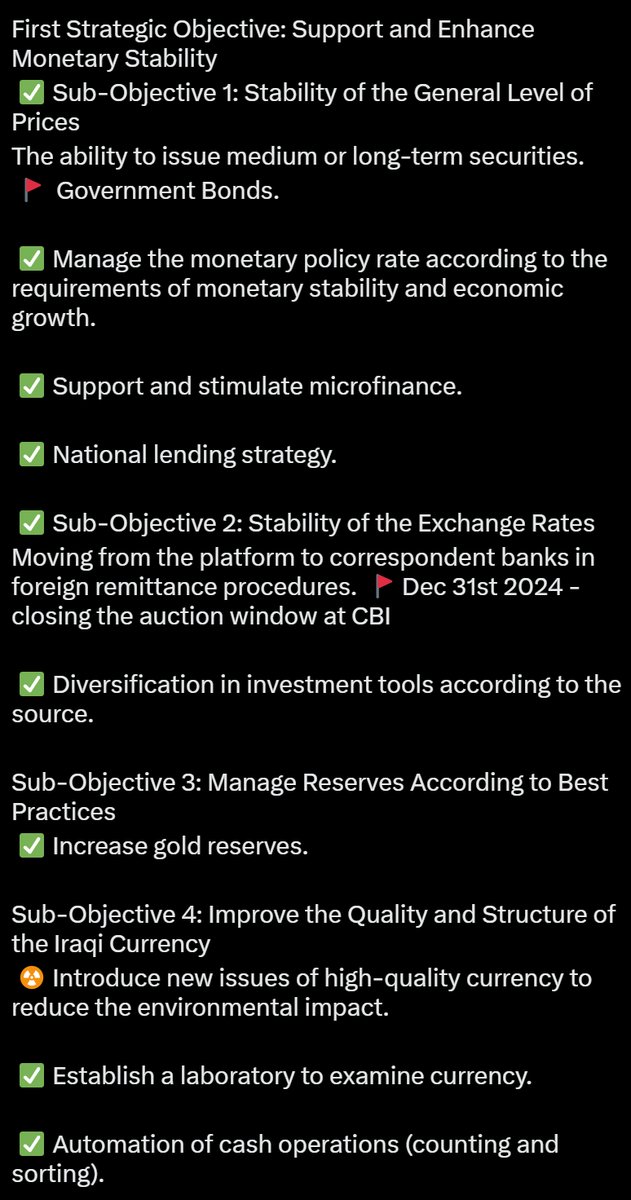
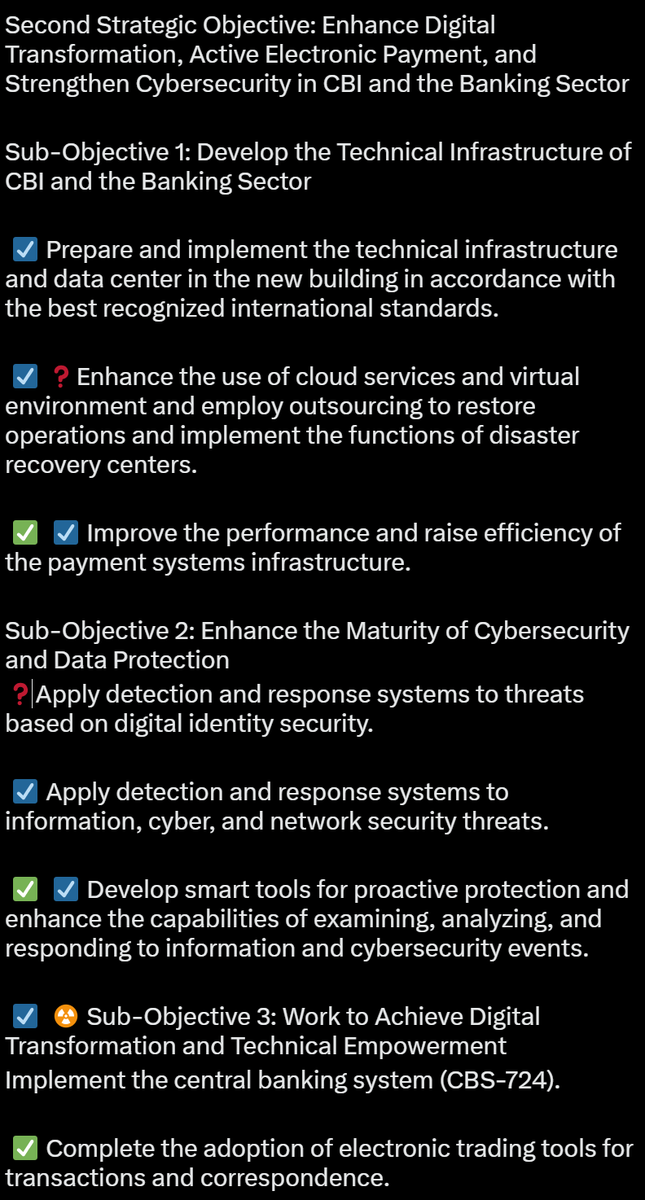
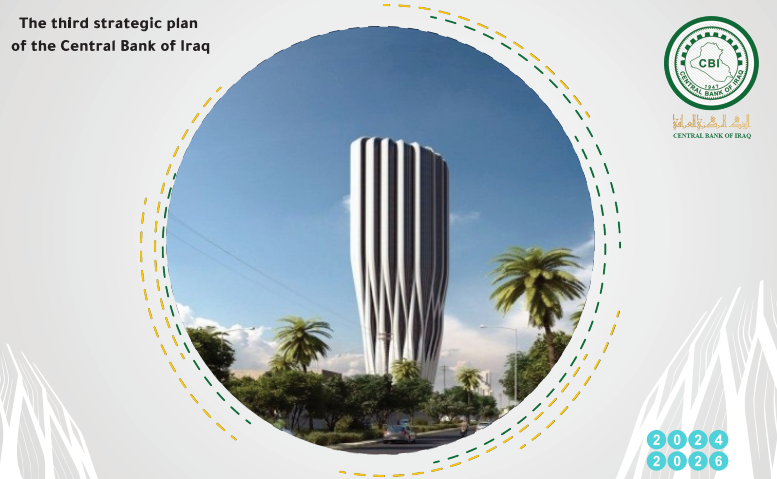
Hey everyone! I created a 🧵 on the Central Bank of Iraq (CBI) for you. Hope you all had an awesome weekend! It snowed here at Tahoe, This thread covers the CBI’s Third Strategic Plan for 2024–2026.
The CBI is powering through this plan, and as I’ve said before, This is a PLAN you must wrap your brain around that fact. It's their transformative roadmap for Iraq’s financial system.

"The CBI isn’t twiddling its thumbs waiting for some event to happen in Iraq." Clickbait

The CBI launched its Third Strategic Plan (2024–2026) to achieve financial stability, promote digital payments, and boost financial inclusion, ensuring price stability, jobs, and prosperity for Iraqi's.

It includes 7 strategic objectives, 24 sub...objectives, and 76 initiatives...a comprehensive blueprint to modernize Iraq’s economy and banking sector.

🚩I created a thread 🧵listing their strategic objectives. It’s lengthy, so take your time to review. I included notes for you:
Green check : ✅Completed objectives.
Blue check : ☑️Objectives started and currently in progress.
Orange circle :☢️ Objectives not yet started.
Question mark :❓ No information available.
Red flag : 🚩 My personal notes.
✅☑️: Objectives with some tasks completed and others still in progress.
🚩I’ll post a Part 2 later covering some really cool stuff. Stay tuned! --See 9 part thread below👇Image Image
Dec 18, 2024 6 tweets 2 min read
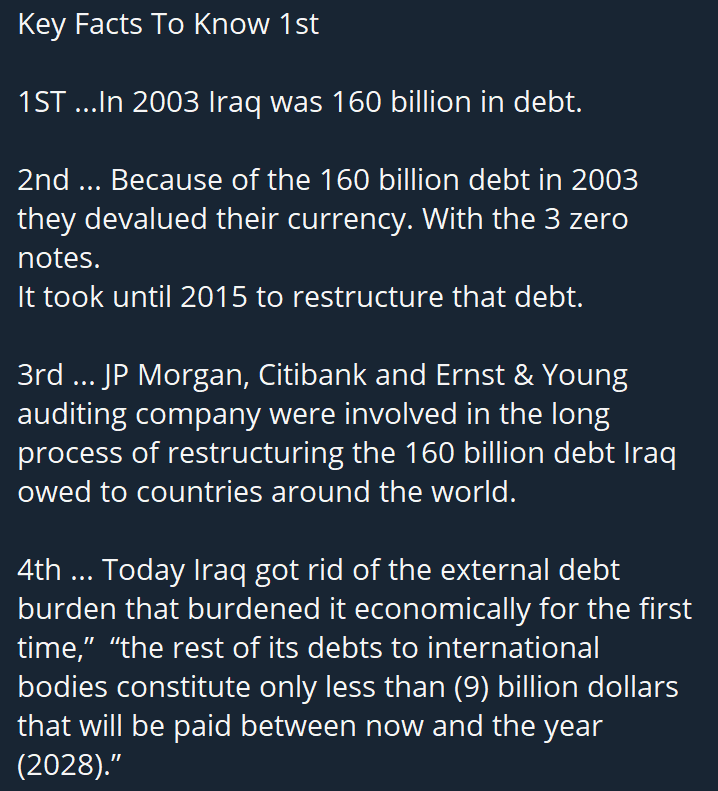
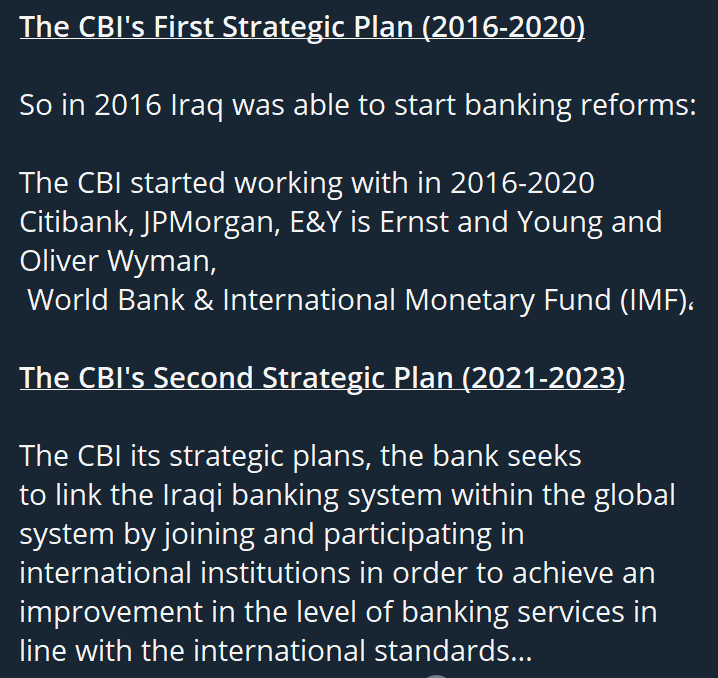
Below are highlights of documents I have read from the CBI 3 Strategic Plans from 2016 - 2026 and a brief history. I have just posted the ones that apply to the currency reforms. After you read them leave a comment. I just wonder if you'll see what I SEE. Thread is 4 post below. Image Image
Dec 15, 2024 8 tweets 3 min read
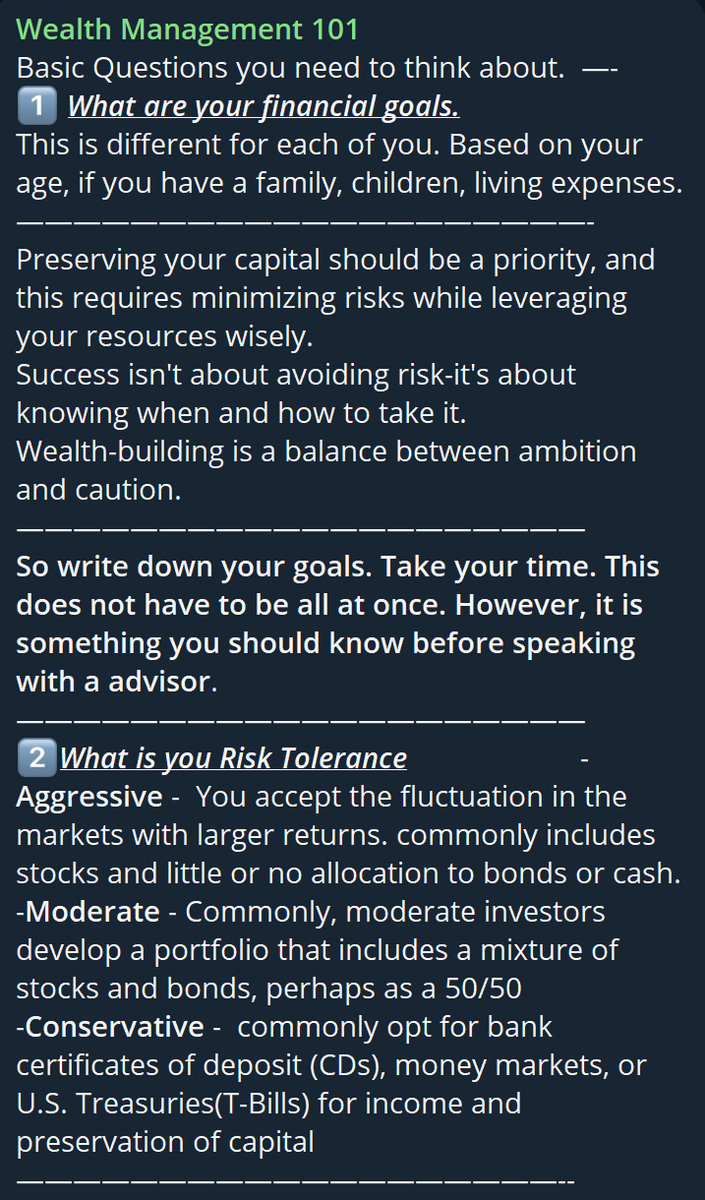
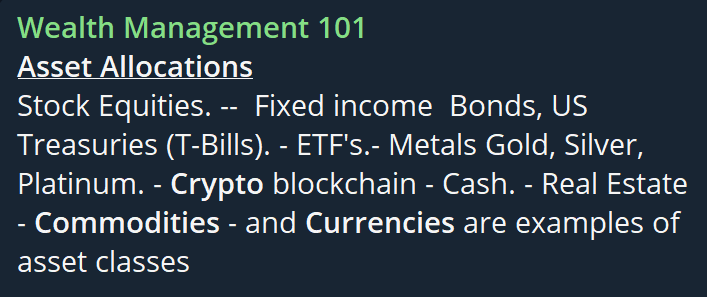
Part 2 -- Wealth Management 101
See 8 part thread Image Image
Dec 4, 2024 4 tweets 1 min read
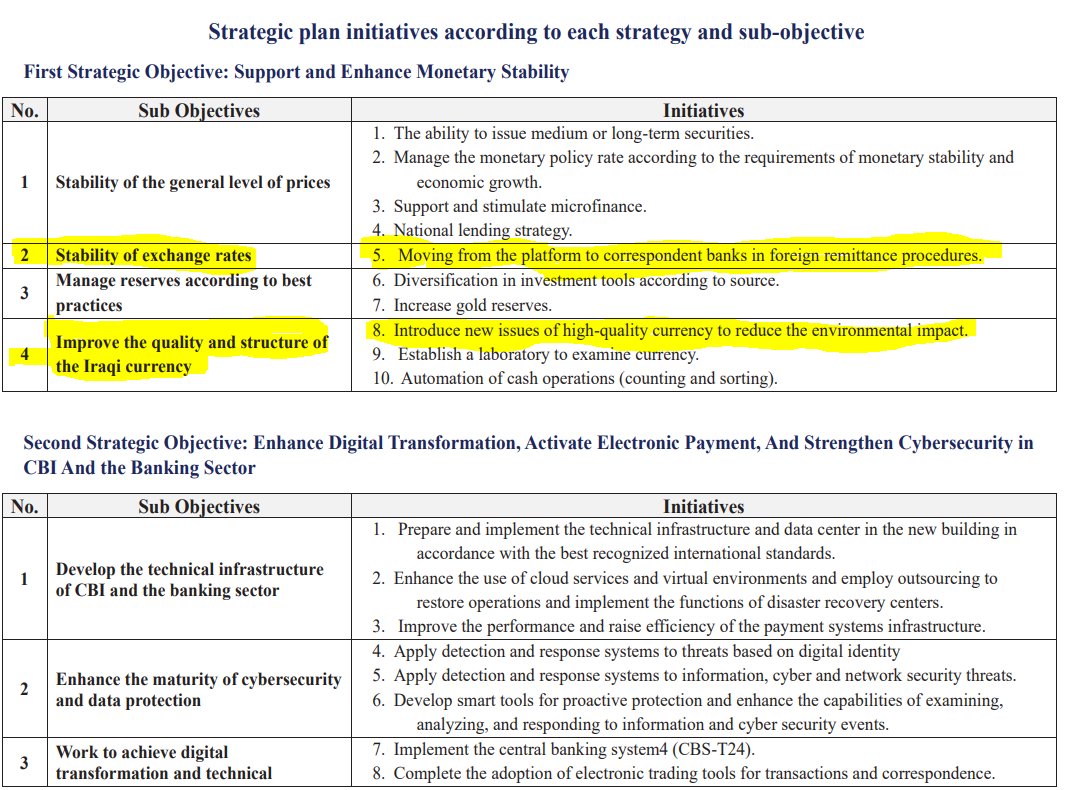
CBI Plan for 2024-2026
#2 Stability of exchange rates 5. Moving from the platform to correspondent banks in foreign remittance #4 Improve the quality and structure of the Iraqi currency 8. Introduce new issues of high-quality currency to reduce the environmental impact
See thread Image (Moving from the platform to correspondent banks in foreign remittance procedures) This is ending the currency auction. When they do, it'll end the parallel market, they can have lowers notes (Introduce new issues of high-quality currency to reduce the environmental impact.) Image
Nov 2, 2024 5 tweets 2 min read
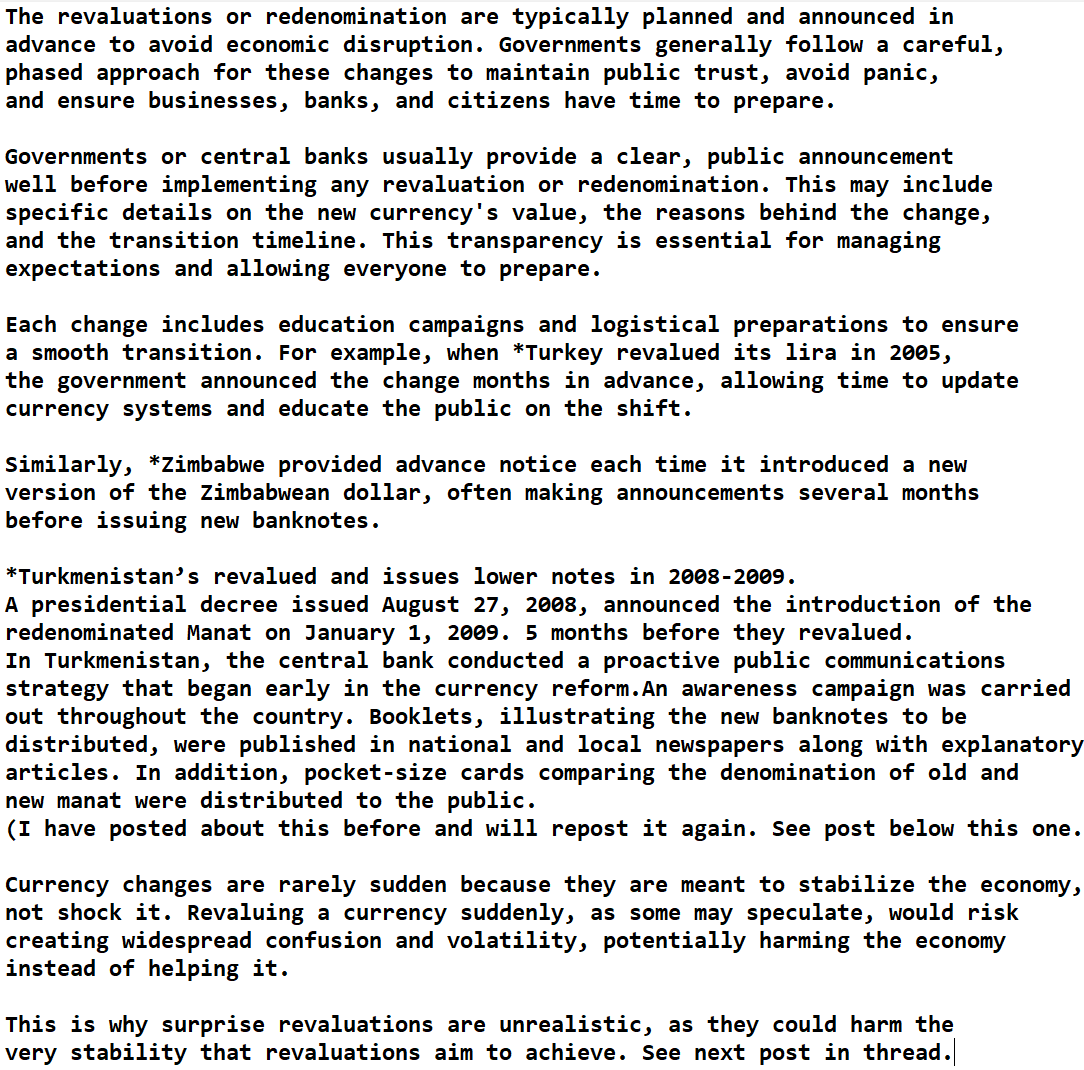
I got a lot of question about this. So I put together a thread 1-4 to to explain the revalue process. IMF Quote "The total and orderly overhaul of Turkmenistan’s currency system in 2008–09 in many respects serves as a model for other countries." I reviewed others as well 👇 Share Image I posted this on Oct 16th. It is the steps for just the revalue part. Also see next post for 1st steps of auditor's and preparations of public education campaign.
Oct 16, 2024 12 tweets 3 min read
The total and orderly overhaul of Turkmenistan’s currency system in 2008–09 in many respects serves as a model for other countries. IMF QUOTE I going to highlight just the revalue part. You can read the full report linked below in #9 See threads below.👇 1⃣The first step in the Turkmen currency reform was to unify the exchange rate. Like Iraq Turkmenistan’s had a parallel market. The CBI sells dollars at 1310 to banks in Iraq and the banks then sell them for more to the public 1500 example. So Iraq's 1310/1500 need to be equal.