Sayf al-Dīn al-Miknāsī Profile picture
وقال ابن أبي زيد القيرواني: من حفظ المدونة والمستخرجة لم تبق عليه مسألة
Jan 26 12 tweets 26 min read
🧵A thread on the final phase of adh-Dhahabī

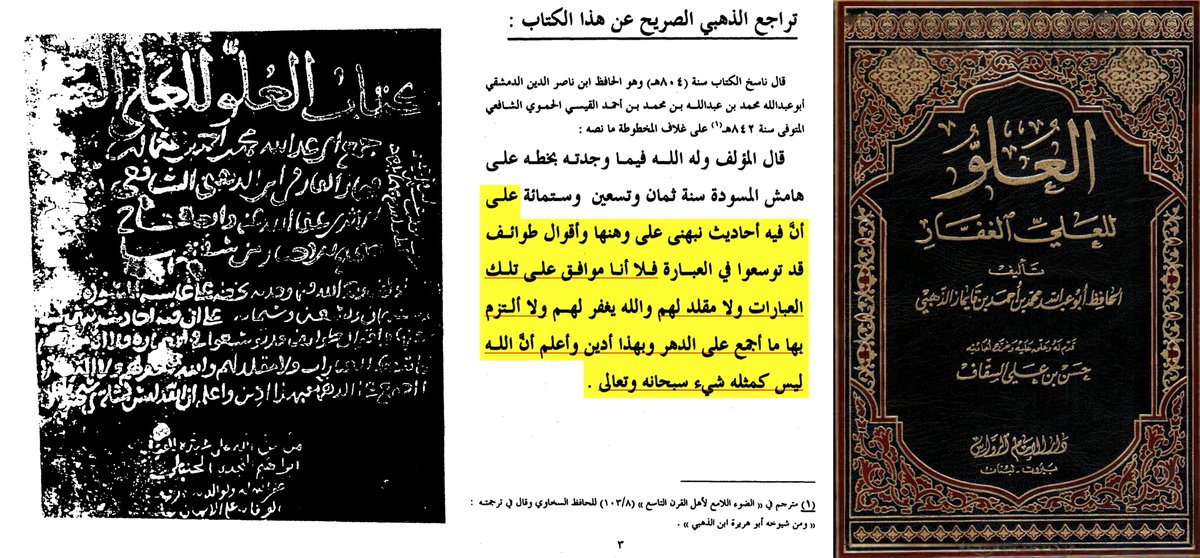
ʾImām Muḥammad ibn ʾAḥmad ibn ʿUthmān adh-Dhahabī رحمه الله was among ḥuffāẓ and leading mutaqaddimīn, a critic and master of ḥadīth, tārīk͟h, and fiqh, whose authority rests upon precision in naql, and exhaustive comparison of isnāds.Image Retraction

بسم الله الرحمن الرحيم

ʾImām Ibn Nāṣiru-d-Dīn رحمه الله, who transcribed Kitābu-l-ʿUlūww, noted on the cover of the manuscript, based on what he found in adh-Dhahabī’s own handwriting from the draft, that adh-Dhahabī رحمه الله wrote,

❝In it [i.e., the book] are ʾaḥādīth; I was alerted to their weakness, and statements of groups who continued in expressing [the ʿaqīdah expressed in the book]. I am not in agreement with those expressions, nor am I an imitator of them. May Allāh forgive them, and I do not commit myself to them, ever. Upon this I remain for all time, and upon this I hold as my dīn, and I know that Allāh is unlike anything; subḥānahu wa-taʿālā.❞

╾ Kitābu-l-ʿUlūww ╼

In the following thread, we will examine the repentance of adh-Dhahabī, provided by Ibn Nāṣiru-d-Dīn¹, by carefully contrasting the creed reflected in his earlier writings, such as Kitābu-l-ʿArsh and Kitābu-l-ʿUlūww, with the ʿaqīdah that emerges from his later works, including Tārīk͟hu-l-ʾIslām, Siyar Aʿlāmu-n-Nubalāʾ, and other late compilations. This comparison will highlight clear shifts in emphasis, language, and doctrinal positioning.

In addition, we will present a collection of important statements made by adh-Dhahabī regarding his own identity, methodological stance, and intellectual orientation, alongside remarks he recorded or transmitted concerning his teachers and those whom he looked up to once. These materials together allow for a clearer understanding of his later alignment and the trajectory of his thought.

¹ He is Muḥammad ibn ʿAbdullāh ʾAbū Bakr ibn Muḥammad ibn ʾAḥmad ibn Mujāhid al-Qaysī ad-Dimashqī. He was an intelligent and trustworthy scholar of ḥadīth. Al-Maqrīzī said regarding him, “he pursued ḥadīth until he became the unrivaled ḥāfiẓ of the lands of ash-Shām. He authored several works, and none like him remained in ash-Shām after his passing.” (see as-Sulūk li-Maʿrifat Duwalu-l-Mulūk, 7/423).Image
Dec 1, 2025 24 tweets 19 min read
🧵A thread on the reliability of Ḥanbal ibn ʾIsḥāq ash-Shaybānī

Ḥanbal ibn ʾIshāq ibn Ḥanbal ash-Shaybānī — al-Muḥaddithu-th-Thiqah, ar-Rāwīʿu-l-Aʿlam ʿanu-l-ʾImām, Ṣāḥibu-l-Masāʾil wa-l-Musnad, wa-Ḥāfiẓ Turāthu-l-Ḥanābilah al-Awwal. Image ʾImām adh-Dhahabī (رحمه الله) writes,

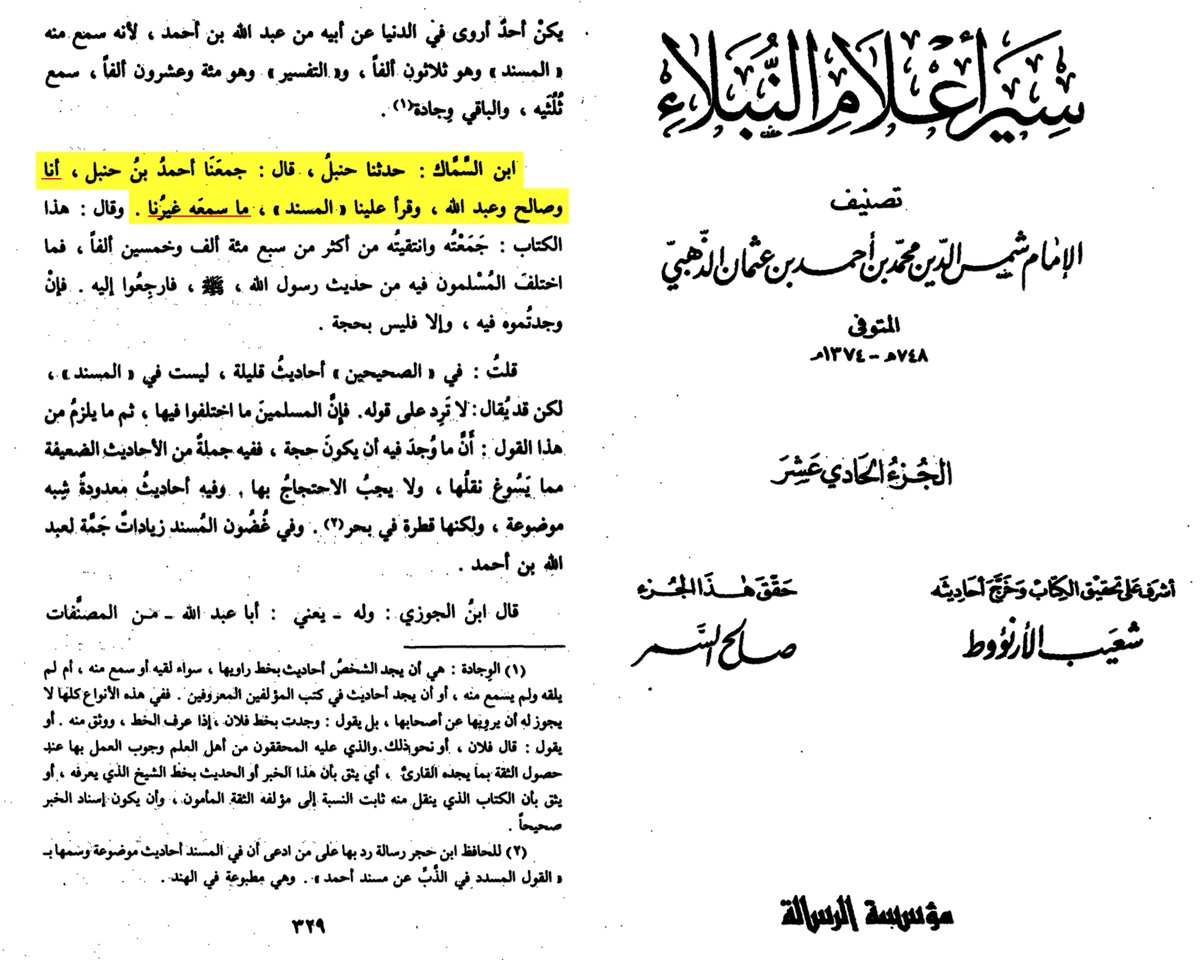
❝ʾAḥmad ibn Ḥanbal gathered us — myself [Ḥanbal], Ṣāliḥ, and ʿAbdullāh — and he read to us the Musnad. None besides us heard it.❞

╾ Siyar Aʿlāmu-n-Nubalāʾ (11/329) ╼

In this thread, we will examine the status and reliability of Ḥanbal ibn ʾIsḥāq ash-Shaybānī رحمه الله. We will explore whether he was considered weak, decent or strong in ḥadīth, analyze the origins of the misunderstanding surrounding his credibility, and discuss how this issue has been interpreted and revisited by pious Ḥanābilah and later scholars in our time.Image
Nov 3, 2025 28 tweets 19 min read
🧵A thread on at-Taʿrīf bi-ʿArafah

Imagine walking and seeing your local brothers and seeing them gather in the masjid on the Day of ʿArafah each year, reciting Qurʾān and making collective duʿāʾ.

Sounds a bit like bidʿah, huh? Image What is at-Taʿrīf bi-ʿArafah?

ʾImām Ibn Ḥajar al-Haytamī (رحمه الله) writes,

❝The meaning of at-Taʿrīf: it is the gathering of people after ʿAṣr on the Day of ʿArafah for duʿāʾ; outside of ʿArafah.”❞

╾ Tuḥfatu-l-Muḥtāj bi-Sharḥu-l-Minhāj (4/108) ╼Image
Oct 5, 2025 20 tweets 4 min read
🧵A thread on Ibn Qutaybah & the Makān of Allāh

ʾImāmu-l-Muḥaddithīn, ʾAbū Muḥammad, ʿAbdullāh ibn Muslim ibn Qutaybah ad-Dīnawarī — al-Lughawī, al-ʿĀlim, Ṣāḥibu Taʾwīl Mukhtalifu-l-Ḥadīth. Image ʾImām Ibn Qutaybah (رحمه الله) writes,

❝And if these people were to return to their fiṭrah (innate disposition) and to that upon which their creation was fashioned — recognition of the Creator ﷻ — they would know that Allāh ﷻ is al-ʿAlī (the High), ...
Sep 30, 2025 66 tweets 13 min read
🧵A thread on al-Buk͟hārī’s view of Allāh’s Kalām

ʾAbū ʿAbdillāh Muḥammad ibn Ismāʿīl al-Buk͟hārī — al-ʾImāmu-l-Muḥaddithīn, the foremost among the preservers, and the standard-bearer of the Sunnah. Image (1) The Narration

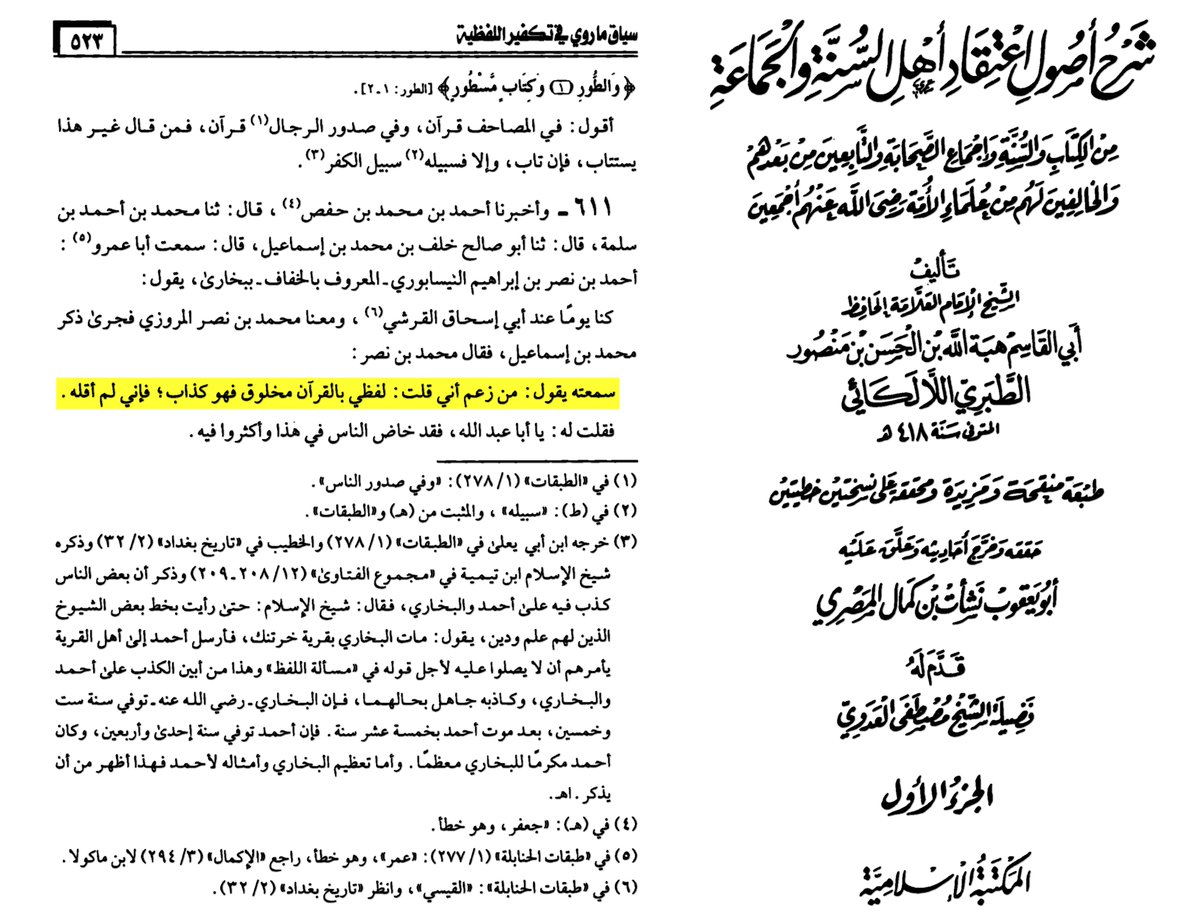
ʾImām al-Lālakāʾī (رحمه الله) writes,

❝I heard him (i.e. al-Bukhārī) say: “Whoever claims that I said, ‘My lafẓ (wording) of the Qurʾān is created,’ then he is a liar; for I did not say it.”❞

╾ Sharḥ Uṣūlu-l-Iʿtiqād (1/523, no. 611) ╼ Image