Fighting in Spain was the dearest desire of the Maghreb dynasties, perpetuating the pious and glorious tradition of the Almoravids and Almohads. In their eyes, Andalusia was not only “the field of martyrdom and the gate to eternal happiness” but also the extension of their empire, where their own people were already numerous and powerful; it served as the outlet where the unemployed and turbulent forces of the kingdom would be lost, a place of exile for members of the royal family and potential claimants whom the sultan found prudent to remove—among these princes descended from Abd el-Ḥaqq were recruited the leaders of the Volunteers of the Faith. Christian Spain likewise had its “lost children”, the Almogavars, who watched the border and sometimes pushed hazardous raids through Islamic lands. (2/6)

 Beginning in the 18th century, the Rehamna controlled a vast zone stretching between the Oum Rabia and the Atlas, where their pastoral economy depended heavily on transhumance secured through protection contracts. In the pre-colonial Haouz, this system allowed the Arab Rehamna to offer protection to neighboring High Atlas Berber tribes such as the Ghighaya, Mesfiwa, and Gundafa, who in return granted them access to grazing lands. Through these arrangements, the Rehamna extended their authority far beyond their own territory, acting not only as allies but also as patrons of the surrounding tribes.
 In late October 1907, Mulay Abdelaziz organized the mehalla of Ibn al-Baghdadi into the Chaouia.

 The imperialist policy of ʿAbd al-Muʾmin manifested itself in appointing one of his sons as heir and distributing the provinces of the empire among his other sons, thereby ensuring the survival of this new Mu'minid dynasty—even at the cost of going against the fundamental tenets of Almohad doctrine. (2/6)
 From the pre-Islamic era, tribal belonging was obtained through kinship, walāʾ (clientage), adoption, or slavery. The bond that dominated everything was patrilineal descent—only the father transmits nasab. Tribal names expressed origin through a founding ancestor, real or symbolic, in formulas like Banū Fulan (“sons of Fulan”). The group bond is blood from the father, while the alliance bond is contractual honor and protection.
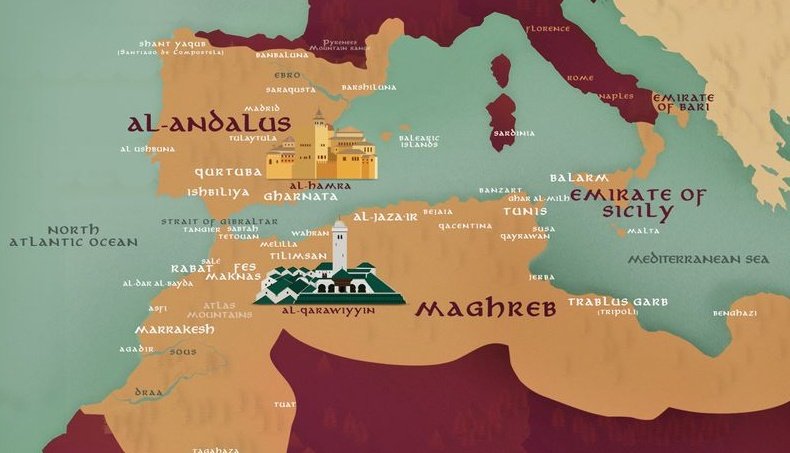 According to the testimony of several authors, the great Berber tribes of medieval Maghreb, such as the Sanhaja (Iznagen) or Zenata (Iznaten), possessed different Berber dialects so far removed from each other that they were not mutually intelligible.