Bla B Profile picture
Business & Management l Economics of Strategy I Circular Economy l SAP ERP technologies l Analytics l Contrarian, insightful and omniscient l Arsenal
Feb 11, 2024 6 tweets 9 min read
1/2 *📰 History Of Zimbabwe’s Economic Collapse*

🇿🇼 *1997 – $50000 TO WAR VETS WITHOUT BUDGET.* War veterans hold a serthxies of protests against Mugabe, pressing for gratuities and pensions. Mugabe buckles, and orders Finance Minister Herbert Murerwa to dole out ZW$50,000 each to over 50,000 war veterans. Total bill =ZW$3.5 billion. None of it is in the budget. Mugabe dismisses concerns, including from Murerwa, that the spending will bankrupt the economy.

🇿🇼 *CHAOTIC LAND GRAB.* The Government announces its intention to list more than 1,400 farms, many of them productive, for redistribution to landless blacks. The IMF and other donors threaten to pull out.

🇿🇼 *FISCAL INDISCIPLINE.* spread that foreign reserves are down to just a month’s worth of imports. Speculators, panicked by the flurry of bad news, start stocking up on US dollars. Desperate, the Government injects US$15 million to try and prop up the economy but its too late.

🇿🇼 *BLACK FRIDAY.* November 14, the Zimbabwe dollar plunges 72%. The stock market crashes 46%. That same day, by coincidence, there is a national blackout. The day comes to be known as “Black Friday”. In the aftermath, Government orders companies to shut down their foreign currency accounts, hoping the flow of US dollars onto the market will put brakes on the Zimdollar’s slide. But it has the opposite effect; confidence collapses even further, as does the stock market and the Zimdollar itself.
Investors head for the exits. McDonalds, the US fast food giant, abandons plans to open its first outlet in Zimbabwe.

🇿🇼 *1998 – NATIONWIDE RIOTS.* Riots hit the country in January after the price of basic goods rises by up to 50 percent, blamed on the collapse of the Zimdollar. Maize meal prices rise by 45% within a week. Army is deployed for the first time in years to quell the riots. “They will not hesitate to shoot,” Home Affairs Minister Dumiso Dabengwa warns.

🇿🇼 *1998 - DRC WAR.* Government introduces price controls and a range of tariffs on imports. In August, Zimbabwe enters the DRC war. Some estimates said the country spent US$1m a day to fund the war, further weakening the local currency.

🇿🇼 *1999 – FOREX SHORTAGES* Zimbabwe runs out of forex. Zimbabwe has defaulted on most of its foreign debt by mid-year. The IMF finally confirms its intention to withdraw funding. This leads to further exchange controls. The Government fixes the Zimdollar rate at $38 to USD way above its true value.

🇿🇼 *2000 – CABINET RESHUFFLING* Murerwa is reshuffled out. On August 1, new Finance Minister, Simba Makoni, bows to market pressure and devalues the Zimdollar to $55 to the USDollar, still lower than the parallel market rate of $60 for a USDollar. In the same week, unions, businesses and activists stage a nationwide stay away to protest the economic crisis.

🇿🇼 *2001 — RBZ PRINTING MONEY* A $500 note is issued, and is followed by another different $500 note within weeks. A $5 coin is also introduced.

🇿🇼 *2002 – MAKONI FIRED.* Mugabe rejects Makoni’s pleas for further devaluation. “Devaluation is sinister and can only be advocated for by our saboteurs and enemies of this government,” Mugabe tells him. Makoni is soon fired, and Murerwa is reappointed. Government shuts down all bureaux de change, accusing them of being “conduits” of illegal forex trade.

🇿🇼 *2002 IMF SUSPENSION* In June, the IMF suspends technical assistance to Zimbabwe because of arrears amounting to US$132 million. This had nothing to do with SANCTIONS.

🇿🇼 *2003 – RBZ PRINTS TRAVELLERS CHEQUE.* The RBZ introduces what it calls traveller’s cheques, in denominations of $1,000, $5,000, $10,000, $20,000, $50,000 to $100,000. Zanu PF loots a lot of travellers cheques from RBZ. They are hugely unpopular and are soon quietly phased out.Image
Image
2) 🇿🇼 *2003 - RBZ PRINTS BEARERS CHEQUE.* Zimbabwe is now producing less than half its 1996 exports. Pressure is building. That September, RBZ introduces bearer cheques in denominations of $5,000, $10,000 and $20,000. Initially, the bearer cheques are only valid up to January 31, 2004. Again there is a lot of looting at RBZ and other banks by Zanu PF cronies. Zimbabwe’s reserves are down to under US$20 million, about 3 days’ worth of imports.

🇿🇼 *2003 -GIDEON GONO APPOINTED GOVERNOR.* In December 2003, Gideon Gono was appointed RBZ governor. It is a decision that is to have a major impact on the future of the currency. Later, a leaked US embassy cable was to quote IMF mission chief Sharmini Coorey describing Gono as “the world’s worst central banker by far.”
One of Gono’s first decisions was to tighten control of central bank’s accommodation of banks. This leaves many banks in crisis.

🇿🇼 *2004 – lIQUIDATION OF BANKS* Still unwilling to float the currency, the Government comes up with a Managed Foreign Exchange Auction System that January. Exporters sell a quarter of their forex at a fixed rate of Z$824 and another 25 percent at an auction rate. Exporters keep the other half in their foreign currency accounts for up to 21 days, after which they must offload the remainder at the auction rate. Gono's sector measures start taking toll on banks. On January 3, Century Discount House shuts down. Eight other banks are kicked out of the clearing system for failure to fund their RTGS positions. More bearer cheques arrive in January, with a June expiry date. That same June, another batch comes, this time with a December 31 expiry date. However, even those cheques with a June expiry date remain legal tender.
The cheques are mocked by the public. There is LOOTING at RBZ, and still this has nothing to do with SANCTIONS. At the launch of Barbican Bank, Murerwa jokes: “I know you are all concerned about the current cash crisis. I am too. I am however more concerned because I am now being called Mr Burial Cheques.”

🇿🇼 *2005 – THE FOREX AUCTION SYSTEM COLLAPSES.* The forex auction system isn’t working. So, on October 21, Government replaces it with the Tradable Foreign Currency Balances System (TFCBS). Under this system, there is a dual exchange rate system; market transactions are done at an interbank rate, while Government transactions are done at the fixed official rate. It obviously doesn’t work.

🇿🇼 *2006 – OPERATION SUNRISE. ZIMBABWEAN DOLLAR DEVALUATION.* The dual exchange rate system is replaced in April, and all transactions are now at the interbank rate. The rate collapses. The Zimdollar is devalued again in July to $250. New bearer cheques arrive, in a series of 1 cent, 5 cents, 10 cents, 50 cents, $1, $10, $20, $50, $100, $500, $1,000, $10,000 and $100,000. Then, on August 1, the madness begins. Desperate, RBZ lops off three zeros from the currency. Gono launches a massive marketing campaign, dubbed “Operation Sunrise”, hoping to package this as a good thing. “Say no to zero and hello to hero,” Gono says.

🇿🇼 *2007 – INFLATION* On the 7th of September, the Zimdollar is devalued again to $30,000. Still, the Government is playing catch-up; on the black market, the Zimdollar is ten times weaker at $300,000 per US dollar on the parallel market.
Desperate, the Government tries to ban inflation; retailers are ordered to cut prices by half. It does nothing to stop inflation and shop shelves go empty. The Government stops publishing inflation stats regularly. On July 1, a $500,000 note is introduced, but it is valued at just US$12 even at the official exchange rate. On New Year’s Eve, RBZ launches a $750,000 note.
Apr 3, 2023 41 tweets 7 min read
1. How can we correct our economic mistakes and remodel our economy? We urgently need to go deeper beyond the surface of old and existing macro and microeconomics choices and understand the past and exiting political economy to interrogate on where we got it all wrong. 2. Rhodesia's economy was heavily reliant on agriculture, especially tobacco and maize production. In the 1970s, the country faced economic challenges, including a decline in agricultural productivity due to droughts, sanctions and a decrease in investment and foreign aid.
Apr 3, 2023 13 tweets 4 min read
1. Demand management: The Rhodesian model of economy refers to the economic policies and practices implemented in Rhodesia from the 1960s to the 1970s. And created one of Africa’s phenomenal accelerated industrial growth only rivalled by South Africa. 2. Under the Rhodesian model, the government pursued a policy of economic self-sufficiency, with a focus on developing domestic industries and reducing dependence on imports. The government also placed a strong emphasis on maintaining low inflation and a stable currency.
Apr 2, 2023 16 tweets 6 min read
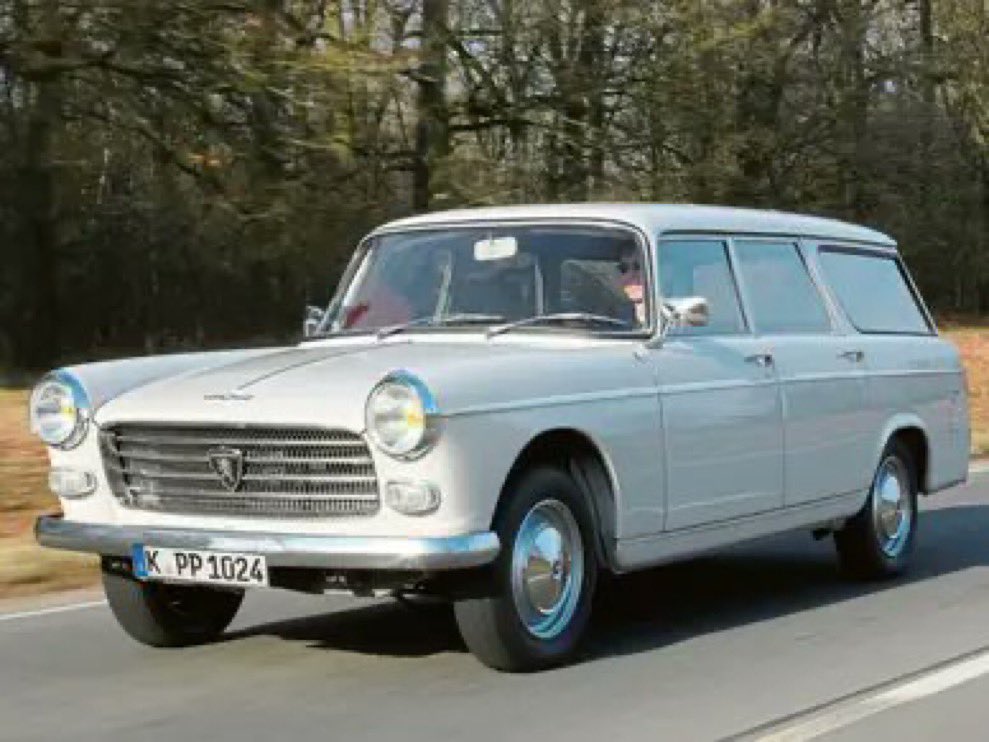
1. Germany’s VWs and these French Peugeot cars became dominant in Zimbabwe replacing British cars after UN placed sanctions on Rhodesia. Rhodesians were smuggling gold to Germany where the Rhodesian dollar was being printed and Rhodesian military vehicles were made these engines 2. West Germany company Giesecke & Devrient was printing money for the Rhodesian government and Rhodesia used to send gold to Germany to insert into the R$ notes. And this created a channel for gold smuggling to Germany which was not a UN member when UN sanctions were agreed.