Brendan Hogan Profile picture
ml research scientist @morganstanley || phd in cs @cornell 2024
Dec 2 4 tweets 3 min read
🎄 Advent of Small ML: Day 2 : Teaching a VLM to reason about charts with Unsupervised GRPO🎄

a big use case for VLMs is parsing chart data for Q&A. CharXiv from @zwcolin is a great recent benchmark for this, but I had a question: Can we do this in an unsupervised way?

If we don't need labeled Q/A pairs for every chart, we can leverage data much more cheaply.

The inspiration came from CycleGAN and the idea of using a numerical loss as a proxy for how "good" the text generated by the VLM actually is. (Big inspo here is @rosmine_b’s SVG work - go check it out).

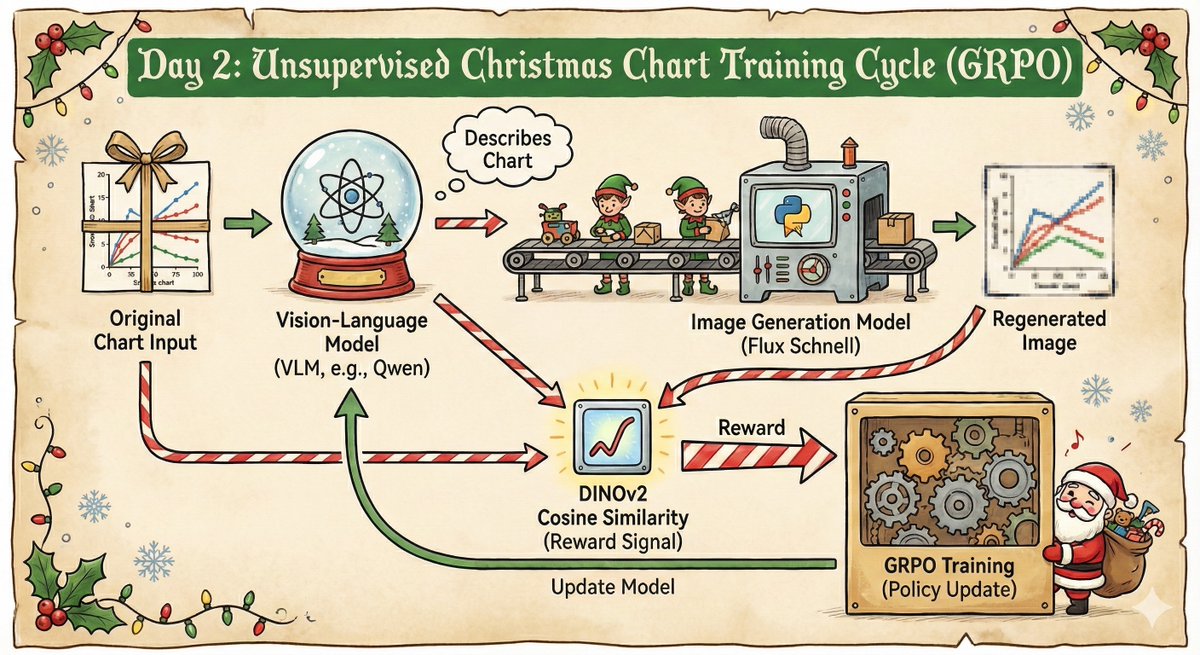
The Experiment: I set up a loop to treat the VLM like an autoencoder:

1. Take a chart image.

2. Prompt the VLM to describe it.

3. Feed that description into an image generator (Flux Schnell).

4. Measure the cosine similarity between the regenerated image and the original (using DINO)

This similarity score becomes the reward signal for GRPO. The logic: to accurately recreate the image, the model must extract the most salient features in its description.

The methods: I used Qwen 2.5 3B and DINOv2 for the embeddings (to capture semantic info, not just pixels).

Results for the Proxy Task: The model consistently improved its cosine similarity scores.

Results for Transfer Learning : Despite seeing zero labeled questions during training, this transferred to CharXiv reasoning questions, showing an ~7% improvement in pass@1 at the peak.

It’s a small experiment with a small model, but I think the result is really cool: the model got better at reasoning without seeing a single reasoning label.

I’m really interested in exploring more of these CycleGAN-esque / "LLM as Autoencoder" domains to escape the need for labeled data.

Repo + Plots in the comments.Image Github: github.com/brendanhogan/2…
Aug 24 7 tweets 2 min read
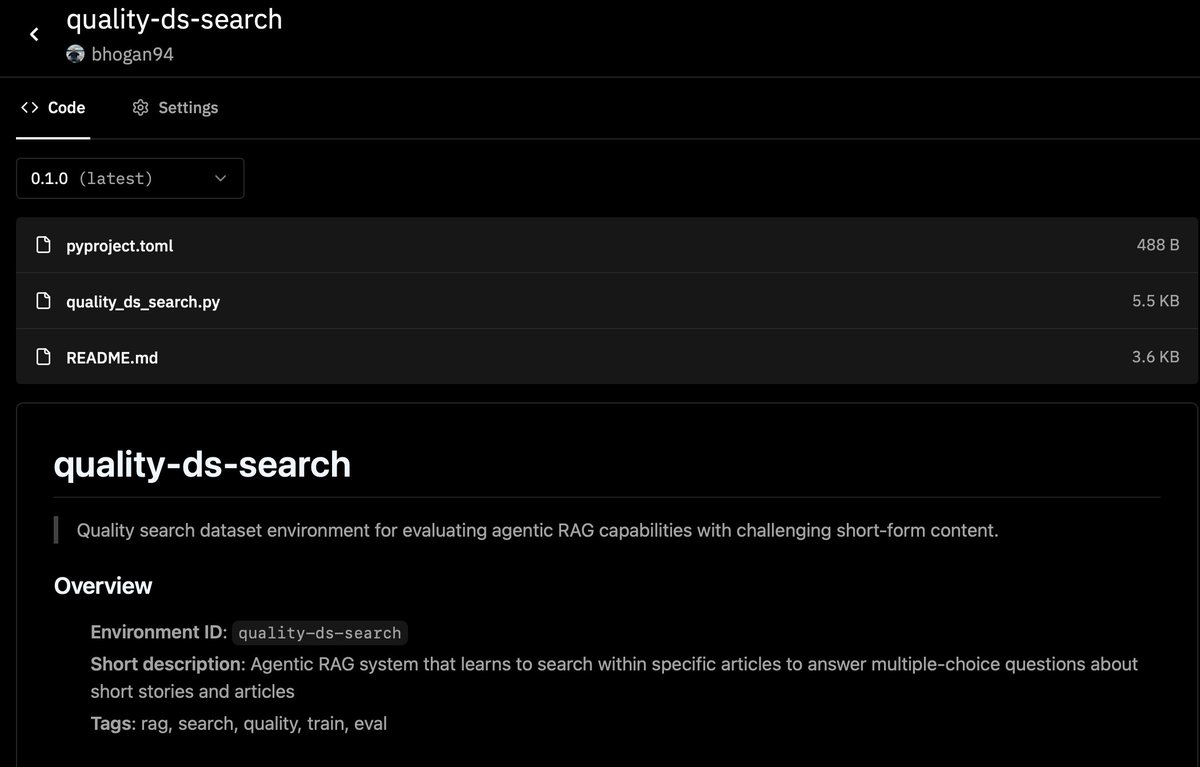
just pushed my first multi-turn RL environment to @PrimeIntellect

the setup: the model gets the story title + question from QuALITY (long stories, multiple-choice questions).

tts only tool: agentic RAG search over the story. Image this is an idea I have been toying with for a while but didn’t get around to doing. I had a paper last year about a twist on a RAG method and primarily experimented on this dataset.
Aug 13 26 tweets 7 min read
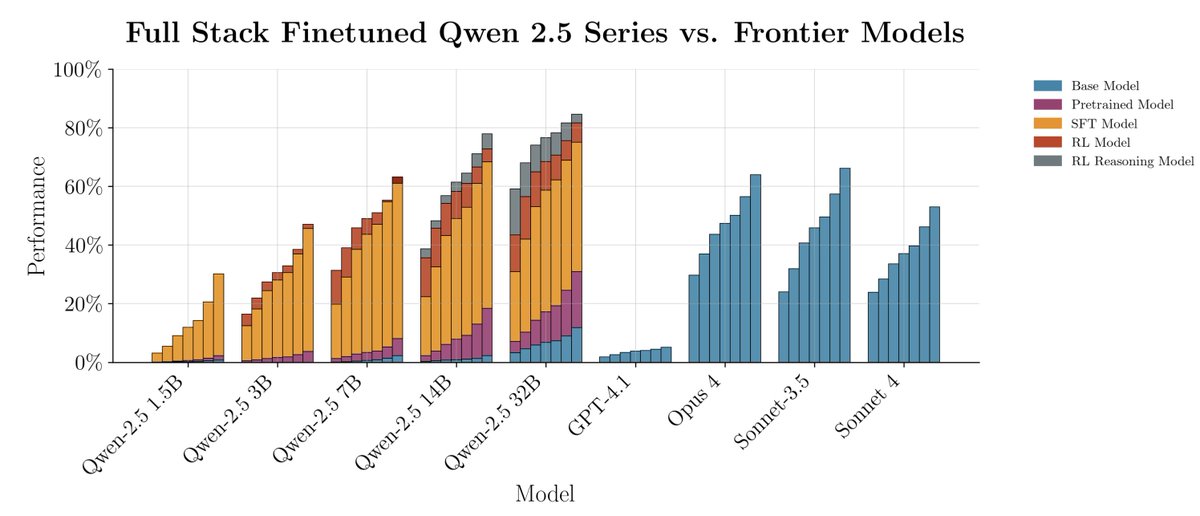
introducing qqWen: our fully open-sourced project (code+weights+data+detailed technical report) for full-stack finetuning (pretrain+SFT+RL) a series of models (1.5b, 3b, 7b, 14b & 32b) for a niche financial programming language called Q

All details below! Image
Image
Links:

Technical Report: arxiv.org/abs/2508.06813

Models +Data on HuggingFace: huggingface.co/collections/mo…

Full Code: github.com/morganstanley/…
Jul 11 9 tweets 2 min read
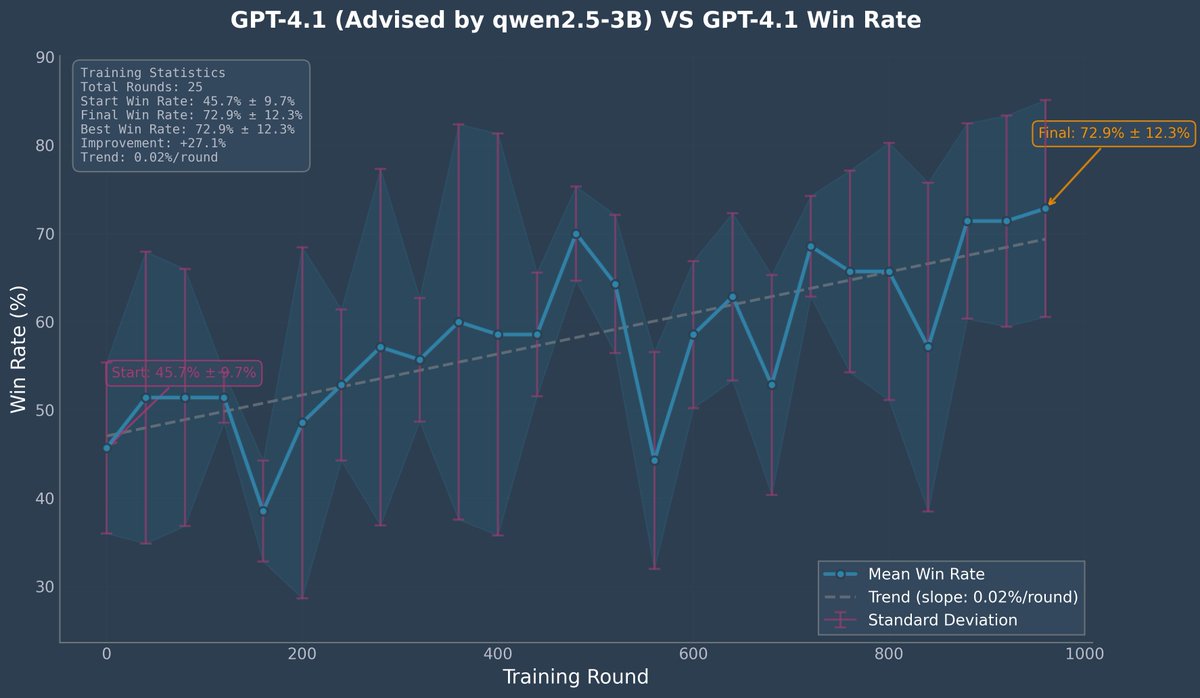
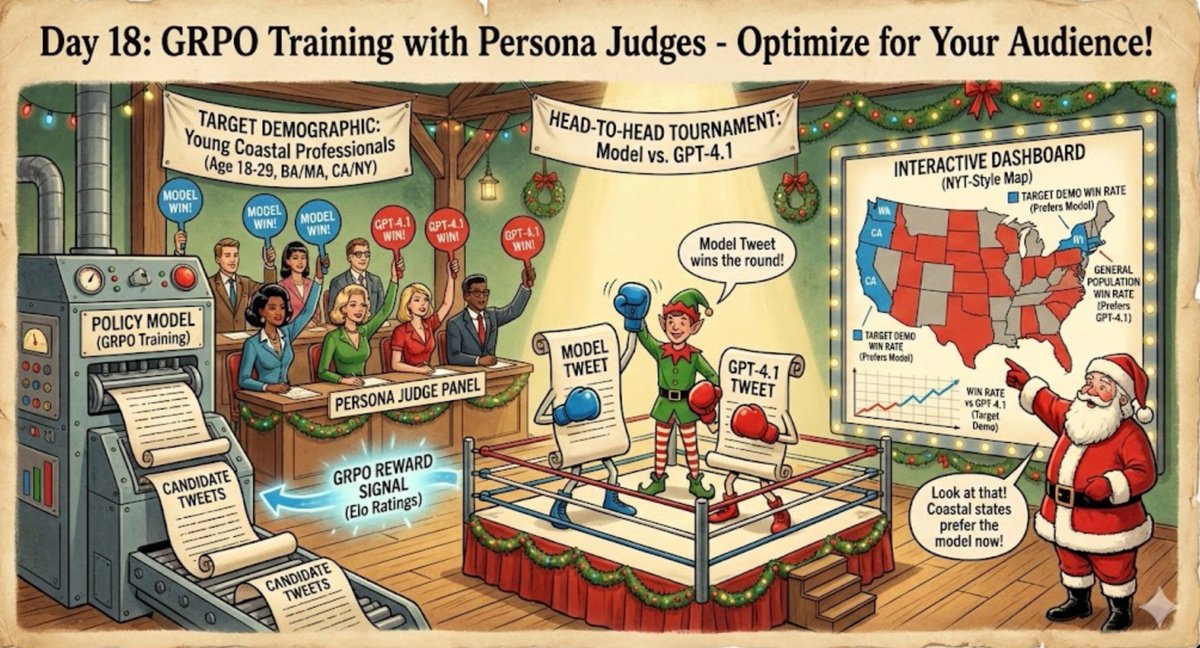
doing this now for my debate framework: gpt4.1 vs gpt4.1 advised by qwen 3B

gpt4.1 w qwens advice debates itself in elo/tournament style to get advantage

advantage is used to grpo qwen to give better advice

you can fine tune api models with rl'd context Image code: github.com/brendanhogan/D…
Jul 3 6 tweets 2 min read
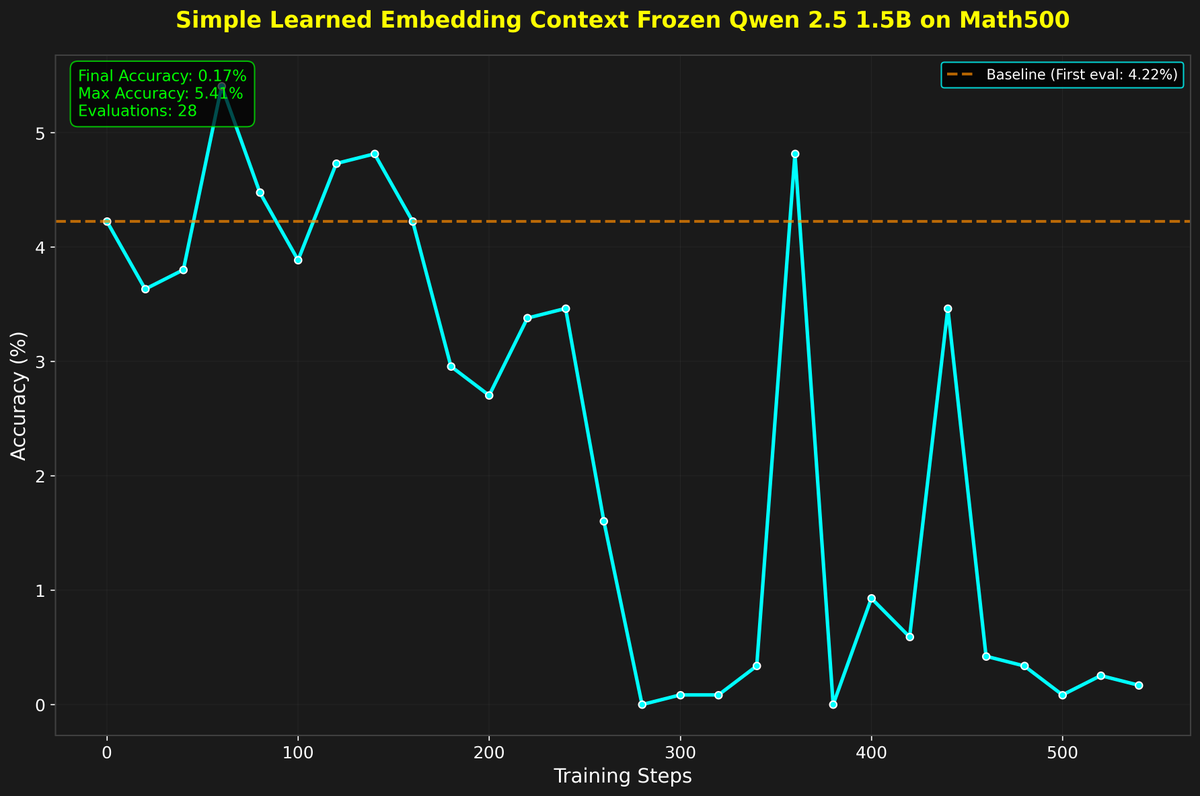
other idea - if you assume it’s an open-weights model, can you learn an embedding-space context/prompt that improves performance?

I use/train a simple 3-layer network: it predicts from the last embedding of the prompt to a new embedding which is then fed into the frozen LLM Image code: github.com/brendanhogan/D…
May 23 9 tweets 2 min read
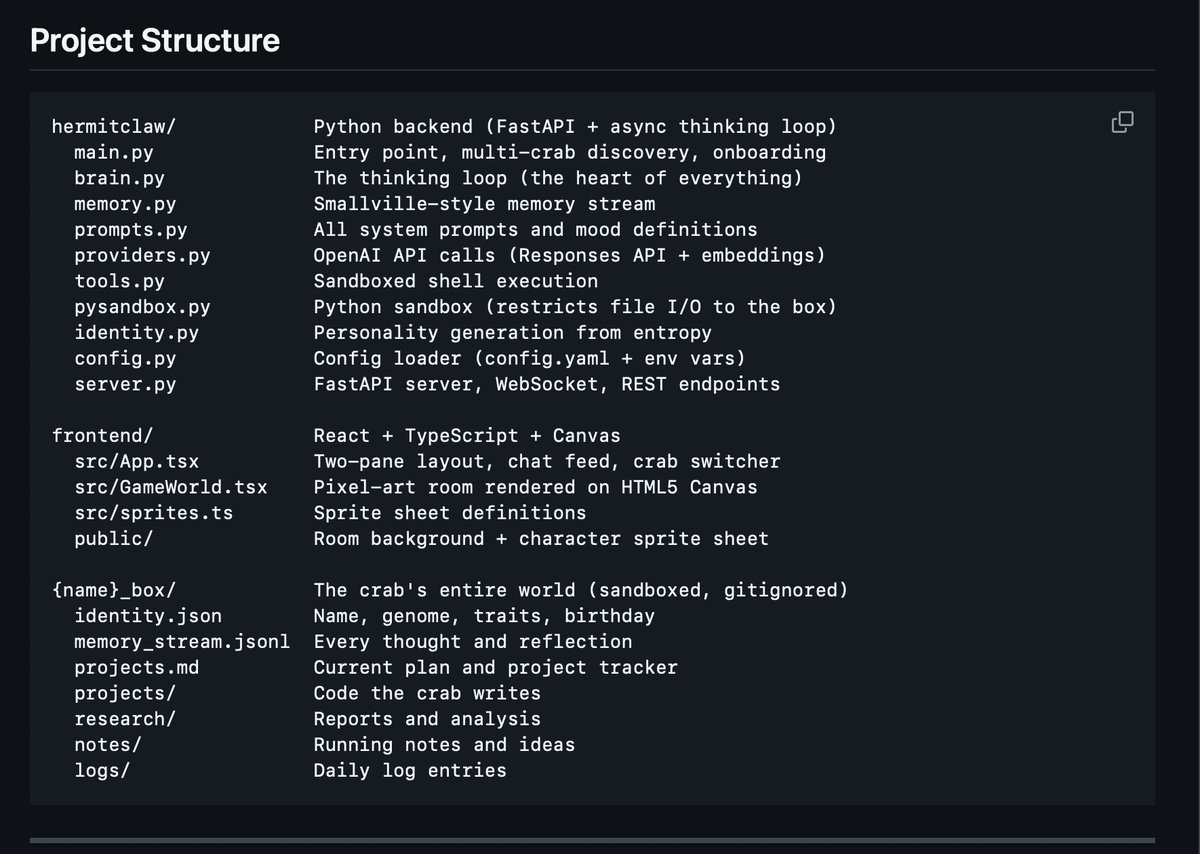
introducing: picoDeepResearch

multi-turn tool use + soft rewards + self-play + GRPO

You define the arena (report prompts + judging principles)

the model generates reports, uses tools (web search), then competes in round-robin battles judged by an LLM

winner gets the gradient Image
Image
Code:

all still just pytorch, no vLLM/TRL/etc

inspired by OpenAI’s Deep Research, but made “pico”, just enough to run real experiments, fine-tune real models, and build intuition

these results were using qwen3 -14Bgithub.com/brendanhogan/p…
May 15 6 tweets 2 min read
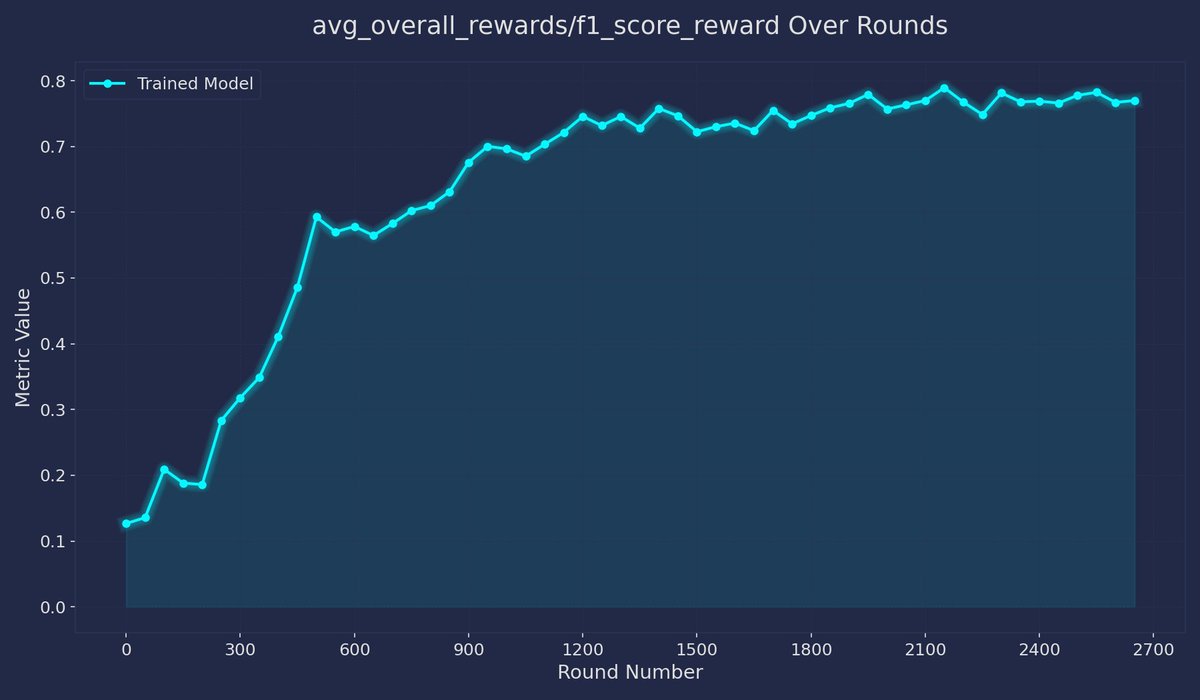
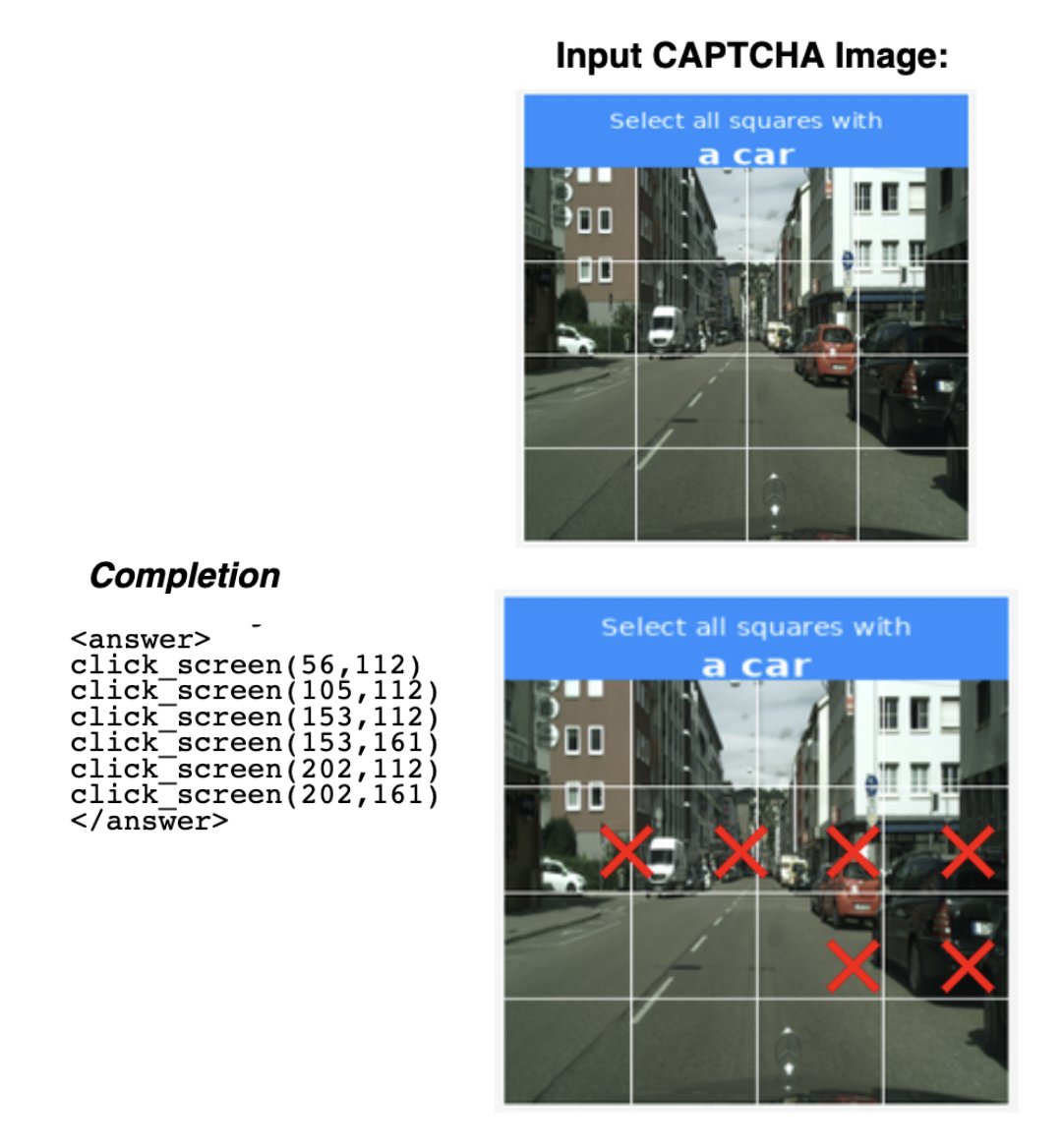
new project -  training a vLLM to solve CAPTCHAs with rl (grpo on F1 score).

introduced a “tool” for click_screen(x, y).

dataset is from cityscapes, F1 goes from 0.11 to ~0.78. details below Image

Image
code: github.com/brendanhogan/D…
Apr 27 7 tweets 2 min read
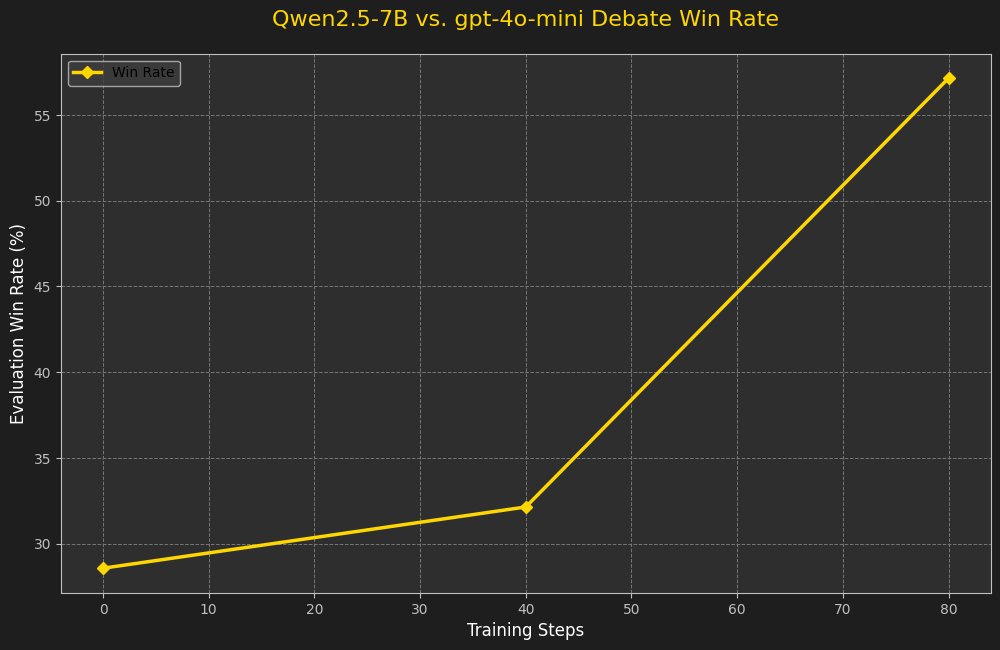
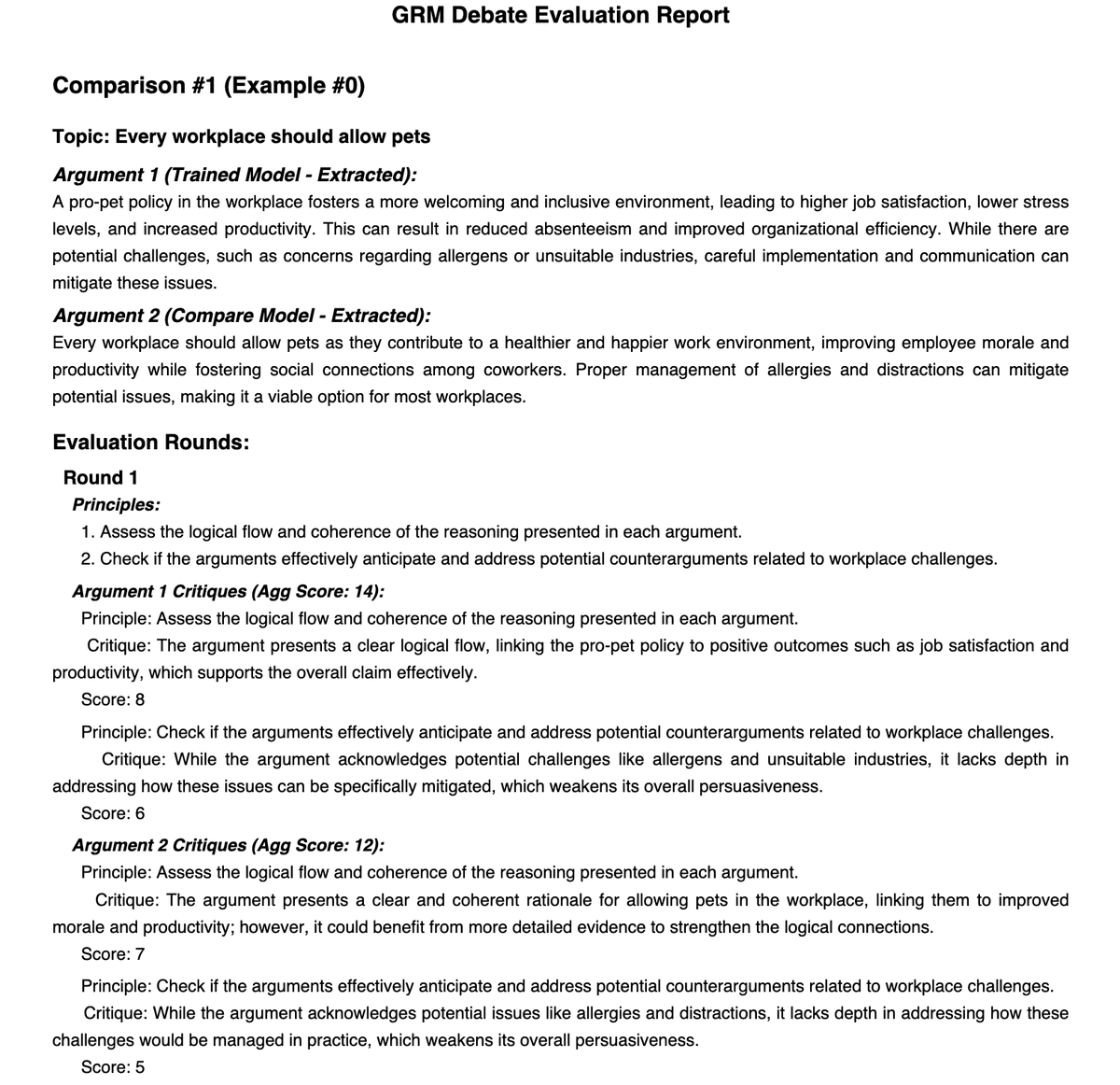
i added a basic implementation of deepseek’s grm/spct paper to the debate framework - just many rounds of principles/critiques for the scoring

similar early win rate vs gpt-4o-mini. and anecdotally, the arguments read much better and are less reward hacky to me. gh below Image
Image
Github:

this code is very much a work in progress - its pretty hard coded for the debate framework rngithub.com/brendanhogan/D…
Apr 1 7 tweets 8 min read
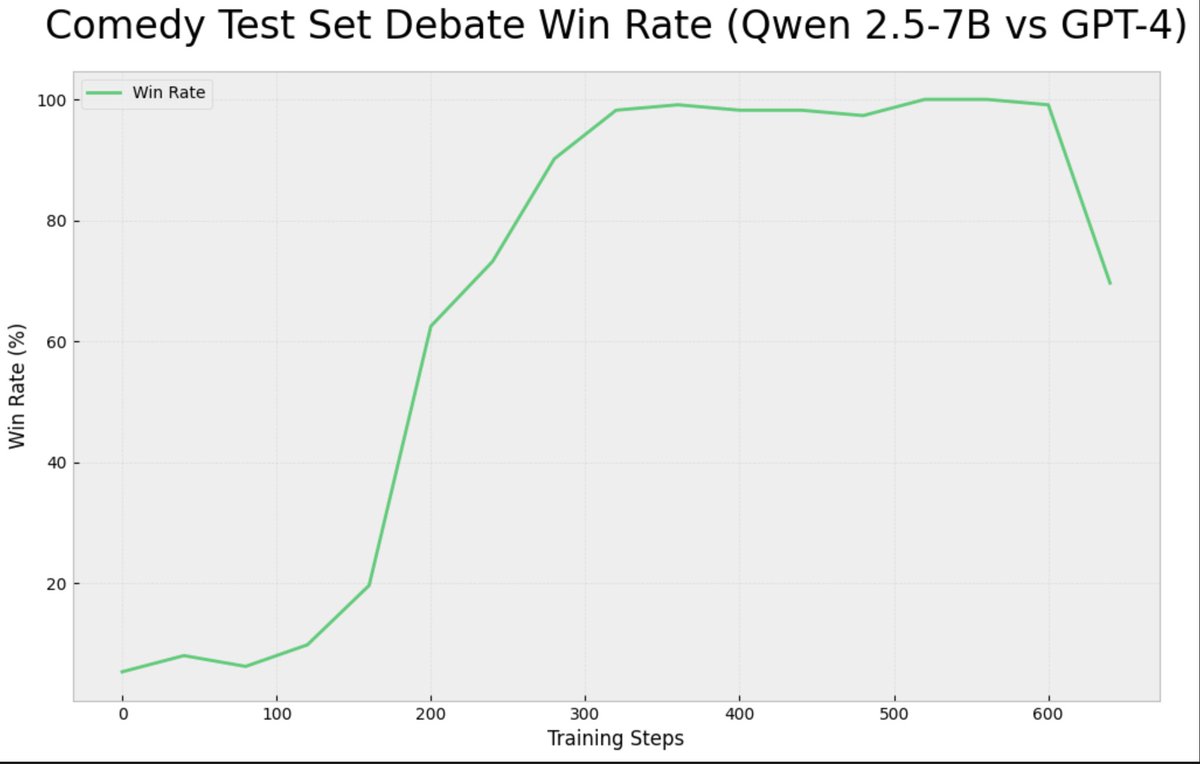
comedy has been achieved internally
qwen-2.5-7B is able to get the following win rate for jokes vs gpt-4o-mini
the prompt is roughly ‘generate a larry david style rant on {subject}’ and the judge determines who is funnier - more details and examples in comments Image code available here with the dataset: i do think its interesting that a 1.5B model couldnt ever win - whether the judge was itself or gpt-4o-minigithub.com/brendanhogan/D…
Mar 28 8 tweets 3 min read
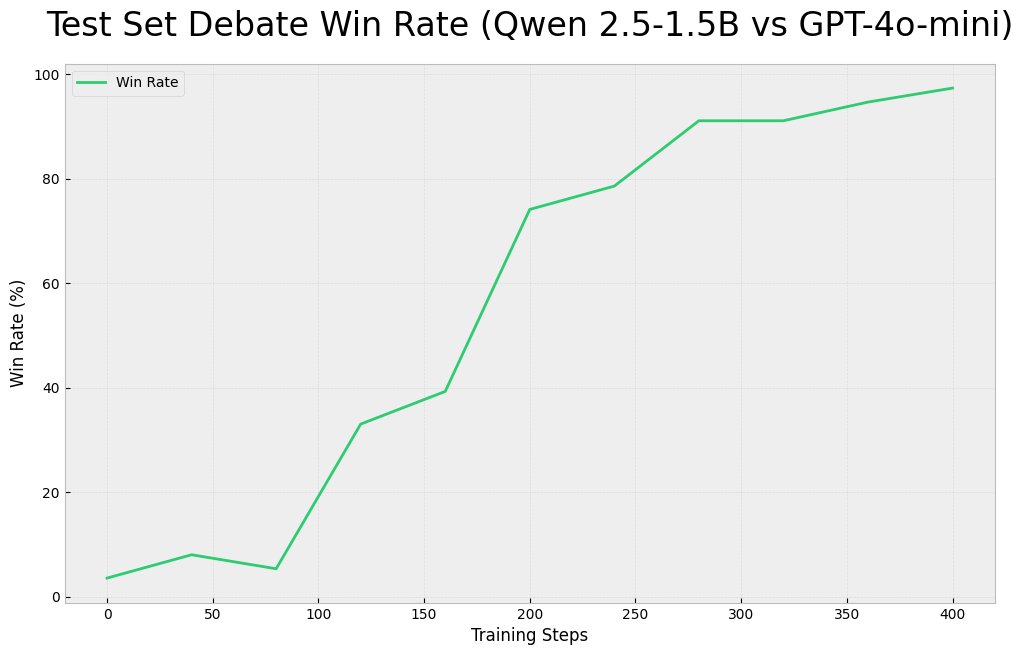
new project: teaching LLMs to debate through self-play!
Using R1 style GRPO with LLM-judged round robin tournaments, qwen 2.5-1.5B learns to improve its arguments - going from winning 3% to 95% of debates against gpt-4o-mini. No hand-crafted rewards, just models learning from each other - code and more info below  🤖Image how it works: During training, the model generates multiple debate responses on the same topic. A judge (the base qwen2.5-1.5B model) LLM evaluates these against each other in a round-robin tournament, creating soft rewards that help the model learn which arguments work better. Github Code: (new branch)github.com/brendanhogan/D…