David Cochrane and his CBC producers are playing a seriously flawed game of gotcha here.
Kate Harrison is correct it is not an apples to apples comparison
Alright, let’s break this down clearly and simply, as if explaining it to someone with special needs who needs it spelled out, like a certain CBC personality, namely David Cochrane.
The difference between a former chair of Brookfield Asset Management, like Mark Carney, earning millions in stock and stock options, and a regular Member of Parliament (MP) holding a few thousand dollars in shares of a Brookfield investment fund boils down to scale, influence, control, and potential conflicts of interest. Here’s a thread for explanation: 🧵
Financial Stake:
Former Chair: Carney held stock options worth $6.8 million USD at the end of 2024, with options on 409,300 shares at a strike price of $37.54. Additionally, he had deferred share rights (DSRs) and other grants totaling around 539,136 shares, valued at approximately $20.8 million CAD in February 2024. These are direct, high-value holdings in Brookfield itself, tied to his executive compensation for steering the company. Such a massive stake creates a strong personal financial interest in Brookfield’s success, especially since stock options gain value if the share price rises.
Regular MP (Melissa Lantsman): An MP might hold a few thousand dollars in a Brookfield-related investment fund, often indirectly through diversified exchange-traded funds (ETFs) like the Vanguard FTSE Canada Index ETF, which includes Brookfield among many other companies. These holdings are passive, small-scale investments with no direct control or significant financial impact. For example, Pierre Poilievre’s disclosed investments in ETFs include Brookfield shares, but they’re a tiny fraction of his portfolio and not direct stock ownership @MarkJCarney @MelissaLantsman
Apr 12, 2025 • 11 tweets • 5 min read
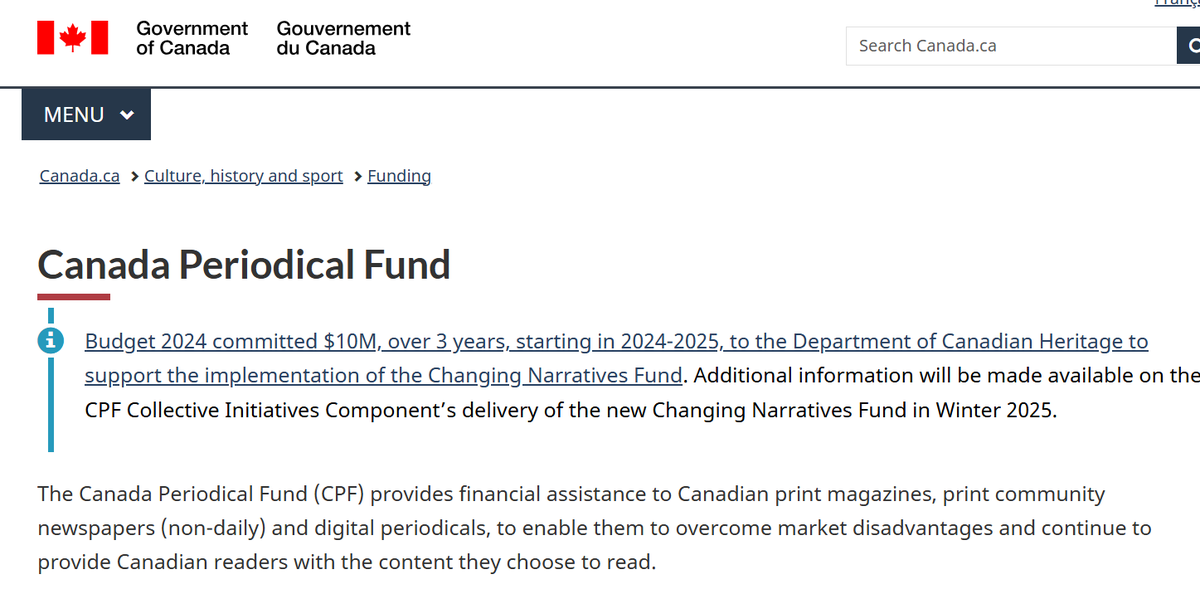
Taxpayers are funding journalists more than ever in Canada
Keep a a skeptical eye on how all these programs create a media independence deficit during campaign coverage
The following are the key funding programs supporting Canadian journalists (Excluding CBC) and how much (approx) they have paid out over the last 10 years 🧵
Canada Periodical Fund (CPF)
Purpose: Supports print magazines, non-daily newspapers, and digital periodicals with funding for content creation, distribution, and innovation.
-2015–2019: ~$75.5 million/year (baseline for Aid to Publishers and other components).
-2020–2022: ~$85–$100 million/year (includes ~$10–$21.5 million for Special Measures during COVID).
-2023–2024: ~$75 million/year (post-COVID stabilization).
Total Over 10 Years: ~$800 million.
Mar 1, 2025 • 9 tweets • 5 min read
Mark Carney, at the Flying Monkeys brewery yesterday in Barrie, steals chunks of Poilievre's platform. What did we learn? A 🧵
"We are going to build, baby, build."
Isn't that a Poilievre slogan? And aren't slogans bad?
Realizes only as he's talking, that despite being rich, he's not giving any proceeds of his book to charity... great look!
"We better start putting proceeds to charity."
The guy is worth $50M+
Jan 18, 2025 • 11 tweets • 6 min read
Banks and financial institutions are jumping ship from Carney's climate organization Glasgow Financial Alliance for Net Zero (GFANZ) all at once. Wonder why?
There was a US House of Representatives Judiciary Committee investigation into the Carney/Bloomberg banking climate coalition.
Their interim report titled "Climate Control: Decarbonization Collusion in Environmental, Social, and Governance (ESG) Investing" was released June 11. judiciary.house.gov/sites/evo-subs…
A short thread 🧵
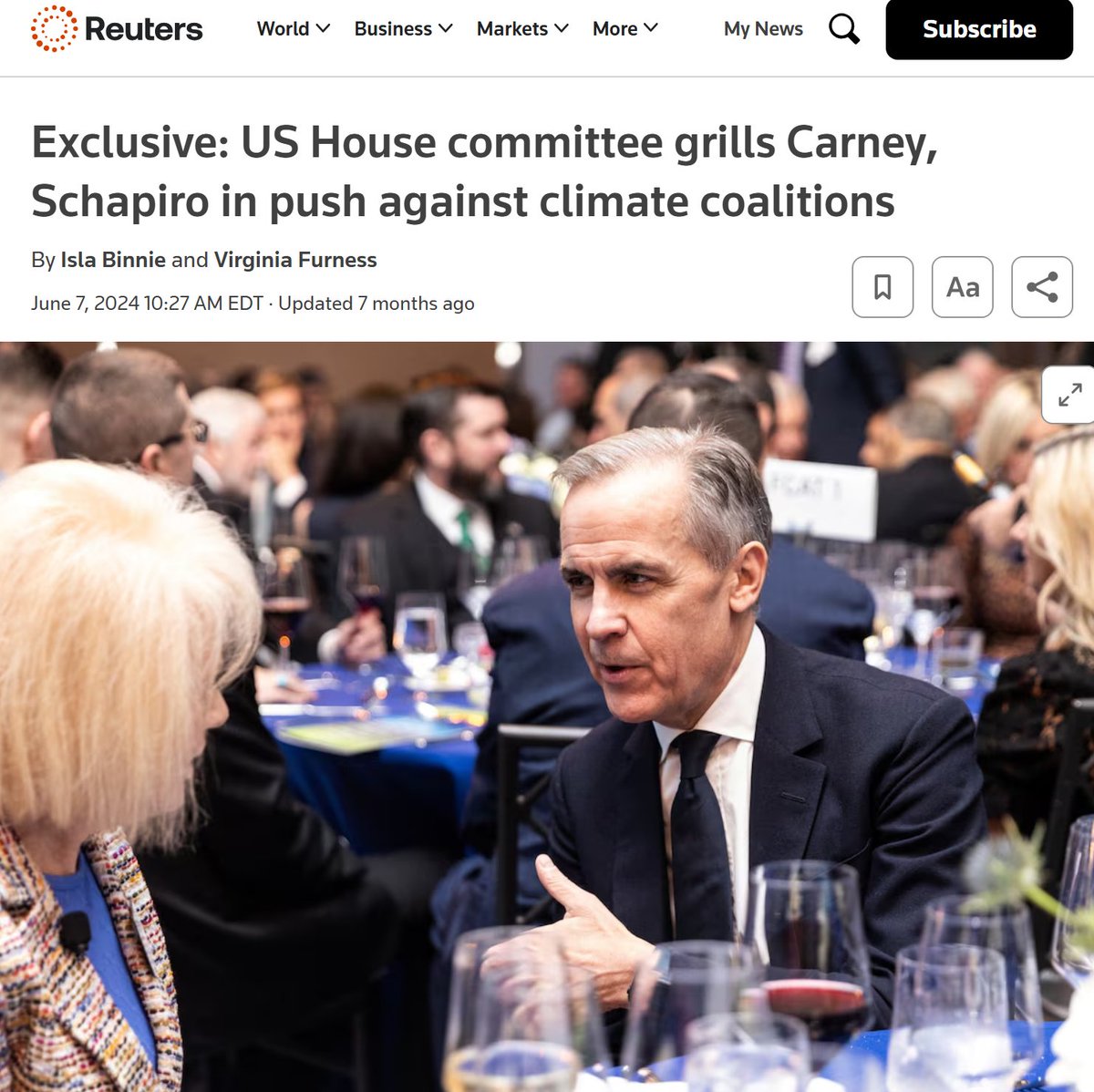
Committee members, as part of their study, conducted interviews Carney and former U.S. SEC Chair Mary Schapiro three days prior on June 7.
Carney is mentioned 7 times in the linked report. Reuters reporting on it at the time states:
"No antitrust lawsuit has so far been brought against any climate coalition of companies. Yet fear of being accused of colluding has driven some financial firms out of such coalitions or has pushed them to reduce their level of co-ordination" 2/ reuters.com/sustainability…