Connor Davis Profile picture
Founder of @getoutbox_ai Learn how to build AI Agents for FREE 👉 https://t.co/q9zPwlldZ4
Dec 27 10 tweets 4 min read
This shocked me.

Google’s Gemini team barely uses “normal prompts.”

Their internal structures look nothing like what Twitter teaches.

I reverse-engineered them from DeepMind examples.

Here are 5 that change everything 👇 Image 1/ The Context Anchor

Most people: "Write a blog post about AI"

Google engineers: "You are a technical writer at Google DeepMind. Using the context from [document], write a blog post that explains [concept] to developers who understand ML basics but haven't worked with transformers."

They anchor EVERY prompt with role + context + audience.
Dec 20 16 tweets 4 min read
Anthropic's internal prompting style is completely different from what most people teach.

I spent 3 weeks analyzing their official documentation, prompt library, and API examples.

Only 2% of users know about XML-structured prompting.

Here's every secret I extracted 👇 Image Anthropic's engineers built Claude to understand XML tags.
Not as code.

As cognitive containers.

Each tag tells Claude: "This is a separate thinking space."

It's like giving the model a filing system.
Dec 19 8 tweets 4 min read
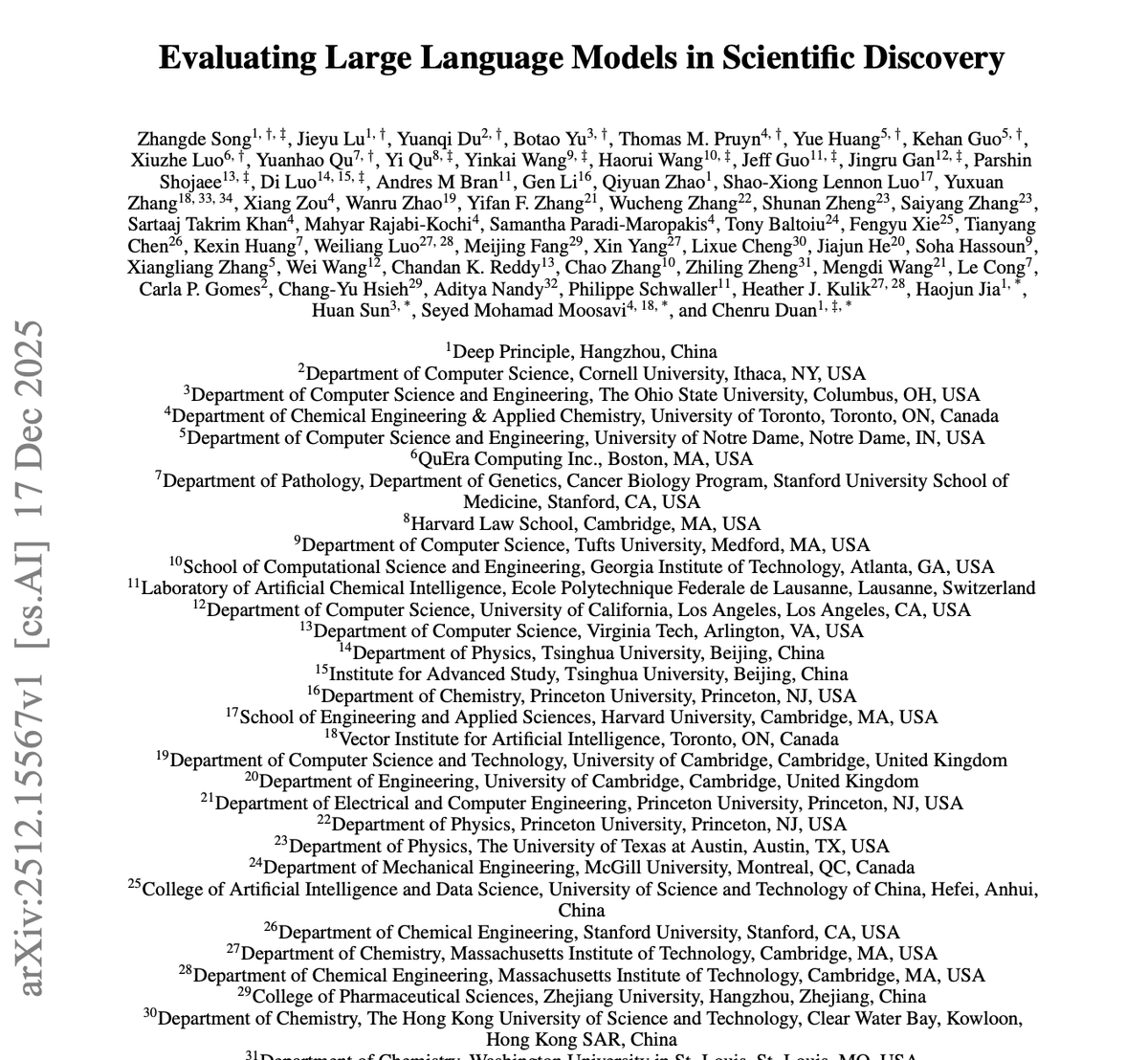
This Harvard & MIT paper quietly punctures one of the biggest myths in AI.

People keep saying LLMs are becoming scientists. This paper actually tests that claim instead of assuming it’s true. The question isn’t whether models can talk about science. It’s whether they can do science.

The researchers didn’t use trivia or clean benchmarks. They forced models to run through the real discovery loop: forming hypotheses, designing experiments, interpreting messy results, and revising beliefs when the evidence pushes back.

That’s where things get uncomfortable.

LLMs can propose plausible hypotheses, but once experiments enter the picture, performance drops fast. Models latch onto surface patterns, struggle to walk away from bad ideas, and try to explain failures instead of learning from them.

Confidence becomes a liability.

One of the most important findings is that benchmark dominance means very little here. Models that crush reasoning leaderboards often fail when asked to iterate, deal with noise, and update theories over time.

Science doesn’t reward clever first answers. It rewards correction.

What this paper makes clear is that scientific intelligence isn’t the same thing as language intelligence. Discovery depends on memory, causal reasoning, restraint, and the ability to say “this was wrong” without spinning a story around it.

LLMs today can write like scientists and sound like experts. They just don’t behave like scientists yet.

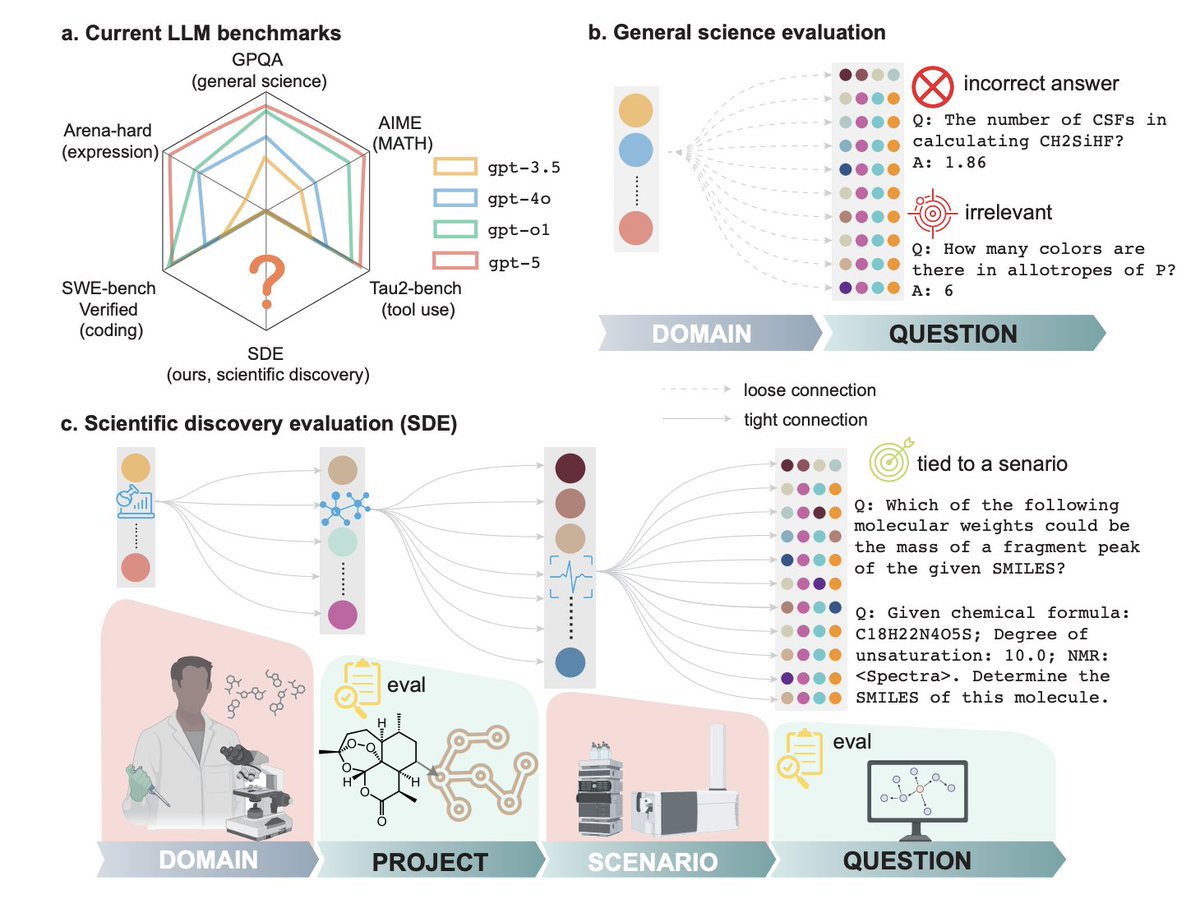
That gap is the real takeaway, and it’s why this paper matters.Image Most AI benchmarks test answers.

This paper tests the process of discovery.

Models must:

• Form hypotheses
• Design experiments
• Observe outcomes
• Update beliefs
• Repeat under uncertainty

That’s real science, not Q&A. Image
Dec 10 12 tweets 6 min read
I didn’t truly understand how to build strong AI agents… until one paper snapped everything into place.

Not a tutorial.
Not a YouTube demo.

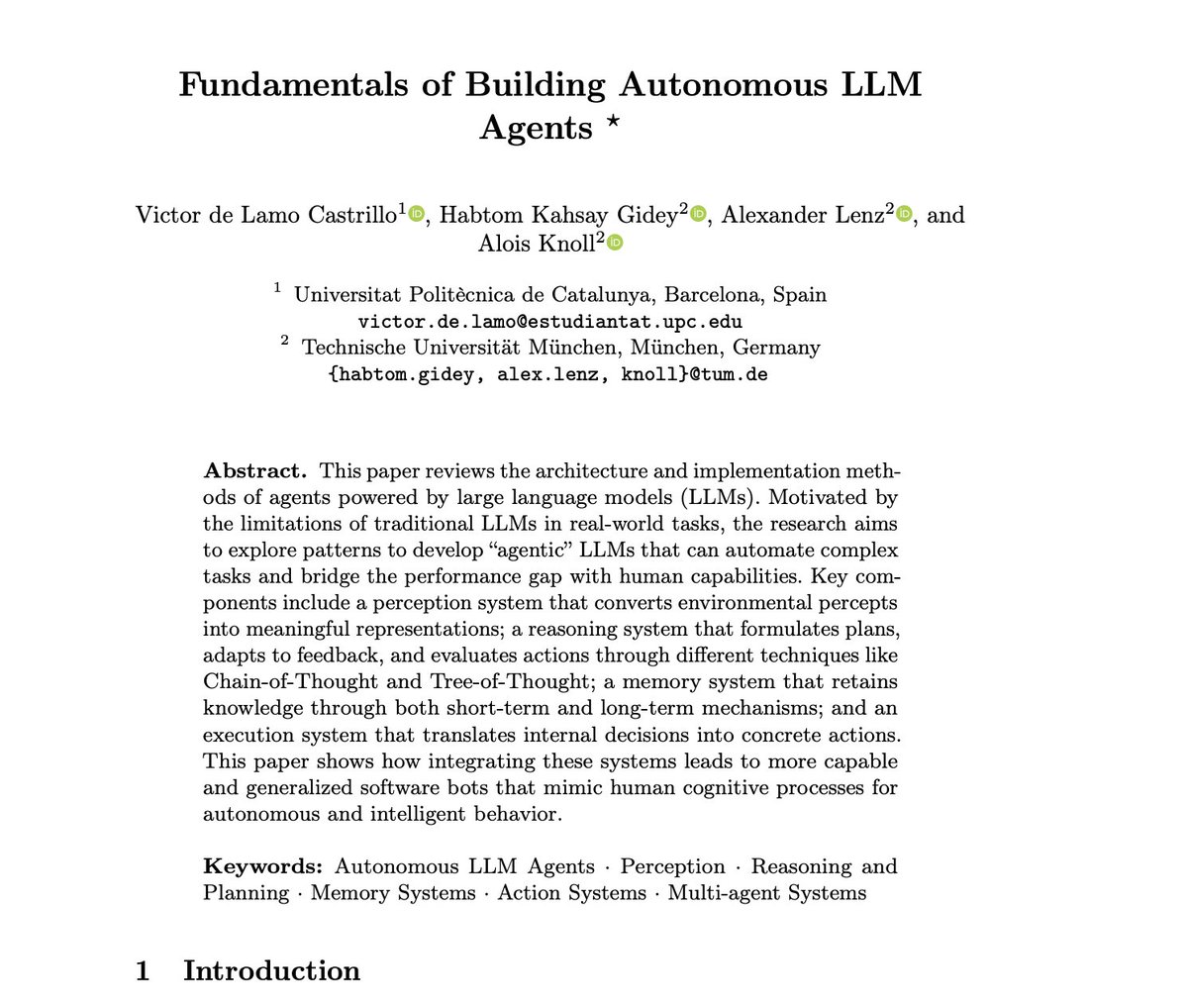
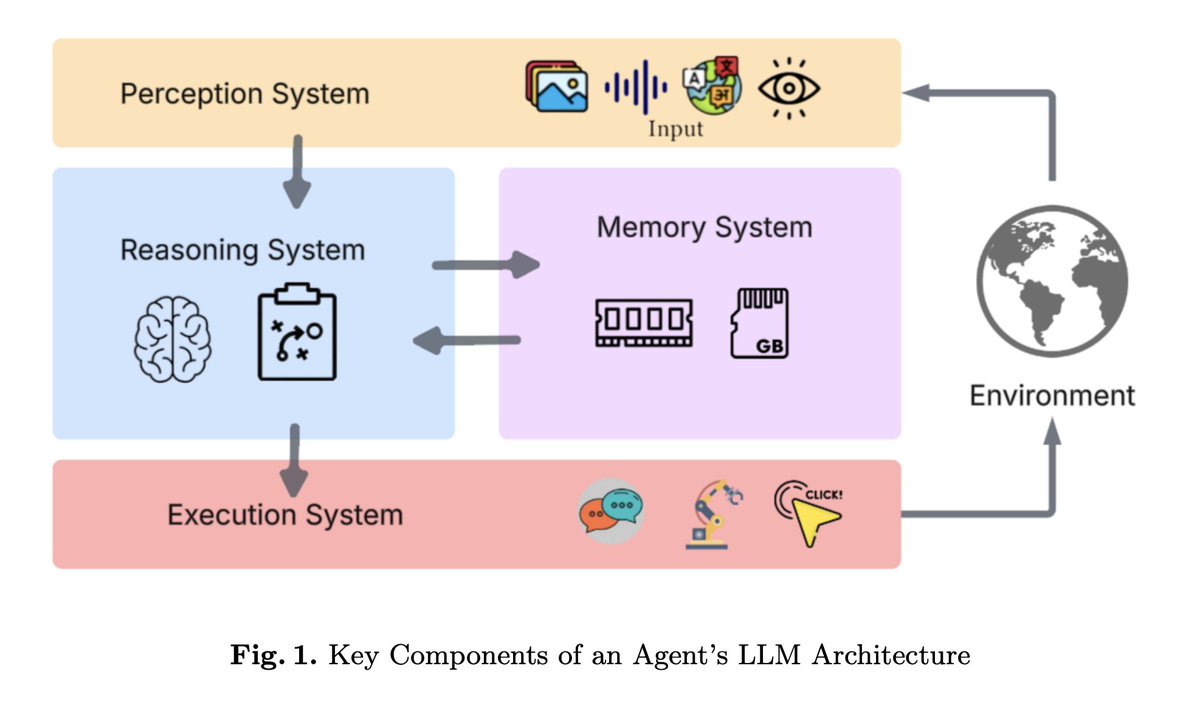
A single arXiv paper: “Fundamentals of Building Autonomous LLM Agents.”

It finally made sense why most “agents” feel like chatbots with extra steps… and why real autonomous systems need an actual architecture.

Here’s the backbone the pros use the part nobody explains clearly 👇

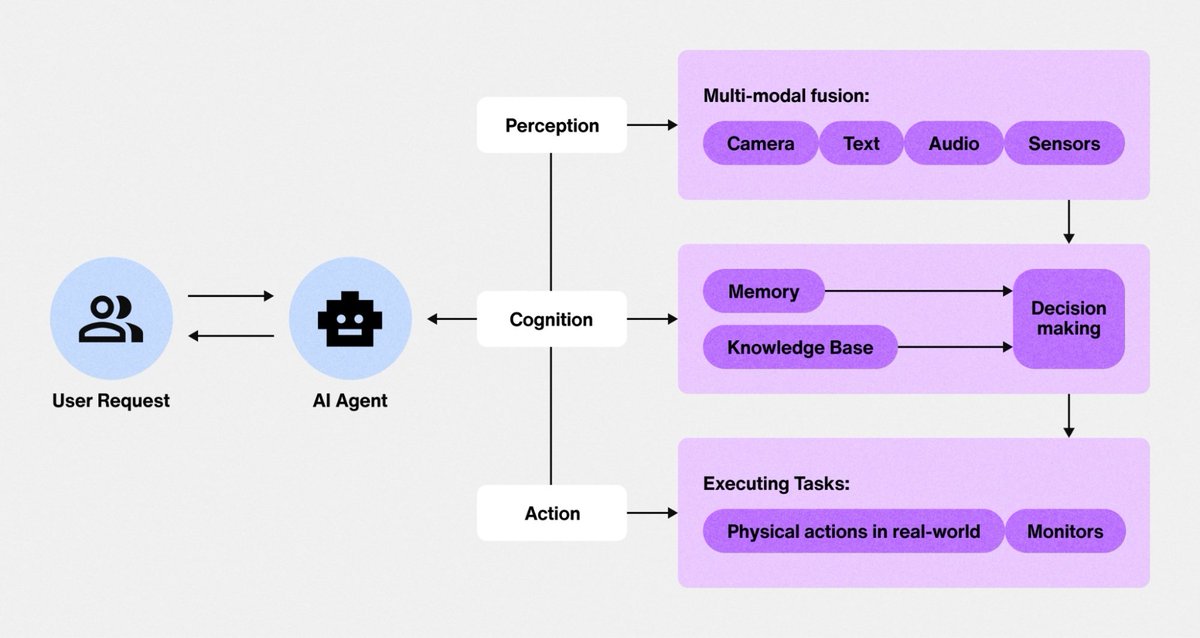
1. Perception: what the agent actually sees

It isn’t just text.

Real agents mix:

- screenshots
- DOM trees
- accessibility APIs
- Set-of-Mark style visual encodings

That’s how an agent stops guessing at a UI and starts understanding it.

2. Reasoning: the engine behind autonomy

The paper breaks down why “single-pass reasoning” collapses almost immediately.

Real agents rely on:

- decomposition (CoT, ToT, ReAct)
- parallel planning (DPPM)
- reflection loops that critique + revise plans

This is the part that turns a model from reactive to intentional.

3. Memory: the part everyone misbuilds

Short-term memory lives in the context window.

Long-term memory lives in RAG, SQL, trajectory logs, and past failures.

Yes failures are stored intentionally because they teach the agent what not to try again.

Without structured memory, the agent resets every step and looks “dumb.”

4. Action System: where the work actually happens

This is the hardest part and the most ignored:

- Tool calls
- API execution
- Python environments
- GUI control at coordinate level

Most demos cut right before this stage because execution is where agents usually break.

Where agents collapse (and why):

The paper maps out the real failure modes:

- grounding errors on GUIs
- infinite loops
- hallucinated tool actions
- bad memory retrieval
- fragile long-horizon planning

And then it gives the fixes:

reflection, anticipatory reflection, guardrails, SoM grounding, specialized sub-agents, and tighter subsystem integration.

If you’ve ever wondered why your agent falls apart by step 3…
or why it “forgets” what it just decided…
or why it panics the moment UI changes…

This paper is the missing manual.

It turns agent-building into engineering not trial and error.Research paper title page: "Fundamentals of Building Autonomous LLM Agents" with authors, affiliations, abstract and keywords about agent architecture and memory, reasoning, execution. The paper makes one thing painfully clear:
Workflows ≠ Agents.

A workflow follows a pre-written script.

An agent writes the script as it goes, adapting to feedback and changing plans when the world shifts.

This single distinction is why 90% of “AI agent demos” online fall apart in real interfaces.Image
Nov 10 8 tweets 3 min read
If you’re building AI agents right now, you’re probably doing it wrong.

Most “agents” break after one task because nobody’s teaching the real framework. Here’s how to build one that actually works ↓ Image First: most "AI agents" are just glorified chatbots.

You don't need 20 papers or a PhD.

You need 4 things:

→ Memory
→ Tools
→ Autonomy
→ A reason to exist

Let’s break it down like you're building a startup MVP:
Oct 2 16 tweets 4 min read
This Stanford study just ended the prompt engineering gold rush. Turns out most viral techniques are placebo.

I verified every claim myself.

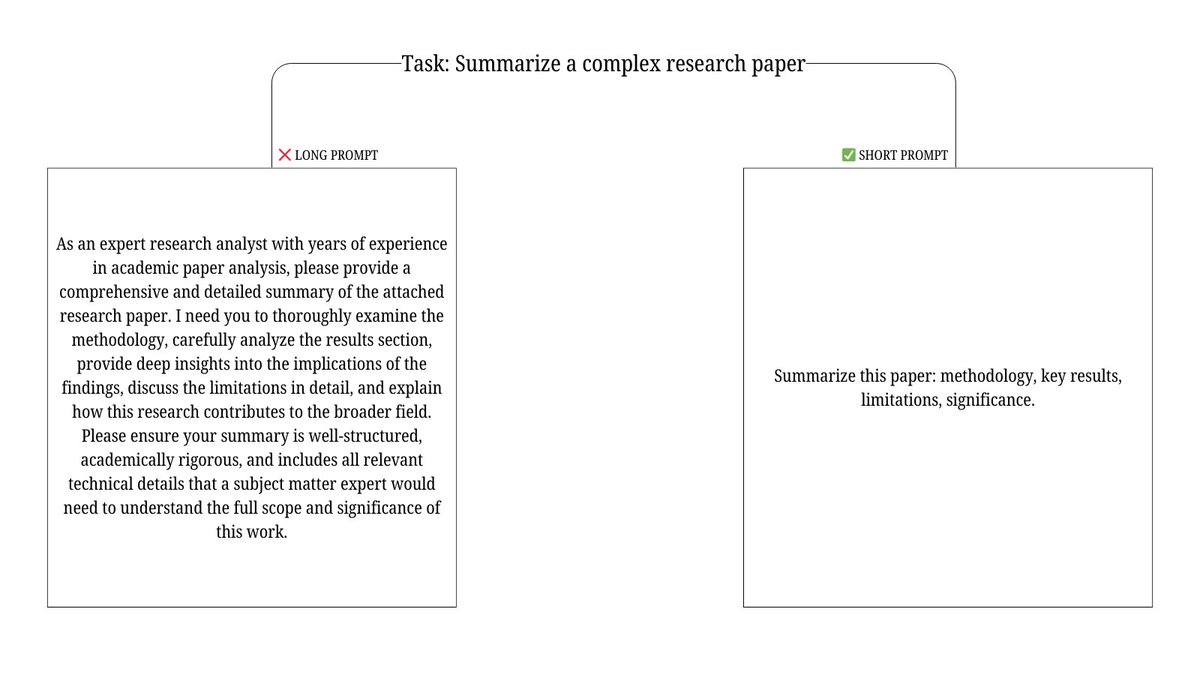
Here's the real playbook: Image The biggest lie: "Be specific and detailed"
Stanford researchers tested 100,000 prompts across 12 different tasks.

Longer prompts performed WORSE 73% of the time.

The sweet spot? 15-25 tokens for simple tasks, 40-60 for complex reasoning. Image
Sep 27 7 tweets 3 min read
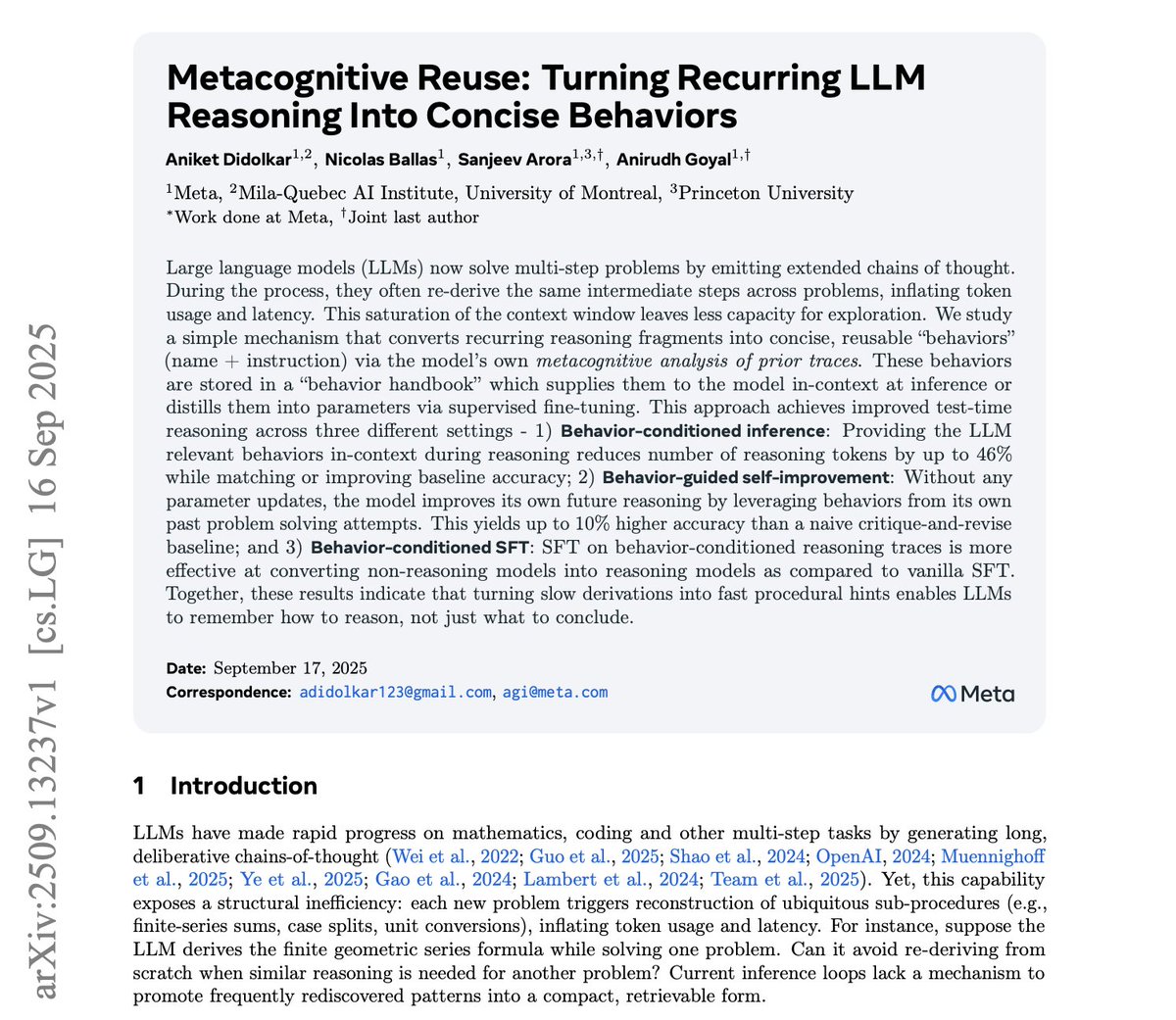
🚨 Meta just exposed a massive inefficiency in AI reasoning

Current models burn through tokens re-deriving the same basic procedures over and over. Every geometric series problem triggers a full derivation of the formula. Every probability question reconstructs inclusion-exclusion from scratch. It's like having a mathematician with amnesia.

Their solution: "behaviors" - compressed reasoning patterns extracted from the model's own traces. Instead of storing facts like RAG systems, they store procedural knowledge. "behavior_inclusion_exclusion" becomes a reusable cognitive tool rather than something to rediscover each time.

The results crush current approaches. 46% fewer tokens with maintained accuracy on MATH problems. 10% better accuracy on AIME with behavior-guided self-improvement versus standard critique-and-revise.

But here's the kicker: when they fine-tuned models on behavior-conditioned reasoning, smaller models didn't just get faster - they became fundamentally better reasoners. The behaviors act as scaffolding for building sophisticated reasoning capabilities.

This flips everything. Instead of "think longer = think better," we get "remember how to think = think better." No architectural changes needed. Just better utilization of patterns the models already discover.

The current paradigm - scale context length for redundant reasoning - looks wasteful now. We're paying enormous computational costs for models to repeatedly rediscover their own knowledge.

This suggests reasoning breakthroughs won't come from bigger models or longer chains of thought, but from systems that accumulate procedural memory. Models that learn not just what to conclude, but how to think efficiently.

The efficiency gains alone make this commercially critical. But the deeper insight challenges our entire approach to reasoning model development.Image The pipeline is surprisingly simple. Model solves problem → reflects on its own solution → extracts reusable behaviors. No architectural changes needed.
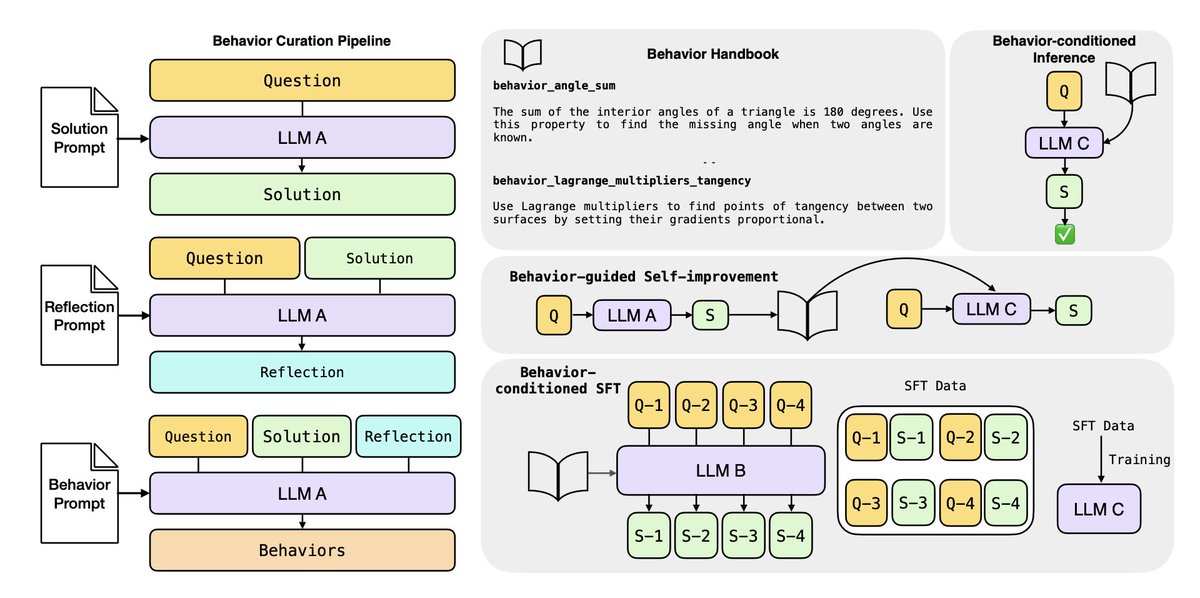

Just metacognitive analysis of reasoning traces. Image
Sep 13 8 tweets 3 min read
Google just solved the language barrier problem that's plagued video calls forever.

Their new Meet translation tech went from "maybe in 5 years" to shipping in 24 months.

Here's how they cracked it and why it changes everything. The old translation process was a joke. Your voice → transcribed to text → translated → converted back to robotic speech.

10-20 seconds of dead air while everyone stared at their screens. By the time the translation played, the conversation had moved on. Natural flow? Dead. Image
Sep 12 9 tweets 3 min read
Forget Google Scholar.

Grok 4 just became a research assistant on steroids.

It scans long PDFs, extracts insights, and formats your bibliography in seconds.

Here’s the prompt to copy: Image The traditional research process is painfully slow:
• Searching Google Scholar
• Reading 50+ papers
• Extracting key findings manually
• Synthesizing ideas into clear insights

Most of this can now be delegated to AI.

Let me show you how AI can help you:
Sep 8 10 tweets 3 min read
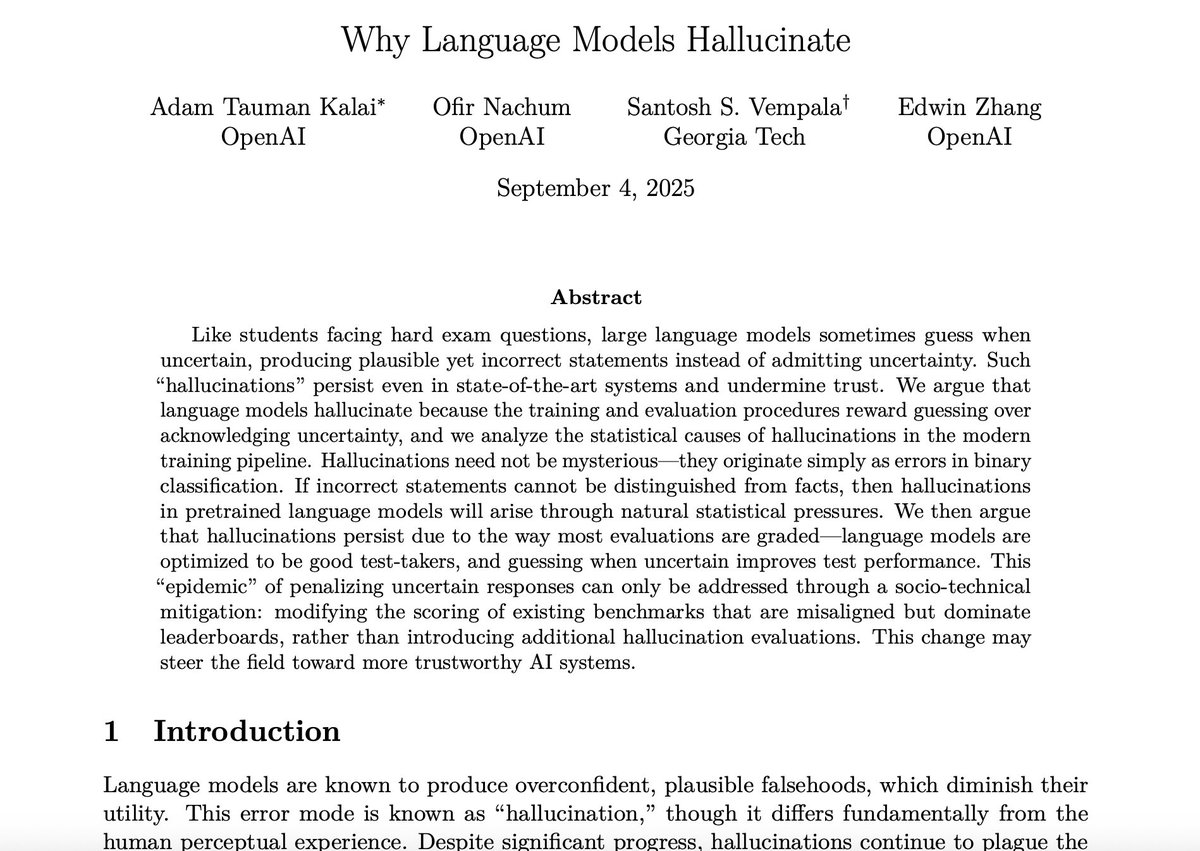
🚨 BREAKING: OpenAI just killed the “hallucinations are a glitch” myth.

New paper shows hallucinations are inevitable with today’s training + eval setups.

Here’s everything you need to know: Image Most people think hallucinations are random quirks.
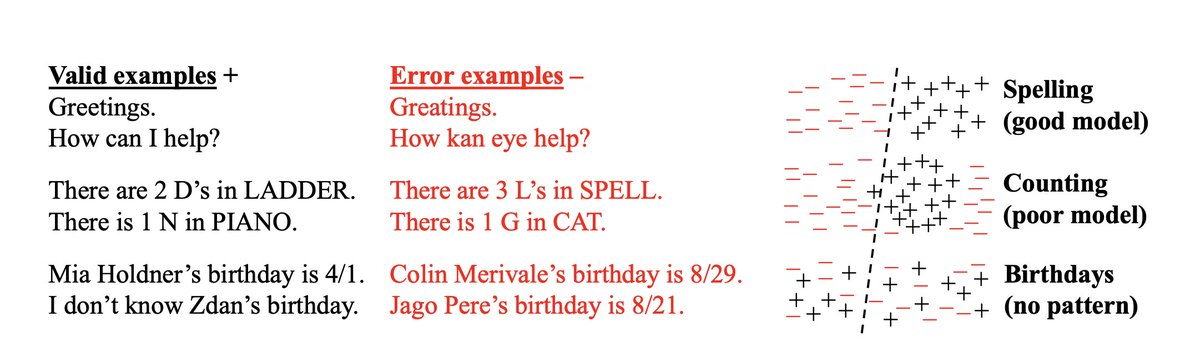
but generation is really just repeated classification:
at every step the model asks “is this token valid?”

if your classifier isn’t perfect → errors accumulate → hallucinations. Image
Sep 7 8 tweets 3 min read
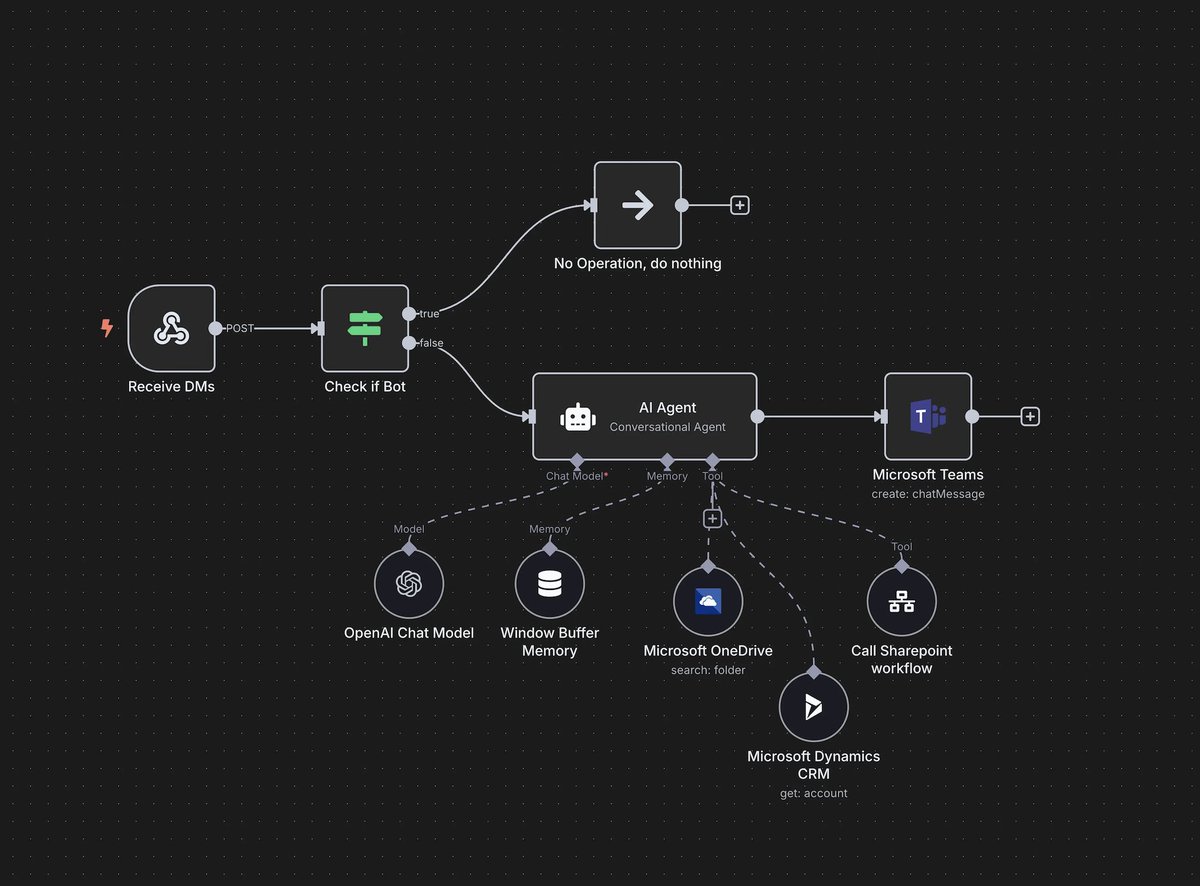
If you want to build AI agents using n8n, do this:

Copy/paste this prompt into ChatGPT and watch it build your agent from scratch.

Here’s the exact prompt I use: Image The system:

1. I open ChatGPT
2. Paste in 1 mega prompt
3. Describe what I want the agent to do
4. GPT returns:

• Architecture
• n8n nodes
• Triggers
• LLM integration
• Error handling
• Code snippets

5. I follow the steps in n8n.

Done.
Sep 5 16 tweets 4 min read
The most important AI paper of 2025 might have just dropped.

NVIDIA lays out a framework for Small Language Model agents that could outcompete LLMs.

Here’s the full breakdown (and why it matters): Image Today, most AI agents run every task no matter how simple through massive LLMs like GPT-4 or Claude.
NVIDIA’s researchers say: that’s wasteful, unnecessary, and about to change.

Small Language Models (SLMs) are models that fit on consumer hardware and run with low latency.

They’re fast, cheap, and for most agentic tasks just as effective as their larger counterparts.Image
Sep 1 10 tweets 3 min read
You don’t need a PhD to understand Retrieval-Augmented Generation (RAG).

It’s how AI stops hallucinating and starts thinking with real data.

And if you’ve ever asked ChatGPT to “use context” you’ve wished for RAG.

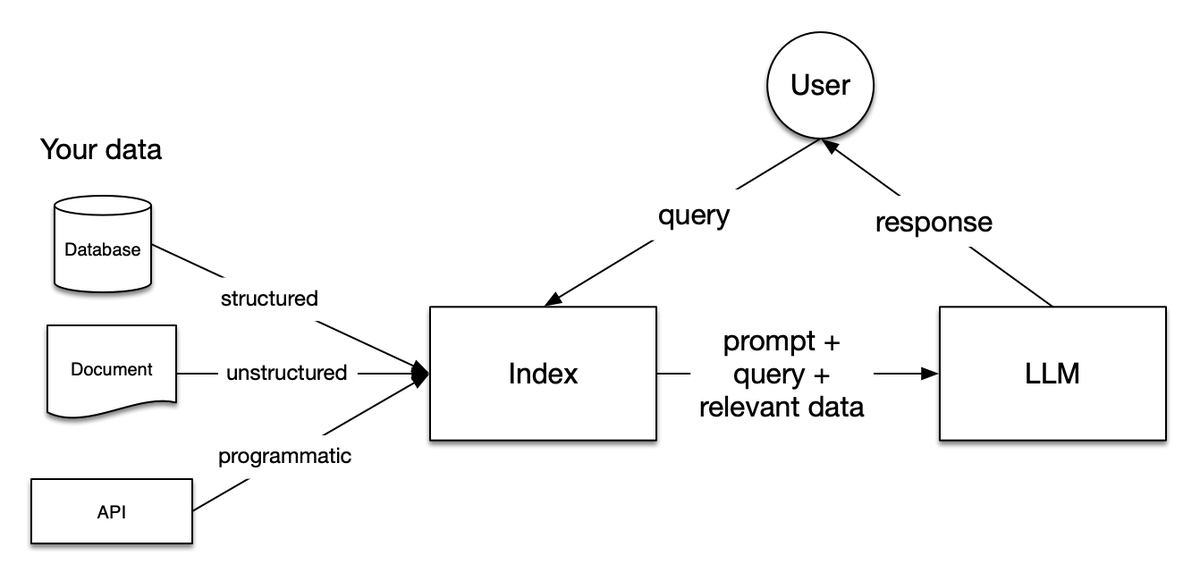
Let me break it down in plain English (2 min read): 1. what is RAG?

RAG = Retrieval-Augmented Generation.

it connects a language model (like gpt-4) to your external knowledge.

instead of guessing, it retrieves relevant info before generating answers.

think: search engine + smart response = fewer hallucinations.

it’s how ai stops making stuff up and starts knowing real things.Image
Aug 24 8 tweets 3 min read
Building AI agents in n8n doesn’t require endless trial & error.

I use 1 mega prompt with ChatGPT/Claude to extract everything I need:

• Architecture
• APIs & triggers
• Logic
• Outputs

Here’s the exact prompt: The system:

1. I open ChatGPT
2. Paste in 1 mega prompt
3. Describe what I want the agent to do
4. GPT returns:

• Architecture
• n8n nodes
• Triggers
• LLM integration
• Error handling
• Code snippets

5. I follow the steps in n8n.

Done.
Aug 23 15 tweets 4 min read
If you’re building AI systems in 2025, there are only two tools worth learning: LangGraph and n8n.

The choice you make here will define how far you can actually scale.

Here’s everything you need to know (and what nobody is telling you): Image Let’s get one thing clear:

LangGraph and n8n are not competitors in the usual sense.

They solve different problems.

But if you misunderstand their roles, you’ll cripple your AI stack before it even gets going. Image
Aug 17 13 tweets 4 min read
You don’t need GPT-5 or Claude 5...

You need better prompts.

MIT just confirmed what AI experts already knew:

Prompting drives 50% of performance.

Here’s how to level up without touching the model: Image When people upgrade to more powerful AI, they expect better results.

And yes, newer models do perform better.

But this study found a twist:

Only half the quality jump came from the model.

The rest came from how users adapted their prompts.