Expansion across North America, Europe and Asia-Pacific.
The NVIDIA partnership.
The Mirantis acquisition.
New GPU deployments.
New customer discussions.
A growing global footprint.
Underneath all of it is a fairly simple view of where the world is heading, and a deliberate strategy for how we position IREN within it.
That strategy is built on three layers. Together, they compound into a structural advantage that gets harder to replicate every quarter we execute.
Layer 1: Physical infrastructure. Power, land, substations, data centers, cooling. The foundation that everything else sits on.
Layer 2: Compute infrastructure. The GPUs, servers and networking that go inside those buildings. Deployed at scale. Generating revenue. Building execution track record.
Layer 3: Software and operational capability. The orchestration, deployment tooling and enterprise expertise that makes the first two layers work harder for customers, and opens the door to a broader, higher-value market over time.
Layers 1 and 2 are where the overwhelming majority of IREN's value is being created today. Layer 3 is where that advantage compounds further over time, but only because Layers 1 and 2 are built, owned and controlled at scale by IREN, not subscale nor contracted from a third party.
Think of Amazon. They didn't win e-commerce by building a great website. They won it by controlling the fulfilment infrastructure at a scale nobody else could replicate. The foundation you don't control becomes the ceiling on your business.
That is exactly how we think about IREN. The physical infrastructure - the land, the power, the substations, the data centers - is owned and controlled by us. The compute deployed into it generates the revenue and execution track record. And the software, orchestration and enterprise capability we are more methodically building on top is what turns the total product into a vertically integrated AI Cloud platform that compounds over time and deepens into a competitive moat.
AI is still early. The bottleneck is increasingly physical. And we have spent eight years building the foundations.
๐๐ก๐ ๐๐ข๐ ๐ข๐ญ๐๐ฅ ๐๐จ๐ซ๐ฅ๐ ๐๐ฌ ๐๐๐๐ฅ๐ข๐ง๐ ๐ ๐๐ฌ๐ญ๐๐ซ ๐๐ก๐๐ง ๐๐ก๐ ๐๐ก๐ฒ๐ฌ๐ข๐๐๐ฅ ๐๐จ๐ซ๐ฅ๐
AI demand grows exponentially.
Infrastructure doesn't.
Every few months we see another meaningful step change in model capability. Better reasoning. Better coding. Better multimodal understanding. Better agents. The latest generation of frontier models feels like one of those moments.
Every time that happens, usage increases, new products emerge, enterprises deploy more workloads, and entirely new use cases become viable. All of those things compound on top of each other.
Think back to the dial-up era. The internet existed. Email worked. Websites loaded - eventually. But the sluggishness of the experience fundamentally constrained what people imagined doing with it. The technology's own limitations shaped the universe of perceived use cases.
AI is in exactly that phase right now. The friction of slow inference and expensive compute subtly depresses AI ambition and imagination. That friction is a function of compute scarcity. It will not persist.
And here is where it gets interesting. It's not just that more compute serves existing demand. It's that more compute creates demand that didn't previously exist. It's like building more highway lanes to reduce traffic. The lanes don't just move the cars that were already queuing, entirely new trips get made that nobody was taking before. People move further from the city. New suburbs get built. New businesses open along the route. New industries restructure themselves around the road.
AI compute behaves the same way. A manufacturer discovers they can run real-time process optimization across every plant simultaneously. A hospital system can model patient outcomes at a level of granularity that was previously unthinkable. A logistics company rebuilds its entire routing infrastructure around live AI inference. None of those use cases were in anyone's demand forecast, because they only became conceivable once the compute existed to make them viable.
The capacity doesn't just serve the demand that exists. It creates the demand that comes next. And then that demand creates the use case after that. It spirals up.
Jensen said it plainly on NVIDIA's most recent earnings call: "Today's data centers are revenue generating AI factories constrained by power." And then this: "Demand has gone parabolic. The reason is simple. Agentic AI has arrived. AI can now do productive and valuable work. Tokens are now profitable, so model makers are in a race to produce more."
Meanwhile the physical world moves slowly.
Permitting. Grid connections. Construction. Cooling systems. Power generation.
You can't just add another 5GW of capacity every time models improve and compute demand accelerates. The physics don't care that every industrial company on earth is about to integrate AI into its operations.
The real constraint in AI is increasingly time-to-compute.
Feb 6 โข 7 tweets โข 2 min read
Another quarterly update completed for $IREN.
We published our Q2 update earlier today, and interest was strong enough to briefly overwhelm the site at release. If you missed the deck, itโs available here:
๐ iren.gcs-web.com/static-files/0โฆ
The past few months have seen continued progress across capacity, customers, and capital. Demand remains the strongest weโve seen and, importantly, weโre building the infrastructure and capital structure required to deliver against it.
Weโre still at an early stage of our AI Cloud build-out, but have already scaled ARR under contract to more than $2.3bn. Our $3.4bn ARR target utilizes only a portion of our now 4.5GW secured power portfolio.
More detail below ๐
1/ Capital
We secured $3.6bn of committed GPU financing for the Microsoft contract at <6% p.a. Combined with the $1.9bn Microsoft prepayment, that covers ~95% of GPU-related capex at an average interest cost just over 3%.
Aug 8, 2024 โข 8 tweets โข 4 min read
$IREN July power costs were very high and managing our #1 expense is front of mind as we build out our 750MW Childress site.
A thread ๐งต
2/ Regular and transparent detail
- One of the benefits of detailed monthly reporting is the ability to engage in quality discussion with our investors around some of the nuances we see day to day in our business.
- Off the back of our July monthly report, I wanted to share some additional perspectives on our power strategy.
Jun 10, 2024 โข 9 tweets โข 5 min read
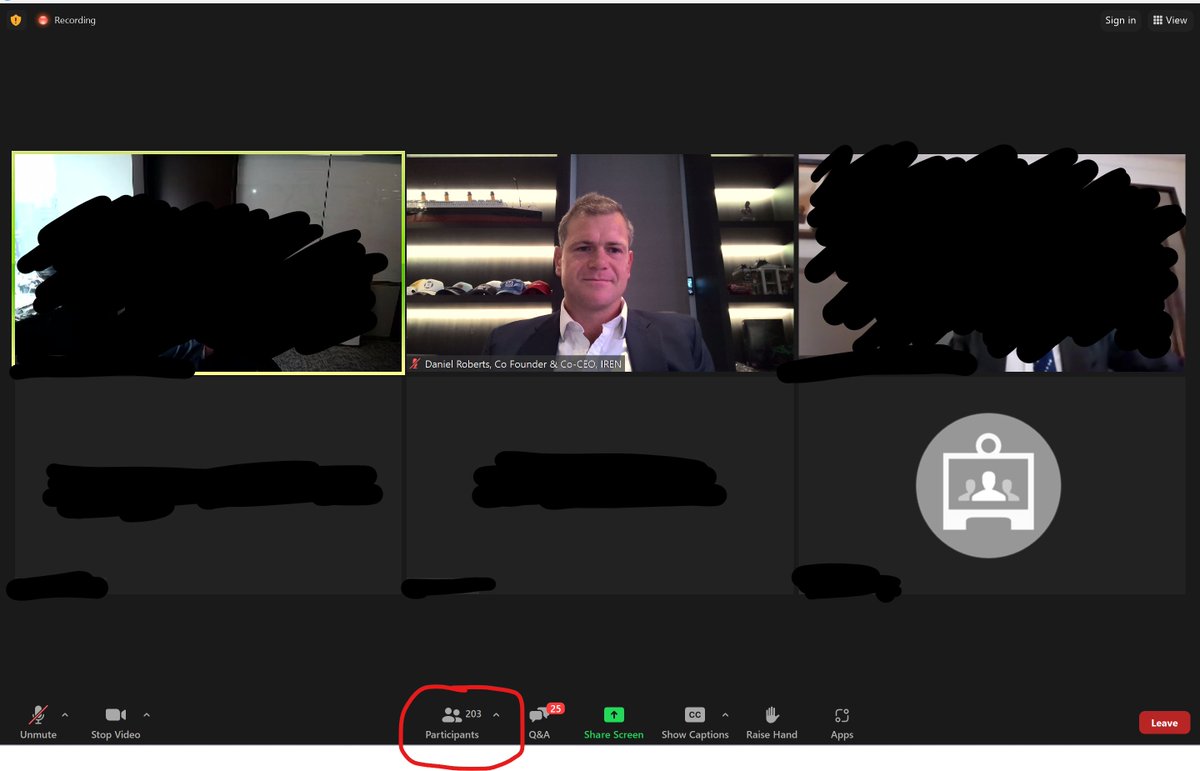
After market close today, one of the Wall St banks asked us to deliver a presentation on Datacenters & Bitcoin Mining. Over 200 investors dialed in ๐
A thread... ๐งต $IREN 2/ Overview of IRENโs business model and assets (including magnitude of grid access):
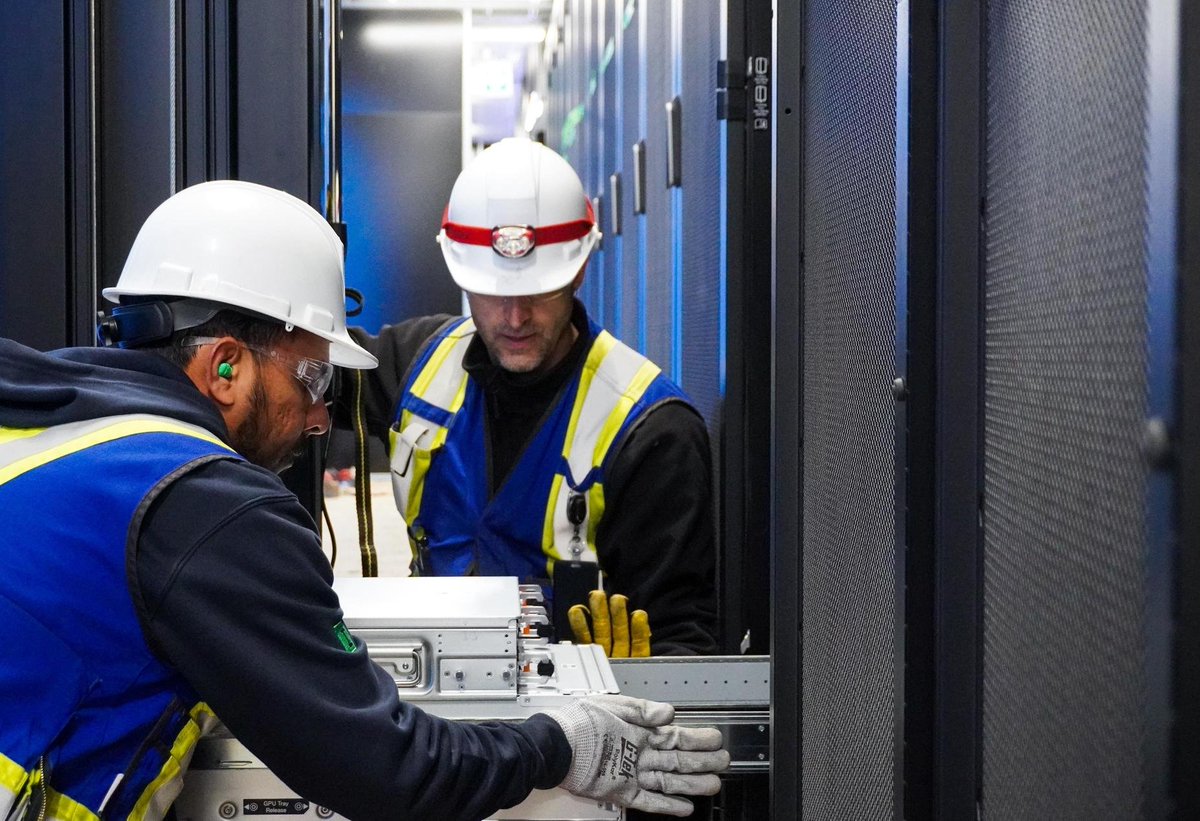
- 260MW of data centers across 4 sites (3 BC, 1 TX), scaling to 510MW in 2024
- support a combination of Bitcoin mining and AI Cloud Services workloads
o 10 EH/s Bitcoin mining, scaling to 30 EH/s in 2024 โ one of the largest listed miners
o 816 NVIDIA H100 GPUs providing cloud services to AI customers
- Significant pipeline of sites and access to energy โ >3GW portfolio, including a 1.4GW site in West Texas where a connection is underway (2026 in-service date)
Mar 26, 2022 โข 10 tweets โข 2 min read
Thread time... ๐งต (my first)
Imagine playing a game of monopoly where someone periodically tips more money onto the board and then occasionally takes some off...
1/n
Itโd make it reasonably hard to concentrate! If you wanted to win, youโd probably get as close as possible to that person and try to get a larger share of those handouts. That person also wouldnโt want to take too much money or theyโll have some pretty grumpy friendsโฆ
2/n