Emeka Ajene ✍🏽 Profile picture
Insights on business, tech, and leadership in Africa β€’ Co-founded @GozemTG and biz media & strategic intelligence platform @AfridigestHQ β€’ Words in @FT @NYTimes
Mar 9 β€’ 4 tweets β€’ 3 min read
How did a company from Shenzhen come to dominate Africa's cell phone industry?

It accepts African markets as they are, not as it wishes they were.

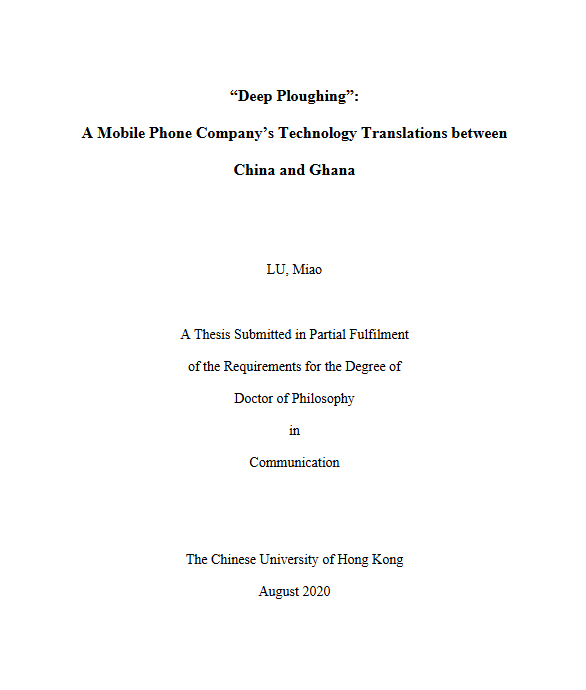
While some companies enter African markets with capital intensive Silicon Valley-style 'blitzscaling' approaches, China's Transsion entered the continent with a 'deep-plowing' strategy

What's 'deep plowing'?

An intensive, long-term approach of cultivating land to grow crops.

For Transsion, 'deep plowing' means starting from the bottom up with the most underserved customers, building extensive distribution networks, localizing products significantly, and investing in consumer trust to cultivate long-term market dominance:

β€’ Customer 'deep plowing' β€” While competitors focused on premium urban consumers, Transsion targeted lower-income and underserved users, especially those in rural & peri-urban areas.

β€’ Distribution 'deep plowing' β€” Transsion embeds itself in the informal retail networks that dominate electronic sales on the continent, employing thousands of agents to reach places competitors don't and establishing physical retail depth from factory to final sale.

β€’ Product 'deep plowing' β€” Transsion went beyond superficial adaptation, spent years studying local needs & behaviors, and modified hardware and software accordingly, including pioneering multi-SIM phones in African markets.

β€’ Service 'deep plowing' β€” One of Transsion's deepest 'plows' is its investment in after-sales service. While many electronics have no official repair centers locally, Transsion established the Carlcare network, Africa's largest mobile after-sales service network.

β€’ Brand 'deep plowing' β€” Transsion created a brand ladder to cover the entire income spectrum: ultra-budget itel devices, performance-focused Infinixes, and aspirational Techno phones. This allows the company to capture customers as their incomes grow, instead of losing them to competitors.

Transsion didn't win Africa's cell phone market by building for the Africa of tomorrow.

They won by 'deep plowing' for the Africa that exists today.

h/t @lumiao1026 whose research on Transsion informs this post β€” check out the links below πŸ‘‡πŸ½ Watch @lumiao1026 discuss Transsion's approach in Africa with @eric_olander on the @ChinaGSProject podcast

Mar 4, 2024 β€’ 13 tweets β€’ 5 min read
Hi friends,

I'm putting together a reading list for Africa Tech πŸ“š

What articles, books, op-eds, reports, etc. are must-reads if you're building, investing in, or otherwise want to get smarter about tech in Africa?

I'll start β€” please add on & help me like/retweet for reach πŸ™πŸ½ @NaijaFlyingDr's 'The mystery of market size in Nigeria'

medium.com/@drola/the-mys…
Jan 14, 2023 β€’ 14 tweets β€’ 7 min read
1/ If you're building a business in Africa, you should:

β€’ understand the growing power of the African diaspora, and

β€’ think about how to harness it for commercial impact

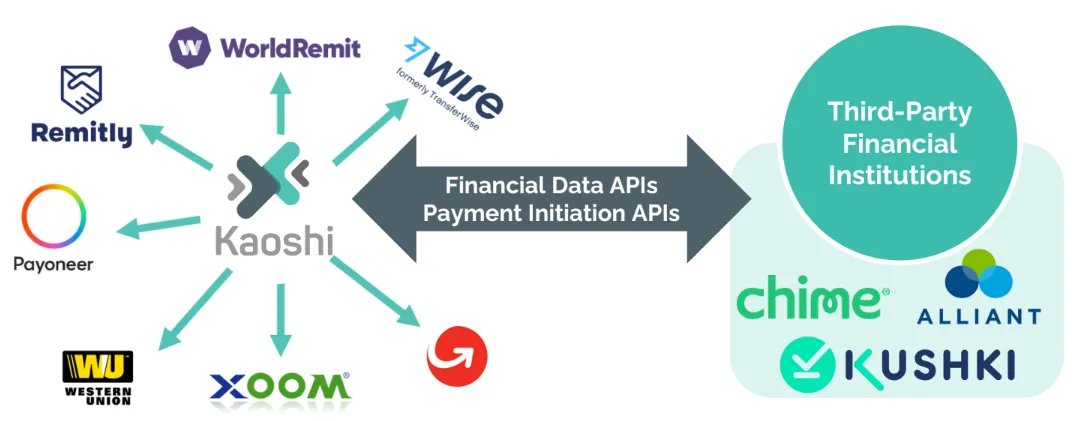
To get you started, here are 5 startups embracing the global African diaspora as a business strategy πŸ‘‡πŸ½ β‘  Cross-border embedded remittances: @KaoshiAPI

What's Kaoshi? Think @Plaid for cross-border finance

Just as Plaid enables embedded finance by aggregating financial data, Kaoshi enables embedded cross-border payments by aggregating cross-border services
Aug 20, 2020 β€’ 20 tweets β€’ 6 min read
1/ What questions should entrepreneurs & investors ask when evaluating new platforms / online marketplaces?

Context: 'Uber for X' business models have shown the potential to scale quickly & capture sizeable value, but certain factors impact the probability of success

Details πŸ‘‡ 2/ Background: These 2-sided platforms have a demand-side (buyers/consumers) & a supply-side (sellers/suppliers)

It's great when both sides are naturally pulled to the platform, but that's not enough

Here are some questions to ask when considering new platforms or marketplaces:
Jul 30, 2020 β€’ 27 tweets β€’ 11 min read
1/ How should startups think about growth?

There are 4 basic options:

β€’ Target an existing market/customer-base with existing products

β€’ Target existing customers with new products

β€’ Target new markets w/ existing products

β€’ Target new markets w/ new products

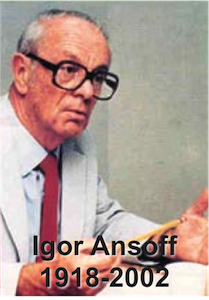
Details πŸ‘‡ 2/ This actually comes from the work of Russian American mathematician, Igor Ansoff

Known today as the 'father of strategic management,' he said growing up in Soviet Russia drove him β€œto excel through making innovative contributions”
May 30, 2020 β€’ 20 tweets β€’ 16 min read
1/ @WarnerMusic, one of the few pure music companies, is going public next week

(Others like @sonymusic/@BMG/@UMG are parts of conglomerates)

If you believe the future involves many more people paying for music streaming services, the WMG IPO is for you

Here's some more infoπŸ‘‡πŸ½ 2/ WMG (@warnermusic) plans to raise as much as $1.8B next week, in what could be the biggest IPO of 2020

WMG is owned by Ukraine-born billionaire Len Blavatnik, one of the world's top 100 wealthiest people (forbes.com/profile/len-bl…), via his diversified holdco, Access Industries