Ex-Banker. 🏦 No fluff, just frameworks. Teaching the 3-Step Analysis method professional investors use.
🧠 Education & Mentorship. (Not a broker / NFA)
May 26 • 12 tweets • 4 min read
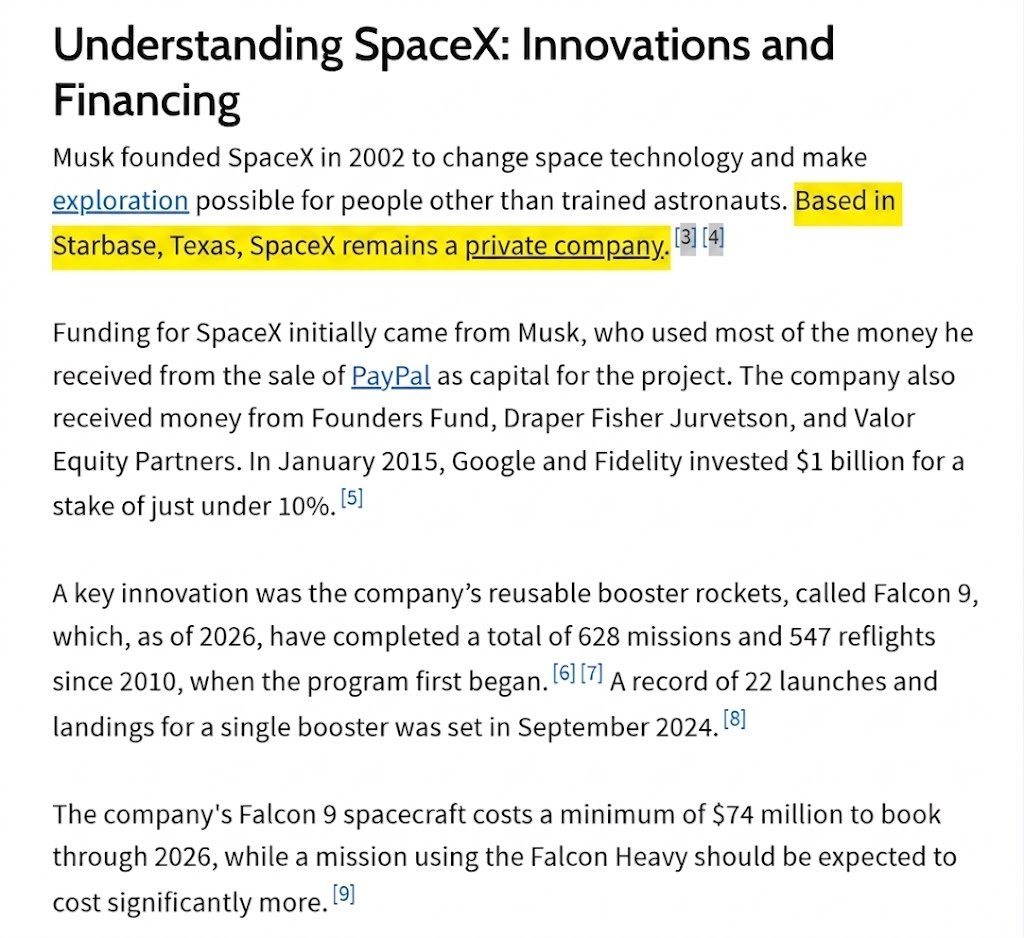
While everyone waits for the SpaceX IPO, 3 already-listed space stocks could 2-5x before it even happens.
They build the hardware behind everything SpaceX is building toward, and most retail investors have never heard of them.
Here's each one:🧵
Let’s talk about what the IPO means for you.
It’ll flood the space sector with money AND attention.
SpaceX has been private 20 years, and its early backers are on massive gains they can't touch.
The IPO is their exit, and the shares they sell get bought by you.
May 25 • 18 tweets • 6 min read
Intelligence sources say Cuba has lined up 300 attack drones within range of US soil.
The US is now wide open to a drone strike, so Trump is about to fund defense companies that can build the protection against it.
8 stocks I believe positioned to win those contracts:🧵
Let’s start off with context.
Axios, citing classified intelligence, reported Cuba acquired 300+ drones from Russia and Iran and discussed using them on US targets.
Cuba denies it.
But the CIA director just visited and the US ran counter-drone drills off Key West.
May 22 • 14 tweets • 5 min read
Back in April, Trump signed an executive order that cracked open a $400 billion market nobody talks about.
It's a brand new category of mental health treatment, and 3 small biotech stocks are positioned to ride it.
Here's each one and why they win:🧵
The category is psychedelic-assisted therapy.
It’s around lab-made magic mushrooms, taken in a clinic with a doctor.
The order fast-tracked approval for it, added $50M in funding, and gave certain drugs priority status.
The day after, 3 tied biotechs popped 20 to 50%.
May 20 • 13 tweets • 4 min read
If you missed Palantir at $20, Intel at $45 or Seagate at $95, you're not alone.
Each stock ran 500-700% in 12 months and most retail investors had no idea.
I went hunting for the next stock like these, and believe these 3 could go on a similar run:🧵
This is for the investor who keeps missing the big winners despite watching CNBC all day and scouring Reddit forums.
By the time stocks show up there, institutions have taken their gains, and retail is buying the top.
I'm sharing 3 that are still early:
May 19 • 17 tweets • 5 min read
Bank of America just sent their institutional clients a report.
They outlined three market signals that preceded every big market crash in history is happening right now.
Retail investors probably have no idea about them.
What each one is + why they predict a crash:🧵
The fastest way to know what's coming in this market is to study what's already happened.
Wall Street's biggest banks already did this, because their own capital and their clients' portfolios depend on avoiding the next crash.
Here are the 3 signs BofA is watching:
May 15 • 17 tweets • 5 min read
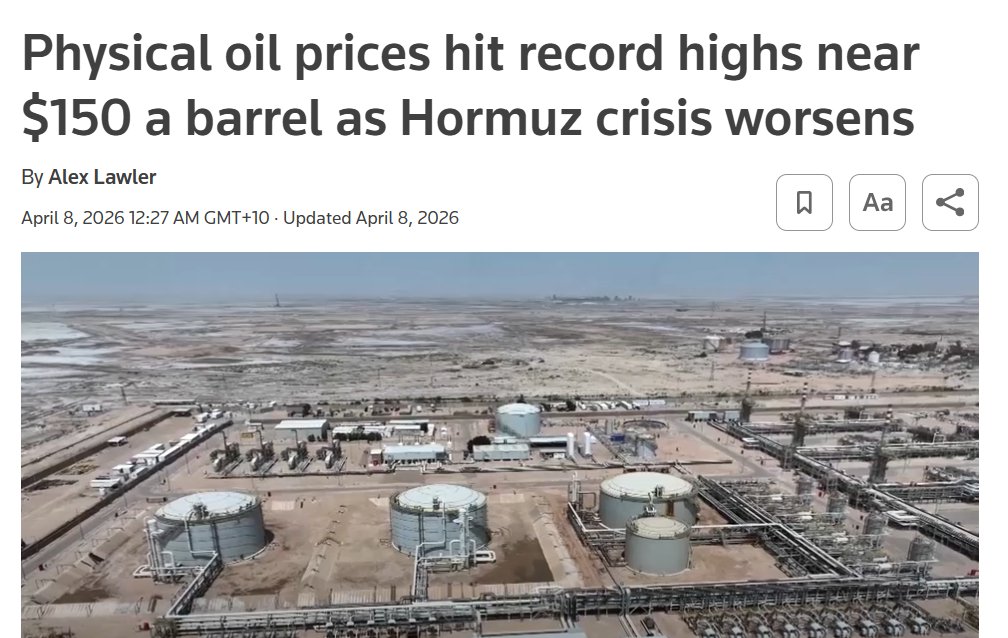
I'm up 60% on oil stocks I bought 6 months before the Iran war.
I got in early by using a 3-step framework that spots WHERE institutional money rotates into next.
In this thread, I'll cover each step and why it works:🧵
Quick note before we go further: I'm not a financial adviser.
I'm not a registered investment adviser. I'm not telling you what to buy.
I'm sharing the research, the framework, and the data I use to make my own decisions.
What you do with it is yours to decide.
Let's dive in.
May 10 • 12 tweets • 4 min read
Quantum computing is on track to become an $850 billion industry by 2040, with $65 billion in government money already committed worldwide.
It's in the same window the internet had in 1992 and cloud computer had in 2010.
3 quantum stocks I'm looking at in 2026:🧵
Firstly, governments are treating quantum the same way they're treating AI right now, a race they cannot afford to come second in.
• The US DoE is funding 5 national research centers
• The DoD requested almost $1B for R&D
May 9 • 14 tweets • 4 min read
There are 8 sectors institutions are positioning TRILLIONS of dollars into right now.
By the time it makes news headlines on CNBC and Bloomberg, their money will have rotated out and retail will be left buying the top.
Here's each sector:🧵
Sector 1: Semiconductors
The global chip market hits $1 trillion this year.
SOXX is the famous ETF play, but CHIPS and BBLU give similar exposure at a fraction of the fees.
May 6 • 14 tweets • 3 min read
The global monetary reset explained in 60 seconds:🧵
Firstly, this thread is a condensed version of the full breakdown of my youtube video.
You can watch it here:
It covers how stable coins are funding US debt, where we are now in this crisis and which 3 assets protect your portfolio.
Let's continue.
May 2 • 11 tweets • 3 min read
With $40 trillion in debt, a war in the Middle East and rising inflation, the market should've crashed by now.
And if it did, your retirement account would drop 30-40% like it did in 2008.
But 4 forces built into the system prevent this from happening.
Each one explained:🧵
1) The Fed steps in every time
When the market drops, they print money or cut rates.
They've done it since 2008.
Right now, they're printing $40 billion a month and calling it reserve management purchases so nobody notices.
Apr 29 • 14 tweets • 4 min read
Institutional money is rotating out of mega cap tech and into two sectors almost no retail investor has looked at.
I tracked where the capital is flowing and identified 5 stocks positioned to benefit from this rotation.
Here's each stock and why they win:
Firstly, this isn't 2021 where everything went up no matter what you picked.
The macro has changed.
Inflation is sticky, energy is scarce, and wars are reshaping supply chains.
Institutional money already positioned into two sectors: oil services and critical minerals.
Apr 23 • 13 tweets • 4 min read
Banks used to hold paper silver that didn't actually exist.
For every real ounce, there were 8 paper IOUs.
A new regulation just forced them to hold 85 cents in real money for every dollar of that paper.
Now some banks are exiting the paper silver market entirely (1/13):
The regulation is called Basel 3.
For decades, banks ran huge trading books where paper silver was a profit center.
Under the new rules, holding that paper costs them real money.
What used to generate profit now loses them money.
So they're being pushed into physical.
Apr 10 • 14 tweets • 4 min read
JP Morgan just sent their institutional clients a report with their full playbook on the Middle East peace deal.
It includes which sectors to buy if the deal upholds and to sell if it falls apart.
I’ve read the full report and I’m breaking it down for you here:🧵
Most investors are watching the news and trying to guess what happens next.
Meanwhile, the biggest banks already have a plan for both outcomes.
They know what to buy if peace holds and what to buy if it doesn't.
The gap between guessing and planning costs investor's money.
Mar 30 • 15 tweets • 5 min read
Turkey's central bank just forced sold billions in gold because of the Iran war.
A country that spent years stacking gold aggressively dumped ~10% of their reserves in 14 days.
Here's why they had no other choice: 🧵
It's no secret that countries were hoarding gold over the last few years, including Turkey.
But now they're all selling - and Turkey is doing it at a scale nobody expected.
They’ve created more selling pressure than every gold ETF investor on the planet combined.
Mar 27 • 15 tweets • 5 min read
Investors don’t realize gold ALWAYS crashes during an oil-driven crisis.
It happened in all major oil shock in the last 50 years - 1973, 1979, 1991, 2001, and 2022.
In this thread, I'll break down exactly why it happens and what institutions expect happens next:
It begins with a disruption in oil supply, resulting in:
But the Fed gets stuck - it can't cut rates anymore.
So bond yields climb, and suddenly US debt paying 5% is more attractive than gold.
Money flows out of gold.
Mar 23 • 15 tweets • 4 min read
The petrodollar system was formed in 1974 to keep the US dollar dominant.
Every country in the world had to buy US dollars to purchase Saudi oil, propping up American economic power.
In this thread, I'm covering how this system is breaking - and how it directly affects you.
Firstly, oil is the most important resource in the world that EVERY country needs.
• The fuel filling up your car
• The fertilizer growing your food
• The electricity powering your home
Whoever controls how oil is paid for holds the biggest lever in the global economy.
Mar 4 • 10 tweets • 3 min read
The Iran War is just a distraction.
The Fed is printing $40 billion per month, disguising it as "reserve management purchases" so you won't notice.
They're deliberately inflating their $38T debt away—and it's creating an unprecedented opportunity in 3 specific sectors:🧵
They've renamed money printing 3 times now.
• In 2008 (financial crisis), it was called "quantitative easing"
• In 2020 (COVID), it was "emergency liquidity measures"
• Now it's "reserve management purchases"
Here's what happens EVERY time they print money:
Feb 15 • 14 tweets • 4 min read
Goldman Sachs just revealed their "buy and sell list for software stocks in 2026".
They're not sharing this with retail investors—just their biggest institutional clients.
But I got my hands on the full list.
Here are their winning and losing stocks for this sector:
Firstly, they created this list based on which software companies will survive AI.
Their list tells you their 26 winners and 41 losers.
I'm breaking down the companies for each that matter most.
Feb 13 • 13 tweets • 4 min read
$4.7 trillion will flood the US economy in just 9 months—creating the largest wealth transfer in American history.
This is part of Trump's tax plan to inflate their debt away.
Institutions are already positioning for this.
Here's what's happening and how to position too: 🧵
This 4.7 trillion doesn't hit all at once. It flows in five distinct waves.
6 economic trends are colliding in 2026 to create the largest wealth transfer of our generation.
Cash holders will get poorer while asset owners will get richer—at a scale not seen in decades.
Here's the breakdown (thread 4/6): 🧵
If you missed Thread 3/6:
• $1B in critical mineral funding with guaranteed Defense contracts
• US building domestic capacity (LPTH, MP Materials, UKOR)
• 10-year government-backed buildout starting now