Matthew Gagnon, CFA Profile picture
Financial Freedom, Simplified. | 8 simple steps to wealth: https://t.co/qSqTYQMJRw Tweets are not advice
Jan 25 20 tweets 13 min read
🧠 IRA MASTERCLASS 📝

The retirement account many *think* they understand, but littered with IRS rules to trip you up.

Who can contribute, Traditional vs. Roth, playbook to avoid unnecessary taxes - here's everything you need to turn a simple account into a wealth-building engine 🤑

Let's help you prepare for life after work.

Welcome to your *IRA Masterclass* 🎓

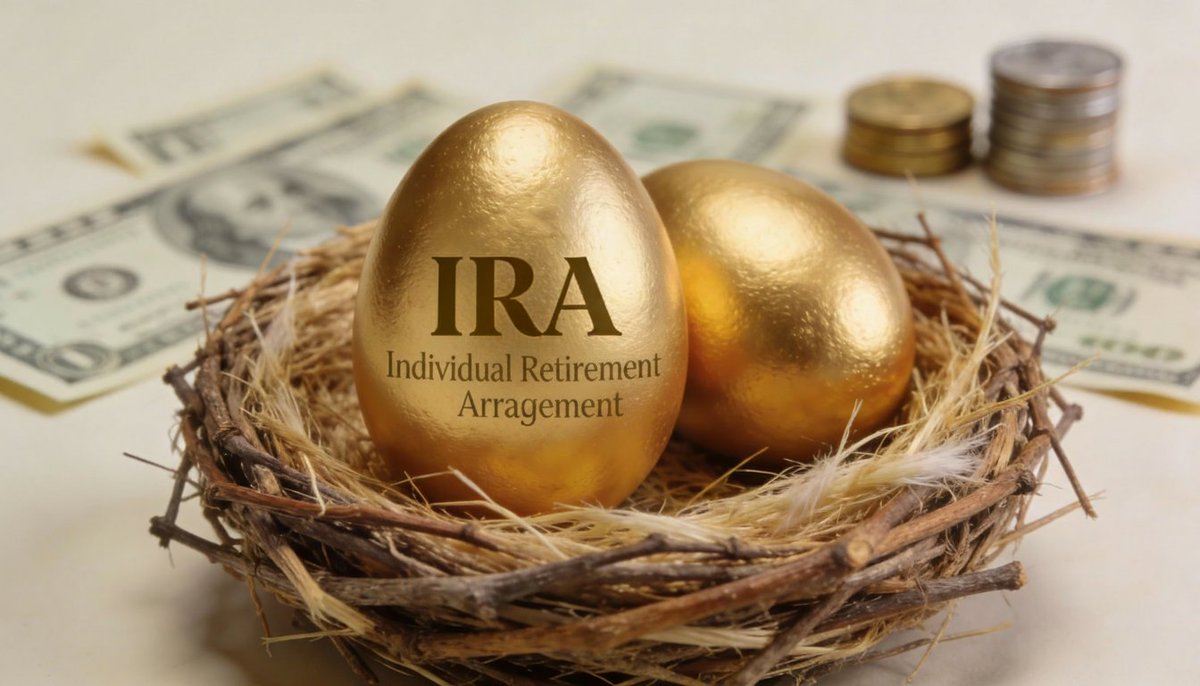
👇🧵Image First off - what is an IRA? 👇

Individual Retirement Arrangements (IRAs) are tax-advantaged savings plans enshrined in US tax code. They exist to make it easier for people to save for retirement.

WHY YOU SHOULD CARE ABOUT IRAs
- Money inside IRAs grows tax-free until withdrawn in retirement. Deferred taxation + a solid investment strategy can supercharge investment growth 💵💵💵
- Due to the 2005 bankruptcy abuse protection law, up to $1.5 million of IRA funds per taxpayer are protected from creditors (Congress adjusts for inflation every few years).

HOW DO I START USING IRAs
Two key questions to start with:

- Can you contribute?
- Is it deductible?

👇
Nov 15, 2025 32 tweets 14 min read
RETIREMENT PLANS 101 🏝️

Part 7 of a series reviewing insights from CFP® professional education.

Retirement plans offer big tax savings for employers and a tax-efficient way for employees to save for future financial security.

In fact retirement plans are some of the largest tax breaks in the US tax code today. 💰

Are you taking advantage?

Let's help you prepare for life after work.

👇🧵Image This post outlines the main types of retirement plans and how they work.

- requirements for plan sponsors (employers)
- how much you can contribute
- how to access the funds
- who can participate

... and more, so you can make the most of your retirement savings. 💪💵

Whether you're an employee looking to save for retirement or a business owner looking to fund a plan I've got tons of useful info for you. Bookmark this one 🔖
Nov 5, 2025 23 tweets 13 min read
What I learned from CFP® professional education (part 6)

PAYING FOR SCHOOL DEEP DIVE 🏫🚌✏️

Continuing this series on concepts to help improve your finances.

This post goes through many sources of education funding -- financial aid, special accounts, tax credits, and the rules surrounding each.

Tons of useful info - you'll want to bookmark this one 🔖

Let's help you get every penny 🫰💰

👇🧵Image Education unlocks a lifetime of earning power. It's probably the best investment we can make for ourselves and those we love.

But it's expensive. 🤑

I recently demonstrated a step-by-step process to calculate how much to save for college. You can use this method to quantify any future multi-year financial goal:

🔗
Image
Oct 20, 2025 12 tweets 10 min read
What I learned from CFP® professional education (part five )

HOME, AUTO and HEALTH INSURANCE

Continuing this series on concepts from my professional studies for those looking to improve their finances.

Let's be honest; insurance isn't exciting. Left to our own devices, many of us probably wouldn't buy it.

But certain types of insurance help society run more smoothly, so the government or institutions require us to carry it.

This post will discuss the types of insurance we deal with in our day-to-day lives. We'll outline the key sections of homeowner's, auto, and health insurance policies, and how to tell if you're properly covered.

NOTE: this is for educational purposes only and is not advice.

Let's dive in 👇🧵Image HOMEOWNER'S INSURANCE 🏠
When you want to buy a home, the bank is willing to loan money for the purchase, charging the borrower interest and making a nice profit over 15 or 30 years as the house is paid off. If the borrower can't pay the mortgage, the bank obtains possession of the home through foreclosure, and then can sell it to someone else.

But if the house burns down the borrower could walk away and leave the lender high and dry, with no asset to repossess. This isn't a risk lenders are willing to take, so they require home buyers to purchase insurance to cover this potential loss.

Homeowner's insurance is a package policy consisting of multiple types of insurance coverage including the home itself ("dwelling"), personal property, and general liability.
Sep 29, 2025 9 tweets 8 min read
What I learned from CFP® professional education (part four)

LIFE INSURANCE FUNDAMENTALS

Continuing this series on concepts from my professional studies for those looking to improve their finances.

Newsflash: it isn't fun to think about death. Especially if you're an optimist, like me and believe most things are going to work out. Why would I ever buy life insurance?

As the saying goes, "hope for the best, plan for the worst". Every day people are joining and leaving the human race. Some quick Googling suggests that, worldwide roughly 368,000 babies are born and 172,000 people die each day.

🍼
babycenter.com/pregnancy/your…

💀
worldpopulationreview.com/countries/deat…

Whenever that event happens to us, it will surely be disruptive for the people we love, and who depend on us. At it's most basic level, life insurance offers piece of mind that our loved ones can process their grief without also having to worry about unpaid debts or financial issues.

Beyond that, certain types of life insurance can be used to transfer wealth tax-efficiently and achieve other planning goals.

This post will discuss different types of life insurance, how they operate, and how to estimate how much you may need.

Note: this is for educational purposes only and is not advice.

Let's dive in 👇🧵Image TYPES

Term
- Guaranteed death benefit (DB) for a set period of time (e.g. 20 year term)
- Pure life insurance, does not accumulate cash value
- Premiums: annual renewal or "paid up" level term
- Employer sponsored: if employer deducts cost, benefits > $50,000 are taxable to employee
Pros: Affordable. Typically the highest death benefit for lowest premium. For those on a budget, term may be all they can afford. Good for short or intermediate term needs.
Cons: Because term insurance expires, if may not be there when you need it.

Whole Life
- Permanent insurance, intended to cover the life of the insured.
- Guaranteed, level premium and DB
- Premiums are invested in the insurer's general account, accumulating cash value (CV) which can be accessed via loan or policy surrender.
- "Participating" policies pay dividends from excess premiums beyond what's needed to pay claims. Dividends are tax-free return of principal, and reduce the policyholder's cost basis (see SURRENDER below).

Pros: Good for: Low risk tolerance and people who need guarantees. Insurance company general accounts are restricted to owning nothing more risky than investment grade fixed income. Insurer bears investment risk.
Cons: Expensive. Because it is meant to last the insured's entire life, and therefore more likely to actually be used, insurance companies price whole life much higher than term insurance.

Modified Whole Life
- Hybrid b/w Term and Whole Life
- Want permanent insurance but can't currently afford higher premiums
- Premiums begin at term insurance levels, and migrate to whole life levels over time
- Good for those anticipating higher future income.
Sep 19, 2025 8 tweets 5 min read
What I learned from CFP® professional education (part three)

RISK MANAGEMENT CONCEPTS

Continuing this series on concepts from my professional studies for those looking to improve their finances. This time we'll cover risk management fundamentals, including common terms, concepts, and outline the risk management process.

Life is full of risks ranging from catastrophic to insignificant. Any of us could twist an ankle stepping out of bed, be rear-ended in traffic, or get struck by a rare disease.

It's neither possible or desirable to eliminate all risks. A riskless life would not be worth living. Rock climbing, ballroom dancing, sports betting -- we all have things we enjoy that involve some level of risk.

Investors who want to pursue growth must likewise bear some amount of risk. Savings accounts, money market funds, and government securities that contain minimal market risk are available. But long term historical data shows that those vehicles fail to maintain the purchasing power of wealth - inflation overwhelms them over time. Diversified equity portfolios, in contrast, have offered long-term returns well over and above inflation, and more volatility with those returns.

We have a choice: Try to preserve purchasing power and take market risk, or try to avoid market volatility and risk losing to inflation. The more of one we choose, the less of the other we have.

Bearing risk is costly, and so is mitigating it. It's a tradeoff.

The goal of risk management is to evaluate where we're over (or under) exposed to various types of risks, and intentionally determine which ones to take (or avoid), acknowledging the inherent tradeoffs involved.

From a financial planning perspective, a big part of this process is to reduce the impact of catastrophic risks on our financial lives and those of our loved ones.

Let's dive in 👇🧵Image TERMINOLOGY

Risk: Possibility of loss / negative outcome
Peril: Cause of the loss (fire, wind, etc)
Hazard: Increases likelihood of loss (driving on bald tires)

TYPES OF RISK

Static Risks: Regularly occurring events unrelated to financial markets (death, earthquakes) --> insurable
Dynamic Risks: Economic and business risks whose timing is uncertain (recession) --> not insurable).
Pure Risk = 2 outcomes: Loss or nothing (e.g. risk you become disabled)
Speculative Risk = 2 outcomes: Loss or gain (e.g. gambling)Image
Sep 2, 2025 11 tweets 8 min read
What I learned from CFP® professional education (part two)

SAVING FOR COLLEGE

Continuing this series on concepts gleaned from my professional studies for those looking to improve their finances.

This time we'll cover how to calculate the total funds needed TODAY to fund future multi-year goals.

We'll use education funding to illustrate the concept, but the principles are the same for estimating retirement savings needs and other multi-year goals.

Let's dive in 👇🧵Image First thing to consider with future goals is the impact of inflation. We know that prices in the economy increase over time. If we're budgeting for expenses a couple months away it's probably not noticeable. But if your kid is 2 and you're planning for college 16 years from now, it must be factored in.

Using college tuition for example, we know the cost today, but we don't know what the cost will be in 16 years. We can estimate it, however, by taking today's cost and accelerating it by the rate of inflation over time.

This ties into a concept called "time value of money", which I've written about before:

x.com/fin_empowermen…

EXAMPLE: Assume the annual tuition at the school you've identified is currently $30,000 per year, and inflation is 3% per year.
- Tuition next year = $30,000 x (1 + inflation) = $30,000 x (1.03) = $30,900
- Tuition in 2 years = $30,000 x (1 + inflation)(1+inflation) = $30,000 x (1.03)(1.03) = $31,827
- Tuition in 3 years = $30,000 x (1 + inflation)(1+inflation)(1+inflation) = $30,000 x (1.03)(1.03)(1.03) = $32,782

For each year into the future we project the price, we need to apply one plus the inflation rate. We can use exponents for shorthand, and continue to add years of inflation acceleration up to our goal horizon of 16 years.Image
Aug 27, 2025 7 tweets 4 min read
What I learned from the CFP® certification professional education program (part one)

CHECK YOUR GAUGES

I haven't posted online for months in order to focus on completing CFP® certification education requirements and studying for the CFP® exam. Happy to report I completed the coursework in April and passed the exam in July (whew!) and am waiting for official approval from CFP® Board to use the designation.

I learned a lot from the education coursework and wanted to share for those looking to improve their finances.

Let's dive in 👇🧵Image I've written about using a #budget to take your financial pulse:

x.com/fin_empowermen…

Keep it simple, track major income and spending categories, aim for a monthly cadence.

As you develop your budget, there are some helpful rules of thumb to identify potential problematic areas of your overall financial picture.

For example, are you ...

spending too much on housing?
carrying too much debt around?
prepared for a financial emergency?

Some simple rules can help you confidently answer these questions.

HOUSING COST RATIO
Add up your monthly housing costs - mortgage payment (principal + interest), taxes, homeowner's insurance, HOA, etc. and divide by your total monthly gross income.
IDEAL: 28% or less.
EXAMPLE: someone with total monthly housing costs of $3,000 and gross monthly income of $10,000 has a ratio of 3,000/10,000 = 0.3 or 30%. Little on the high side.
Thinking about moving? Want to know how much you can comfortably spend on housing? Multiply your monthly income by 0.28. Monthly income of $9,000 suggests total housing costs of $9,000*0.28 = $2,520. Look for something within that budget.
Dec 17, 2024 9 tweets 3 min read
6 Steps to Growth

👇👇🧵

1 - Purpose.

You see a higher, better version of yourself and picturing that person is exciting. You see a problem that needs solving and know you can do it. You're driven to make it happen. Image 2 - Uncertainty.

Success is not a sure thing. You're operating in an unfamiliar environment and the next move is not obvious. Like climbing a mountain, you must steady yourself where you are before reaching for the next rock. Image
Dec 16, 2024 15 tweets 4 min read
Everyone knows #investing is the path to wealth, but most focus on the wrong things.

2 MORE misconceptions that prevent investment success:

👇👇👇🧵 1 - You need to trade all the time

@CharlesSchwab , @Fidelity , @RobinhoodApp all make a big deal about how you can trade for free on their platform.

Their ads show people sending trades on their phone with a confident smile. Image
Dec 16, 2024 15 tweets 5 min read
Since 2007, I've helped hundreds of people invest to build wealth.

People know that investing is the way to build wealth, but most focus on the wrong things.

3 misconceptions that prevent investment success:

👇👇👇🧵 1 - You have to be smart

"Winning the Loser's Game" by Charles Ellis is a book anyone who invests money should read.

Charlie was on Yale's endowment board and worked with David Swenson. He's a legend but the book is simple and practical. Image
Dec 15, 2024 21 tweets 3 min read
Hi I'm Matt. I used to think handling money was too boring and confusing to care about. I've been in and out of debt and felt the pain of managing money the wrong way. Now I've helped manage billions of client assets. Here's my story:
🧵 In 2005 I was 25 years old, no degree, living in my parents' basement having just quit my job as a restaurant cook.

In 2007 I earned my bachelor's degree and began my career interning with a wealth manager in Denver.

In 2012 I moved to Dallas for work.
Dec 6, 2024 4 tweets 3 min read
Some nuggets from a fascinating interview with Whole Foods founder @iamjohnmackey by @ShaneAParrish :

Link: open.spotify.com/episode/2czwsQ…

1 - "It's easy to be a saint on the mountaintop" (7:30)

Mackey is a vegan. His original store, "Safer Way", the precursor to Whole Foods, did not sell meat, alcohol or white sugar. It failed.

Whole Foods succeeded by emphasizing high quality produce and natural foods, and also selling items like meat and dairy which attracted everyday shoppers. Mackey met the market where it was, not where he wanted it to be.

Mackey was criticized by hardline vegans for selling meat in his stores. It's easy to criticize from the sidelines. If Mackey kept the Safer Way vegan-only approach, Whole Foods would've remained a local curiosity.

Instead, he drove a nationwide natural food movement and today, you can buy organic produce everywhere - even Wal Mart.

2 - "I'm a totally enthusiastic capitalist" (1:21:15)

In the last 250 years people have been lifted out of poverty, lifespans are longer, and literacy rates are higher. "Science plus capitalism has allowed humanity to prosper"

Socialism has an allure because people see the flaws and inequality in a capitalist society and think they can be solved by putting "the right people" in charge. However, "the right people never get in because the people that are most drawn to power and control of others [are] the monsters [who] eventually eliminate all the well meaning professors and put them in the gulags." (1:28:59)

"Capitalism is always compared against its failures and it's and socialism is always compared to its ideals. And that's that's not a fair comparison." (1:31:13)

3 - Win-Win philosophy (1:08:23)

Mackey describes the merger with @amazon . Whole Foods was seeing increased competition and losing market share. They needed to cut prices to compete but activist investors were fighting management.

"We began to look around for what I would call the win, win, win solution. How do we get a win for every one of our stakeholders? How can we do something will be best for our customers, best for our team members, best for our suppliers, best for investors, best for the communities that we're part of?"

He reached out to Warren Buffett, who politely declined. "I own Dairy Queen, I don't think Whole Foods is a good brand fit for me."

@JeffBezos wanted to get into the grocery business but Amazon Fresh was struggling.

Mackey needed a partner who understood the long-term strategy for Whole Foods.

Win-win.

After the merger Whole Foods dropped prices, Amazon raised wages for workers, Amazon picked up some of Whole Foods' suppliers, investors got a premium on the stock price and Uncle Sam got capital gains taxes from the deal.

"You can resolve any ethical question by [asking] what's the win win win here? How do we all win? It solves almost all ethical questions." @iamjohnmackey @ShaneAParrish Thanks for reading! Please share is you found value and follow me for more on personal finance and investing.

Want simpler finances?

empowermenttools.net

Let's build wealth and peace.

- Matt
🙏💵🙌 x.com/fin_empowermen…
Nov 7, 2024 4 tweets 4 min read
Last post (link below) discussed:

- Treasury Bonds as Safe Havens: Investors turn to long-term Treasuries for stable, low-risk returns during downturns.
- Inverted Yield Curve as Recession Indicator: When short-term bond yields exceed long-term yields, it often signals a coming recession.
- Historical Pattern: @camharvey 's research linked yield curve inversions with past recessions, predicting several major downturns.

What's the yield curve saying about the economy now?

Let's go deeper ....Image People mostly ignored Harvey's yield curve research despite it predicting the 1990 and 2001 recessions "out of sample" (i.e. the theory worked in the "real world"). But when an inversion preceded the 2008 Financial Crisis, the inverted yield curve gained tons of notoriety as investors realized it had preceded each of the last seven recessions.

1970, 1974, 1980, 1981 - discovered in Harvey's 1988 research
1990, 2001, 2008 - "out of sample"

Harvey's curve next inverted in 2019, prior to the brief but violent 2020 recession.

Eight recessions, eight inversions.

It's common today to define the yield curve as the difference in yield between 10-year and 2-year US Treasury bonds. From this perspective the media claimed the curve “un-inverted” in September:

cnn.com/2024/09/13/eco…

Harvey’s original research, however:

- did not use the 2-year Treasury to represent short-term rates
- averaged the spread between short and long rates over time

Harvey’s yield curve (the one that predicted eight recessions in a row) is constructed by:

1) Subtracting the 90-day T-Bill yield from the 10-year Treasury yield
2) Taking the three-month average of that value

Harvey's research attempted to predict economic growth. GDP is reported quarterly, so averaging the yield curve over the same period made sense. A one-day inversion isn't a meaningful imbalance; Harvey's method identifies prolonged inversions.

The graph below shows Harvey’s curve going back to 1954, including 10 economic recessions (gray bars). You can see the curve inverts (drops below zero) before the last 8. It's also inverted right now.

Harvey’s curve inverted in November 2022. At the end of September, the three-month average spread between 10-year and 3-month Treasuries was -1.28%, and was as low as -1.72% in June 2023.

The last time we saw an inversion of this magnitude was in 1980, which reached -4% at its lowest and preceded a 16-month recession that began in August 1981.

The chart shows the length of prior inversions and the ensuing recessions. At 23 months (and counting), the current inversion is more than double the 9-month average length of the last 13 inversions. It’s the longest inversion since 1978, which lasted 19 months and preceded the six-month February 1980 recession.

The 1973 inversion also lasted 19 months, bottomed at -1.70% and coincided with a 16-month recession.

Given this long inversion and the yield curve's impressive forecasting record, investors have been anticipating when the next recession will come.

If the Harvey curve HAD normalized in September when the 10 and 2-year curve did, the nine-month average time between prior dis-inversions and recessions would imply a recession beginning in JULY 2025. If this hypothetical recession lasted 11 months (the average length of the last eight recessions), it would end in JUNE 2026.

THIS IS NOT A PREDICTION; merely a hypothetical illustration that would be consistent with historical data. The 1966 inversions, for example, occurred more than three years before the economy entered recession in 1970. So the imbalances suggested by the yield curve may take time to play out.

The most important insight the inverted yield curve can offer is to be prepared.Image
Nov 5, 2024 4 tweets 3 min read
As we enter the final months of 2024 the stock market seems to be signaling boundless optimism. Let's check in with the bond market.

You might expect slowing (but positive) economic growth, falling inflation, and the first interest rate cut of the cycle by the Federal Reserve to benefit fixed income markets. Any of those things in isolation would typically be positive for bonds.

On September 18, the Fed decreased the target Federal Funds rate to 4.75%-5.00%, a drop of 0.50%, or 50 basis points. In their statement, the FOMC noted balanced risks between their dual mandate of controlling inflation and fostering full employment, with expanding economic activity, job gains slowing, low unemployment, and inflation moving towards their 2% target.

Source: federalreserve.gov/monetarypolicy…

The Fed rate cut helped short-term bond yields fall, as shown in the US Treasury yield curve chart below (data from the US Treasury Dept. as of November 01, 2024). The yield curve simply shows the interest rates available to investors who purchase bonds of various maturities. By plotting the curve at different points in time we can visualize the changing structure of fixed income markets.

You can see that, compared to August 30 (dark blue line) before the Fed cut rates, Nov. 01 yields (teal line) were lower for 3 month and 1-year Treasuries, but higher along the rest of the curve.

So, what's going on?Image
Image
Short-term interest rates are strongly influenced by central bank policy, which in the US is managed by the Fed, who sets levels of short-term interest rates and performs other functions to stabilize the banking sector. When the Fed reduced the Federal Funds Rate in September, short-term bonds responded in-kind.

Longer-term rates however are less influenced by central banks, which we can see clearly in the chart. The Fed CUT short-term rates and long-term bond yields went ... UP.

10-year Treasury was below 4% in August, and on Friday was 4.37%. Oops!

Long-term yields are more influenced by investor EXPECTATIONS for inflation and economic growth. A simple example illustrates why.

Say you want to borrow $100 for one year. If a bank loans you the money, charging a flat interest rate for the loan, and economic growth is high, they may miss more lucrative investment opportunities while waiting for you to repay the loan. Lenders will demand more interest if the economy seems strong to cover these opportunity costs.

Likewise, in a sluggish economy, investment returns are harder to come by, so lenders will often be more lenient in order to make what they can and weather the downturn.

To summarize: short-term rates are set by policymakers, long-term rates are set by the market. And since long rates went UP after the Fed CUT short rates, the market may not believe the economy is as weak as the Fed thinks.

Bloomberg Agg Index was up 4% for the year through September, but as of Friday it is only up 2%. Something to watch.Image
Oct 10, 2024 22 tweets 5 min read
Ever wonder why a 3-year car loan has a higher payment than a 5-year one?

Or why subscriptions offer discounts if paid in advance for the year?

The answer is a fundamental concept in finance: "time value of money". Image Learning it allows you to compute the value of a series of transactions that stretch across time, translated into a single price.

Or, you can go the opposite way and translate a current price into a series of payments that have equal value.
Sep 8, 2024 4 tweets 4 min read
Private market investments were traditionally reserved for the ultra-wealthy and institutions.

But recently firms have started pushing these investments to everyday investors.

Is this a good thing? Yes and no .....

First, what are we talking about here? Private markets are things like

- Private equity
- Private credit
- Infrastructure
- Private Real Estate

These asset classes offer opportunities not available in public markets. Private equity, for example, may offer exposure to smaller companies earlier in their lifecycle, and in different types of industries than what is available in public markets.

Private markets may offer higher returns, or different return profiles, than public markets. Private credit for example offers financing to companies who either can't or don't want to raise funds in public capital markets by issuing stock or debt (bonds).

Because the companies' securities are not publicly traded, there is less information available to investors to analyze them. You can't find annual reports and earnings call transcripts online for these companies. So private markets require specialized analysis.

Due to the limited information aspect, firms providing credit to private companies can justify charging higher interest rates on loans. Thus private credit investors should expect to earn premium yields compared with public market credit.

Not being publicly traded means the securities are not priced everyday like, say shares of Apple stock. Investment vehicles in private markets often limit investor liquidity. Trading in these markets is more difficult. This can be frustrating if you need to sell your shares, but when public markets are in turmoil, private markets may be less affected.

To summarize, the good:
- potential for higher returns
- exposure to different types of companies
- potential cushion when public markets fall

the bad:
- limited liquidity
- limited information
- requires specialized knowledge

Why should you care?

Private market investments are increasingly being marketed to retail investors. One reason they're doing this is fee compression.

Asset management has become extremely competitive. The rise of indexing has driven down revenue at large investment firms. How can they charge higher fees?

One way is by offering private investments, which it is not possible to "passively" invest in. There is no S&P 500 for private equity. Much of the benchmarks for alternative investments are based on self-reported returns of asset managers in these markets.

As cool as indexing is, it isn't possible in private markets.

This means active investing is the order of the day, which makes sense given that we know specialized expertise is needed.

Private markets managers meet with companies, analyze their businesses, competitors, etc and decide if they're worthy of capital investment. This analysis costs money, and private markets funds are more expensive than public investments.

While large asset managers have eliminated trading fees and even offer zero-cost index funds, private markets offer the opportunity for them to continue the oldest game on Wall Street: "hide the fees"

In addition, some private markets managers are eager to expand into retail investor clientele. The institutions and ultra-wealthy clients they've catered to for years already have their alternative investment allocations dialed in for the most part.
But everyday investors with little (often zero) private markets exposure represent a huge growth opportunity.

To sum it all up:

- Private markets investments are being marketed to everyday "retail" investors.
- This is happening largely because of fee compression and a desire for profitability among asset managers
- This is a mixed bag, as it offers investors the chance at superior returns and risk mitigation compared with traditional investments, but at higher risk, less information, lower liquidity, and higher fees.Image This article from @BainandCompany outlines the current trend.

bain.com/insights/avoid…
Aug 23, 2024 7 tweets 1 min read
The #GOAT of investing is not a fan of dividends.

"Berkshire does not currently pay dividends, and its share repurchases are 100% discretionary. Annual debt maturities are never material. "

- Warren Buffett, Berkshire Hathaway 2023 shareholder letter

Why? 1 - double taxation

Corporate earnings are taxed, but dividends (paid from those same earning) are still taxable to the investor receiving them.

The @InternRevServ loves dividend payers
Jul 4, 2024 4 tweets 1 min read
The asset allocation process I went through below is designed for large portfolios where preserving wealth is part of the goal.

If you're new to investing, or are trying to build wealth, this process might not be the best for you. If you're expecting to work another 20+ years, and are trying to build wealth, your first and biggest enemy is inflation (see below).

The best way to outpace inflation long-term has been stocks.
Mar 29, 2024 24 tweets 8 min read
Professional portfolio design PART 8

We're finding ETFs with which to implement our hypothetical asset allocation.

Last 🧵 (below) we looked at real estate indexes and ETFs that track them.

Let's do the same for bonds and complete our hypothetical three-asset portfolio. 👇👇🙌 🚨***DISCLAIMER - I don't know you, or your personal situation, so I can't recommend investments for you. Nothing I post here is investment advice, but purely for illustrative purposes.

do your own research before investing 🧐
Mar 15, 2024 24 tweets 8 min read
Professional portfolio design PART 7

We've got our asset allocation and are finding ETFs with which to implement it.

Last 🧵 (below) we identified the US stock index we want to track and ETFs that track it.

Let's do the same for real estate! 🏘🏢🌃️ 👇👇👇 🚨***DISCLAIMER - I don't know you, or your personal situation, so I can't recommend investments for you.

This is purely for illustrative purposes and not investment advice.

Do your own research before investing in anything you read about online. 🙌