Cassie Pritchard Profile picture
sign the No Contract, No Coffee pledge here to support union Starbucks workers: https://t.co/PCxKfaA3Ih
Dec 15, 2025 5 tweets 6 min read
The problem with Chibber's (and Brenner's) economic history might be summarized as it being a theory of "Capitalism in One Country."

The enclosure of peasants' land to convert to sheep pasture for commodity wool production, for example, was fueled by Italian and Spanish demand.

Italian and Spanish demand, in turn, was fueled by early colonial enterprises. The Italians' trade and marine networks were hugely determined by the advent of the Crusades--to the point where it's hard to imagine the Genoese or Venetians as we understand them in retrospect *without* the Crusades shaping them. Not only did they engage in merchant activities, but provided transport, mercenary, and supply services to the various Crusader armies.

The Crusades also gave the Genoese and Venetians durable access to Eastern Roman and Muslim markets and (more importantly) demand. The Eastern Roman empire was fabulously wealthy compared to the relatively cash-poor Western European states, and that monetized demand allowed Italian merchants to engage in an early M-C-M' capitalist accumulation cycle.

Not only this, but the massive expense and risks inherent in these maritime networks--particularly when providing and outfitting massive Crusading fleets during a major crusade--led to a banking renaissance in the 12th century. The Crusades required financial coordination on a colossal and international scale, driving innovations in insurance, banking, and bookkeeping, which (directly or indirectly) gave rise to modern financial technologies like double-entry bookkeeping, fractional-reserve banking, and specialized risk insurance.

The Crusades' financial and logistical challenges also enhanced processes of state-centralization in places like England, which would be important for the enclosure process and removal of the peasantry from the land that accelerated in the 14th, 15th, and 16th centuries.

But it wasn't just Levantine crusading: there was also the Reconquista in Iberia (with associated, formally-declared Crusades), crusading in the Baltics against pagans, and colonial enterprises in the Balearics as early as the 13th century.

The Northern Crusades in Prussia and the Baltics were crucial in driving North Sea maritime trade into the hands of German trading cities and the formation of the Hanseatic League, which ultimately drove commercialization as far as London and Amsterdam. Do you get the Dutch East India Company--the world's first joint-stock company--or the Amsterdam Stock Exchange without the Northern Crusades ~400 years earlier? Probably not!

Colonial enterprises in the Mediterranean led to the first cash-crop sugar plantations west of the Indus River--established by the Venetians as a direct result of lands acquired through Crusade. In the 12th century! Long before English or Dutch capitalism!

Commercial plantation agriculture spread throughout the Mediterranean islands as Italians, Spanish, and Portuguese merchants and nobles conquered Muslim island polities, before expanding into the Atlantic with the conquest of Madeira and the Canary Islands. All of which was carried out with the social, political, technological, and financial innovations first pioneered through the Levantine Crusades.

England and the Netherlands, in other words, did not develop capitalism sui generis, as a mechanistic consequence of the Black Death or whatever else. Indeed, Chibber's argument that the presence of colonial plunder in Spain and Portugal disproves the particularity of an English/Dutch capitalist origin is the same problem with his theory of high labor costs and low rents after the Black Death resulting in English capitalism--the labor shortage was continent-wide, and so were the rising wages for laborers. Why England, and not France, or Spain, or Italy, or Germany?

Of course, the real answer is that capitalism does not have an English or Dutch origin, but was a complex, international economic development that spanned centuries and the entirety of Western and Central Europe, plus parts of Eastern Europe, Anatolia, the Black Sea, and the Levant. It gestated in network-nodes like Lubeck and Venice, Amsterdam and Genoa, Tyre and Florence, as people gradually worked out the necessary financial, political, military, legal, and other technologies that could make such a system possible at national scales.

Finally, even with all of this, who knows if it would've stuck in places like England if not for the massive influx of international demand for commodity goods (like English wool) directly consequent to the massive expansion of colonialism via Atlantic and Indian Ocean colonial projects, plus the huge opportunity for profitable investment in colonial ventures! That second part is important; it's not just that colonialism brought back silver and spices, but that it provided investment opportunity.

Chibber is correct here; feudal economies had money--which is to say, they had demand, which money simply tokenizes. The bigger problem preventing the development of capitalism was the lack of profitable investment opportunities. This was an incredibly difficult, colossal barrier to the development of capital.

European colonial projects--properly dated to an origin in 1096, not 1492--were essential in overcoming this problem, by providing huge coordinated pools of demand for commodity goods (food, metals, weapons, horses, etc), transport, mercenaries, and logistical demand for banking and insurance. They deepened international economic relationships profoundly, and acquired new lands where the old order of the previous occupants could be obliterated and replaced with new commercial ventures; enclosure wasn't a problem for Venetian merchants setting up sugar plantations around Tyre, because the old relationships of the people to the land were invalidated (in their eyes) by violent expropriation and by the Otherness of the people so expropriated.

The Crusader states, the Balearics, Crete, the new Prussian and Baltic cities that joined the Hanseatic League, these were all commercial zones made possible by Crusade. The opening of the Atlantic and Indian Oceans to colonialism--effectively, a new kind of Crusade, which relied on similar religious justifications and political technologies, as well as the material and financial technologies honed through Crusade--provided an explosion of investment opportunity as profitable venture after profitable venture brought back slaves, silver, and spices to Europe.

So, no, capitalism didn't develop consequent to colonialism in the manner of the strawman argument Chibber provides, where Mexican silver magically transformed the relations of production. But the relations of production were transformed by the practices and technologies and investments of colonialism. Another way of saying this is that Chibber is correct when he asserts that feudal people tried to avoid and constrain markets. Indeed, peasants everywhere have always distained markets for their risk, and preferred land for its security.

And without robust markets, you can't turn a profit, which means you don't have investment opportunity. So Chibber is also correct when he says that this meant, during feudalism, the rich landlords invested their money in warfare, which was the most reliable way to turn wealth and power into more wealth and more power. The rudimentary, feudal M-C-M' cycle, but where C is just...violence.

But where he fails is in explaining how feudal Europe emerged from this trap: how, exactly, did investment in commerce displace investment in violence as a profit-center? As it happens, the answer is: it didn't. The two were intimately commingled for the entirety of capitalism's prodromal stage beginning in the 11th and 12th century, all the way through the height of mercantilism and then laissez-faire, and even well into the 20th century.

But, crucially, in the earliest stages, investment opportunities were developed almost exclusively through colonial violence, where unwanted (and generally unequal, and unfree) commercial relationships could be imposed on a conquered, colonized populace. Again, you didn't need to worry about the politics of enclosure--or seigneurie, or whatever--in Mallorca or Madeira or Antioch or Rostock, because the proto-bourgeoisie was setting up shop anew, on its own terms, not competing with the political power of landlords and peasants. They had to go outside the European feudal system to find new places that could be brought to heel, and where they could hone both their technologies of violence and of finance.

It is instructive that the Venetians, Genoese, etc, did not become financial sophisticates and early nodes in a capitalist international network by investing at home, but by investing in violence abroad. Eventually investments came home, yes, but only after this emerging merchant class had built sufficient political, financial, and military power to impose a new order.

England and the Netherlands are certainly notable for bringing the logic of a capitalist investment cycle to domestic agriculture earlier than other European states, and they did become wealthier by it. But it was something they brought to domestic agriculture; it was not invented there. It had already been honed for centuries in Mediterranean and North Sea colonial networks.

Before the English brought capitalist logic to bear on the peasantry--and simultaneous to that process, and for long after it was completed--they were investing abroad in networks of conquest, which were totally necessary to empower the emerging bourgeoisie such that they could remake the relations of production.
Sep 19, 2025 18 tweets 3 min read
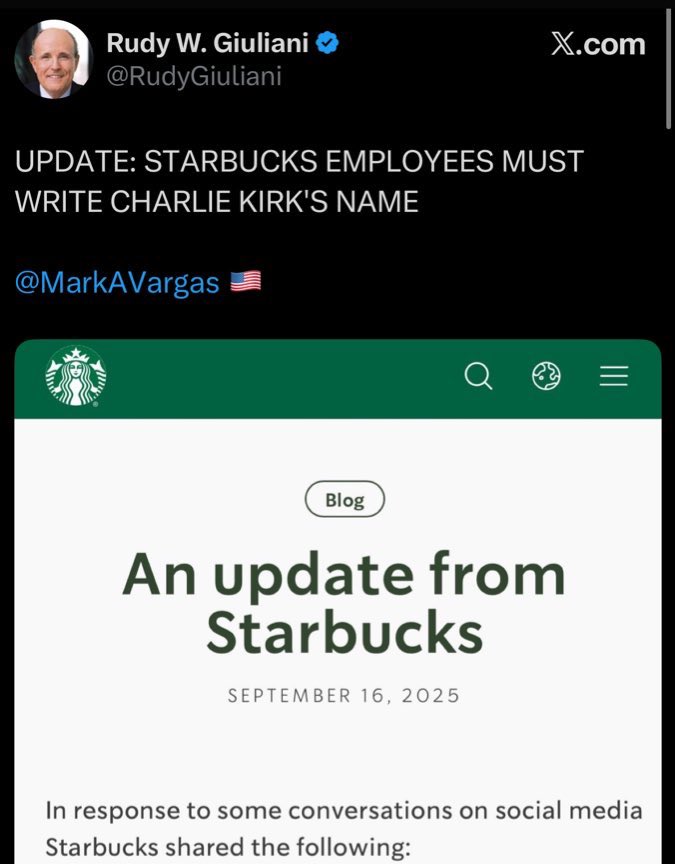
The Right understands this as a humiliation ritual, as a form of Effigy Politics in which they deploy Charlie Kirk as a synecdoche for the politics of subjugation he practiced, and the barista as synecdoche for the groups they want to dominate—young, queer, nonwhite, female, etc. Image We live in a time where popular democracy is so atrophied, and civic institutions so gutted, that even the ascendant Far Right doesn’t know how to vent their spleen except through expressive consumption, through symbolic Judas Burnings of non-compliant workers
Aug 24, 2025 11 tweets 3 min read
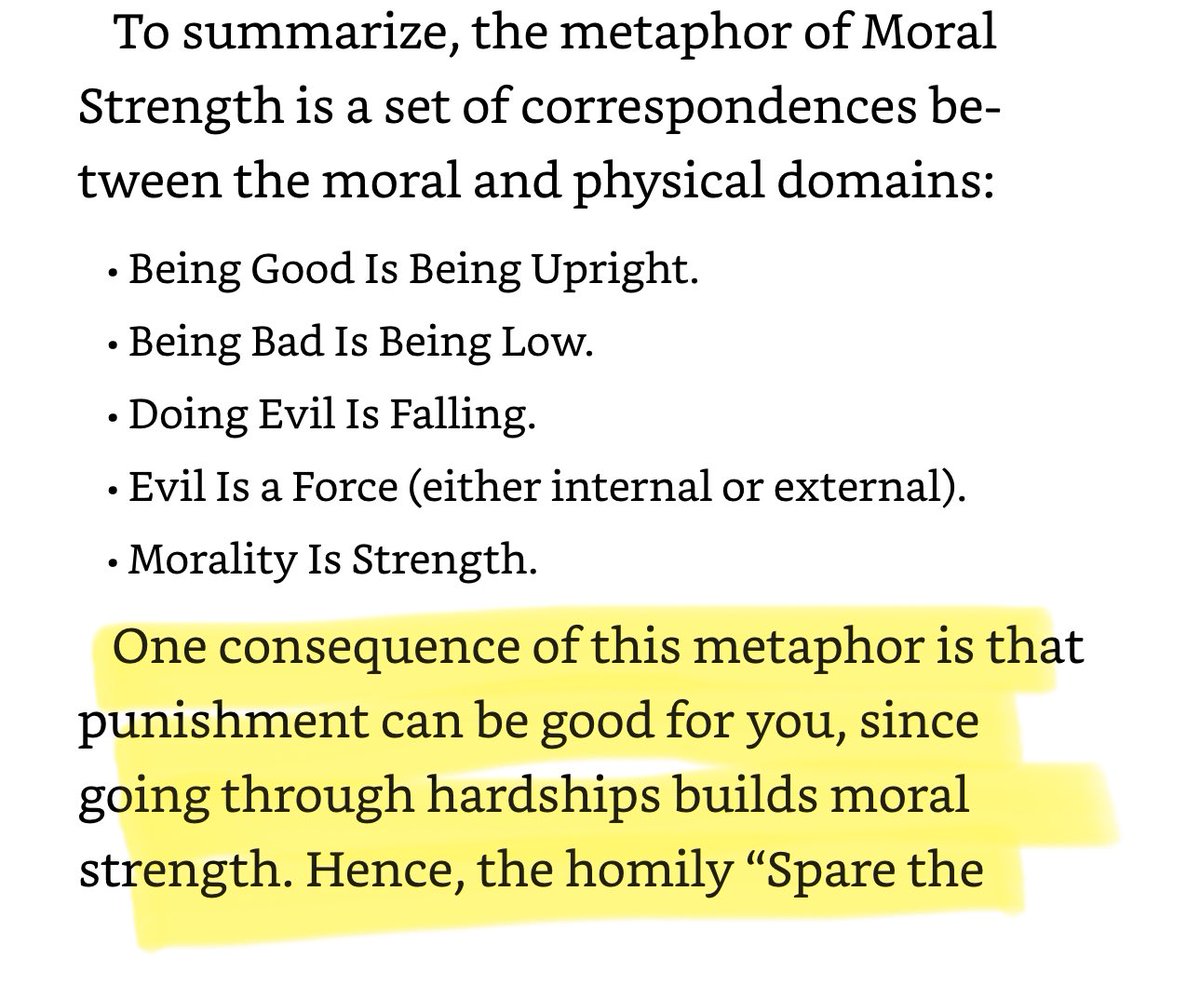
The basic idea here, uniting vaccine hostility, ending PEPFAR, skepticism of GLP-1 drugs, pasteurization, etc, is that the Right believes The Strong do not need these protections or cheats, and they reward the undisciplined/deviant/weak when they ought to suffer or die Image They believe that medical science has constructed a whole order which increasingly protects people from what we do not need to be protected from; sure, maybe some fat disabled homosexual needs pasteurization because their body can’t handle Natural Raw Milk—but not me, I’m Strong
Aug 14, 2025 12 tweets 2 min read
You’re misunderstanding my point; “police are the actual enemies of people in the real world, so we must abolish them.”

Ok. How? And, importantly, how in such a way that doesn’t prompt immediate backlash and retrenchment? This is where “imagination” actually matters! I’m sorry but this is totally inadequate analysis: “X is bad, and therefore must be opposed. That’s all you need to know.”

Wrong! You need to know how you plan to successfully oppose police, or whatever other thing you’re opposing.
Aug 7, 2025 6 tweets 1 min read
AI certainly looks a lot like a bubble, but I’d caution leftists from being too smug about it.

We used to ridicule Amazon for being a perennial money-loser. And Netflix. And Uber. Now they’re all profitable and have remade whole industries, and American life. For the worse! We used to shit on self-driving cars as “always five years away.” Well, Waymo seems to have actually gotten there, pretty much. Folks are still clinging to some copium about how you can mess with them, but it’s pretty clear self driving tech is viable.
Aug 3, 2025 20 tweets 4 min read
Centrists can’t grasp that it’s impossible to remedy this by campaigning with Liz Cheney, or even by adopting conservative policy positions

Kamala could say she would be tough on the border, but she was abysmal at saying *why*. She couldn’t speak conservative *values* She also couldn’t speak very well to *liberal* values, either! She comes from a grand Democratic tradition of being fucking awful at speaking the language of morality, of moral metaphor and archetype. Of scaffolding policy with a moral and metaphorical context
May 15, 2025 4 tweets 1 min read
I’m kind of tired of people talking about “revolution, not [material improvement short of revolution]!” unless they’re actually out there successfully building institutions/organizations which might plausibly be able to mobilize the working class for revolution In my experience, 99% of the time the people who say stuff like this mean “refuse to participate in the existing struggles of the working class, at the level of workers’ current political consciousness” with no serious effort to do anything else besides publish zines
May 6, 2025 46 tweets 7 min read
Honestly the easiest thing to do immediately and by executive authority, as a left-populist president, would be to punish/imprison *different* symbolic targets. Instead of immigrants, bankers. Instead of homeless people, slumlords. Health insurance CEOs. Etc. But Dems generally refuse to punish elites even when there’s legitimate grounds to punish actual crimes, with full due process. They couldn’t even punish their political opponents who attempted a coup!
Apr 21, 2025 9 tweets 2 min read
While this is articulated in MAGA-coded grievance language, there’s a related truth.

I’ve talked before about how liberal experts are often blind to their own values, because they approach society as a math problem to solve. Goodness is something to be Efficiently Optimized It’s not truly sneaky, in the sense that this blindness is totally sincere. They really think everyone wants the same things—that there just is an objective definition of The Good, and that the job of the state is to maximize Goodness Production. It all seems obvious to them
Mar 27, 2025 11 tweets 2 min read
This is the lib version of Trumpism and it is present in some of the Abundance types—specifically, we’re seeing a nationwide exhaustion with self-regulation and compassion, and a desire to just throw up your hands, and do what’s easy even if it leaves others behind I have a family friend who was a really volatile and narcissistic 20-year old, who worked on herself over the years, went to therapy, grew up, and became infinitely more conscientious and regulated in her 30s. She fell down the Trump pipeline this election, and has regressed
Mar 24, 2025 9 tweets 2 min read
I will keep begging leftists to have some humility about praxis. We act like politics has been solved, Correct Praxis is already known, and we just have to implement it. But we keep losing. So how can we possibly have the right praxis? If the American left already had the answers for how to Do The Work correctly, then why did we fail when 2 million people in Gaza needed us to win? We failed so comprehensively it’s totally broken all my faith and trust in our received wisdom about strategy and tactics
Mar 7, 2025 14 tweets 3 min read
I’ve got some quibbles here but Trace is mostly right. On the left we’ve largely abandoned persuasion in favor of discipline, and instruction.

We get strident and offended when it’s suggested we might have to *entice* and *encourage* people to agree with us I maintain my belief that one of the great virtues and unique strengths of socialism/socialists is that we’re *right* more than anyone else. We’re materialists, we’re critical, and that counts for a lot. But we’ve also gotten kind of high off that rightness.
Feb 26, 2025 7 tweets 2 min read
It’s actually imperative liberals and leftists learn how this works: only a tiny minority of Americans actually care about literal deficits. No one really cares about “fiscal responsibility.” These are symbols; they signify “taking resources away from the Undeserving and Cheats.” The GOP is the party of “fiscal responsibility” because “fiscal responsibility” means “taking money away from poor people, single mothers, the homeless, immigrants, and minorities.” They can take out infinite debt and give it to billionaires and be totally consistent
Feb 12, 2025 5 tweets 2 min read
Sorry but he’s right. This metric doesn’t explain any of the political behavior leftists want to explain as being due to economic suffering.

Things got better; people voted for Trump. Culture war issues are luxury issues that Americans vote for in good times, not bad. All the data on economic discontent is most parsimoniously explained by partisanship. People unhappy with “the economy” mostly report positive personal financial situations—it’s literally just Republicans mad that the Wrong People are getting assistance.
Feb 8, 2025 11 tweets 2 min read
Something I’ve come to realize about most of the American left, is that we believe that it’s liberals’ job to win and hold power, our job to shame them, and their moral duty to listen to us—a tiny powerless minority—and do our bidding. It’s a toddler’s theory of change Of course, it’s a theory largely sold to us by liberals, especially in academia (many who fancy themselves radicals). It’s a narrative of the eternal Outsider radical, who marches and sits-in and publishes exposés and whatever else.
Jan 6, 2025 6 tweets 2 min read
Jesus Christ Jacobin is fucking embarrassing.

This attitude of “so what if I was lying? It’s a lie that slanders the Bad Guys” is a fucking blight on the Left right now.

It matters because we can’t solve fake problems, dumbass! @devintoshea Image This type of shit matters—if people think the problem is private equity owning existing housing stock, then they’ll push for legislation to ban that, which would be fine, but WOULDN’T BRING DOWN RENTS. Which then leaves people mad at us, the Left, for failing to deliver!
Dec 1, 2024 27 tweets 4 min read
For a long time many of us on the left have tolerated some very counterproductive discourse norms because it seemed like everyone crying about them was actually opposed to the *substance* of anti-racism, disability justice, decolonization, and so on But it feels like we’ve gotten to a point where these norms are truly untenable, even (especially?) for those of who care to really do the work and win on these fronts, as well as on the front of class struggle.
Nov 28, 2024 8 tweets 2 min read
Just an incredible, undeniable failure by liberals. A human catastrophe.

And you’d think socialists, of all people, would be eager to scourge the libs about this clear, empiric failure of their unscientific policies! Yet so many of us defend these liberal policy regimes! Housing is this bizarro space where 90% of socialists become raving liberals who suddenly believe in the power of regulated markets to deliver socially-necessary goods. It’s insane that we give up criticizing one of the biggest, most obvious weak points of liberal policies!
Nov 26, 2024 6 tweets 1 min read
The main problem I have with leftist arguments against YIMBY housing reforms (upzoning, legalizing single stairwell buildings, etc) is that they all seem to assert some version of “the market can never provide cheaper rents than it currently does”, which is flatly not credible Housing should not be a market-provided commodity, but for now that’s what it is. And it is cheaper in some places than in others. And it has been cheaper at different times. None of the leftist arguments I’ve seen about the power of landlords to dictate price can explain this
Nov 22, 2024 12 tweets 3 min read
Tbh @Tyler_A_Harper, the “pipeline” is very real—it describes so many young men I know.

The problem is Democrats see Bernie as *causative* here; he drove them away from Dems and to MAGA. Of course, the opposite is true: they would’ve stayed Dems with a Bernie-style platform Image We should absolutely talk about the reality that tons of low-info, low-propensity, and politically disengaged voters loved Bernie and flocked to him. But he put off the highly-engaged base of the Democratic Party.

Problem is, Dems needed those low-info voters after all
Oct 24, 2024 11 tweets 2 min read
I really think if Harris loses, it won't just be about a bad campaign and a bad candidate. Looking at the polling on immigration, homelessness, and crime (among other issues), the country has lurched right pretty hard in just the last few years. I think because of COVID People experienced a collective crisis, which demanded concerted action and sacrifice in order to protect the whole public--but especially the most vulnerable. And they hated it! They got exhausted with it very quickly. They wanted to go "back to normal" ASAP