Henry Gao Profile picture
Prof of Law @SgSMUYPHSL; Senior Fellow @CIGIonline; Board Member @AJIL_andUnbound, @JIEL_OUP, & @hinrichfdn. All views are my own. Feel free to quote.
3 subscribers
Jan 31 4 tweets 2 min read
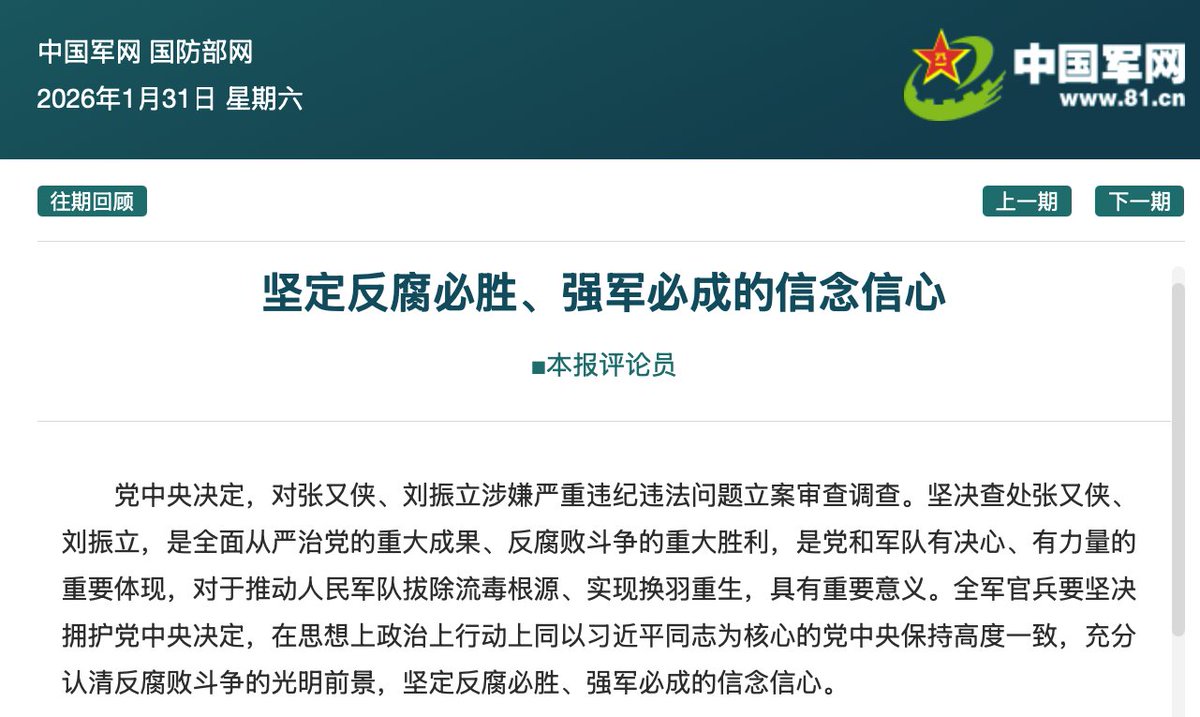
Today PLA Daily finally published another editorial on the Zhang Youxia case, which in itself is not surprising. What is striking are the following:
1. The editorial came a full 6 days after the case was first reported, during which time Zhang’s name never appeared at all. Image 2. Despite the strong rhetoric, there is still no pledge of loyalty from commanders across the various regions.
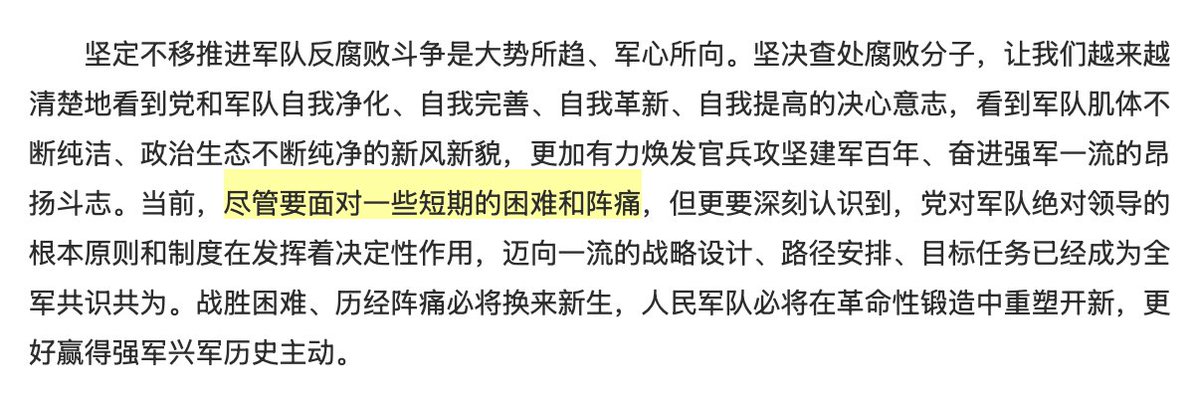
3. The editorial openly acknowledges the need to “face short-term difficulties and periodic pains,” implicitly admitting that things didn't go as smoothly as planned. Image
Jan 26 5 tweets 2 min read
Today’s PLA Daily editorial on anti-corruption offers a textbook example of how to read CCP propaganda:
Read it backwards.

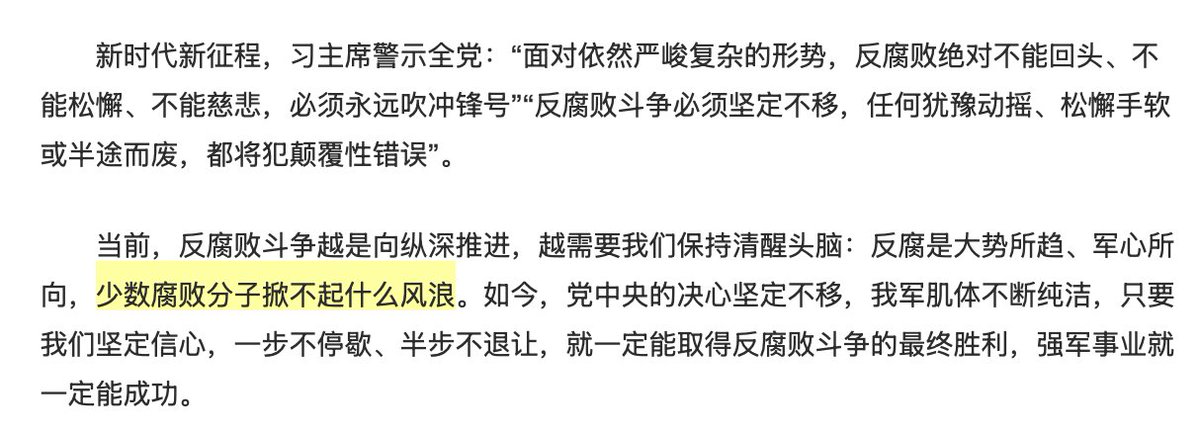
The key message is that “a few corrupt elements can’t make any waves.”

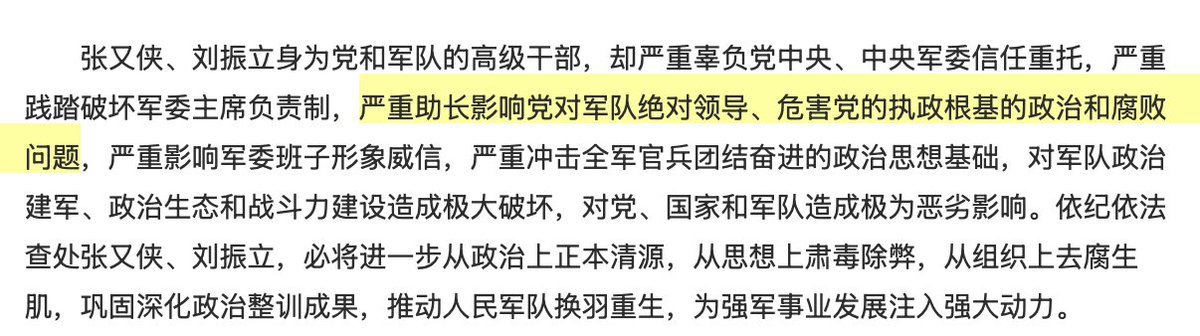
1. Is it really just “a few,” when 5 of the 6 CMC members other than Xi are gone? Image 2. Among the 5 major crimes listed in yesterday’s PLA Daily piece, corruption was only the 3rd. Even then, Zhang and Liu were not accused of corrupting themselves, but of “seriously promoting political and corrupt problems that affect the Party’s absolute leadership of the army.” Image
Jan 26 5 tweets 2 min read
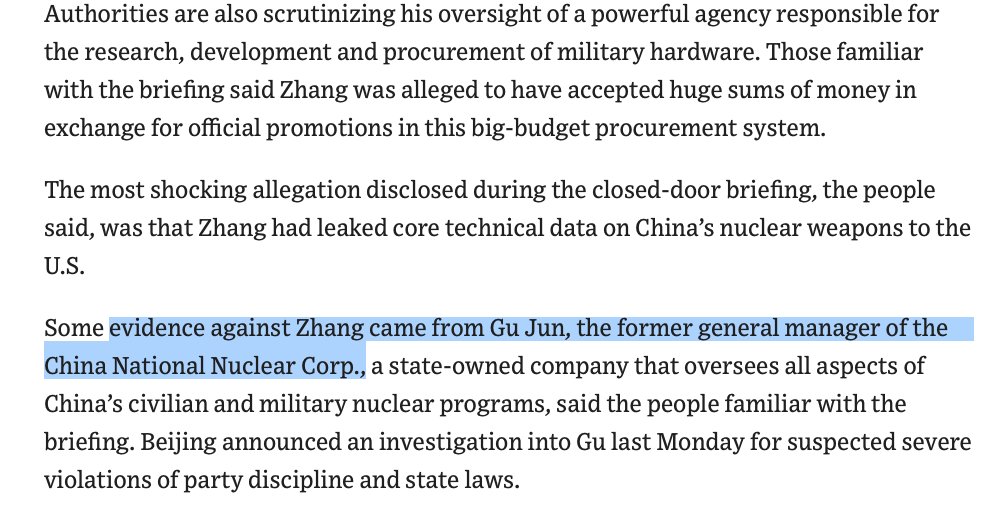
Interesting story by @Lingling_Wei & @ByChunHan, but I have several questions:

1. @WSJ reports that the evidence against Zhang came from Gu Jun, former general manager of China National Nuclear Corp. But anyone familiar with the Chinese system knows that a suspect under Image investigation may say virtually anything (in response to leading questions) in exchange for mitigation.
Moreover, this is almost impossible given how siloed the Chinese system is, as @neilthomas123 pointed out here:
Jan 25 7 tweets 2 min read
What is Zhang’s real crime?

It has nothing to do with corruption, despite what People’s Daily (and many pundits here) have claimed. The issue is far more fundamental: who controls the PLA.

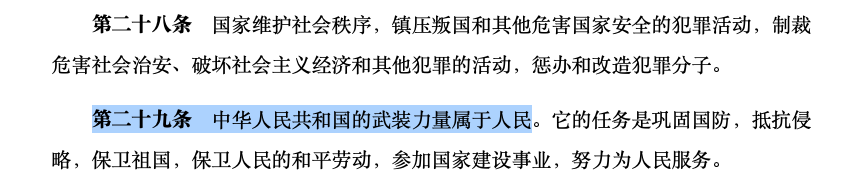
Art 29 of PRC Constitution states that PRC armed forces belong to the people. Image In reality, however, the army belongs neither to the people nor even to the People’s Republic.
It belongs to the CCP.

This principle was established under Mao and has been reaffirmed repeatedly. Most recently, the 2019 CCPCC Decision on Several Major Issues of Adhering to and
Dec 30, 2025 8 tweets 2 min read
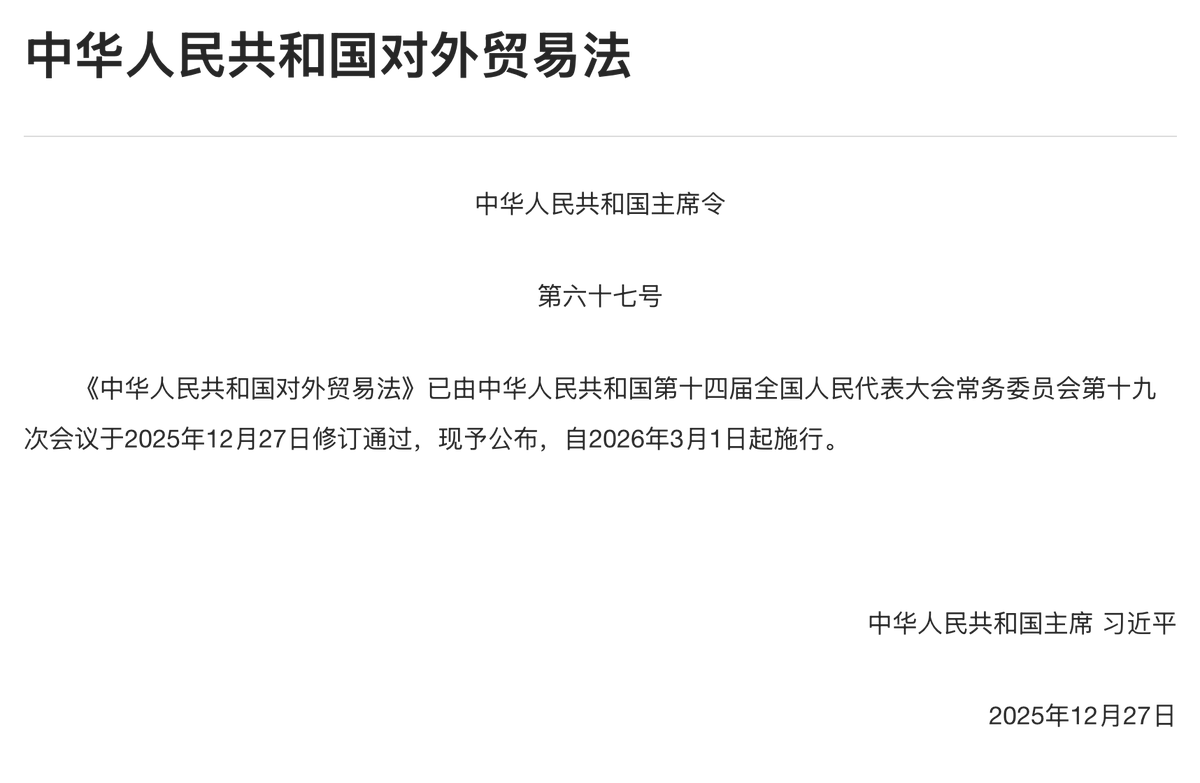
China has just revised its Foreign Trade Law, and the signal is unmistakable: Beijing is preparing for a long, tougher trade war with the US—for the next 3 years and beyond.

At the core of the revision is a new willingness to use unilateral trade countermeasures. Under the Image revised Article 40, China can restrict or ban trade with foreign individuals or firms that harm China’s sovereignty or development interests, disrupt “normal” market transactions with Chinese entities, or discriminate against Chinese firms.
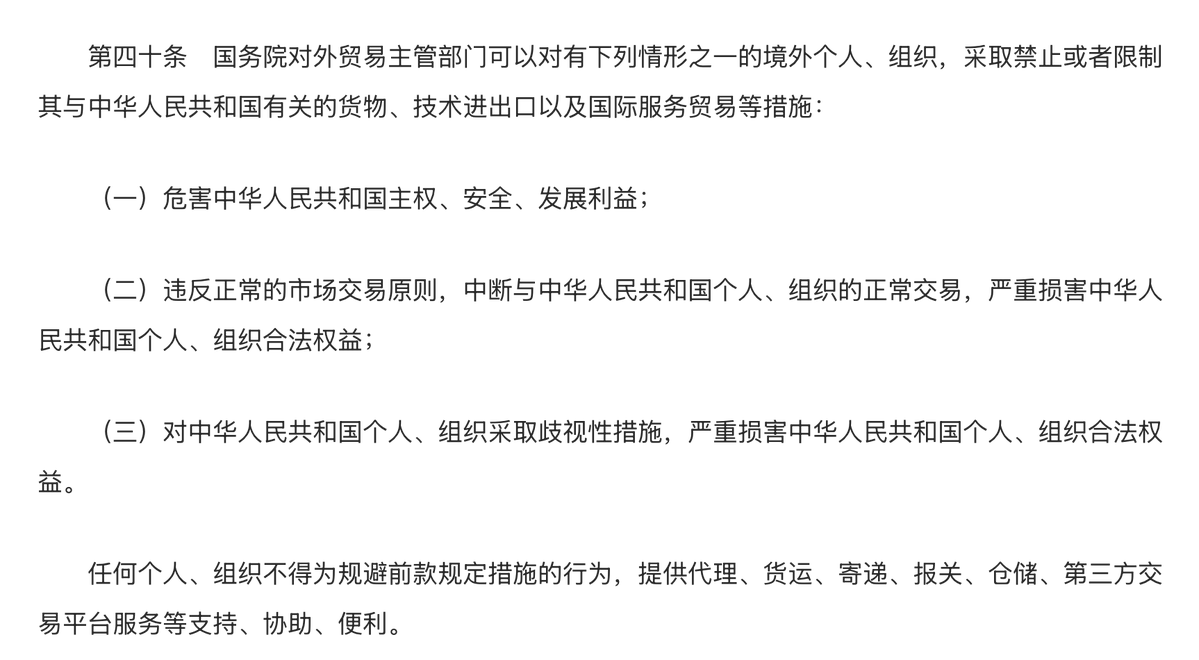
Crucially, the law also goes after Image
Nov 20, 2025 16 tweets 4 min read
Finally had time to read this, but I could barely get past the opening pages. Still, I’ll try.

This is how Kuo begins his essay:
“This essay doesn’t rehearse the familiar bill of particulars on China—constraints on political pluralism and independent media; expansive security Image powers and preemptive detention; pressure on religious and ethnic expression; and episodes of extraterritorial coercion—not because those concerns are trivial, but because the task here is different.”

This has become the now-standard preface in China-defender discourse:
Oct 16, 2025 6 tweets 2 min read
A close reading of MOFCOM’s press conference today revealed more than the ministry likely intended to admit.

In response to a @Reuters question, the spokesperson stated:

“After the Madrid Talks, despite China’s repeated dissuasion, in just over 20 days the US intensively Image introduced 20 repressive measures against China, seriously damaging China’s interests and undermining the atmosphere of the talks. In particular, at the end of September, the US issued a ‘penetrating rule’ for the export control entity list, effectively expanding it to thousands
Oct 14, 2025 9 tweets 3 min read
I’m tired of people claiming that China and US reached an agreement in Madrid last month to refrain from introducing new restrictions.

That is simply not true — even by China’s own account.

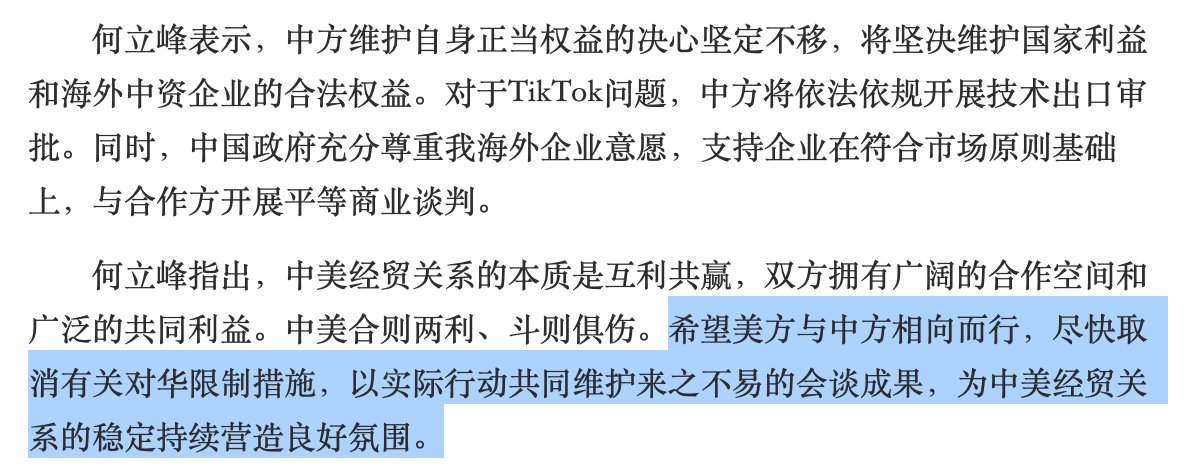
1. People’s Daily editorial published the day after the talks quoted He Lifeng saying “China HOPES US and China would go hand in hand, cancel the relevant restrictions on China as soon as possible, jointly safeguard the hard-won results of the talks with practical actions, and continue to create a good atmosphere for stability of economic and trade relations.” Image
Oct 11, 2025 7 tweets 3 min read
Why the sudden wave of retaliations and escalations from Beijing?

The answer lies in the eight editorials published in the People’s Daily over the past few days.

Written under the pen name 钟才文, these pieces are widely understood to represent the views of the Office of the Image Central Financial and Economic Commission, headed by He Lifeng — China’s economic tsar.

The Oct 4 editorial proclaimed that China has become “the main contributor to global economic growth and an anchor of stability,” attributing this to the “certainty” of China’s development Image
Aug 15, 2025 6 tweets 3 min read
Xi’s Feb speech to private firms is finally published—and it confirms everything I predicted before the meeting:
Private firms must fully align with China’s strategic competition vs the US. Image Xi says private firms’ problems stem from external shocks (tech revolutions, trade restrictions) or internal missteps (over-diversification).

To Xi, the Party is not the problem, it is the solution.

Thus, firms must “unify their thoughts and actions with the Central Committee.” Image
Aug 8, 2025 8 tweets 3 min read
What’s the biggest threat to China’s economy in the 2nd half of 2025?

It’s not the trade war, nor any new government policy. It’s a judicial interpretation from the Supreme Court.

On July 31, the Court issued Interpretation on Applicable Law in Trying Labour Dispute Cases (II). Image Article 19 states:

“If the employer agrees with the employee, or the employee promises the employer, that there is no need to pay social security premiums, the people’s court shall find the agreement or promise invalid. If the employer fails to pay social security premiums in Image
Aug 3, 2025 6 tweets 1 min read
强烈推荐大家收听@guoguang_wu老师的这期访谈。吴老师不仅深入分析了中共之后中国的现实可能性,还提出了多项具体可行的民主转型策略。以下是我对访谈要点的总结:

1. 里应外合,如齐伐燕

“里应外合”有两重含义。一方面,反对力量应善用国际社会的影响力。当下内需疲弱、对外贸依赖日益加深的背景下 国际支持对于中国的民主转型更是至关重要。而近期以@milesyu10 教授为代表的美国保守派也开始认真探讨中共之后中国的可能性,则代表美国政经精英也开始关心这个议题,甚至为此做准备。我在此大胆预测:如果“汤武之事”在未来数年再度上演,那么包括马斯克在内的西方精英或明或暗表达支持也不足为奇。
Aug 1, 2025 4 tweets 2 min read
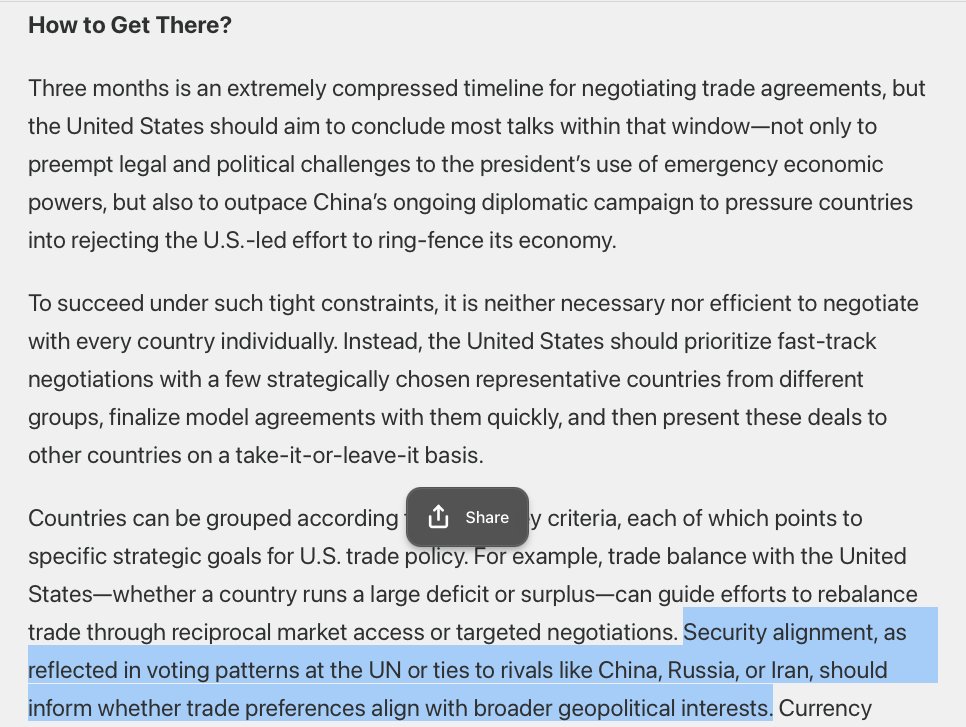
The new tariff numbers confirm what I wrote 4 months ago in my @commonplc piece “The Art of a Trade Deal”:

1. I stressed that these negotiations aren’t just about trade-security alignment would be a key factor. This is now explicit in the executive order, which repeatedly cites Image
Image
security considerations in setting final tariff rates.

2. I predicted countries would be grouped based on key criteria. That’s exactly what we see: broadly speaking, there are three groups—friends (10–15%), enemies (30%+), and frenemies (19–25%).
May 9, 2025 6 tweets 3 min read
The US-UK trade deal is out—and it confirms most of my predictions in my @commonplc piece “The Art of a Trade Deal” 4 weeks ago:

1. Tariffs: The 10% tariff remains in place for now, but contrary to some interpretations, this doesn’t mean the UK failed to negotiate it down. The Image Agreement explicitly states that both sides will enter negotiations to reduce tariff rates. As I noted, the likely landing point is around the US’s 3.4% rate-if the UK is willing to match it.

2. Non-Tariff Barriers (NTBs): Just as I anticipated, NTBs is central to the next phase Image
Apr 10, 2025 5 tweets 2 min read
A New BRI on the Horizon?

Today’s front page of People’s Daily features the Central Peripheral Work Conference—a major development, given this is only the second such meeting in the PRC’s 76-year history.

The first such meeting was in Oct 2013, when Xi launched the BRI, which Image was elevated to a national strategy at the 3rd Plenum of the 18th CCP Central Committee held the following month.
As I argued in this @trade_review article 3 years ago, the BRI was China’s strategic response to US containment through the TPP, where the
cambridge.org/core/journals/…Image
Apr 9, 2025 5 tweets 2 min read
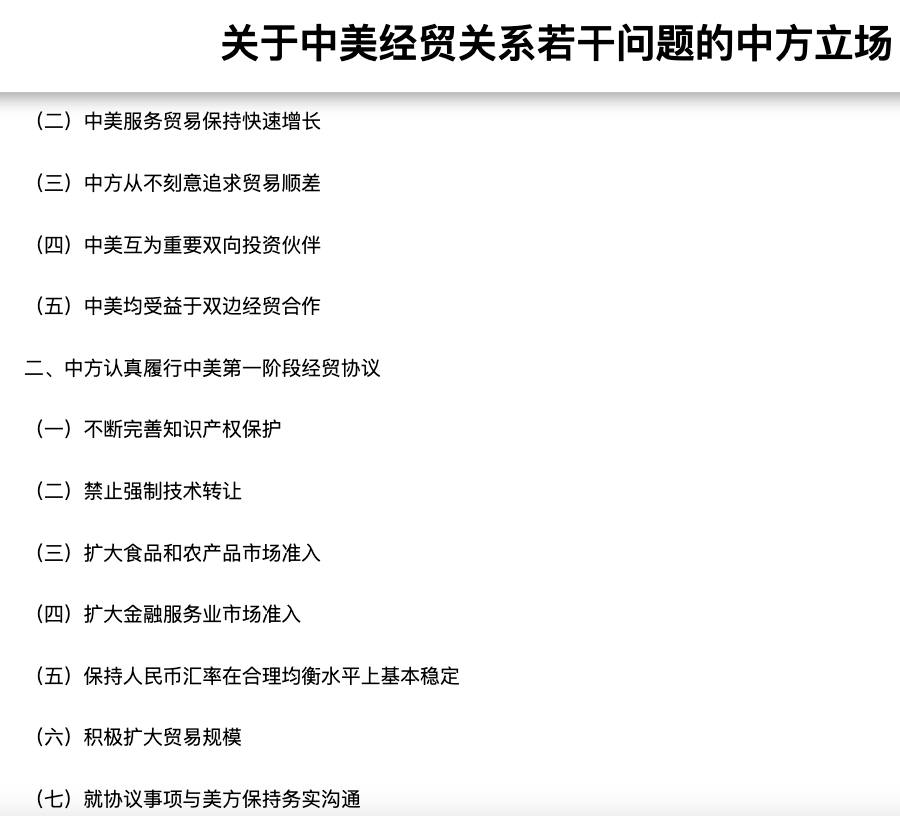
China today released a white paper titled “China's Position on Some Issues Concerning China-US Economic, Trade Relations.”

No, it’s not about setting the record straight as it claims.

It’s a retaliation wishlist—and a catalog of Beijing’s deepest trade fears. Image 1. Retaliation List:
• Banning U.S. services exports
• Halting IP protection for U.S. companies
• Imposing forced tech transfers
• Banning U.S. food and agricultural products
• Limiting access to China’s financial markets
• Devaluing the RMB Image
Apr 8, 2025 4 tweets 2 min read
Why did Trump impose tariffs on Heard & McDonald Islands-home only to penguins, and British Indian Ocean Territory, which is occupied solely by military personnel?

No, it’s not because of internet domain names, as some speculated.

The answer is found in today’s People’s Daily Image editorial, “Pressure and threats are by no means the right way to deal with China,” which proudly declared that China maintains “import and export records with almost all countries and regions in the UN Standard Country or Area Codes for Statistical Use.”

And guess what? Among Image
Apr 7, 2025 5 tweets 1 min read
Three things you need to know about Liberation Day tariffs:

1. It’s not about the methodology.

The formula has been widely mocked, but that misses the point. The numbers aren’t meant to hold up in a PhD defense—they’re meant to shock, to create leverage. The more extreme the figure, the stronger the incentive for other countries to come to the negotiating table with the U.S.

2. It’s not even about the tariffs.
The real issue isn’t Vietnam’s tariff rates—it’s China’s trans-shipment tactics and its central role in global supply chains.

The aim is to
Apr 7, 2025 15 tweets 6 min read
Amid Trump tariff chaos, People’s Daily published an editorial today urging everyone to “Focus on Doing Your Own Things”—a phrase that sums up China’s core strategy. This thread breaks it down.

It begins by acknowledging that U.S. tariffs do hurt, but “the sky can’t collapse.” Image That phrase—“the sky can’t collapse”—is notable. Mao used the exact same words in 1962 during a meeting of 7,000 top CCP officials, after a disastrous 13 years marked by the Great Famine and split with a world Superpower - the USSR.

Fittingly, this is also the 13th year of Xi’s Image
Apr 4, 2025 4 tweets 1 min read
Cambodia 49%, Laos 48%, Myanmar 45%, Vietnam 46%.

At first glance, these tariffs seem irrational — but let’s try to make some sense of them.

Put simply, these 4 countries got high tariffs because of the significant volume of transshipment from China to U.S. routed through them. So while the tariffs may not make traditional economic sense, they might make strategic sense — as a deterrent against serving as transshipment hubs for China.

In effect: allow transshipments, and your own exports get punished.

Is it crude?
Yes.

But could it be an effective
Feb 23, 2025 8 tweets 3 min read
Quick thoughts on America First Investment Policy:

1. It aims to usher in “America’s Golden Age”, which will be achieved through facilitation of “investment by US allies and partners” and “protect the US from new and evolving threats that can accompany foreign investment.” Image 2. Not only will it stop direct investment by China in the US, but also it will stop ivestment “through partner companies or investment funds in third countries.”

3. The way to solve the problem is:

A. Restricting Chinese investment “to take over US critical infrastructure” & Image