A 501(c)(6) nonprofit dedicated to fostering the responsible growth & adoption of Bitcoin in Illinois through education, advocacy, & collaboration.

Jan 13 • 4 tweets • 2 min read
CLARITY Act Update: BITCOIN ONLY EDITION
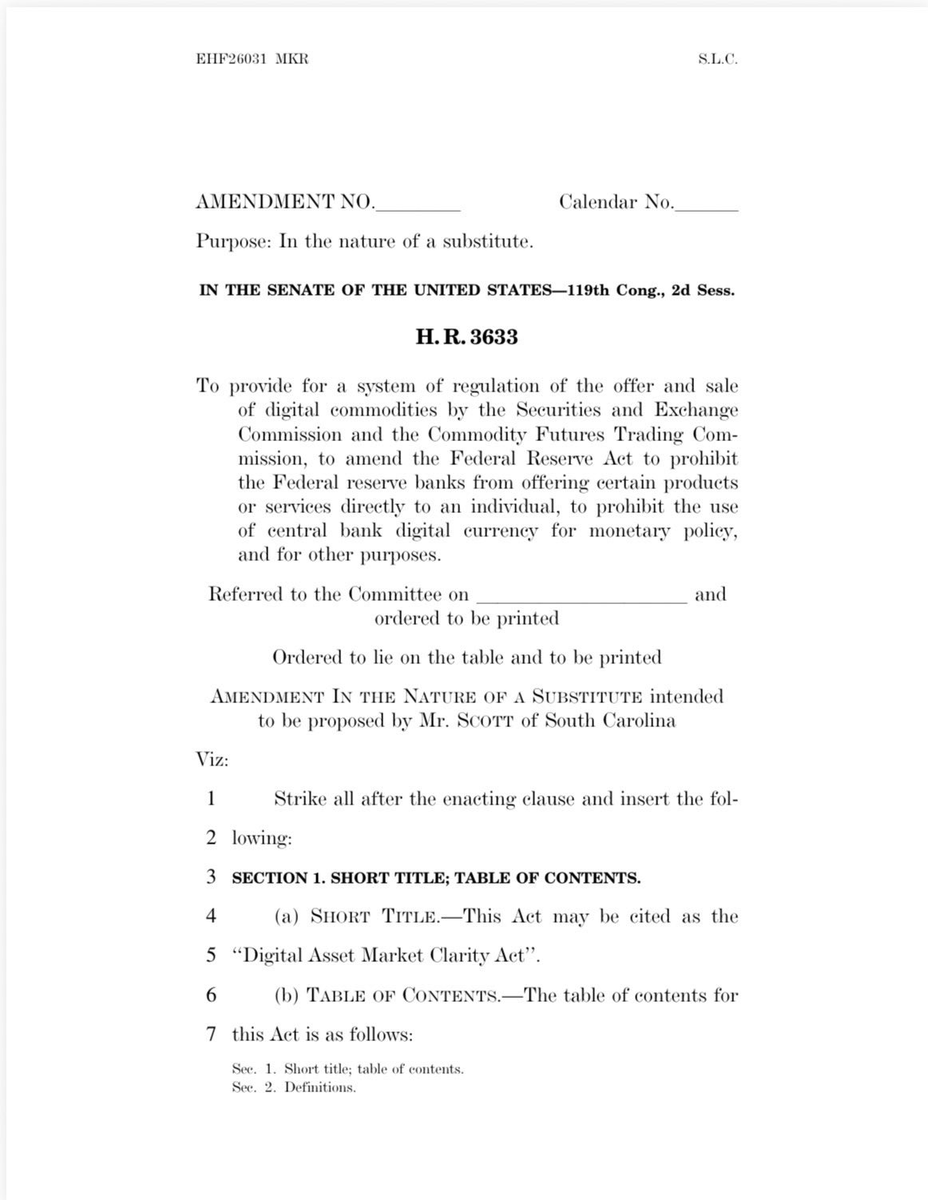
#Bitcoin is one of the clearest winners under the Senate Banking Committee's draft digital asset market structure bill.
TL;DR: This draft essentially codifies what the market has long treated Bitcoin as a decentralized digital commodity free from SEC securities jurisdiction while giving it special fast-track protection via the ETF clause. It's one of the most favorable outcomes possible in U.S. crypto legislation. Altcoins with more centralized histories face a bumpier path by comparison.
Here's how it specifically affects Bitcoin based on the bill's key classifications & provisions. A 🧵...1. Classification as a "Network Token" (Non-Ancillary/ Commodity Status)
-The bill distinguishes between "ancillary assets" (tokens still tied to significant issuer/entrepreneurial efforts → remain under heavy SEC oversight with disclosure requirements) and "network tokens" (sufficiently decentralized → treated as non-securities/digital commodities under CFTC primary jurisdiction).
-#Bitcoin is the textbook example of a mature, decentralized network token. Multiple sources and community discussions highlight that BTC automatically qualifies as non-ancillary due to:
-No ongoing issuer control (no central foundation or company driving value post-launch).
-Long-established decentralization (mining, nodes, governance).
-A special grandfathering clause reinforces this: A token is explicitly considered non-ancillary (i.e., not a security) if it was the principal asset of a U.S.-listed exchange-traded product (ETP/ETF) as of January 1, 2026.
-Bitcoin spot ETFs have been live and dominant since 2024 → BTC is locked into commodity treatment from day one, removing any lingering SEC securities risk.