Joachim Voth Profile picture
economic historian. opinions=my own. pronouns (Sir/Herr Prof. Dr.). Pessoa aficionado. 🇮🇱

Jan 23 9 tweets 3 min read
How do you motivate workers? Leo Bursztyn, Ewan Racliffe and I have a new paper. We look at highly skilled 'workers' whose effort was near-impossible to monitor -- German fighter pilots in WW2. Image In "Never Enough: Dynamic Status Incentives in Organizations" we examine data from more than 5,000 fighter pilots. The Luftwaffe ran a sophisticated system of awards. To qualify for higher ones, u had to have the first medal. As the war progressed and the initial medal became
Mar 3, 2025 8 tweets 2 min read
After the heated exchange in the White House, many people are asking - what are the real prospects for Ukraine? I am no defence specialist, nor a military historian; but i have dabbled a bit in the economic history of war. Some thoughts.@lugaricano @nfergus @BachmannRudi First, Ukraine doesn't need toconquer Moscow to "win". Making Russia withdraw to the border of 2013 would be more than enough. The Russian have already withdrawn from about 40% of their maximum territorial conquests; they can easily lose the rest. Why do I say that?
Jan 21, 2025 11 tweets 3 min read
What is the meaning of life? What would you remember as bringing satisfaction, meaning, and purpose to your life? These are the modest questions that David Lagakos, Stelios Michalopoulos and I try to answer by "interviewing" over 1,400 Americans. We don't get to talk to them Image directly; instead, we examine interviews conducted by the Federal Writers Project. This was part of the New Deal work creation programs, and the aim was to get many ordinary Americans to tell their life stories in their own words. The interviews are loving preserved Image

Nov 11, 2024 8 tweets 2 min read
Derek Guy has some interesting observations on the decline in the quality of menswear over the last 80 years. There is a lesson here -- most of these changes are unmeasured quality changes, for the worse. That means when economists compare prices over time, we are partly comparing the price of (well-made, sturdy, well-fitting, built-to-last) clothes with nasty, cheap, ugly, ill-fitting, disposable clothes. To the extent that the CPI fails to take this into account, it will understate price increases -- and overstate productivity gains. Ok, you
Jul 17, 2024 7 tweets 2 min read
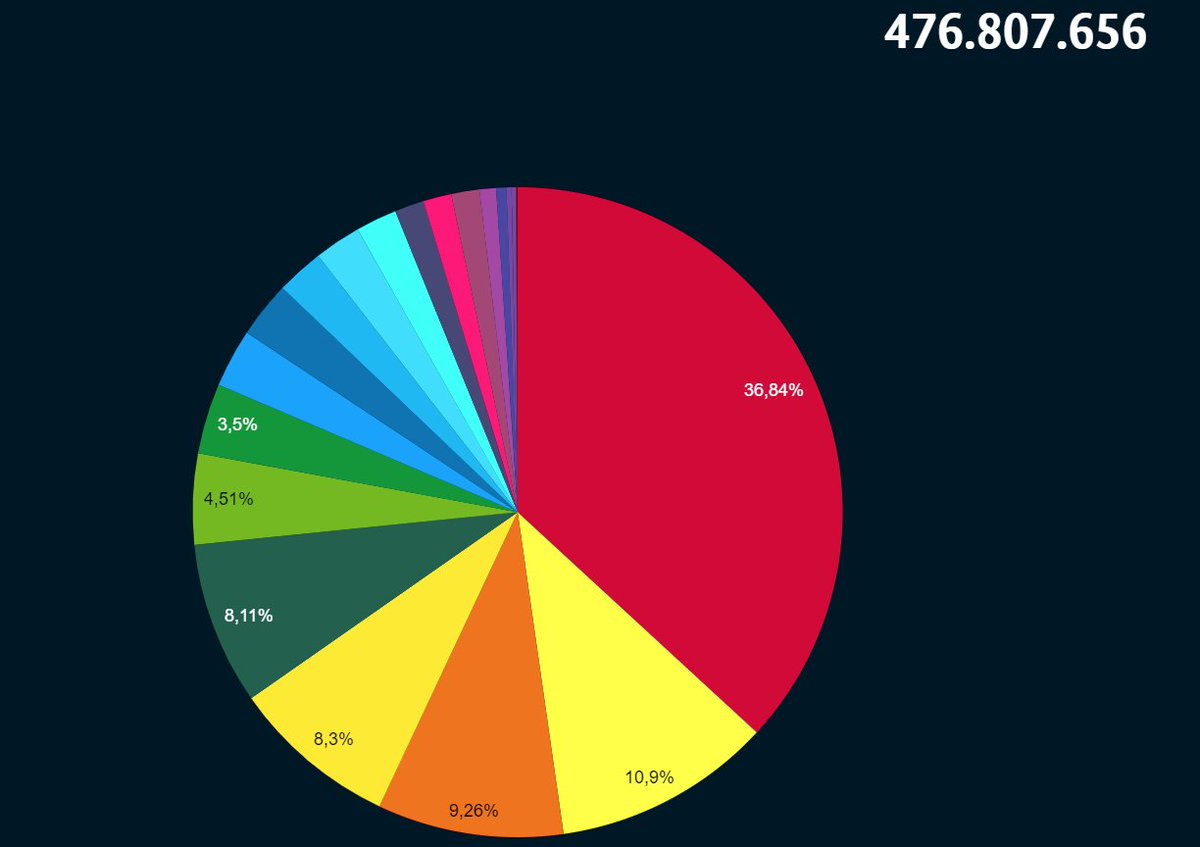
Given that Europe will soon have to pay for its own defence (#jdvance) I thought I would have a look at the German budget for 2024. It's 476 bn of spending, with this distribution: The red bit - 33% - is social spending - about 75% pensions + 25% social transfers (175 bn total!) Image only 10.9% is defence, 9.3% roads+rails etc. 8% goes on debt service, the dark green bit is various bits to fund more pensions. There is also 10 bn for dev aid and another 10 bn for the climate/energy/econ ministery. A few thoughts: Germany will have to spend 5%
Jul 3, 2024 10 tweets 3 min read
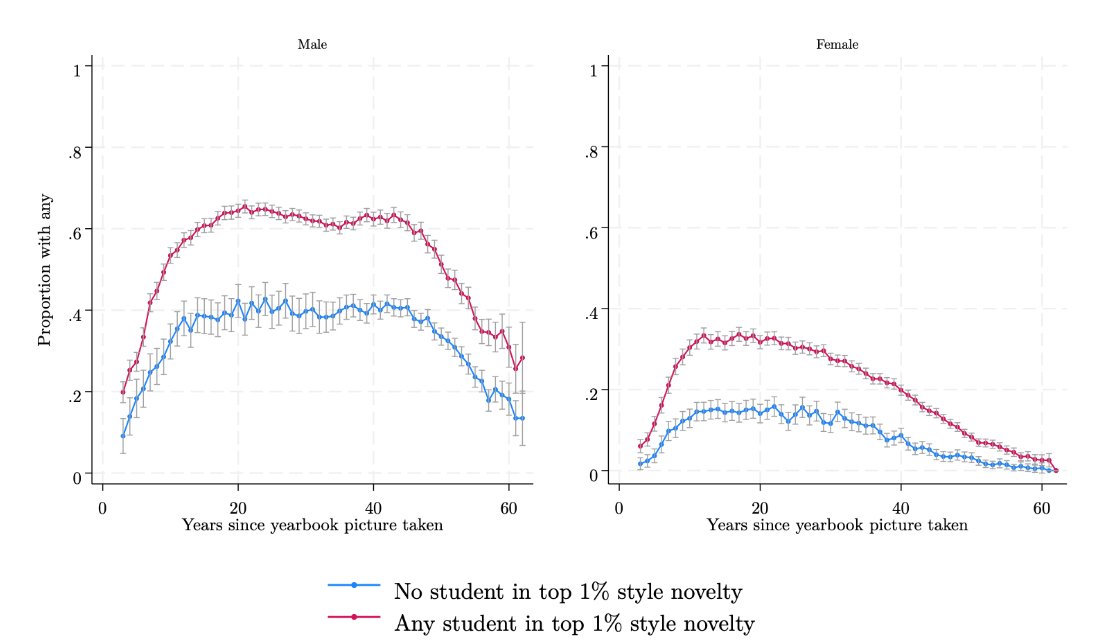
What can 14 million images tell us about cultural change? @YanagizawaD and I have a new working paper that argues - a lot! To fix ideas, check out this handsome young man who graduated from Cupertino high school in 1972. Steve Jobs was wearing a tux, bow tie and long hair Image in his senior portrait; no facial hair or jewelry in sight. Fewer than 0.1% of hs graduates had ever looked like that in their hs portrait. Jobs of course was famously creative, being granted 960 patents. We ask - is this pattern general? We look at commuting zones with Image
Oct 20, 2023 17 tweets 5 min read
"God is dead", Friedrich Nietzsche famously proclaimed in 1882. What happens to politics when societies become increasingly secularized? In a new working paper, @essobecker and I examine the case of Germany. github.com/huggingbeard/p… Most people stayed nominally Christian for the longest time. We first create measures of "Shallow Christianity" - indicators of a lack of deep-rooted religious belief in interwar Germany. We use three - naming patterns, superstition, and the share of notables who enter religious
Aug 29, 2022 6 tweets 4 min read
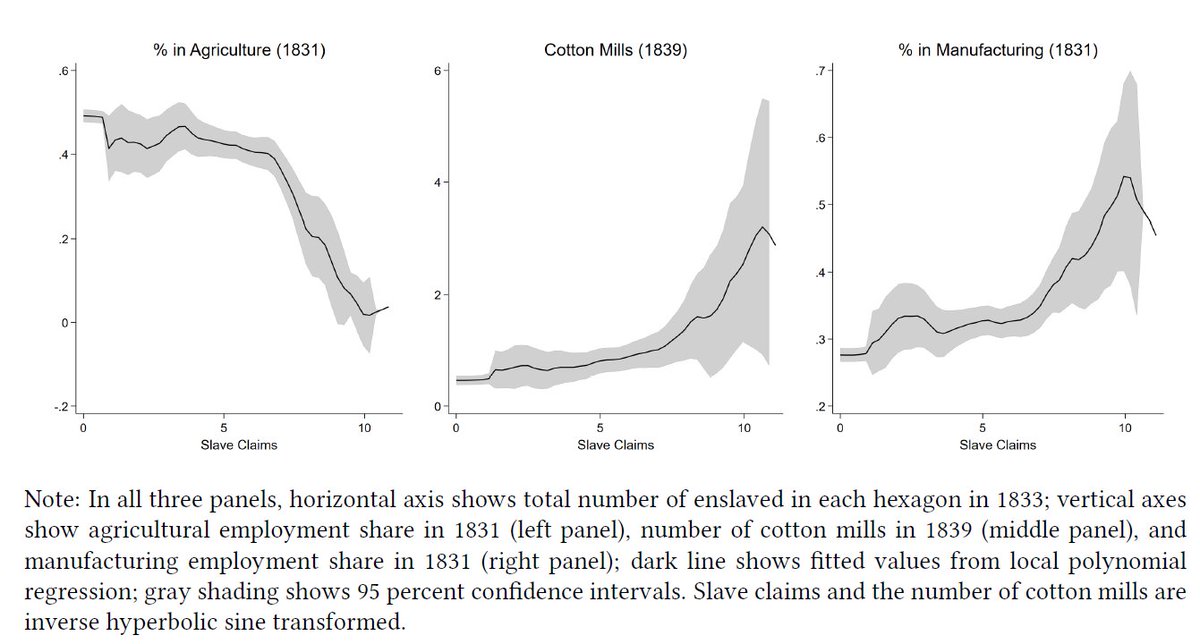
Did slavery facilitate Europe's early rise to riches? Steve Redding @ReddingEcon, Stephan Heblich, and I focus on the single biggest slave-trading nation, Britain, and revisit the famous "Williams hypothesis". We combine theory and geographically disaggregated data to show Image that areas with more slavery wealth were less agricultural, had more cotton mills, adopted more steam engines, had higher per capita wealth, and employed more people in manufacturing. We use weather shocks to slave traders wealth to document an exogenous link running from slave
Aug 8, 2022 15 tweets 4 min read
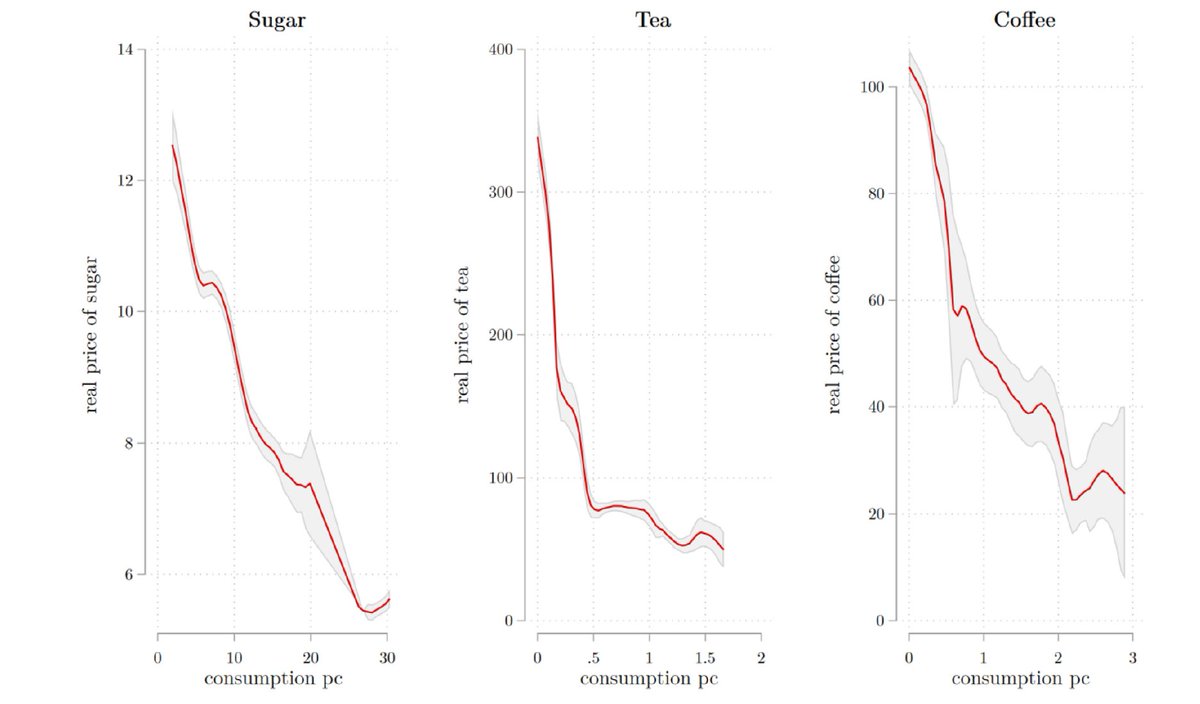
Did living standards stagnate in Europe pre-1800? Did international trade only matter from 1850 onwards? A decade ago, Jonathan Hersh @DogmaticPrior and I set out to find out. As Europeans crossed the Atlantic and rounded the Cape of Good Hope #EconTwitter they brought back many things including exotic spices, tomatoes, potatoes, tobacco, coffee, tea, and eventually (after the plantation economy got going), sugar. By the late 18th century, even the English working class spent close to 10% of their income on "colonial goods"
Jul 19, 2022 7 tweets 2 min read
A propos the current heat wave (34 degrees in Zurich today, heat advisory in place) -- it is utterly amazing to me that collectively, people in Northern Europe seem to have decided that they should just suffer in moral superiority, rather than use AC. Sure, 20-30 years ago, when some regulations (like those in the canton of Zurich) were passed banning or limiting AC use, much of the power came from fossil fuels. But today, photovoltaics are cheap + super-efficient; importantly, there is a "natural hedge" here = you only need AC when there is lots of sun