Linguistic Discovery Profile picture
Exploring the science and diversity of language! 🗣️ Run by Danny Hieber, Ph.D. (@dwhieb, /ˈdæn.jəl ˈhi.bɚ/)
Jun 8, 2025 7 tweets 2 min read
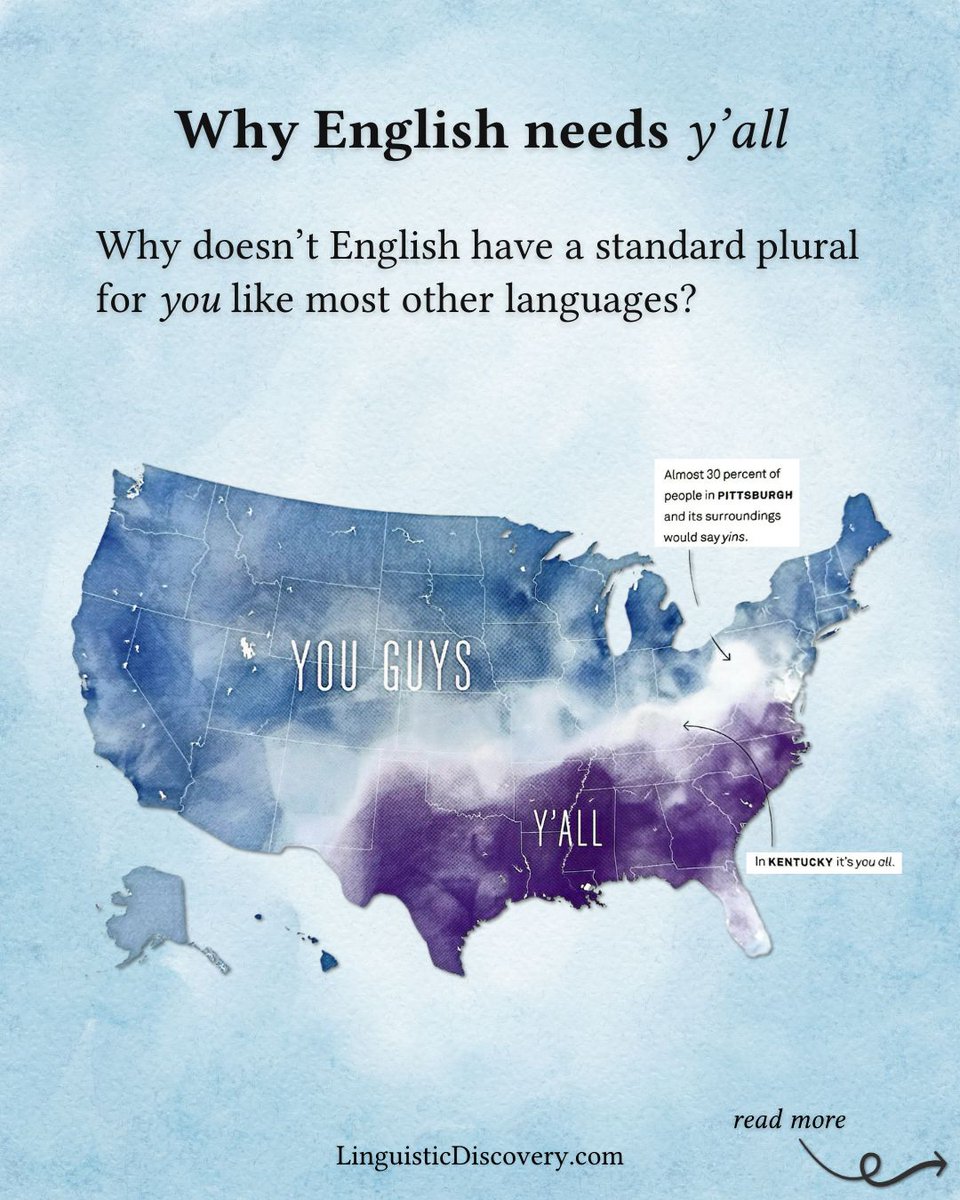
Why doesn’t English have a standard plural for “you”? 🧵 1/7 Image 2/7 Image
May 14, 2025 7 tweets 2 min read
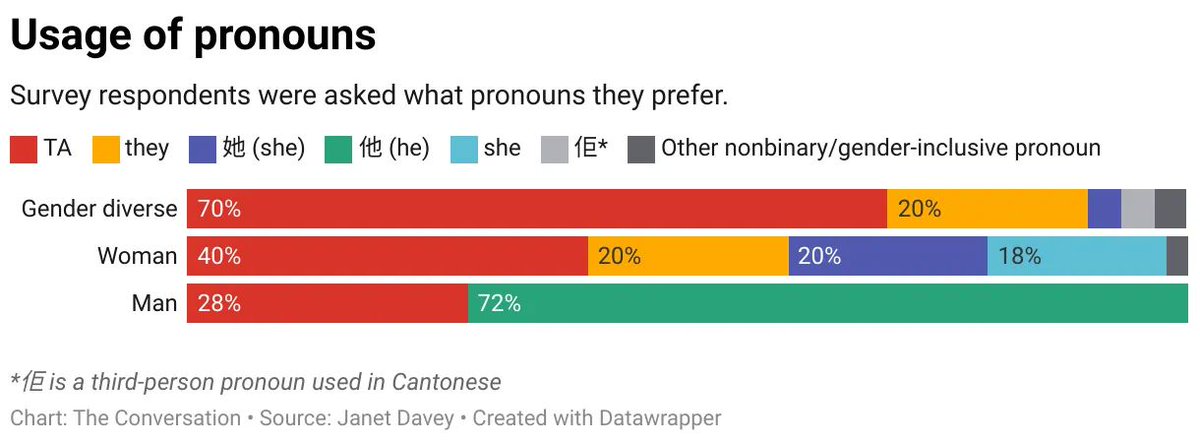
Spoken Mandarin Chinese doesn’t have gendered pronouns. The word tā can mean ‘he’, ‘she’, or ‘it’.

However, *written* Chinese does distinguish gender: 他 ‘he’, 她 ‘she’, 它 ‘it’. 1/ 2/ The character for the feminine pronoun ‘she’ was introduced in the early 1900s during the women’s liberation movement, along with the character for the neuter pronoun ‘it’.
Dec 26, 2024 13 tweets 4 min read
How was writing invented? And why?

Here’s the story of how the growing trade networks and complex administration of the earliest civilization evolved into the world’s first writing system. 🧵 1/13

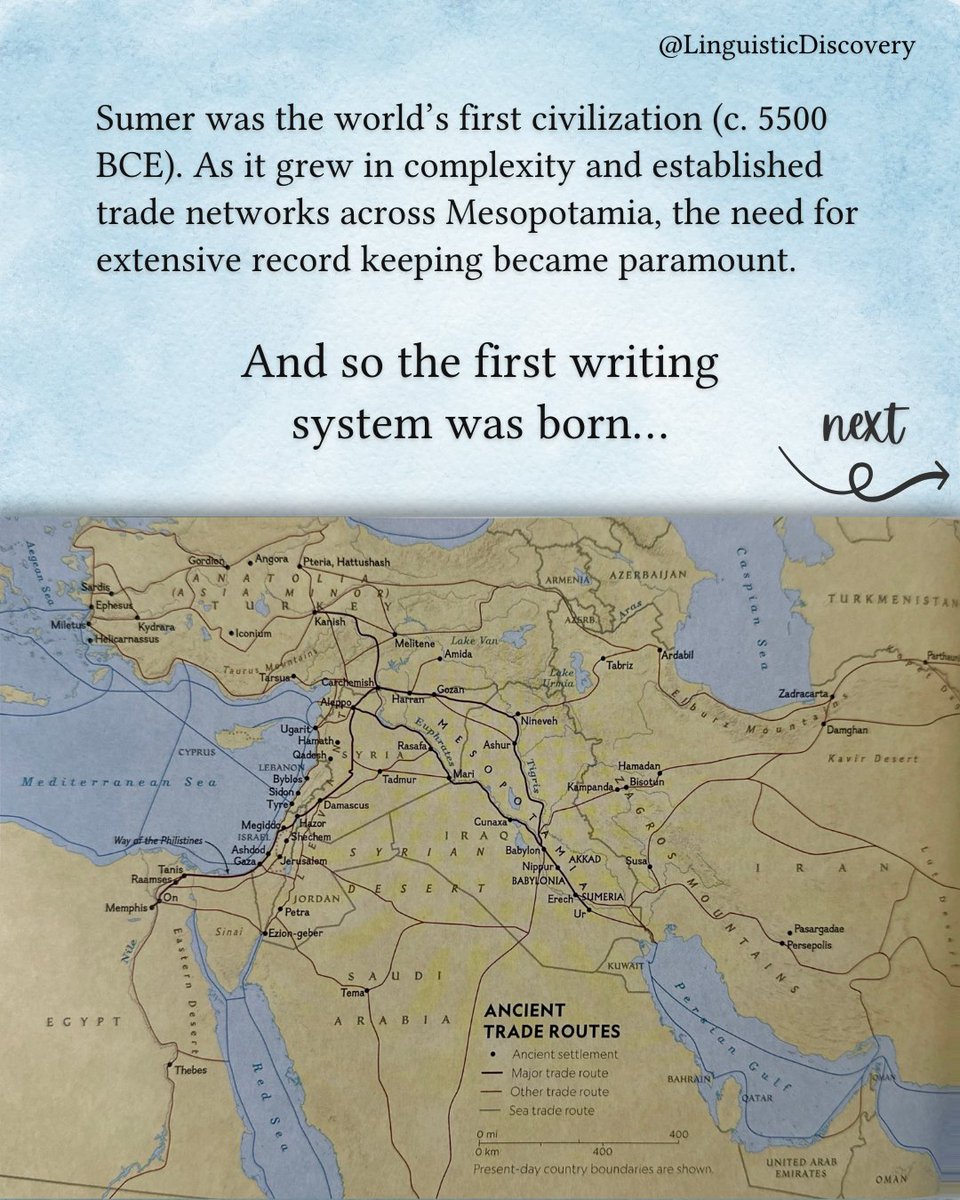
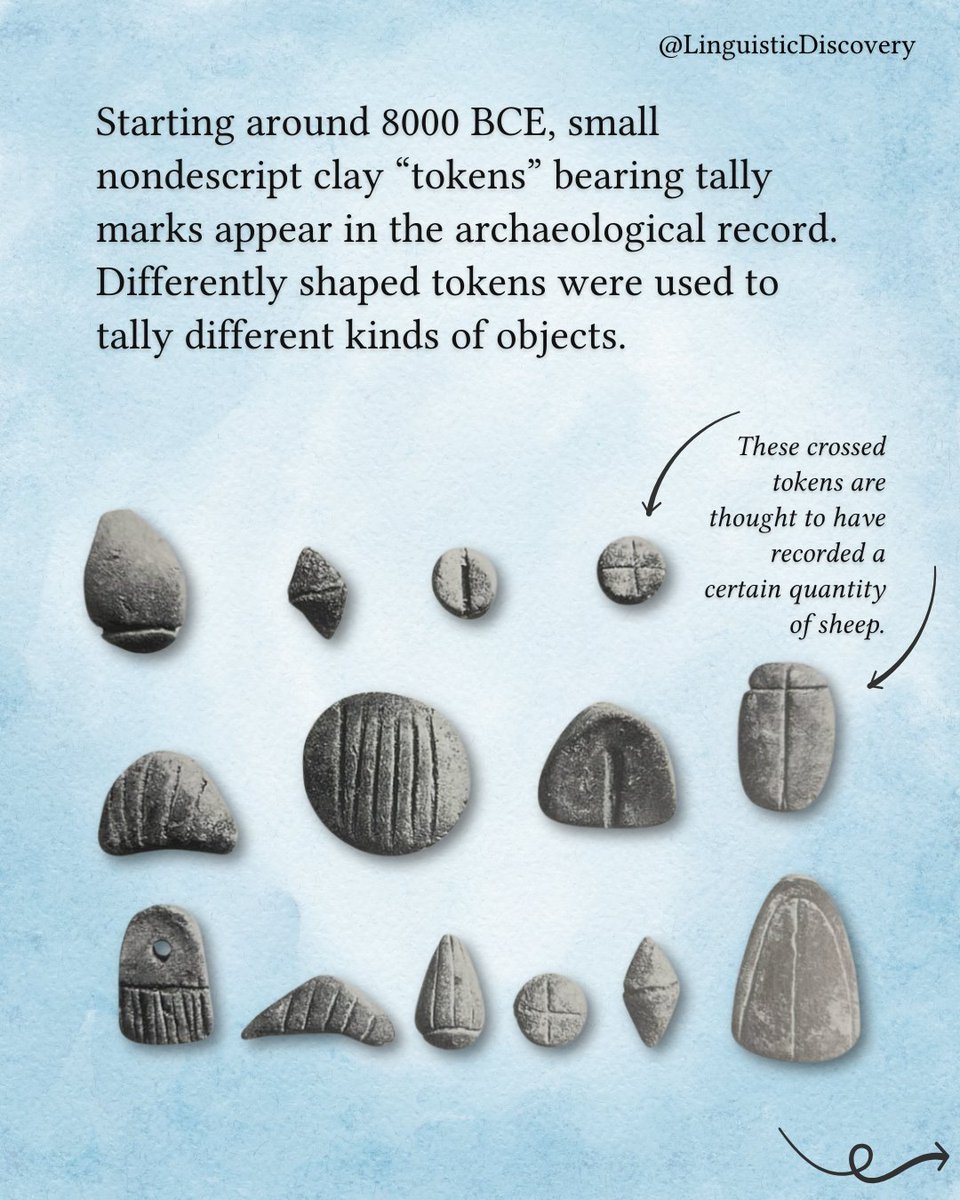
#Sumerian #cuneiform #Babylonian #Mesopotamia #counting #numbers #numerals #archaeology #trade #history #linguistics #writing #languageSumer is the world’s first civilization (c. 5500 BCE). As it grew in complexity and established trade networks across Mesopotamia, the need for extensive record keeping became paramount.  And so the first writing system was born…  Image: Map of ancient trade routes in Mesopotamia. 2/13 Starting around 8000 BCE, small nondescript clay “tokens” bearing tally marks appear in the archaeological record. Differently shaped tokens were used to tally different kinds of objects.  Image: A collection of tokens of various shapes and sizes, some with tally marks, some with other patterns. Several have a cross etched on them, thought to have been used to record a certain quantity of sheep.
Jan 1, 2024 16 tweets 4 min read
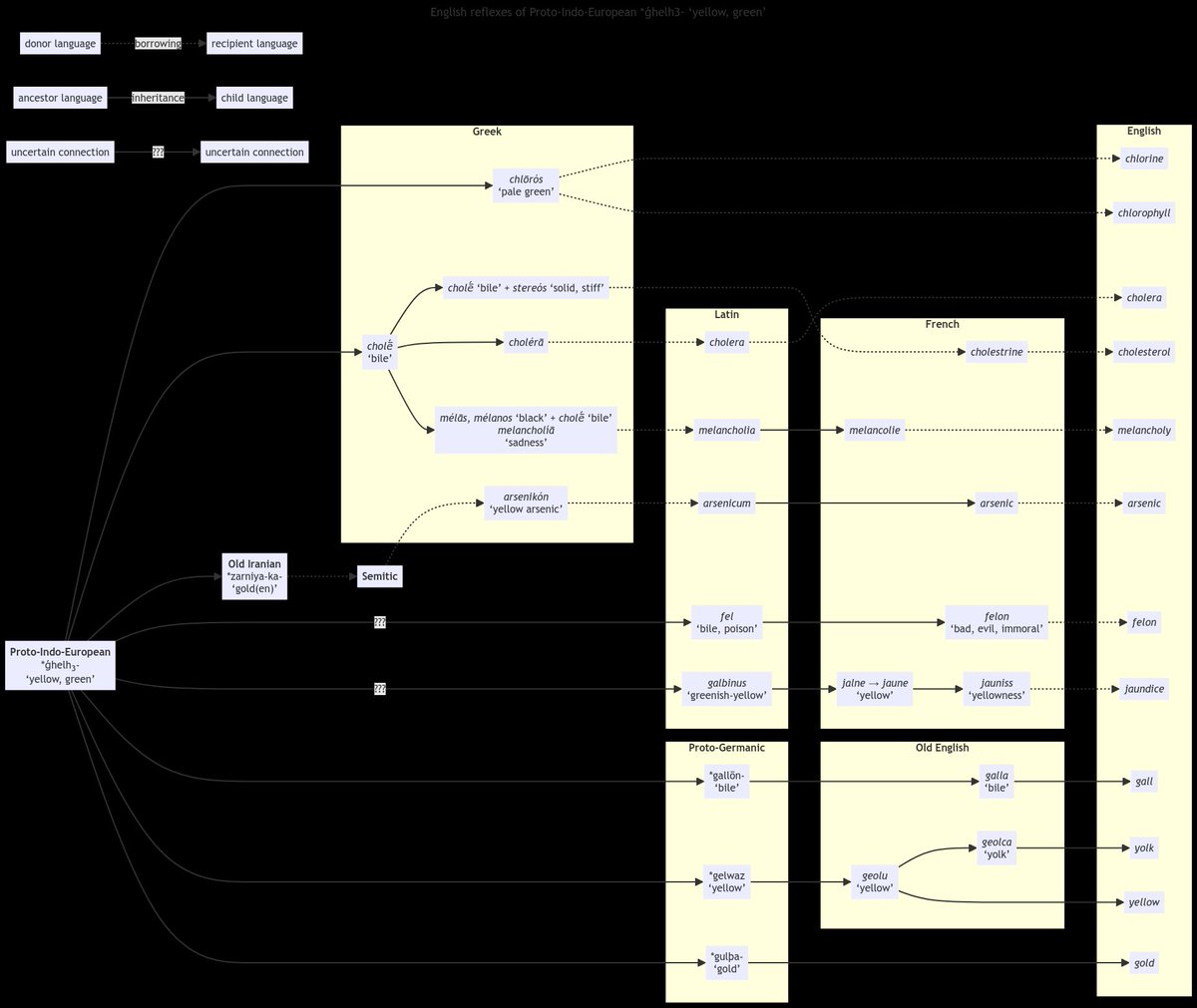
The Proto-Indo-European language (the hypothesized original ancestor language of most modern languages in Europe and South Asia, hereafter abbreviated “PIE”) had a root *ǵʰelh₃- ‘yellow, green’. 1/16 Image Aside: How can this word refer to both ‘yellow’ and ‘green’? Historically, color terms in the world’s languages referred to a broader range of colors than they do today, and focused more on the texture or brightness of the object rather than its hue. 2/16
en.wikipedia.org/wiki/Color_term