Rāma Śēṣan Chandraśēkaran Profile picture
| Control theory | Mathematical Physics | ❤️ Pagan Cultures | Linguistics| Writing @brhat_in | Author of: From Gods to the God https://t.co/t68nAMuger
4 subscribers
Sep 28 5 tweets 5 min read
I just read this piece of crap from thefederal.com/category/state…

My thread of rebuttal 1/n

Evangelism is a fundamental right when it comes to Christianity, Islam, or even a niche neo-wagon cult that is best not named, yet it becomes "scandalous" and "embarrassing" when practiced by Hinduism, the majority faith of India. Why the double standard?

Why is Hindu outreach framed as manipulative or divisive, while other religions’ proselytizing is celebrated as noble?

Historically, Hinduism has been inclusive, absorbing diverse practices without aggressive conversion tactics, unlike missionary-driven faiths that often demand exclusive allegiance.

The 'Dalit Govindam' initiative is an extension of this ethos, inviting marginalized communities to participate in devotion.
Critics who label Hindu evangelism as "exploitation" conveniently ignore the aggressive conversion campaigns in tribal and Dalit areas by foreign-funded missionaries, often backed by global networks. Data from the 2011 Census shows a steady decline in Hindu populations in certain regions, correlating with such activities yet Hindu efforts to reconnect with their own are vilified.
The outrage seems less about principle and more about discomfort with Hinduism asserting itself in a secular India. If evangelism is a right, why is it denied to Hindus in their own cultural heartland?
... to be continuedImage 2/n

Hindu evangelism is branded as "vote-bank politics," but Christian and Islamic proselytizing is portrayed as selfless and apolitical. Really?

Evangelism is a fundamental right for other faiths, but when Hindus engage, it’s "religious exploitation."

And who decides what Dalits need? Do they need churches, mosques, or Bibles? Why is Christian outreach to Dalits unquestioned, but Hindu initiatives must wait until every Dalit is "well-educated, well-employed, and healthy"? What kind of lopsided secularism is this?

This selective outrage reeks of hypocrisy. Christian missionaries have operated schools and hospitals in India for centuries, often as tools for conversion, yet their motives are rarely scrutinized. Meanwhile, Hindu organizations like TTD are expected to solve systemic socio-economic issues before even speaking to their own community.

The Indian Constitution guarantees freedom of religion under Article 25, which includes the right to propagate one’s faith. Why is this right weaponized against Hindus alone? If Dalits can be approached by every ideology from communism to Christianity, why are Hindu institutions barred from engaging them in a free market of ideas?

The assumption that Dalits need "saving" by external forces dismisses their agency. Programs like 'Dalit Govindam' empower Dalits to reclaim their spiritual heritage, not as charity cases but as equal devotees of Lord Balaji.

to be continued ......Image
May 26 5 tweets 9 min read
1/5
What the heck did Karl Marx say? Here is a small thread for those who want a nice and compact summary of his key ideas. Next time, you engage with Marxism, this would be useful.

Topic 1: History as a series of class struggles:

Marx propounded a new theory of history called historical materialism, in which he claimed that all of history could be explained through a single parameter - economics. The economics forms the substructure - the basis of history. Everything else - politics, law, culture, religion, etc are superstructures and are understood solely in terms of the substructure.

The first step in historical materialism is that Marx divides humanity into two—and only two—classes: the working class (proletariat), who work, and the wealthy class (bourgeoisie), who own the means of production and for whom the working class work in exchange for money. A Marxist has to define these two classes no matter which society he studies, at whatever point in time.

In Marxist theory, each period, one class is victorious and owns the most important means of production; another labors for them, with other classes playing marginal roles. This victorious owning class sets up government, laws, cultures, and religions that serve and promote its interests. Then, when a new technology comes into the picture that serves as a superior means of production compared to the current one, this new technology-bearing class cannot advance because of the political-legal-cultural structures that favor the old owning class and hence they revolt against the existing system and win. After winning, this new technology-owning class begins a new historical period, now dominated by this new means of production with them the people who own this technology as the victorious class. This continues until another technology comes about that creates another revolution.

For example, in medieval Europe, the means of production was agricultural land; the ruling class were the aristocratic owners of that land; and the workers were the peasants. Over time, the commercial merchant class of the towns improved its means of production, gaining wealth and power. But their ascent was blocked by the monarchical, traditional, and legal structures the land-owning aristocracy had set up to serve its own ends. Eventually, the merchant class gained enough power to stage revolutions against the landed aristocracy to set up a capitalist driven economy. Marx sees his communist revolution as the final revolution that will usher in an utopian paradise of equality.

Marxism is explicitly an internationalist theory: Nations do not matter; only classes do. Capitalism will destroy itself for purely economic reasons, leading to a bloody revolution of the proletariat, which as the largest class in history will end all class differences in a communist utopia.

.....Image 2/5
Topic 2: Alienation and the Irrational Resource Allocation from Capitalism
Another central notion in Marx’s historical materialism is that of alienation (German: entfremdung). This may remind you of the alienation or separation between believers and disbelievers, and the messianic oppression that the disbeliever inflicts upon the believer. Let us now see how this is secularised in historical materialism.

While a capitalist sees a worker earning money as a good thing that benefits both parties (the worker needs money and the wealthy man needs labour, so they exchange what they have for what they need), Marx sees this as a form of alienation or oppression by the wealthy. Marx views productive work as the creative essence of what makes someone human. In selling his labor power to the bourgeoisie for money, the worker is selling the essence of his self. Then, at the end of the production process, the bourgeoisie owns the product of the worker’s labor, sells it at a profit, thus owning the worker’s own human essence for a wage.

Marx further argues that there is a distinction between use value and exchange value of an item. Take the water bottle as an example. The use value of a water bottle for someone is determined just by how useful it is to a person and how badly he needs it. But money (price worth) in capitalism captures not the use value of the water bottle but what is called the exchange value that depends on the supply and demand of the water bottle.

The price of the water bottle in capitalism is not determined just by how useful it is to a person but also on how many water bottles are in supply and how many other people want the water bottle. When the supply is high and the demand is low, the price of the same water bottle is low compared to the high demand and low supply scenario where the price is high. So, according to Marx, capitalism substitutes the exchange value of a commodity for its use value and is hence highly irrational!

Similarly, Marx argues that what a worker is paid as wages captures the exchange value of his labor and not the use value. The wage of a laborer in a capitalist economy is not decided based on how useful the labor is to the owner but based on the supply and demand of that labor. If there are lots of people willing to work and only few employers who want that work, the wages of the labor is low. Similarly, when a given labor is in high demand but there are only a few people who can perform that labor (because it requires special skills), the wage for that labor is high. If a factory worker really paid the laborer for the use value of its labor, then he would not be paying him very low wages and make him work under horrible working conditions. He does that simply because he knows that he has lots of other workers who will come even if this worker quits.

Thus, according to him, capitalism is irrational because it ends up allocating resources to people based on the exchange value of their labor and the commodities and not based on the use value of their labor and commodities. A Marxist society should thus redistribute resources and labor according to needs and not exchange values quantified by price. Thus, the famous communist phrase - "From each (working) according to his ability; to each (getting) according to his needs".

In a capitalist society, everyone is dependent on many others for their livelihood. Money and private property connect us to countless others through trade (imagine for a moment where the food you eat, the chair you sit on, the water you drink, and the shoes you wear come from). But Marx sees this capitalistic dependence as a loss of freedom like Rousseau—since it creates interdependence between the working and owning classes—and believes capitalism leads to a superficial, alienated society full of meaningless relationships dictated solely by money. What capitalists like Adam Smith view as a self-regulating free market governed by self-interest, Marx sees it differently as a loss of liberty and a key factor that prevents worker revolution.

In a famous passage from “The Communist Manifesto”, Marx says that capitalism coarsens life, showing the power relations among men to be what they really are: naked exploitation which Marx views as honest, direct, brutal exploitation—without the pretext of moral, religious, or caste superiority.

Marx predicts that, as capitalism progresses, the working class will be increasingly exploited by the wealthy class (whose only interest is profit), and inequality between the classes will widen. Eventually, Marx foresees a revolution: the working class will rise against the owning class and reverse the existing power structures.

After this revolution, the wealthy will be forced to relinquish their property, and the working class will establish a utopian communist society where everyone lives as equals, without private property or money, and all means of production are owned collectively by the state.Image
May 12 11 tweets 15 min read
Donald Trump was right. The conflict between India and Pakistan is centuries old and is the latest version of the continuing conflict between India and Arab-Turkish imperialism. This thread is filled with all the important episodes of the Arab-Turkic conquests of India in one place. Book mark it.
1/n
The Dawn of Conquest: Md bin Qasim’s Invasion of Sindh (711–714 CE)

In the early 8th century, fired by the zeal of conquest and guided by the edicts of his faith, Md bin Qasim, a young Umayyad general, marched into India under the orders of Governor Al-Hajjaj. With a 6,000-strong army, he aimed to subdue Sindh, a land of ancient kingdoms and vibrant temples. His mission, as recorded in the Chachnama, was ruthless: slay all able-bodied men, enslave women and children, and reshape the land in the image of the Caliphate.
The port of Debal fell first in 711 CE, its defenses crumbling under Qasim’s siege. For three days, the city bled—its residents massacred in a grim spectacle of conquest. Temples were razed, their sacred idols shattered, and mosques rose atop their ruins. The text of Chachnama recounts the chilling toll: thousands perished, their cries drowned by the clamor of victory.
Brahmanabad followed, where 6,000 to 16,000 men of fighting age were slaughtered, their blood staining the earth. In Multan, the same fate befell all who could wield a sword. Qasim’s campaign was unrelenting—city after city faced his wrath. At Rawar, the spoils were staggering: 60,000 souls enslaved, their futures torn apart. Across Sindh, hundreds of thousands were chained, their lives reduced to servitude.
The plunder was immense—Hindu temples, palaces, and establishments yielded gold, jewels, and treasures untold. Sacred sculptures were smashed, their fragments scattered as symbols of a new order. Qasim’s three-year campaign (711–714 CE) left an indelible mark: a land of ancient glory brought to its knees, its people subjugated, its heritage defiled.
This was but the first chapter of a long saga of invasions that would shape India’s destiny. 🪔
#ArabInvasions #IndianHistory #SindhRejectsCorporateFarmingImage 2/n
The Scourge of the North: Sultan Mahmud of Ghazni’s Relentless Raids (1000–1027 CE)

Sultan Mahmud of Ghazni, a name that echoes with terror, descended upon Northern India seventeen times between 1000 and 1027 CE, reviving the brutal legacy of Qasim with unmatched ferocity. Driven by zeal and greed, he sought to plant Islam’s banner while plundering a land of ancient riches. 🪔

In 1001–02, his army stormed Northwest India. Al-Utbi writes: “Swords flashed like lightning… fountains of blood flowed like the fall of a setting star.” The Muslims “wreaked vengeance on the infidel enemies of God,” slaying 15,000, their bodies left as “food for beasts and birds of prey.” The spoils were staggering—500,000 slaves, men and women of beauty, alongside boundless wealth.
Nagarkot (Kangra) fell in 1008, yielding 70,000,000 dirhams, 700,400 mounds of gold and silver, precious stones, and embroidered cloths. In 1011, Mahmud marched on Thanesar to “extirpate idolatry.” Al-Utbi recounts: “Blood of the infidels flowed so copiously that the stream was discolored… people couldn’t drink it.” The Sultan returned with “plunder impossible to count.”
The conquest of Kanauj was merciless. Its people either converted or perished—seven forts fell in a single day. Al-Utbi notes: “Many fled like wretched widows and orphans… those who didn’t were put to death.” Tens of thousands were enslaved, their lives shattered, as Mahmud’s army looted without restraint.
Alberuni, a scholar in Mahmud’s court, mourned: “Hindustan was utterly ruined… the Hindus became like atoms of dust scattered in all directions.” Their hatred for Muslims grew deep. Nehru himself later wrote in his book "The Discovery of India", “Most Muslims adore him; most Hindus hate him… Islam became associated with barbarous cruelty.”
#IslamicInvasions #IndianHistory #MahmudOfGhazniImage
Feb 14 5 tweets 5 min read
The end of Buddhism in India - a thread
1/5

With so much propaganda going on about the evil brahmins "destroying" Buddhism and causing it to vanish out of India, here is my personal analysis of why it fell.

REASONS
1. Turkish Invasions -
The fall of Buddhism was undoubtedly precipitated by the Islamic Turkish invasion and sacking of monasteries, universities, and libraries.

2. Abstraction at the technical level -
For several centuries, philosophical debates among and between the various Hindu and Buddhist sects refined their religious philosophies which made them abstract and less easy for the layperson to differentiate.

But why was Buddhism and not Hinduism, vulnerable due to these?Image 2/5 The end of Buddhism in India

3. Syncretism at the layman level -
Development of tantra and the proliferation of a host of Bodhisattva and Dharmapala deities must have also made Buddhism less different to a common folk from orthodox or tantric Hinduism. Also, there was absorption of Buddhism by Hinduism as well which is reflected in the Vaishnavite doctrine of Buddha as an avatara of Vishnu. Even the Pala dynasty, the last Buddhist dynasty to rule India, who considered themselves as proud Buddhists, also prided themselves on full observance of rituals and offerings to gods and the observance of varna.

So, with the common man unable to see a distinct Buddhism in the level of praxis, it became to be seen as a religion of specialists and philosophers. It became increasingly associated with monastic learning as it failed to distinguish itself from Hinduism at the common level of the layman.Image
Dec 8, 2024 30 tweets 19 min read
I am learning Chinese and I found that the characters aren't random but have logic in their formation. I present them here, and will update. I have learnt 600 characters now and it has been a beautiful journey. I present the traditional characters here (not modern Mandarin), although for the most part, both sets coincide.

Set 1: Woman and Child
Char 1 女 nǚ (woman)
It means a woman and the character schematically represents a woman taking a long stride with her leg

Char 2 子 zî (infant, child)
This means an infant or a child and is supposed to represent a sleeping infant with its head lying to its left and with outstretched hands but with legs swaddled together using cloth bands as in traditional Chiense culture

Char 3 好 hăo (good, right)
The character represents a woman with child that signifies goodness of a woman with child and sticking to it always

Char 4 安 ān (peace)
This character meaning peace is a woman staying inside her house - under a roof above her. Peace is achieved only when woman is inside her house - yes, Chinese is a patriarchal language

Char 5 字 zì (written character)

This signifies an infant under roof. The infant part is to remind us of the pronunciation (zi) and Chinese texts transcribed in bamboo bound into books were previously preserved inside the house. Set 2: Pigs in home 🤣 😂 🤣 😂

Char 6 豕 shî (pig)
This character is supposed to schematically represent a pig.

Char 7 家 jiā (house, family)
This character, meaning family or house, is represented by a pig under a roof. Because in ancient Chinese culture, pigs were the only domesticated animals to be kept inside the house as they exhibited far less nuisance, and they were considered more valuable.

Char 8 嫁 jià (marry a man)
This character meaning marrying a man is the combination of characters for a woman and a family. It represents a woman marrying a man because she moves into a new family or house while marrying. Also, the family character is a phonetic reminder of the pronunciation of the word (jia).

Char 9 妻 qī (wife)
When a man marries, he bestows the broom unto the wife bestowing upon her, the rulership of the house. Hence, wife = one who wields the broom. The character reflects it by putting the character of a broom above the character of a woman.
Nov 16, 2024 6 tweets 3 min read
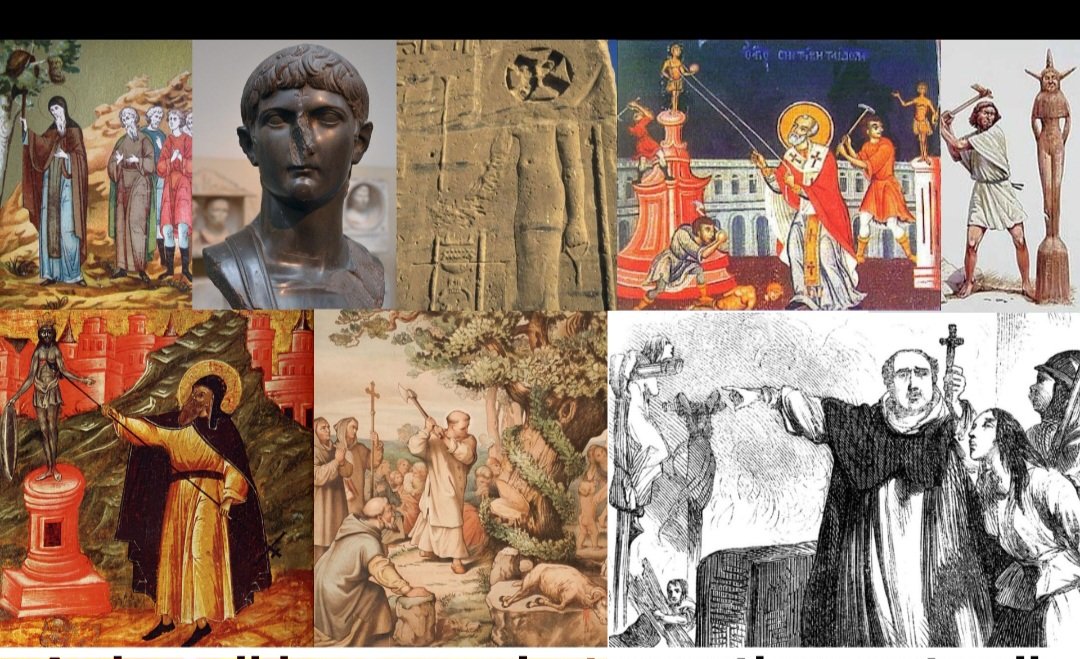
Latest book to my collection. "The Rise of Western Christendom" by Peter Brown. Remember again friends, Europe wasn't always Chrisitian. And it didn't become fully Chrisitian overnight, with everyone suddenly thinking Jesus is better than Poseidon or Zeus or Baal or Odin. Christianity expanded and conquered step by step, one by one, town by town, year by year, legislation by legislation, sword upon sword. It took a thousand years (0 to 1000 AD) for Western Europe to become completely Christian. If you asked a pagan in 400 or 500 AD if he thought his religion would go completely extinct, he would have said NO. Yet here we are. Stay tuned to this thread as I post interesting extracts from this amazing book.Image Christian - pagan bhāicāra explained by the historian Peter Brown on how Christians destroyed pagan temples out of love. Image
Oct 12, 2024 23 tweets 17 min read
1/n

Grammar lessons on Old Tamil:
Are you a native Tamil speaker who is passionate about reading Old Tamil poems but are intimidated by the archaic language and can’t exactly follow translations and commentaries into modern formal Tamil? Are you a native Tamil speaker who was bored of Tamil grammar in school but feel like catching up now? Are you a linguist who would want a nice grammatical expose of the Old Tamil language? I present in this thread, a series of grammar lessons for Old Tamil. Bookmark it if you want to learn Old Tamil grammar. It will be divided into four major parts -

Verbs
Non-Verbs
Syntax
Poetic Meter

Today, I present to you, the lessons on verb classes. I will keep adding. What follows is a series of bite sized grammar lessons for Old Tamil. Some lessons may be very familiar to you and some, not so much. But, after reading this, you should get a nice sense of command over the workings of the language.

Read on to get started about Tamil verbs. 2/n

Verbs: Roots: Tamil verb roots can have more than one syllable

Sanskrit and other languages have verb roots that have only one syllable (one vowel). All other parts of the verb are prefixes and suffixes. But in Tamil, one can have two syllables (two vowels) and sometimes, more than two syllable roots too. The raw roots (like in English and Sanskrit) are used in the command form - imperative - when you ask someone to do something.

Examples of verb roots with one syllable:

செல் = hey, go!
செய் = hey, do!
காண் = hey, see!
சொல் = hey, tell!
ஈ = hey, give!
பார் = hey, look!

Examples of verb roots with two syllables:

உணர் = hey, feel!
கொடு = hey, give!
விடு = hey, leave!
மோது = hey, collide!
கூடு = hey, come together!
படி = hey, read!
தூங்கு = hey, sleep!
நட​ = hey, walk!
நடு = hey, plant!
Oct 7, 2024 23 tweets 8 min read
1/n Why I have little sympathy for the collapse of Christianity in the West. A thread on famous icononclasms of ✝️ against pagans ..... Image 2/n Ivory diptych of a priestess of Ceres, the Roman goddess of cereal, still in fully classical style, ca 400: the "idol" was defaced and thrown in a well at Montier-en-Der (later an abbey) where it was found. Image
Aug 30, 2024 22 tweets 14 min read
1/n
#sanskrit
#mahabharara

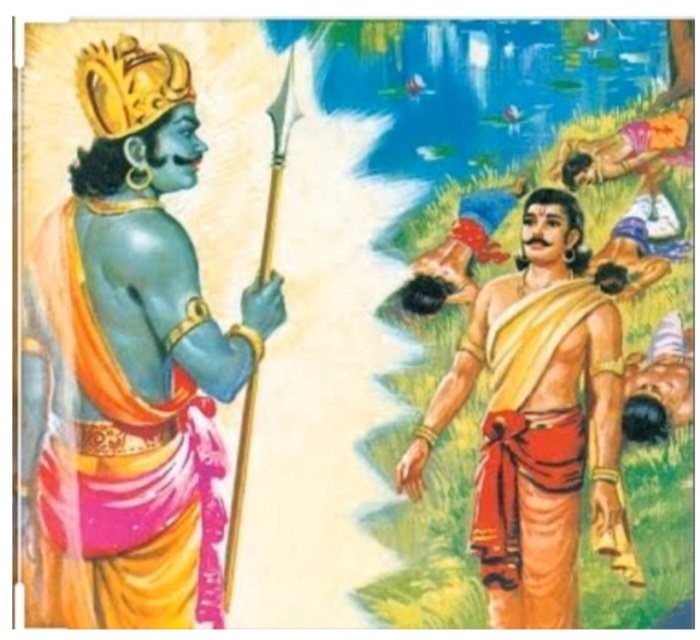
In this thread, I will be posting the verses of Yakṣapraśna: from Mahābhāratam. These are the questions asked by Yakṣa to Yudhiṣṭhira to have his brothers come back to life. These questions are in simple Sanskrit Q-A format , so it will be useful for beginners Sanskrit students. Also they are rhyming and hence enjoyable.Image 2/n

Theme: Sun

Q1: किंस्विद् आदित्यम् उन्नयति।
What makes the sun rise?
A: ब्रह्म आदित्यम् उन्नयति।
It is Brahma which makes the sun rise.

Q2: के च तस्य अभितश्चराः ।
Who all accompany the sun closely?
A: देवाः तस्य अभितश्चराः ।
The devās accompany the sun closely.

Q3: कः च एनम् अस्तं नयति ।
What makes the sun set?
A: धर्मः च अस्तं नयति ।
Dharma also makes the sun set.

Q4: कस्मिन् च प्रतितिष्ठति।
In what is the sun firmly anchored?
A: सत्ये च प्रतितिष्ठति।
Aug 16, 2024 10 tweets 6 min read
1/n Some assorted extracts from Buddhist literature.

Warning: Oppressed, suppressed SJWs, please stay away

Buddha in Dhammapada 389 says.
Pali: Na brāhmaṇassa pahareyya, nāssa muñcetha brāhmaṇo, dhī brāhmaṇassa hantāraṃ tato dhī yassa muñcati.

Translation: One should not strike brāhamana, nor should a brāhmana, when struck, give way to anger. Shame on him who strikes a brāhmana, and more shame on him who gives way to anger.Image 2/n
In Kunālavadāna, King Ashoka says:

Sanskrit: "āvāhakāle ’tha vivāhakāle jāteḥ parīkṣā, na tu dharmakāle |

Translation: Now, at the time of a wedding, a marriage, one [rightly] considers jāti, but not at the time of [teaching] the Dharma Image
May 22, 2024 4 tweets 5 min read
1/4
Were sub-Saharan Africans primitive? Didn't they have enough intelligence to invent or adopt the wheel? Is their linguistic tradition inferior because they didn't have writing? Read below to counter the racist European supremacists.

Some basic geography, economics and history:

Is it true that native sub-Sahara Africans never invented or adopted the wheel?

Africans certainly knew about wheels and so did the native Americans (as evident from toys in the archaeological record). There are some evidences of wheeled transport used intermittently, particularly around the Sahel in Africa, at times corresponding to the early Middle Ages. But it didn’t really catch on. Why? Let's educate this literate wheel loving European first. It doesn't take much IQ to figure out that a circular object rolls on a flat surface.

The wheel by itself is a pretty simple idea but also pretty useless – a toy, nothing more. You need big domesticable animals that can operate in groups with other animals to pull those wheeled vehicles. This was the reason why the Incas in America never made use of the wheel despite inventing it and using it as a toy. There are no strong domesticable animals to pull wheeled vehicles in America - horse/bulll/whatever animals we associate with wheeled carriages weren't simply found in pre Columbian America.

How about Africa? Surely they were exposed to Asia and Mediterranean through trade. They would have been exposed to wheels even if they were dumb to think of it themselves. Why didnt the sub Saharan Africans adopt it? Reason is again biology and geography - not strong suit for European supremacists.

African Tryponosomiasis is a deadly disease affecting humans but animals more fatally - PFA below poc for details of the disease and the areas most prone to it. So you can't rear and take care of horses or bulls or cattle to pull wheeled wagons or carts when there is such a widespread disease.

Most inventions are like that. It’s not about a single stroke of genius. It’s the means to fulfil it that matters for it to be used in practice.

Also how much was wheeled transport used intermittently Europe itself?Image
Image
2/4 Also, Europe and South Asia itself didn't use wheels for long distance transport before the industrial age. Europe is too well connected by rivers and lakes and the sea - Europe is a peninsula of peninsulas. So, Europeans themselves preferred water transport for long distances and used wheeled wagons only for short distance transport- from the nearest bank to the final destination using the last leg of the journey. The Romans used their roads mainly not for long distance transport through wagons but of their army. Same is true with Sub Saharan Africa as well. Water transport is easier as there is no need to flatten and lay roads and maintain animals. See maps below.

Wheel was useful for long distance transport only in central Asia (grasslands) and in the Middle East which don't have a well connected river system. But even in the Middle East, camels displaced wheels as a preferred mode of long distance transport after late antiquity.

Also, are written cultures inherently superior than oral cultures? Read furtherImage
Image
Mar 27, 2024 5 tweets 8 min read
In case you want to learn Sanskrit along with some nice Subhāṣitas, bookmark this thread
1/n

The original saying is in the picture and the word by word dissection with explanation is in the tweet

हंसः श्वेतः बकः श्वेतः , कः भेदः बक-हंसयोः? नीर-क्षीर-विवेके तु हंसः हंसः बकः बकः

Words:
हंसः = swan
श्वेतः = white
बकः = stork
कः = what?
भेदः = difference
नीरः = water
क्षीरः = milk
विवेकः = sense of rational discrimination
तु = indeed (emphatic) = Hindi तो

कः भेदः बक-हंसयोः = what (is) the difference between बक (and) हंस?

योः = between, of, among, in, on, at FOR A DUAL SET OF OBJECTS ONLY

Other examples:
1. शुभः सीता-रामयोः विवाहः
Auspicious is the wedding of Sita and Rama
2. दृढं दुर्योधन-कर्णयोः मित्रत्वं
Firm is is the friendship between Duryodhana and Karna

For singular nouns ending with अः or अम् like विवेकः , the ending ए as in विवेके signifies a locative function

विवेकः = intelligence
विवेके = in intelligence

वनं = forest
वने = in the forest

मध्यं = middle
मध्ये = in the middle

Example: Bhagavad gita 1.21
सेनयोः उभयोः मध्ये.... (उभय = both)

योः in सेनयोः and उभयोः signifies "OF" here and मध्ये signifies "in the middle"

Translation: In the middle of the two armies....

हंसः श्वेतः बकः श्वेतः = A swan is white, a stork is white

कः भेदः बक-हंसयोः = what is the difference between swan and stork?

नीर-क्षीर-विवेके तु = indeed in water-milk-discrimination

हंसः हंसः बकः बकः = a swan is a swan and a stork is a stork

Complete translation: A swan is white, a stork is white; what is the difference between swan and stork?
Indeed in water-milk-discrimination, a swan is a swan and a stork is a stork

Sentences:
1. कः भेदः काक-हंसयोः?
What is the difference between a crow and a swan?
2. दर्शने हंसः श्वेतः परन्तु काकः कृष्णः
In appearance, a swan is white but a crow is black
3. कः भेदः अर्जुन-दुर्योधनयोः ?
What is the difference between Arjuna and Duryodhana?
4. पार्वती-शिवयोः कृपा
Blessing of Shiva and Parvati
5. भगवद्-भक्तयोः सम्बन्धः
Relationship between bhagavan and Bhakta
6. धर्मक्षेत्रे कुरुक्षेत्रे....किम् अकुर्वत सञ्जय?
(Gita 1.1)
In the dharmic kurukshetra, what did they [Pandavas & Kauravas] do, Sanjaya?
7. धार्तराष्ट्राः रणे हन्युः (रणम् = battlefield) Gita 1.46
The Dhartarashtras (sons of Drtarashtra) shall kill (हन्युः) on the battlefield

रणम् = battlefield, रणे = on the battlefieldImage In case you want to learn Sanskrit along with some nice Subhāṣitas, bookmark this thread
2/n

The original saying is in the picture and the word by word dissection with explanation is in the tweet

Note: this is a conversation between Rama and Lakshmana but not actually there in Valmiki Ramayana, but just a shubashita to convey patriotism. Rama here says to Lakshmana why he can't stay back in Lanka

Rama to Lakshmana:
अपि स्वर्ण-मयी लङ्का न मे लक्ष्मण रोचते । जननी जन्मभूमिः च स्वर्गात् अपि गरीयसी

VOCABULARY:
अपि = even/too/also/eventhough
स्वर्णः = gold
मयी = full of
लङ्का = Lanka
न = not/is not
मे = to me (also: my)
रोचते = is attractive /causes to like
जननी = mother
जन्मभूमिः = motherland
स्वर्गः = heaven
गरीयसी = Noble, Superior

For singular nouns ending with अः or अम्, the ending आत् (e.g. स्वर्गः => स्वर्गात्) signifies meaning "FROM, THAN" , like Hindi से

स्वर्गः = heaven
स्वर्गात् = from heaven/ than heaven

Phrase by phrase translation:
अपि स्वर्ण-मयी लङ्का = However this Lanka, full of gold
न मे लक्ष्मण रोचते = doesn't look attractive to me, O Lakshmana
जननी जन्मभूमिः च = mother and motherland
स्वर्गात् अपि गरीयसी = are superior even than heaven

Translation: However Lanka is, full of gold, doesn't attract to me, O Lakshmana. Mother and motherland are superior than even heaven

Eg. GITA 2.40
....स्वल्पम् अपि अस्य धर्मस्य त्रायते महतो भयात्
Of even a little of this dharma rescues from great danger

भयः = danger, भयात् = from danger
अपि = even
स्वल्पम् = little

Eg. Mahamrityunjay mantra
उर्वारुकमिव बन्धनात्
मृत्योर्मुक्षीय मा अमृतात्

बन्धनात् = from बन्धनम् (stem)
अमृतात् = from अमृतम्
मा = not
मृत्योः = from मृतयु
मुक्षीय = free

Like a cucumber from its stem, free (me) from death (mrtyu), NOT from amrtam (deathlesness)

Examples:
1. मधुरं मे रोचते
Sweet attracts me (I like sweet)
2. फलं मे न रोचते
Fruit doesn't attract me (I don't like fruit)
3. क्षीरमयं मधुरं = sweet full of milk
4. शोभमयः विवाहः = wedding full of auspiciouness
5. स्वर्णमयी शृङ्खला = chain full of gold (golden chain)

Depending on ending of the qualified noun, it is either मया , मयी or मयंImage
Feb 12, 2024 6 tweets 6 min read
A thread on the strong connection between the Iranian religion of Zoroastrianism and Vedic religion:
1/n

The central theme in Zoroastrianism is fire worship and all their temples have a fire in the sanctum that is always kept burning. Respect to the fire is a central theme in Zoroastrianism. In fact after the Islamic conquest of Iran, Zoroastrians who converted to Islam for the sake of employment in artisan work or metal working (that involves the use of fire) were excommunicated from the Zoroastrian community as they had defiled the fire by using it for material purposes. Recital of verses of Avesta (holy book of Zoroastrianism) in front of the fire is called YASNA in Old Persian - does this remind you of the Sanskrit word YAJÑA? This word YASNA has descended into modern Persian as JASHN which means ceremony or festival!!!

The central theme in Vedic religion is also a fire sacrifice, where verses from the Veda are recited while sacrificial offerings are made to the fire. This ritual is called "yajña" in Sanskrit.

Sanskrit-Persian Cognates Summary:
Yajña => Yasna (modern. Jashn)Image
Image
2/n Gods and metaphysics

Zoroastrians and Vedic Aryans worshipped equivalent sets of gods with cognate names. I first give the names of the Persian gods followed by their cognates in Vedic Sanskrit.

Examples:
1. Āsmān = अश्मन् (sky, firmament)
2. Hvar = सूर्य (sun)
3. Māh = मास (moon)
3. Vātā, vāyu = वाता, वायुः (winds)
4. Zām = (no cognate) (earth)
5. Haoma = सोम (mystic drink)
6. Yima = यम (death)

Next, there were other sets of gods named AHURAs (असुर) and DAEVAs (देव). Both in Vedic and Older Iranian religion, the words didn't separate into any good versus bad connotations but eventually the vedic and zoroastrian traditions diverged. Devas become good in Hinduism and asuras become bad. But in Zoroastrian religion, the ahuras become the good gods and the daevas, the bad ones.

7. Ahura = असुर
8. Daeva = देव

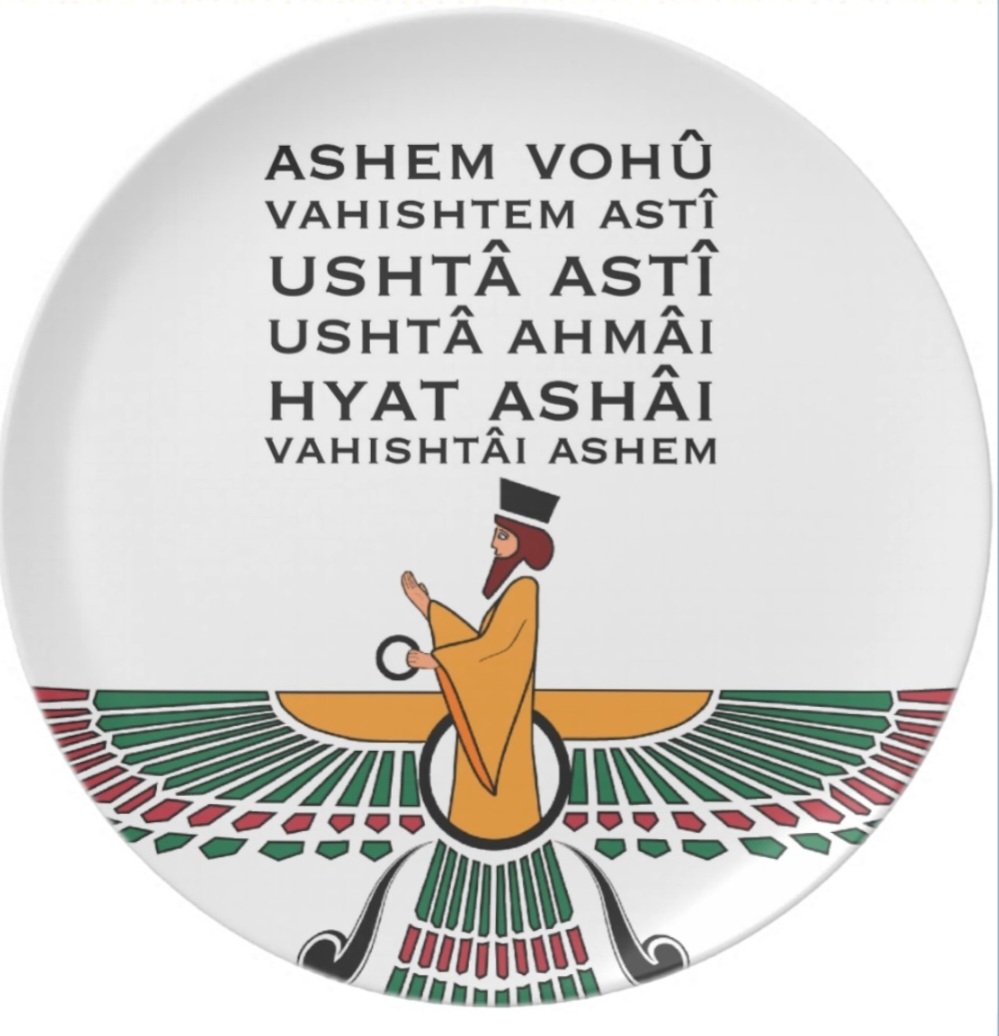
Also central to the Vedic cosmology is the concept of cosmic order that kept the sun and moon in their paths and the other cycles in universe as they ought to be. This was called ASHA in Persian and ऋत in Vedic. This is a supreme principle and even the gods are subordinate and subjected to it. Also opposing it was the force of disorder which is called DRUJ in Persian. The cognate word in Sanskrit would be द्रुह् which gives words like द्रोह etc. The ritual practices are said to uphold asha/ऋत against druj/द्रुह्

9. Asha = ऋत
10. Druj = द्रुह्Image
Image
Jan 31, 2024 6 tweets 7 min read
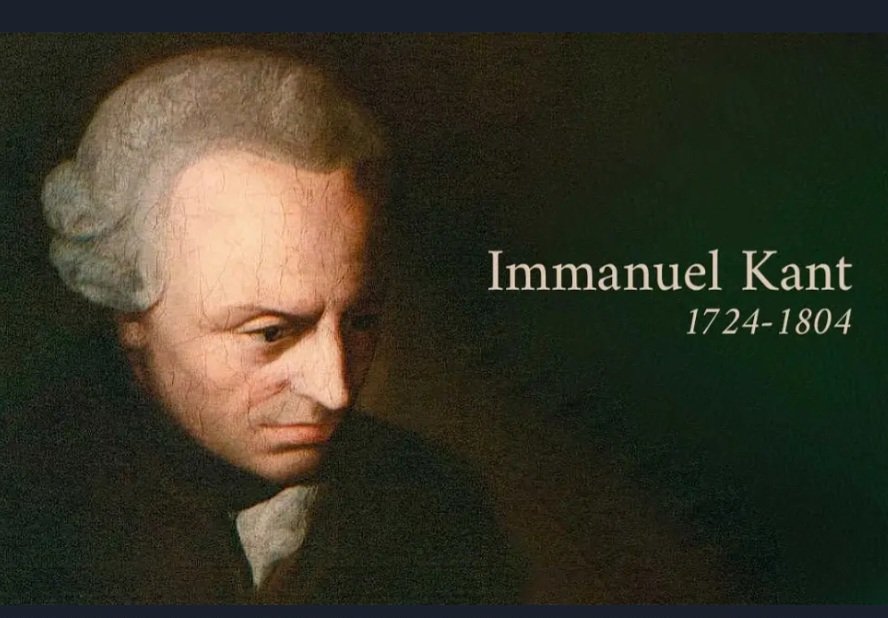
Kant's idea of freedom and Bhagavad Gita 1/n

Now let me tell me about a philosophical thought developed by a philosopher named Immanuel Kant who lived in the 18th century. After reading it, tell me if it reminds you of some shloka in Bhagavad Gita!!

Kant asked: what is freedom?
There is a standard answer to this question which I call the "liberal" view of freedom. According to a liberal

"A person is free when his action isn't constrained by any external restrictions from outside of him"

A liberal basically says "I am free if I can do as I please without any external agent to interfere with it". The liberals view this notion of freedom as a good thing, at least as far as it does not interfere with other's freedom.

In a liberal viewpoint, a good society is when all individuals have the ability to execute actions as they desire as far as it does not interfere with another individual's freedom.

But is this freedom real freedom? Kant really disagreed with it. Why? Read onImage
Image
Is a rich drug addict free? 2/n

Kant demolishes the liberal view of freedom by asking the simple question like:

Is a rich drug addict free when he acts unrestricted?

According to a liberal definition, this drug addict is free - nothing from outside is placing any constraint in his actions and all his actions are a result of his own desire for the drug. This is where a liberal definition sounds unsatisfactory.
But what is the alternative to the liberal definition?Image
Dec 29, 2023 28 tweets 35 min read
#temple_church_mosque
As we approach the Ram-janam-bhumi Temple inauguration, here in this thread, I present some interesting examples of successive conversions: pagan temple => church => mosque

1/n
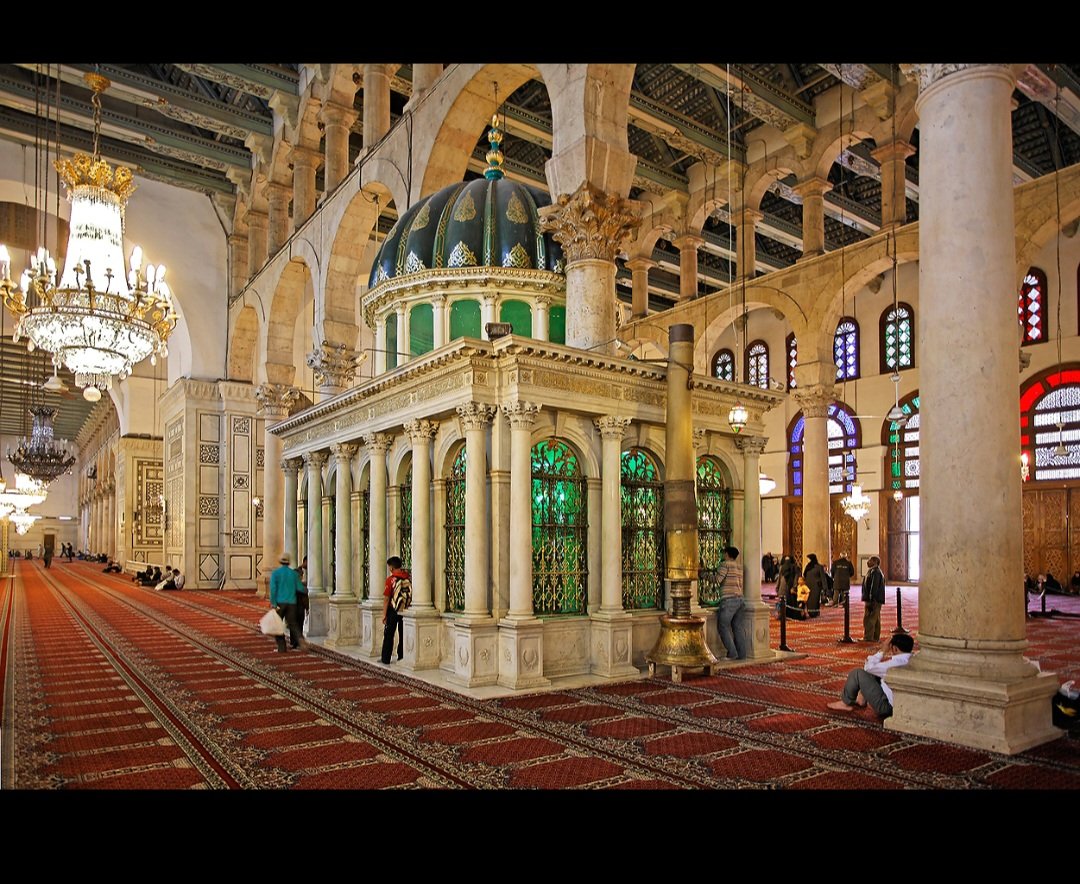
Left: Picture of Ummayad Mosque in Damascus, the capital of Syria

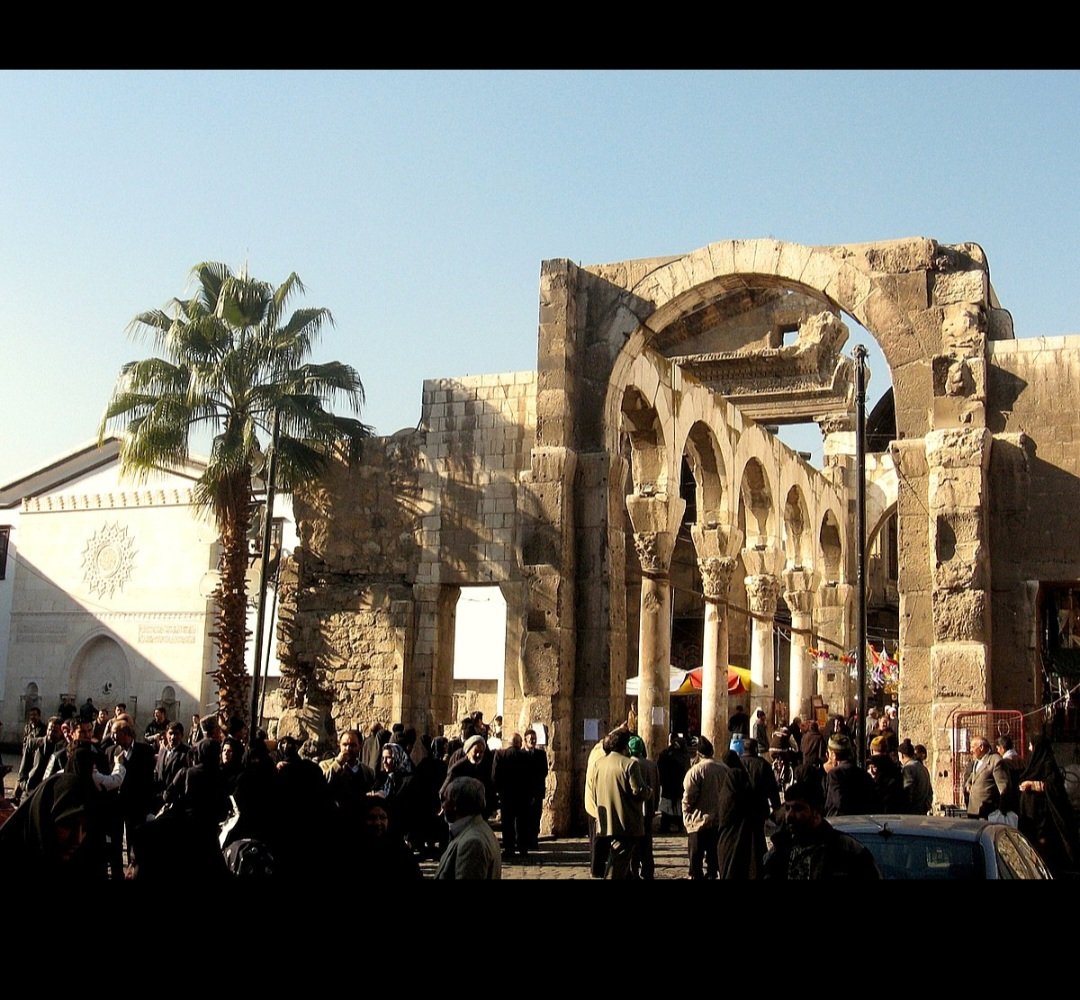
Right: The ruins of the pre existing pagan temple to Jupiter constructed in the times of the Roman Empire

First, the temple was converted to a church dedicated to John, the Baptist during the pagan persecutions by Christians by Emperor Theodosius I at the end of 4th century

Later when the Islamic Ummayads captured Damascus and made it the capital of the Ummayad Caliphate, they converted it into a Mosque.Image
Image
#temple_church_mosque
As we approach the Ram-janam-bhumi Temple inauguration, here in this thread, I present some interesting examples of successive conversions: pagan temple => church => mosque

2/n
Left Pic: the Parthenon mosque in Athens, Greece under Ottoman Turkish rule

Originally, the Parthenon was a temple dedicated to the Greek Virgin goddess Athena in 5th century BCE after the victory of Athens against Persia.

Later it was converted into a church of Our Lady of Athens, dedicated to the Virgin Mary under pagan persecution of Christians

After Greece was conquered by the Turks, it was made into a mosque.

Right pic: After Greece attained independence from Ottoman Empire in the 19th century, the Greek govt rebuilt the Parthenon (without idols of course)Image
Image
Dec 26, 2023 4 tweets 3 min read
1/n #christian_destruction
#pagans
In this Christmas week, I will keep posting about Christian destruction of pagan temples. Friends, do you think only India to be a land of temples where the gods and humans live together in the sacred civilisational geography? Well, here I quote a report from Alexandria, a city in Greco-Roman ruled Egypt in the first few centuries after Christ.

Source: P.M.Fraser “A Syriac Notitia Urbis Alexandriae”, JEA 37 [1951]: 103-8. It reads:
At Alexandria, one finds in Quarter A: 308 temples, 5058 houses …. Quarter B: 110 temples,
5990 houses... Quarter C: 855 temples, 2140 houses, …..Quarter D: 800 temples, 5515 houses
….. Quarter E: 405 temples, 5593 houses …

This totals to about 2478 temples and 24296 houses. This averages out to about 1 temple for every 10 houses!! Not only this, shrines of gods and goddesses were also present in every public building including public baths, courts, gymnasia etc. There is no reason to not assume that this same statistic held more or less for other cities as
well. So, a pagan city was dotted with lots and lots of temples. Obviously not all the temples were of equal grandeur, wealth and importance. There were small roadside temples with priests coming only part time along with large majestic temples where thousands of pilgrims visited per day from all over the empire. These super popular, grand temples tended to be atop mountains.

Where did all these temples go?Image 2/n
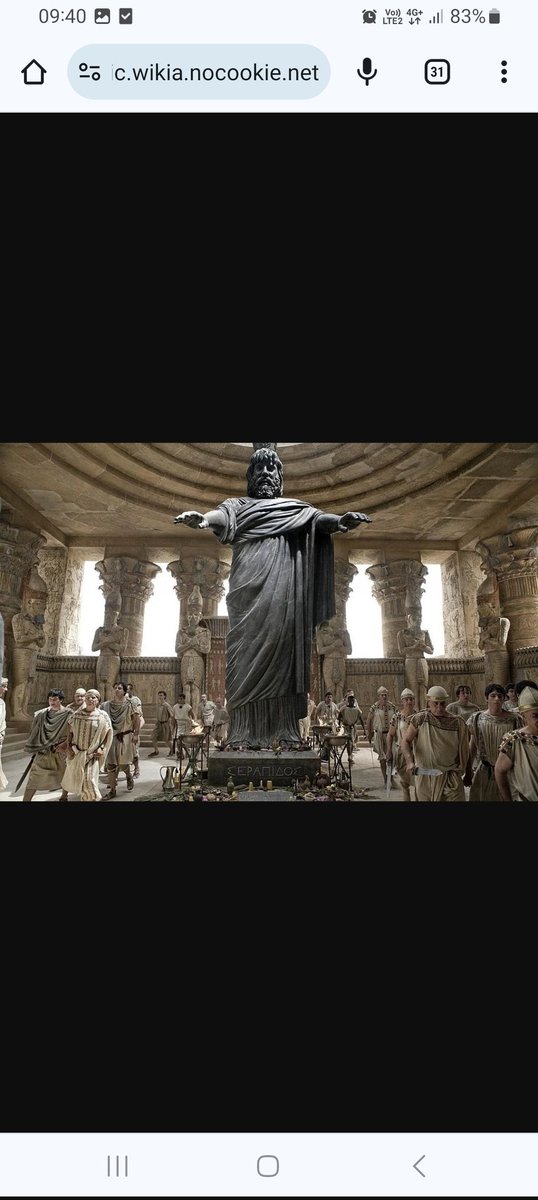
Left pic: reconstruction of a pagan temple at top of a mountain in the city of Alexandria named Serapeum

Right pic: current state of the temple in ruins

What happened friends?
We have a Christian chronicle of how this temple was destroyed. Continue to read.......
Image
Image
Dec 25, 2023 4 tweets 4 min read
A thread on the real history of Christmas:
How a Sun God and God of time were appropriated for Christmas:
1/n
Jesus birthday is neither recorded in the gospels of the New Testament nor in Jewish or Roman sources. Why? At his time, Jesus was a nobody - a rural illiterate itinerant laborer from the region of Galilee, which is itself a backwater of the Judean region.

Christmas is not mentioned by any of the the early church fathers especially Tutellian and Ireneaus who wrote extensively in the second century. But by the time we reach the fourth century works like St Augustine or St Jermome, we have mentions of Dec 25 as a festival commemorating Jesus birth. What happened exactly in between in the third century?Image
Image
2/n
In the dates from Dec 17 to Dec 25 in pagan Rome, a grand festival called Saturnalia was celebrated in honor of Saturn, the God of time. This was the equivalent of Diwali for the pagan Romans. In this period, people had feasts, exchanged gifts and there was a peculiar custom. At this period of festivity in Rome, slaves in every household would be served by their masters - the role of master and slave would be reversed. Also the slaves were allowed to criticize or be disrespectful to their masters.
This festival celebrated freeing of souls and the return to an ancient golden age when Saturn ruled.
This festival was celebrated with pomp all over the Roman Empire- it was an empire level grand festival and public holiday.

ALSO ROMANS WOULD HAVE TREES IN THEIR HOUSED AND DECORATE WITH VARIOUS IDOLS OF VARIOUS GODS IN SATURNALIA - this eventually became Christmas trees. The idols of gods eventually replaced by bells.

Now you see that Dec 25 is the final day of Saturnalia.

Something happened in the third century - read belowImage
Dec 21, 2023 6 tweets 4 min read
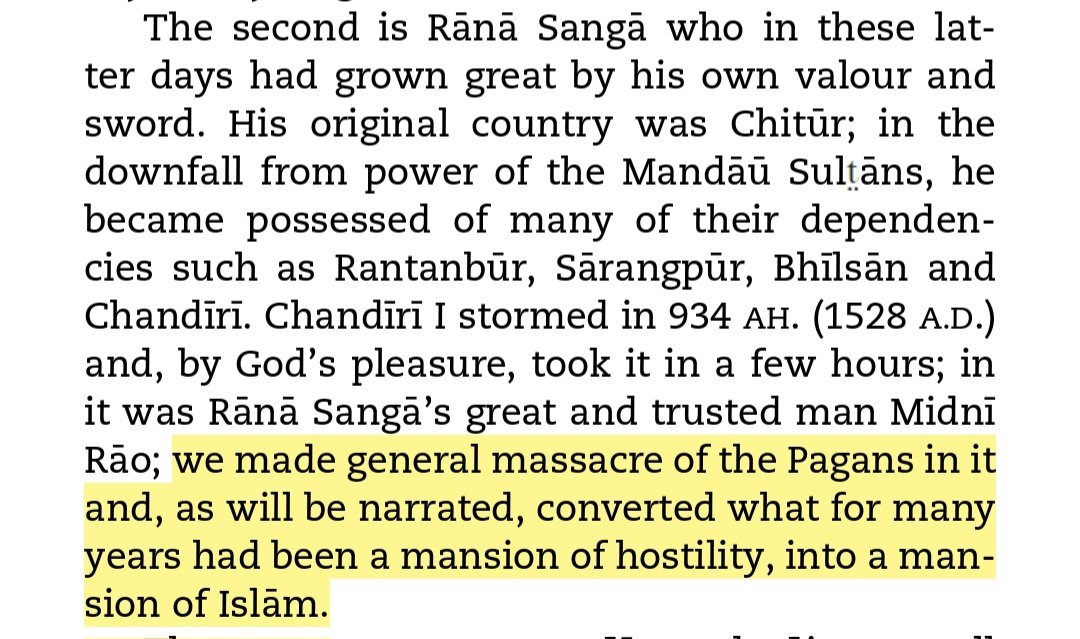
1/n In this thread, exposing the Mughal emperor Babur through his own autobiography. I read through the Babur Nama (his autobiopgraphy) from a translation from the original Trukic dialect. The first thing i noted:

For battles with fellow Muslim kings, he uses the word war. For battles with only Hindu kings, he uses the term HOLY WAR (zihaad).Image 2/n
Here is his account of his battle with Rana Sanga. He is clear that he wants to convert the mansion of hostility to a mansion of Islam

While his description of the material wealth of India is positive, look at his description of the people of Hindustan (pic on right). It is filled with xenophobic hatred.Image
Image
Nov 26, 2023 5 tweets 11 min read
We always think of Europe, Middle East and Americas as eternally Chri$tian / Mu$lim but they are not. In this thread, with hashtag #lost_gods , I post about some of these millions of deities in the the ancient world who all had to go away for the triumph of the two monotheisms. One will hence realize how much the world was like us, 2000 years ago. In this thread, I will post memorable and cherished stories , festivals and rituals associated with the various formerly polytheistic cultures - Greece, Roman, Persian, Anatolian, Akkadian, Assyrian, Babylonian, Canaanite, Celtic, Norse, Baltic, Slavic, Cherokee, Navajo, Mayan, Aztec and so on....Image #lost_gods
Posting the first deity from formerly polytheistic civilisations.
The Saundarya Lahari, attributed to Shankarācārya, begins as
शिवश् शक्त्या युक्तो यदि भवति शक्तः प्रभवितुम्
It translates as:
Shiva becomes capable (शक्तः) to create (प्रभवितुम्) only by Shakti (शक्त्या).

Every civilisation had its own variety of Shakti, the supreme mother Goddess, a source of all creation. Today, I will talk about the great mother Goddess of Rome - the Goddess CYBELE, who was simply referred to as "Magna Mater" (the Great Mother in Latin). Cybele was the Supreme mother Goddess of the Rome and worshipped extensively when Rome was beginning to emerge as the superpower in the Mediterranean.

The origins of Cybele go all the way back to prehistoric Anatolia (Turkey) where a Proto-Cybele like figurine dated to about 6000 BCE was found by archaeologists - known as the Seated Woman of Catalhüyük. At this stage she is clearly a fertility goddess as she is depicted giving birth.

Then when Greek culture came to Turkey from around 8th century BCE, this goddess was adopted by the Greeks and identified with the Greek goddess of Gaea, mother earth in Greek culture. There doesn't seem to be an unanaminous consensus about this identification of Cybele with Gaea - some accepted her and some rejected this identification. So because of this divisiveness, the shrines of Cybele in Greek culture were built and honored outside the city walls - as a protector diety. The Athenians had a dedicated structure to Cybele too, after they felt that she had sent a plague to the city for not honoring her. Soon however, Cybele was gradually more accommodated into the Greek pantheon and stories involving her with the other Greek gods were circulating around. But Cybele's future would be the greatest in Rome.

Rome fought 3 major wars (Punic wars) with Carthage, a rival power, after which it was clear that it was the sole rising power in the Mediterranean. But in the 2nd war, Rome was almost defeated and narrowly missed getting destroyed by Carthage. It is at this time, Cybele enters Rome.

According to historical records, during the 2nd Punic War, in
the late 3rd century B.C.E., omens seemed to indicate that Rome was about to experience a catastrophic military defeat at the hands of Carthage. Desperate for relief, the Roman senators consulted the Oracle, who declared that Rome could defeat Carthage, if the city offered worship to the Great Mother. Roman priests determined that this referred to the Great Mother of the Pergamum (who worshipped Cybele as the mother goddess).

According to legend, the Great Mother came to Rome in the form of a black meteorite stone. On a sweltering day in 204 B.C.E., a barge (flat boat) sailed up the Tiber River,
carrying the meteoric stone that the Romans viewed as the incarnation of Cybele, the Great Mother. Suddenly, the ship caught on a sandbar and for a moment, it looked like the goddess couldn't make it to Rome. But Claudia Quinta, a matriarch of the city, prayed to the Great Mother to release the ship. Miraculously, the barge pulled free, and Claudia herself miraculously towed it to the shore! Cybele had freely chosen to come to Rome to save their city from defeat and this bolstered her status as a goddess. In addition, soon after the stone was brought to the city, Rome defeated Hannibal, Carthage’s supreme military leader. This sealed Rome’s faith in Cybele. A temple was built for the Great Mother on the Palatine Hill, and an annual festival, the Megalesia, was established in her honor. The story of Cybele’s dramatic barge ride into Rome was retold and cherished by all Roman families.
In the epic poem Aeneid by Virgil (writ.14 BCE), Cybele is told to be the mother of Jupiter himself, the king of all Roman gods! And they saw Cybele's arrival to Rome as a return, with the Romans having been exiled from her all these years! In short, Cybele had been domesticated by the Romans! They saw her as Supreme Mother ever sinceImage
Nov 22, 2023 8 tweets 12 min read
#VISHNU_SAHASRANAMAM
Are you someone who knows Vishnu sahasranamam by heart and want to use it to improve your Sanskrit vocabulary? Then watch out this thread. I will post verb roots behind each name of Bhagavān Viṣnu:

Name 1. विश्वम्
This means world. This name is so because Vishnu is everywhere, he is the world and the lord of the world. The verb root behind it is the root विश्

विश् = enter, occupy, pervade

So this root means to enter or occupy or pervade. विश्व is called so because it the entire world is nothing but everything that pervades us.

Some verb forms to learn:
NOTE: I will be quoting mostly 3rd person singular forms. I just give HE but it can also be substituted by SHE or IT.
VERBS:
विशति = he enters (present)
विवेश = he entered (historical past)
वेक्ष्यति = he will enter (future)
विशतु = he is commanded to enter
विशेत् = he should enter
विश्यात् = may he enter
वेष्टुम् = to enter
विष्ट्वा = after entering
मा विक्षः = hey, you don't enter
NOUNS & ADJECTIVES:
वेशनम् = the act of entering
वेशनीयः ,वेष्टव्यः = that which is to be entered
विष्टः = entered
विशन् = while entering
वेशकः = enterer

For more forms, visit:
#VISHNU_SAHASRANAMAM
Name 2. विष्णुः

Don't you find it strange that the words विष्णु and विष meaning poison, derive from the same root विष्?

What does this root do? Turns out

Root विष् = spread around

विष्णु = (literally) he who is spread out everywhere

How does the word for poison विष fit here? Imagine an ancient man getting bitten by a snake. People nearby would have noticed the poison spread slowly from the point of bite to all his body. So, they might have called this phenomenon as विष which literally means "spread".

Some verb forms to learn based on this root.
NOTE: I will be quoting mostly 3rd person singular forms. I just give HE but it can also be substituted by SHE or IT.

VERBS:
वेवेष्टि = he spreads (present)
विवेष = he entered (historical past)
वेक्ष्यति = he will spread (future)
वेवेष्टु = he is commanded to spread
वेविष्यात् = he should spread
विष्यात् = may he spread
वेष्टुम् = to spread
विष्ट्वा = after spreading
मा विषः = hey, you don't spread

NOUNS & ADJECTIVES:
वेषणम् = the act/means of spreading
वेषणीयः ,वेष्टव्यः = that which is to be spread
विष्टः = spread (past passive participle)
वेविषत् = while spreading
वेषकः = spreader

For more forms, visit:

Oct 27, 2023 31 tweets 48 min read
#SANSKRIT_LESSONS
LESSON 1:
In this thread, I will post content for new comers to learn and understand Sanskrit, the natural way by seeing conversations in various scenarios. There won't be any extensive grammar instruction although at the end of each lesson, I will shortly summarize the grammar points from each lesson without going to too much technical details.
By the time u read 100 such conversations, you will have a functional grasp of the language's core.
In this first lesson, I imagine a conversation between Ramesh, a Tamil guy who has for the first time, come to Kashi and wants to know the way to the Vishwanath temple and Suresh, a native guy in Varanasi who guides Ramesh.

Ramesh: हे महोदय, हे महोदय!!
Suresh: नमस्ते महोदय, किम् अवश्यकम्?
Ramesh: अहं विश्वनाथमन्दिरं गन्तुम् इच्छामि किन्तु तस्मै मार्गं न जानामि। भवान् जानाति वा?
Suresh: आम्, अहम् अपि तत्र एव गच्छामि। भवान् मया सह आगच्छतु।
Ramesh: अस्तु महोदय, बहवः धन्यवादाः
Suresh: चिन्ता मास्तु, आगच्छतु।

(In the auto)
Suresh: भवतः नाम किम्?
Ramesh: मम नाम रमेशः, भवतः?
Suresh: मम नाम सुरेशः। भवान् कस्मात् प्रदेशात् गतवान् अस्ति?
Ramesh: अहं तमिळ्नाडुप्रदेशात् गतवान् अस्मि। अहं चेन्नैनगरे वसामि
Suresh: अस्तु, अहं काशीनगरे एव वसामि।
Ramesh: एवं वा? भाग्यशाली भवान्।
Suresh: भवान् किम् करोति?
Ramesh: अहं सङ्गणकाभ्यन्त्रकः अस्मि, TCS company मध्ये कार्यं करोमि। भवान् अत्र किम् करोति?
Suresh: अहं अत्र व्यापारकः अस्मि। विश्वनाथमन्दिरस्य समीपे मह्यम् एकः आपणः अस्ति, तत्र पूजावस्तूनि विक्रयं करोमि।
Ramesh: एवं वा? अत्युत्तमम् महोदय। अहं अवश्यं भवतः आपणं गमिष्यामि।
Suresh: अवश्यं महोदय

Look further only after you have fully internalized this conversation and can have it spontaneously inside your head. The points below will finetune your knowledge

Grammar points:
अहं......(verb)मि
[I] present tense

भवान्.....(Verb)ति
[You-respect] present tense

.......(verb)तवान्
Have done ...perfect tense

भवान्........(verb)तु
(You-respect) (please do)

अहं = I
मम = my
मया सह = with me

भवान् = you
भवतः = your

तत्र = there
अत्र = here

नगरम् = city
नगरात् = from the city
नगरे = in the city

कस्मात् = from what?

तस्मै = for him / for that

अहं अस्मि = I am
भवान् अस्ति = you are (respectfully)

मन्दिरम् = temple
मन्दिरस्य = temple's #SANSKRIT_LESSONS
LESSON 2:
In this lesson, Suresh tells Ramesh about the history of the Kashi Vishwanatha Temple, while travelling on the way to the shrine

Ramesh: हे सुरेश महोदय, अहं मम जीवने प्रथमं काशीनगरं गतवान्। विश्वनाथस्य दर्शनं कर्तुम् अहं अति उत्सुकः अस्मि। कृपया भवान् तस्य मन्दिरस्य चरितं प्रासिद्धं च मह्यम् वदतु
Suresh: अवश्यम् रमेश महोदय....अहं इतः वदामि , भवान् शृनोतु।

काशी एकम् अतिपौराणिकनगरम् अस्ति। विश्वनाथमन्दिरं शिवस्य ज्योतिर्लिङ्गक्षेत्रेषु प्रसिद्धं क्षेत्रम् अस्ति। स्खन्दपुराणे अपि एतस्य मन्दिरस्य विषयः प्राग्लिखितः ।
परन्तु बहुशस् एतत् मन्दिरं धुर्तैः इस्लामियैः शासकैः विनष्टम् कृतम् । सद्यः अयोग्यः औरङ्गसिबः मन्दिरं सम्पूर्णतया नाशनम् कृतवान् अस्ति। ततः तस्य उपरि ज्ञानवापिमस्जिदं स्थापितवान् अपि । अद्य दर्शनीयम् क्षेत्रं मूलमन्दिरं नास्ति । महाराज्ञी अहल्याभाईद्वारा तदनन्तरं स्थापितं क्षेत्रम् एव। हिन्दवः मूल्यक्षेत्रम् प्रतिग्रहणाय बहुधा प्रयत्नं कुर्वन्ति।

Ramesh: एवं वा? अहम् अपि इच्छामि , शीघ्रं हिन्दवेषु मूलमन्दिरं प्रत्यर्पणं करणीयम् इति

GRAMMAR POINTS
VERBS
Verbs - Present tense

[27/10, 18:23] Rāma Śēṣan: अहं (I)......मि
Eg. अहम् ....अस्मि
अहम्...करोमि
अहम् ... वदामि
अहम्....इच्छामि

भवान् (you-male, respect)..........ति
Any singular noun.....ति

भवान् करोति ,
भवान् वदति
भवान् शृणोति
रामः करोति ,
सीता वदति
रमेशः शृणोति

3rd person plural:
Noun.......न्ति

Plural: हिन्दवः कुर्वन्ति

Singular: हिन्दुः करोति

Verbs - Giving command
भवान् ..तु
Eg.
भवान् करोतु
भवान् वदतु
भवान् शृणोतु

VERBAL ADJECTIVES

Past tense in has/had form
(Male noun)......-तवान्

औरङ्गसीब् स्थापितवान्
अहं (male) गतवान्
भवान् (male) गतवान्

Passive voice
(Male noun).....तः / इतः
(Neuter noun) ...तम्/ इतम्

Eg.
क्षेत्रम् स्थापितम् (constructed site)
विष्यः प्राग्लिखितः (matter previously-written)

NOUNS
जीवनम् = Life
जीवने = in life
जीवनेषु = in lives
जिवनाय = to/for the life

क्षेत्रम् = the site
क्षेत्रे = in the site
क्षेत्रेषु = in the sites
क्षेत्राय = to/for the site

Guess the meaning of प्रतिग्रहणाय where प्रतिग्रहण = sieze back