Mark Kaplan Profile picture
Founder - https://t.co/E9l4JWamHI, Heart Attack Survivor, Truth Seeker, Former ATP Tennis Pro, MBA Economics UC Irvine, Global Finance Entrepreneur, Husband and Father.
Apr 16 • 18 tweets • 5 min read
I have 12 years of blood work. 7 panels. Every result. Every flag. All leading up to my heart attack at 52.

They flagged one marker every single time. LDL cholesterol. The only one they cared about.

They missed a different marker flagged 4 times.

A marker Dr. Broda Barnes called "the riddle of heart attacks" in 1976.

Let me show you what they saw, what they missed, and what nearly killed me. 🧵 October 2007. I'm 39. Professional tennis player. Eating what I thought was healthy.

Pasta. Gatorade. Whole grains. Low fat everything. The "elite athlete" diet.
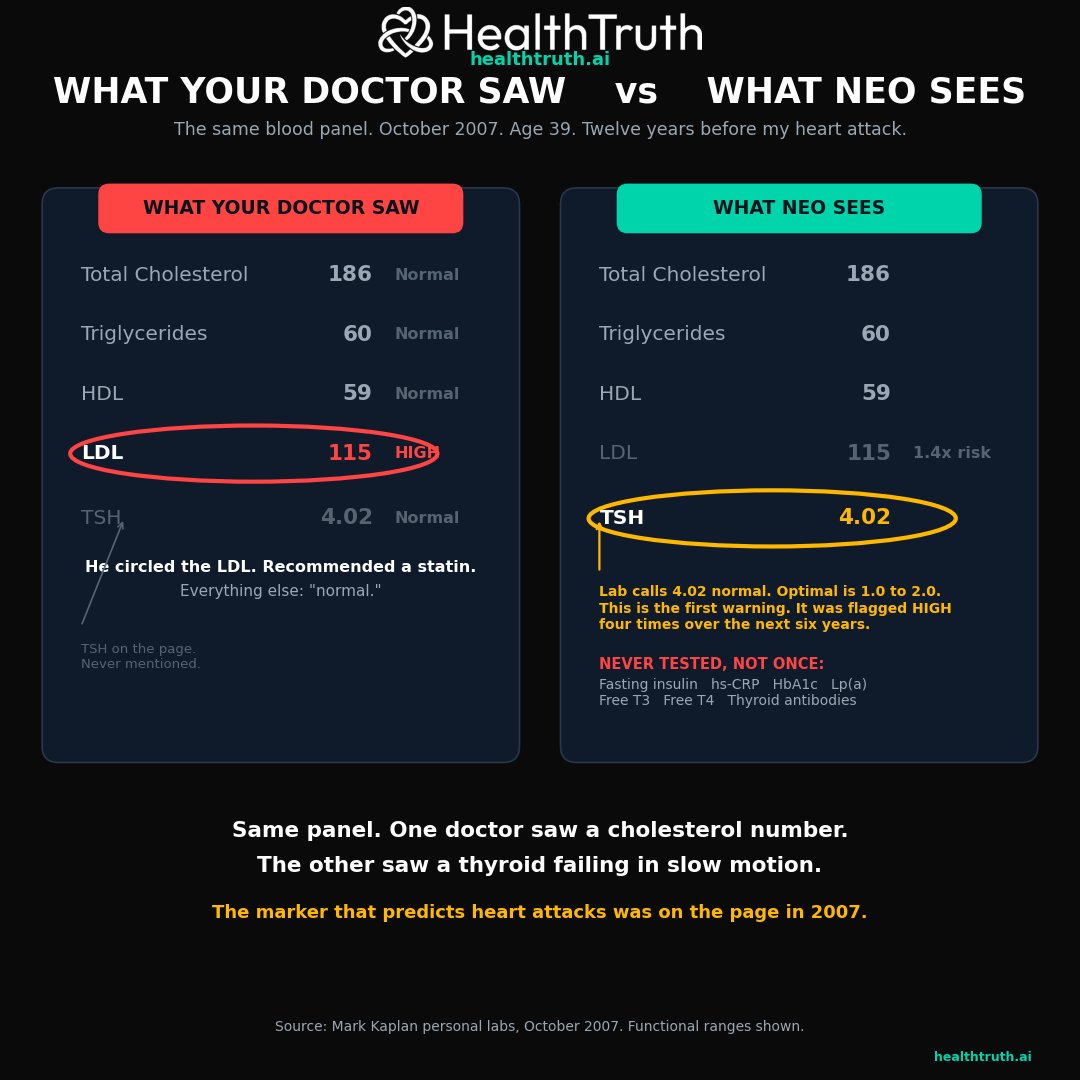
Total cholesterol: 186. "Normal."
Triglycerides: 60. "Excellent."
HDL: 59. "Good."
LDL: 115. Flagged HIGH.

My doctor circled the LDL.
Apr 13 • 25 tweets • 12 min read
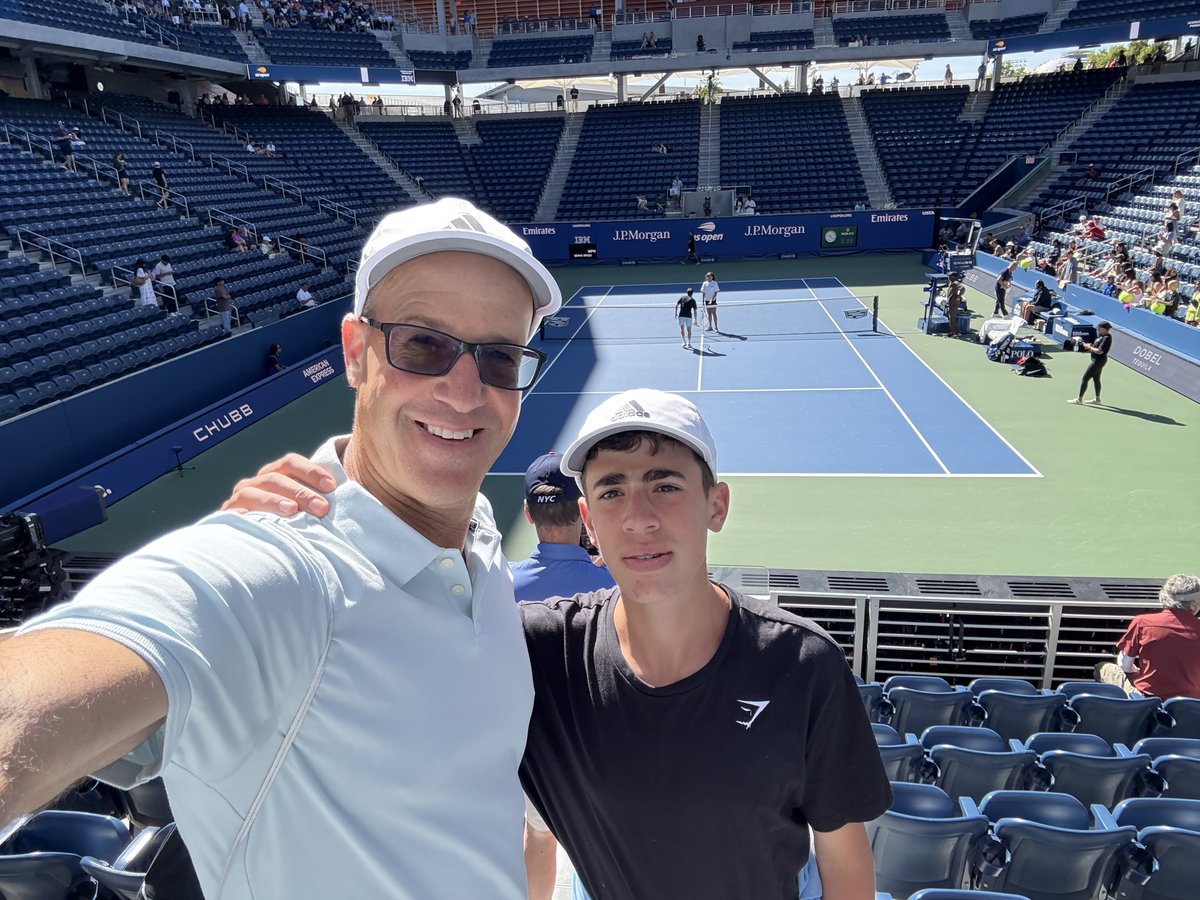
This is me at 19 years old. Arthur Ashe is handing me the College Player of the Year trophy at the US Open. I was ranked #5 in the nation at UC Irvine. I made the semifinals of the NCAA singles and doubles. I won 20 matches in a row my senior year.

I was the fittest person in any room I walked into. And I was fueling myself for a heart attack.

Every single day I avoided red meat. I chose margarine over butter. Skim milk over whole milk. Low-fat everything. I ate exactly what the food pyramid told me to eat.

At 52, my heart stopped on a tennis court. This thread is about why.

šŸ§µšŸ‘‡Image
Image
I grew up in South Africa eating real food. Meat. Eggs. Full-fat milk. Butter. Food from the earth.

Then I came to America and the world told me that food was going to kill me. So I switched. I ate what the guidelines said. What every coach and every nutritionist and every cereal box said was "heart-healthy."

For 30 years I stayed away from eggs. I chose margarine over butter. I picked chicken breast over red meat. I thought I was doing everything right.

I was poisoning myself and didn't know it.

The food I grew up on in South Africa wasn't killing me. The food America told me to eat was.Image
Apr 12 • 22 tweets • 10 min read
I had a heart attack at 52.

7 things could have prevented it.

My doctor didn't test a single one.

Not because he's a bad doctor. Because the system that trained him was designed to sell drugs, not save lives.

25 hours of nutrition in 4 years of medical school.
70% of his education funded by pharma.
A $600 billion industry that needs you sick to survive.

Here's what they missed in my checkup.
And what they're missing in yours right now.Image WHAT THEY TESTED:

Total cholesterol.
LDL cholesterol.

That's it.

That was the entire basis for putting me on medication for the rest of my life.

Two numbers. One drug. No conversation.

Here's what they DIDN'T test.
And every single one of these is more predictive of heart disease than LDL cholesterol.Image
Apr 10 • 11 tweets • 6 min read
I had a heart attack at 52. The system failed me. So I built HealthTruth with four of the most courageous doctors on earth.

A cardiac surgeon. A cardiologist who published in the BMJ. A metabolic surgeon. And a functional nutrition expert with 14 million followers.

They put their careers on the line to tell you the truth. Here's who they are and what we're building together.

The HealthTruth co-founders at the MAHA event in Washington DC. 🧵Image Dr. Philip Ovadia @ifixhearts is a cardiac surgeon and co-founder of HealthTruth.

He's operated on thousands of hearts. And he says something that should change how you think about heart disease forever:

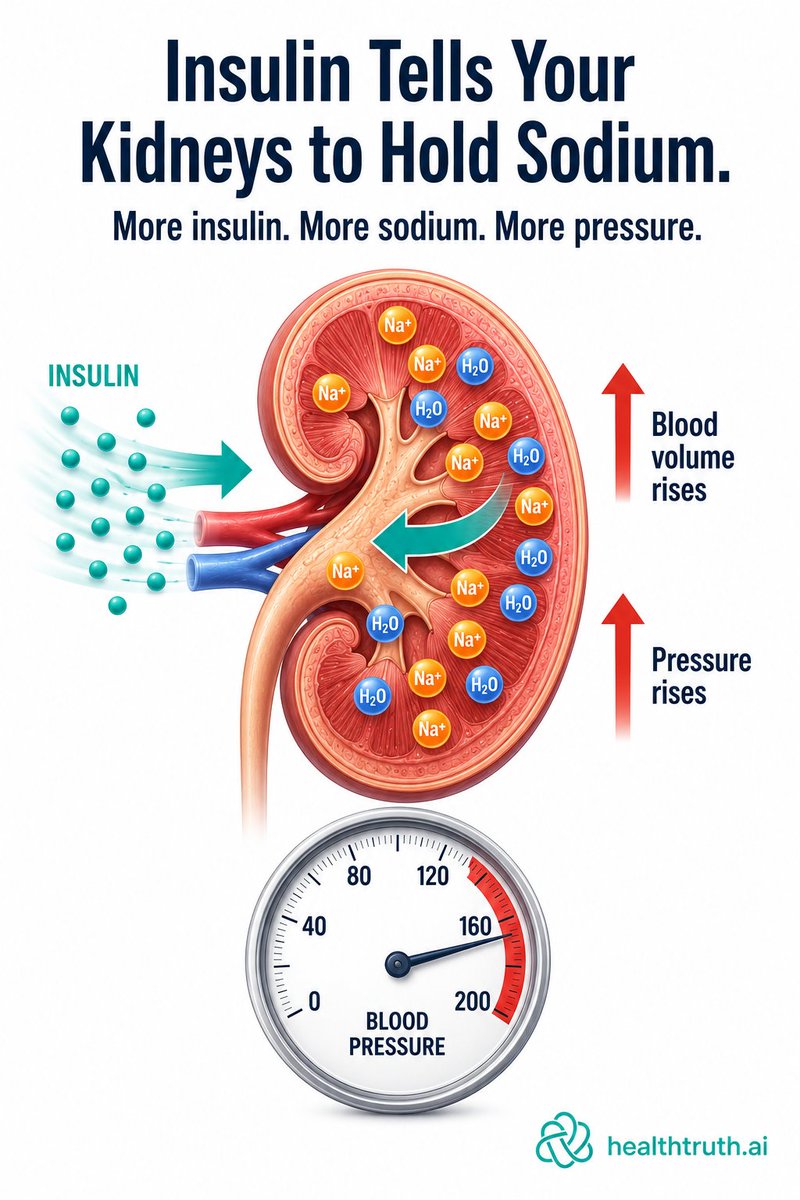
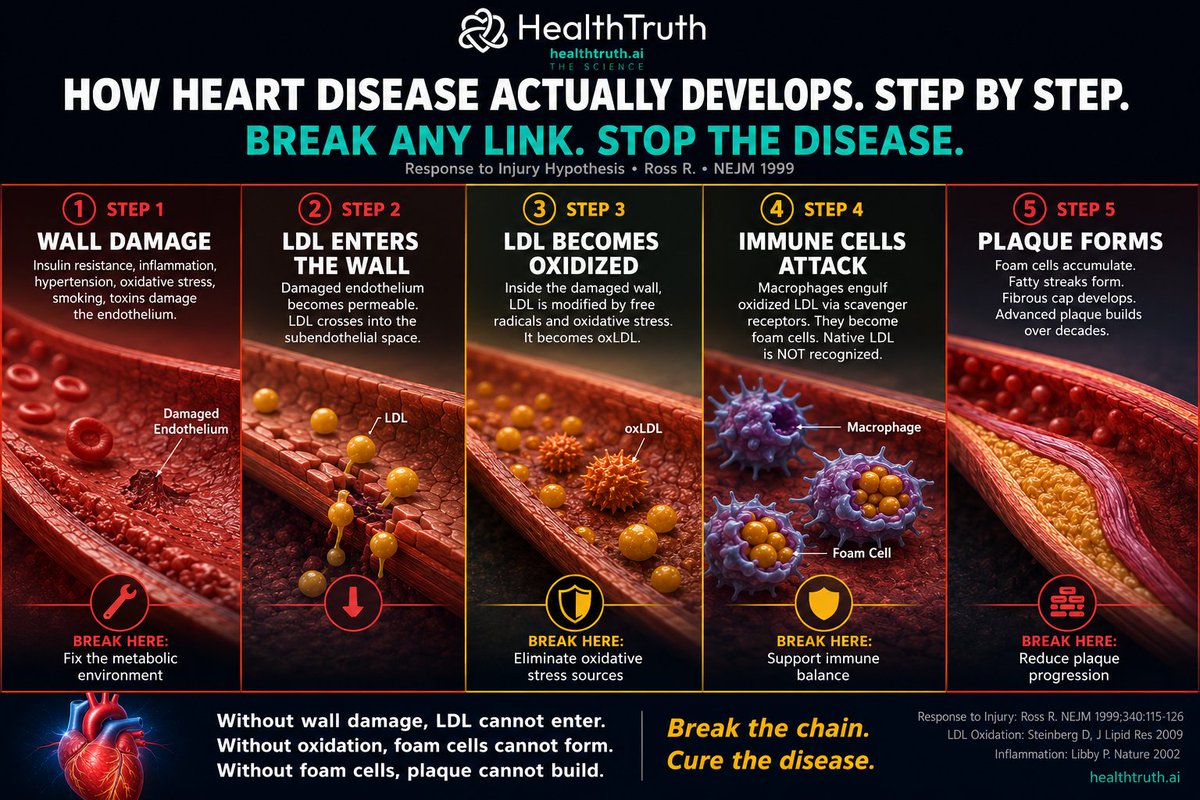
"The patients on my table didn't get there because of high cholesterol. They got there because of metabolic dysfunction. Insulin resistance. Chronic inflammation. Processed food. I became a cardiac surgeon to fix hearts. Now I'm trying to prevent people from ever needing me."

That's the surgeon who's building HealthTruth with me. He doesn't want you on his operating table. He wants you to never need one.Image
Apr 9 • 21 tweets • 11 min read
My statin thread went viral. Thousands of you read it. But the messages that hit me the hardest were the ones that said: "Mark, I have heart disease in my family. My dad had it. My grandfather died from it. Am I next? Is there any hope for someone like me?"

I need you to hear me. There is hope. Real hope. Backed by science.

Look at this chart. A 2016 study in the New England Journal of Medicine followed 55,685 people. Even those dealt the WORST genetic hand for heart disease cut their risk in HALF through lifestyle alone.

You are not your diagnosis. You are not your family history. Let me show you why. 🧵Image 1/ I know what it feels like to believe your genetics are a death sentence. I was lying in a hospital bed at Stamford Hospital in 2020. I was 52. I just had a heart attack on a tennis court. A lifelong athlete. The fit one. And my first thought was: this was always going to happen. It's in my blood. There's nothing I can do.

That thought almost broke me. Because when you believe you're doomed, you stop fighting. You accept the pills. You stop asking questions. You hand your life over to a system that hands you a bag of drugs and says good luck.

I'm here to tell you that thought was wrong. And I have the data to prove it.
Apr 9 • 16 tweets • 8 min read
I was lying in a hospital bed at Stamford Hospital, terrified, and a doctor told me I'd die without a pill. That pill helps 1 in 100 people. This is my story. 🧵

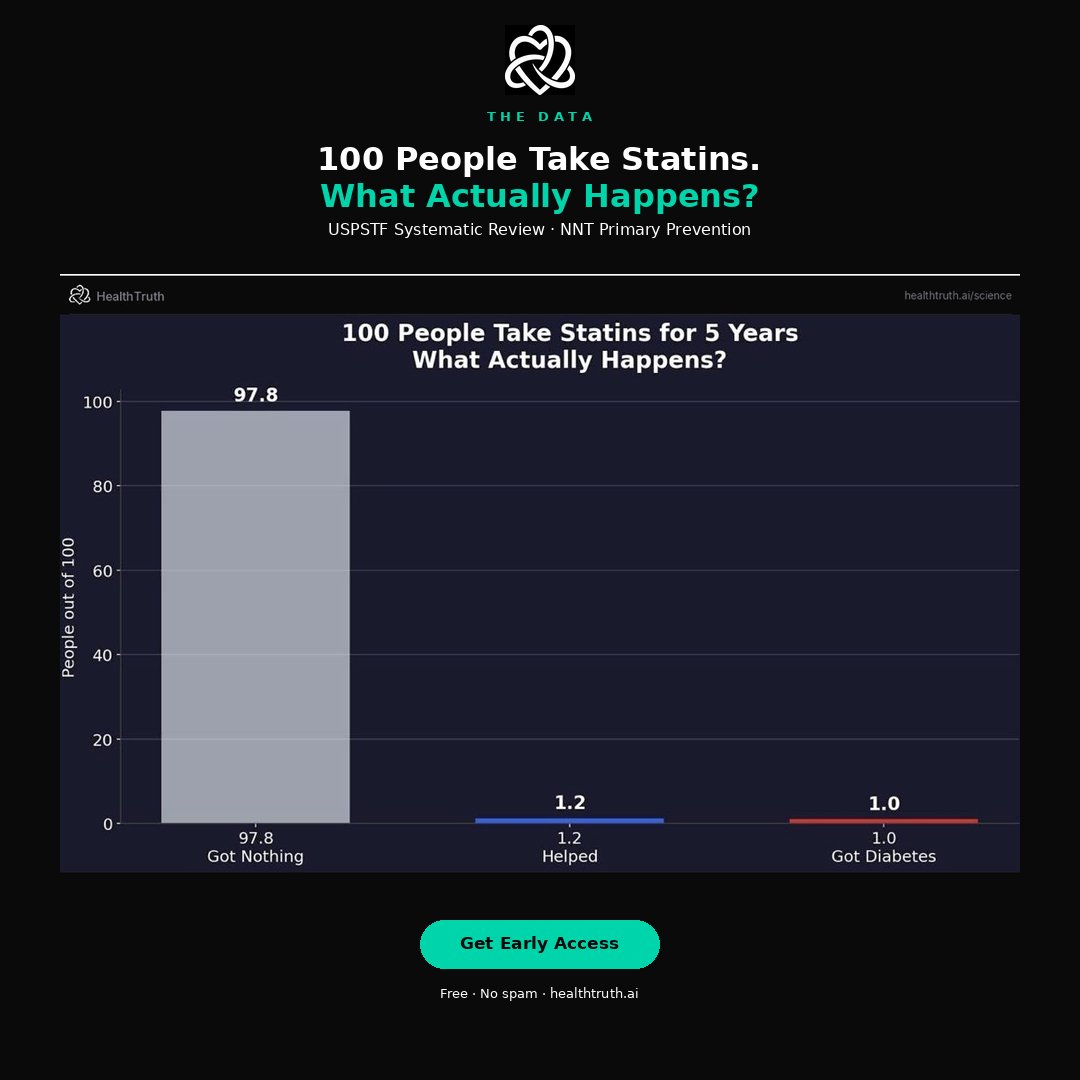
Look at this chart. 100 people take statins for 5 years. 98 get nothing. 1 is helped. 1 gets diabetes. This is the most prescribed drug in history.

Source: Cochrane Library 2011; Sattar et al., Lancet 2010 — cochranelibrary.comImage 1/ That's not a typo. The absolute risk reduction of statins is 1.2%. But the pharmaceutical industry markets it as 36% — the relative number. Blue is what they tell your doctor. Red is the truth. A 2010 Cochrane Review confirmed it. Dr. Aseem Malhotra published the same finding in the BMJ.

Source: Malhotra A., BMJ 2013; 348:g3866 | Cochrane Review 2010 — bmj.comImage
Apr 9 • 6 tweets • 2 min read
🧵 Your doctor obsesses over your LDL cholesterol.

Here's what JAMA Cardiology says actually predicts heart disease:

Diabetes → 10x risk
Metabolic syndrome → 6x risk
Severe obesity → 4.7x risk
Smoking → 4x
Hypertension → 4x

Now look at what your doctor is focused on:

LDL cholesterol → 1.4x
Total cholesterol → 1.0xImage Read that again.

Total cholesterol has essentially ZERO predictive power for heart disease in younger adults.

(Dugani et al., JAMA Cardiology, 2021)
Apr 9 • 15 tweets • 8 min read
I was lying in a hospital bed at Stamford Hospital, terrified, and a doctor told me I'd die without a pill. That pill helps 1 in 100 people. This is my story. 🧵

Look at this chart. 100 people take statins for 5 years. 98 get nothing. 1 is helped. 1 gets diabetes. This is the most prescribed drug in history.

Source: Cochrane Library 2011; Sattar et al., Lancet 2010 — cochranelibrary.comImage 1/ That's not a typo. The absolute risk reduction of statins is 1.2%. But the pharmaceutical industry markets it as 36% — the relative number. Blue is what they tell your doctor. Red is the truth. A 2010 Cochrane Review confirmed it. Dr. Aseem Malhotra published the same finding in the BMJ.

Source: Malhotra A., BMJ 2013; 348:g3866 | Cochrane Review 2010 — bmj.comImage
Apr 1 • 19 tweets • 6 min read
You're taking a statin.

You think you're safe.

I thought so too.

I was a professional tennis player. Ranked #117 in the world.

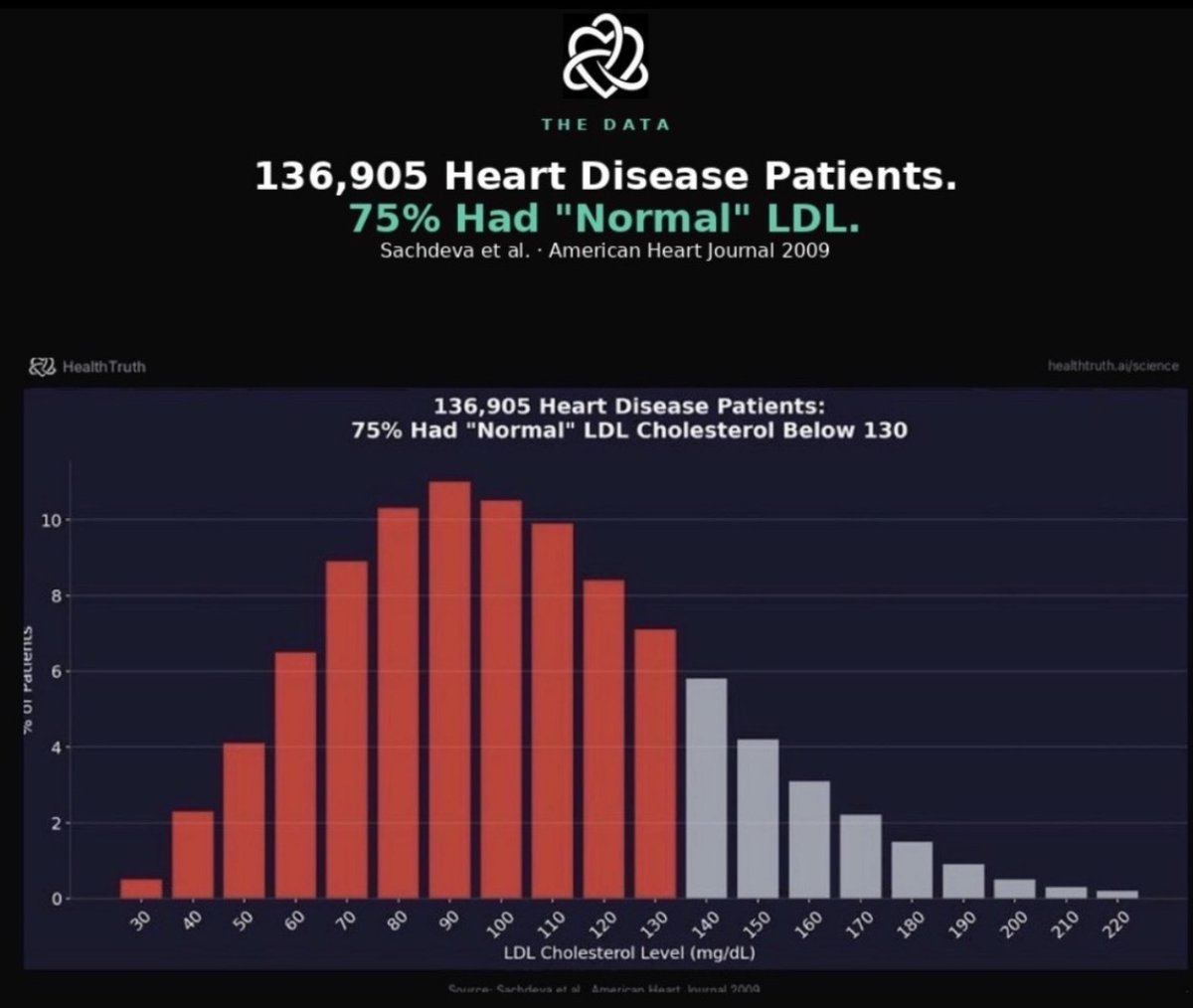
My cholesterol was "normal" my entire adult life.

At 52, I had a heart attack.

What I discovered next changed everything. 🧵 Image Then I found this graph.

BMJ 2020. Johannesen et al. 108,243 people. 9.4 years.

The lower your LDL cholesterol, the more you die.

Lowest death rate? Not at the bottom. In the MIDDLE.

bmj.com/content/371/bm…Image
Mar 28 • 10 tweets • 2 min read
When I had my heart attack at 52, my doctors only cared about one thing:

My LDL cholesterol.

"It's too high. Take this statin."

I trusted them. I took the pills.

And I got sicker.

Then I found this research on 155,000 women. It changed everything. 🧵 Image Look at this chart.

155,000 women. Years of follow-up.

Researchers tracked what ACTUALLY predicted who would have a heart attack.

LDL cholesterol? Barely moved the needle.
Mar 28 • 10 tweets • 2 min read
"You can't change Lp(a). It's genetic."

Every cardiologist told me this after my heart attack.

My Lp(a) was 276. They said I'd need drugs for life.

I got it down to 52. No drugs.

Here's my chart. 🧵 Image After my heart attack, doctors wanted me on statins immediately.

"Your Lp(a) is dangerously high. It's genetic. You can't change it."

But something didn't sit right. So I did my own research.

What I found made me furious.
Mar 28 • 10 tweets • 2 min read
"You can't change Lp(a). It's genetic."

Every cardiologist told me this after my heart attack.

My Lp(a) was 276. They said I'd need drugs for life.

I got it down to 52. No drugs.

Here's my chart. 🧵 Image After my heart attack, doctors wanted me on statins immediately.

"Your Lp(a) is dangerously high. It's genetic. You can't change it."

But something didn't sit right. So I did my own research.

What I found made me furious.
Mar 26 • 16 tweets • 8 min read
My last post hit 700K views.

People said "you're not a doctor" and "this is dangerous."

Ok. Here's 5 years of blood work with my name on it.

Every lab. Every number. Nothing hidden.

Let's go 🧵 After my heart attack in 2020, every doctor said the same thing.

"Statins. For life."

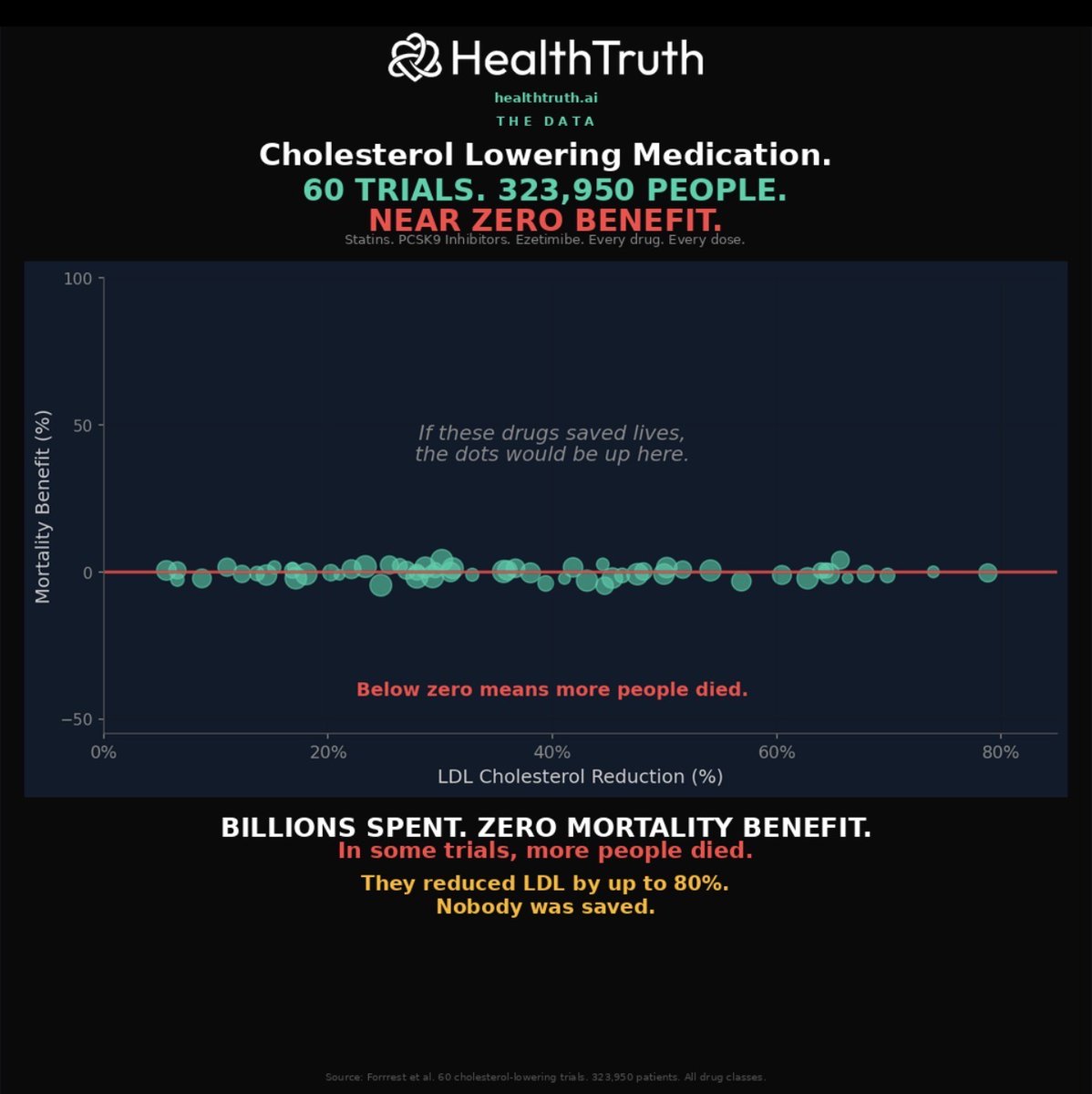
I looked at the research. I looked at the side effects. I said no.

Instead I tested my blood every few months for 5 years straight. Over 40 panels.

This is what I found. Image
Mar 25 • 10 tweets • 3 min read
I was a professional tennis player.

I competed at Wimbledon. I ranked 117 in the world. I was the healthiest person I knew.

At 52, I drove myself to the ER mid-match and had a heart attack.

Here's what I found when I refused to accept the answer my doctor gave me 🧵 My cardiologist had an explanation ready before I even left the hospital.

"It's genetic. Here's your statins. You'll be on them for life."

No questions about what I was eating. No bloodwork beyond the basics. No discussion of insulin resistance or inflammation.

That was the whole plan.