Monopoly Capital đź’¸ Profile picture
Buying monopolies, compounding forever. 👔🏦 NFA 15% off stock research → https://t.co/HSOoLpIVrU
Dec 21 • 5 tweets • 3 min read
Some companies are just too hard to compete with.

If you are not interested in $GE, I don't understand your investing style.

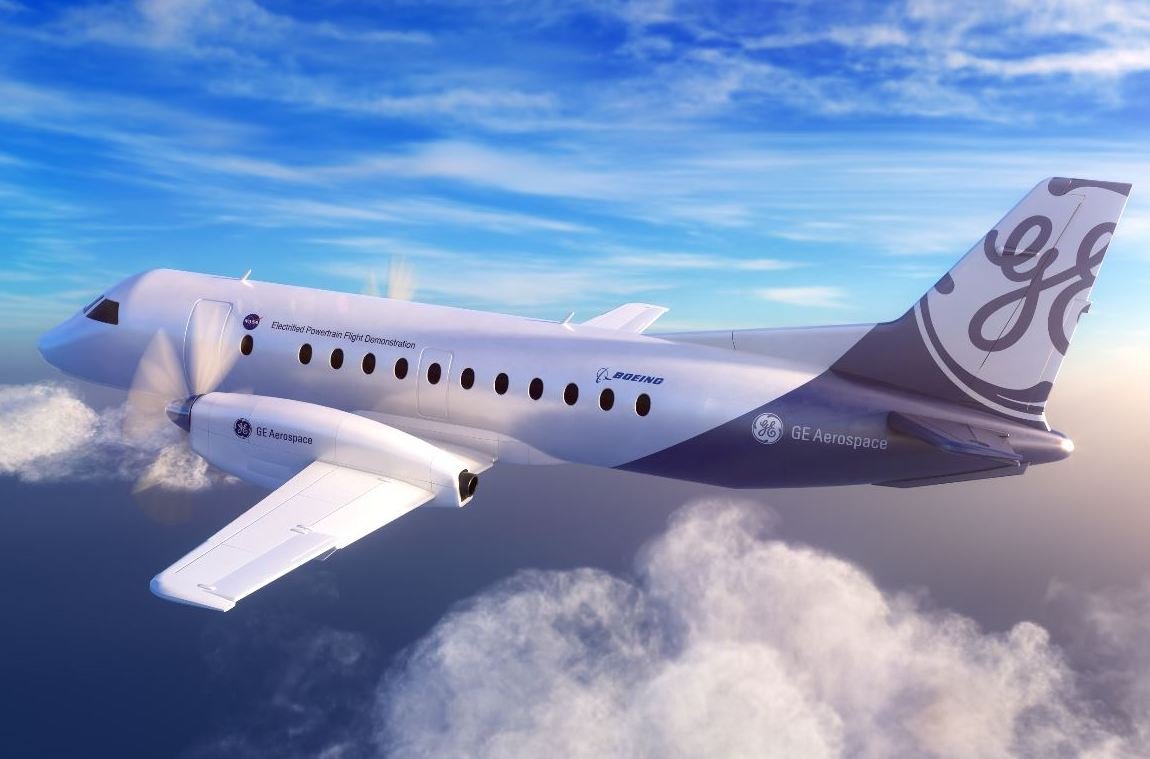
After the highly successful spinoff, General Electric is now a pure-play aviation company.

Here is the breakdown on the aerospace moat đź§µ Image 1/ The Business Model & Portfolio

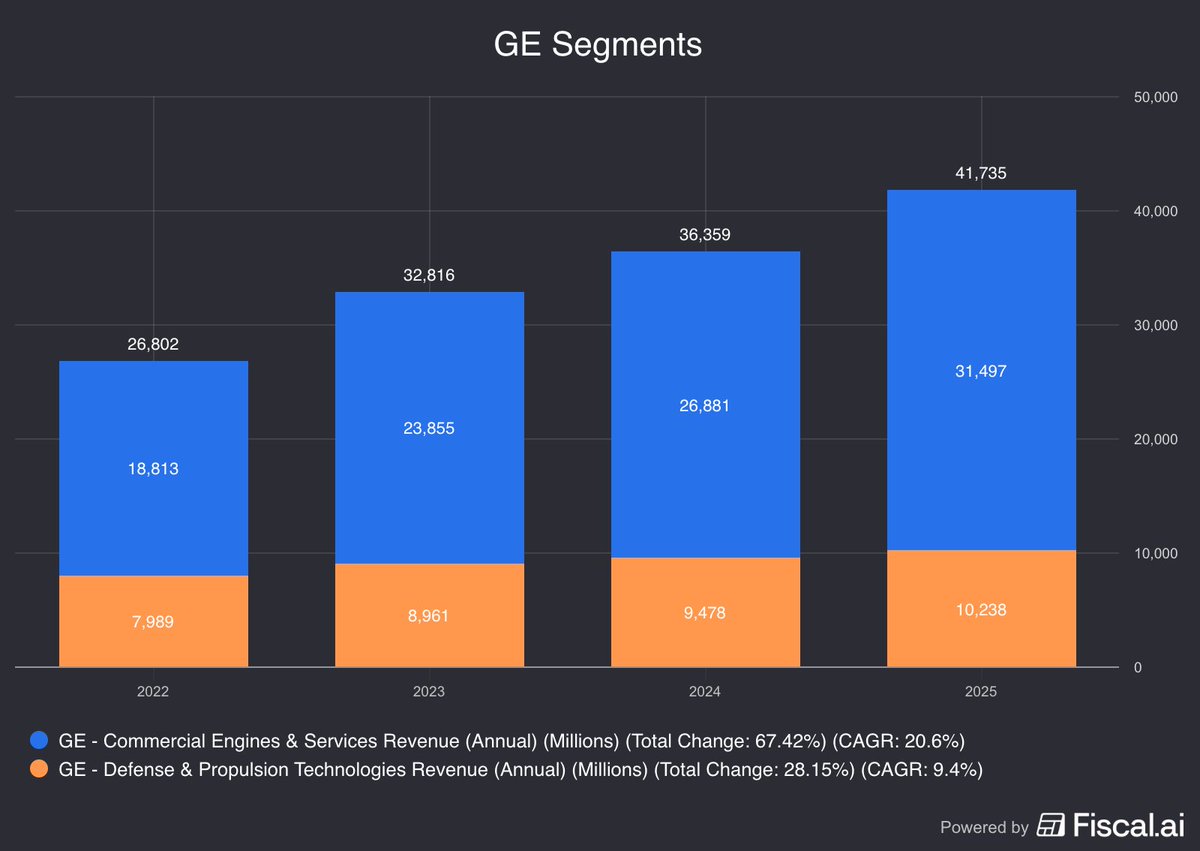
The revenue is broken up into two segments: Commercial (~75%) and Defense (~25%).

The strategy is Razor & Blade. GE sells engines (the razor) to capture the aftermarket (the blade). Because engines fly for around 30 years, the real ROI is in the service contracts.

They have a total installed base of ~70,000 engines and power 3 out of every 4 commercial flights globally.

Commercial (Airlines)
• Narrowbody: Run via CFM, a 50/50 JV with Safran. The CFM56 is the cash cow (powers ~55% of narrowbody flights). The LEAP is the future (~75-80% market share for new deliveries).
• Widebody: The GE9X is the exclusive monopoly for the 777X. The GEnx powers the 787 Dreamliner (~66% market share vs Rolls-Royce).

Defense (Military)
• Fighters: The F414 is the exclusive powerplant for the F/A-18 Super Hornet.
• Rotorcraft: The T700 is standard issue for the US Army (powers 100% of Black Hawks and Apaches). The new T901 recently won the contract to power the next generation.Image
Dec 18 • 5 tweets • 3 min read
This company will change the way you look at stocks.

Ferrovial ( $FER ) is a natural monopoly and owns some of the most prized assets and infrastructure in the world.

If you don't have time now, bookmark and read this later. đź§µImage 1. Toll Roads (Highways)
This segment is the crown jewel of the business.

Operated through their subsidiary Cintra, they function on a "Full Lifecycle" model. They design, finance, and build these complex projects from scratch. They own around 22 concessions and over 1,000 km of managed roads across 9 countries.

It consists of long-term concessions (often 50–99 years) with uncapped or inflation-linked pricing power.

Why is pricing uncapped? (Two key examples)

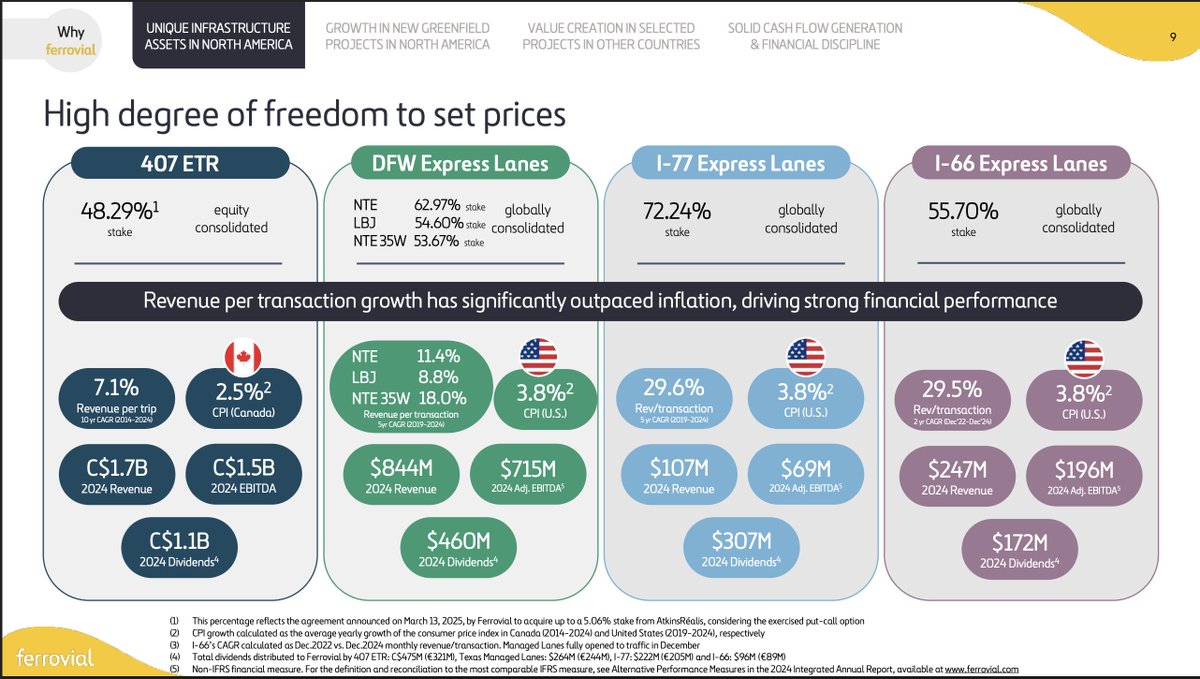
• Canada (The 407 ETR Model): This is widely considered one of the best infrastructure assets in the world. In 1999, the government signed a 99-year lease that effectively allows Ferrovial to raise tolls indefinitely, provided a minimum number of cars still use the road. Because Toronto traffic is so severe, drivers continue to pay regardless of the cost, and the government has no legal recourse to stop the price hikes. And by the way, this highway runs at an ~89% EBITDA margin.

• US Managed Lanes (e.g., Texas, Virginia, NC): These contracts require the express lanes to maintain a minimum speed of 50 mph. If the lanes get congested, the system automatically raises the price to deter drivers. Uncapped pricing is a necessity here and if there were a price ceiling, the lanes would fill up and traffic would slow down (violating the contract). It is an incredible business model.Image
Sep 23 • 7 tweets • 3 min read
My most recent buy is TransDigm ( $TDG )

First of all, it is not fair to call it an oligopoly with peers like Heico, Honeywell, and Safran. They are a collection of monopolies.

Introducing the company that has not had a red year since 2008 đź§µImage What They Do

TransDigm is an aerospace company that designs, produces, and supplies highly engineered aircraft components. They make specialized parts critical to aircraft operation, including actuators, pumps, ignition systems, flight control systems, landing gear components, seatbelts, parachutes, and hundreds of thousands of other products (SKUs).

Monopolistic and Proprietary Characteristics

A significant portion of TransDigm’s sales comes from sole-source products. About 90% of its products are proprietary, protecting this position.

Proprietary designs make replication difficult. To be certified for use on an aircraft, a replacement part must be proven identical to the original—a process the FAA calls “nearly impossible” for sophisticated parts with proprietary processes or coatings.

Flight safety is a lengthy and serious process, which is why regulation, a proven track record, and trust are critical.

Pricing Power / Switching Costs

TransDigm has immense pricing power, with roughly 75% of sales being sole-source. The company can aggressively price aftermarket spare parts, and buyers often have little choice: aircraft often operate for 30–50+ years, so operators are effectively locked in.

Parts are a small fraction of total aircraft cost, discouraging competitors from replication. Switching is also impractical due to certification costs of $100,000s to $1,000,000s. Similar to FICO, the impact on overall revenue is so small that replication or switching is impractical.
Aug 26 • 5 tweets • 1 min read
Most think predictable, recurring cash flow only exists at Netflix or Costco. Wrong.

You’d be an absolute fool to short Brookfield Corp ( $BN )

Here is why⬇️ Image $BAM:
~94% of fee-related earnings are tied to long-term or perpetual capital.
~86% of fee-bearing capital is permanent or long-term in nature.
~â…“ of AUM is permanent capital, and ~50% is locked into agreements of 10+ years.