Marilyn Moedinger Profile picture
Founder @RuncibleStudios Architect, Designer, Consultant. RE o/o. Former GC and professor. History, art, space,etc. Resources, ✨️NEW PODCAST✨️ + more 👇
Oct 21 16 tweets 3 min read
Interior Design Checklist!

This is the stuff people forget to include in their budget and in their designs, and then have to make last minute decisions during construction and/or see a bunch of unplanned expenses.

Let's go 👇👇

[And respond with your own!] Before diving in: *good* interior design is about way more than "pretty colors" or "mood boards" - it's a highly technical field that requires a lot of knowledge about a lot of different related trades and fields.

A true pro is worth their weight in gold, and their knowledge and ability to organize a project will save you a ton of money.
Sep 9 11 tweets 2 min read
Yesterday I posted a bunch of things that are worth spending your money on in a renovation/new build.

Today, here's a list of things that ARE NOT worth it!

...in my opinion! You can spend your money however you want.

As usual, #1 is at the end!

Ok, let's dive in: - fancy appliances. They don't necessarily last longer, they are more about the brand name. And they're more expensive to maintain.

- whole house automation systems. Most people get annoyed with them very quickly.
Sep 8 13 tweets 3 min read
After 20 years in the industry, here are a few things I think are worth spending money on in a renovation or new build.

I don't mean "buying the most expensive" option, I mean "not buying the cheap sh!t".

#1 is at the end :)

Ok, let's dive in: - Door handles. Emtek is a great resource.

- Solid core doors

- GOOD pocket door tracks. Most people don't like pocket doors bc of the crappy tracks. Spend $500 on good hardware and never worry about this again. And DO NOT use barn doors instead.
Jul 16 6 tweets 3 min read
In this Boston penthouse, storage space was at a premium. The owners were willing to commission custom furniture (designed by us) to take advantage of every square inch.

Let's break down what we came up with, for the 11x13 primary bedroom: Image First, we raised the bed on a platform, and created deep drawers under the bed. This is great storage for linens, pillows, blankets, and other bulky items.
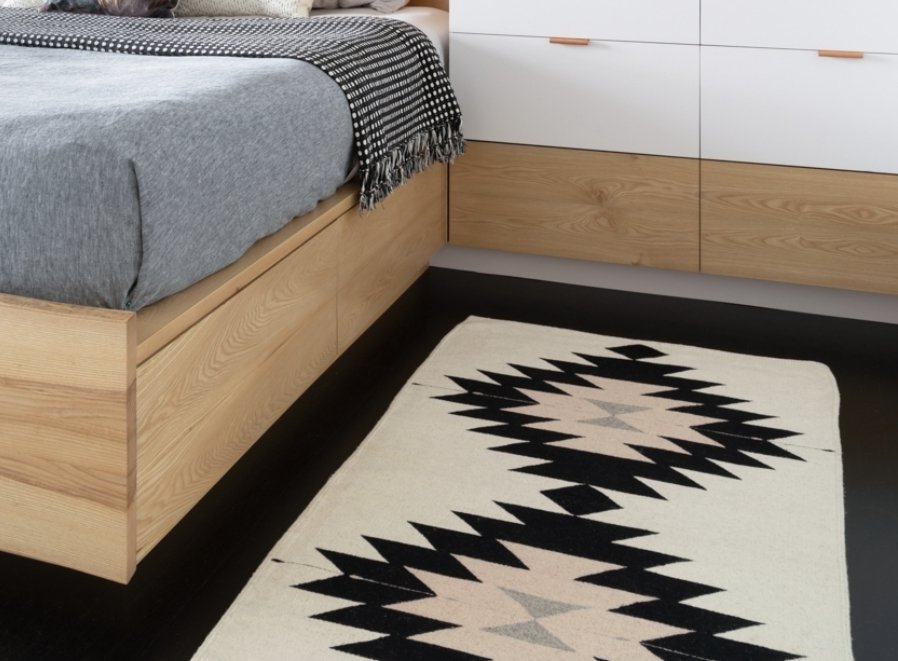
Next, we carried that "platform" visually around the other pieces in the room, to tie things together. Image
Jun 26 15 tweets 6 min read
Secret storage!

It's the biggest request we get from clients - how can they maximize storage? In my experience, storage opportunities are often hidden in plain sight.

Here are 11 examples, all from my own work [plus a #12 that's kind of cheating but I stand by it]: 👇 1. Weird bump in a wall? Stick some cabinetry or shelving there!

This piece is in the kitchen, and is the mail/papers landing spot, dog food storage, etc - all the stuff you want near the kitchen, but not in the middle of all your cooking stuff.

[Before and after shown] Image
Image
Jun 18 15 tweets 4 min read
For residential projects, you can [and should] ask for an itemized cost estimate from a GC, even on early bids.

But - the accuracy of that estimate is only as good as whatever you give them to base the estimate on.

A ranking, from least accurate to most accurate 👇

[unsurprisingly, I provide my clients with #10] 1. Google search/HGTV.

This is basically worthless, and usually waaaay underpriced.

They leave out jurisdictional requirements, regional considerations, site considerations, etc.

Don't bother.
Jun 16 24 tweets 7 min read
How do we compare construction estimates?

Even if we give all GCs the same drawings/specs, we inevitably get different things back from each GC.

Especially on residential projects, it's *really* hard compare things "apples to apples."

Here are 10 things I look for/do: Before we dive in - this is mostly referring to residential work. Commercial/larger work is a different animal - many of these principals still apply in concept, though!

And - construction is highly regional. What is normal in one place is highly unusual in another place. Understanding local construction and estimating norms is vital - you can lose a lot of money by making assumptions based on another region's construction norms.
Apr 24 11 tweets 2 min read
Owners: if you don't have the brain power, time, capacity, or ability to make decisions and stick to them...

...you have no business doing a design/construction project.

Make the time to do the very real work of making decisions, or don't do the project. 🧵 Your indecision causes frustration, delays, irritation, and cost overruns.

Your indecision eviscerates your team's goodwill.

Your indecision costs you - and everyone on your team and everyone you hire - money, time, and aggravation.
Apr 10 19 tweets 7 min read
Let's talk toilets!

Back when I was working construction, a plumber took me aside and said, "Marilyn, here are the 2 rules of plumbing: Blue is cold, red is hot, and sh!t don't flow uphill."

Me: "Bob that's 3 things."

Him: *winks* "I'm a plumber, not a mathematician!" 👇🧵 Let's break that down...because even though Bob was making fun of himself, he also knew his, um, sh!t.

"Blue is cold, red is hot." I think most of you probably already know this one, so no need to go too in depth on it. Fittings, pipes, drawings, etc are often coded with red/blue to help everyone keep things organized in planning and install.Image
Apr 8 17 tweets 6 min read
Overhead lighting: everyone does it, but most do it poorly!

Even with "can lights" and cheap LED pucks, there are things you can do to improve overhead lighting that don't cost much [if anything] and will make a vast improvement in your lighting.

Read on👇👇 1. Beam spread.

Every fixture has a "beam spread," or the "width" of the cone of light that is delivered. Even at the same lumens [perceived light power], a wider beam spread will not reach the floor with the same "power" as a narrower beam spread.

Look this info up [on your specific fixture], combine that with your ceiling height, and already you'll be on your way to a better design.Image
Apr 2 15 tweets 6 min read
Designing and installing residential HVAC systems: 10 things you *must* do!

HVAC often gets left to the subs during install, when it should be planned ahead as part of the design.

Good subs and GCs welcome this kind of planning, bc it makes their lives easier.

Read on 🧵 Image
Image
First of all, this is not a comprehensive list. There are many more than 10 things you need to do to have a well-designed and well-installed HVAC system.
As usual, work with your local pros for local climate/code rules.

Ok, let's dive in:
Mar 22 10 tweets 4 min read
Bathroom sink vanities!

It's a real workhorse of the bathroom, but in the wrong hands, it can be more show than substance.

It's possible to be both beautiful *and* functional! Here are some things to keep in mind [and my favorite sink spec!]

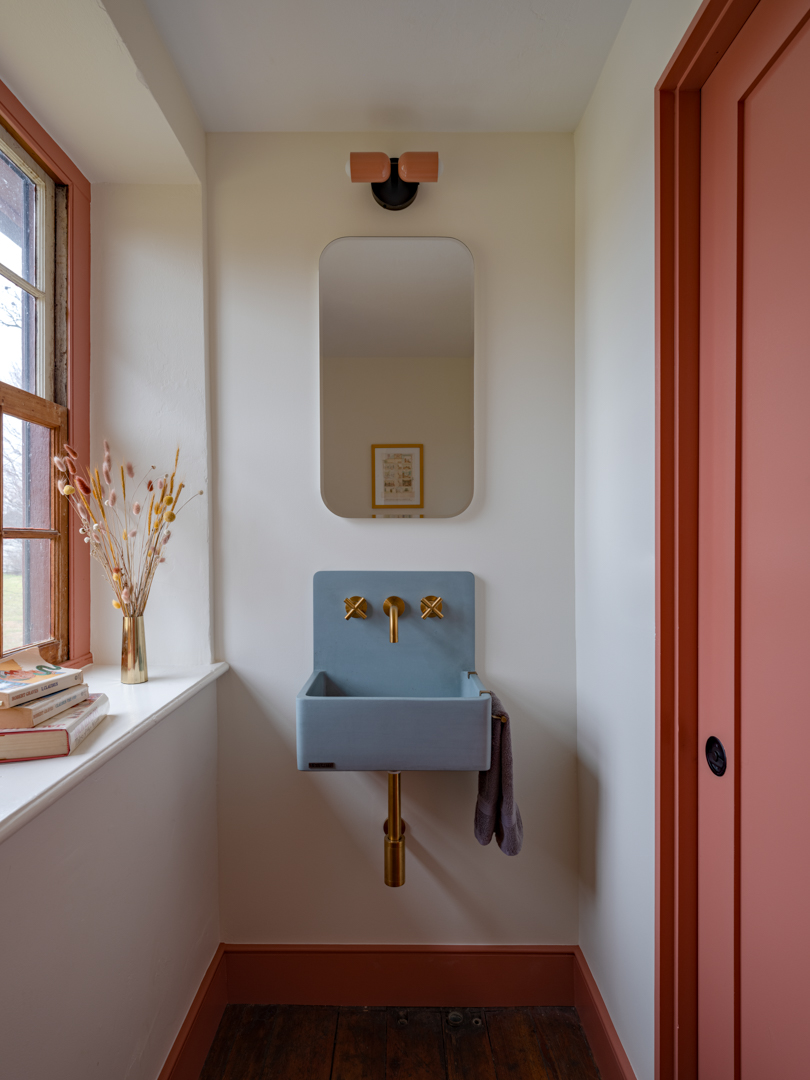
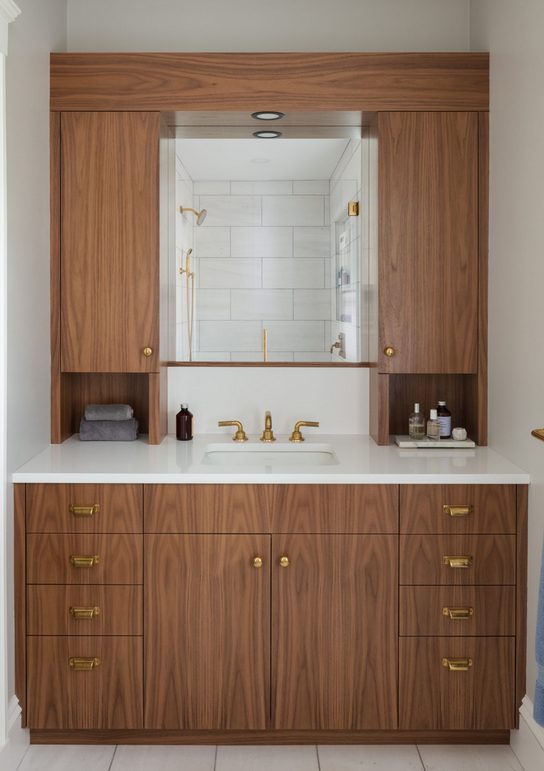
All photos from my own projects. - consider "beside the sink" towers for additional storage, or in locations where you can't do a recessed medicine cabinet [exterior walls]

- grain match your doors/drawers! Notice how the grain pattern continues across the whole vanity - that's how we know it's custom, and not cheap imitationImage
Mar 21 14 tweets 5 min read
After yesterday's post about kitchens, I got some requests to do something similar for bathrooms.

So here we go: here are some of my quick favorite thoughts on designing custom residential bathrooms.

[Again, all photos are from my own projects.]

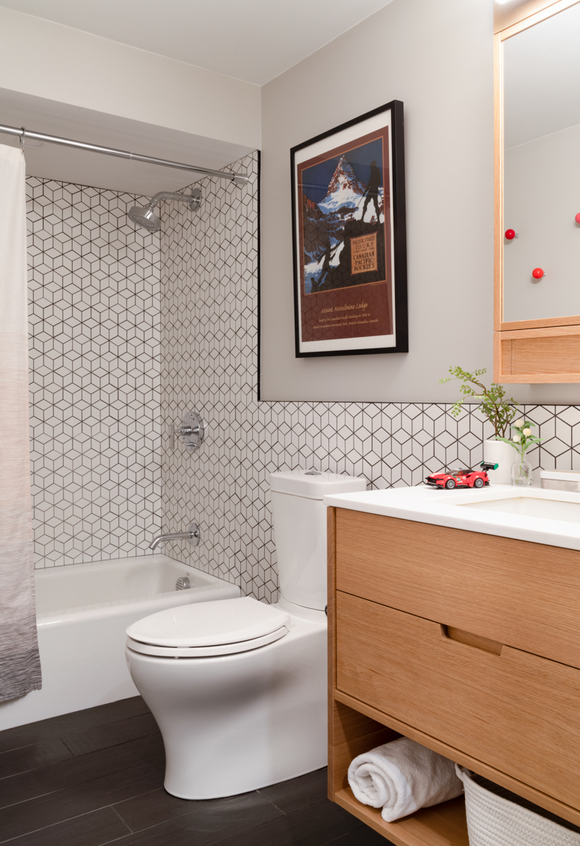
Let's dive in! - first of all, bathrooms are highly, well, personal. If you hate all these ideas and want to do your own weird stuff, go for it. I'm just here as someone who's designed 100s of bathrooms [1000s if we count my multifamily work]

- first, some basic dimensions:
Mar 20 13 tweets 5 min read
Been working on designing several kitchens all week. Here are some of my favorite things to keep in mind when designing a kitchen.

There are many, many more...but I have to get back to work...!

[All photos are my own projects.]

Ok, let's dive in: - it's your kitchen. You can ignore everything here and do whatever you want. Don't fight me, just make your weird kitchen that's perfect for you. BUT I've designed 100s of kitchens, and I do know a thing or two.

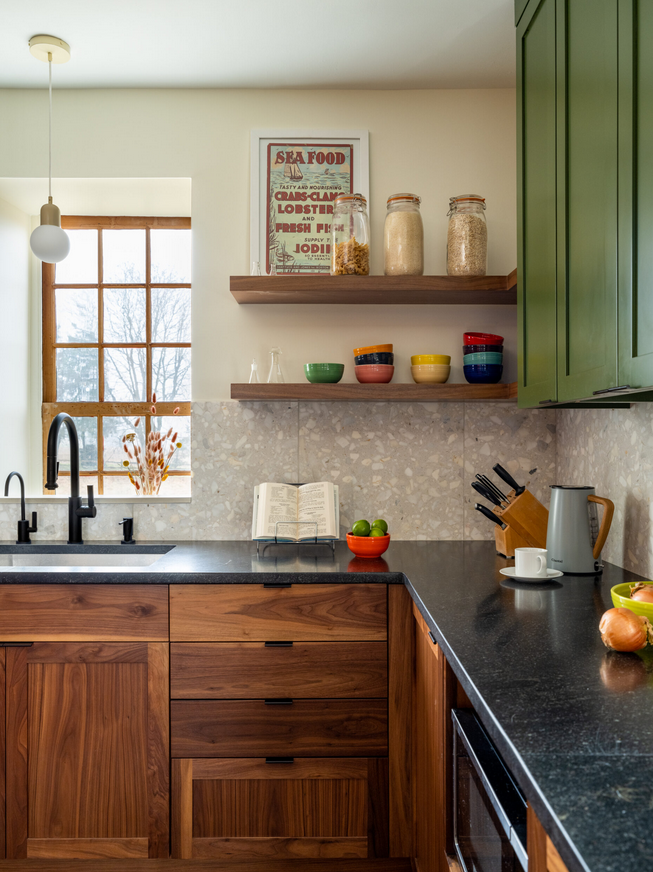
- drawers are generally more useful than doors on cabinets. For door cabinets, consider using rollouts to maximize storage.Image
Mar 13 11 tweets 2 min read
Designing a home for aging in place right now. Everyone knows about installing grab bars...but someone's home isn't a "facility" or a hospital.

Here are a few things that help. But I also want to talk about what I think is the *most* important thing [about halfway thru thread if you want to skip ahead]. - Allowing space not just for mobility devices and wheelchairs, but a helper
- storage for mobility devices - no one is excited to look at a pile of walkers, etc at the front door
- TV across from the bed
Feb 26 10 tweets 5 min read
Some new followers, so I thought I'd reintroduce myself!

I do a bunch of stuff: architecture, consulting, teaching, real estate. Here's what I focus on:

1. I'm an architect, and founder of Runcible Studios, a full service architecture firm based in Boston, MA and Lancaster, PA. Image We specialize in 3 things: custom residential, multifamily, and unique/select commercial/industrial. We work in the greater Boston area and SE Pennsylvania, and I'm currently licensed in MA, PA, ME, and VA.
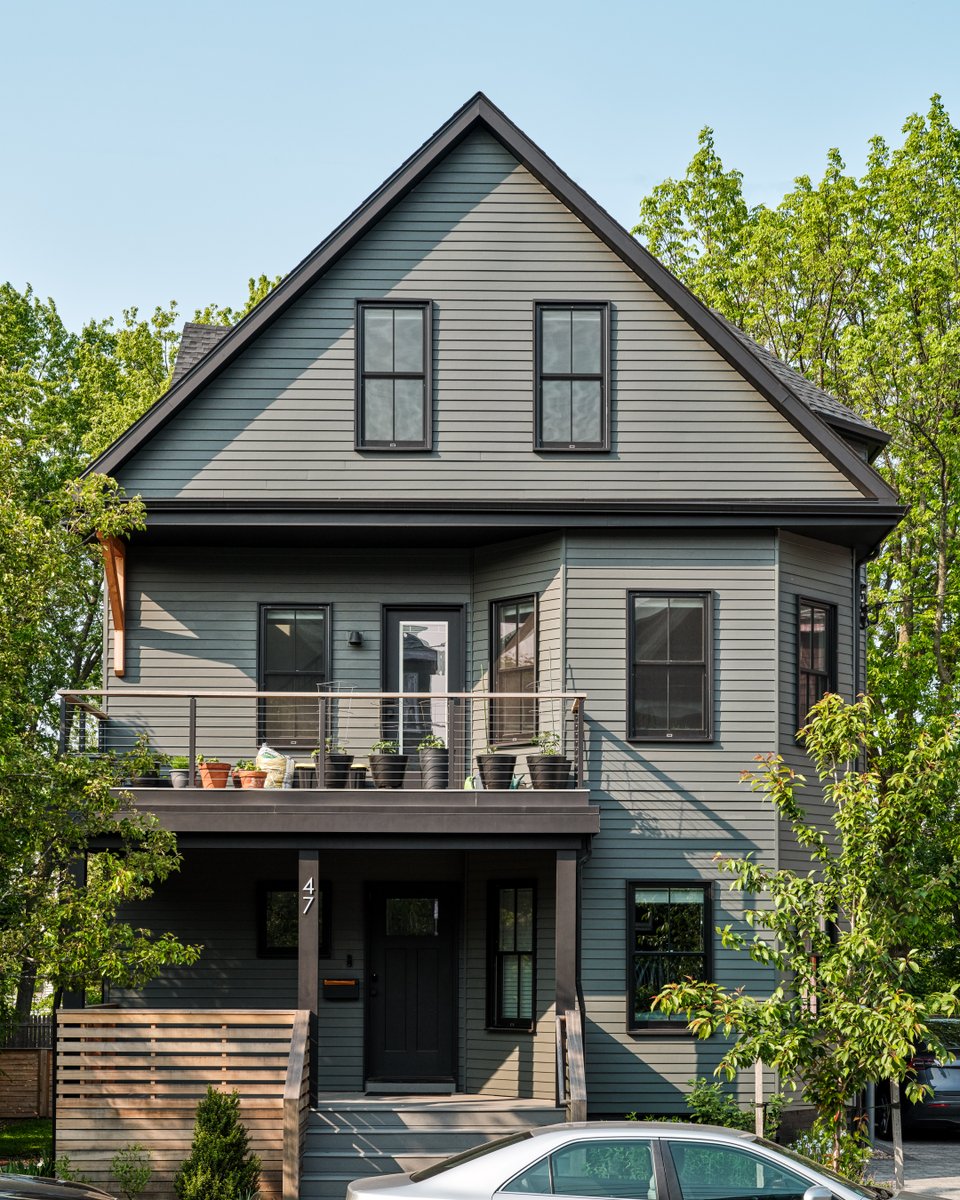

I started the firm in 2014, and we've been successful because we bring real value to our clients: highly personalized touch, serious design chops, deep construction knowledge, and the mind of an owner.Image
Image
Image
Image
Feb 19 5 tweets 1 min read
If someone calls themselves a "free thinker" these days, I can pretty much guess exactly what they think.

It's amazing to see so many self-labeled "contrarians" and "free thinkers" go along with stuff just because "their guy" or their group says it.

Try, try, try to think critically and objectively. Get out of your trenches. Not just to be a contrarian for contrarian's sake...but to be honestly and dispassionately curious. It's *really* hard. The first step: take a pause before agreeing or disagreeing with something.

The second step: ask yourself: if a person you hate says the exact same words as "your guy," would you hear the words differently?
Mar 16, 2023 21 tweets 4 min read
Sounds smarter on the jobsite: CA terms.

"CA" is short for "contract administration," aka the construction phase of the project.

Bldg industry folks who have their act together know this stuff. Read on...👇 👇

(YouTube video series resource posted at the end!) Before we get started: this is a generic explanation, and the way these things play out is dependent on both the contract you have and state law. (Fun fact: in many states, even if a homeowner signs a terrible contract w/ a GC, they are still protected by state law!)
Feb 7, 2023 11 tweets 2 min read
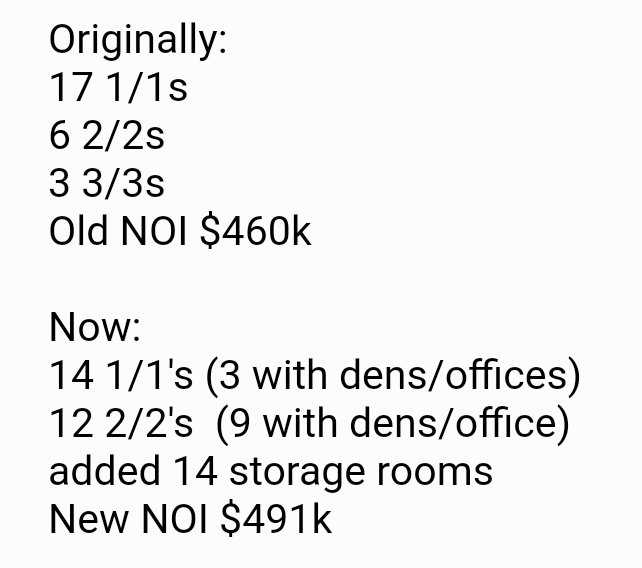
$500k+ in added value with no increase in hard costs...

Ready to hear how my work with a developer to tweak the floorplans of his multifamily (26 unit) building got us there?

Because that's what we did.

Read on 👇👇 He was about to start the final design/documentation phase with his architect and wanted another opinion - he had a feeling he could get more juice out of the floorplans before finalizing the drawings.

We had an initial call, and it was clear: tons of room for improvement.
Feb 4, 2023 9 tweets 2 min read
I have a lot to say about this whole debacle, but it boils down to architects needing to be better business people. I'm *so sick and tired* of firm owners abdicating responsibility for basic biz practices in the name of "we only do work we like." Guess what? (Rant ahead...) When your firm is run by academics who don't need to "kill what they eat," they perpetuate the idea of the "gentleman architect," someone who's independently wealthy and doesn't need to care about profit or sustainable biz practices. And it's horsesh!t.
Feb 2, 2023 6 tweets 3 min read
Riffing on @bobbyfijan's post from yesterday, here's a bit of analysis on why this floorplan works.

Read on 👇👇 Everyone knows that deep floorplates (red arrow) make units tough - with window access only on one side, you pretty quickly get lots of dark spaces deep in the unit.

So, we split the unit into spaces that need light (light blue) and spaces that don't (dark blue).