@rattletrap1776 Wow, that's an impressive timeline you've created! Let’s dive in and explore it together
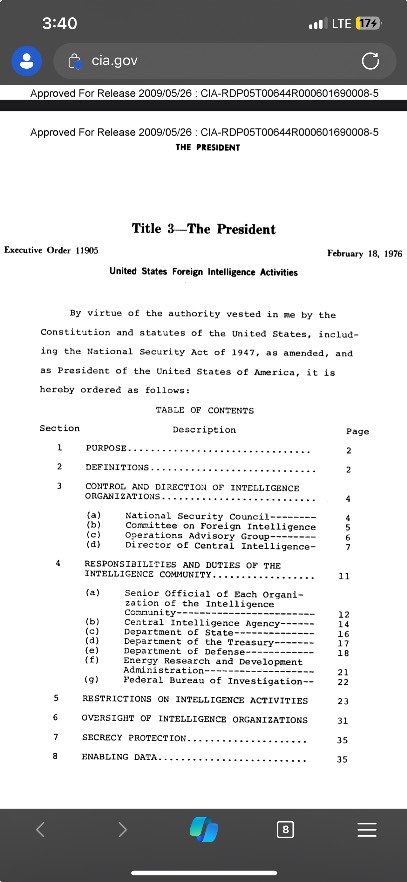
—Title 50 Chapter 33 Section §1550 This section requires the President to submit reports on the use of military force and support of partner forces every 180 days
—Executive Order 13912 Issued on March 27, 2020, this order allowed the President to activate up to 1 million reserve components to active duty in response to the COVID-19 national emergency
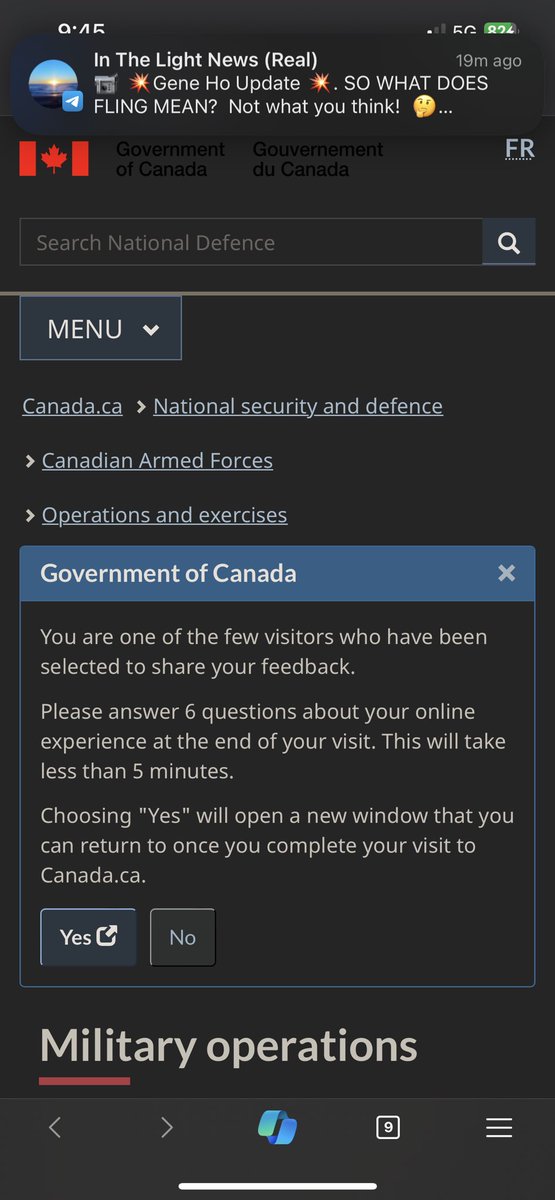
—Executive Order 13913 Signed on April 4, 2020, this order established the Committee for the Assessment of Foreign Participation in the United States Telecommunications Services Sector
—Quite a lot happened in those first 180 days of 2020.
—What’s your take on these events?
Dec 24, 2024 • 4 tweets • 5 min read
The frustration with wealth inequality often stems from several key ideas, including the zero-sum view of wealth.
Let’s break down this concept and see if the statistics support it:
Zero-Sum View of Wealth
The zero-sum view of wealth suggests that the economy is like a fixed pie, where if one person gets a larger slice, others get smaller slices.
This perspective implies that the wealth of billionaires comes at the direct expense of everyone else.
Is This View Supported by Statistics?
1) Wealth Distribution: According to the 2022 World Inequality Report, billionaires hold 3% of the world’s wealth, which is a significant concentration in the hands of a few
This statistic can fuel the perception that wealth is unequally distributed.
2) Economic Growth: Critics of the zero-sum view argue that wealth can be created, not just redistributed.
For example, technological innovations and new businesses can expand the economic pie, benefiting more people
3) Income Inequality: In the U.S., the wealth gap has been widening.
The top 1% of earners have seen their incomes grow significantly faster than the rest of the population
This disparity can lead to the belief that the rich are getting richer at the expense of the poor.
Conclusion
While the zero-sum view of wealth is a common perspective, it’s important to consider both sides of the argument.
Wealth can be created through innovation and economic growth, but the current distribution of wealth does show significant inequality.
Understanding these nuances can help in forming a more balanced view of the issue.
Do you have any specific statistics or aspects you’d like to explore further?
There are several arguments against the existence of billionaires, often rooted in concerns about economic inequality, social justice, and the influence of extreme wealth on democracy. Ruined
Here are some of the main points:
Economic Inequality
1) Wealth Concentration: Critics argue that billionaires contribute to the concentration of wealth, which exacerbates economic inequality.
This can lead to a society where a small elite controls a disproportionate share of resources, while many struggle to meet basic needs.
2) Resource Allocation: Extreme wealth can distort resource allocation, with billionaires potentially influencing markets and economies in ways that prioritize their interests over the public good.
Social Justice
1) Moral Concerns: Some believe that it is morally wrong for individuals to amass such vast fortunes while others live in poverty.
This perspective holds that extreme wealth is inherently unjust in a world with significant unmet needs.
2) Opportunity Hoarding: Billionaires often have access to opportunities and networks that are out of reach for most people, perpetuating cycles of privilege and disadvantage.
Influence on Democracy ruined
1) Political Power: Billionaires can wield significant political influence through campaign contributions, lobbying, and media ownership.
This can undermine democratic processes and lead to policies that favor the wealthy.
2) Policy Impact: The interests of billionaires may not align with those of the broader population, potentially leading to policies that exacerbate inequality and limit social mobility.
Economic Arguments
1) Market Distortion: The concentration of wealth can lead to market distortions, where the economic power of billionaires influences market outcomes in ways that may not be efficient or fair.
2) Innovation Stifling: Some argue that extreme wealth can stifle innovation, as billionaires may invest in ways that protect their interests rather than fostering broad-based economic growth.
Counterarguments
It’s also important to consider counterarguments, such as the idea that billionaires can drive innovation, create jobs, and contribute to economic growth.
Many billionaires are also philanthropists, donating significant portions of their wealth to charitable causes.
Understanding these arguments can help in forming a nuanced view of the role of billionaires in society.
Dec 19, 2024 • 37 tweets • 16 min read
@VivekGRamaswamy Oh ok 🤣 🤷♀️ I didn't even notice that 😂
@VivekGRamaswamy axios.com/2024/12/18/joh…
Dec 18, 2024 • 9 tweets • 3 min read
@elonmusk Ima dive into this bill
• Purpose: The bill aims to provide continuing appropriations for the fiscal year ending September 30, 2025, and includes provisions for disaster relief.
• Short Title: It may be cited as the “Further Continuing Appropriations and Disaster Relief Supplemental Appropriations Act, 2025.”
• Table of Contents: The bill includes a detailed table of contents outlining its various sections and provisions.
Dec 11, 2024 • 20 tweets • 15 min read
@NotOpCue @DanScavino
There are several key documents and directives that outline Continuity of Government (COG) protocols, which can provide evidence of how these measures are regulated and potentially infringe on individual rights.
Here are some notable examples:
1) Executive Order 13961: This order, issued in December 2020, focuses on the governance and integration of federal mission resilience.
It mandates that executive departments and agencies maintain the capability to perform National Essential Functions (NEFs) under all conditions1.
2) Presidential Policy Directive-40 (PPD-40): This directive, issued in 2016, outlines the National Continuity Policy.
It requires federal executive branch departments and agencies to develop integrated continuity plans to ensure the performance of essential functions during a wide range of emergencies
3) Federal Continuity Directives (FCDs): These directives provide guidance on continuity planning and implementation.
For example, FCD-1 outlines requirements for continuity capabilities, including distributed operations, devolution, relocation, succession, and reconstitution
4) Department of Defense Instruction 3020: This instruction addresses continuity requirements for the Department of Defense, including the identification of Emergency Relocation Group (ERG) and Devolution Emergency Response Group (DERG) personnel
These documents highlight the extensive planning and measures in place to ensure government continuity.
However, the lack of transparency and potential for executive overreach in these protocols can raise significant concerns about the protection of individual rights.
By examining these documents and advocating for greater oversight and transparency, we can work towards ensuring that COG protocols are regulated in a way that protects both national security and individual freedoms.
Dec 7, 2024 • 5 tweets • 2 min read
Elon Musk’s Plan:
Musk, along with Vivek Ramaswamy, aims to cut $2 trillion in government waste by eliminating remote work for federal employees.
REMOTE Act:
Proposed legislation will monitor federal employees’ computer use to ensure productivity.
Criticism of Remote Work:
Musk and Ramaswamy argue that remote work leads to inefficiency and waste, with Musk particularly vocal against it.
Government Efficiency:
The Department of Government Efficiency (DOGE) is an advisory board with no direct power, focused on generating cost-cutting ideas.
Implementing Watchdog Recommendations:
DOGE has focused on directing federal agencies to implement recommendations from the Government Accountability Office (GAO) and Inspectors General.
These recommendations aim to improve efficiency and could potentially save billions of dollars
Citizens can play a significant role in enhancing government efficiency through various actions and initiatives.
Here are some ways they can contribute:
Engage in Civic Participation:
Actively participating in local government meetings, town halls, and public forums allows citizens to voice their concerns and suggestions for improving government operations.
Provide Feedback:
Offering constructive feedback on government services and programs can help identify areas for improvement.
Many government agencies have platforms for citizens to submit their comments and suggestions.
Volunteer:
Volunteering for community projects and local government initiatives can help reduce costs and improve service delivery.
Citizens can contribute their skills and time to support various public services.
Stay Informed:
Keeping up-to-date with government policies, programs, and performance helps citizens understand how their government operates and where improvements are needed.
Informed citizens can advocate more effectively for changes.
Report Inefficiencies:
Reporting instances of waste, fraud, or abuse to appropriate authorities, such as Inspectors General or watchdog organizations, can help address inefficiencies and hold government accountable.
Participate in Public Consultations:
Engaging in public consultations and surveys conducted by government agencies allows citizens to provide input on proposed policies and programs, ensuring they are effective and efficient.
Advocate for Transparency:
Supporting and advocating for transparency initiatives, such as open data programs and freedom of information laws, can help ensure government operations are open and accountable.
Support Innovation:
Encouraging and supporting the adoption of new technologies and innovative practices in government can lead to more efficient and effective public services.
By taking these actions, citizens can help create a more efficient, accountable, and responsive government.
Dec 4, 2024 • 4 tweets • 1 min read
Yes, the situation is still developing. Two U.S. Navy destroyers were indeed attacked in the Red Sea. The USS Stockdale and USS O’Kane were targeted by missiles and drones while escorting American ships. Fortunately, the destroyers successfully intercepted the threats, and no injuries or damage were reported.
• Attack Repelled: Two U.S. Navy destroyers, the USS Stockdale and USS O’Kane, successfully repelled an attack by Iranian-backed Houthi rebels in the Gulf of Aden, ensuring no injuries or damage.
• Weapons Engaged: The destroyers defeated multiple threats, including anti-ship ballistic missiles, uncrewed aerial systems, and an anti-ship cruise missile.
• CENTCOM’s Commitment: The actions highlight CENTCOM’s ongoing efforts to protect U.S. personnel, regional partners, and international shipping from Houthi attacks.
• Retaliatory Strikes: The attack followed U.S. retaliatory strikes on Houthi weapons storage facilities in Yemen, marking the first combat use of the F-35C stealth strike fighter.
Dec 3, 2024 • 34 tweets • 12 min read
@BrainStorm_Joe Lets dissect this
U.S. House Speaker Nancy Pelosi spoke at a climate summit, emphasizing that “America is back” in the fight against climate change.
She highlighted the importance of putting women and girls at the center of climate efforts, noting that they are disproportionately affected by climate impacts.
Pelosi also mentioned a $1.85 trillion package focused on health, family, and climate change, reflecting the Biden administration’s goals
Nov 22, 2024 • 13 tweets • 5 min read
The image you shared shows a group of military aircraft over San Angelo, Texas, identified by their yellow plane icons.
The inset image highlights an aircraft with the registration number 156113 and the label SNAP: C2B049.
These aircraft are flagged as military, confirming their nature.
It seems like these Canadian trainers are conducting some sort of operation or exercise in the area.
Aircraft Details
Registration Number: 156113
Label: SNAP: C2B049
Type: Military aircraft (as indicated by the DB flags)
Location
The aircraft are over San Angelo, Texas.
Other nearby locations include Lubbock, Abilene, Midland, Killeen, Austin, New Braunfels, and Nuevo Laredo.
Activity
The presence of multiple military aircraft in this area suggests a coordinated operation or training exercise.
The aircraft are likely Canadian trainers, as you mentioned, which could mean they are participating in joint exercises with the U.S. military or conducting independent training missions.
Tracking Source
The data is from adsbexchange.com, a popular site for tracking aircraft in real-time.
Possible Reasons for Activity
Training Exercises: Military aircraft often conduct training missions to maintain readiness and proficiency.
Joint Operations: Canada and the U.S. frequently collaborate on defense exercises.
Surveillance or Reconnaissance: Military aircraft might be involved in monitoring activities.
@rattletrap1776 The data is from , a popular site for tracking aircraft in real-time.adsbexchange.com
Nov 18, 2024 • 11 tweets • 4 min read
• Lawsuit Progress: Ligado Networks’ $39 billion lawsuit against the US government can proceed, as ruled by Judge Edward J. Damich.
The case involves claims of unlawful actions by the Departments of Defense and Commerce regarding Ligado’s L-band spectrum.
• Spectrum Dispute: The dispute centers on Ligado’s plan to use L-band spectrum for a wireless network, which the Department of Defense argues could interfere with GPS signals crucial for military and civilian use.
• Government Pushback: The Pentagon has not disclosed specific systems at risk, complicating Ligado’s defense.
Legislative efforts are ongoing to force the Pentagon to reveal this information.
• Political Context: The situation may change with the incoming Trump administration, which previously supported opening up spectrum for economic growth.
• Ligado Networks Lawsuit: Ligado Networks is suing the U.S. government for $39 billion, alleging unlawful actions by the Departments of Defense and Commerce that effectively seized its L-band spectrum without compensation.
• Background: The lawsuit follows a controversial 2020 FCC decision to rezone spectrum for a 5G network, despite concerns about interference with GPS receivers.
• Financial Struggles: Ligado faces potential bankruptcy due to $4 billion in loans and bonds coming due, and the company has put its 5G plans on hold.
• Allegations: The suit claims DoD and Commerce fabricated arguments, misled Congress, and orchestrated a smear campaign against Ligado.
Nov 18, 2024 • 12 tweets • 5 min read
Special Air Mission
Special Air Mission [SAM] aircraft provide safe, comfortable, and reliable air transportation for the President, Vice President, Cabinet, members of Congress, and other high-ranking American and foreign dignitaries.
Flying worldwide, SAM aircraft represent the highest level of DV travel and must meet stringent schedule and protocol requirements under intense media scrutiny.
The 89th Airlift Wing provides this service with 17 aircraft dedicated to the SAM and 15 helicopters supporting federal emergency requirements.
SAM is especially essential in wartime when diplomacy and negotiation become critical elements of national security strategy.
World events may, at any given time, require the nation's leaders to be dispatched simultaneously on diplomatic missions around the world.
Physical and communications security are integral to the mission. SAM passengers conduct highly sensitive business while en route, and their objectives must not be compromised.
Mission protocol dictates the use of civilian airports almost exclusively. Because SAM aircraft are the official transportation for leaders of the United States Government, they are a highly visible symbol of the United States of America.
National pride dictates these aircraft portray the highest American standards. SAM mission areas may be divided into the following categories:
Nov 16, 2024 • 37 tweets • 20 min read
Conditional probability is the probability of an event that is occuring with respect to the event th...
Conditional probability is the probability of an event occurring given that another event has already occurred. It’s denoted as ( P(A|B) ), which reads as “the probability of A given B.” Here’s a breakdown:
Formula
[ P(A|B) = \frac{P(A \cap B)}{P(B)} ]
•( P(A \cap B) ): The probability that both events A and B occur.
•( P(B) ): The probability that event B occurs.
Example
Suppose we have a deck of 52 cards, and we want to find the probability of drawing an Ace given that we’ve already drawn a King.
If we assume the first card is not replaced, the deck now has 51 cards.
•Event A: Drawing an Ace.
•Event B: Drawing a King.
Since the King is already drawn, there are still 4 Aces in the deck of 51 cards: [ P(A|B) = \frac{4}{51} ]
Applications
•Medical Testing: Probability of having a disease given a positive test result.
•Weather Forecasting: Probability of rain given cloudy skies.
•Finance: Probability of stock price increase given market trends.
How is conditional probability used in machine learning?
Conditional probability plays a crucial role in various machine learning algorithms and models.
2). Bayesian Networks
•Concept: These are graphical models that represent the probabilistic relationships among a set of variables.
•Application: Used in risk analysis, diagnostics, and decision support systems.
•Example: In medical diagnosis, the network can model the probability of diseases given symptoms.
3). Hidden Markov Models (HMM)
•Concept: HMMs use conditional probabilities to model sequences of events, where the system being modeled is assumed to be a Markov process with hidden states.
• Application: Speech recognition, bioinformatics, and financial modeling.
• Example: Predicting the next word in a sentence given the previous words.
4). Conditional Random Fields (CRF)
• Concept: CRFs are used for structured prediction, modeling the conditional probability of a label sequence given an observation sequence.
• Application: Natural language processing tasks like named entity recognition and part-of-speech tagging.
• Example: Identifying entities in a sentence (e.g., names, locations).
5). Bayesian Optimization
• Concept: This technique uses Bayes’ Theorem to optimize hyperparameters of machine learning models.
• Application: Hyperparameter tuning in complex models like deep neural networks.
• Example: Finding the optimal learning rate and batch size for a neural network.
6. Reinforcement Learning
• Concept: Conditional probabilities are used to model the likelihood of transitioning from one state to another given an action.
• Application: Training agents in environments like games or robotics.
• Example: Predicting the next state of a game character given its current state and action.
Summary
Conditional probability helps in making informed predictions and decisions based on prior knowledge and observed data.
It is foundational to many machine learning techniques, enabling models to learn from data and improve their performance over time.
how does it apply to everyday life?
WOW thats CRAZY
Conditional probability is quite relevant in everyday life, even if we don’t always realize it.
Here are some practical examples:
1). Weather Forecasting (hurricane Helene)
•Example: The probability of rain given that it’s cloudy.
Meteorologists use historical data to predict the likelihood of rain based on current weather conditions.
2. Medical Diagnosis ( Committing Murder)
•Example: The probability of having a disease given a positive test result.
Doctors use conditional probability to interpret test results and make informed decisions about further testing or treatment.
3). Traffic and Navigation (spying)
•Example: The probability of encountering traffic given the time of day. Navigation apps like Google Maps use conditional probability to provide the fastest routes based on current traffic conditions.
4). Sports 👈 RIGGED
• Example: The probability of a team winning given their past performance against a particular opponent.
Coaches and analysts use this information to strategize and make game-time decisions.
5. Finance and Investments (Ponzi Scheme)
•Example: The probability of a stock price increasing given recent market trends.
Investors use conditional probability to assess risks and make investment decisions.
6. Shopping and Recommendations 🤔 Louis Vitton LV designer bags made out of children skin
•Example: The probability of liking a product given your past purchases.
Online retailers use this to recommend products you might be interested in.
7). Everyday Decisions
•Example: Deciding whether to carry an umbrella based on the weather forecast.
You use the probability of rain to make a practical decision.
8). Social Interactions
• Example: The probability of someone responding positively to a message given their past responses.
This helps in tailoring communication to improve relationships.
Summary
Conditional probability helps us make better decisions by considering the likelihood of events based on known conditions.
It’s a powerful tool that enhances our ability to predict outcomes and manage uncertainties in various aspects of life.
Nov 13, 2024 • 78 tweets • 27 min read
@rattletrap1776 Hi Derek what you teaching me today 😂
The U.S. Space Force was established by President Donald Trump on December 20, 2019, when the National Defense Authorization Act was signed into law
• Establishment: The U.S. Space Force (USSF) was created on December 20, 2019, as the first new branch of the armed services in 73 years, emphasizing the importance of space for national security.
• Role and Importance: Space capabilities are crucial for modern military operations and daily civilian life, including communication, navigation, and infrastructure.
• Threats: Potential adversaries are developing threats to deny U.S. access to space, making it essential to protect and defend space assets.
• Mission: The USSF is dedicated to ensuring the U.S. and its allies maintain access to space, operating 24/7 to support and defend critical space systems.
Oct 26, 2024 • 6 tweets • 4 min read
NOTAMs inform pilots of potential hazards or changes in airspace conditions that could affect flight safety.
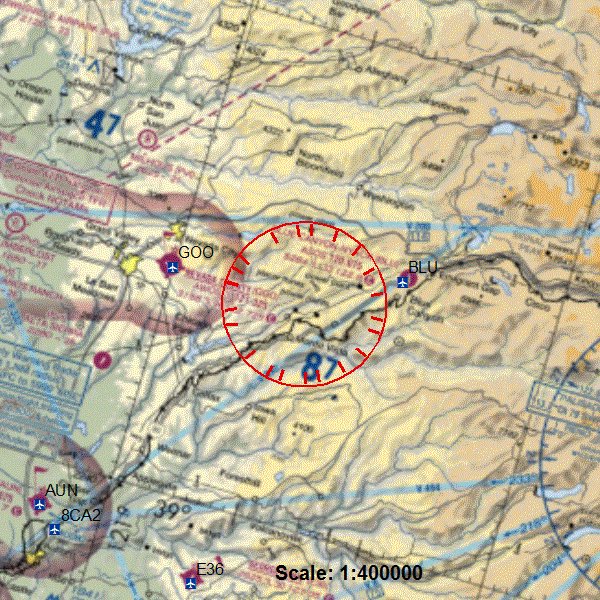
One entry shows a NOTAM with ID “04/562,” dated 10/26/2024, for facility “ZAB” in Arizona, categorized under “HAZARDS,” describing an event near Pomona, CA.
“ZAB” stands for the Albuquerque Air Route Traffic Control Center. It’s one of the FAA’s 22 Air Route Traffic Control Centers (ARTCC) in the United States, responsible for managing en route air traffic over a large portion of the southwestern United States, including parts of Arizona, New Mexico, and Texas.
The United States has 22 Air Route Traffic Control Centers (ARTCCs), each responsible for managing en route air traffic in different regions.
Here are the ARTCCs:
1Albuquerque (ZAB)
2Anchorage (ZAN)
3Atlanta (ZTL)
4Boston (ZBW)
5Chicago (ZAU)
6Cleveland (ZOB)
7Denver (ZDV)
8Fort Worth (ZFW)
9Honolulu (ZHN)
10Houston (ZHU)
11Indianapolis (ZID)
12Jacksonville (ZJX)
13Kansas City (ZKC)
14Los Angeles (ZLA)
15Memphis (ZME)
16Miami (ZMA)
17Minneapolis (ZMP)
18New York (ZNY)
19Oakland (ZOA)
20Salt Lake City (ZLC)
21Seattle (ZSE)
22Washington (ZDC)
Each ARTCC covers a specific region and ensures the safe and efficient flow of air traffic within its designated airspace
Location Details: The NOTAM specifies coordinates and radials from the ROME VORTAC and ATHENS VOR/DME.
Flight Restrictions: No pilots may operate an aircraft in the specified areas unless exceptions are described.
Purpose: The site is informational, assisting pilots and aircrews with flight planning and familiarization.
Disclaimer: It should be used alongside other pre-flight information sources to meet all requirements of 14 CFR 91.103.
tfr.faa.gov/save_pages/det…
The NOTAM with ID “04/562,” dated 10/26/2024, for the Albuquerque ARTCC (ZAB) in Arizona, categorized under “HAZARDS,” describes an event near Pomona, CA. This NOTAM indicates a temporary flight restriction (TFR) or other airspace hazard that could affect flight operations in the specified area.