
Assistant Professor leading the Social RL Lab https://t.co/ykwfJG84Bj @uwcse and Staff Research Scientist at @GoogleAI.
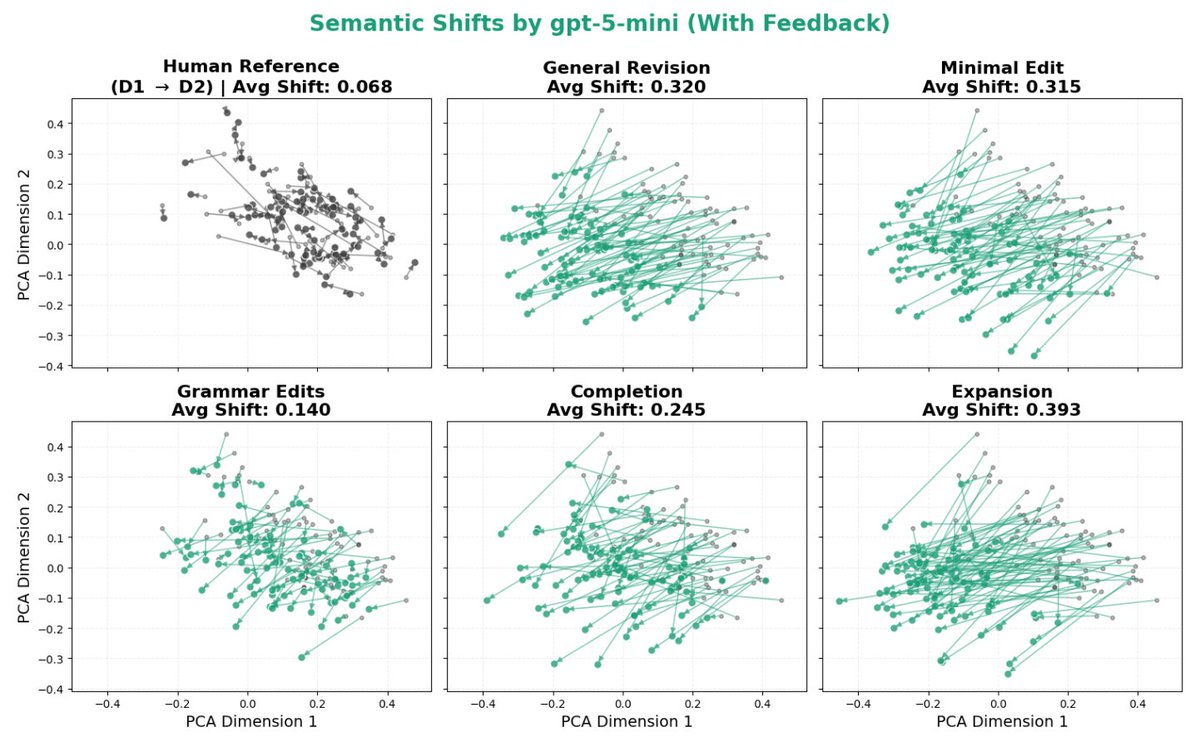 This is a problem, because LLM-generated text is already infiltrating a lot of our cultural and scientific institutions. For example, we look at the 21% of ICLR 2026 reviews that were found to be LLM-generated, and find that they actually focus on different scientific criteria than human reviews! e.g. LLMs increase focus on scalability by +111% vs. humans.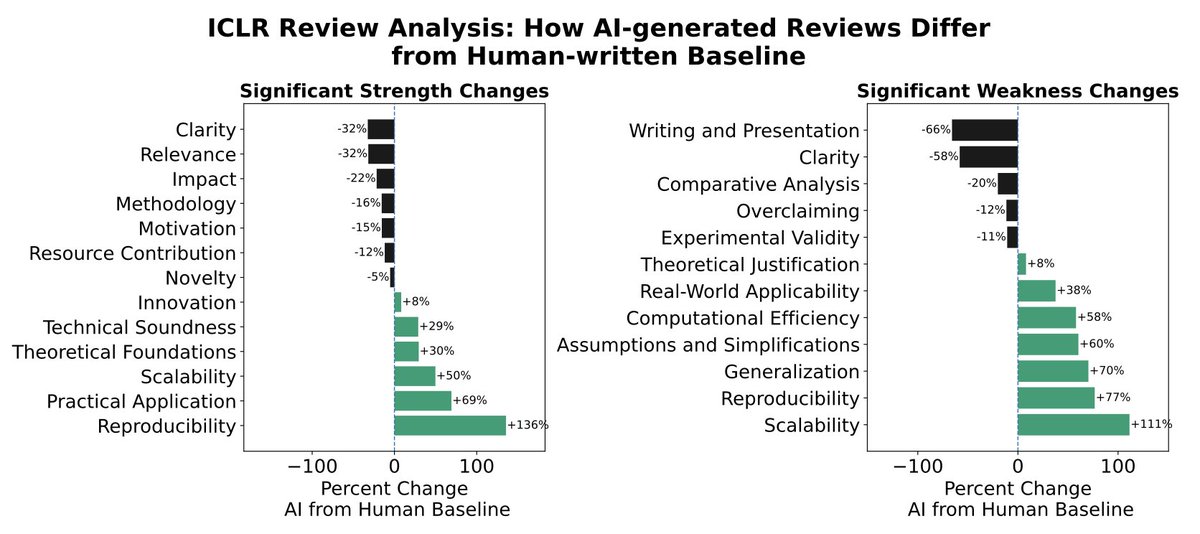
 2) ...by learning from cues like sentiment and conversation length that are implicit in the text itself. We show this is more effective than relying on explicit labeling of human preferences.