Nethrapal Profile picture
IIT-IIM alum, Rank 236 in UPSC, Authored " The Inspiring Ambedkar" & "The Pain of Merit." , Finance Minister Award 2022, Ahinda Intellect, Views Personal
May 16, 2025 8 tweets 5 min read
In UPSC, do SC candidates get lower interview marks if they get higher written marks?

I took the recent marks list of 2025 and did an analysis to check this out.

Scatter plots of Written vs. Interview marks for SC and UR candidates, with trend lines.

The SC plot shows a downward slope (negative correlation): many top written SC performers cluster at lower interview scores.

The UR plot shows a mild upward trend, indicating a positive correlation between written and interview marks in the UR group. This divergence is evident in the exam results.

Such inverse pairing of low written–high interview and high written–low interview is prevalent in the SC data, contributing to the negative correlation. By contrast, in the UR group, strong written performance is often met with decent or even high interview marks (e.g. an UR candidate scoring 825 written was awarded 210 in interview

What conclusions can you draw from this?Image Despite having comparable outstanding written scores, SC candidates in the top quartile received lower interview scores on average (~164) than their UR counterparts (~177). This ~13-point difference in interview means suggests a disparity. The distribution of interview marks further highlights this:
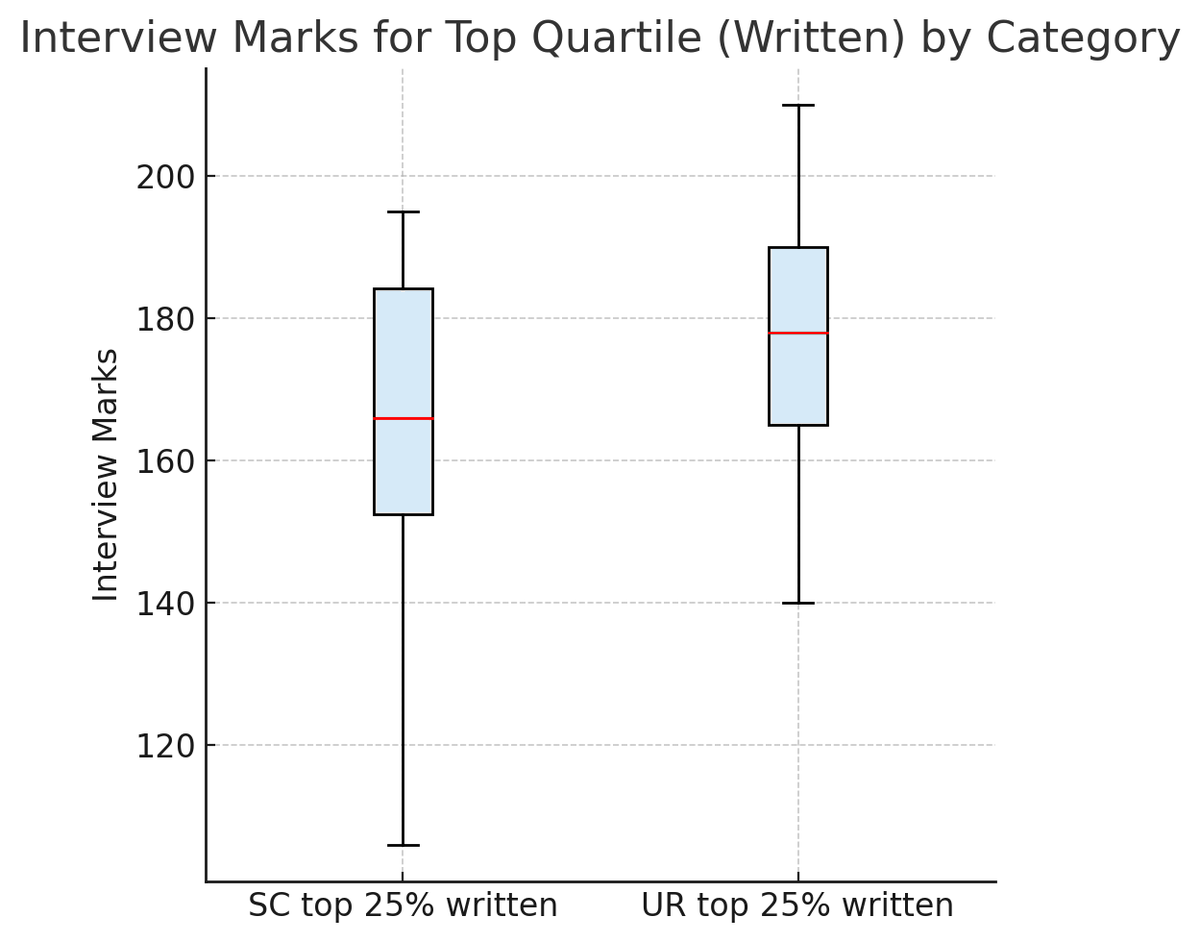
Box plot of interview scores for the top 25% written scorers in SC vs UR. The median interview score for top SC writers (red line) is visibly lower and the spread extends to lower values compared to UR. High-written SC candidates often received interview marks on the lower end of the range, whereas top-written UR candidates’ interviews are generally higher. Notably, several SC candidates with very high written scores received surprisingly low interviews. For example, one SC candidate with 828 marks in written got only 151 in the interview. In contrast, some UR/general category candidates with slightly lower or similar written scores earned much higher interview marks – e.g. an UR candidate with 785 written scored 193 in the interviewImage
Dec 24, 2024 8 tweets 2 min read
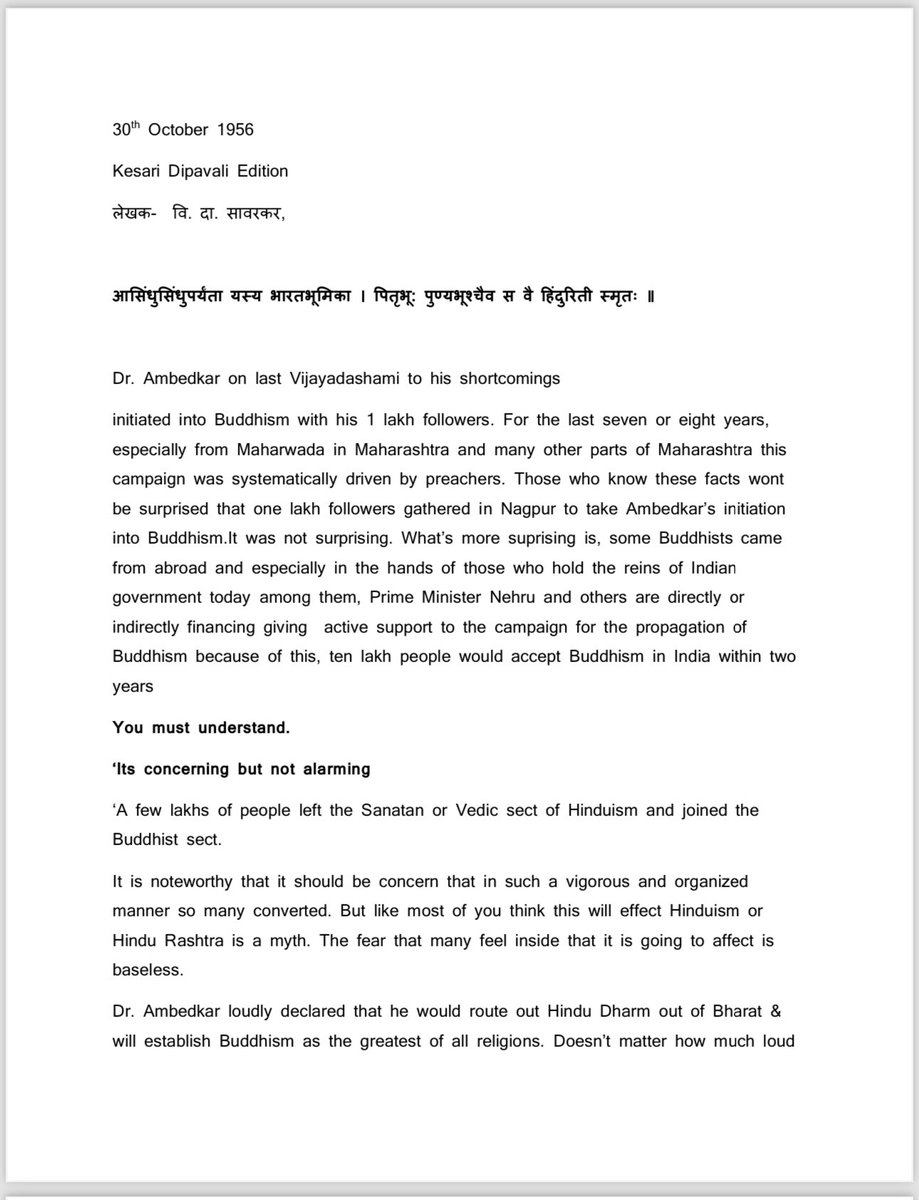
In 1956, Savarkar published an article against Ambedkar in his newspaper Kesari. This thread has the entire article. Read on
(1/8) Image (2/8) Image
Jun 17, 2024 10 tweets 4 min read
Did #reservations cause train accidents?

A detailed thread against a viral image which is being used
(1/n)
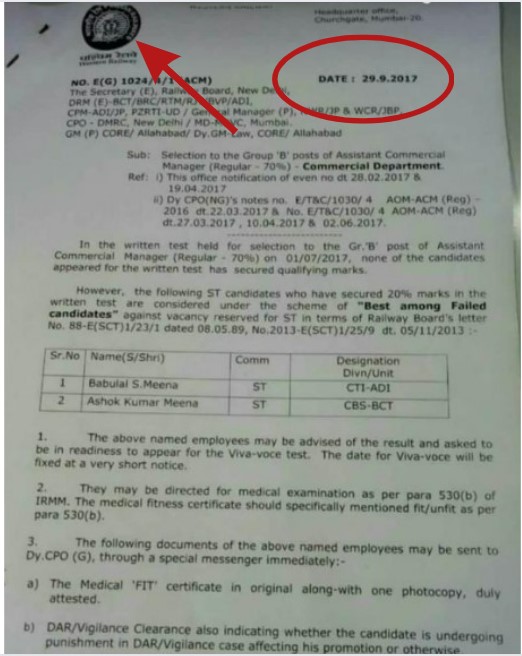
🧵 Image "Best among failed candidates" is from a Mumbai mirror report dated October 7 2017. The report spoke about an internal test conducted to fill the post of assistant commercial managers.
Now 20 employees from Group C category failed the exams. But using the best among failed candidates were called for interviews.
Now those selected under this scheme were are not directly promoted. They are considered for an ad-hoc promotion during a six month trial and then made permanent only if they are found suitable
(2/n)
Jun 15, 2024 6 tweets 3 min read
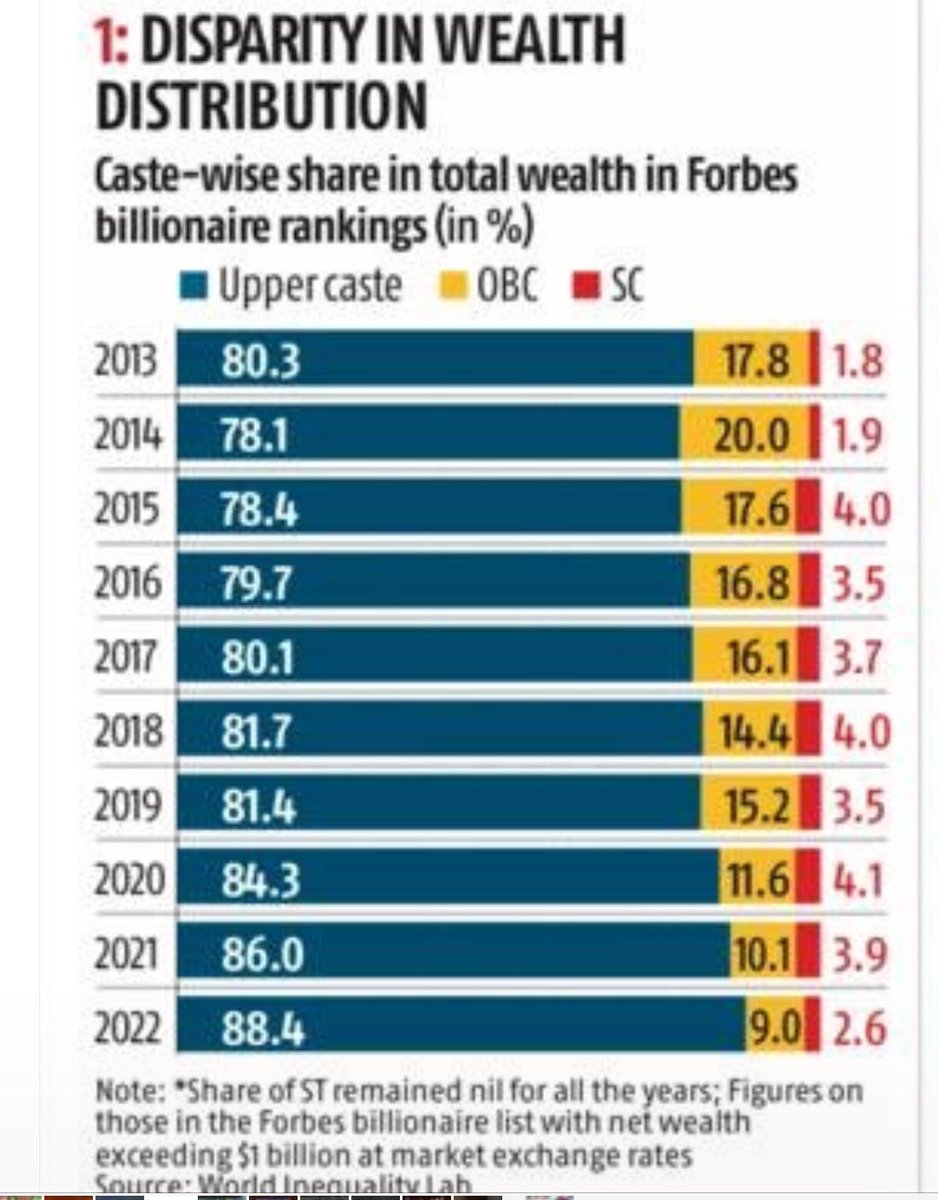
Upper caste own 88.4% of the wealth compared to just 9.0% for OBCs and 2.6% for SCs in 2022.

Please see below 👇👇👇

Pura Kabza…

With no assets, intergenerational wealth, no networks, no connections it is next to impossible for these communities go up the ladder without #reservations.

The saddest part in this is OBC’s wealth share of 17.3% in 2013 has reduced to 9.0% in 2022.

This is big dip showing OBCs who owned traditional small and medium scale businesses are shutting down.

The economic power is getting concentrated in upper castes.

Kabza is only increasing..Image Most of the enterprises are owned by Upper castes and OBCs. However representation of OBCs is only in enterprise size of 20 employees and less. SC and ST have negligible representation. This is the reason why SC STs should concentrate only on permanent organised salaried jobs in government and private sector. Cutting government jobs have the biggest impact on themImage
May 29, 2024 20 tweets 9 min read
A detailed thread on the issue of how SC/ST/OBC reservations were avoided in 10,000 schools using minority status certificates after RTE 2009 Act.

🧵
Read the full thread
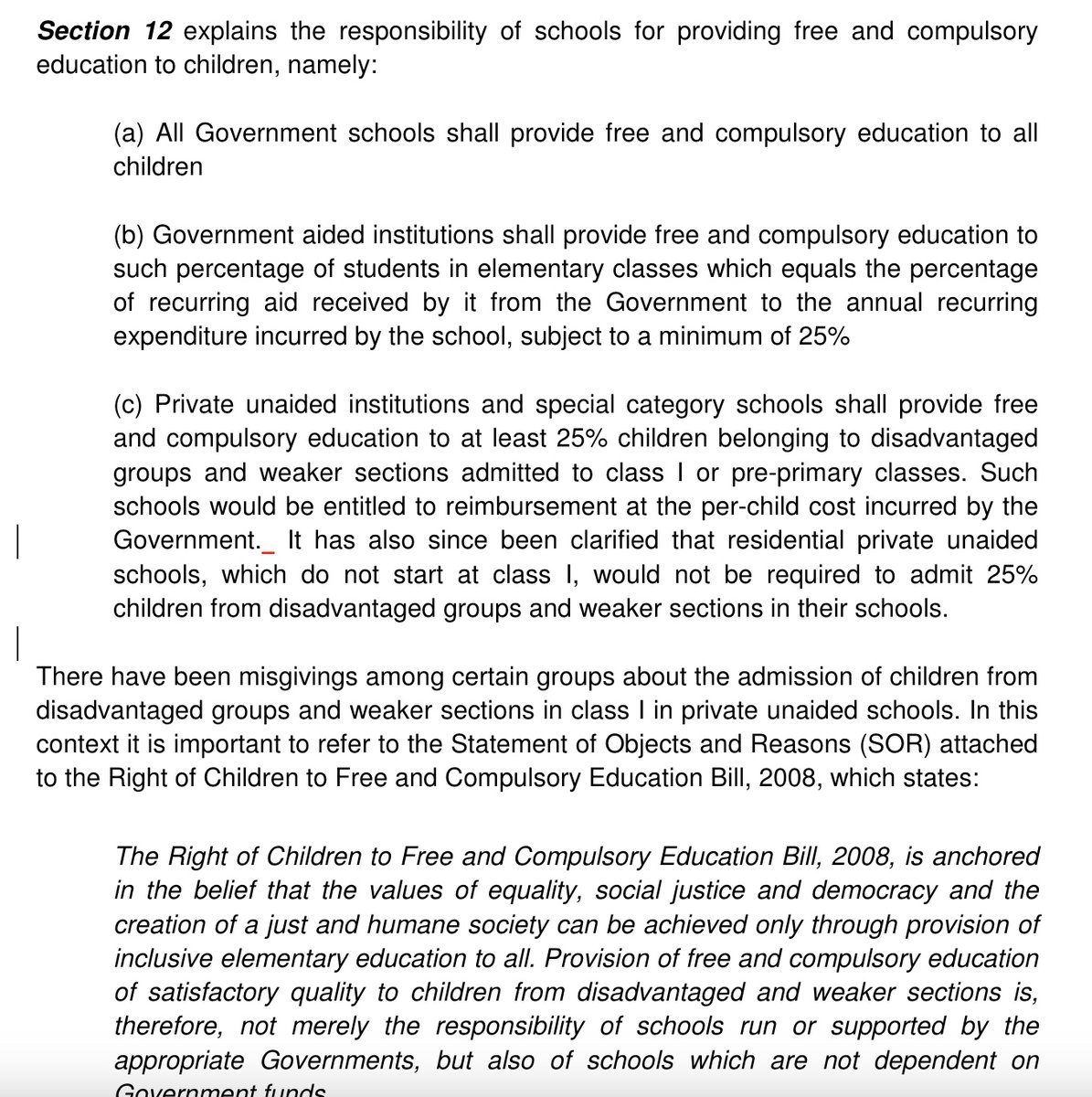
(1/n) Right to Education 2009 act gave all children, in the age of 6 to 14 years, a constitutional right of equal and high quality education. RTE act under section 12 mandated 25% of the seats in private schools to be reserved for children from economically weaker section and disadvantaged group.
(2/n)Image
Jan 23, 2024 13 tweets 7 min read
Why can not Marathas be given OBC reservations?
A detailed thread
In 1901, Maratha were included in Class II-Kshatriya, and Kunbi's were included in Class III-Vaishyas and were never included in Sudras, the current-day OBCs.
Including Marathas and Kunbis would be reverse discrimination against the existing OBC/EBC population.
1/nImage
Image
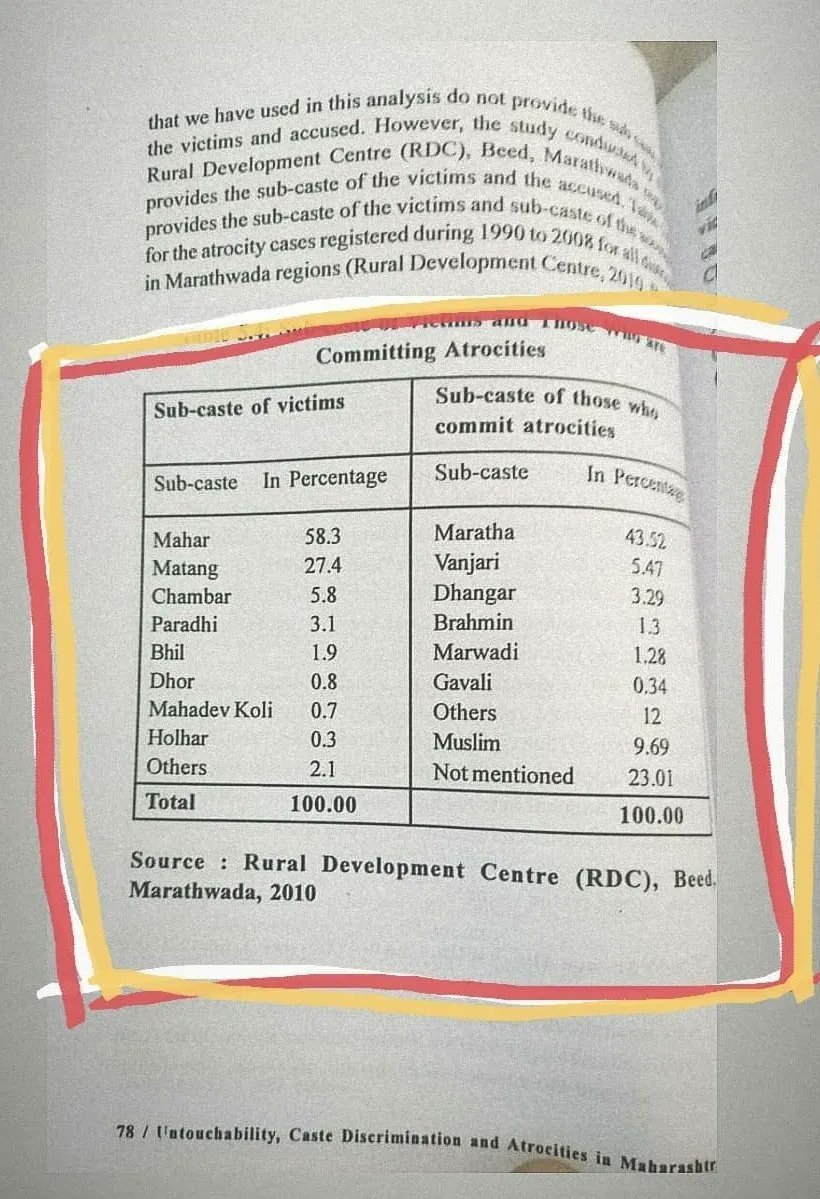
Statistcs shows that Maratha community committed 43.52% of the atrocities against SC/ST much more than Brahmins.
(2/n) Image
Oct 7, 2023 7 tweets 2 min read
हाँ देख लो भाई, देख लो।
कहाँ है 50% रिजर्वेशन?
ये 50% रिजर्वेशन तो भ्रम ही है।
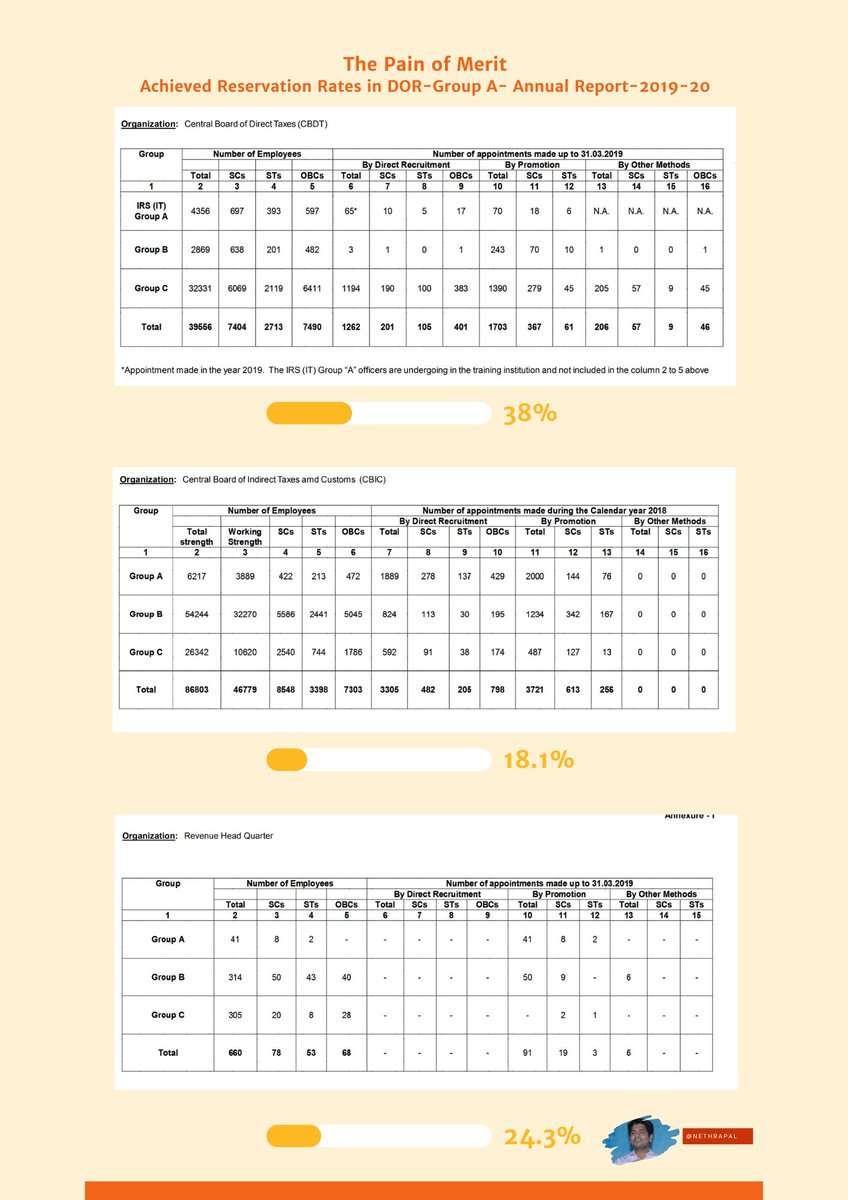
देख लीजिये वित्त मंत्रालय में कितना रिजर्वेशन है भाई?
ढूंढ़ते रहिए कहा है 50% रिजर्वेशन।
दलित आदिवासियों का तो कुछ तो हिस्सेदारी है।
मगर ओबीसी का तो बहुत ही बुरा हाल है।
कुछ तो गडबड है।
(1/7) Image (2/7) Image
Sep 21, 2023 19 tweets 7 min read
50% reservation is a myth.

Unlike popular perception, there is hardly any representation for SC, ST, and OBC communities in higher civil services and Group A/B government employment.

The 50% limit is never met.
Sharing a detailed thread of real data.
(1/n)
#Merit #Reservation
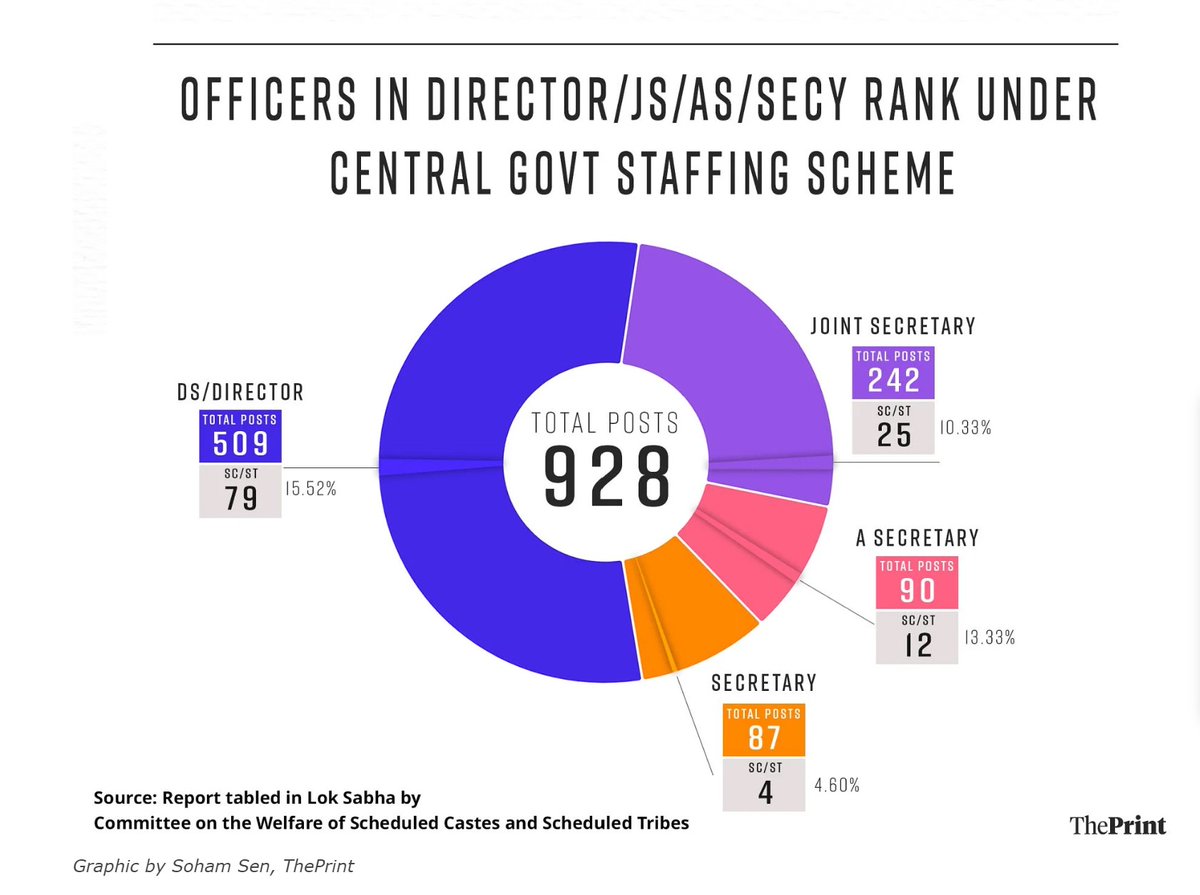
Representation of SC/ST in Director/JS/AS/Secretary rank in central government

Just 4 secretaries out of 87 secretaries ( 4.60%)
Just 12 Additional secretaries out of 90 (13.33%)
Just 25 Joint secretaries out of 242 (10.33%)
Just 79 Deputy secretaries out of 509 ( 15.52%) Image
Aug 30, 2023 6 tweets 4 min read
Was Ambedkar Islamophobic?

Recently a prominent author mentioned that Ambedkar was Islamophobic quoting selectively.

But investigations into minorities committee of round table conference proceedings shows that contrary.

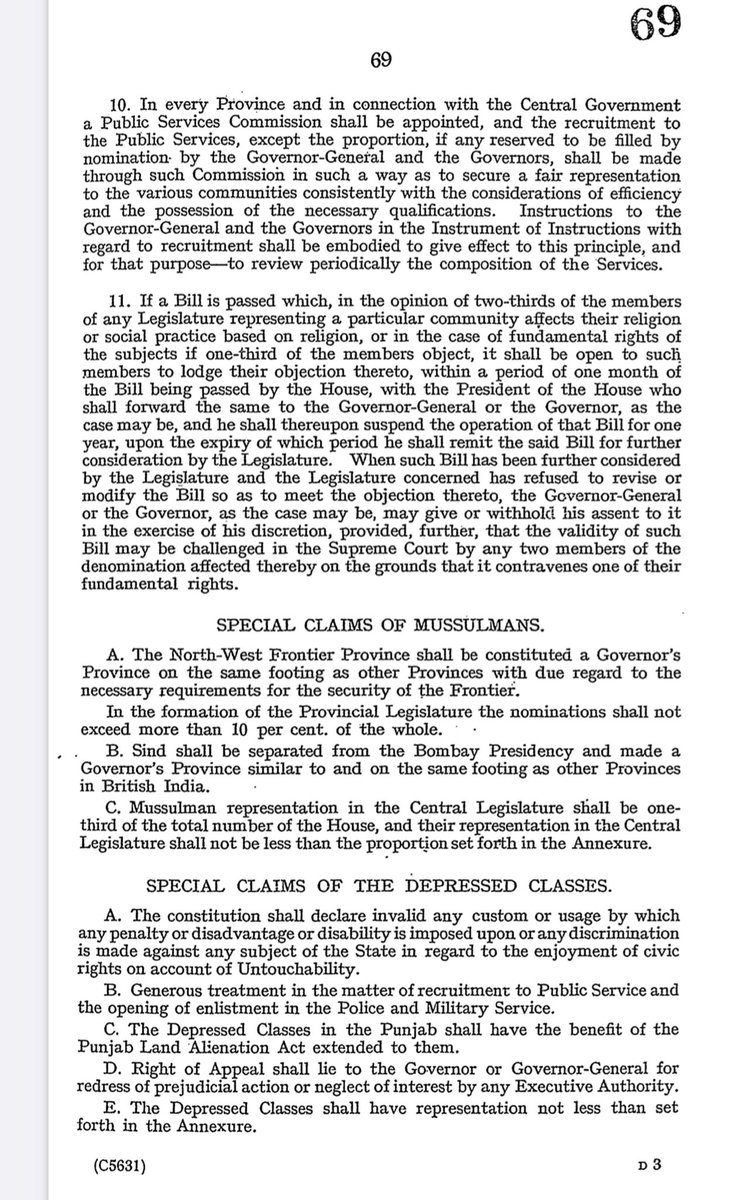
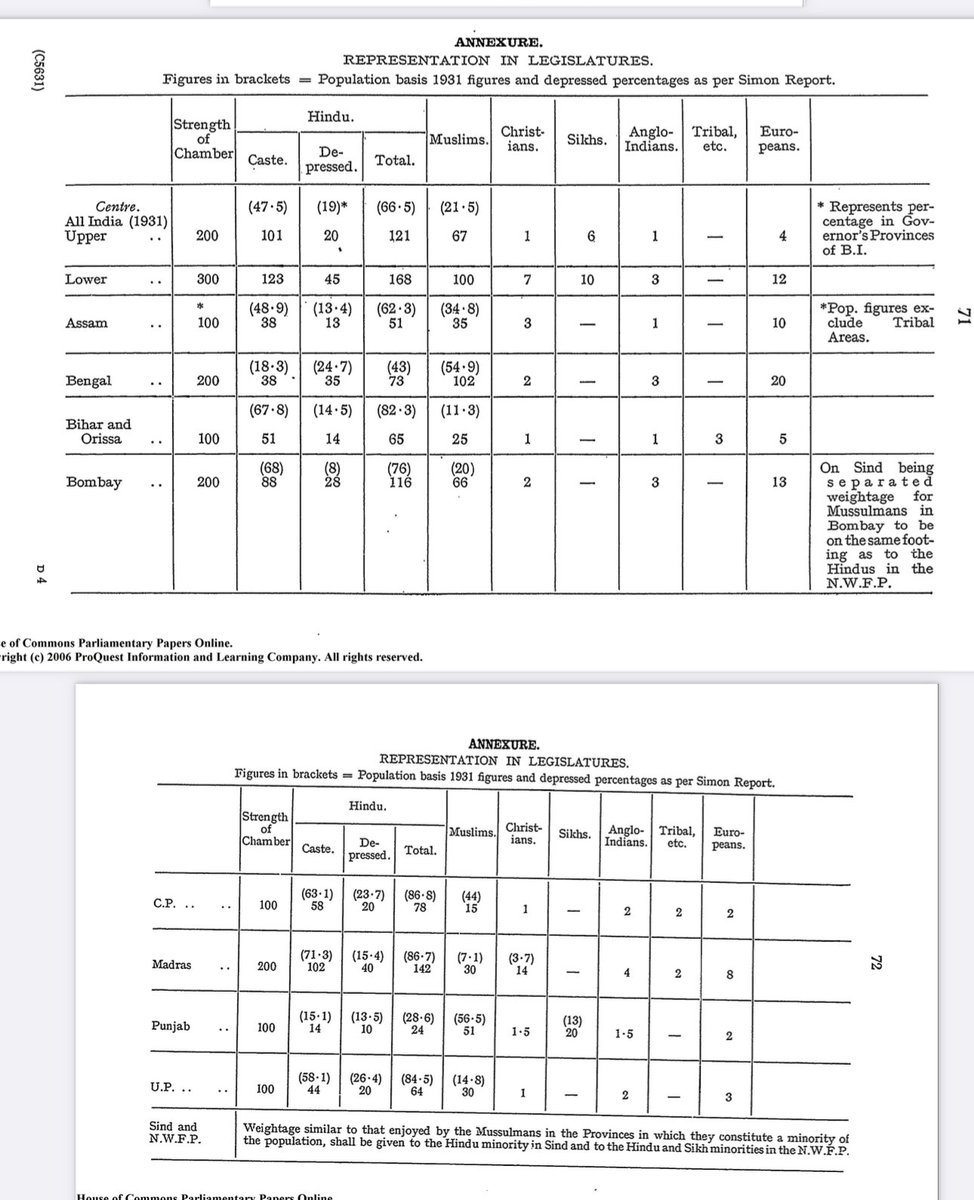
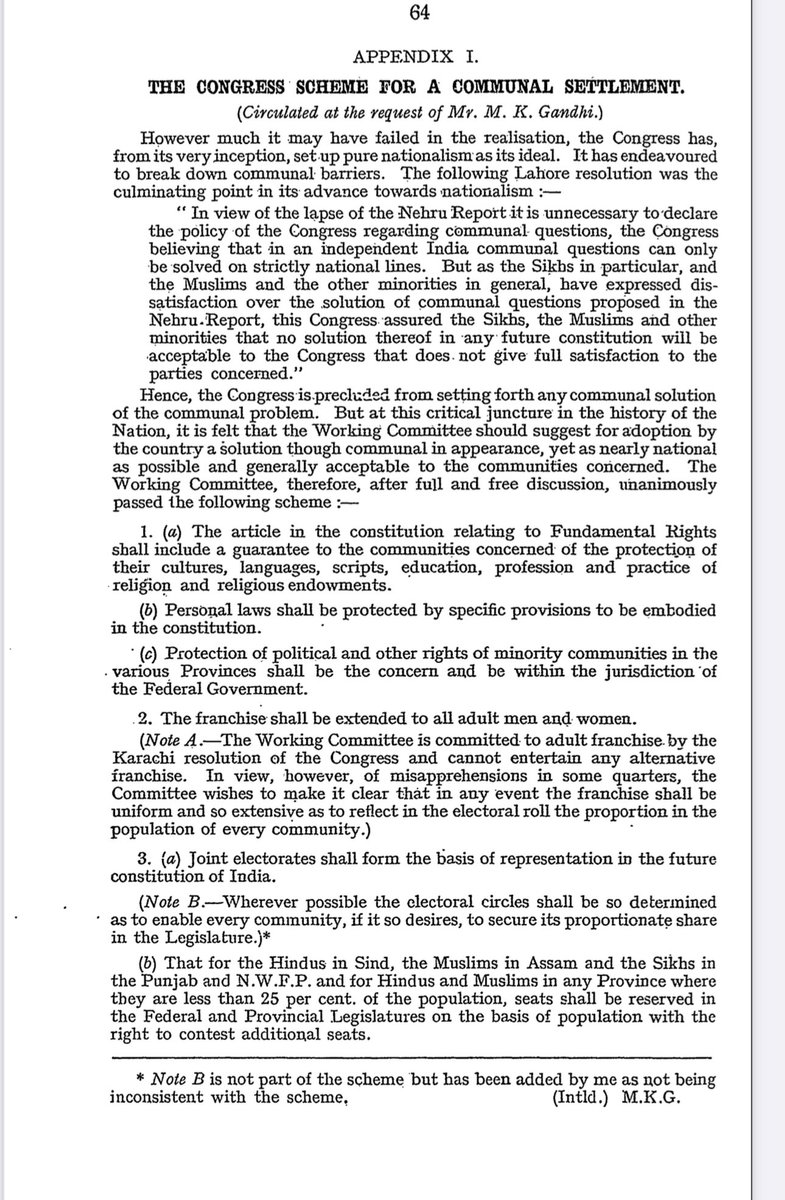
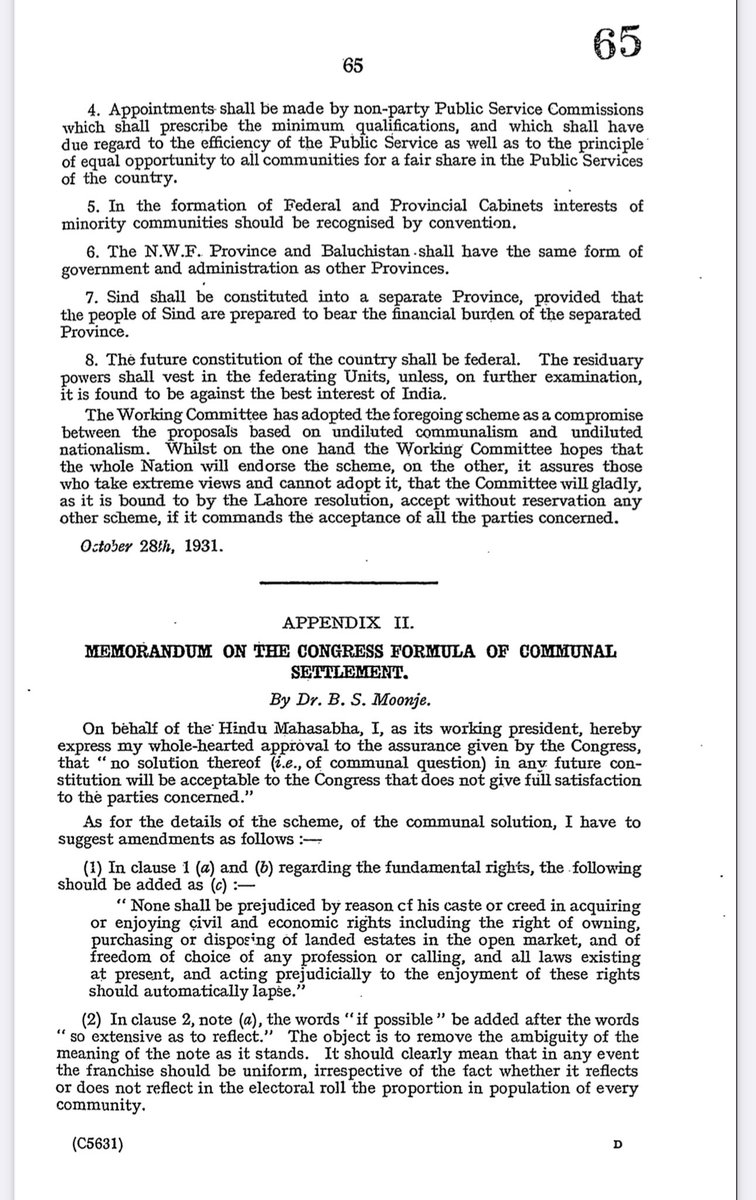
See how he fought for Muslims and depressed classes together..

Real Evidence no quotes

#Ambedkar #Islam


Why Ambedkar and Gandhi clashed ?
Contrary to the above congress submitted its proposals in minorities committee where it did not propose reservations or separate electorates for depressed classes

See below 👌👌

This was the reason for clash between Ambedkar and Gandhi
Image
Image
Aug 22, 2023 9 tweets 4 min read
Making Meat eating punitive

@dillivali found that it was the enforced vegetarianism by Marwar Merchants who made meat-eating punitive. These merchants predominantly Jains and Vaishnavites, called ‘achhep’ to denote leather workers, sanitation workers, artisans, and Muslims. And this category of people was mostly punished for their transgressions in water access, meat-eating and rituals.

The author found many petitions "documents of resistances" wherein fines were placed on those who were involved with injuring or slaughtering animals.

Cherian’s research shows that the Jain and Brahmin officers of the Rathore kingdom laid down strict codes that solidified caste identities on the basis of meat-eating, abortion, chastity, gambling and alcohol.

There are some important findings which all readers need to understand:

(1) Firstly, there is a group of people who have been propounding that caste was a British construct. That is India was a casteless society and it was the British who created the caste system in India. This is far from true. The argument given in this book, clearly shows that Jains who became very rich and powerful in Rathore Kingdom along with Brahmins who occupied administrative law enforced Hindu law, making Meat eating punitive

(2) Secondly, whether this was there only in the later half or even during the Mughal or period earlier is not known. This is some kind of mystery which the book does not explore.

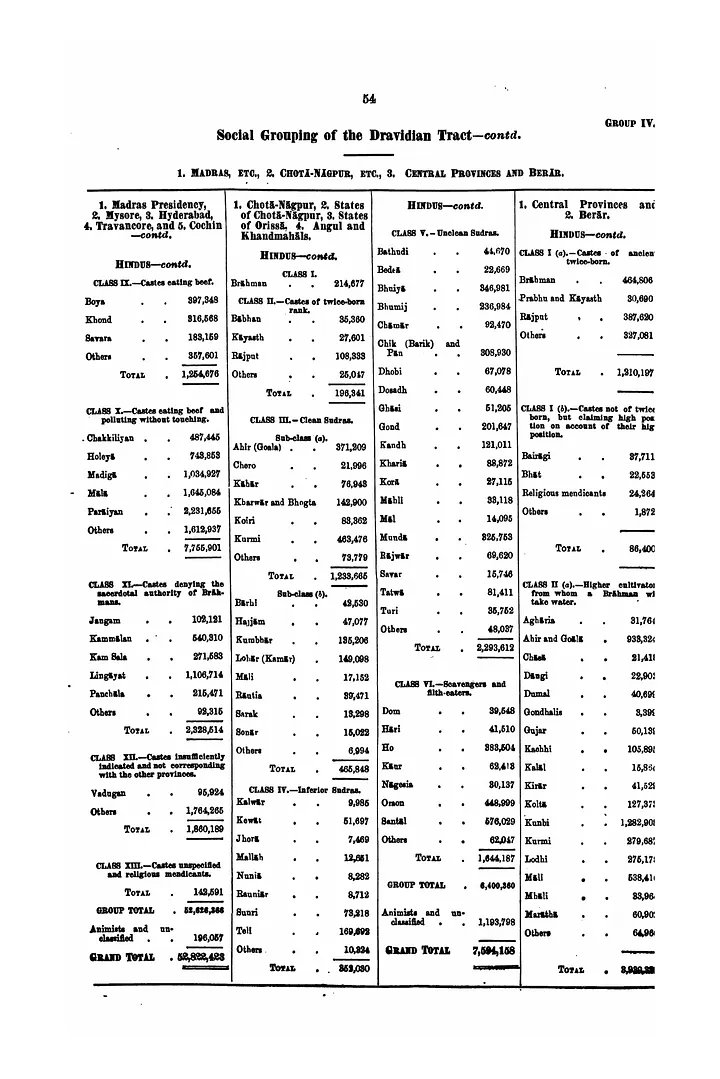
(3) However, the book fails to understand that it was not just meat eating alone that resulted in caste hierarchy. For example, Shudras did not have beef but had other meats. But they were not discriminated against or treated the same way as the untouchables. The main test here is eating beef, which is more punishable than regular meat, which probably created a difference between the shudras and untouchables. Please see the attached social hierarchy, where untouchables who ate Beef were placed much below Shudras who did not have Beef.

(4) Now, the social hierarchy is very complex, and the basis of this is not just meat eating. It may be one of the factors. This is because, even in Shudras, there was further social hierarchy.
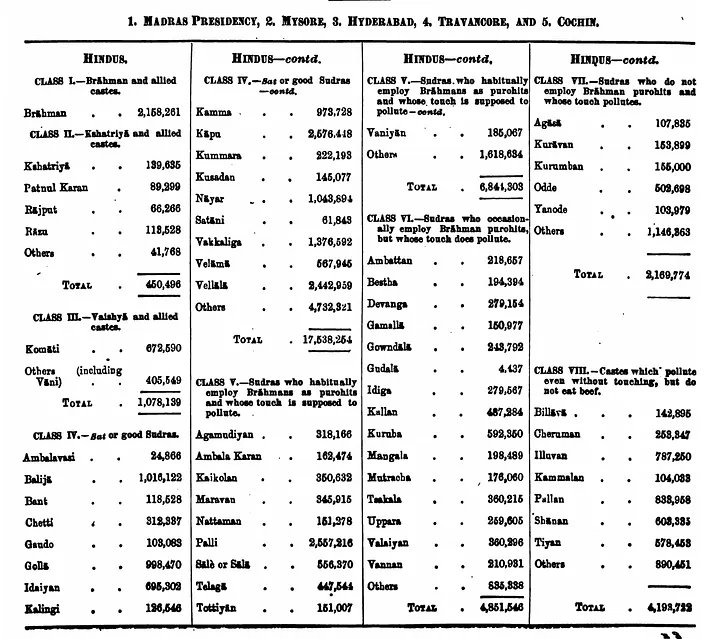
The image corresponds to Madras Presidency/Mysore/Hyderabad/Travancore and Cochin from 1901 census
They classified the castes not as OBC/SC/ST, but as given below, in order of social supremacy,
Class I- Brahman and Allied Castes
Class II- Kshtraiya and Allied Castes
Class III- Vaishas and Allied Castes
Class IV- Good Shudras
Class V-Sudras who habitually employ Brahmans as Purohits and whose touch is supposed to pollute
Class VI- Sudras who occasionally employ Brahmans Purohit but whose touch does pollute
Class VII- Sudras who do not employ Brahman Purohits and whose touch pollutes
Class VIII- Castes which pollute even without touching, but do not eat Beef
Class IX - Castes eating Beef
Class X- Castes eating Beef and polluting without touching
Class XI- Castes denying the authority of Brahmanas
Class XII- Castes that dont fall under the above.

So, the book does not explore this.
Meat eating may not be the only factor

#meateating #vegetarinism #untouchabilityImage
Image
Aug 14, 2023 10 tweets 5 min read
Ambedkar and the Freedom Struggle.

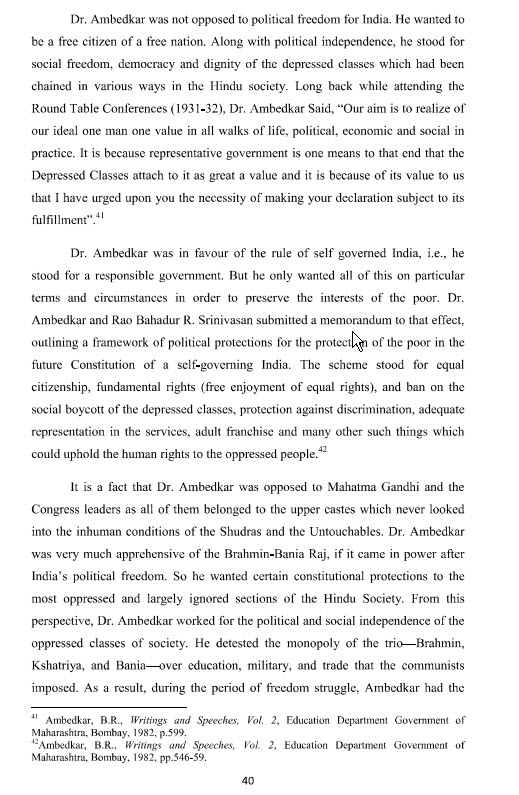
Ambedkar had two enemies, one British and another the congress. He blamed British control for the neglect of the welfare of millions of people. He held that depressed classes in no sense formed an integral part of the community and remarked that the status granted to these poor people was "midway between that of the serf and the slave". He himself said that the civic rights, equality of opportunity can be never achieved by the British government

" It is only a government which is of the people, for the people and by the people that will make this possible"

The myth that he sided with British to get rights for depressed classes is a myth. He mentioned that

" The British government did not energetically and enthusiastically work for the restoration of the rights of the depressed classes and that it did not exercise its power to strike at the undemocratic denial of elementary human rights to the untouchables"

He clearly recognized the difference between freedom of the country and the freedom of its people. He mentioned that

" it is entirely wrong to concentrate all our attention on the political independence of our country. It is suicidal to imagine that political independence necessarily means real all sided freedom" Unity of the country, not only political but also social, was his supreme concern.

To him, nationalism was synonymous with the rejection of caste spirit. He remarked that

" Any claim for sharing of power by the minority is called communalism, while monopolizing the whole power by the majority is called nationalism"

He mentioned that British government was a foreign government and nothing much was achieved under its government. He remarked

" Has the British government done anything to remove your untouchability? Before the British you could draw water from the village. Has the British government secured you the right to the well? Before the British you could not enter the temple. Can you enter now? Before the British you were not allowed to serve in the military. Is that career open to you? Gentlemen to none of these questions you can give an affirmative answer"

He mentioned further

" Nobody can remove your grievances as well as you can, and you cannot remove them unless you get political power in your own hands. No share of this political power can come to you so long as the British government remains as it is. It is only in a swaraj constitution that you stand any chance of getting the political power into your own hands without which you cannot bring salvation to your people"

So he wanted real political power to flow to depressed classes and not just few caste hindus holding onto it.

In First round table conference he called for a government of the people, by the people and for the people. He called for a unified state, adult suffrage, reserved seats and legal protections for the poor. He mentioned writing against the British

" Nobody, we beileve, is capable of resolving our complaints as effectively as we are...Only a Swaraj constitution gives us an opportunity to seize political power, without which we will be unable to save our people...We are aware that political power is shifting from the British to those who wield enormous economic, social and religious clout. Though the concept of swaraj conjures up images of tyranny, persecutions and injustice perpetrated against us in the past, We are hopeful that it will come to pass"

#Ambedkar #FreedomstruggleImage Image
Jul 17, 2023 4 tweets 2 min read
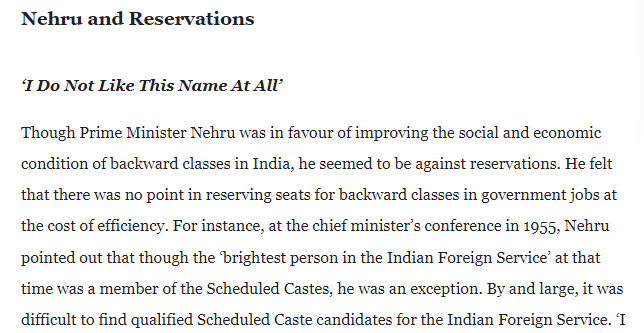
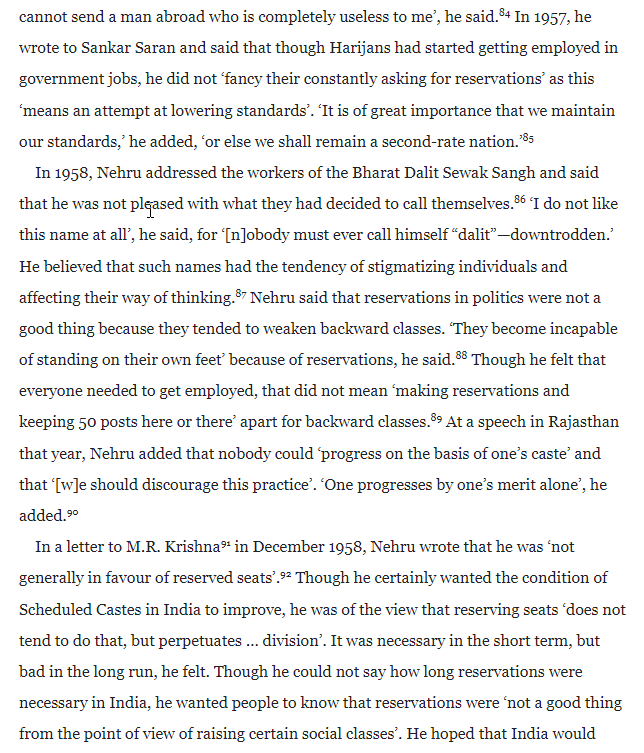
Nehru's view on reservation

Part 1 -See below 👇👇
(Source: These seats are reserved by Abhinav Chandrachud. son of CJI Chandrachud ) Image Part 2 -See below 👇 (Source: These seats are reserved by Abhinav Chandrachud. son of CJI Chandrachud ) Image
Jul 9, 2023 6 tweets 4 min read
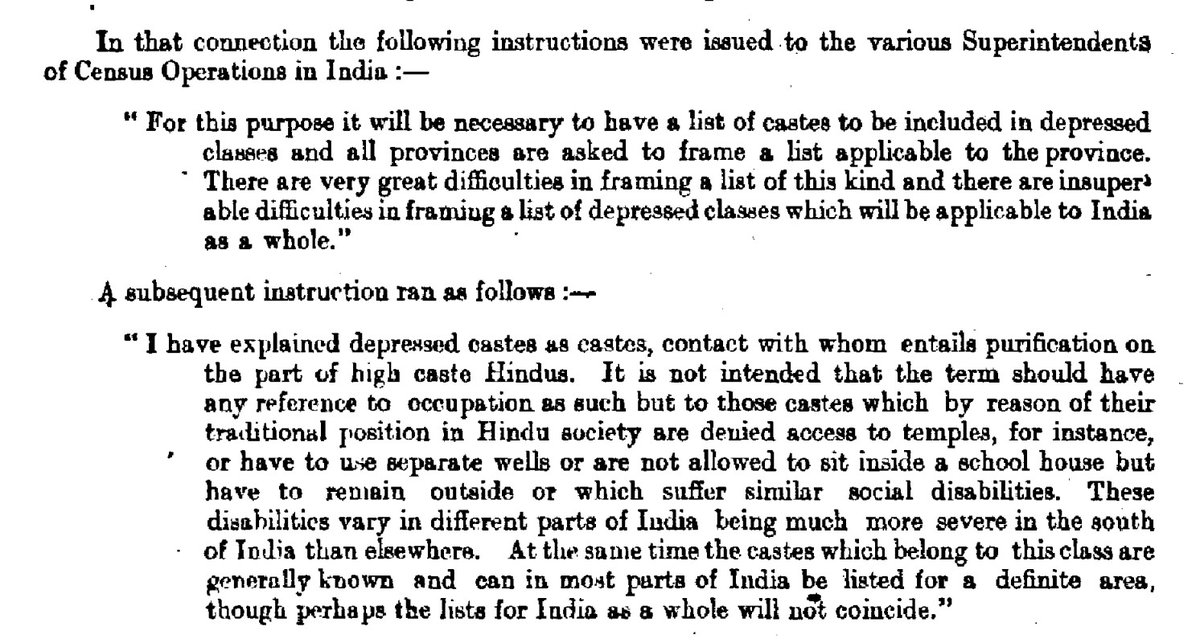
Scheduled Castes list is a homogeneous class formed by a set of criteria defined across several census

Extracts/Graphics show the extracts from 1931 census where the definition of exterior class that is the current scheduled caste is defined.

It states that depressed castes… https://t.co/5NJKnOiVUhtwitter.com/i/web/status/1…
The possible tests for scheduled castes were also defined in 1931 census
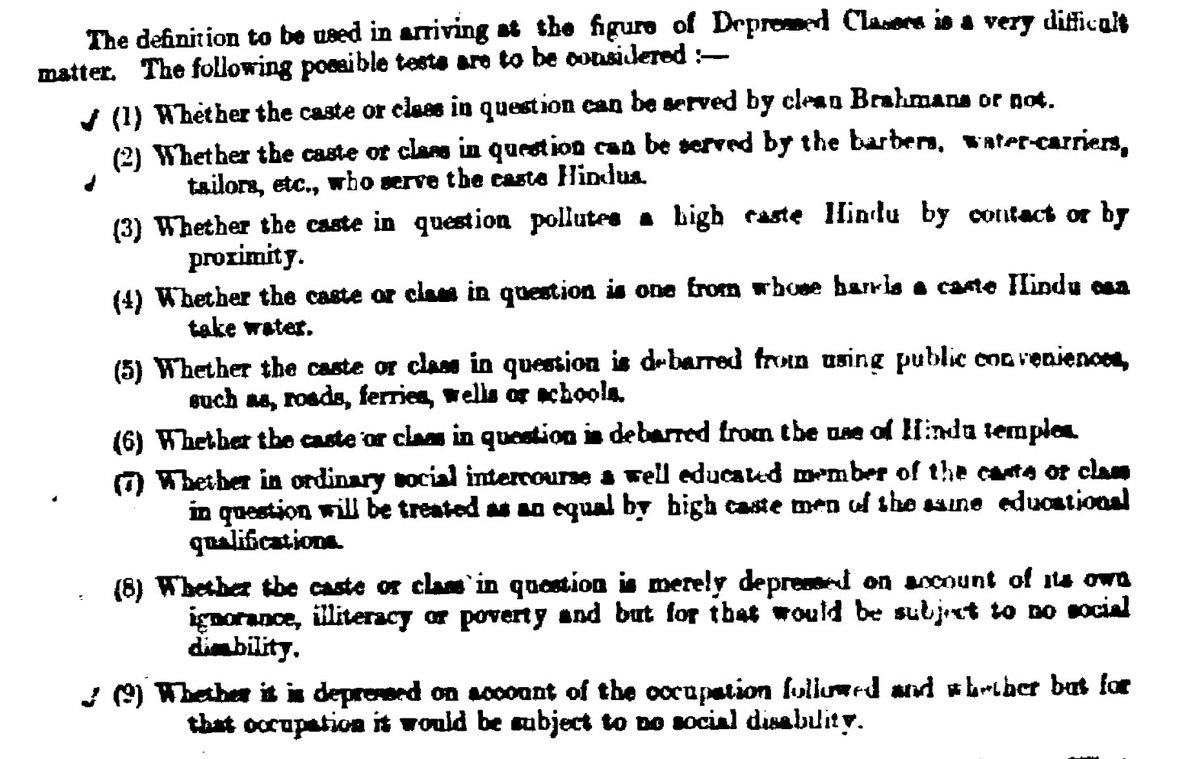
Snap shot from 1931 census attached below

The British India new that identifying depressed classes would be extremely difficult. So they came up with the following possible tests which are defined below… https://t.co/SVK6qzYWHhtwitter.com/i/web/status/1…