Your three peasants in 1500 is a genuinely elegant framing.
It is also doing something very specific that needs to be named.
It begins the story at a point before European colonialism restructured the global economy.
Which means it can then present the divergence that followed as something that emerged from within European society: from English ingenuity, from Protestant work ethic, from whatever cultural or institutional qualities you might want to attribute it to.
But here is what was happening to the Indian peasant between 1500 and 1750 while the Englishman was "pulling ahead":
The British East India Company was in the process of capturing the most sophisticated textile manufacturing economy in the world.
In 1750, India produced approximately 25% of global GDP.
Its textile industry was so advanced that British manufacturers lobbied Parliament to pass laws banning the import of Indian cloth because they could not compete with it.
Parliament passed those laws.
Then it went further.
It systematically deindustrialized India to turn it into a raw material supplier and a captive market for British manufactured goods.
The Indian peasant did not "fall behind" because the Englishman innovated faster.
The Indian peasant "fell behind" because the British Empire dismantled the industry above his head, extracted the surplus, and wrote the story afterward as a tale of two different levels of ingenuity.
Your starting point of 1500 is not neutral.
It is the last moment before the mechanism of divergence was switched on.
I want to say something about the 1500 starting point one more time, because it is the foundation of everything else you've built.
In 1500, the Aztec capital Tenochtitlán had a population of approximately 200,000 to 300,000 people, larger than any city in Europe at the time.
It had running water, causeways, floating gardens, a sophisticated administrative system, and markets that the Spanish conquistadors described in letters home with undisguised awe.
In 1500, the Mali Empire controlled the gold trade of West Africa and had produced Mansa Musa, whose pilgrimage to Mecca in 1324 was so extravagantly wealthy that his spending single-handedly caused inflation across the Mediterranean economy for a decade.
In 1500, China had the world's largest economy, had invented printing, paper money, gunpowder, and the compass, and had conducted naval expeditions to East Africa half a century before Europeans reached the Americas.
In 1500, the Indian subcontinent produced approximately 24% of global GDP.
Your three peasants in 1500 are not equivalently positioned at the starting line of some neutral competition that the Englishman happened to win.
The Englishman won it in the way that a competitor wins when he is allowed to change the rules, redraw the course, and arrest the other runners when they get too far ahead.
The race metaphor doesn't work.
But if you insist on it
The Englishman did not run faster.
He was the one who built the track.
Jun 28 • 4 tweets • 3 min read
That map is not a map of intelligence.
It is a map of what happens to test scores when you systematically destroy a population's access to nutrition, stable schooling, and economic security for several generations and then hand them a pencil.
The countries coded darkest red on that map are, without exception, the countries most thoroughly extracted by European colonialism.
The Congo. Sierra Leone. Mozambique. Mali.
These are not coincidences sitting next to each other on a map.
These are the predictable, measurable, documented consequences of specific historical events being laundered into a biological argument by people who need the consequences to look like causes.
The map doesn't show you African intelligence.
It shows you the invoice for European colonialism, repackaged as a nature documentary.
In the 20th century, average IQ scores rose by approximately 30 points across the developed world.
30 points. In one century. In populations whose genetic makeup did not change.
If IQ were primarily a biological property fixed by genetics, this is impossible.
Genes do not move that fast. Evolution does not work on a hundred-year timescale.
What changed was environment.
Nutrition improved. Lead was removed from gasoline and paint. Schooling became universal. Visual and abstract reasoning became more common in daily life.
The scores followed the environment.
This is the Flynn Effect, named after researcher James Flynn, and it is one of the most replicated findings in all of psychometrics.
It tells you something important: the distance between a population scoring 70 and a population scoring 100 on an IQ test is not the distance between two biologically distinct categories of human.
It is the distance between two environments.
Change the environment. The scores change.
They already did. In every country where the environment changed.
May 22 • 6 tweets • 5 min read
Konstantin, you asked a Black woman where she'd rather live than Britain or America or Canada.
Let's take Britain as your example of tolerant, slavery-ending Western excellence.
Britain did not end slavery voluntarily. Britain ended the Atlantic slave trade in 1807 after decades of organized abolitionist pressure, slave rebellions across the Caribbean, most consequentially Haiti in 1791, and the growing calculation that wage labor was becoming more economically efficient than chattel slavery in certain contexts.
When Britain "abolished" slavery in its colonies in 1833, it paid £20 million in compensation.
Not to the enslaved.
To the enslavers.
The people who had been worked and beaten and raped and bred like livestock for generations received nothing.
Their enslavers received the equivalent of £17 billion in today's money, funded by British taxpayers.
A debt so large that British citizens were still paying it off in 2015.
You read that correctly.
British taxpayers were paying off the debt incurred compensating slave owners until 2015.
So when you ask a Black woman where she would rather live, the answer she gives, if she says Britain, is not an endorsement of British moral superiority.
It is a statement about which available option causes her the least harm.
You said Western societies ended slavery "without bloodshed."
Haiti would like a word.
The Haitian Revolution, 1791 to 1804.
Enslaved people in Saint-Domingue, France's most profitable colony, which produced 40% of Europe's sugar and more than half its coffee, rose up, fought the French colonial army, fought a British expeditionary force of 20,000 troops, fought Napoleon's army, and won.
They established the first Black republic in the history of the world.
The Western response to this bloodless, voluntary, enlightened abolition was:
France imposed an indemnity of 150 million gold francs, later reduced to 90 million, which Haiti was forced to pay as the price of being recognized as a sovereign nation.
As compensation to the French slave owners whose human property had liberated itself.
Haiti finished paying that debt in 1947.
The United States refused to recognize Haiti diplomatically until 1862, and only then because the Southern states had seceded and were no longer in Congress to block it.
The West's response to the one case where enslaved people ended slavery for themselves, through their own revolutionary violence, was to economically strangle the resulting country for 150 years.
Tell me again about voluntary, bloodless abolition.
Tell me again about Western tolerance.
Aug 27, 2023 • 7 tweets • 3 min read
THREAD: The Shadowy Evolution of Western Military Dominion
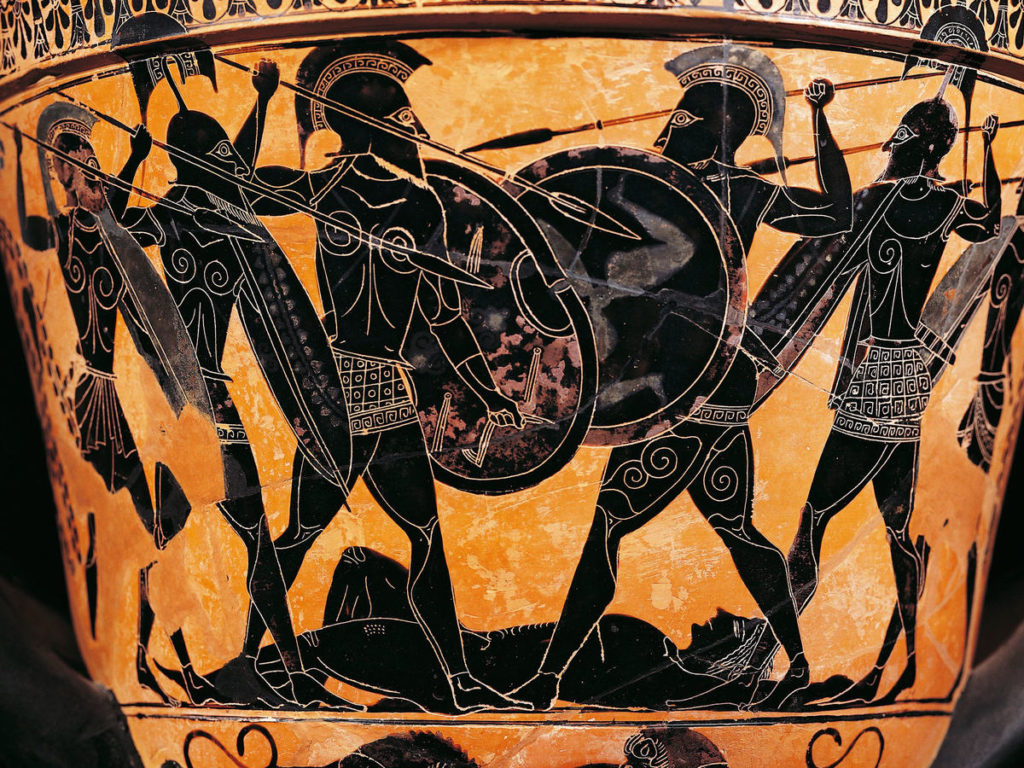
1/7 The Western military tradition, a legacy stretching from Greeks to Romans, was thrust upon Northern European tribes post the Roman Empire's collapse.
A relentless cycle of dominance and assimilation began.2/7 These traditions glorified shock battles, heralded civic militarism, and birthed a breed of heavily armed infantrymen. A legacy of brute force took root.
Tactical prowess, discipline, and training were their cornerstones - a veil of balance designed to subjugate and conquer.
Jun 14, 2023 • 4 tweets • 3 min read
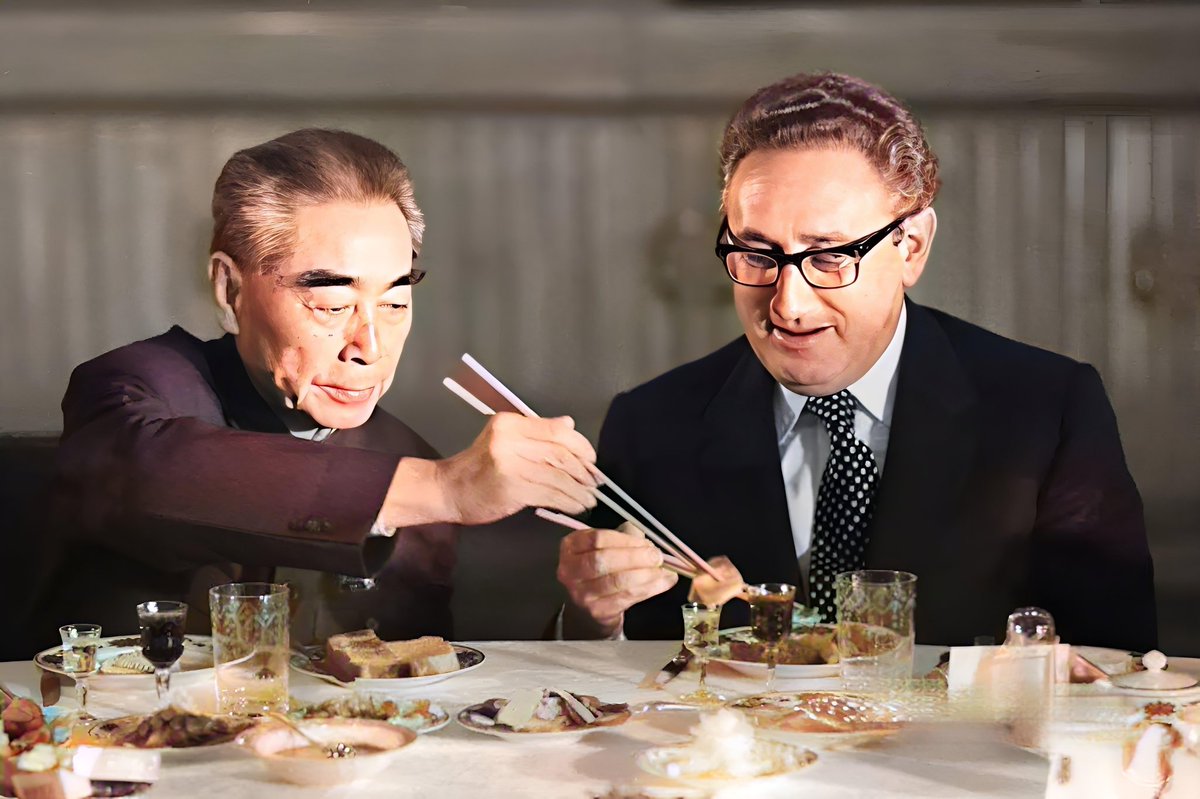
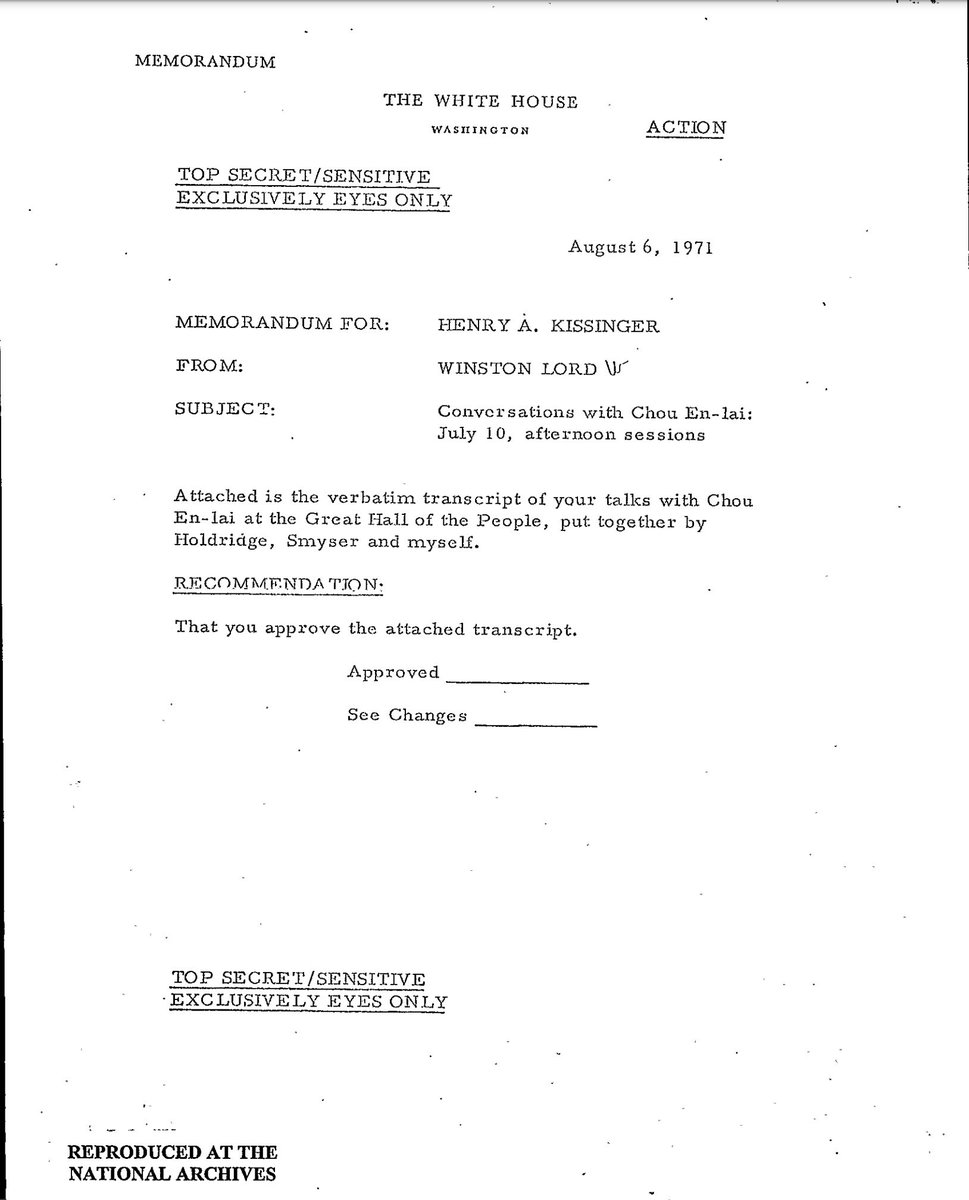
🇺🇸DR. KISSINGER: "... To answer your question, we deliberately referred to you as the People’s Republic of China for the first time in a public document of the United States as a symbol of the direction we want to go, and therefore you understand us correctly, that is we want… twitter.com/i/web/status/1…
Source: