Founder & CIO IKIGAI Asset Manager || Ex Sr Fund Manager(Equity)@KotakMF, passionate about investing. These are my personal views.
Oct 19 • 13 tweets • 3 min read
Every Diwali, you’ll find hundreds of “Top Picks.” But few talk about what not to do and where are the excesses brewing up.
This Diwali, let’s focus on avoiding landmines — the pockets of excesses and euphoria that can quietly erode wealth.
We’ve written about many of these risks in our latest IKIGAI Quarterly Newsletter — because in investing, capital protection precedes compounding.
Sometimes, the best “pick” is not picking what everyone else is chasing.
Artificial Intelligence: Dream to Mania?
AI has captured boardrooms, headlines, and investors’ imagination. But as history shows, when optimism turns into obsession, prudence becomes a virtue.
But the question we must ask as investors is simple: are we riding the wave of a revolutionary technology, or teetering at the edge of another bubble?
We believe the sector is at an inflection point. Markets are treating AI as a one-way bet, but beneath the surface, the signs of excess are starting to flash red.
#Investing
#Markets
#MarketCycle
#ArtificialIntelligence
Oct 14 • 9 tweets • 4 min read
Markets, like life, move in cycles of excitement and pause. Since July 2024 (15 months) our markets have been flat. MSCI India has underperformed MSCI EM by more than 25% on rolling one year basis.
Market breadth has been extremely weak - only 44% of stocks managed to outperform the BSE 500, and barely 30% of BSE 500 names are even in the green on a rolling one-year basis.
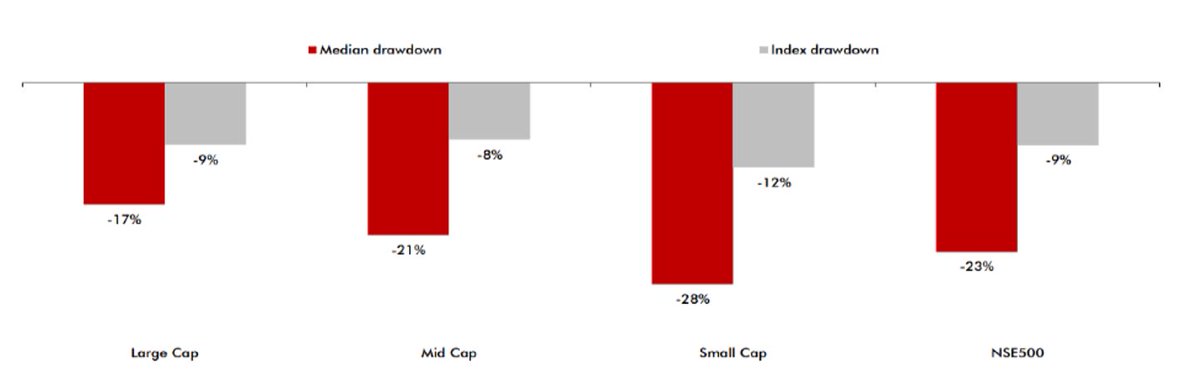
The headline indices tell only part of the story. As the chart below shows, benchmark levels often mask the pain beneath the surface.
While the index drawdown looks modest, the median drawdowns of individual constituents from their 52-week highs have been far deeper, highlighting the broad-based pressure across stocks.
This has been a true time correction - frustrating for many, but also healthy. Because it has quietly reset the expectations.
Jul 16 • 7 tweets • 4 min read
In the latest quarterly newsletter, we go deeper into our investment process, with a spotlight on one filter that rarely fails us: 𝗖𝗮𝘀𝗵 𝗙𝗹𝗼𝘄 𝗖𝗼𝗻𝘃𝗲𝗿𝘀𝗶𝗼𝗻.
Because as we like to say, “𝗧𝗼𝗽 𝗹𝗶𝗻𝗲 𝗶𝘀 𝘃𝗮𝗻𝗶𝘁𝘆, 𝗯𝗼𝘁𝘁𝗼𝗺 𝗹𝗶𝗻𝗲 𝗶𝘀 𝘀𝗮𝗻𝗶𝘁𝘆, 𝗯𝘂𝘁 𝗰𝗮𝘀𝗵 𝗶𝗻 𝘁𝗵𝗲 𝗯𝗮𝗻𝗸 𝗶𝘀 𝗿𝗲𝗮𝗹𝗶𝘁𝘆.”. 𝗪𝗲 𝗲𝘅𝗽𝗹𝗮𝗶𝗻 𝘄𝗵𝘆 𝗰𝗮𝘀𝗵 𝗳𝗹𝗼𝘄 𝗰𝗼𝗻𝘃𝗲𝗿𝘀𝗶𝗼𝗻 𝗶𝘀 𝗼𝗻𝗲 𝗼𝗳 𝗼𝘂𝗿 𝗺𝗼𝘀𝘁 𝘁𝗿𝘂𝘀𝘁𝗲𝗱 𝘀𝗶𝗴𝗻𝗮𝗹𝘀, 𝗮𝗻𝗱 𝗵𝗼𝘄 𝗶𝘁’𝘀 𝗵𝗲𝗹𝗽𝗲𝗱 𝘂𝘀 𝗮𝘃𝗼𝗶𝗱 𝗯𝗶𝗴 𝗺𝗶𝘀𝘁𝗮𝗸𝗲𝘀.
To build a truly strong and lasting business, cash flow matters more than reported earnings. That’s because while profits can be adjusted in many ways through accounting, cash flow is much harder to manipulate.
When we look back at companies that have created real, long-term value, one thing stands out - they consistently generate healthy cash flows along with profit growth.
In fact, companies that report good profits but struggle with cash flow often trade at lower valuations. And the reverse is also true: solid cash flow, even with modest profits, can earn investor trust.
We have avoided some major investing mistakes in the past simply by paying close attention to the cash flow statement - not just the earnings report.
We’ve seen many companies show strong revenue and profit growth but struggle to generate real cash. Over time, the gap between reported numbers and reality starts to show.
May 3 • 6 tweets • 5 min read
Common narrative - Sell Mid/Small and move to Large Caps?
In our latest quarterly newsletter, we addressed in detail the widely discussed narrative: "𝗦𝗵𝗼𝘂𝗹𝗱 𝘆𝗼𝘂 𝘀𝗲𝗹𝗹 𝗺𝗶𝗱- 𝗮𝗻𝗱 𝘀𝗺𝗮𝗹𝗹-𝗰𝗮𝗽𝘀 𝗮𝗻𝗱 𝗺𝗼𝘃𝗲 𝗲𝗻𝘁𝗶𝗿𝗲𝗹𝘆 𝘁𝗼 𝗹𝗮𝗿𝗴𝗲-𝗰𝗮𝗽𝘀?"
In case you missed it, we wanted to highlight a few important observations that we believe are worth your attention:
𝗖𝗼𝗺𝗺𝗼𝗻 𝗻𝗮𝗿𝗿𝗮𝘁𝗶𝘃𝗲 – 𝘀𝗵𝗼𝘂𝗹𝗱 𝘄𝗲 𝘀𝗲𝗹𝗹 𝗠𝗶𝗱/𝗦𝗺𝗮𝗹𝗹 𝗮𝗻𝗱 𝗺𝗼𝘃𝗲 𝘁𝗼 𝗟𝗮𝗿𝗴𝗲 𝗖𝗮𝗽𝘀?
A common narrative in today's market is that large caps offer better value compared to mid and small caps—and we acknowledge that on headline valuations, that does hold true.
At first glance, these numbers make a compelling case for relatively inexpensive large caps. However, headline valuations can often be misleading. In the next section, we take a closer look at what’s driving these averages—and why a deeper lens is essential when making allocation decisions.
There are certain fundamental changes in the Mid/Small Cap space worth highlighting…1. 𝗖𝗮𝗻 𝗠𝗶𝗱 𝗮𝗻𝗱 𝗦𝗺𝗮𝗹𝗹 𝗰𝗮𝗽𝘀 𝗲𝗮𝗿𝗻𝗶𝗻𝗴𝘀 𝗼𝘂𝘁𝗽𝗮𝗰𝗲 𝗟𝗮𝗿𝗴𝗲 𝗖𝗮𝗽 𝗲𝗮𝗿𝗻𝗶𝗻𝗴𝘀 𝗴𝗿𝗼𝘄𝘁𝗵?
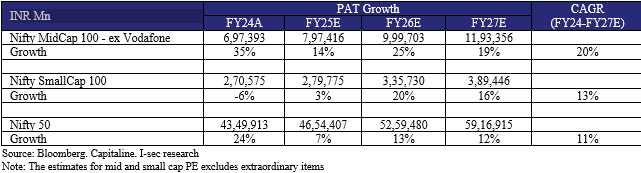
• As seen in the Exhibit below, consensus expects that mid and small cap companies would continue to deliver higher earnings growth versus their larger peers over FY24 – 27E.
• In the last 5 years, Nifty Midcap 100 earnings compounded by 22% vs 18% for Nifty 50. In case mid/small caps grow at a faster clip, is a premium valuation justified on a PEG basis?