
Rights of nature & climate campaigner. Barrister & river guardian. Protecting trees & rivers. Founder @lawfornature & @riverroding


 The River Roding is one of the worst rubbish polluted rivers in the country. Not only does it flow through many large urban centres, but the action of the tides sucks up rubbish from across the Thames Estuary & drops it on the Roding. In some places, the rubbish is so thick it completely covered river channels like the Aldersbrook. The authorities have not removed rubbish from the river in decades. When I asked the EA if they could remove the rubbish, they said it was “too dangerous” & also forbid volunteers from doing it as well, meaning we had to trespass, climb fences & scale ladders to remove the rubbish ourselves.


 First, I needed to discover where the oil was coming from, as I knew the Environment Agency (EA) would do nothing otherwise. The trouble is, the oil could be from anywhere miles upstream or even from one of the many tributaries. I messaged our River Roding Trust local guardian groups upstream to see if they could see any oil: they couldn’t, which narrowed it down. By Saturday morning, the oil was still flowing on the main river, so I set off from Ilford to see where it was coming from. I investigated every outfall, until I found where it was coming from- a tributary called Loxford Water, just upstream from my boat.
  Eels are some of the most fascinating, & also under-appreciated, creatures on earth. Not only have humans never been able to successfully breed eels in captivity, but we have never actually observed their breeding in the wild.

 At 8am, as the sun rose over the towers of Barking, I pushed my canoe out into the river & paddled downstream. Even in those first few minutes, out amongst the calling of the birds & silvery reflections of the sky on the river, I knew this day was as much a gift for myself as the river.


 I spoke to the owner of where I was staying & they too felt that the island had a holy feel & deserved it’s own chapel. There was also an existing building- an old stone farm building- that would be perfect for it. Luckily it wasn’t being used for anything important; unluckily that meant over the years it had become the dumping place for all manner of things that are hard to get off an isolated island over the years.


 I arrived on the island on the last ferry of the day, carrying just one other person. I had a slight trepidation, as it was getting late, I didn’t have anywhere to stay & had no plans except to walk, be in nature and wallow in the mysticism & history of the place.


 One of the biggest causes of both flash flooding & sewage spills in London is the extent to which we have made the city more impermeable than it needs to be, by excessively paving & asphalting.
 The River Bourne rises on the greensand ridge East of Sevenoaks.


 I left Southwark Cathedral at 7pm along the Thames path, walking 10 miles to get to the first piece of green outside the city & slept on the banks of the Thames by the Lighthouse at Tripcock Ness. The estuary is a weird & lonely place, where heavy industry meets wild nature


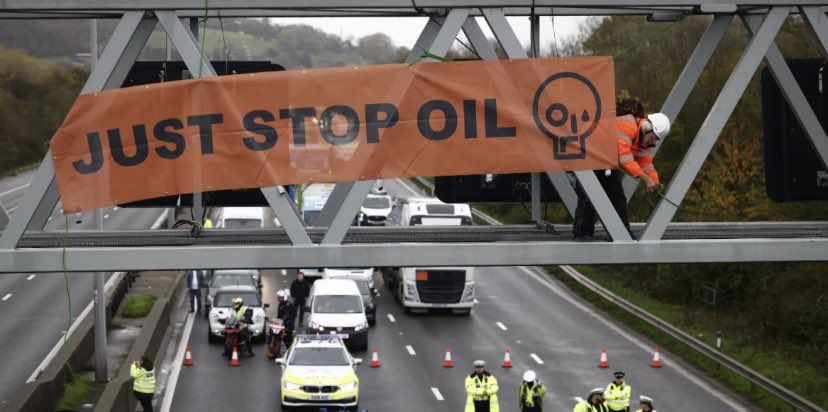
 The statutory offence of public nuisance is set out at section 78 Police, Crime, Sentencing & Courts Act 2022. There is a strong case that water companies across the country are committing this offence when they carry out illegal sewage spills into many of our rivers & seas.
 A few weeks ago, I organised a clean up day with @riverroding to remove rubbish from the River Roding in central Ilford. Even in such an urban location, the water was clear & flowing over sand & gravel. There was a short rainstorm & we sheltered under a bridge…


 The kestrel I wrote about has returned, but seemingly can’t hunt in the huge field next door as all of the plants are dead, & thus the creatures that they support are gone. It’s hypnotising to watch it hunting on my riverbank, but melancholy that it’s restricted to a tiny area.

 Thread below gives some background about black poplar. For the last 150 years they have struggled to reproduce sexually. Although they can easily be propagated by taking cuttings & effectively cloning them, lack of sexual reproduction meant there was a limited number of genotypes

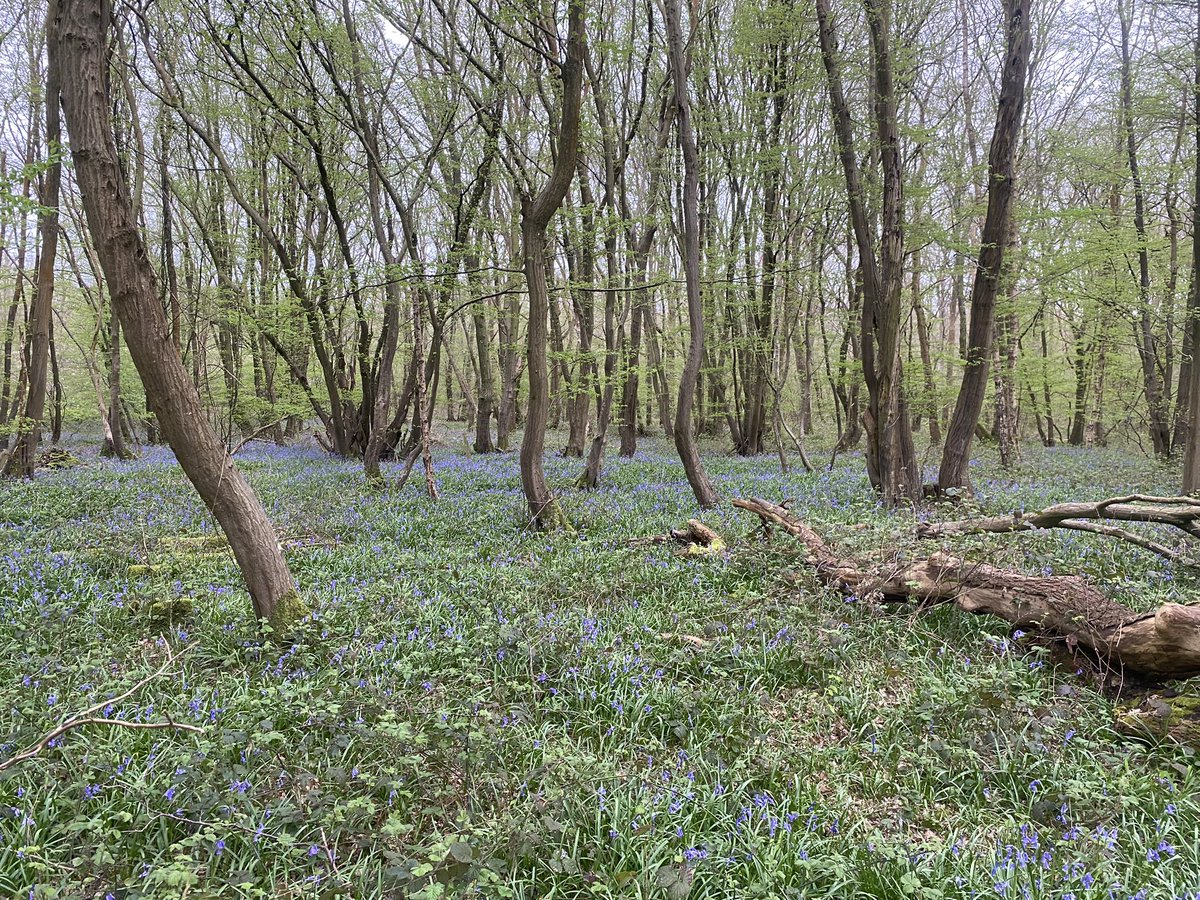

 February: occupying one of the Wellingborough Lime Trees for 8 hours in freezing conditions to stop it being chopped down. Very glad to say that the police dropped charges 6 months later & thanks to amazing efforts of @wellywag, all the trees are still standing!

 The Sinangoe are an indigenous community of around 50 families & 250 people. They have a territory of over 60,000 hectares alongside the Rio Aguarico in North East Ecuador & West of the city of Lago Agrio. They belong to the A’i Cofan people of North Ecuador & South Columbia

 The main form of protection for historically important trees is currently Tree Preservation Orders (TPO’s). However the TPO regime is significantly less robust & protecting of trees than the Listed Building or Scheduled Ancient Monument regimes
 I’d like to ask the judges what they meant by the words “in current times”, because it looks like they mean ‘in times where more & more people are protesting actions that will lead to the deaths of millions of people’; & that as more people realise the horror of our situation…