Bryce Hanna Profile picture
Nutrition, pharmacology, biochemistry, herbalism, and sunlight ☀️🌿 For business inquiries: contact@multiflora-herbs.com
Jun 5 20 tweets 6 min read
Let's talk about flavonoids

THREAD // Image Flavonoids are one of the most medicinal classes of active compounds found in food and herbs

If you've seen discussion of "polyphenols" or "antioxidants" in fruits and vegetables this essentially always refers to flavonoids

Similarly most plant pigments are actually flavonoids
May 24 14 tweets 7 min read
If you're new to my work, START HERE:

These are ten first principles that the average person can implement to improve their health

THREAD // Image 1. Magnesium saturation

Magnesium should be dosed daily using well-absorbed forms until a surplus is achieved for your individual biology

Magnesium glycinate, magnesium taurate, and magnesium malate are my favorite oral forms, while magnesium chloride or epsom salt (mag sulfate) can be used topically

Doses should be spread out throughout the day to avoid a laxative effect, higher doses can be taken before bed (breakfast/lunch/dinner is a good schedule to start)

Start with a dose of 100-200mg elemental magnesium and work up from there

You can also make topical magnesium spray with 1/4-1/2 cup of magnesium chloride added to 1 cup of water in a glass spray bottle

1-5+lbs of magnesium can be added to a bath or foot soak tray as well
May 23 10 tweets 5 min read
THE AXES OF AGING

For the last two years I've been working to develop a framework of aging which distills its complex mechanisms into a set of pathways which can be activated or inhibited by diet, lifestyle, and pharmacology

This is still a work in progress which I plan to refine and clarify over time, including finding more practical applications Today I'll simply be introducing each axis and briefly summarizing some of the key factors that modulate it

While these are broadly independent they do overlap, interact, and promote each other, and similarly many factors will target multiple axes at once

The Axes of Aging are:

- Excitation
- Deposition
- Hypoxia
- Inflammation
- Permeability
- Aggregation
May 18 35 tweets 12 min read
The Truth About ATP

In most biology research ATP is referred to as the main energy currency in living organisms, but this actually isn't quite true

In this thread I'll break down ATP's deeper functions, and the impact it has on human biology

THREAD // Image The energetic resources of mitochondria revolve entirely around the electron transport chain

In the simplest sense this is a series of electron donating/accepting protein complexes, named complex I through IV

These complexes carry an electron current across the membrane Image
May 15 8 tweets 2 min read
To resolve sleep apnea the first factors I would focus on are evening infrared/sunlight, magnesium, thiamine, CoQ10, baking soda, and Buteyko/bag breathing Thiamine and magnesium work together to support pyruvate dehydrogenase, which funnels pyruvate into the Krebs cycle

This is protective in sleep apnea as brain hypoxia often leads to localized lactic acidosis that can interfere with oxygen delivery and contribute to fatigue
May 15 4 tweets 3 min read
Why does bicarbonate resolve these issues? The answer is two-fold

First, one of the defining factors of sleep apnea is acidosis due to CO2 not being adequately breathed out during apnea episodes when breathing stalls

Heightened sensitivity to CO2 is what generates these breathing pauses as it stimulates hyperventilation, causing a subsequent drop in CO2 that no longer stimulates breathing

Beyond that the acidosis leads to reduced affinity of hemoglobin for O2 leading to poor brain oxygenation, and mild brain hypoxia causes localized lactic acidosis creating a vicious cycle

Bicarbonate bridges the gap between these alternating high and low CO2 states, as it converts back and forth into CO2 via the carbonic anhydrase pathway

In the process it also absorbs free protons, buffering acidity and improving O2 release from hemoglobin in the brain The second mechanism which Jack and I discussed is improving the amount of "deep sleep" or NREM

This stimulates the glymphatic system to clear accumulated brain waste that's built up from the previous day

When NREM sleep is impaired with issues like sleep apnea it can cause this waste to build up leading to brain fog, lactic acidosis contributes to this as well

While my personal experience has led me to believe baking soda increases NREM through multiple mechanisms, the clearest way it does this is by directly reducing apnea and improving blood flow to the brain

The sudden rise in CO2 that occurs in breathing laps promotes waking and interrupts the sleep cycle
researchgate.net/publication/32…

Magnesium glycinate paired with L-theanine is also useful in supporting NREM and the glymphatic system
May 13 4 tweets 2 min read
Strangest thing I've learned today is that the eyes have an ocular microbiome

It's become pretty common knowledge that the gut microbiome exists, and if you've been in the health space you've probably heard of the oral microbiome and skin microbiome

The eye's bacterial population is probably the least understood, as the strains have to live under specific conditions of light, salinity, and the body's immune defense

This could play a role in certain eye disorders like dry eyes or chronic conjunctivitis, and "ocular dysbiosis" could contribute to eye infection A number of different ocular strains have been detected, and overall diversity is quite low compared to other microbiomes

It is common to detect pathogenic bacteria transiently in the eye which further supports dysbiosis playing a role in eye infection

Even fungal strains like Candida can be detected in the eye in both children and adults
May 10 28 tweets 10 min read
Movement, massage, and tissue hydration

Recently I've come across a surprising group of pieces of evidence, individually they seem unusual, but I think together they point to an interesting neglected aspect of health

THREAD // Image I've written before about collagen networks in the human body

These networks are electrically conductive, and collagen is piezoelectric, flexoelectric, and pyroelectric, meaning that it can translate energy from pressure, flexion, and heat into a current
Apr 26 6 tweets 3 min read
Most people would be shocked if they realized how many of their negative emotional states like depression, anxiety, and irritability are downstream of physical issues like low blood sugar, constipation, histamine/inflammation, and poor quality sleep

I'll share a story from my own life that illustrates this:

In my early 20's when I first got into nutrition I was eating plant-based vegan/vegetarian and working at a vegan "burger" restaurant

It was whole food based and better quality than a lot of more processed options, but over time I noticed a consistent pattern

I got one free shift meal per day, and around one hour after eating it I would consistently experience a bout of straight up suicidal depression and nihilistic thoughts

I'm not someone who's prone to this usually, so it made me think something was VERY wrong, and over time I noticed that it only occurred when I would eat something off of the grill or fryer... At the time I started eating alternatives like salads and couldn't figure out what was happening, but knowing what I know now I have an explanation

In an attempt to be healthier the restaurant owners had opted to use sunflower oil rather than the usual canola/soybean fryer oil, and sunflower oil is one of the highest omega-6 oils

On top of that, they were changing the fryer oil very infrequently, only once a week, so the oil had days to degrade at high heat, sunflower oil has a smoke point of around 450F and on the grill they were cooking with it at 500+F

The compounds produced when overheating PUFA are some of the nastiest and most inflammatory out there, including acrolein, 4-HNE, MDA, trans fats, and aldehydes

These compounds take a few hours to form usually, but fryers are especially bad as they typically exceed the limits of major oxidation, especially with something like sunflower oil!

I was quite literally making myself suicidal every day with how inflamed my brain was, all because no one had ever educated me about these compounds
Apr 18 12 tweets 3 min read
Brain fog must first be addressed by interrupting the cascade of inflammation

Inflammation impairs cognition via activation of TLR4 receptors leading to cytokine release from glia

This system is activated by endotoxin, histamine, glutamate, biotoxins, and hypoxia

(thread) Image TLR4 stimulates histamine release, but histamine excess also upregulates this pathway


Methylation is needed to detox histamine via HNMT, and this can be supported with methyl-B12, methylfolate, and B6

These factors should be reintroduced gradually to avoid methyl waste production (homocysteine)pmc.ncbi.nlm.nih.gov/articles/PMC17…
Mar 29 13 tweets 8 min read
Sleep is perhaps the most reducing (or antioxidant) process in the body

The glymphatic system uses CSF flow to detox oxidative neurotransmitter waste, homocysteine, oxidized lipids, amyloid plaques, lactate, excess glutamate, etc

This is paired with a diffusion of melatonin that stabilizes redox and energy metabolism pathways

Melatonin has two properties that make it uniquely important compared to other antioxidants released during sleep

It is amphiphilic, meaning it is soluble in both lipids and water, allowing it to operate in both membranes and cytosol

It also generates an "antioxidant cascade" where byproducts of its oxidation act as antioxidants themselves, giving it a unique ability to work as a multi-use antioxidant or electron donor

Both glymphatic detox and melatonin release are coordinated by light

THREAD //Image Blue and green light (which are predominant in "cool" energy-efficient LED and fluorescent lights) are the frequencies that are most suppressive of melatonin release
The ideal way to promote healthy melatonin release is avoiding bright artificial light after sunset, your light environment should be as dark or dim as possible

You can also use selective modulation like blue-blocking glasses or blue-blocking LED bulbs, but these are secondary to darkness and a low-stim environment

What you do during the day matters as well

Bright light in the morning will shift circadian hormone peaks like cortisol and testosterone forward, leading to melatonin being released earlier as well
Mar 17 7 tweets 3 min read
I've had a renewed interest in creatine recently, it's one of only a handful of supplements I've been taking

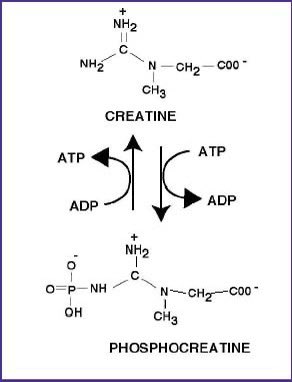
Both creatine and thiamine have the ability to support the ATP/ADP ratio by donating extra phosphate groups to turn ADP back into ATP

This means creatine acts as a "phosphate sink" where at any given time 60% of it is in the creatine phosphate form

When ATP levels begin to fall in cell stress, hypoxia, and high metabolic demand creatine opposes the loss of ATPImage The interesting thing is that some of the benefits of taking glycine may actually be a result of its role in creatine synthesis
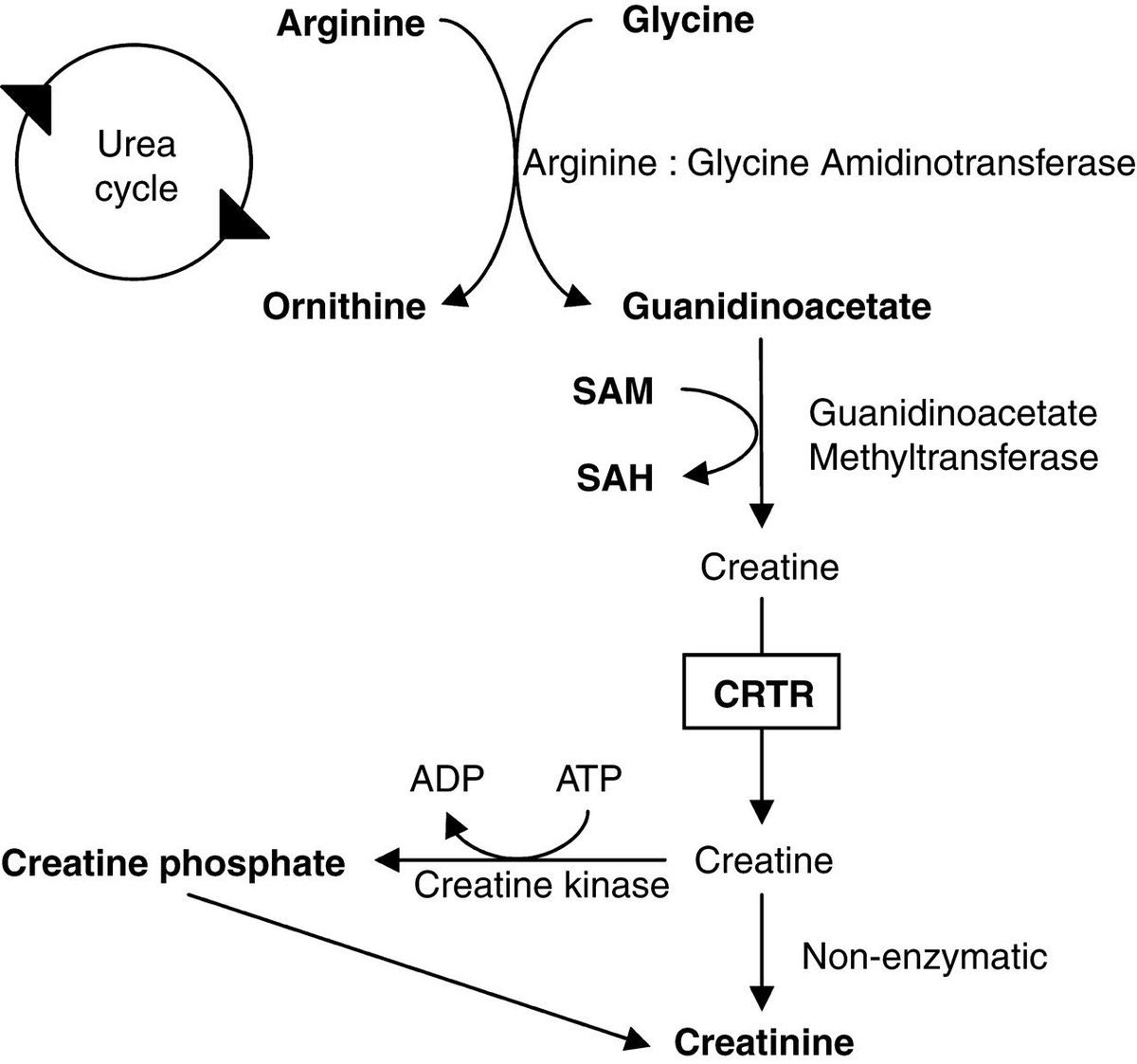
Animal research shows that higher glcyine intake produces higher creatine levels in tissue, and it almost certainly works the same in humans Image
Mar 5 16 tweets 5 min read
The idea of digestion affecting mental state is reaching a point of being common knowledge

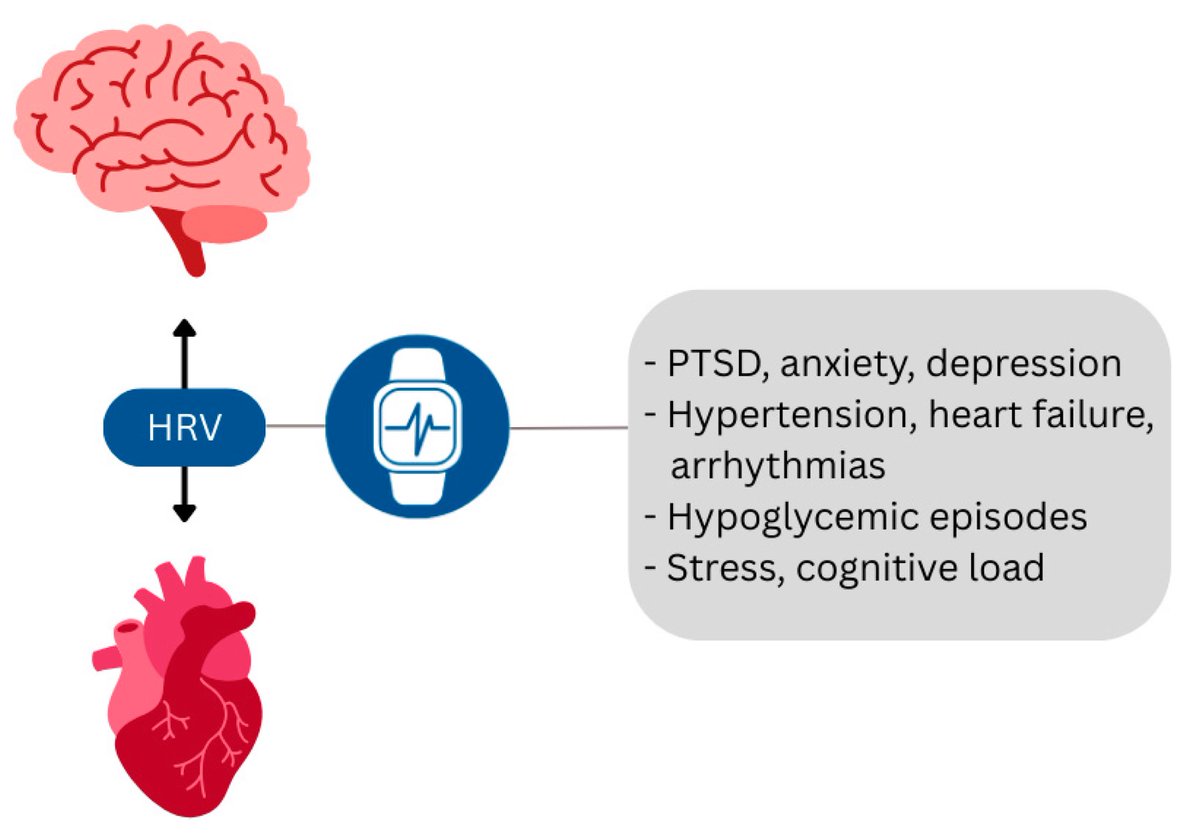
However the gut's neural network is not a "second brain" but a "third brain," as after the CNS the heart and circulatory system have the second most neurons

So in the same way that the gut microbiome and its metabolites alter brain activity, circulation issues can as well

(thread)Image One of the best examples of this is "biofeedback"

Anxiety involves increased heart rate, but artificially elevating heart rate can also lead to the perception of anxiety

This isn't just the brain noting the heart rate but instead the fact that the same factors that regulate heart rate are those that regulate anxiety

Adrenaline, noradrenaline, glutamate, and elevated calcium are all involved here
Sep 13, 2024 6 tweets 2 min read
Idebenone is an interesting quinone that may be useful in Parkinson's disease

It's an analog of CoQ10 (another quinone) but while CoQ10 binds to complex I to transfer electrons to complex III idebenone can bypass CI and move directly to CIII

It's also a membrane antioxidant Image Complex I blockage is one of the main underlying drivers of Parkinson's disease

It creates metabolic issues in dopaminergic neurons and has been shown to to elevate neurotoxic dopamine wastes

The main downside is that idebenone does not unblock complex I itself
Sep 11, 2024 9 tweets 2 min read
GDNF is a brain growth factor that regulates growth of various neurons, but is particularly targeted toward dopamine

It's considered promising for the treatment of addiction and Parkinson's disease

Let's look at a few ways to stimulate it Image In addiction, things that increase dopamine have a tendency to increase GDNF in the short term while downregulating it during withdrawal

This is true for alcohol, nicotine, drugs, etc

The psychedelic ibogaine, used in addiction therapy, may work partially by increasing GDNF
Sep 8, 2024 6 tweets 3 min read
Brain normally runs on glucose (more than 50%), under cognitive exertion energy demands outpace oxygen availability and lactate shuttled into neurons from glia becomes the dominant energy source (50-60%)

Lactate also represents the point of "high cognitive load" and fatigue Now while I don't believe lactate is responsible for exercise-induced fatigue on its own, it does play a role in cognitive fatigue


The point where anaerobic metabolism is reached "indicates that a cognitive task has reached the limits of complexity for a given individual"


Beyond that, it's been suggested that one of the main features of intelligence is better use of glucose by the brain
ncbi.nlm.nih.gov/pmc/articles/P…
sciencedirect.com/science/articl…
static1.squarespace.com/static/538634a…
Sep 6, 2024 7 tweets 3 min read
I have a theory that a LOT of sleep issues in babies and young kids are a result of bright artificial light before bed and in the middle of the night (when nursing, etc)

I plan to avoid night-lights and artificial light at night with my children as much as possible I think there's a spectrum to this, and I'd rather use a dim night-light than turn on overhead lights, but neither is ideal

Blue-light filtered bulbs could be used as well

There's a growing body of research that supports the idea that artificial light at night harms children
Sep 6, 2024 4 tweets 1 min read
Black walnut is one of the most common ingredients in "candida cleanses" and blends meant to reverse SIBO

Similar to black seed oil, it also contains an active quinones, in this case the compound juglone, lawsone, and plumbagin

Quinones are pro-oxidants that break down biofilms and have toxic effects on pathogens, while promoting antioxidant pathways and chelating heavy metals in humans and higher animalsImage Thymoquinone, juglone, and other quinones all cross the blood brain barrier

They break down amyloid and tau aggregates in animal models of Alzheimer's, likely through their intercalation into the protein, and the removal of free iron and copper that trigger aggregation
Sep 4, 2024 25 tweets 8 min read
Understanding inositol

How a sugar molecule that occurs naturally in food can help balance blood glucose, prevent insulin resistance, and help manage PCOS, anxiety, depression, and OCD

Benefits, dosing, and more

THREAD // Image Inositol is a simple sugar, like glucose, lactose, galactose, etc

It's one of the most ancient molecules in biology, and as such it plays a role in signaling and structure

It can be converted to phosphatidyl-inositol and used as a component of membranes Image
Sep 2, 2024 4 tweets 2 min read
Dopamine is a quinone

Or rather, all catecholamines (dopamine, adrenaline, noradrenaline) are hydroquinones that share the two -OH groups found in other hydroquinones

These -OH groups can be oxidized forming both dopamine-o-quinone and superoxide free radicals Image While many quinones are beneficial DOQ is essentially a neurotoxic byproduct of dopamine

When excess dopamine is released and not cleared (ie glymphatic system dysfunction) it will tend to accumulate

All quinones have both a quinone, semiquinone, and hydroquinone form
Aug 31, 2024 5 tweets 1 min read
One of the most common (but difficult to explain) experiences people have when taking lion's mane mushroom is that forgotten past memories will resurface, particularly difficult ones

Erinacine A in lion's mane is a kappa opioid receptor agonist which I think explains this The main endogenous ligand of the kappa opioid receptor is the anti-endorphin known as dynorphin

Put simply, dynorphin is a negative conditioning hormone involved in trauma, addiction, and negative conditioning

Dynorphin kills pain but is also very dysphoric