
The Russia Watcher is a daily tracking survey of Russian public opinion, run by political scientists at @Princeton @P...
 The clearest trend is a steady decrease in the frequency w/ which respondents get info abt the "special military operations" from family & friends. In summer 2022, ~50% got daily info abt the SMO from fam/friends; now it's ~40%. 2/
 Here are the distribution of attitudes across the 4-point Likert scale. 2/


 Disapproval ratings are at ~17% for each (~10-11% completely disapprove & ~7% generally disapprove). Wagner appears to have slightly higher approval than Prigozhin, perhaps because of greater name recognition. But the pattern is, unsurprisingly, very similar for both. 2/
 (2) "The majority of the Ukrainian leadership are Nazis." Almost everyone who said they support the SMO agreed w/ this statement, & ~59% strongly agreed. SMO opponents were more divided on this, although a plurality disagree (~46%). Uncertainty is higher among SMO opponents. 2/
 We asked respondents to list the first 3 words that come to mind when thinking abt Zelenskyy. We then stemmed words and created a word cloud sized by frequency. As you can see, there are some repeat stems we still need to clean up (e.g. president, Ukraine). 2/

 We conducted this word association test from 10/30-11/07 w/ ~1800 respondents. We asked the sensitive word (SMO) alongside various other political & nonpolitical words. The 2 most common words by far were "war" & "Ukraine," which we removed from the clouds to show the others. 2/
 On Aug 25, we estimated support for SMO @ ~74.5%. However, this excludes DK/NA responses, which typically make up ~13% of our sample. This means ~65% said they supported, ~22% said they didn't, and ~13% DK/NA. Then we started to see a slow, steady decline in support. 2/
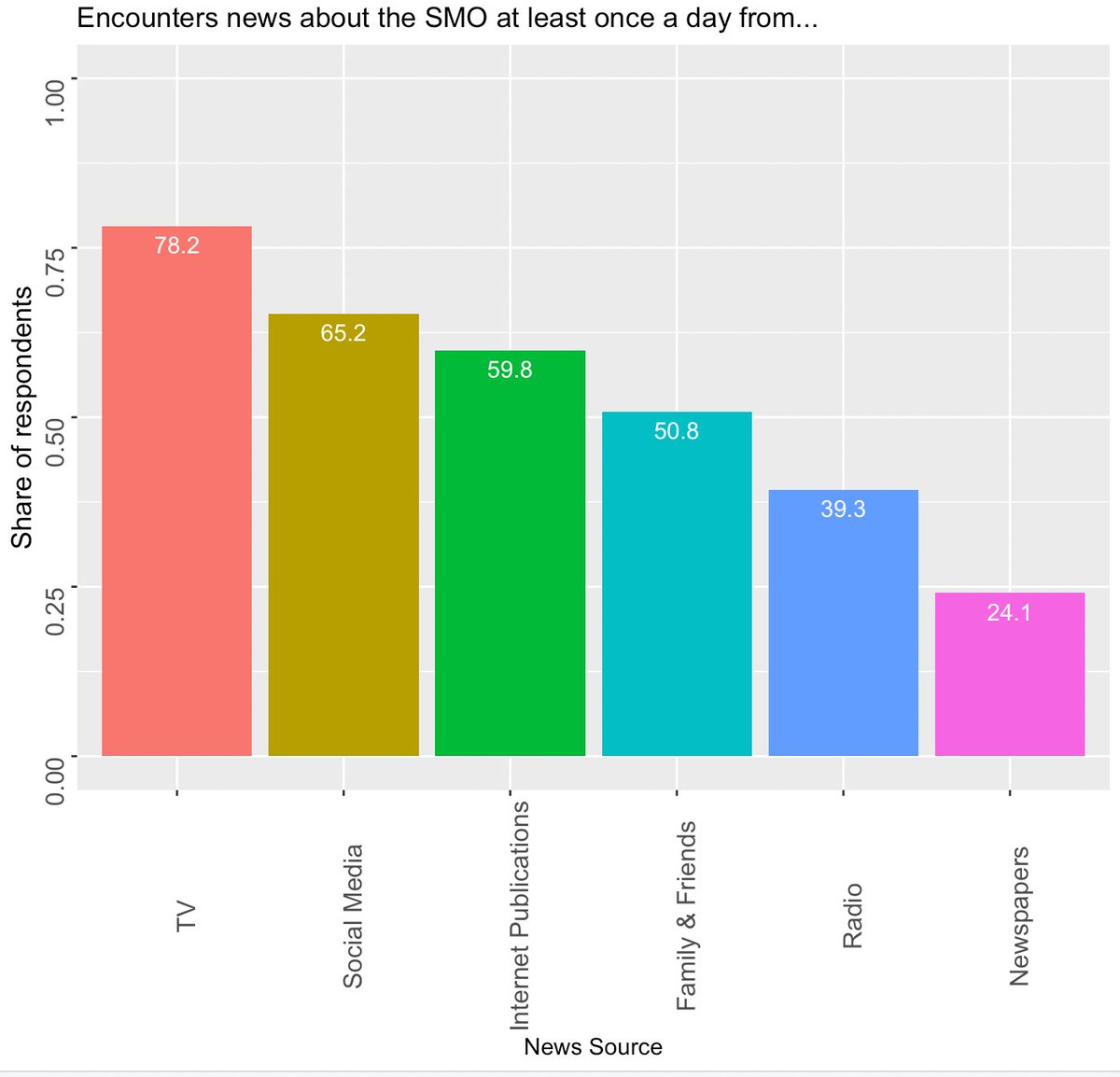 3rd is internet pubs (~60% daily), 4th is family & friends (~51% daily), 5th is radio (~40% daily), and last is traditional newspapers (~24% daily). 2/
 In September, interest in 'the situation in 🇺🇦' picked back up, which may be related to the end of summer/ return to work and school. This is likely also related, at least in part, to the 🇺🇦 counteroffensive, which began at the very end of August. 2/
 In July and August, support for bombing cities was ~31-33%. There also seems to be an uptick over the past few days, after Russia launched missile strikes against cities across Ukraine. Note that these figures exclude "do not know" and "prefer not to answer" responses. 2/

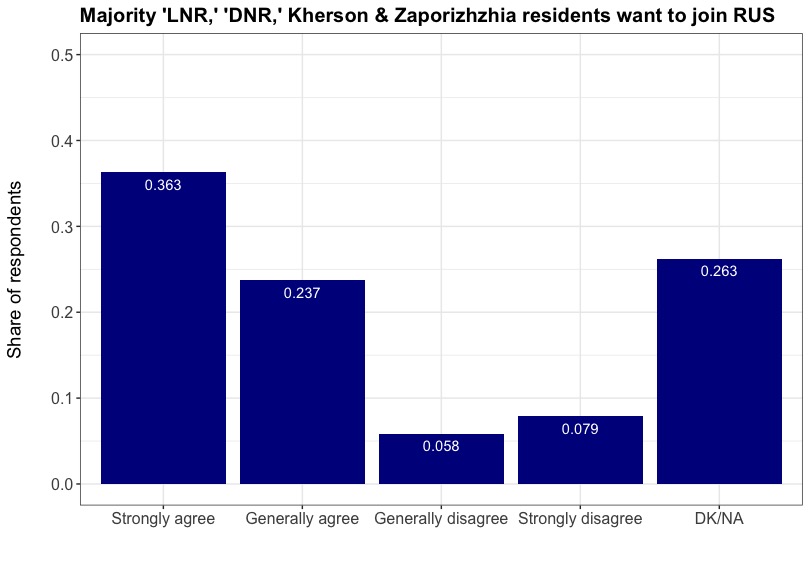
 A 3pp drop in support may not seem like much, but it occurred over the course of less than 3 weeks. This is the lowest estimate of Putin approval we’ve registered since we started our Russia Watcher survey on 5/19. 2/
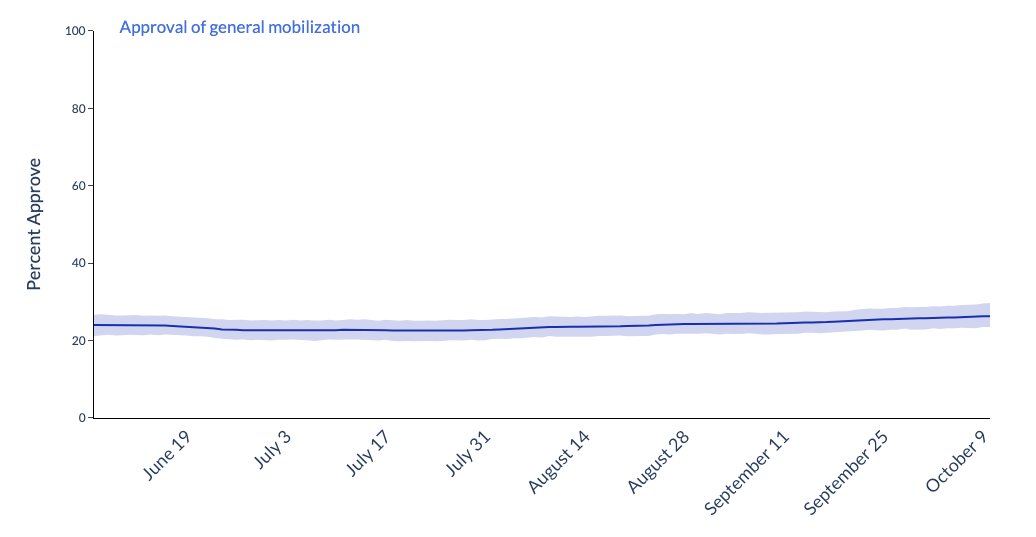
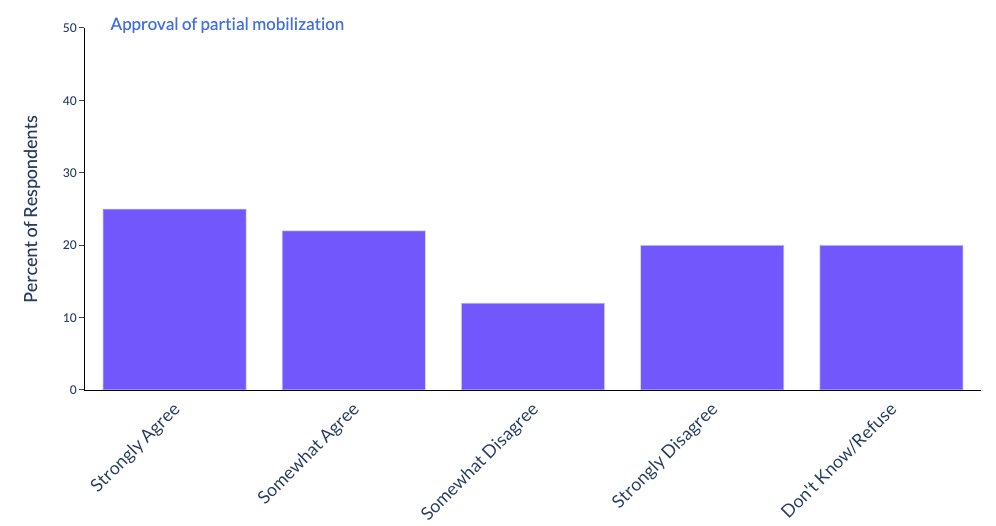 On 9/21, Putin announced "partial" mobilization of military reservists. That same day, we began asking Russians whether they support Putin's decision. From 9/21-9/23 (today), average support has remained relatively consistent: ~58-59%. 2/
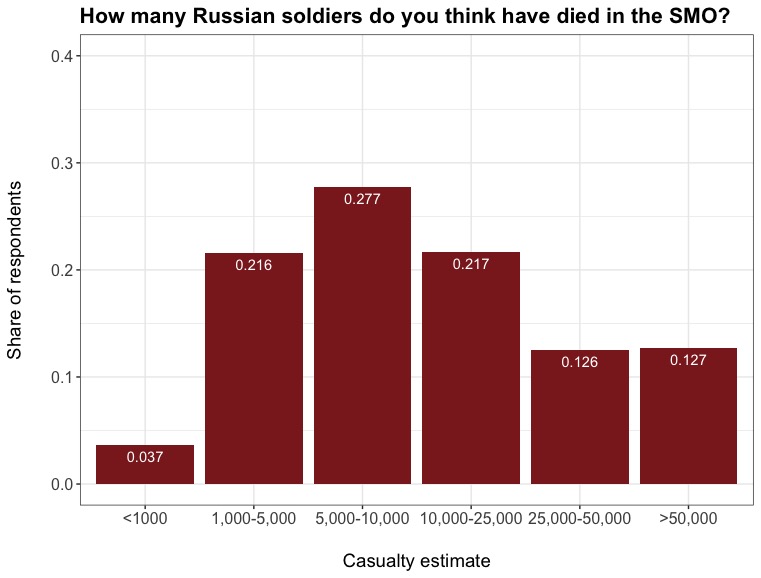 While we have been asking this question regularly since mid-June, these averages are from the beginning of August to present. 2/
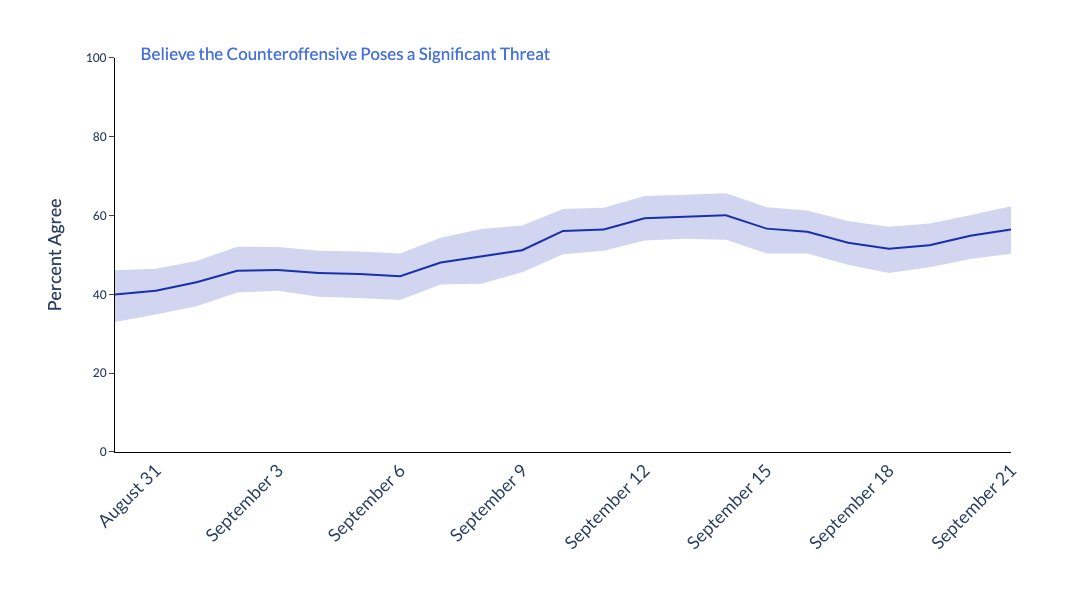 From 9/14-9/18, share of Russians who said 🇺🇦 military actions in S&E pose significant threat to 🇷🇺 forces has decreased from 60.1% to 51.6%. From 9/18-9/21 (today), % has increased to 56.5%. 2/
 This comes as no surprise, given the hawkish rhetoric and propaganda that is regularly broadcast on Russian TV channels--which are both highly popular sources of news and tightly controlled by the state. 2/
