Sam Hall Profile picture
Raising awareness of psychiatric drug withdrawal. Sharing the reality, the science and fight for recognition. Making the invisible visible. IG - samhall404
Jan 23 12 tweets 2 min read
1/ After thirteen years on 150 mg of the antidepressant sertraline, and three years in protracted withdrawal, I’m now down to 3 mg. Only now am I starting to feel what this drug took from me slowly, quietly year by year.🧵 2/ For over a decade, my emotions were muted. I knew I loved my fiancée, friends and family, but I didn’t feel it. There was a glass wall between me and the people I cared about. That barrier wasn’t due to my character or personality as I thought, it was chemically induced.
Oct 13, 2025 22 tweets 4 min read
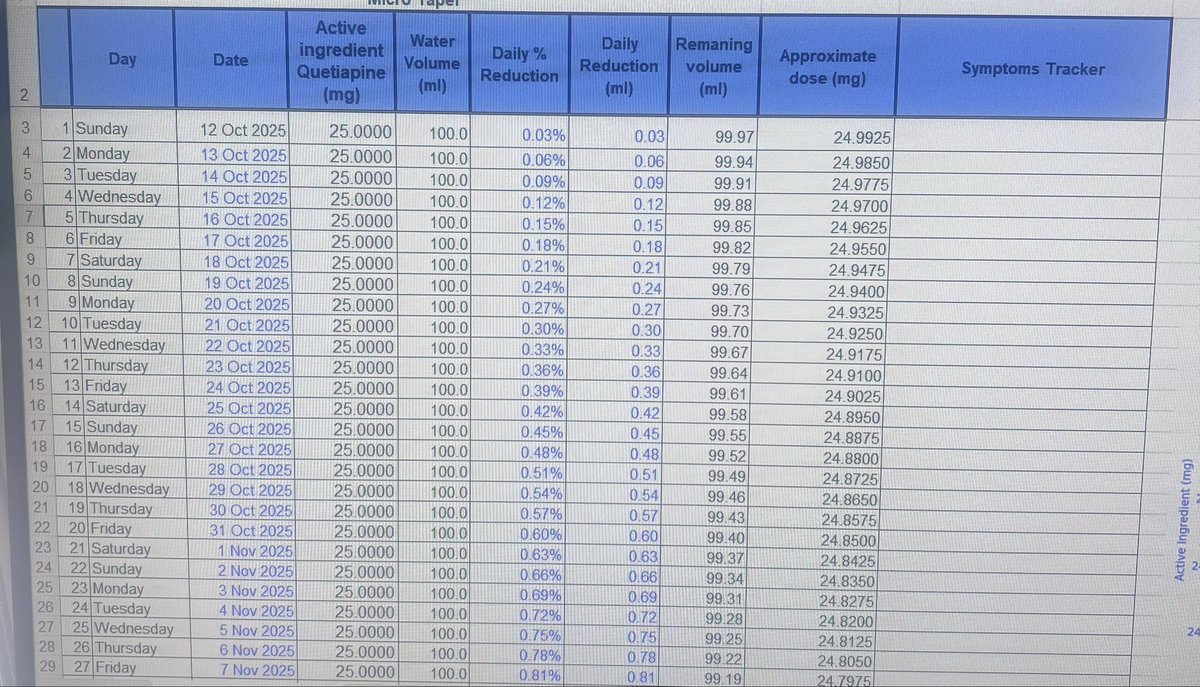
1/ I’ve began my taper from quetiapine. I was prescribed 25 mg a year ago for insomnia. In truth, the insomnia was caused by antidepressant withdrawal, but it was mistaken for relapse and labelled a new “mood disorder.” That single misdiagnosis has had devastating consequences 🧵 Image 2/ Giving an antipsychotic for sleep is like trying to kill a fly with a flamethrower instead of a fly swat. It might work short term, but it suppresses multiple neurotransmitter systems across the brain, far beyond what’s needed for rest.
Sep 18, 2025 9 tweets 2 min read
🧵 1/ This is my harsh reality of psychiatric drug withdrawal. Many patients are forced to turn their kitchens into makeshift pharmacies to taper or reinstate psychiatric drugs; crushing tablets, weighing powder on mg scales, mixing suspensions and using syringes. Image 2/ The science has been clear for years. Antidepressants follow a hyperbolic dose response curve. Near the low end, even a tiny reduction can mean a big change in receptor occupancy.
Aug 30, 2025 11 tweets 3 min read
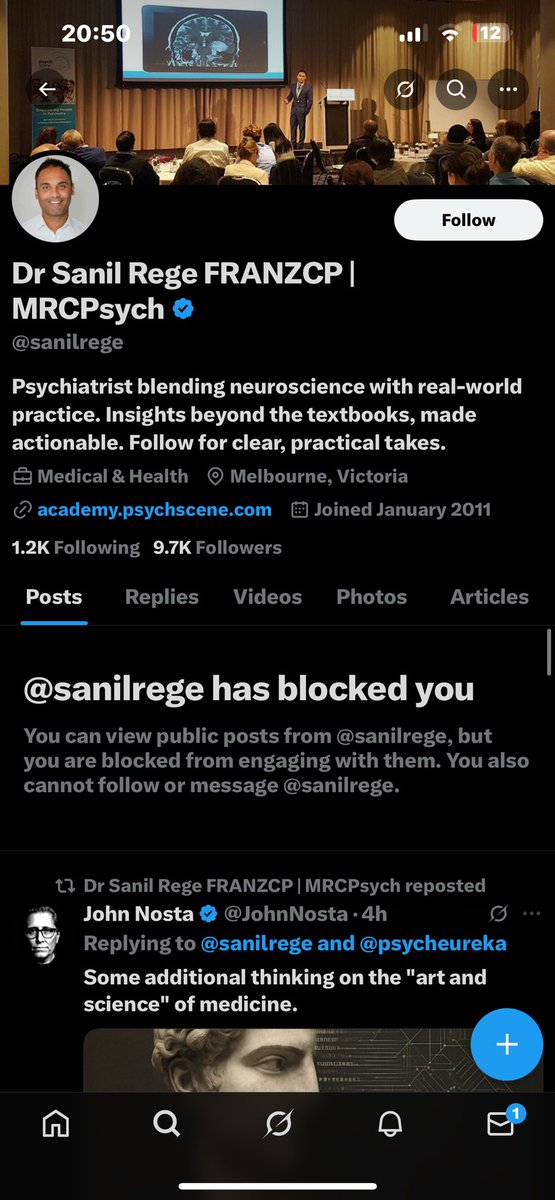
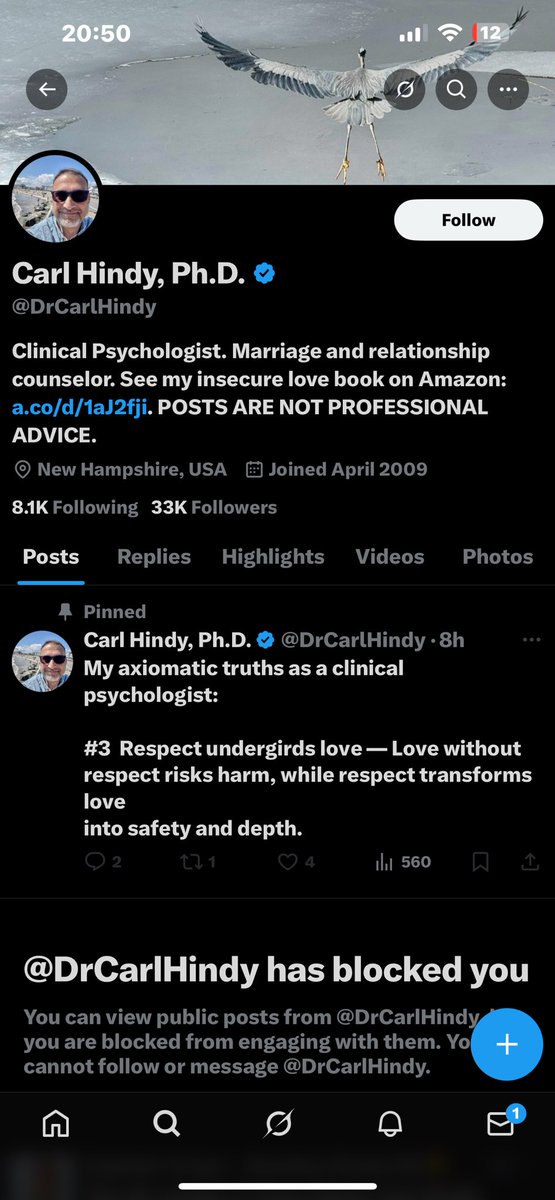
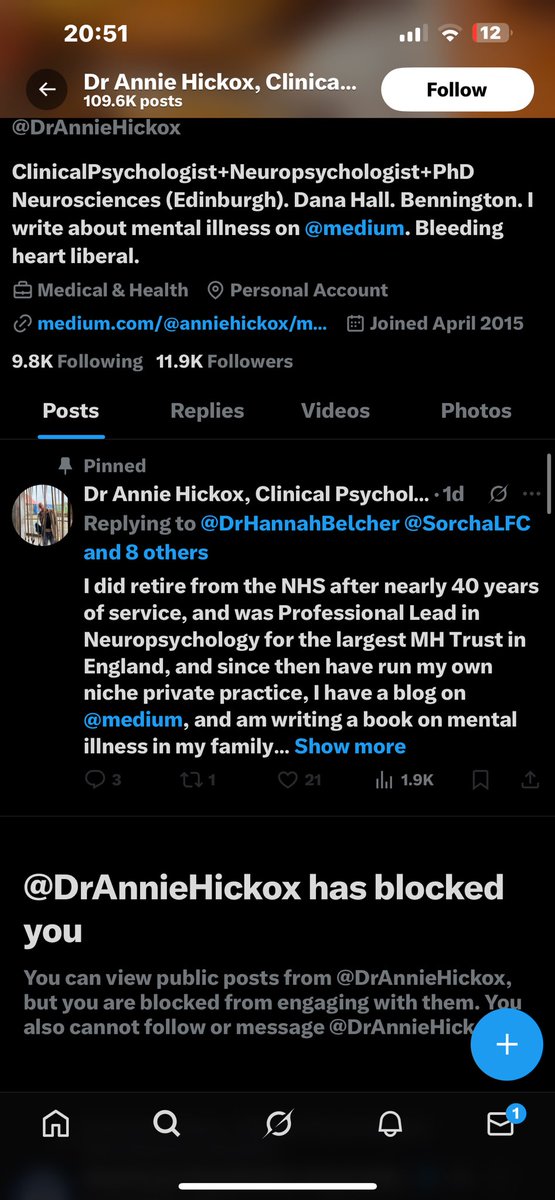
🧵 1/ A pattern on here is clear: clinicians post about mental health care, but when harmed patients share critical perspectives respectfully, the exchange often ends with a block. Initial engagement gives the appearance of openness, yet when critique deepens, dissent is removed Image
Image
Image
Image
2/ Blocking isn’t just a personal choice; in this context, it functions as a form of epistemic exclusion. By removing harmed patients’ voices, clinicians construct a one sided narrative where only supportive, non critical comments remain visible.
Aug 27, 2025 9 tweets 2 min read
1/ Antidepressant withdrawal is often delayed in onset. The fact that so many clinicians still haven’t grasped the basic science behind this and dismiss patients with “relapse” or new psychiatric labels is nothing short of negligent. 🧵 2/ When you take antidepressant, your brain doesn’t just “adjust,” it adapts by downregulating serotonin receptors and altering neurotransmitter systems. This isn’t a temporary change; it’s structural.
Aug 24, 2025 9 tweets 2 min read
🧵1/ The @JAMAPsych antidepressant WD paper by @sameerjauhar @GemmaLewis13 @kalfas_michael & others was supposed to reinforce psychiatry’s party line. It set out to downplay withdrawal, blur it with “relapse” and reassure clinicians it’s “mild and brief.” Instead, it detonated. 2/ The strategy was clear; blur withdrawal with relapse, present a sanitised version of reality and hope patients stayed quiet.
Aug 20, 2025 12 tweets 2 min read
Psychiatrists have spent decades downplaying the severity and prevalence of antidepressant withdrawal. They call it “discontinuation syndrome,” minimise it to “flu like symptoms,” and insist it resolves in a few weeks. Science says otherwise. 🧵 Symptoms go far beyond “flu like.” They include electric shock sensations, akathisia, panic, insomnia, derealisation, suicidality and many others that can last months or years. These aren’t just nuisances. They can be disabling and life threatening.