Sandeep Vaheesan Profile picture
Legal director @openmarkets. Fellow @cplusci. Advisory council @PeoplesParity. Book Democracy in Power @UChicagoPress. All opinions are my own.
Feb 5 16 tweets 3 min read
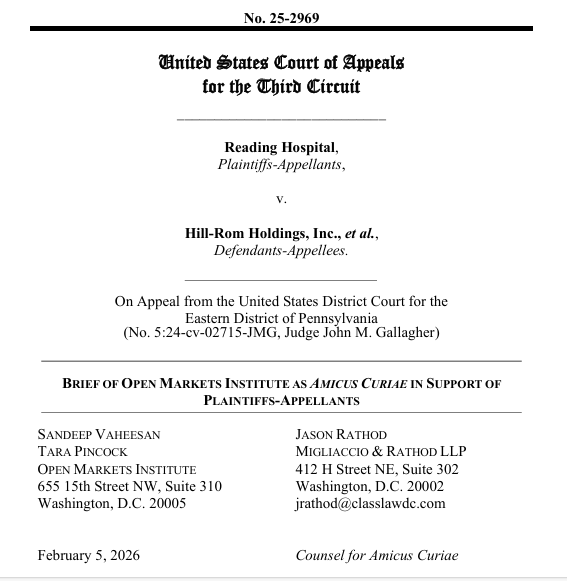
1. Today, @openmarkets filed an amicus brief in a case concerning exclusive dealing by a monopolist. It implicates the Third Circuit’s decision to turn a section of the Clayton Act into mere surplusage.

Thanks to @jasonrathod @classlawdc for serving as our local counsel! Image 2. Reading Hospital sued Hill-Rom, the monopolistic manufacturer of hospital beds, for perpetuating its monopoly by imposing exclusive conditions on health systems. They must purchase most of, or all, their beds from Hill-Rom or risk being cut off. openmarketsinstitute.org/publications/a…
Dec 2, 2024 24 tweets 4 min read
1. The New Deal delivered broadly shared abundance in the United States. Here is one important way in which it did—universal electrification. 2. Before the 1930s, private utilities, under the control of Wall Street, dominated the power sector and extended service principally based on short-term profit considerations
May 13, 2022 15 tweets 4 min read
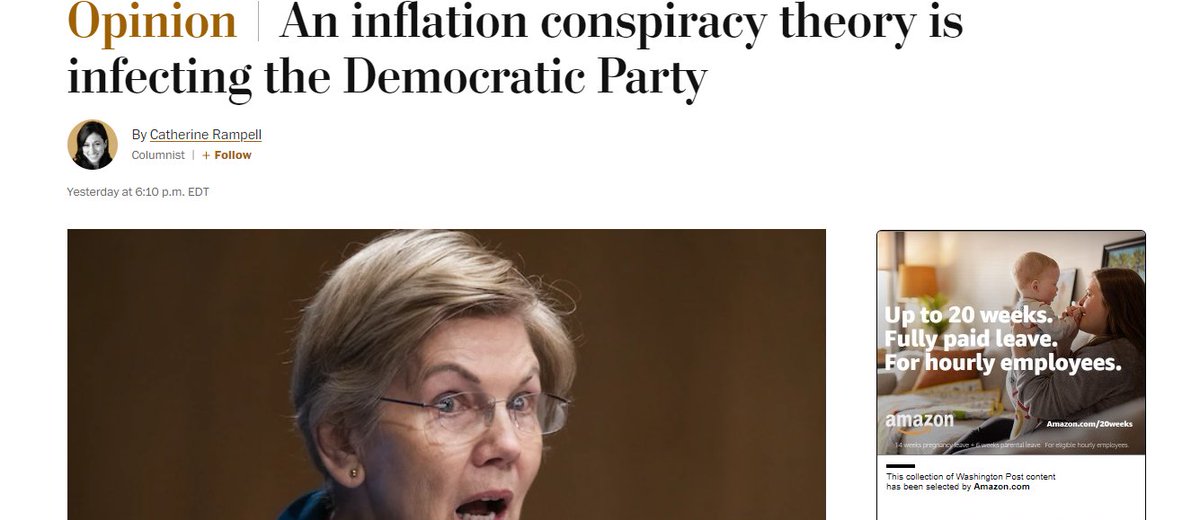
1. Instead of trying to be maximally snarky, the author of this op-ed should have examined the connection between lax anti-merger policy and inflation today Image 2. For 40 years, the government has taken a generally hands-off approach to corporate mergers, effectively ignoring the strong anti-merger law that Congress passed in 1950
Jul 28, 2021 9 tweets 2 min read
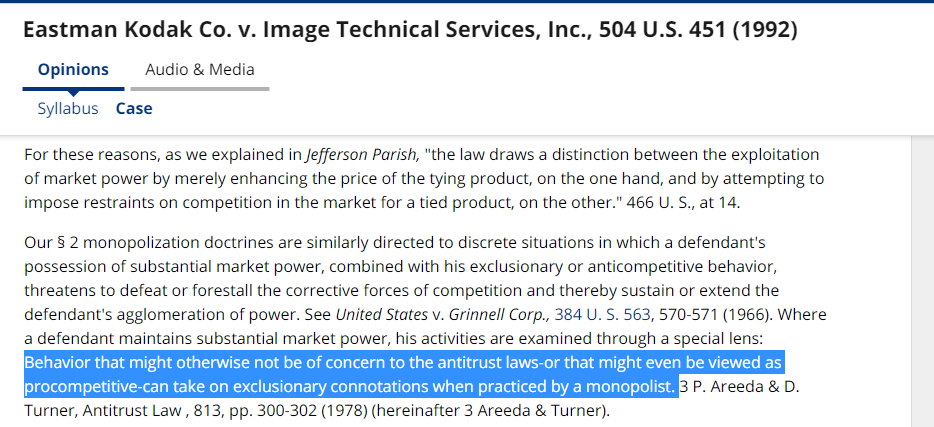
1. The “big monopolization case” has an important, even central, place in the history of U.S. antitrust law. A thread on the promise—and limits—of the big case-centered approach today 🧵 2. Every period has landmark govt cases that tried, sometimes successfully, to break up dominant firms (horizontally or vertically)—Northern Securities and Standard Oil in the early decades, Alcoa and Paramount in the mid-20th century, and AT&T and Microsoft in the neoliberal era
Jun 4, 2021 17 tweets 5 min read
1. In a case called Sanofi v. Mylan, the Tenth Circuit will decide whether a suit challenging Mylan’s monopolization of epinephrine auto-injectors (popularly known by Mylan’s brand EpiPen) can go to trial. A thread 🧵 2. EpiPen is an essential device for millions who are susceptible to a potentially fatal anaphylactic reaction to certain foods, insect bites, and medications
Apr 13, 2021 17 tweets 3 min read
1. A thread on an important case on monopolization and fair competition: Dreamstime v. Google.

Google is accused of using its search monopoly to favor its own services and disadvantage independent rivals (a practice commonly known as “self-preferencing.”). 2. Dreamstime, a stock photograph provider, alleges that Google demoted it in search results to help Google Images, which presents and often appropriates copyrighted content from Dreamstime and others.
Apr 13, 2021 5 tweets 2 min read
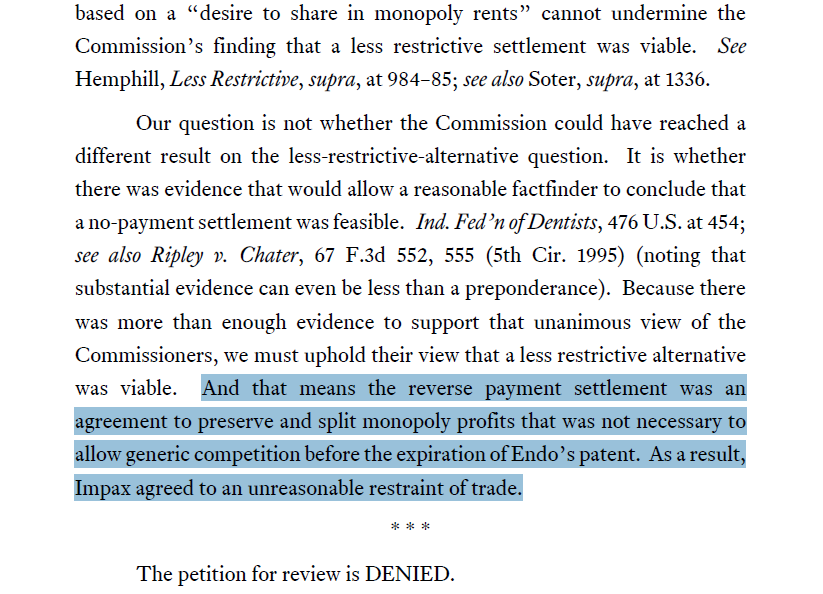
In Impax v. FTC, the Fifth Circuit today affirmed the FTC's decision against a pay-for-delay agreement between a branded and generic drug company. Pay-for-delay agreements are an important contributor to runaway drug prices. In exchange for delayed generic entry, branded companies share a portion of their monopoly profits (in cash and non-cash form) with generic rivals--at the expense of patients and payors.
Apr 12, 2021 4 tweets 1 min read
Gilad's piece raises an important issue: Competition is not categorically good.

Law and policy determine whether online platforms and publishers compete principally to attract users by offering better services and terms or to appeal to advertisers through more surveillance. Under one model, publishers rely entirely on subscription fees and do not seek ad revenues. Such publishers compete for subscribers through lower fees and more and better content.
Dec 7, 2020 15 tweets 3 min read
1. Thread on a Supreme Court case (AMG Capital Management v. FTC) concerning loan shark Scott Tucker’s attempt to recover his ill-gotten gains and the FTC’s power to protect the public from corporate misconduct 2. By pairing the exploitation of payday loans (annual interest rates as high as 1000% and very short terms) with deception, theft, and sham affiliation with a Native American tribe, Tucker built a predatory finance empire that profited off the precarious
Dec 17, 2019 17 tweets 3 min read
1. The prescription drug crisis is, in large measure, a monopoly problem. Pharmaceutical companies charge extortionate prices by serially patenting trivial “innovations” on drugs developed decades ago, buying out competitors, and colluding with generic rivals. 2. A recent @openmarkets white paper details how corporate consolidation, abuses of the patent and regulatory systems, and exclusionary practices protect and extend drug monopolies openmarketsinstitute.org/wp-content/upl…
Dec 2, 2019 18 tweets 4 min read
1. A thread on Section 2 of the Sherman Act. In the words of one federal court, this law, “designed to curb the excesses of monopolists and near-monopolists, is the equivalent in our economic sphere of the guarantees of free and unhampered elections in the political sphere.” 2. Section 2, which prohibits monopolization and attempted monopolization, is at the center of a major antitrust case
Sep 18, 2019 7 tweets 3 min read
1. Antitrust insiders often remind us that collusion among competitors is per se illegal and that it is "the supreme evil of antitrust." Courts and enforcers, however, apply the anti-collusion rule selectively and in troubling ways. 2. @clairekelloway wrote an excellent piece last week on how the Tenth Circuit, in a July decision, chose not to apply the per se rule to a group of Western ranchers collusively fixing the wages of immigrant shepherds openmarketsinstitute.org/blogs/court-de…