SETI Park Profile picture
Korea Patent Attorney | Tech story teller | Live in Seoul ๐Ÿ‡ฐ๐Ÿ‡ท | Youtube channel : https://t.co/6hW7CCkxa9
Oct 31 โ€ข 4 tweets โ€ข 3 min read
๊ฐ„๋งŒ์— Google์˜ ์Šค๋งˆํŠธ ์•ˆ๊ฒฝ ๊ด€๋ จ ์‹ ๊ทœ ํŠนํ—ˆ๋“ค ์ค‘ ๋ˆˆ์— ๋„๋Š” ๊ฑด๋“ค์„ ๊ฐ„๋žตํ•˜๊ฒŒ ๋‹ค๋ค„๋ณด๊ฒ ์Šต๋‹ˆ๋‹ค. ๐Ÿ•ถ๏ธ

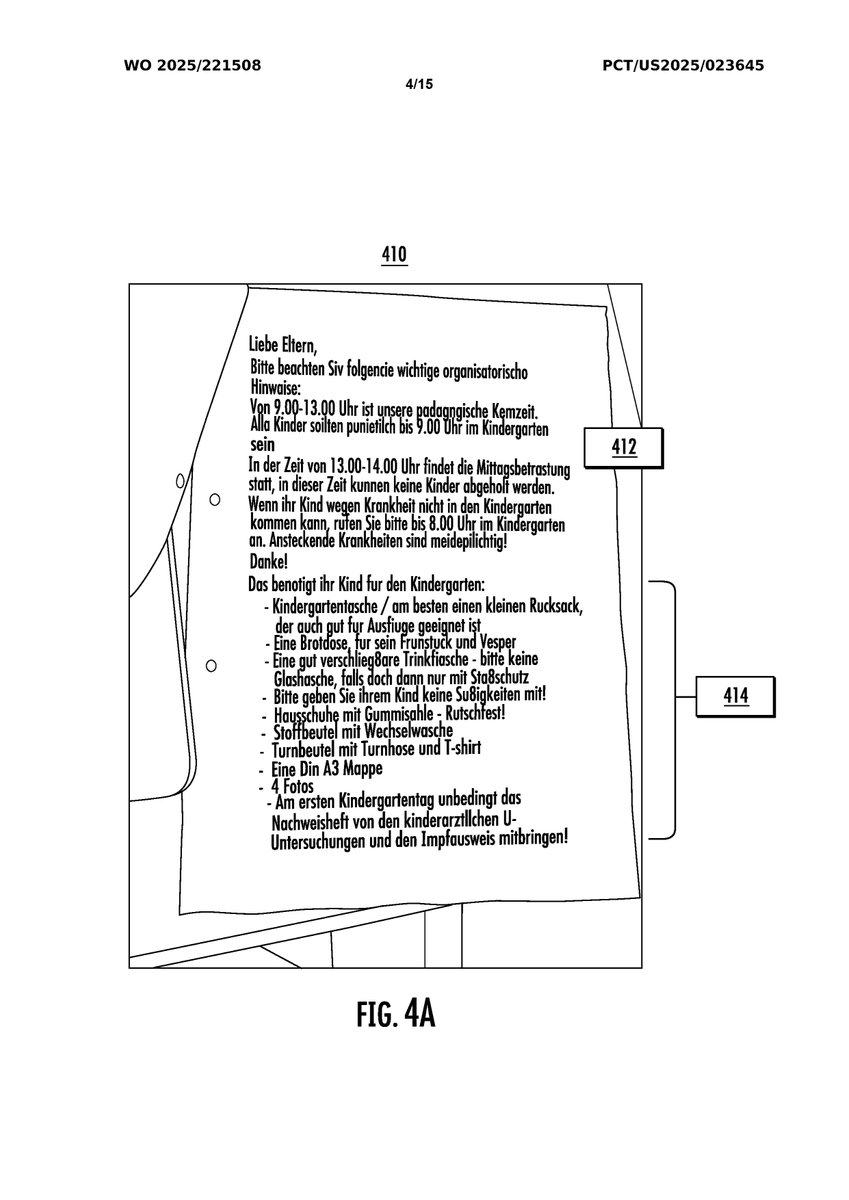
๋ณด๋‹ค ๋ณด๋‹ˆ ์‚ฌ๊ณ  ์‹ถ์–ด์ง€๋„ค์š”. ๐Ÿ‘€ 1๏ธโƒฃ WO2025221508A1: AR ๋ฒˆ์—ญ ์ธํ„ฐํŽ˜์ด์Šค ์ œ๊ณต์„ ์œ„ํ•œ ๊ธฐ๊ณ„ํ•™์Šต ํ…์ŠคํŠธ ์ •๋ ฌ ์˜ˆ์ธก ๊ธฐ์ˆ ์ž…๋‹ˆ๋‹ค.

์ด ๊ธฐ์ˆ ์ด ์™„์„ฑ๋˜๋ฉด, ์ ์–ด๋„ ๋ฌธ์„œ ์˜์—ญ์—์„œ์˜ ์–ธ์–ด์˜ ์žฅ๋ฒฝ์€ ์‚ฌ๋ผ์งˆ ๊ฒƒ ๊ฐ™์Šต๋‹ˆ๋‹ค. ๐Ÿ‘€

๋„๋ฉด 4A์™€ 4B๋Š” ๋…์ผ์–ด(4A)๋ฅผ ์˜์–ด(4B)๋กœ ๋ฒˆ์—ญํ•œ ๊ฒฐ๊ณผ๋ฌผ์˜ ์˜ˆ์‹œ์ด๊ณ , 11A-11C๋Š” ์˜์–ด(11A)๋ฅผ ์ผ๋ณธ์–ด(11B, 11C)๋กœ ๋ฒˆ์—ญํ•œ ๊ฒฐ๊ณผ๋ฌผ์ž…๋‹ˆ๋‹ค. ๐Ÿ˜Image
Image
Image
Image
Oct 10 โ€ข 7 tweets โ€ข 16 min read
HIP ASSEMBLY AND KINEMATICS OF A HUMANOID ROBOT

@Figure_robot's WO2025213141A1 presents a humanoid robot hip assembly that achieves enhanced mobility through non-orthogonal actuator arrangements, eliminating torso pitch actuators while maintaining full range of motion.

Figure AI's recent Figure 03 model demonstrates significantly improved locomotion capabilities, particularly in executing squats and maintaining upright walking postures that closely mimic human movement. The technical foundation enabling these capabilities lies in the hip assembly design that addresses fundamental challenges in humanoid robotics. Traditional humanoid designs often require numerous actuators to achieve human-like motion, increasing system complexity, weight, and failure points while reducing operational runtime. The challenge intensifies when designing hip assemblies that must support the robot's entire upper body weight, enable complex multi-axis movements, and avoid kinematic singularities that could lock the robot in unusable positions ([0004]-[0005]). These constraints typically force engineers to choose between comprehensive motion capabilities requiring many actuators or simplified designs with limited functionality.

Figure AI addresses this challenge through a hip assembly architecture featuring non-orthogonal actuator arrangements where the angle between hip roll and hip flex axes deviates from the conventional 90 degrees ([0006], [0089]). The system eliminates the traditional torso pitch actuator, instead utilizing the hip flex actuators to achieve forward bending motion ([0085]). This approach reduces actuator count while maintaining essential mobility. The pelvis frame adopts a depth-elongated lateral hyperboloid configuration rather than conventional flat mounting surfaces ([0087]). Additionally, the leg twist actuator is positioned below both hip flex and hip roll actuators, creating a kinematic chain that inherently avoids singularities within the operational workspace ([0086], [0716]-[0717]).

Key Breakthroughs:
- Achieving non-orthogonal hip actuator configuration with 15-25 degree angles between axes, preventing kinematic singularities within usable range
- Eliminating dedicated torso pitch actuator by redistributing forward bending function to hip flex actuators
- Implementing hyperboloid pelvis frame geometry that provides structural stability while enabling actuator clearance

[FIG. 1A: Humanoid robot 1 in extended position showing upper portion (head/neck, torso, shoulders, arms), central portion (waist/spine 60, pelvis, hips 70), and lower portion (legs, feet)]
[FIG. 4: Perspective view of waist, pelvis, and hip assemblies showing integrated actuator arrangement and hyperboloid pelvis configuration]Image
Image
1. Core Innovations

1๏ธโƒฃ Non-Orthogonal Hip Kinematics for Singularity Avoidance
โ—ฝ Technical Challenge: Conventional humanoid hip designs employ orthogonal actuator arrangements where hip flex, hip roll, and leg twist axes intersect at 90-degree angles ([0716]). This orthogonal configuration creates kinematic singularities when the hip roll actuator rotates outward to 90 degrees, aligning the hip flex axis parallel with the leg twist axis ([0717]-[0718]). At singularity points, the robot loses a degree of freedom and cannot move in certain directions regardless of actuator torque. These singularities often occur within the robot's operational workspace, particularly during wide-stance movements or lateral stepping motions that are essential for stability and versatility ([0719]-[0720]).

โ—ฝ Innovative Solution: The hip assembly implements a non-90 degree angle between the hip roll axis and a reference plane containing the hip flex axis ([Claim 1], [0166]-[0167]). Specifically, this angle ranges between 15 and 25 degrees from orthogonal ([Claim 2]). The hip roll actuator (J12) physically cannot rotate outward to 90 degrees due to this angular offset, preventing the alignment of hip flex (J11) and leg twist (J13) axes ([0717]-[0718]). The configuration ensures singularities exist only beyond 55 degrees of outward rotation from the sagittal plane, well outside typical operational requirements ([0719]-[0720]). Each hip assembly maintains this non-orthogonal relationship through precise mounting geometry on the pelvis frame ([0087], [0739]-[0740]).

โ—ฝ Competitive Advantage: The non-orthogonal configuration provides the robot with significant range of motion without encountering singularities during normal operation ([0731]-[0732]). The design eliminates the need for complex singularity avoidance algorithms that would otherwise consume computational resources during motion planning. By positioning singularities outside the usable working range, the robot maintains full controllability across all practical leg positions ([0733]). This geometric solution is inherently robust, requiring no sensors or software intervention to prevent singularity conditions. The configuration particularly benefits dynamic movements like squats and lateral stepping where traditional designs would approach singular configurations.

2๏ธโƒฃ Torso Pitch Through Hip Actuation Architecture
โ—ฝ Technical Challenge: Traditional humanoid robots include dedicated actuators for torso pitch motion, allowing the robot to bend forward at the waist or "belly" ([0704]). These torso pitch actuators add weight, complexity, and potential failure points to the system ([0705]). Each additional actuator requires power electronics, wiring, cooling, and mechanical support structure, increasing overall system mass. The placement of pitch actuators in the torso or waist region also complicates the robot's center of mass management during dynamic movements. Furthermore, coordinating multiple actuators for simple forward bending tasks introduces control complexity and potential for conflicting commands between torso and hip actuators ([0705]-[0706]).

โ—ฝ Innovative Solution: The robot eliminates dedicated torso pitch actuators entirely, instead utilizing the hip flex actuators (J11) to achieve forward and backward torso motion ([0085], [0704]-[0707]). When forward bending is required, both hip flex actuators rotate simultaneously to pitch the entire upper body ([0708]-[0709]). This approach leverages the existing hip actuators that already possess high torque capacity for supporting and moving the robot's upper body mass ([0710]). The torso structure lacks any actuator positioned above the torso twist actuator configured for forward bending ([Claim 12], [0268]-[0269]). Load paths for lifting objects naturally flow through the hip flex actuators, aligning mechanical advantage with functional requirements ([0710]-[0711]).

โ—ฝ Competitive Advantage: Eliminating the torso pitch actuator reduces the total actuator count, directly decreasing failure points and extending operational runtime ([0705]-[0706]). The design places lifting loads optimally on the hip flex actuators which must already be sized for supporting body weight ([0710]). This load consolidation allows for more efficient actuator utilization compared to distributing forces across multiple smaller actuators. The simplified kinematic chain reduces control complexity while maintaining full forward bending capability ([0711]-[0713]). Power consumption decreases due to fewer actuators requiring continuous energization for position holding. The approach particularly benefits tasks requiring the robot to lift objects from the ground, where hip-based bending provides superior mechanical advantage.

3๏ธโƒฃ Hyperboloid Pelvis Frame with Integrated Mounting Architecture
โ—ฝ Technical Challenge: Conventional robot pelvis designs employ substantially flat surfaces for mounting multiple actuators, typically arranging rotational axes in orthogonal Z and X directions ([0738]-[0739]). Flat mounting surfaces limit actuator placement options and create clearance challenges when multiple large actuators must operate in close proximity. The pelvis must provide rigid support for hip actuators while accommodating the torso lean actuator (J10) positioned within the pelvis frame ([0087]). Traditional designs struggle to balance structural rigidity, actuator clearance, and weight optimization. Direct coupling of legs to the torso without an intermediate pelvis structure reduces stability and durability in humanoid systems ([0735]-[0736]).

โ—ฝ Innovative Solution: The pelvis frame adopts a depth-elongated lateral hyperboloid configuration providing three-dimensional mounting surfaces for actuators ([0739]-[0740]). This geometry positions hip actuators with rotational axes in X and Y directions rather than conventional Z and X orientations ([0740]-[0741]). The hyperboloid shape creates natural clearance zones for the torso lean actuator (J10) positioned within the pelvis frame ([0742]). Hip flex actuators (J11) mount forward of the spine actuators (J9 and J10), allowing hip roll actuators (J12) to extend rearward and position the robot's legs under its torso ([0745]-[0748]). The pelvis frame includes integrally formed motion limit stops configured to restrict hip flex actuator range between 10-40 degrees backward and 145-175 degrees forward ([Claim 7], [0219]).

โ—ฝ Competitive Advantage: The hyperboloid geometry increases structural durability while optimizing weight distribution compared to flat-plate designs ([0741]-[0742]). Forward mounting of hip actuators enables optimal leg positioning under the torso for enhanced stability ([0747]-[0748]). The three-dimensional surface provides multiple mounting angles, accommodating the non-orthogonal actuator arrangement without requiring adapter brackets. Integrated motion stops eliminate separate limiting components, reducing part count and assembly complexity ([0219]). The pelvis serves as a rigid intermediary structure between legs and torso, improving load distribution and system durability compared to direct leg-to-torso coupling ([0736]-[0737]). This configuration particularly benefits dynamic movements where forces must transfer efficiently between upper and lower body segments.

2. Architecture & Components

The hip assembly architecture integrates multiple actuator systems with the pelvis frame and waist assembly to enable complex multi-axis motion while maintaining structural efficiency.

1๏ธโƒฃ Hip Assembly Components:
- Hip flex actuator assembly (J11) with portion positioned within pelvis frame ([0160]-[0161])
- Hip roll actuator assembly (J12) coupled to second extent of hip flex actuator ([0164]-[0165])
- Leg twist actuator assembly (J13) positioned below both hip actuators ([0168]-[0169])
- Cross-roller bearings with through-bore for internal wiring ([Claim 6], [0215]-[0216])

2๏ธโƒฃ Pelvis Structure:
- Depth-elongated lateral hyperboloid pelvis frame configuration ([0739]-[0740])
- Left and right actuator mounts integrated into frame structure ([0156]-[0157])
- Integrally formed motion limit stops for range restriction ([Claim 7], [0219])
- Planar surface on rear bottom for IMU mounting ([Claim 10], [0231])

3๏ธโƒฃ Waist Assembly:
- Main body with parabolic shape having height less than width ([Claim 8], [0223])
- Projecting actuator housing extending downward, offset toward front ([Claim 9], [0227])
- Torso twist actuator assembly (J10) within projecting housing ([0204]-[0206])
- Torso lean actuator assembly (J9) coupled to pelvis frame ([0258]-[0259])

4๏ธโƒฃ Kinematic Configuration:
- Non-90 degree angle between hip roll and hip flex axes ([0166]-[0167])
- Spine angle formed between torso twist and torso lean axes ([0261]-[0262])
- Leg twist axis substantially parallel to torso twist axis in neutral position ([Claim 13], [0273])
- Absence of rotatory actuator below and aligned with torso twist axis ([Claim 14], [0277])

3. Operational Mechanism

The hip assembly operates through coordinated multi-axis actuation enabling humanoid locomotion and torso positioning without kinematic singularities.

1๏ธโƒฃ Hip Flexion and Extension:
- J11 actuators enable leg movement backward 30-40 degrees from neutral ([0757]-[0758])
- Forward range extends 145-175 degrees, bringing knee adjacent to chest ([0759], [0767])
- Both hip flex actuators coordinate for torso forward/backward bending ([0708]-[0709])
- Motion limit stops physically constrain range to prevent overextension ([0219]-[0220])

2๏ธโƒฃ Hip Roll and Leg Positioning:
- J12 actuators provide lateral leg movement up to 55 degrees from sagittal plane ([0719]-[0720])
- Minimum 15-degree outward rotation required for leg-torso clearance at maximum flexion ([0783]-[0784])
- Non-orthogonal configuration prevents singularity within operational range ([0731]-[0733])
- Hip roll combines with leg twist for complex foot placement ([0716])

3๏ธโƒฃ Torso Mobility Integration:
- J10 enables torso twisting over 170 degrees for lateral reaching ([0795]-[0797])
- J9 provides 20-40 degrees lateral bending without forward pitch actuator ([0799]-[0801])
- Spine support assembly couples J9 and J10 maintaining spine angle ([0260]-[0262])
- Coordinated actuation enables squatting through hip-based motion ([0708]-[0710])

4. Figures

[FIG. 9: Exploded view of waist, pelvis, and hip assembly showing waist body, perforated vent panels, spine support assembly, and pelvis frame structure]
[FIG. 11: Cross-sectional view showing hard stop of spine actuator J10 and coupling of spine support assembly to J9]
[FIG. 31: Cross-sectional view showing hard stop of J11 and positional relationship of J11, J12, and J13 actuators]
[FIG. 33: Internal perspective view of hip flex actuator assembly J11 showing hip frame, pelvis adapter, and hip cover]

5. Key Advantages

โœ… Eliminates kinematic singularities within operational workspace through non-orthogonal actuator arrangement with 15-25 degree angular offset ([0731]-[0733])

โœ… Reduces total actuator count by eliminating dedicated torso pitch actuator while maintaining full forward bending capability through hip actuation ([0705]-[0706])

โœ… Achieves 200-degree hip flexion range enabling deep squats and high knee movements critical for humanoid versatility ([0765])

โœ… Provides 170-degree torso twist range using single rotary actuator for efficient lateral reaching and object manipulation ([0795]-[0797])

โœ… Integrates motion limit stops directly into pelvis frame structure, reducing component count and assembly complexity ([0219])

โœ… Enables leg-to-torso clearance at maximum flexion with minimal 15-25 degree hip roll, optimizing energy efficiency ([0789]-[0794])

โœ… Supports momentary peak torques of 101.6-152.4 N-m across all hip actuators for dynamic movement capability ([Claim 5])Image
Image
Image
Image
Oct 9 โ€ข 9 tweets โ€ข 25 min read
์˜ค๋ž˜ ๊ธฐ๋‹ค๋ฆฌ์…จ์Šต๋‹ˆ๋‹ค.
์˜ค๋Š˜ ๊ณต๊ฐœ๋œ @Figure_robot Figure 03์˜ ์‹ ์ฒด ๊ตฌ์กฐ์— ๋Œ€ํ•œ ํŠนํ—ˆ ๋ถ„์„๊ธ€์„ ์˜ฌ๋ ค๋ณด๊ฒ ์Šต๋‹ˆ๋‹ค. HUMANOID ROBOT WITH ADVANCED KINEMATICS

@Figure_robot's WO2025179236A1 presents a general-purpose humanoid robot featuring 62 degrees of freedom distributed asymmetrically across upper, central, and lower body portions to optimize manipulation capability over locomotion complexity. The robot industry faces a critical challenge: over 10 million unsafe or undesirable jobs exist in the United States alone, yet conventional humanoid robots struggle to perform dexterous tasks in human-centric environments due to kinematic limitations and singularity problems that restrict workspace and operational control.

Traditional designs mirror human anatomical proportions, distributing degrees of freedom relatively evenly across body regions under the assumption that matching human skeletal ratios produces human-like capability. This approach results in robots that walk adequately and manipulate objects sufficiently but excel at neither function because resources distribute uniformly rather than strategically. The specification identifies three fundamental problems with conventional humanoid robot kinematics.

First, orthogonal actuator arrangements create singularities when rotational axes become parallel ([0147]). This causes loss of degrees of freedom and requires infinite joint velocities for certain end-effector motions. These singularities force control systems to implement real-time avoidance algorithms that increase computational load and restrict workspace utilization.

Second, balanced degree-of-freedom distribution across body portions limits manipulation dexterity ([0159]). Hands and arms lack sufficient actuators for complex assembly tasks while legs contain unnecessary complexity for repetitive locomotion. Third, dedicated spine pitch actuators consume 30-40% of available torso volume, reducing battery capacity and limiting operational runtime to 2-3 hours in typical deployments ([0222]).

Figure AI addresses these challenges through three interconnected innovations. First, motion-capture-driven kinematic configuration methodology positions singularities outside operational workspace. Second, extreme asymmetric degree-of-freedom distribution concentrates 77% in upper portion and only 6% in lower portion. Third, strategic actuator angling prevents axis alignment during typical motions. The resulting robot achieves several operational capabilities. Runtime exceeds 4-6 hours through 2.5+ kWh battery capacity enabled by 270% torso volume increase. Deep squatting with leg flexion beyond 160 degrees combines with 20-degree lateral rotation for torso clearance. Full dexterous manipulation through 16-degree-of-freedom hands supports complex assembly operations.

Key Breakthroughs:
- Motion capture system (240+ Hz cameras, IMUs) generates kinematic maps positioning arm singularities 10-20 degrees outside normal workspace through data-driven actuator angle optimization
- Asymmetric distribution concentrates 48 of 62 degrees of freedom (77%) in upper portion allowing dexterous manipulation while minimizing lower portion to 4 degrees of freedom (6%) reducing weight and power consumption
- Hip pivot actuator angled 12-22 degrees below transverse plane coupled to hip flex actuator (not directly to pelvis) permits deep squats exceeding 160-degree leg flexion without torso interference

[FIG. 10: Complete humanoid robot in extended position showing anthropomorphic configuration with 62 degrees of freedom distributed across head/neck, torso, arm assemblies, hands, spine, pelvis, hip assemblies, legs, and feet]
[FIG. 8A: Kinematic chains schematic with stippling patterns indicating seven actuator types and commonalities, showing strategic concentration of types 3, 5, and 7 accounting for over 60% of total 42 actuators]Image
Image
Oct 8 โ€ข 4 tweets โ€ข 3 min read
GONOGO ๋‹˜์˜ ๊ธ€์— ์ž๊ทน์„ ๋ฐ›์•„, ์ €๋„ 20k + followers ๋ฅผ ๋ชฉํ‘œ๋กœ ๋‹ฌ๋ ค ๋ด์•ผ๊ฒ ์Šต๋‹ˆ๋‹ค.

Tesla Believers ๋ถ„๋“ค์€ ๋Œ€๋ถ€๋ถ„ ์ด๋ฏธ ์ €์˜ ํŒ”๋กœ์›Œ์‹ค ๊ฒƒ ๊ฐ™๊ณ ,

Figure AI์™€ Unitree์˜ ํœด๋จธ๋…ธ์ด๋“œ ํŠนํ—ˆ๋“ค์„ ๋ถ„์„ํ•˜๋ฉฐ, ์•ˆํ‹ฐ Tesla-ํœด๋จธ๋…ธ์ด๋“œ ํŒฌ ๋ถ„๋“ค์„ ํƒ€๊ฒŸ์œผ๋กœ ์™ธ์—ฐ ํ™•์žฅ์„ ... ๐Ÿ‘€ ํƒ€๊ฒŸ ์ œ 1ํ˜ธ: Figure 03์˜ ์‹ ์ฒด๊ตฌ์กฐ ๐Ÿค–๐Ÿฆพ๐Ÿฆฟ

#๏ธโƒฃ Patent No.: WO2025179236A1
๐Ÿ“‹ Title: Humanoid robot with advanced kinematics

@Alisvolatprop12
@GoingBallistic5
@TheHumanoidHub Image
Image
Sep 6 โ€ข 5 tweets โ€ข 3 min read
๐Ÿ“ธ ํ‹ฐ์ ธ (Teaser)

๋ฏธ๋ž˜์˜ ๋กœ๋ด‡์€ ํ˜„์‹ค ์„ธ๊ณ„๋ฅผ ์—ฐ์•  ์‹œ๋ฎฌ๋ ˆ์ด์…˜ ๊ฒŒ์ž„(๋ฏธ์—ฐ์‹œ)์ฒ˜๋Ÿผ 'ํ”Œ๋ ˆ์ด'ํ•  ๊ฒ๋‹ˆ๋‹ค.

๋งˆ์น˜ ๊ฒŒ์ž„ ํ”Œ๋ ˆ์ด์–ด๊ฐ€ ์—ฌ๋Ÿฌ ์„ ํƒ์ง€ ์•ž์—์„œ ์ƒ๋Œ€์˜ ๋ฐ˜์‘์„ ์˜ˆ์ƒํ•˜๊ณ  ์ตœ์„ ์˜ ์„ ํƒ์ง€๋ฅผ ๊ณ ๋ฅด๋Š” ๊ฒƒ์ฒ˜๋Ÿผ ๋ง์ด์ฃ .

AI์˜ ์ƒ์ƒ๋ ฅ, ๊ทธ โ€˜๋ฐ˜์ „โ€™์˜ ๊ด€์ 

์ตœ๊ทผ ๊ตฌ๊ธ€์˜ Veo๋‚˜ xAI์˜ Grok Imagine ๊ฐ™์€ ์ตœ์ฒจ๋‹จ I2V(Image-to-Video) ๊ธฐ์ˆ ์„ ์ƒ๊ฐํ•ด ๋ด…์‹œ๋‹ค. ์ด ๊ธฐ์ˆ ์€ ์ž…๋ ฅํ•œ ์ด๋ฏธ์ง€์™€ ํ…์ŠคํŠธ(ํ”„๋กฌํ”„ํŠธ)๋ฅผ ๋ฐ”ํƒ•์œผ๋กœ ๊ฐ€์ƒ ์„ธ๊ณ„์˜ ์˜์ƒ์„ ๋งŒ๋“ค์–ด๋‚ด๋Š”, ๊ทธ ์ž์ฒด๋กœ๋„ ๋†€๋ผ์šด ๊ธฐ์ˆ ์ž…๋‹ˆ๋‹ค.
ํ•˜์ง€๋งŒ ์ง„์งœ ํ˜๋ช…์€ ์ด ๊ณผ์ •์„ ๋’ค์ง‘์–ด, AI๊ฐ€ ์ด ๊ธฐ์ˆ ์„ ์Šค์Šค๋กœ๋ฅผ ์œ„ํ•ด ํ™œ์šฉํ•  ๋•Œ ์‹œ์ž‘๋ฉ๋‹ˆ๋‹ค.

๊ณผ๊ฑฐ ์ œ๊ฐ€ ๋‹ค๋ค˜๋˜ ๊ธ€ ์ค‘์—์„œ, ๊ตฌ๊ธ€๊ณผ ๋”ฅ๋งˆ์ธ๋“œ ํŠนํ—ˆ์— ์ œ์‹œ๋œ โ€˜Inner Monologue(๋‚ด๋ฉด ๋…๋ฐฑ)โ€™ ๊ฐœ๋…์„ ๊ธฐ์–ตํ•˜์‹œ๋‚˜์š”? ์ด๊ฒƒ์€ AI๊ฐ€ ๋ˆˆ์•ž์˜ ์ƒํ™ฉ์„ ์ธ์‹ํ•œ ๋’ค, ๊ทธ๊ฒƒ์„ โ€˜์–ธ์–ดโ€™๋กœ ๋ช…ํ™•ํ•˜๊ฒŒ ์š”์•ฝํ•˜๊ณ  ์ธ์ง€ํ•˜๋Š” ์‚ฌ๊ณ  ๋ฉ”์ปค๋‹ˆ์ฆ˜์ž…๋‹ˆ๋‹ค. ์ด๊ฒƒ์ด I2V ๋ชจ๋ธ๊ณผ ๋งŒ๋‚˜๋ฉด, ๊ธฐ๊ณ„๋Š” ์ธ๋ฅ˜ ์—ญ์‚ฌ์ƒ ์ตœ์ดˆ๋กœ โ€˜์ƒ์ƒ๋ ฅโ€™์„ ๊ฐ€์งˆ ์ˆ˜ ์žˆ๊ฒŒ ๋ฉ๋‹ˆ๋‹ค.

์‹œ๋ฎฌ๋ ˆ์ด์…˜: ์˜ตํ‹ฐ๋จธ์Šค๋Š” ์–ด๋–ป๊ฒŒ '์ตœ์„ ์˜ ์„ ํƒ'์„ ํ•˜๋Š”๊ฐ€

ํ…Œ์Šฌ๋ผ ์˜ตํ‹ฐ๋จธ์Šค๊ฐ€ ๊ณต์žฅ์—์„œ ์ผํ•˜๋˜ ์ค‘, ํ•œ ์—”์ง€๋‹ˆ์–ด๊ฐ€ ๋‹ค๊ฐ€์™€ ์ธ์‚ฌ๋ฅผ ๊ฑด๋„ธ๋‹ค๊ณ  ์ƒ์ƒํ•ด ๋ด…์‹œ๋‹ค.

โ–ถ STEP 1: โ€˜Inner Monologueโ€™๊ฐ€ ์„ ํƒ์ง€๋ฅผ ์ƒ์„ฑํ•ฉ๋‹ˆ๋‹ค

โ€˜Inner Monologueโ€™ ๋ชจ๋ธ์„ ํ†ตํ•ด, ์˜ตํ‹ฐ๋จธ์Šค์˜ ํ”„๋กœ์„ธ์„œ๋Š” ๊ฐ€๋Šฅํ•œ ๋Œ€์‘ ์‹œ๋‚˜๋ฆฌ์˜ค๋“ค์„ โ€˜์–ธ์–ดโ€™๋กœ ์ƒ์„ฑํ•ฉ๋‹ˆ๋‹ค.

* ์„ ํƒ์ง€ A: ์นœ์ ˆํ•˜๊ฒŒ ์†์„ ํ”๋“ค๋ฉฐ ์ธ์‚ฌํ•œ๋‹ค.
* ์„ ํƒ์ง€ B: ๋ฌด์‹œํ•˜๊ณ  ํ•˜๋˜ ์ผ์„ ๊ณ„์†ํ•œ๋‹ค.
* ์„ ํƒ์ง€ C: ๋ชจ์š•์ ์ธ ์–ธํ–‰๊ณผ ํ•จ๊ป˜ ์œ„ํ˜‘์ ์ธ ์ž์„ธ๋ฅผ ์ทจํ•œ๋‹ค.

โ–ถ STEP 2: โ€˜Grok Imagineโ€™์ด ๊ฐ ์„ ํƒ์ง€์˜ ๋ฏธ๋ž˜๋ฅผ ์‹œ๋ฎฌ๋ ˆ์ด์…˜ํ•ฉ๋‹ˆ๋‹ค

์ด์ œ ์˜ตํ‹ฐ๋จธ์Šค๋Š” ์–ธ์–ด๋กœ ๋œ ์‹œ๋‚˜๋ฆฌ์˜ค(from Step 1)์™€ ํ˜„์žฌ์˜ ์‹œ๊ฐ ์ •๋ณด(from Camera)๋ฅผ ๊ฒฐํ•ฉํ•˜์—ฌ, ๊ฐ ์„ ํƒ์ง€๊ฐ€ ๋ถˆ๋Ÿฌ์˜ฌ ๊ฐ€์žฅ ๊ฐ€๋Šฅ์„ฑ ๋†’์€ ๊ฒฐ๊ณผ๋ฅผ ์งง์€ ์˜์ƒ์œผ๋กœ โ€˜๋ฏธ๋ฆฌ ๋ด…๋‹ˆ๋‹คโ€™.

* A์˜ ๋ฏธ๋ž˜: ์—”์ง€๋‹ˆ์–ด๊ฐ€ ํ™˜ํ•˜๊ฒŒ ๋ฏธ์†Œ ์ง“๋Š” ์˜์ƒ.
* B์˜ ๋ฏธ๋ž˜: ์—”์ง€๋‹ˆ์–ด๊ฐ€ ์–ด์ƒ‰ํ•ดํ•˜๋ฉฐ ๋Œ์•„์„œ๋Š” ์˜์ƒ.
* C์˜ ๋ฏธ๋ž˜: ์—”์ง€๋‹ˆ์–ด๊ฐ€ ๊ฒ์„ ๋จน๊ณ  ๋’ท๊ฑธ์Œ์งˆ ์น˜๊ฑฐ๋‚˜, ๋น„์ƒ ์ •์ง€ ๋ฒ„ํŠผ์„ ๋ˆ„๋ฅด๋ ค ํ•˜๋Š” ์˜์ƒ.

โ–ถ STEP 3: ์ตœ์ ์˜ ํ–‰๋™์„ ์‹คํ–‰ํ•ฉ๋‹ˆ๋‹ค

์˜ตํ‹ฐ๋จธ์Šค๋Š” ๊ฐ ์„ ํƒ์ง€๊ฐ€ ๋‚ณ์„ ๊ฐ€์žฅ ๊ฐœ์—ฐ์„ฑ ๋†’์€ ๋ฏธ๋ž˜๋“ค์„ ๋น„๊ตํ•˜๊ณ , ์ •ํ™ฉ์ƒ ๊ฐ€์žฅ ๊ธ์ •์ ์ธ ์ƒํ˜ธ์ž‘์šฉ์„ ์ด๋Œ์–ด๋‚ผ ์„ ํƒ์ง€ A๋ฅผ ์‹คํ–‰ํ•ฉ๋‹ˆ๋‹ค. ๋งˆ์น˜ ์ตœ๊ณ ์˜ ์—”๋”ฉ์„ ๋ณด๊ธฐ ์œ„ํ•ด ์‹ ์ค‘ํ•˜๊ฒŒ ์„ ํƒ์ง€๋ฅผ ๊ณ ๋ฅด๋Š” ๊ฒŒ์ž„ ํ”Œ๋ ˆ์ด์–ด์ฒ˜๋Ÿผ ๋ง์ด์ฃ .

์Šค์Šค๋กœ ๋ฐœ์ „ํ•˜๋Š” โ€˜๊ธฐ๊ณ„์˜ ์ง๊ด€โ€™

์ด ๋ฐฉ์‹์˜ ์ง„์งœ ์ ˆ๋ฌ˜ํ•œ ์ ์€, ์†Œํ”„ํŠธ์›จ์–ด์™€ ํ•˜๋“œ์›จ์–ด์˜ ๋ฐœ์ „์ด ์„œ๋กœ์˜ ์„ฑ๋Šฅ์„ ๊ฐ€์†ํ•˜๋Š” โ€˜๋ชจ๋“ˆํ˜• ์„ฑ์žฅ ์•„ํ‚คํ…์ฒ˜โ€™์— ์žˆ์Šต๋‹ˆ๋‹ค.

* ์†Œํ”„ํŠธ์›จ์–ด์˜ ์ง„ํ™” โ†’ ํŒ๋‹จ๋ ฅ์˜ ๊ณ ๋„ํ™”
โ€˜Inner Monologueโ€™์™€ โ€˜I2Vโ€™ ๋ชจ๋ธ์ด ์—…๋ฐ์ดํŠธ๋ ์ˆ˜๋ก, ๋กœ๋ด‡์˜ ์‚ฌํšŒ์  ์ง€๋Šฅ๊ณผ ์ƒํ™ฉ ํŒ๋‹จ ๋Šฅ๋ ฅ์€ ์ฆ‰๊ฐ์ ์œผ๋กœ ๊ฐœ์„ ๋ฉ๋‹ˆ๋‹ค.

* ํ•˜๋“œ์›จ์–ด์˜ ๋ฐœ์ „ โ†’ ์‹ค์‹œ๊ฐ„์— ๊ฐ€๊นŒ์šด ์ง๊ด€
์ถ”๋ก  ์นฉ์˜ ์—ฐ์‚ฐ ์†๋„๊ฐ€ ๋นจ๋ผ์งˆ์ˆ˜๋ก, ์ƒ์ƒํ•˜๋Š” ์†๋„ ์—ญ์‹œ ๋นจ๋ผ์ง‘๋‹ˆ๋‹ค. ๊ฒฐ๊ตญ ์žฅ๊ธฐ์ ์œผ๋กœ๋Š” ์ธ๊ฐ„์˜ โ€˜์ง๊ด€โ€™๊ณผ ๊ตฌ๋ณ„ํ•  ์ˆ˜ ์—†๋Š” ์ˆ˜์ค€์— ๋„๋‹ฌํ•˜๊ฒŒ ๋  ๊ฒƒ์ž…๋‹ˆ๋‹ค.

Tesla๊ฐ€ xAI์— ํˆฌ์žํ•ด์•ผ๋งŒ ํ•˜๋Š” ์ด์œ 

์ด์ œ ์™œ ์ผ๋ก  ๋จธ์Šคํฌ๊ฐ€ Grok Imagine์— ๊ทธํ† ๋ก ์ง‘์ค‘ํ•˜๋Š”์ง€, ๊ทธ ๊ฑฐ๋Œ€ํ•œ ๊ทธ๋ฆผ์ด ๋ณด์ด์‹ค ๊ฒƒ์ž…๋‹ˆ๋‹ค. ํ˜น์ž๋“ค์ด ์ง€์ ํ•˜๋“ฏ, ์ด๊ฒƒ์€ ๋‹จ์ˆœํžˆ ์„ธ๊ณ„ ์ตœ๊ณ  ๋ถ€์ž์˜ ๊ฐ’๋น„์‹ผ ์˜์ƒ ์ œ์ž‘ ํˆด์ด๋‚˜ ๊ฐœ์ธ์ ์ธ ์ทจ๋ฏธ ํ”„๋กœ์ ํŠธ๊ฐ€ ์•„๋‹™๋‹ˆ๋‹ค.

xAI์˜ Grok Imagine์€ Physical AI๋ผ๋Š” ์›๋Œ€ํ•œ ๋น„์ „์„ ์™„์„ฑ์‹œํ‚ฌ ๋งˆ์ง€๋ง‰ ํผ์ฆ ์กฐ๊ฐ์ด์ž, ๋ชจ๋“  ๊ธฐ๊ณ„์— โ€˜์ƒ์ƒ๋ ฅ ์—”์ง„โ€™์„ ์ด์‹ํ•˜๋Š” ํ•ต์‹ฌ ๊ธฐ์ˆ ์ด๊ธฐ ๋•Œ๋ฌธ์ž…๋‹ˆ๋‹ค.

๋”ฐ๋ผ์„œ ์ด๋ฒˆ ์ฃผ์ฃผ์ดํšŒ์˜ ํˆฌ์ž์•ˆ์€ ์žฌ๋ฌด์  ๊ฒฐ์ •์„ ๋„˜์–ด, ๊ธฐ๊ณ„์— ์˜ํ˜ผ์„ ๋ถˆ์–ด๋„ฃ๋Š” ์—ญ์‚ฌ์  ์ „ํ™˜์ ์ด ๋  ๊ฒƒ์ž…๋‹ˆ๋‹ค.

์ƒ์ƒํ•˜๋Š” ๊ธฐ๊ณ„์˜ ์‹œ๋Œ€๊ฐ€, ์ง€๊ธˆ ๋ง‰ ๋ฌธ์„ ์—ด๊ณ  ์žˆ์Šต๋‹ˆ๋‹ค. ๐Ÿค–๐Ÿ’ญImage
Image
์–ด? ๐Ÿ‘€โ—๏ธ Image
Jul 1 โ€ข 6 tweets โ€ข 13 min read
NEURAL NETWORKS FOR EMBEDDED DEVICES

@Tesla's US12346816B2 patent introduces a transformative neural network architecture addressing the fundamental computational constraints of embedded devices through systematic bit-width reduction and arithmetic overflow prevention. The invention confronts the critical limitation wherein "processors may be too complex or expensive for use in inexpensive devices, such as IOT devices that may include inexpensive processors having a more limited bit-length" ([0002]), establishing a new paradigm for deploying sophisticated neural networks on resource-constrained hardware. This architectural innovation enables neural network inference on processors traditionally limited to simpler computational tasks, specifically 8-bit arithmetic processors found in IoT devices.

The technical breakthrough manifests through a co-designed approach linking neural network topology with arithmetic constraints, wherein "dimensionalities determined such that an output value generated by combining elements of an input layer as maximum values of the first integer representation with elements of a corresponding filter as maximum values of the second integer representation does not overflow the bit length of the registers" (Claim 1). This mathematical guarantee ensures operational integrity within 8-bit non-saturating arithmetic environments while maintaining inference accuracy through strategic quantization and novel convolutional topologies.

The patent's significance extends beyond incremental optimization, fundamentally reconceptualizing how neural networks interact with hardware limitations. Rather than treating bit-width constraints as performance degradation factors, the invention integrates these boundaries as first-order design parameters, yielding architectures that achieve optimal efficiency precisely because of, not despite, their computational constraints.

[FIG. 1: Star-shaped convolution filter showing 5-element spatial sampling pattern with center and cardinal direction weights]Image 1. Core Innovations

1๏ธโƒฃ Overflow-Constrained Dimensional Co-Design Architecture
โ—ฝ What it does: The system generates neural network architectures by jointly optimizing layer dimensionalities and bit-precision allocations to guarantee arithmetic overflow prevention. Filter elements are constrained to specific maximums (32, 16, or 8 elements) with corresponding activation and weight quantization schemes that ensure output values remain within [-128, 127] bounds ([0026]-[0031]).

โ—ฝ Ingenuity: The innovation transcends traditional post-training quantization by embedding overflow constraints directly into architectural search space. Where conventional approaches treat bit-width reduction as lossy compression applied to pre-existing networks, this method recognizes that optimal architectures for reduced-precision environments possess fundamentally different topological properties. The mathematical coupling between filter dimensions and bit allocationsโ€”exemplified by 32-element filters utilizing (2+s) activations and (1+s) weights to guarantee maximum output of 96โ€”demonstrates how constraint-aware design yields superior efficiency compared to retrofit solutions.

โ—ฝ Technical significance: This approach eliminates the iterative trial-and-error process of quantization-aware training, instead providing deterministic guarantees of overflow-free operation. The framework enables single-pass architecture generation optimized for specific hardware constraints, reducing development cycles and ensuring deployment reliability on non-saturating arithmetic processors.

2๏ธโƒฃ Star-Shaped Convolution Topology
โ—ฝ What it does: The star-shaped filter samples five spatial positionsโ€”center pixel at (x,y) plus immediate orthogonal neighbors at top, bottom, left, and rightโ€”while explicitly excluding diagonal elements ([0034]). This non-rectangular kernel topology reduces computational complexity from 9 multiply-accumulate operations (traditional 3ร—3) to 5 operations while preserving spatial feature extraction capabilities.

โ—ฝ Ingenuity: The brilliance resides in recognizing that spatial convolution's information capture exhibits anisotropic importance distribution. Human visual perception and most natural image statistics demonstrate stronger correlation along cardinal directions than diagonals. By exploiting this insight, the star topology achieves near-parity feature extraction with 44% fewer operations. Moreover, the 5-element structure enables more aggressive bit allocationโ€”weights representable as (3+s) versus (2+s) for 9-element filtersโ€”creating a compound efficiency gain through both reduced operation count and enhanced precision per operation.

โ—ฝ Technical significance: The topology's mathematical properties align optimally with 8-bit arithmetic constraints, enabling maximum output calculations of 5ร—7ร—3=105, safely below the 127 overflow threshold. This innovation demonstrates how hardware-aware kernel design can achieve superior performance-per-operation compared to naive uniform sampling approaches.

3๏ธโƒฃ Dual-Parameter Adaptive Quantization Framework
โ—ฝ What it does: The system implements independent quantization parameters for activations and weights within each layer, utilizing the transformation V_Q = (V_R/A) - B where A and B represent layer-specific scaling and offset parameters ([0044]-[0050]). These parameters are determined through dataset-driven min-max analysis, creating optimal binning strategies for each tensor independently ([0052]-[0053]).

โ—ฝ Ingenuity: Traditional quantization schemes apply uniform bit reduction across all network components, failing to exploit the heterogeneous precision requirements of different layers and tensor types. This dual-parameter approach recognizes that activations and weights exhibit distinct statistical distributions and functional roles. The mathematical decoupling enables, for instance, (3+s) activation precision paired with (1+s) weight precision based on layer-specific overflow analysis. The framework's sophistication extends to adjacent layer quantization collapsing ([0054]), wherein sequential quantization-dequantization operations merge into single transformations, halving computational overhead without sacrificing precision.

โ—ฝ Technical significance: The adaptive framework enables optimal bit allocation across network depth, maximizing information retention within hardware constraints. The quantization parameter determination process provides deterministic overflow prevention while maintaining maximal representational capacity for each layer's specific computational requirements.

2. Architecture & Components

The StarNet architecture orchestrates specialized computational elements designed for efficient 8-bit arithmetic execution on embedded processors.

1๏ธโƒฃ Star-Shuffle Block Composition:
The fundamental building block implements the sequence {1ร—1-conv, relu, star-conv, relu, shuffle} ([0037]), creating a carefully structured computational pipeline. The 1ร—1 convolution performs channel-wise feature mixing within group-length constraints (maximum 32 channels), enabling cross-channel information aggregation while maintaining overflow bounds. The star-conv layer provides spatial feature extraction through the 5-element sampling pattern, followed by the shuffle layer that performs channel permutation to prevent group isolation in subsequent layers ([0035]).

2๏ธโƒฃ Hierarchical Network Architecture:
StarNet-A demonstrates practical implementation through a 32-layer architecture ([0057]-[0064]) with progressive complexity scaling. The network initiates with a star-conv layer processing input images using 16-bit arithmetic ([0058])โ€”the sole exception to 8-bit computationโ€”acknowledging that "quantizing the input image does damage accuracy." Subsequent layers organize into groups: 2 star-blocks โ†’ max-pool โ†’ 6 star-blocks โ†’ max-pool โ†’ 12 star-blocks โ†’ max-pool โ†’ 12 star-blocks, with group-length progression from 8 to 16 to 32 channels.

3๏ธโƒฃ Quantization Integration Architecture:
Each layer maintains dual quantization parameter setsโ€”activation parameters (A_input, B_input) and layer parameters (A_weights, B_weights)โ€”enabling independent precision optimization ([0044]). The system preprocesses weights into quantized representations during initialization, while runtime quantization applies to activations dynamically. This separation enables efficient deployment with preprocessed static weights and dynamic activation quantization.

3. Operational Mechanism

The StarNet operational pipeline implements a sophisticated interplay between architectural constraints and runtime execution to maintain overflow-free computation throughout inference.

1๏ธโƒฃ Initialization Phase:
The network generation process begins with bit-length determination for target hardware registers ([0067]), establishing fundamental arithmetic constraints. The system then determines appropriate integer representations for inputs and filters, with each representation associated with specific value ranges. For 8-bit signed arithmetic, this constrains values to [-128, 127], creating hard boundaries for all subsequent calculations.

2๏ธโƒฃ Quantization Parameter Determination:
During preprocessing, the system propagates a representative dataset through the network, collecting minimum and maximum activation values at each layer ([0052]). These extrema feed into the parameter determination system, solving for optimal A and B values that maximize precision while guaranteeing overflow prevention. The mathematical framework ensures that after quantization, dequantization, and arithmetic operations, no intermediate or final value exceeds register capacity.

3๏ธโƒฃ Runtime Inference Pipeline:
Input data undergoes initial 16-bit processing in the first layer ([0058]), leveraging CPU capabilities before transitioning to 8-bit DSP processing. Each subsequent layer receives pre-quantized weights and applies runtime activation quantization using V_Q,input = (V_R,input / A_input) - B_input ([0046]). The star-conv operations execute with guaranteed overflow prevention through dimensionality constraints, while shuffle layers permute channels to maintain representational completeness across groups.

4๏ธโƒฃ Optimization Through Quantization Collapsing:
Adjacent layers optimize execution through quantization operation merging ([0054]), eliminating redundant dequantization-requantization cycles. This transformation reduces computational overhead by factor of two while maintaining mathematical equivalence, critical for achieving real-time performance on resource-constrained processors.

[FIG. 2: Star-shuffle neural network block architecture showing sequential processing through 1ร—1 convolution, ReLU activation, star convolution, ReLU activation, and shuffle layer]
[FIG. 3: Complete StarNet-A architecture displaying 32-layer progressive structure with group-length scaling from 8 to 32 channels]
[FIG. 7: Neural network structure generation process flow showing bit-length determination, integer representation assignment, dimensionality generation, and final structure creation]
[FIG. 4: Quantization mathematical framework illustrating forward quantization V_Q = (V_R/A) - B and inverse dequantization transformations]

4. Key Advantages

โœ… Deterministic Overflow Prevention: Mathematical guarantees ensure arithmetic operations never exceed 8-bit bounds through architectural constraints rather than runtime checking, eliminating unpredictable behavior in safety-critical deployments.

โœ… Computational Efficiency Optimization: Star-shaped convolution reduces multiply-accumulate operations by 44% while quantization collapsing halves adjacent layer overhead, achieving compound efficiency gains.

โœ… Hardware Deployment Feasibility: Direct execution on 8-bit DSP cores without specialized hardware requirements enables deployment on existing embedded processors found in IoT devices.

โœ… Memory Footprint Reduction: 8-bit storage throughout network (except initial layer) achieves 75% memory reduction compared to 32-bit implementations, critical for cache-constrained embedded systems.

โœ… Adaptive Precision Allocation: Layer-specific quantization parameters optimize bit usage based on actual computational requirements rather than uniform reduction, maximizing information retention.

โœ… Architectural Scalability: Group convolution with configurable group-length supports diverse network depths and widths while maintaining overflow constraints through systematic dimensionality scaling.

โœ… Development Cycle Acceleration: Single-pass architecture generation with guaranteed properties eliminates iterative quantization-aware training, reducing time-to-deployment for embedded applications.

5. Analogy

Tesla's StarNet innovation parallels modern gaming's Level of Detail (LOD) and foveated rendering optimizations, demonstrating how intelligent resource allocation achieves superior performance within strict computational constraints.

Consider how modern games must render complex 3D environments on mobile devices with limited GPU powerโ€”precisely analogous to running neural networks on 8-bit embedded processors. Traditional approaches would uniformly reduce all graphics quality, making everything equally blurry and degrading the gaming experience. This mirrors how naive neural network quantization uniformly reduces all precisions to 8-bit, causing catastrophic accuracy loss.

Game engines instead implement foveated rendering: the GPU renders objects in your direct view and cardinal directions (forward, left, right, up, down) at high detail, while diagonal corners receive reduced processing. This exactly mirrors the star-shaped convolution's 5-element patternโ€”sampling center and orthogonal positions while excluding diagonals. Just as human vision naturally focuses on cardinal directions, the star topology captures essential spatial features with 44% fewer computations.

The quantization framework operates like dynamic resolution scaling in games. Near objects render with 8 quality levels, mid-range with 4 levels, and distant objects with 2 levelsโ€”analogous to how different neural network layers receive different bit allocations based on their precision requirements. The mathematical overflow prevention parallels GPU memory bandwidth protection: the system pre-calculates that total scene complexity never exceeds available memory, preventing the crashes that would occur from overflow.

This optimization enables mobile devices to run graphically intensive games at 60fps despite having 75% less computational power than gaming PCsโ€”just as StarNet enables professional-grade neural network inference on simple 8-bit processors found in smart doorbells and IoT sensors. The key insight in both domains: strategic asymmetric resource allocation outperforms uniform compression, achieving near-parity results with dramatically reduced computational requirements.Image
Image
Image
Image
Jun 22 โ€ข 5 tweets โ€ข 13 min read
BALANCING TRAINING DATA FOR TRAINING NEURAL NETWORKS

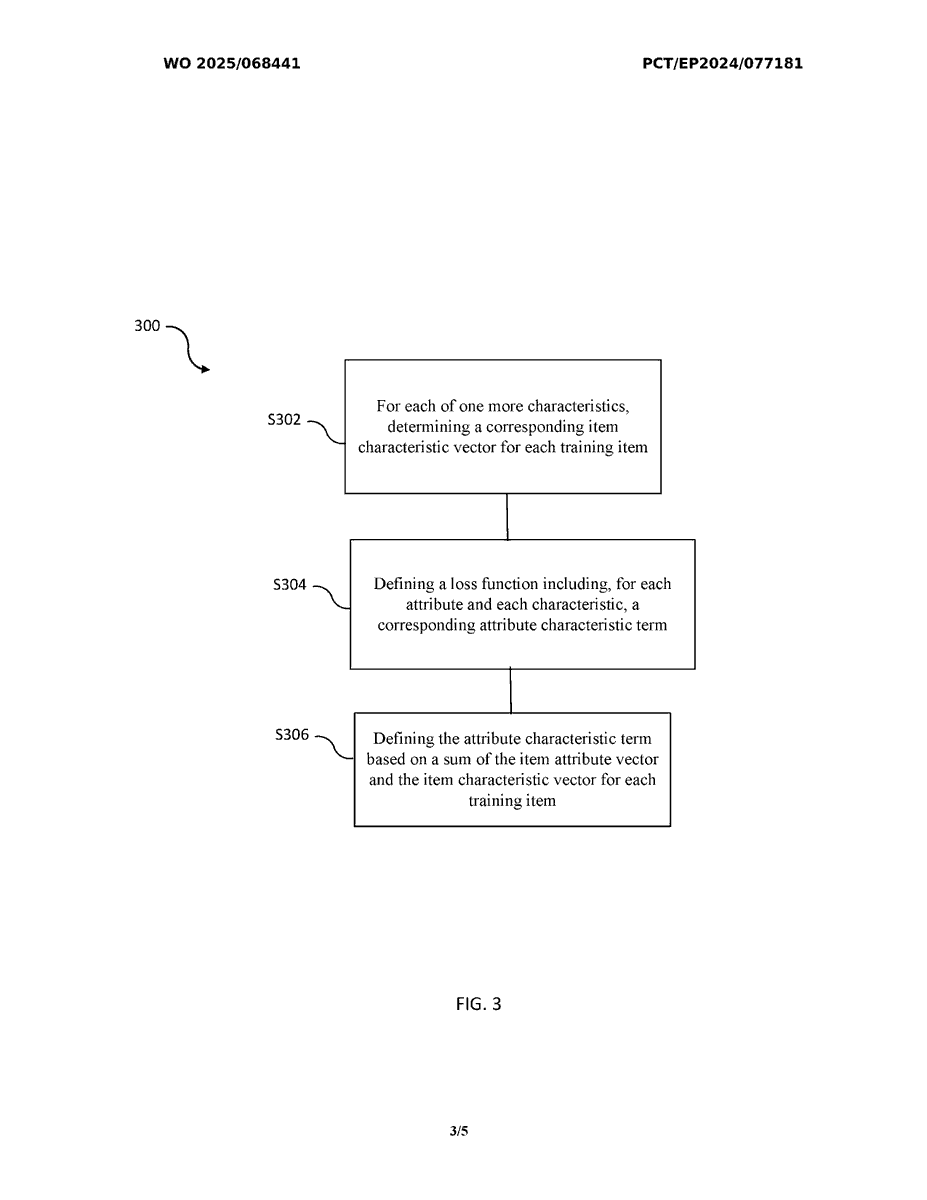
@GoogleDeepMind's WO2025068441A1 patent introduces a mathematically rigorous framework for mitigating systematic biases in neural network training databases through polynomial weight optimization and multi-order statistical dependency decoupling. The invention addresses the fundamental challenge where "the distribution of audio-visual elements in such databases is often different from a desired distribution" ([0004]), a discrepancy that compromises neural network generalization capabilities and perpetuates harmful societal biases when "association bias in the training dataset can make a trained neural network less successful at tasks" ([0012]).

This comprehensive bias mitigation system employs a hierarchical loss function architecture that simultaneously addresses first-order representation bias and second-order attribute-characteristic correlations, enabling "rebalancing" of training databases where "images having the attribute 'cat' are removed and/or given less weight in the training" ([0004]). The mathematical framework extends beyond simple filtering to implement constraint-based optimization ensuring statistical independence between orthogonal properties.

The technical breakthrough manifests in the system's ability to automatically discover and mitigate indirect associations through language model-driven proxy attribute generation, addressing cascading correlations where "a certain training database may statistically correlate 'men' with briefcases... and briefcases with being lawyers, such that an indirect association exists between men and lawyers" ([0046]).

[FIG. 1: Neural network system architecture showing hierarchical relationship between training database (100), training items (102) with audio-visual elements (104), item attribute vectors (106a-c), and neural network (108)]
[FIG. 4: Empirical validation demonstrating bias reduction across model scales (100M/1B parameters) and architectures (S/32, B/32) with quantitative parity metrics]Image
Image
1. Core Innovations

1๏ธโƒฃ Polynomial Weight Optimization Framework with Guaranteed Convergence
โ—ฝ What it does: The system implements a mathematical optimization framework where each training item receives a weight value w determined through minimization of a polynomial loss function L(w,a) with respect to weight values and item attribute vectors ([0006]-[0007]). The loss function maintains polynomial degree โ‰ค 2, ensuring "a single minimum" ([0032]) and enabling both iterative gradient-based optimization and potential analytical solutions "in a single step" ([0028]).

โ—ฝ Ingenuity: The architectural innovation transcends conventional data filtering approaches by formulating bias mitigation as a constrained optimization problem with mathematical convergence guarantees. Traditional methods employ heuristic sampling or hard filtering that discards valuable training data. This framework preserves all training items while optimally adjusting their influence through continuous weight values, transforming the discrete selection problem into a differentiable optimization landscape. The polynomial constraint (degree โ‰ค 2) ensures convexity, eliminating local minima traps that plague non-convex formulations. The system achieves this through careful loss function engineering where "all terms of the loss function may have a dependence on the weight values which is polynomial" ([0032]).

โ—ฝ Technical significance: The guaranteed convergence enables predictable bias mitigation across datasets ranging from 100M to 1B items ([0056]). The continuous weight formulation preserves information while achieving targeted distributions.

2๏ธโƒฃ Second-Order Statistical Dependency Decoupling Architecture
โ—ฝ What it does: Beyond first-order representation adjustment, the system implements attribute-characteristic covariance minimization through specialized loss terms that "reduce association bias between attributes and characteristics in the training database" ([0042]). Each attribute-characteristic pair contributes a term based on "a corresponding second sum over the training items, weighted by the corresponding weight values, of a second function" ([0042]) that captures cross-correlation between orthogonal properties. The mathematical constraint |Cov[q(sk - ฯ€k), qy]| โ‰ค ฮตR ([0063]) enforces near-independence.

โ—ฝ Ingenuity: The innovation recognizes that bias manifests not merely in marginal distributions but in conditional dependencies between conceptually unrelated properties. While prior approaches address "managers shown as men" through representation balancing, they fail to decouple the underlying statistical association. This architecture implements simultaneous optimization over multiple covariance constraints, achieving statistical independence without requiring explicit negative examples. The threshold mechanism ฮตR provides computational tractability by tolerating negligible associations. The second function's product formulationโ€”"(i) the item attribute vector minus the desired attribute vector... and (ii) the item characteristic vector" ([0043])โ€”elegantly captures deviation from both marginal and conditional targets.

โ—ฝ Technical significance: This dual-constraint optimization enables training of neural networks that generalize correctly across attribute-characteristic combinations absent from training data. Empirical validation demonstrates "mean parity between men and women across all occupations" ([0058]).

3๏ธโƒฃ Language Model-Driven Proxy Attribute Discovery and Mitigation
โ—ฝ What it does: The system employs "a trained language model to define one or more additional 'proxy' attributes based on the selected attributes" ([0046]), automatically expanding the optimization scope to capture indirect associations. These proxy attributes undergo the same weight optimization process, ensuring comprehensive bias surface coverage. The language model identifies latent correlations that propagate bias through intermediate concepts, such as the briefcase-lawyer association that indirectly links gender to profession.

โ—ฝ Ingenuity: The breakthrough lies in recognizing that bias propagates through semantic networks of correlated concepts invisible to direct attribute analysis. Traditional approaches require manual identification of all bias pathwaysโ€”an intractable task given the combinatorial explosion of potential associations. This innovation leverages language models' encoded world knowledge to automatically discover bias propagation chains. The system transforms an open-ended bias discovery problem into a closed-form optimization by using the language model as an oracle for relevant proxy generation. The proxies integrate seamlessly into the existing mathematical framework, requiring no architectural modifications while dramatically expanding bias mitigation coverage.

โ—ฝ Technical significance: Proxy-based optimization achieves superior bias reduction, particularly "for models with large representations trained on large datasets" ([0056]). The automated discovery eliminates human bottlenecks in identifying subtle bias pathways.

2. Architecture & Components

The system implements a hierarchical architecture orchestrating data representation, optimization, and validation components.

1๏ธโƒฃ Core System Architecture (Figure 1):
- Training database (100): Repository of training items with associated metadata
- Training items (102): Individual learning units containing audio-visual elements or textual/transactional records
- Audio-visual elements (104): Images (still/video) or audio segments with temporal extent
- Item attribute vectors (106a-c): Multi-dimensional representations of attribute likelihood
- Neural network (108): Both consumer of balanced data and potential attribute extractor

2๏ธโƒฃ Mathematical Optimization Components:
- Loss function L(w,a): Polynomial objective with degree โ‰ค 2 constraint
- Weight optimizer: Gradient-based or analytical solver
- Attribute terms: First-order bias correction components
- Attribute-characteristic terms: Second-order correlation elimination
- Penalty term: Divergence regularization from subsampling rate ฮท

3๏ธโƒฃ Multi-Modal Processing Pipeline:
- Object detection networks: Extract visual attributes from images ([0045])
- Voice recognition systems: Process audio for attribute identification
- Textual analyzers: Apply criteria-based characteristic detection
- Tokenization engine: Convert free text to vocabulary-based representations ([0047])
- Vector concatenation: Merge multi-modal features [first_vector, second_vector]

4๏ธโƒฃ Proxy Generation Subsystem:
- Language model interface: Query formulation for proxy discovery
- Semantic expansion: Selected attributes โ†’ correlated proxy attributes
- Integration module: Proxy incorporation into optimization framework

3. Operational Mechanism

The system operates through a sophisticated multi-phase pipeline transforming biased databases into statistically balanced training resources.

1๏ธโƒฃ Attribute Vector Determination Phase:
The process initiates with comprehensive attribute vector computation for each training item ([0025]). For audio-visual elements, specialized neural networks process the content: "if the audio-visual element(s) are image(s), an object detection neural network model may be applied to generate an output which lists recognized objects" ([0045]). This output undergoes transformation into item attribute vectors, potentially yielding "a binary value indicating that the likelihood is above a threshold, or a real value varying with the likelihood" ([0022]). Textual descriptors undergo parallel processing where "the second vector for each training item and attribute" emerges from "determining if the corresponding textual descriptor meets a corresponding first criterion" ([0048]).

2๏ธโƒฃ Mathematical Optimization Execution:
Algorithm 1 ([0060]) implements the core optimization loop with hyperparameters including "tolerance levels ฮตD and ฮตR" ([0063]). The loss function instantiation combines multiple terms: attribute terms enforcing marginal distribution targets, attribute-characteristic terms eliminating correlations, and penalty terms maintaining proximity to subsampling rate ฮท. The update mechanism "q = ฮ [0,Q] exp(-ฮณ(biasvector))" ([0060]) projects onto feasible weight space while following the negative gradient direction of the composite loss function.

3๏ธโƒฃ Iterative Convergence Process:
The system executes repeated optimization cycles, each iteration updating weights to reduce the loss function ([0027]). The polynomial formulation guarantees convergence to the global minimum, with the algorithm maintaining feasibility constraints E[q] = ฮท throughout. The bias vector computation (Algorithm 2) evaluates constraint violations dynamically, focusing computational effort on active constraints exceeding tolerance thresholds.

4๏ธโƒฃ Deployment Integration:
Post-optimization, the balanced dataset integrates into neural network training through multiple mechanisms ([0029]). Threshold-based filtering eliminates items with weights below cutoff values, while probabilistic sampling uses weights as selection probabilities during batch construction. Advanced integration employs "weight values of a product of a utility value for the corresponding training item and the measure of a divergence" ([0050]), incorporating external quality metrics into the sampling process.

[FIG. 2: Weight optimization process flow showing iterative refinement cycle from initial attribute vector determination (S202) through loss function definition (S206) to weight update execution (S208)]
[FIG. 3: Extended processing architecture incorporating characteristic vectors (S302) and attribute-characteristic loss terms (S304-S306) for second-order bias mitigation]

4. Key Advantages

โœ… Mathematical Convergence Guarantees: Polynomial loss formulation with degree โ‰ค 2 ensures "a single minimum" ([0032]), eliminating local optima issues plaguing non-convex optimization approaches.

โœ… Information Preservation Architecture: Continuous weight assignment maintains complete training database while achieving distributional targets, contrasting with destructive filtering methods.

โœ… Multi-Order Bias Mitigation: Simultaneous optimization over first-order representation and second-order association biases through unified mathematical framework.

โœ… Automated Proxy Discovery: Language model integration enables detection of "indirect association... between men and lawyers" ([0046]) without manual bias pathway specification.

โœ… Scalable Deployment: Framework demonstrates consistent performance from 100M to 1B scale datasets ([0056]) without algorithmic modifications.

โœ… Domain Agnostic Application: Architecture supports "audiovisual items, such as images... or audio items" plus "transactional records or textual records" ([0002]), enabling cross-domain deployment.

โœ… Computational Efficiency: Threshold mechanisms (ฮตD, ฮตR) provide tolerance bands reducing optimization complexity while maintaining bias mitigation effectiveness.

5. Analogy

@GoogleDeepMind's training data balancing system operates remarkably like a music streaming service's sophisticated recommendation algorithm undergoing systematic de-biasing to achieve true musical diversity.

Consider Spotify's "Discover Weekly" confronting user complaints about recommendation homogeneity. The platform's training data contains 60% English pop songs, causing the algorithm to consistently suggest English-language tracks even to users seeking diverse international music. More perniciously, the system exhibits subtle correlations: female artists cluster in ballad recommendations while male artists dominate rock suggestions, leading to gender-stereotyped playlists when users search for "powerful music."

The balancing system functions as an algorithmic music curator that maintains the complete library while adjusting each track's influence on recommendation training. Rather than deleting overrepresented English pop (destructive filtering), the system assigns mathematical weights to every song. During algorithm training, these weights determine sampling frequencyโ€”overrepresented categories receive lower weights, underrepresented genres receive higher weights, achieving distributional balance without content removal.

The second-order optimization parallels breaking gender-genre associations. The system identifies that recommending "emotional songs" shouldn't correlate with artist gender, implementing mathematical constraints ensuring statistical independence. When training the recommendation engine, the optimizer simultaneously pursues two goals: balanced language representation AND eliminated gender-genre correlation.

Most remarkably, the language model component discovers hidden proxiesโ€”perhaps songs under 3 minutes correlate with Western pop, which correlates with English lyrics. Without addressing this "song length" proxy, even after direct balancing, short songs might still dominate recommendations. The system automatically identifies and corrects these indirect bias pathways.

The end result transforms user experience: searches for "great music" return genuinely diverse results spanning languages, genres, and artist demographics, while maintaining recommendation quality. The algorithm learns musical excellence patterns independent of spurious correlations, precisely mirroring how DeepMind's system trains neural networks on balanced data to achieve unbiased, high-performance outputs.Image
Image
Apr 12 โ€ข 4 tweets โ€ข 10 min read
Mechanical Door Adjustment: Tesla's Panel Alignment Solution

@Tesla's WO2024129911A1 patent introduces an innovative door panel alignment system that transforms vehicle manufacturing through a rail and clamp-based adjustment mechanism. By implementing a dual-axis adjustment design with strategic locking mechanisms, the system achieves superior panel alignment while significantly reducing manufacturing complexity and labor requirements.

This deceptively simple mechanical solution addresses a persistent manufacturing challenge that directly impacts vehicle quality perception and long-term durability.

[FIG. 1: Representation of a vehicle interior showing door panels and dash panels with meeting points requiring alignment]
[FIG. 5: Flowchart illustrating the method for aligning and locking panels using the adjustment mechanism]Image
Image
1. Core Innovations:

1๏ธโƒฃ Rail and Clamp Architecture
โ—ฝ๏ธWhat it does: Connects the first panel to the second panel through a cylindrical rail that allows for sliding adjustment
โ—ฝ๏ธBenefit: Enables continuous, infinite adjustment versus traditional ratcheting mechanisms limited to predetermined increments

2๏ธโƒฃ Dual-Axis Adjustment System
โ—ฝ๏ธWhat it does: Provides independent X-axis (horizontal) and Y-axis (vertical) adjustment capabilities through coordinated mechanisms
โ—ฝ๏ธBenefit: Allows complete positional control in multiple dimensions simultaneously, significantly reducing alignment time compared to sequential single-axis systems

3๏ธโƒฃ Cam-Based Locking Mechanism
โ—ฝ๏ธWhat it does: Secures the X-axis position through a simple rotational cam mechanism that applies precise pressure to the rail
โ—ฝ๏ธBenefit: Enables quick one-step locking versus multi-step procedures requiring specialized tools

4๏ธโƒฃ Integrated Micro-Adjustment System
โ—ฝ๏ธWhat it does: Automatically shifts X-axis position by precisely controlled 0.1-5.0mm when Y-axis position is fixed
โ—ฝ๏ธBenefit: Creates optimal gap between panels to reduce friction and wear while maintaining perfect aesthetic alignment

2. Key Components:

1๏ธโƒฃ Sliding Rail System
- Cylindrical rail connected to the first panel and extending through the second panel
- Allows free X-axis movement when unlocked
- Provides structural support and guidance for panel positioning
- Compatible with multiple panel configurations

2๏ธโƒฃ First Clamp Mechanism
- Cam-based design for X-axis position locking
- Quick transition between locked and unlocked states
- Fixed to the second panel while sliding along the rail
- Enables infinite position adjustment along the horizontal axis

3๏ธโƒฃ Second Clamp Mechanism
- Bolt and T-nut system for Y-axis adjustment
- Integrated compression tabs for controlled X-axis micro-adjustment
- Dual-function design that secures both axes simultaneously
- Creates repeatable, precise panel positioning

3. Technical Features:

โœ… Spring-biased alignment system enabling automatic centering with significantly less manual intervention
โœ… Infinite non-incremental adjustment capability versus fixed positions in traditional systems
โœ… One-step locking process replacing complex multi-step procedures
โœ… Controlled micro-gap creation with precise 0.1-5.0mm adjustability for optimal spacing
โœ… Dual-axis position control through a single integrated mechanism instead of separate systems
โœ… Cam-based quick locking requiring only a simple rotation versus multiple operations in conventional fasteners
โœ… Compression tab micro-adjustment creating precise, repeatable spacing across production units
โœ… Maintenance-free design eliminating periodic adjustment requirements common to traditional systems

[FIG. 6: Detailed view of the alignment mechanism showing rail, clamp mechanism, door bolt, T-nut, and compression tabs]
[FIG. 7: View of the alignment mechanism showing the cam in first and second positions]
[FIG. 3C: Cut-away view showing the spring that biases the first door panel toward the dash panel]
[FIG. 4A: View of the alignment mechanism showing the panel in a vertical position with oversized slots]

4. Operational Mechanism:

1๏ธโƒฃ Initial Positioning
- The first panel is positioned relative to the second panel using the cylindrical rail system
- The spring bias (380) automatically pushes the first panel toward its intended alignment position with the first dash panel
- The panel can move freely along both X and Y axes when unlocked, allowing greater freedom compared to traditional systems
- Oversized slots (400) allow for Y-axis positioning flexibility without binding or restriction

2๏ธโƒฃ X-Axis Alignment and Locking
- The spring bias automatically pushes the panel toward optimal X-axis alignment with greater precision than manual positioning
- The first clamp mechanism (cam 324) is rotated from first position (326) to second position (328) in a single rotation
- The cam applies pressure to the rail, creating a strong holding force compared to conventional fasteners
- The first panel is now secured in the horizontal direction with minimal drift potential

3๏ธโƒฃ Y-Axis Alignment and Micro-Adjustment
- The panel is positioned to the desired Y-axis alignment
- The door bolt (304) is tightened, engaging with the T-nut (116) in a single operation
- Tightening compresses the compression tabs (306), creating a precisely controlled X-axis shift of 0.1-5.0mm
- This automatically creates an optimal gap between panels, significantly reducing contact points while maintaining perfect visual alignment

5. Key Advantages:

โœ… Manufacturing Efficiency
- Significantly reduces assembly time compared to traditional methods as stated in [0037]
- One-step locking replaces complex multi-step procedures requiring "significant labor"
- Automated alignment through spring bias substantially reduces human intervention
- Eliminates specialized tooling requirements, reducing capital expenses
- Improves first-time correct alignment rate through automated positioning

โœ… Enhanced Quality Control
- Infinite adjustment capability enables significantly improved alignment precision
- Controlled micro-gaps (0.1-5.0mm) substantially reduce panel wear and friction
- Creates visually superior panel gaps with less variation between vehicles
- Addresses "inadequate alignment of components" issues mentioned in [0037]
- Maintains alignment integrity over vehicle lifetime through secure "cam-based" locking mechanisms

โœ… Design Versatility
- Applicable to various panel types including doors, hoods, trunks, and interior components as noted in [0036]
- Adaptable to different vehicle designs from compact cars to commercial vehicles
- Compatible with existing manufacturing processes without production line redesign
- Extendable to "robots, manufacturing, aerospace, and industrial" applications as mentioned in [0036]
- Reduces part count compared to traditional adjustment systems

6. Analogy:

This alignment system functions like a precision musical instrument tuning mechanism, transforming automotive manufacturing from crude adjustments to fine art. Traditional panel alignment methods resemble old piano tuning systems with ratcheting pegs that only move in fixed increments, making perfect pitch difficult to achieve and requiring significant skill and time. Each adjustment is limited to set positions, similar to how traditional panel alignment systems restrict positioning to predefined increments.

Tesla's system, by contrast, is like a modern guitar's precision tuners with infinitely variable adjustment capabilities. The spring bias functions like an automatic tuner that guides the string toward the correct pitch, while the dual-axis adjustment system works like the ability to adjust both string height and tension simultaneously. The cam-based locking mimics the quick-lock tuning pegs on high-end instruments that secure position with a simple motion, while the micro-adjustment feature resembles the fine-tuners on a violin that create perfect intonation through subtle, precise movements.

Just as musicians require perfectly tuned instruments to produce harmonious music, automakers need precisely aligned panels to create visually harmonious vehicles. And just as modern instrument tuning has reduced the time and expertise needed while improving consistency, Tesla's alignment system significantly improves manufacturing efficiency while enhancing quality. The result in both cases is a superior end product achieved with less effort and greater consistency.Image
Image
Image
Image
Feb 4 โ€ข 6 tweets โ€ข 7 min read
๐Ÿšจ @Tesla's patent on the dry electrode with LITHIUM METAL is just granted! ๐ŸคฏImage Free-Standing Lithium Metal Electrode Fabrication Using Direct Elemental Lithium

@Tesla's US12218303B2 patent introduces a groundbreaking electrode fabrication system that challenges a fundamental assumption in battery manufacturing.

Traditionally, using elemental lithium metal (oxidation state zero) in electrode production was considered impossible due to its extreme reactivity - it can explode on contact with common manufacturing solvents like water or NMP. Instead, manufacturers have relied on expensive surface-engineered lithium powders that require complex activation processes.

This invention demonstrates that pristine lithium metal can be directly incorporated into electrode structures through sophisticated dry processing techniques, fundamentally transforming how we think about battery material processing while simultaneously improving performance and reducing manufacturing complexity.

[FIG. 1: Cross-sectional view showing electrode integration in energy storage device]Image
Jan 24 โ€ข 5 tweets โ€ข 6 min read
I'm always curious about how smart glasses, shown by Google's Project Astra Video, with limited computing power and battery capacity can operate these complex AI models.

After reading @Google's US20250028570A1 patent, I got a glimpse of the mechanism of how Google tries to run them. ๐Ÿ˜ฒ Split-Compute Architecture for Wearable Devices

@Google's US20250028570A1 patent introduces an innovative split-compute architecture that transforms wearable device capabilities through resource-based task distribution. By implementing sophisticated runtime environment management and dynamic resource optimization, the system achieves superior performance while significantly improving battery life and thermal efficiency.

[FIG. 1: Complete split-compute architecture showing wearable device and companion device interaction]
[FIG. 2: Extended architecture demonstrating multiple companion device support]Image
Nov 7, 2024 โ€ข 4 tweets โ€ข 4 min read
Blended Cathode Active Material Including Iron Phosphate Based and Nickel Oxide Based Materials, and Methods Thereof

@Tesla's WO2024229047A1 patent describes novel blended cathode active materials combining iron phosphate based materials with minimal amounts of nickel oxide based materials, and methods for their manufacture. The invention achieves superior battery performance while significantly reducing the use of expensive elements. ๐Ÿงต

[FIG. 5A: First charge/discharge voltage-capacity curves showing performance improvement]
[FIG. 4A: Bar graph showing reduced impurity content in treated materials]Image
Image
1. Core Innovations:

1๏ธโƒฃ Cost-Effective Material Design
โ—ฝ๏ธWhat it does: Uses 0.1-3 wt.% of nickel oxide material with iron phosphate
โ—ฝ๏ธBenefit: Maximizes performance while minimizing expensive elements

2๏ธโƒฃ Advanced Processing Control
โ—ฝ๏ธWhat it does: Optimizes surface characteristics and purity through controlled processing
โ—ฝ๏ธBenefit: Achieves high performance with minimal nickel oxide content

3๏ธโƒฃ Synergistic Material Integration
โ—ฝ๏ธWhat it does: Creates beneficial interactions between LFP and NMC/NCA
โ—ฝ๏ธBenefit: Improves stability and reduces iron dissolution

4๏ธโƒฃ Temperature-Resistant Design
โ—ฝ๏ธWhat it does: Enables stable operation at elevated temperatures
โ—ฝ๏ธBenefit: Extends battery lifetime under demanding conditions

2. Key Components:

1๏ธโƒฃ Iron Phosphate Based Material (LFP/LMFP)
2๏ธโƒฃ Nickel Oxide Based Material (NMC/NCA)
3๏ธโƒฃ Surface Area Processing System
4๏ธโƒฃ Heat Treatment Module
5๏ธโƒฃ Material Blending System

3. Key Technical Features:

โœ… Precise material ratios (90-99 wt.% iron phosphate)
โœ… Controlled surface area (>4 mยฒ/g for nickel oxide)
โœ… Optimized heat treatment (650-800ยฐC)
โœ… Minimized impurity content (<0.5 wt.% LiOH)
โœ… Enhanced stability at high temperatures

[FIG. 3A-B: SEM images and XRD spectra showing material transformation]
[FIG. 6A: Discharge capacity demonstrating long-term stability]
[FIG. 9: Performance across different electrochemical charging ranges]

4. Operational Mechanism:

1๏ธโƒฃ Surface area processing of nickel oxide materials
2๏ธโƒฃ Heat treatment in oxygen atmosphere
3๏ธโƒฃ Precise blending of processed materials
4๏ธโƒฃ Formation into electrode structures
5๏ธโƒฃ Integration into battery cells

5. Key Advantages:

โœ… Enhanced capacity retention
โœ… Improved cycling stability
โœ… Reduced material costs
โœ… Better high-temperature performance
โœ… Lower iron dissolution

6. Analogy:

Think of this system like a master chef's recipe where a small amount of premium ingredient is strategically combined with high-quality basic ingredients. Just as a skilled chef might use a small quantity of an expensive truffle to enhance an entire dish while keeping costs reasonable, this invention uses a minimal amount of costly nickel-based materials to significantly improve the performance of iron phosphate batteries. The careful processing of these materials is like the chef's precise cooking techniques that bring out the best qualities of each ingredient while ensuring they work together harmoniously.Image
Image
Image
Sep 7, 2024 โ€ข 5 tweets โ€ข 5 min read
Oh my god! @Tesla's secret Unboxed Process has been revealed. ๐Ÿ‘€ Image Modular Vehicle Architecture for Assembling Vehicles

@Tesla's WO2024182432 patent introduces an innovative modular architecture for efficiently assembling vehicles. This approach enables parallel manufacturing of vehicle sections, reducing assembly time and complexity. ๐Ÿงต

[FIG. 1: Illustrates side and top views of sections of a pick-up truck to be joined according to the vehicle architecture]Image
Aug 25, 2024 โ€ข 7 tweets โ€ข 8 min read
Did you know that @Tesla and @argonne filed a joint patent application for Electrolyte additive compounds? Image Tesla and Argonne's High-Voltage Battery Electrolyte Additives

Background:
Increasing the operating voltage and temperature of energy storage devices, particularly lithium-ion batteries, is desirable for enhancing energy storage, increasing power capability, and broadening real-world use cases. However, high voltage and high-temperature conditions can significantly reduce battery stability and lifespan. As electrodes become thicker (correlated with higher cell energy), the electrolyte formulation becomes increasingly important to address performance challenges.

In this context, Tesla and Argonne National Laboratory have jointly developed this patent (WO2023164002A1), introducing novel electrolyte additive compounds that significantly improve the performance of high-voltage energy storage devices, particularly lithium-ion batteries.

Key Innovations:
1. New structural electrolyte additive compounds (Formula A-E)
2. Enhanced cycling stability at high voltages (above 4.4V) and high temperatures (40-45ยฐC)
3. Discharge capacity retention of over 90% after 50 cycles (at 4.4V)

Electrolyte Composition:
- Lithium salt (e.g., LiPF6, LiBF4, LiDFOB)
- Organic solvents (e.g., EC, DMC, EMC)
- Novel additives (0.1-8 wt%)

This technology can be applied to high-energy density batteries for electric vehicles and other high-performance energy storage systems.

FIG. 1A is a bar chart showing the number of cycles required to reach a capacity of 160 mAh/g for lithium-ion batteries with electrolyte systems containing the compounds of the present invention, compared to a baseline electrolyte system.

In this graph, "baseline" represents the standard electrolyte system, while the other bars represent electrolyte systems containing the new additives proposed in this patent (A, B, C, D, G series, etc.).

Most of the electrolyte systems containing the new additives show longer bars compared to the baseline electrolyte system. This suggests that the new additives enhance the capacity retention ability of the batteries, allowing them to maintain high capacity for longer periods even under high voltage and high-temperature conditions.Image
Jun 26, 2024 โ€ข 4 tweets โ€ข 4 min read
SpaceX has launched an enormous number of Starlink satellites and continues to launch more.

Why do they keep launching satellites even though they've already deployed enough for satellite-based internet service?

The secret might lie in SpaceX's patent US 2024/0164089 A1.
Image
Image
Patent US 2024/0164089 A1 is about a system and method of providing access to compute resources distributed across a group of satellites. This technology aims to provide cloud-services similar to AWS or Azure by utilizing a large-scale satellite constellation like Starlink.

The key components and operating principles are as follows:

1๏ธโƒฃ Overall system structure (Refer to Fig. 1B)
โ–ซ๏ธ Satellite network: Multiple satellites orbiting Earth provide services.
โ–ซ๏ธ User terminals: Ground-based units directly communicate with satellites to request and receive services.
โ–ซ๏ธ Gateways: Act as intermediary points connecting satellites with ground networks.
โ–ซ๏ธ SatOps (Satellite Operations) service: Manages and controls the entire system. Includes topology service, node status service, steering service, and workload management component.

2๏ธโƒฃ Satellite internal computing environment (Refer to Fig. 6)
โ–ซ๏ธ Each satellite can host multiple independent computing environments.
โ–ซ๏ธ Each computing environment can be operated by different cloud-service providers (e.g., streaming services, trading platforms).
โ–ซ๏ธ Satellite control systems, antennas, memory devices are integrated to provide services independently.
โ–ซ๏ธ Energy management module efficiently manages limited power resources.

3๏ธโƒฃ Dynamically organized satellite groups (Refer to Fig. 20)
โ–ซ๏ธ Multiple satellites are dynamically organized to provide greater compute capability.
โ–ซ๏ธ Organization is adjusted in real-time considering workload, satellite position, energy status, etc.
โ–ซ๏ธ Efficient data exchange within the group is possible through inter-satellite communication.

The core of this system lies in its flexibility and scalability. Satellites are dynamically organized in response to user requests and provide necessary compute resources. SatOps coordinates the entire system, and rapid data transfer occurs through inter-satellite communication.Image
Image
Image