Sukh Sroay Profile picture
Sharing daily insights on AI, No Code, & Tech Tools • Follow me to master AI to level up your life • DM for Collabs

Apr 29 14 tweets 4 min read
Claude can now manage your money like a $5,000/month wealth advisor from Merrill Lynch. For free.

Here are 12 prompts that build portfolios, rebalance assets, and find hidden fees eating your returns:

(Save this before it disappears) Image 1. The Portfolio Architect

"I'm [age], earning [$X/year], with [$X] in savings. My risk tolerance is [conservative/moderate/aggressive]. Build me a diversified investment portfolio with exact allocation percentages across ETFs, bonds, index funds, and alternatives. Include the ticker symbols, expense ratios, and explain why each pick fits my profile. Then stress-test this portfolio against the 2008 crash and 2020 COVID drop — show me the projected drawdown and recovery timeline."
Apr 27 6 tweets 5 min read
Your phone number is sitting on at least 8 data broker websites right now.

Whitepages. Spokeo. BeenVerified. TruePeopleSearch. FastPeopleSearch. Intelius. PeopleFinders. USPhoneBook.

Your name. Your address. Your relatives. Your past addresses. Your age. Your employer.

Anyone in the world can pull it up in 30 seconds for free.

You can wipe yourself off all of them. Free. Takes 20 minutes.

Here's the exact process for every site:

This isn't paranoia.

The FTC has confirmed that scammers, stalkers, and identity thieves use these data broker sites as their first stop before any attack.

They get your full name, your address, your phone, your relatives' names, and use it to bypass security questions, social engineer your bank, and show up at your door.

Even federal judges have had their home addresses pulled from these sites and used to track them down. One judge's son was murdered because of it.

If it's worth doing for them, it's worth doing for you. Site 1: Whitepages

This is the biggest one. Most lookups start here.

>> Go to whitepages.com/suppression-re…
>> Search your name and city
>> Find your listing and copy the URL
>> Paste it into the suppression form
>> Verify with a phone call (automated, takes 30 seconds)
>> Submit

Whitepages removes most listings within 24 hours.

⚠️ They will try to upsell you a paid removal. You don't need it. The free version works.
Apr 26 14 tweets 3 min read
🚨BREAKING: Apple just dropped a paper proving the smartest "reasoning" AI models on Earth don't actually reason.

They collapse to 0% accuracy on a puzzle a 7-year-old can solve.

The way they proved it is brutal. Image Apple researchers took the top reasoning models in the world.

o3-mini. DeepSeek-R1. Claude 3.7 Sonnet Thinking.

Then they handed them Tower of Hanoi.

The simplest recursive puzzle in computer science. Move disks between pegs. Don't put a big disk on a small one.

That's it. That's the whole game.
Apr 26 16 tweets 3 min read
BREAKING: A former Anthropic researcher just leaked the internal Claude prompting playbook.

No speculation. No guesswork. Direct from someone who built it.

You're burning 35% of Claude's reasoning capacity with one common mistake.

Here are the 10 prompts they use that nobody outside Anthropic knows about: OpenAI and Anthropic engineers leaked a prompting technique that separates beginners from experts.

It's called "Socratic prompting" and it's insanely simple.

Instead of telling the AI what to do, you ask it questions.

My output quality: 6.2/10 → 9.1/10

Here's how it works:
Apr 23 10 tweets 2 min read
A single CLAUDE .md file just hit #1 on GitHub trending.

44k stars. 7 days. zero dependencies.

it fixes LLMs' worst coding habits using 4 principles Karpathy called out.

here's exactly what's in it 👇 Image The backstory...

Karpathy went public about what LLMs actually get wrong when they code:

→ they make wrong assumptions silently
→ they overcomplicate everything
→ they edit code they were never asked to touch
→ no pushback, no clarifying questions

they just run.
Apr 20 16 tweets 3 min read
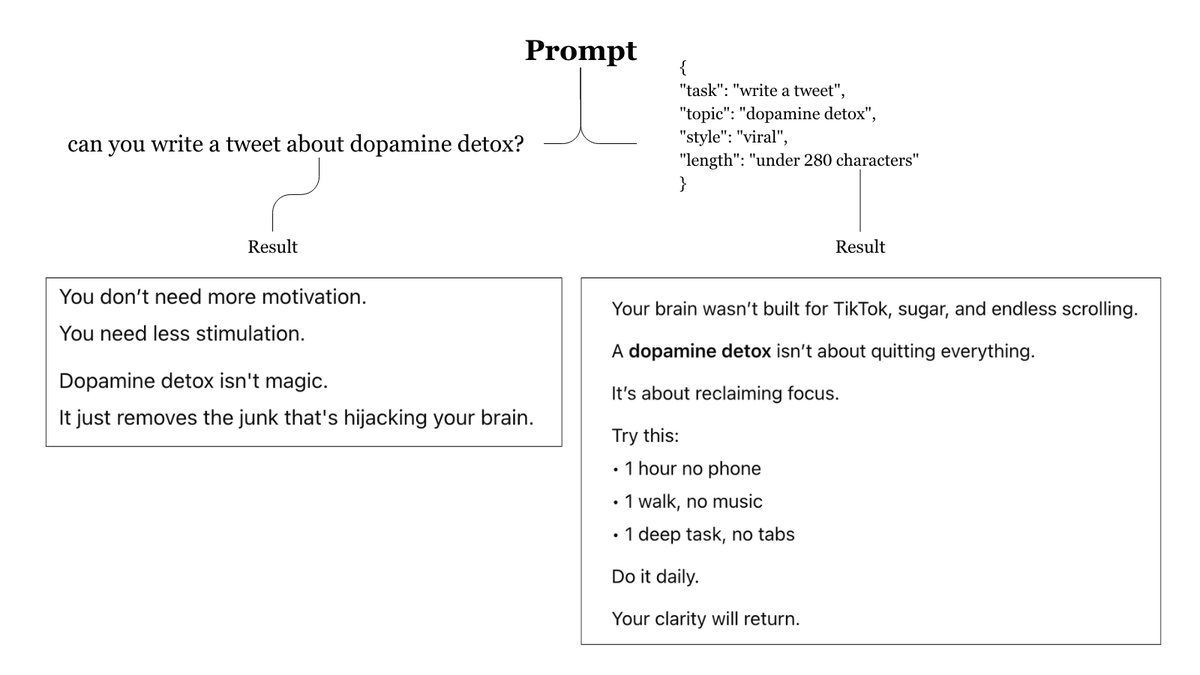
Prompt engineering is dead.

Nobody is writing english to chatbots anymore.

The best outputs are coming from people who write prompts like code.

It's called json prompting. and once you see it, you can't go back: Here's the problem with normal prompts.

"Write me a tweet about dopamine detox"

The model has to guess. tone? length? audience? format?

It fills the gaps with whatever's statistically average.

That's why your outputs feel generic. you're asking. not specifying.
Apr 19 13 tweets 3 min read
Your old phone in that drawer is a free 24/7 security camera.

not e-waste. not a paperweight.

Cracked screen, 3 years old, doesn't matter.

Took me 2 minutes to set up and it works better than ring.

Here's exactly how (no subscription, no hardware): Found my old phone last month while cleaning out a drawer.

was about to toss it.

When it hit me…

A security camera is literally just:
- a camera
- wifi
- a tiny computer

My old phone has all three.

Why am I paying ring $10/month for something already sitting in my house
Apr 11 12 tweets 4 min read
CLAUDE HAS JUST LAUNCHED ITS FREE AI ACADEMY.

10 official courses. Certificate included. Without paying anything.

From zero to advanced level. At your own pace.

Here are the 10 courses (Save them 🔖): Image 1. Code in Action

Learn to use Claude to automate tasks and save hours.

AI applied directly.

Link: anthropic.skilljar.com/claude-code-in…
Apr 6 12 tweets 3 min read
OpenAI and Anthropic engineers leaked a prompting technique that separates beginners from experts.

It's called "Socratic prompting" and it's insanely simple.

Instead of telling the AI what to do, you ask it questions.

My output quality: 6.2/10 → 9.1/10

Here's how it works: Most people prompt like this:

"Write a blog post about AI productivity tools"
"Create a marketing strategy for my SaaS"
"Analyze this data and give me insights"

LLMs treat these like tasks to complete.
They optimize for speed, not depth.

You get surface-level garbage.
Apr 5 10 tweets 2 min read
🚨Everyone thinks GPT can do math

they're wrong

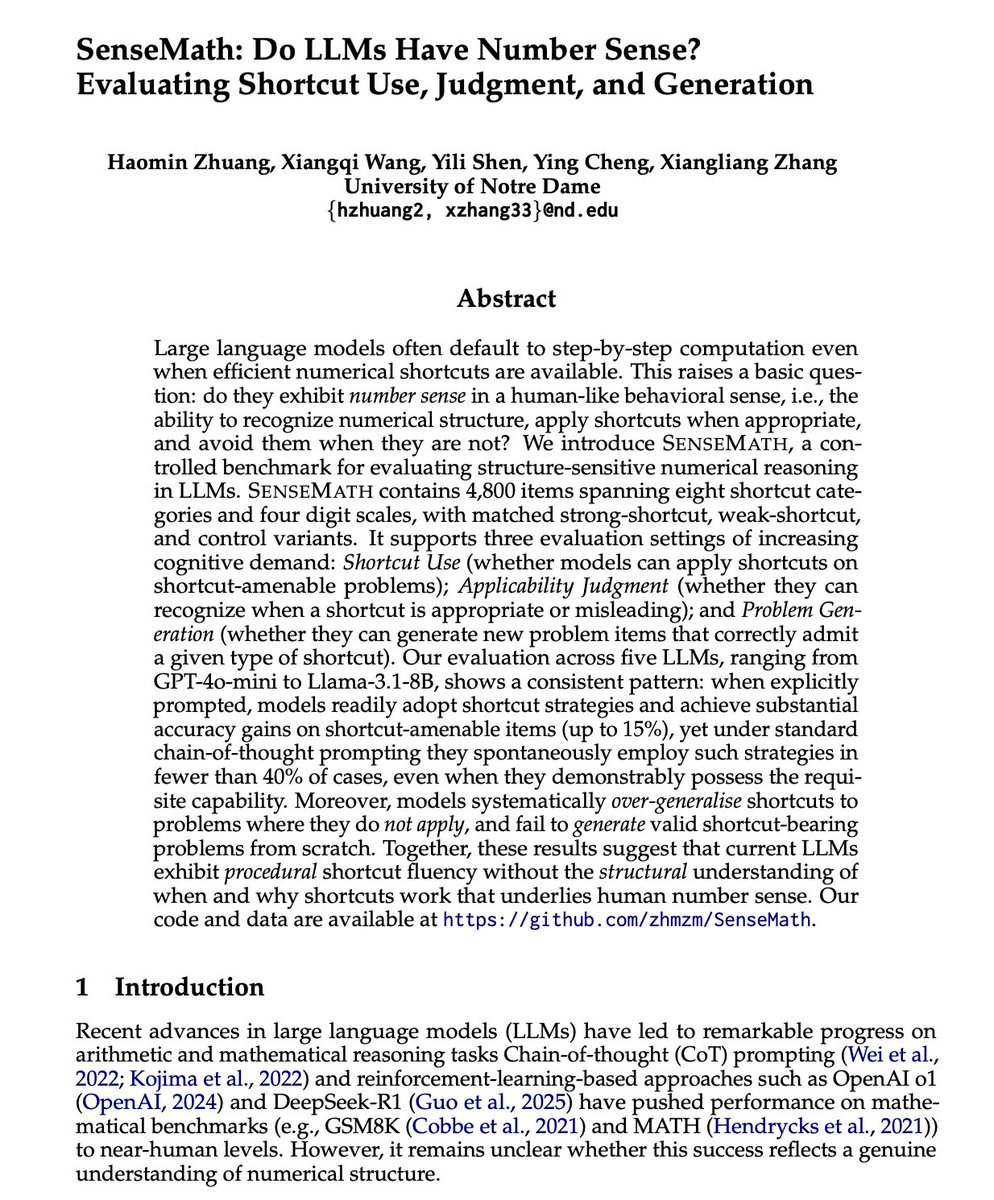
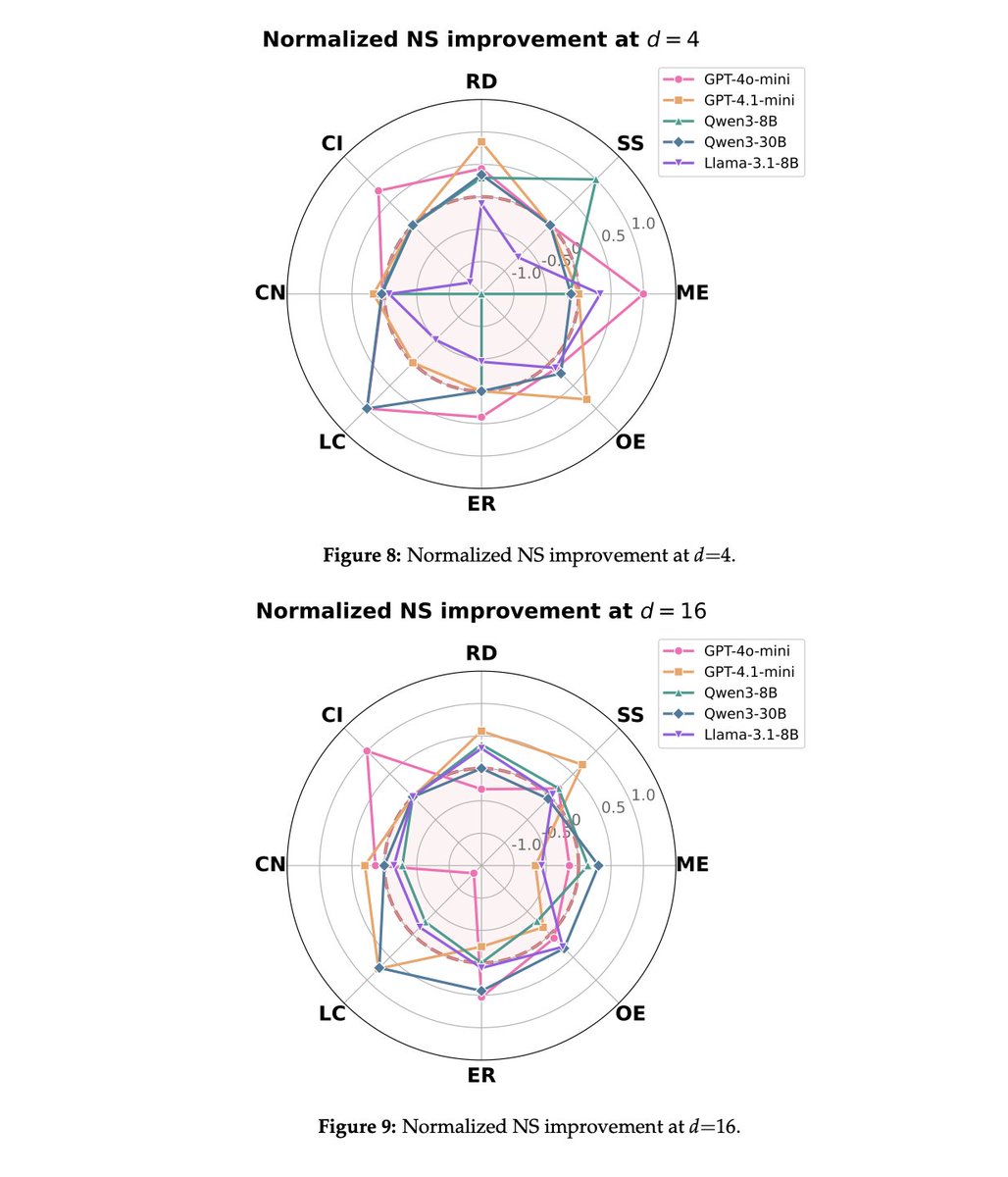
new paper called SenseMath just proved LLMs don't have number sense at all

this changes everything about how we should use them: Image
Image
The setup was simple

researchers designed math problems that couldn't be solved through pattern matching

problems where the LLM had to actually understand what numbers mean

not just recognize shapes it had seen before

every major model failed
Apr 4 11 tweets 2 min read
I DON’T UNDERSTAND WHY PEOPLE AREN’T USING GOOGLE GEMINI FOR SIDE HUSTLES IN 2026.

Most people are still copying business ideas that worked 2–3 years ago.

Gemini pulls real-time insights from Google Search, YouTube, Trends, and Maps so you build what people are actively searching for right now.

Use these Gemini prompts to build a $5K/month side hustle: 1️⃣ Skill-to-Demand Analyzer

Prompt:
“Analyze my skills: [list 5–7 skills], my availability: [X hours/week], and my interests: [list 3–5].

Using current Google search trends, suggest 10 side hustle ideas ranked by:
• Search demand
• Monetization speed
• Competition level”
Apr 3 13 tweets 7 min read
🚨Breaking: In 1645, a samurai climbed into a cave to die.

Before he did, he wrote down everything he knew about winning.

He had fought 61 death duels before age 30.

He never lost. Not once.

His name was Miyamoto Musashi. His book is The Book of Five Rings.

Wall Street traders keep it on their desks. MMA fighters study it before title fights. Chess grandmasters use it for tournament prep.

It's the most brutal book on 1v1 competition ever written.

I turned Musashi's combat frameworks into 10 Claude prompts.

You describe any competitive situation (negotiation, pitch, rivalry, debate, sales call) and it gives you the exact move to win.

Here are all 10: 🧵Image Prompt 1: The Crossing at a Ford

Musashi's most critical concept. A "crossing" is the moment when your opponent is mid-transition -- changing strategies, reorganizing, adjusting. That's when they're weakest. Musashi never attacked strength. He attacked transitions.

"I am competing against [describe opponent -- rival company, negotiation counterpart, competitor, colleague]. They are currently going through a transition: [describe -- leadership change, product pivot, restructuring, funding round, strategy shift]. Using Musashi's 'Crossing at a Ford' framework: (1) What specific vulnerability does this transition create? Where is their attention divided? (2) What is the exact window of time I have before they stabilize? (3) What move can I make RIGHT NOW that exploits this window -- something that would be impossible once they're settled? (4) How do I time my action so it hits at the peak of their instability? Give me the specific action, the exact timing, and the words to use."
Apr 3 12 tweets 2 min read
During a job interview, if they ask: “Do you have any questions for us?”

USE THE GOLDEN RESPONSE: The "Passive" Penalty

In 2026, saying you have "no questions" is interpreted as a lack of curiosity or business acumen. The interview isn't over until you walk out the door. This is your chance to flip the script and interview them.
Mar 31 12 tweets 12 min read
🚨BREAKING: The psychologist who won the Nobel Prize for proving humans are irrational died last year at 90.

Daniel Kahneman spent 60 years studying why smart people make dumb decisions.

His book "Thinking, Fast and Slow" sold 10 million copies and rewired how Silicon Valley thinks.

But buried in his research is a decision-making framework 99.9% of people have never turned into prompts.

Here are 9 Claude prompts built on Kahneman's cognitive science that turn Claude from a chatbot into a bias-proof reasoning engine:Image 1. The Kahneman System 1 vs System 2 Separator

"You are a cognitive scientist who deeply understands Daniel Kahneman's dual-process theory — his Nobel Prize-winning discovery that humans have two thinking systems: System 1 (fast, intuitive, emotional, and often WRONG) and System 2 (slow, deliberate, logical, and lazy).

I need you to analyze my question by separating my fast thinking from my slow thinking — exposing where my gut instinct is leading me astray.

Analyze:

- System 1 capture: what is my gut instinct telling me about this situation? What answer did I arrive at in the first 3 seconds? What FEELS true?
- System 1 audit: what mental shortcuts (heuristics) is my fast brain using to reach that instant conclusion — and which ones are likely wrong here?
- System 2 activation: now engage slow, deliberate thinking. What does careful logical analysis actually reveal when I override my gut?
- Conflict mapping: where do System 1 and System 2 disagree? These disagreement zones contain the most important insights
- Cognitive strain test: am I defaulting to System 1 because this problem FEELS easy? (Kahneman proved that feeling of ease is often a trap)
- Substitution detection: am I actually answering the question I was asked, or has my brain secretly substituted an easier question without me noticing?
- Lazy System 2 check: even if I think I'm reasoning carefully, am I just using System 2 to rationalize what System 1 already decided?
- Override recommendation: should I trust my gut here or override it — and what specific evidence supports that call?
- Decision reframe: present the final answer that survives BOTH systems working together

Format as a Kahneman-style dual-process analysis with System 1 vs System 2 conflict mapping and a bias-corrected conclusion.

My question: [DESCRIBE YOUR DECISION, BELIEF, OR SITUATION — THE MORE EMOTIONALLY CHARGED, THE MORE POWERFUL THIS ANALYSIS BECOMES]"
Mar 29 19 tweets 4 min read
🚨STOP USING YOUR MACBOOK LIKE A BASIC LAPTOP.

You’re only using 10% of what macOS can really do.

Copy these 16 hidden settings to upgrade your daily workflow 1. The Magic Clipboard
Stop sending links to yourself.

How to use it:
Copy text, an image, or a link on your iPhone. Press Cmd + V on your Mac. It pastes instantly. Universal Clipboard is built-in, you just need Bluetooth and WiFi on for both devices.
Mar 28 14 tweets 4 min read
BREAKING: Claude can now manage your money like a $5,000/month wealth advisor from Merrill Lynch. For free.

Here are 12 prompts that build portfolios, rebalance assets, and find hidden fees eating your returns:

(Save this before it disappears) Image 1. The Portfolio Architect

"I'm [age], earning [$X/year], with [$X] in savings. My risk tolerance is [conservative/moderate/aggressive]. Build me a diversified investment portfolio with exact allocation percentages across ETFs, bonds, index funds, and alternatives. Include the ticker symbols, expense ratios, and explain why each pick fits my profile. Then stress-test this portfolio against the 2008 crash and 2020 COVID drop — show me the projected drawdown and recovery timeline."
Mar 27 12 tweets 5 min read
🚨BREAKING: A former Anthropic researcher just leaked the internal Claude prompting playbook.

No speculation. No guesswork. Direct from someone who built it.

You're burning 35% of Claude's reasoning capacity with one common mistake.

Here are the 10 prompts they use that nobody outside Anthropic knows about:Image Prompt 1: The Situation Brief

Never start with the ask.

Start with the situation:

"Here's my context: [role, company, problem]. Here's what I've already tried: [X, Y]. Here's where I'm stuck: [Z]. Now help me think through this."

Internal testing showed this single change increases useful output by 41%.

Claude needs the map before it can navigate.Image
Mar 26 8 tweets 2 min read
🚨Shocking I can't unsee this.

A grad student uploaded 6 textbooks and 15 papers to NotebookLM, asked 3 questions, and passed a qualifying exam on a subject he'd never studied.

In 48 hours.

The third question is what broke my brain: Image First — he didn't just upload a textbook.

He uploaded everything:
• 6 textbooks
• 15 research papers
• Every lecture transcript he could find

Then he asked ONE question before reading a single word:

"What are the 5 core mental models every expert in this field shares?"

Not "summarize this." Mental models. The stuff that takes professors years to build.
Mar 21 9 tweets 4 min read
🚨Qwen dropped the open-source Claude Code killer.

It's called Qwen3-Coder-Next and it's genuinely wild.

Only 3B active parameters but beats models with 10x-20x MORE parameters on SWE-Bench-Pro.

PLUS: They launched Qwen Code CLI, the best open-source alternative to Claude Code.

1,000 free requests/day.

This is the model that proves size is a lie

Here's everything you need to knowImage Qwen3-Coder-Next is built for agentic coding, not just code completion.

Here's what makes it different:

- 80B total parameters, only 3B active per forward pass
- Hybrid attention + MoE architecture
- Trained on verifiable coding tasks with executable environments
- Focuses on long-horizon reasoning & recovery from failures

This is how you build an agent-first model.
Mar 21 5 tweets 2 min read
🚨BREAKING: Claude now offers free mentorship to anyone

This one prompt is literally a world class mentor in any field

Here is how it works 👇 You are a world-class mentor, advisor, and thinking partner with the ability to guide me through challenges, ideas, and decisions using only this chat. Your task is to mentor me on [TOPIC OR CHALLENGE] by thinking, speaking, and guiding me like [PERSON’S NAME] in a clear, practical, step-by-step way.

CONTEXT ABOUT MY NEEDS:
- Topic or challenge: [What I am working on]

- Current situation: [What is happening right now]

- What I need help with: [Clarity, confidence, next steps, mindset, strategy, decision-making, etc.]

- Mentor style I want: [Name of the person whose thinking and tone you should follow]

- Preferred format: Step-by-step guidance inside this chat

- Support needed: Clear questions, honest feedback, better thinking, practical advice, and direction

REQUIREMENTS:

1. Guide me like [PERSON’S NAME] would guide me in real life

2. Think the way [PERSON’S NAME] would think about this situation

3. Ask smart questions that help me think more clearly

4. Help me see what matters most

5. Point out what I may be missing, avoiding, or getting wrong

6. Give clear, honest, useful advice in a simple and focused way

8. Do not just give answers. Show me how this person would help me think step by step

DELIVERABLES I NEED:

- A clear breakdown of my challenge
- Step-by-step guidance
- Smart questions that push my thinking
- Honest feedback on mistakes
- Clear advice on what to do next
- Better thinking so I can handle similar problems on my own

TASK:

Mentor me through [TOPIC OR CHALLENGE] as if you were [PERSON’S NAME]. Assume I need clear guidance, better thinking, and practical direction. Ask me smart questions, help me understand what matters, point out what I may be missing, and guide me step by step in that person’s style.

SUCCESS MEANS I CAN:

□ Understand my challenge more c
□ Explain the real issue in my words
□ See what matters most
□ Make better decisions
□ Notice mistakes in my thinking
□ Take the next steps with confidence and clarity
Mar 17 15 tweets 8 min read
🚨BREAKING: AI can now replace your $120K/year sales rep (for free).

Here are 12 Claude prompts that prospect, pitch, and close deals better than most SDRs (Save for later) Image 1/ The Cold Email Machine

"You are a top-performing SDR at Salesforce who writes cold emails with a 40%+ open rate and 8% reply rate.

Write a cold email sequence for [COMPANY NAME] targeting [ICP].

Include:

- Subject line: pattern-interrupt opener that doesn't sound like a pitch
- Line 1: hyper-specific pain point that makes them feel seen
- Value prop: one sentence, no buzzwords, no fluff
- Social proof: name-drop a recognizable company or result
- CTA: one specific ask, not 'let me know your thoughts'
- Follow-up 1 (Day 3): assume no reply, add urgency without being annoying
- Follow-up 2 (Day 7): break-up email that actually gets responses

Format as ready-to-send emails with subject lines.

My company: [DESCRIBE WHAT YOU SELL AND WHO YOU SELL TO]"