Massive goth- arachnologist, taxidermist, illustrator, jeweller, plant hoarder & collector of Victoriana. ND/FMS 🕷🔬🕸 🌿
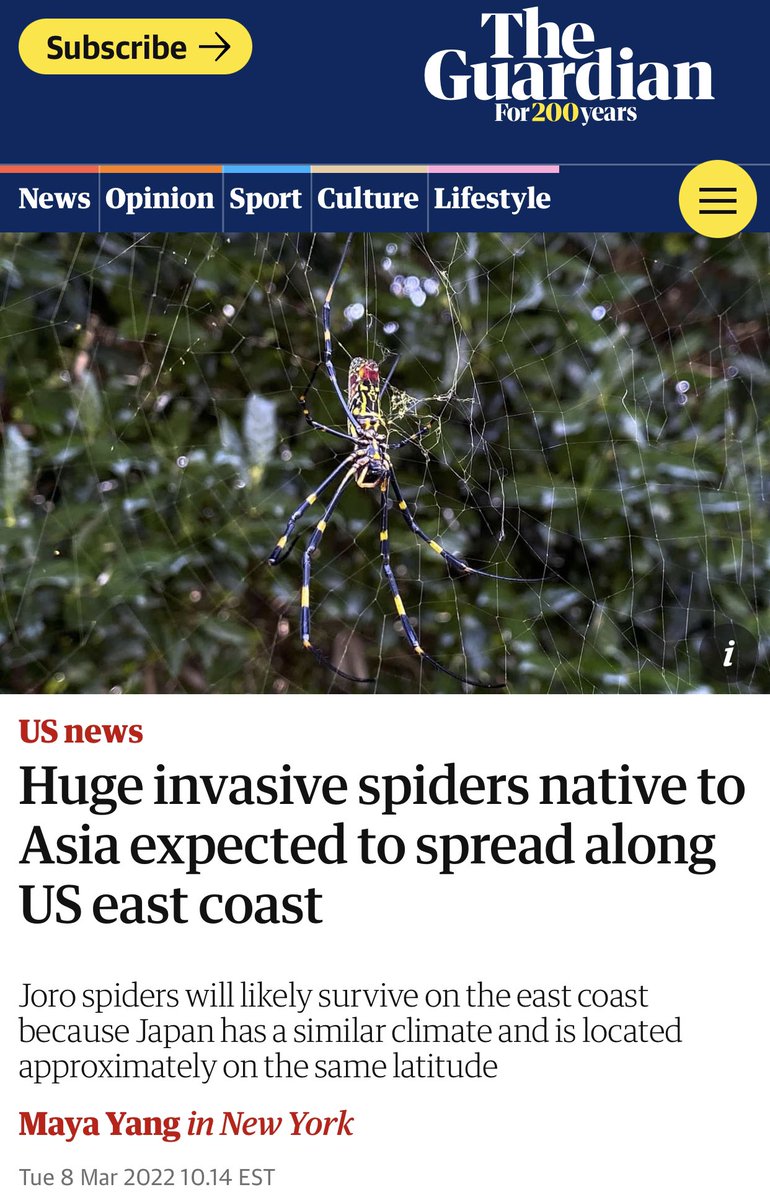 Trichonephila clavata, one of several species commonly known as golden orb weavers, is a large species of orb weaving araneomorph spider originating from Japan, Korea, Taiwan & China. It is also known as the Joro spider & has actually been in the USA for nearly a decade already.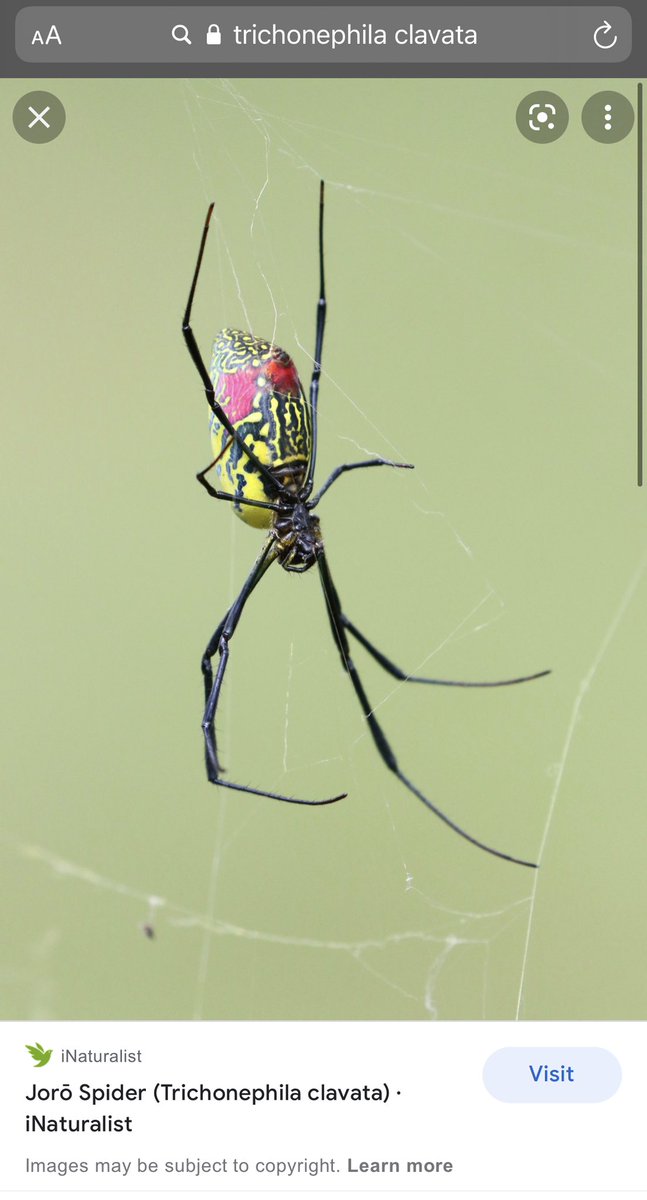


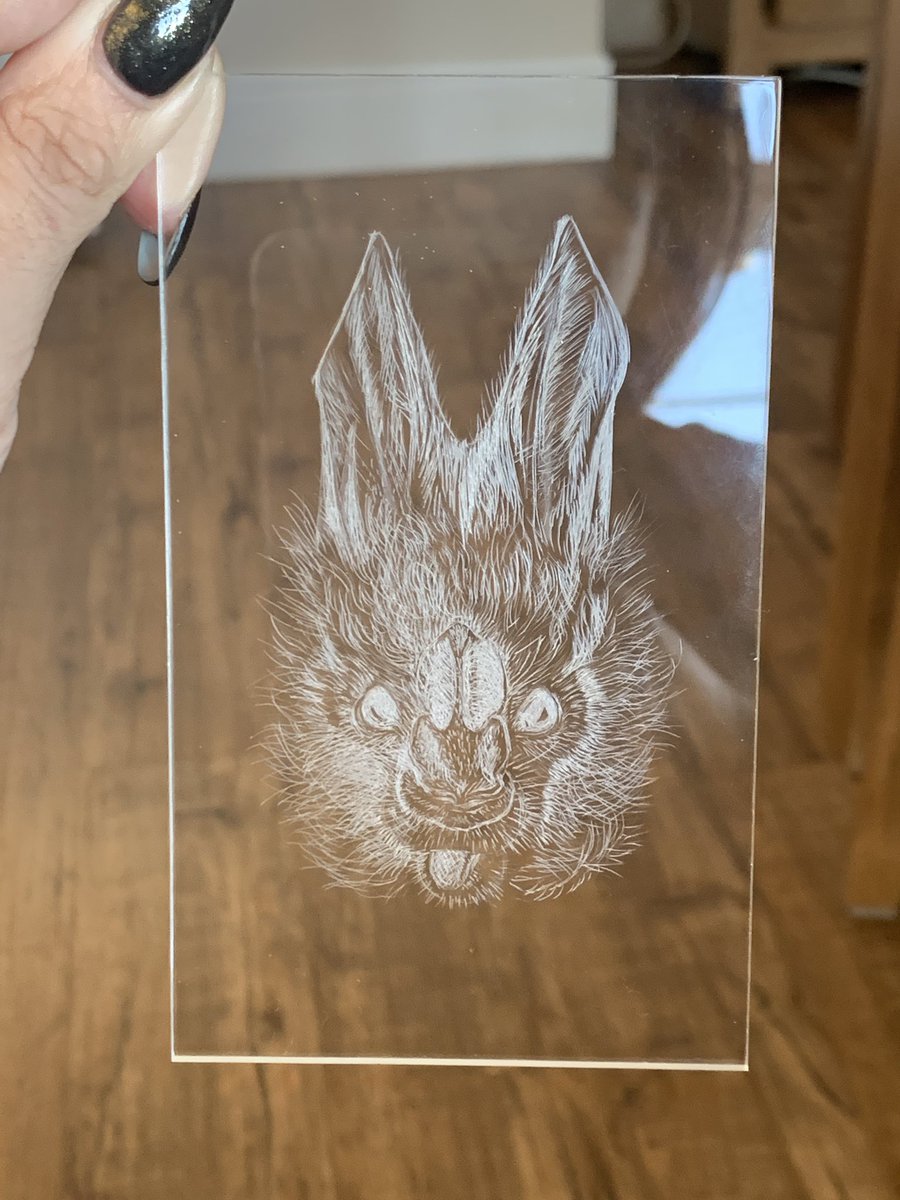
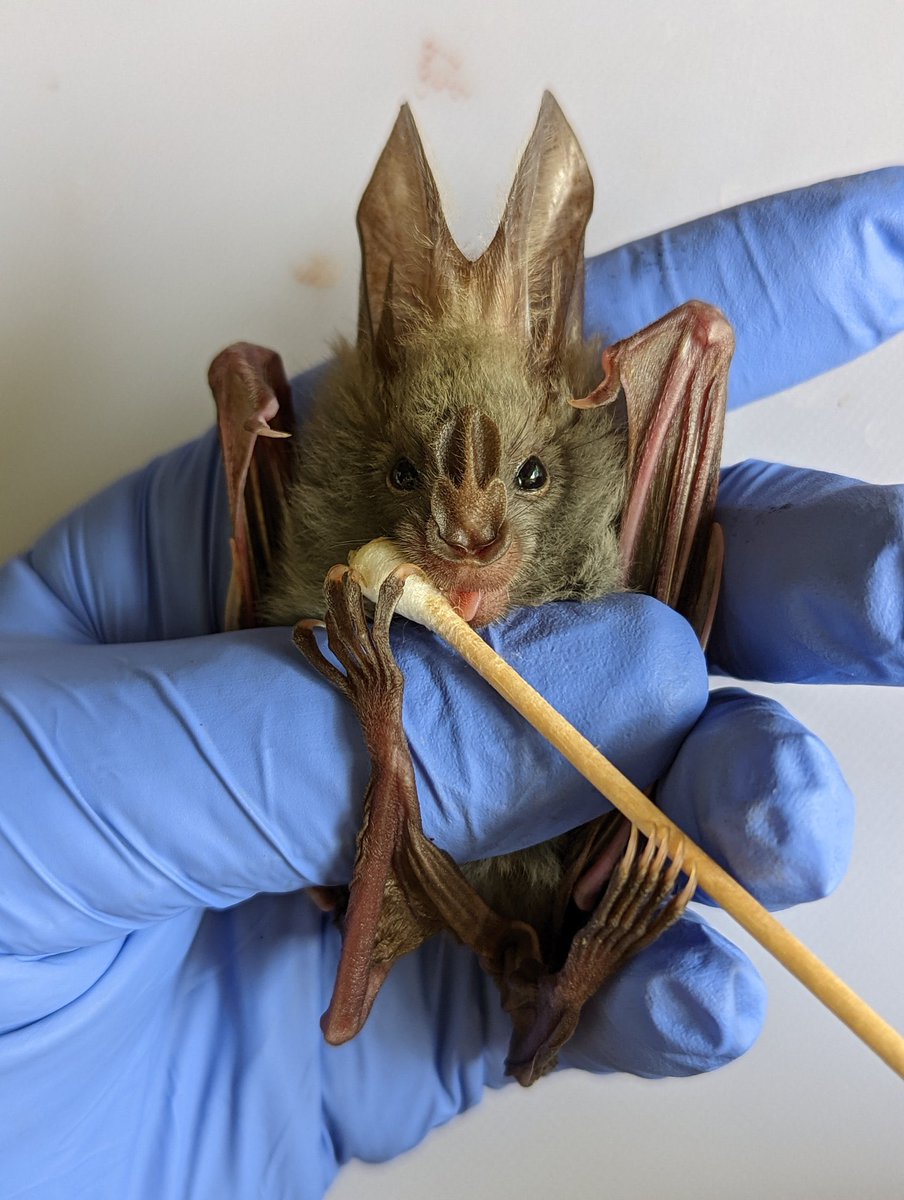 Thanks for permission to use your photo as reference @lunn_tamika!

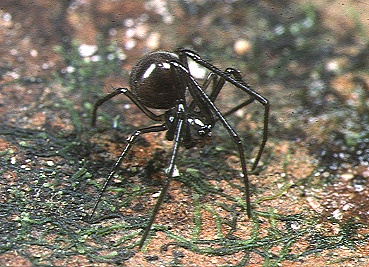 They occur worldwide, but mostly S. America, Africa, Asia & Australia/NZ. A few species are found in Europe and North America as well. (Image: Micropholcomma sp. by tjeales on iNat, CC)
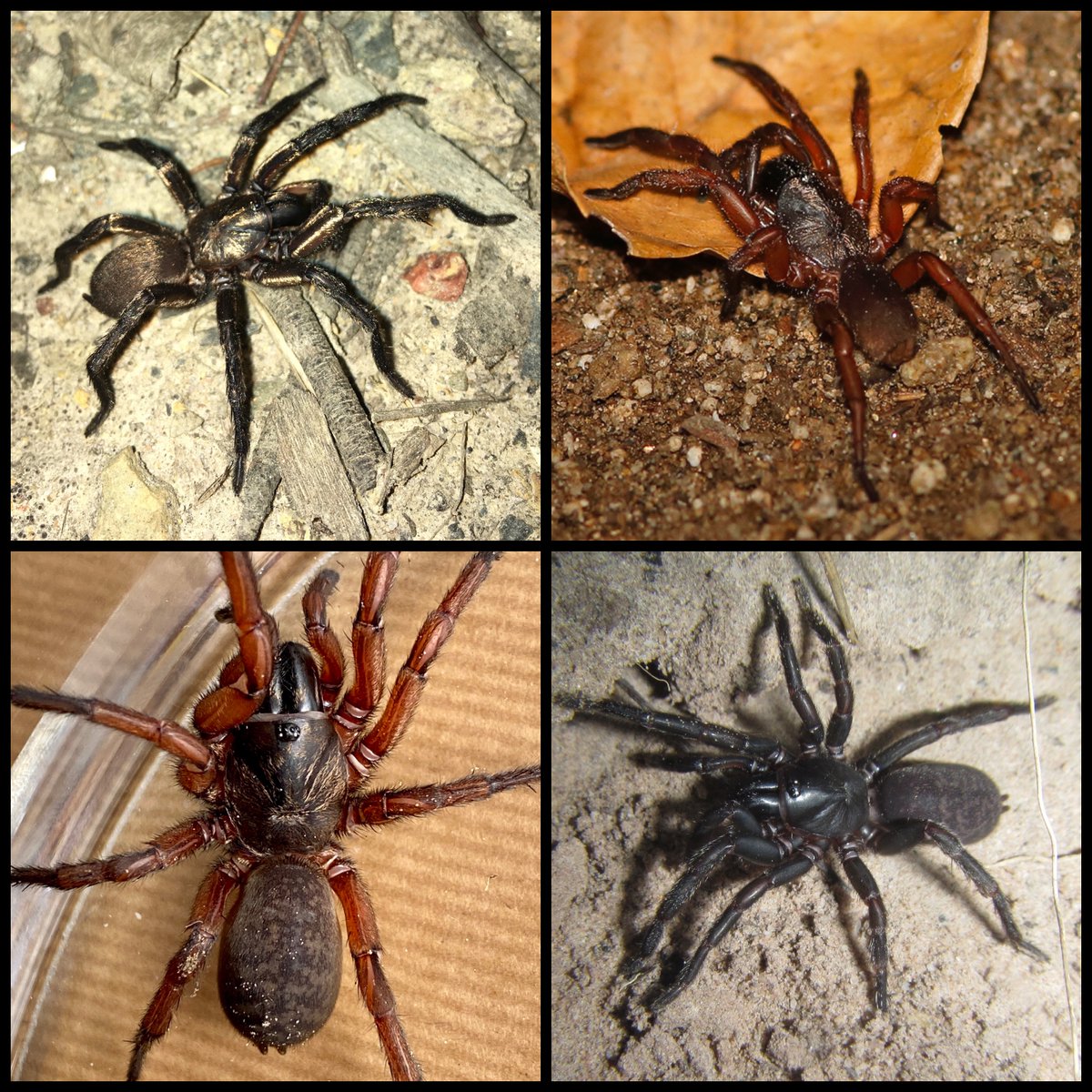 This family comprises 10 genera/104 species. These are mygalomorph spiders, an infraorder containing tarantulas, trapdoors, funnel webs, curtain webs & others characterised by their downward pointing chelicerae & fangs (& other things). (Chenistonia maculata by matthew_connors)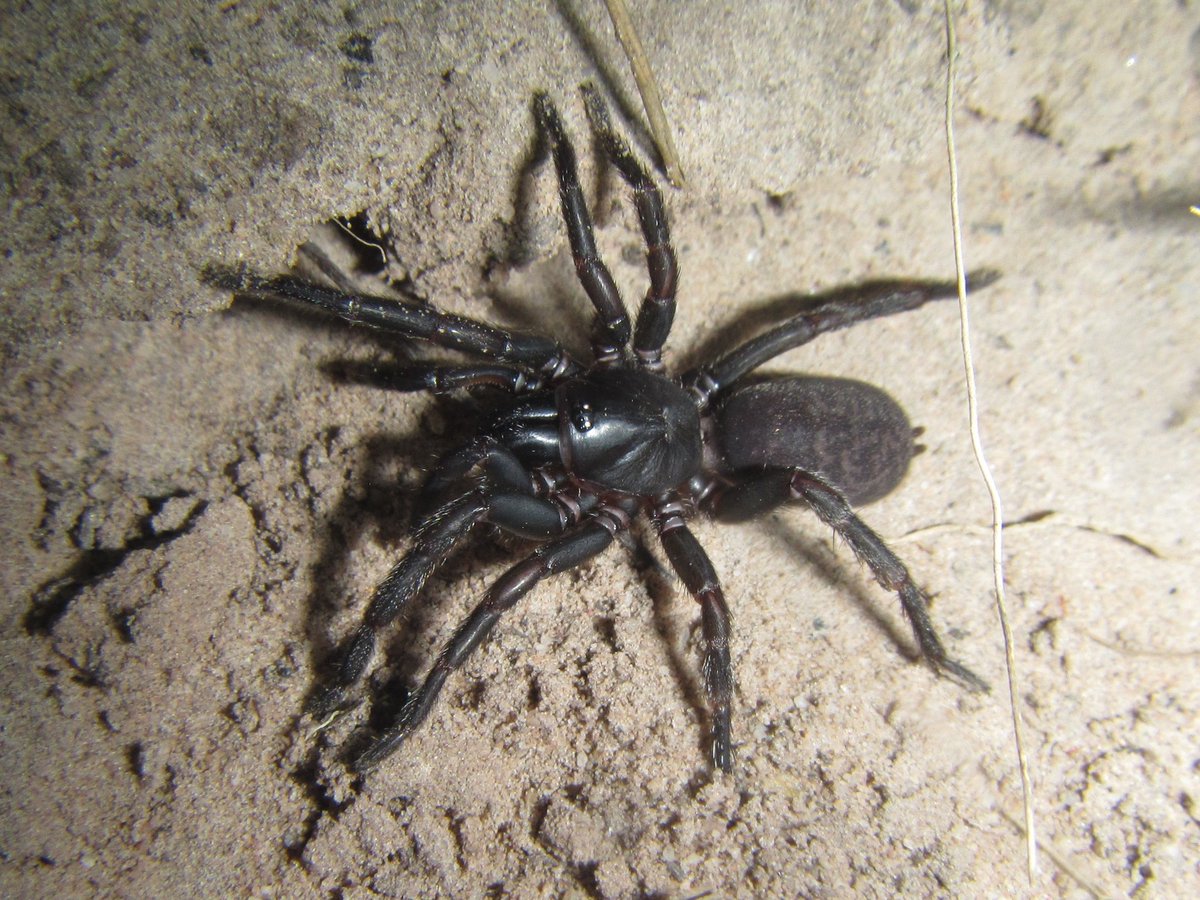
 Ammoxenidae are commonly known as termite hunters. They are found in Africa & Australia, living on sand dunes, savannahs & bushland in both arid & tropical areas. They actively hunt for termites & when they're not hunting, they dig themselves into the sand. (Img: iNat cecileroux)
 Amaurobiid spiders are generally quite rounded & velvety looking, not too vibrant or brightly coloured in most cases (though as you can see here, A. similis does try!), vary in size from 5-30+mm body length, & tend to inhabit cracks, crevices & other sheltered spots. (Pic: mine)
 Agelenid spiders vary quite a lot in appearance from genus to genus, but generally can be identified by eye arrangement (see my awful pic), web type/habitat & shape of cephalothorax... though, as always, there are some that do not fall in line with this which makes things fun 😂
 Actinopodidae can be found in Australia and Central & South America. They are considered medically significant, which means their venom is potentially dangerous. Overall, they are heavy set, impressive looking spiders, usually with a stocky legs, large chelicerae & fangs.
 The spider has burrowed down in such a way that I have a window into its moult chamber. The whole thing is lined with silk, but most amazing of all is the protective measure it has taken to deter any would be attackers from disturbing it while it’s in its most vulnerable state.
 Then I saw that what I actually had was a male & female & he had pounced on her to mate with her. What was most remarkable about this was the total lack of any kind of courtship behaviour or caution in approaching her. He just got straight down to it as soon as he got a chance.