
tetsuo Profile picture
ℭ & 𝔄𝔰𝔰𝔢𝔪𝔟𝔩𝔶 𝔰𝔦𝔫𝔠𝔢 ’94
5 subscribers
Dec 6 4 tweets 3 min read
🎨 The Grok Imagine Prompting Cheat Sheet

Stop letting AI guess your camera angles.

Most people prompt "Cool cyberpunk character" and get the same boring medium shot every time. To get cinematic results, like the shots in the video below, you need to speak the director's language.

I broke down the specific Shot Types into a copy-paste formula for Grok.

⚠️ Pay attention to the "Mistake" section at the bottom, it solves the two most annoying AI habits.

Steal the cheat sheet below. 👇

Formula: (Shot Type) + (Art Style) + (Character) + (Clothing) + (Style Details)

1. 📐 Shot Type (The Frame)

• Establishing Shot: Far away, environment focus.

⚠️ PRO TIP: If the AI zooms in too close, describe your character as a "tiny silhouette" to force the camera back.

• Full Shot: Head to toe. Best for showing off outfits.

⚠️ PRO TIP: If it cuts off the legs (landscape mode), describe the boots and the floor to force the full frame.

• Medium Shot: Waist up. The standard "dialogue" shot.
• Close-Up: Head and shoulders. Focuses on emotion.
• Extreme Close-Up: Macro focus on a specific detail (eye, ring, scar).

2. 🎨 Art Style

• 90s Anime Cel-Shaded
• Cinematic 35mm Film Photography
• Digital Concept Art (Unreal Engine 5)
• Dark Fantasy Oil Painting

3. 👤 Character

• Cybernetic Street Samurai
• High-Elf Diplomat
• Noir Detective

4. 🧥 Clothing

• Holographic flight jacket
• Tattered ceremonial robes
• Tactical ballistic vest

5. ✨ Extra Style Details

• Volumetric fog & God rays
• Golden Hour lighting
• Film grain

📋 Copy-Paste Examples

• The Scene Setter (Establishing Shot): "Extreme wide establishing shot of a massive fantasy metropolis built into a cliffside. In the distance, a tiny silhouette of a traveler stands on a bridge. Cinematic lighting, epic scale."

• The Outfit Showcase (Full Shot): "Full shot of a 90s Anime style Mech Pilot wearing an orange flight suit and heavy magnetic boots, standing on the concrete hangar floor. Cel-shaded details, industrial lighting."

• The Emotion (Close-Up): "Close-up of a Hyper-realistic Soldier, intense stare, mud splatters on face, 8k resolution, dramatic shadows."

🛑 Troubleshooting: Common Mistakes & Fixes

Mistake #1: The "Vanity" Zoom (Establishing Shot)

❌ Bad Prompt: "Establishing shot of a Cyberpunk hacker wearing a black trench coat with blue neon circuit patterns, high collar, and tactical gear."

Why it fails: You described the clothing details too much. The AI panicked and zoomed in to show you the "neon patterns," ignoring your request for a wide shot.

✅ The Fix: "Extreme wide establishing shot of a massive Cyberpunk city. In the distance, a tiny silhouette of a hacker stands on a rooftop." (Describe the environment, not the clothes).

Mistake #2: The "Missing Legs" (Full Shot)

❌ Bad Prompt: "Full shot of an anime pilot standing in a hangar."

Why it fails: In landscape images, AI hates leaving empty space on the sides. It naturally zooms in to the waist (Cowboy Shot) to fill the frame, cutting off the feet.

✅ The Fix: "Full shot of an anime pilot wearing heavy magnetic boots, standing on the concrete hangar floor." (Describe the footwear and the ground to force the AI to render the bottom of the image).
Oct 30 16 tweets 39 min read
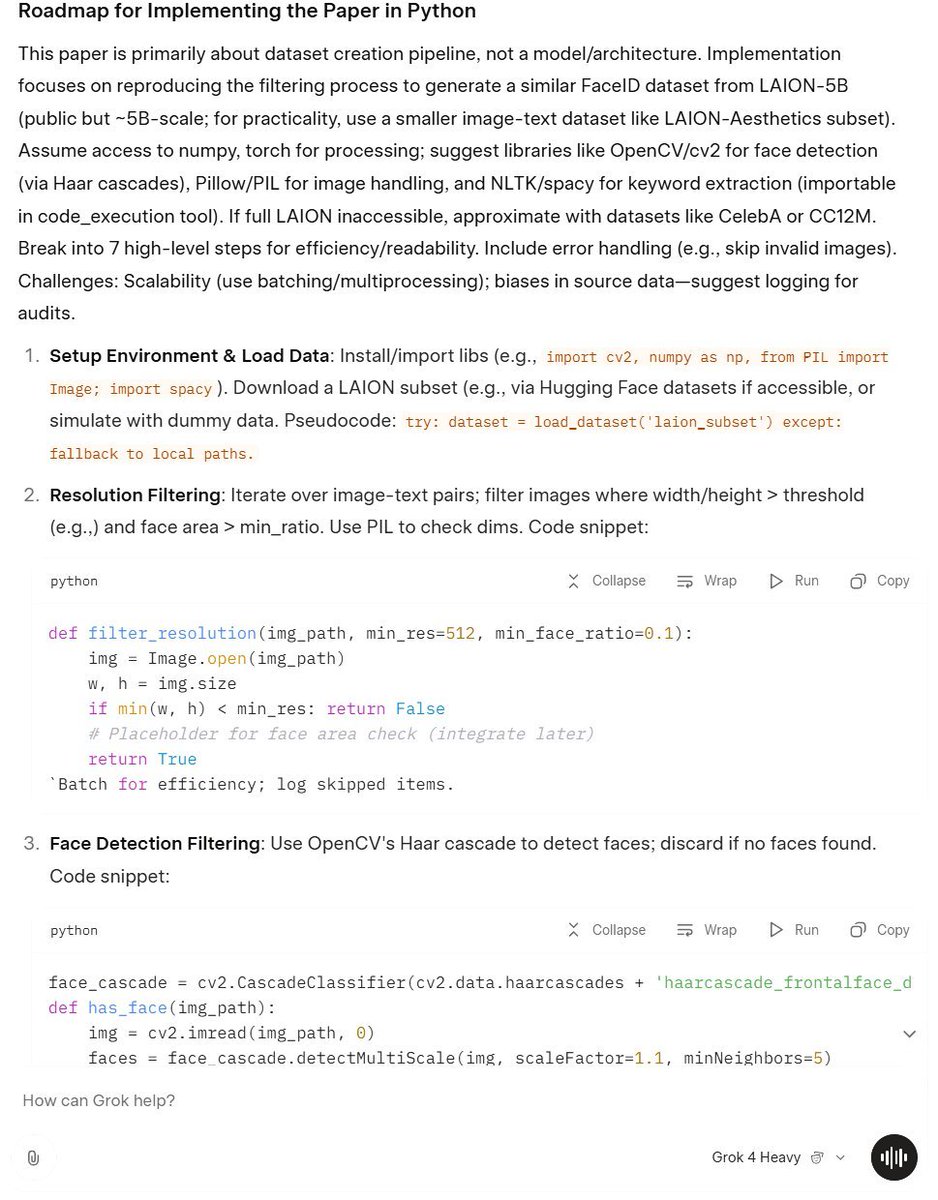
Prompts I Use to Write Software with Grok.

👇A thread (Updated Over Time). Typical Grok-Code-Fast Web-Stack

Language:
• TypeScript
Frontend:
• React
• Tailwind CSS
• Next.js
Backend:
• Next.js (API Routes with Edge Runtime for low-latency AI calls)
• Vercel Postgres
○ Database (fully managed PostgreSQL with seamless Next.js integration via @ vercel/postgres SDK)
• Auth.js (formerly NextAuth.js)
○ Authentication (handles user auth, sessions, and providers like Google/OAuth; stores user data in Vercel Postgres)
• Stripe
○ Payments
• Vercel AI SDK (@ vercel/ai)
○ Integrates AI models via Vercel AI Gateway for unified access to providers (e.g., Grok) without managing individual API keys or rate limits
○ Supports streaming responses, hooks like useChat/useCompletion, and server-side generation in API routes
Deploy:
• Vercel
○ Full integration with Vercel features: Serverless/Edge Functions, automatic scaling, previews, analytics, and AI Gateway for proxying AI requests with caching, logging, and failover
○ Native support for Vercel Postgres with one-click setup, automatic backups, and scaling
Oct 15 7 tweets 15 min read
Grok Imagine Video Animation Cheatsheet

This Grok Imagine cheatsheet, will give you tips on creating cinematic video clips with lifelike motion.

There are six threads in this cheatsheet:

🧵1-5. 20 detailed example prompts combining multiple techniques for various scenarios.

🧵6. A categorized list of camera movements, shot types, lighting techniques, post-production effects, on-set operator calls, audio/sync options, and output settings with brief.


Dramatic Portrait Reveal* (For a close-up face photo: Creates an emotionally charged reveal with glowing edges and soft focus shifts, ideal for personal branding or character-driven social media posts.):
cinematic lighting, focus pull, depth of field, motion blur, lens flare, bokeh, rim lighting, slow motion, smooth tracking.

Epic Landscape Sweep* (For a mountain or cityscape image: Delivers a breathtaking view with dynamic camera motion, perfect for travel promotions or environmental showcases on platforms like Instagram.):
360 orbit shot, dolly-out, golden hour lighting, god rays, volumetric lighting, parallax effect, wide-angle lens, crane shot up, time-lapse, HDR effect.

Intense Action Sequence* (For a dynamic figure or vehicle image: Builds high-energy action with gritty realism, widely used for sports clips, gaming promos, or adventure trailers on YouTube.):
handheld micro-shake, whip pan, zoom-in, motion blur, hard lighting, particle effects, physics simulation, fast motion, cuts to, chromatic aberration.

Romantic Night Scene* (For a couple or urban night shot: Crafts a dreamy ambiance, popular for romantic reels or urban nightlife posts on social media.):
soft lighting, bokeh, neon lighting, dolly-in, arc shot, reflections, bloom, blue hour lighting, crossfade, audio sync.


Oct 11 6 tweets 4 min read
In this small thread, I'll break down how you can create full-length movies or anime with Grok 4 Imagine.

This entire video was created with Grok4 Imagine and a video editor. 1/n


The first thing you'll want to do is come up with a prompt for your 'characters' from a storyboard you have created.

I built a free-to-use app that uses AI to take a generic prompt or image and provide an optimized prompt that will work well in Grok Imagine.grokprompt.fun
Mar 2 18 tweets 4 min read
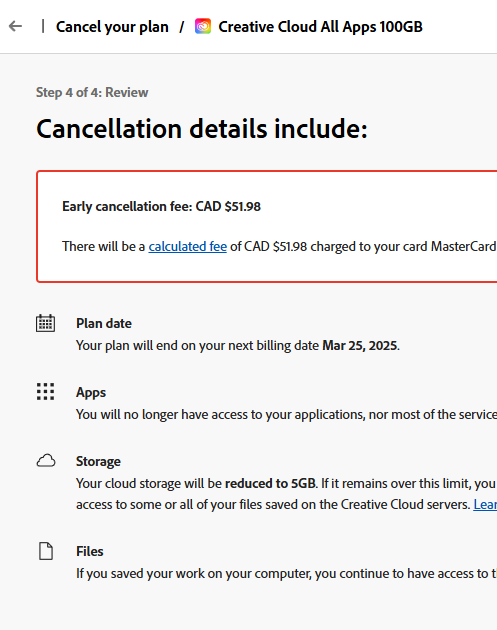
Adobe Fuck you, you snakes. Who charges people for canceling a subscription? Image @Adobe Do better.
Feb 9 5 tweets 8 min read
🧵0/3 Here's why we are building the AgenC open source AI agent framework entirely in C and how it will revolutionize edge computing and embedded AI.

👇This thread is worth reading. 🧵1/3 Market Impact & Adoption Potential

Shift in Edge Computing and IoT AI: An open-source C AI agent framework will be a game-changer for edge AI deployment. By enabling sophisticated AI models to run on inexpensive, low-power hardware, it will allow AI processing to be pushed out closer to sensors and end-users. This reduces reliance on cloud computation, lowers latency, and improves privacy (since raw data need not leave the device). Industries are already keen on on-device AI – the Edge AI market is booming, projected to grow to $270+ billion by 2032. A lightweight, efficient framework is exactly what's needed to unlock AI use-cases in this space, from smart home appliances to industrial IoT sensors. For example, imagine intelligent monitoring on a microcontroller that can detect anomalies in machinery in real-time, or tiny medical wearables that run neural networks locally. Today, these are often implemented with highly optimized C/C++ inferencing libraries (like TensorFlow Lite Micro, or vendor-specific libraries) because Python frameworks are too heavy. A dedicated C agent framework, especially since it's open-source, will become the standard for these edge scenarios. Analysts predict TinyML (tiny machine learning on microdevices) will explode in the coming years – device installs are expected to rise to over 11 billion by 2027. The AgenC framework will be poised to ride that wave, enabling AI on billions of devices that were previously too resource-constrained for anything beyond trivial logic.

Open-Source Innovation & Industry Collaboration: By being open-source, the AgenC C-based AI framework would benefit from collective innovation. Many organizations in performance-critical industries (automotive, robotics, aerospace, healthcare devices, etc.) have specialized needs that aren't fully met by one-size-fits-all frameworks. With an open project, they could contribute code for optimizations, new hardware backends, or domain-specific features. This collaborative development can dramatically accelerate the project's evolution. History shows that open-source projects often innovate faster and dominate their domains – Linux, for instance, became the ubiquitous OS through community contributions. In the AI domain, the open-source ethos is already seen as crucial for progress. Most people in the tech community believe that OSS fosters a collaborative environment and accelerates AI innovation. By lowering the barrier for anyone (companies, academics, hobbyists) to inspect and improve the code, the framework will quickly gain powerful features and optimizations that a single team can not develop alone. Open availability will also democratize AI deployment know-how. Small startups or research labs can use the framework to run state-of-the-art agents on cheap hardware, driving further creative applications. Essentially, an open-source C AI framework could become a community-driven standard for embedded AI, much like how OpenCV became a standard library for computer vision in C/C++. This broad participation would not only improve the framework rapidly but also increase trust and adoption in enterprise settings (since many eyes have vetted the code, and no single vendor "owns" it).

Advancing AI in Embedded & Constrained Environments: Perhaps the most exciting potential impact is how the framework could expand the frontiers of where AI can be deployed. Today's cutting-edge AI models mostly live in the cloud or on powerful edge devices (like GPUs in cars or phones). A robust C framework will bring advanced AI to far more constrained settings. Think microcontrollers running reinforcement learning for adaptive control, or tiny drones with onboard neural navigation. We're already seeing hints of this – researchers managed to deploy a deep reinforcement learning policy on a microcontroller-powered nano-drone by writing a custom C inference library, something that general frameworks couldn't handle. With a dedicated framework making this easier, we could see a new class of "smart" embedded agents. This could transform products and industries: smart sensors that don't just report data but analyze it on-site, medical implants that adjust therapy in real-time via AI, or spacecraft and autonomous robots that need ultra-reliable, real-time onboard decision making without bulky runtime environments. By optimizing for minimal memory and maximal efficiency, the C framework would empower developers to squeeze AI into devices and scenarios that were previously off-limits. And because it's open-source, educational institutions and hobbyists could also experiment freely, accelerating the spread of AI into every corner of the physical world.
Feb 4 21 tweets 4 min read
🧵1/19 DeepSeek lied about it's costs.

DeepSeek R1's training did not actually cost only $6 million, that figure was an incomplete and selective representation of the costs. They also have access to around 50,000 Hopper GPUs.

Here's proof.👇 🧵2/19 Officially, the company reported $5.5M in GPU compute for a single training run, but it left out the massive investments in hardware and development that were required to make that run successful.
Jan 30 10 tweets 5 min read
🧵0/9 Stanford Intro Reinforcement Learning, from generalization to advanced deep RL. Full videos, assignments, and a final project.

Prereqs:
- Programming knowledge.
- Derivatives & matrix vector operations.
- Probability and Stats.
- Foundations of ML.

Links in comments👇 Image 🧵1/9
Full playlist: youtube.com/playlist?list=…

CS234: web.stanford.edu/class/cs234/in…

👇Projects in 2/9 ... 9/9
Jan 27 4 tweets 1 min read
🚨 Important Notice for Crypto/AI Investors: 🚨

If you see projects claiming "DeepSeek AI Integration," there are serious red flags to consider.

Technical Reality:

DeepSeek-R1 lacks fundamental features needed for - real applications.

- No function calling capability
- Can't interface with external systems
- Limited multi-turn interactions
- No API integration support

Integration Impossibility:

- Without function calling and API support, meaningful integration into other projects is impossible
- Even GPT-3.5 from 2022 has more practical utility for real applications

Market Context:

Projects claiming DeepSeek integration are likely:

- Misrepresenting technical capabilities
- Lacking technical understanding
- Using buzzwords without substance

Bottom Line:

DeepSeek-R1 is a research model showing interesting results on benchmarks, but it cannot be meaningfully "integrated" into applications due to fundamental technical limitations.

Any project claiming otherwise raises serious concerns about their technical credibility and transparency.

Remember:

Real AI integration requires specific technical capabilities that DeepSeek-R1 explicitly acknowledges it doesn't have! Using R1's reasoning outputs as prompts = potentially viable. Claiming full "DeepSeek AI integration" = still misleading if the project needs actual function calling or API integration.
Oct 5, 2024 4 tweets 3 min read
🧵1/3 Operating Systems: Three Easy Pieces is one of the best ways to learn OS concepts.

The book, along with online resources, homework, projects, and video lectures, is completely free.

I've also dropped some playlists to follow the book.

👇Book and resources in comments. Image 🧵2/3 free online book, in chapter-by-chapter form: pages.cs.wisc.edu/~remzi/OSTEP/

Errata and Book News: pages.cs.wisc.edu/~remzi/OSTEP/c…

👇Lecture videos, homework, projects. Image
Oct 4, 2024 4 tweets 2 min read
Pain-text linux socket cheatsheet for the C programming language.

👇Repository with the ASCII in comments. Image Git: github.com/7etsuo/windows… (you'll want to grab socket-cheatsheet.txt)

Raw: raw.githubusercontent.com/7etsuo/windows…
Oct 1, 2024 5 tweets 2 min read
🧵1/n Jerry Cain from Stanford University explains pointers and structs in C, showing a clever way to access struct fields. This series is one of the best resources online for C programming.

Source: Stanford University

👇 Lectures with handouts, assignments, and videos. 🧵2/n Stanford Engineering Everywhere | CS107 - Programming Paradigms:

👇Video Series. see.stanford.edu/Course/CS107
Image
Aug 3, 2024 4 tweets 2 min read
🧵1/2 MIT's Charles Leiserson covers the progression from source code to compilation, machine code, hardware interpretation, and ultimately, execution.

👇Full MIT Performance Engineering of Software Systems Course 👇 🧵2/2
The course programming language is C.

Performance Engineering of Software Systems is an 18-unit class that provides a hands-on, project-based introduction to building scalable and high-performance software systems. Topics include performance analysis, algorithmic techniques for high performance, instruction-level optimizations, caching optimizations, parallel programming, and building scalable systems.

ocw.mit.edu/courses/6-172-…
Jul 22, 2024 8 tweets 2 min read
🧵1/25 Lectures videos for CS 194: Advanced Operating Systems Structures and Implementation (Spring 2013, UC Berkeley).

Lecture 01 - What is an Operating System? 🧵2/25 Lecture 01 - TDD (Test-Driven Design), BDD (Behavior-Driven Design), and all that.
Jul 3, 2024 5 tweets 8 min read
🧵1/n: Ever wanted to build an operating system?

xv6 is a modern re-implementation of Dennis Ritchie's and Ken Thompson's Unix Version 6 (v6) for RISC-V multiprocessors, using ANSI C. Developed by MIT, it is designed to teach fundamental OS concepts.

👇OS, Books and Course👇 Image 🧵2/n

MIT 6.S081 (Introduction to Operating Systems):

xv6-riscv-book:
-

Operating System:
-

👇Full Video Lecture Playlist👇pdos.csail.mit.edu/6.828/2020/ind…
github.com/mit-pdos/xv6-r…
Jun 21, 2024 6 tweets 3 min read
Dr. Randal E. Bryant breaks down C and assembly:

- Arrays vs pointers - what's the difference?
- How multi-dimensional arrays actually work
- Structs and memory alignment

🧵1/n 👇Course book, assignments, and all video lectures. Videos from the book:

Computer Systems: A Programmer's Perspective" provides a detailed look at how computer systems function, focusing on system-level programming in C and x86 assembly.

🧵2/n All lecture material and Videos below 👇Image
Jun 19, 2024 10 tweets 8 min read
These are the best books you can buy to learn x86-64 assembly.

🧵1/n God tier collection of papers videos exercises and lectures👇 Image Cheatsheet I wrote for writing x86 Windows shellcode and the Win32 Shellcoder I developed while studying for my OSED Exploit Development certification.


🧵2/n raw.githubusercontent.com/7etsuo/win32-s…
Image
May 22, 2024 4 tweets 8 min read
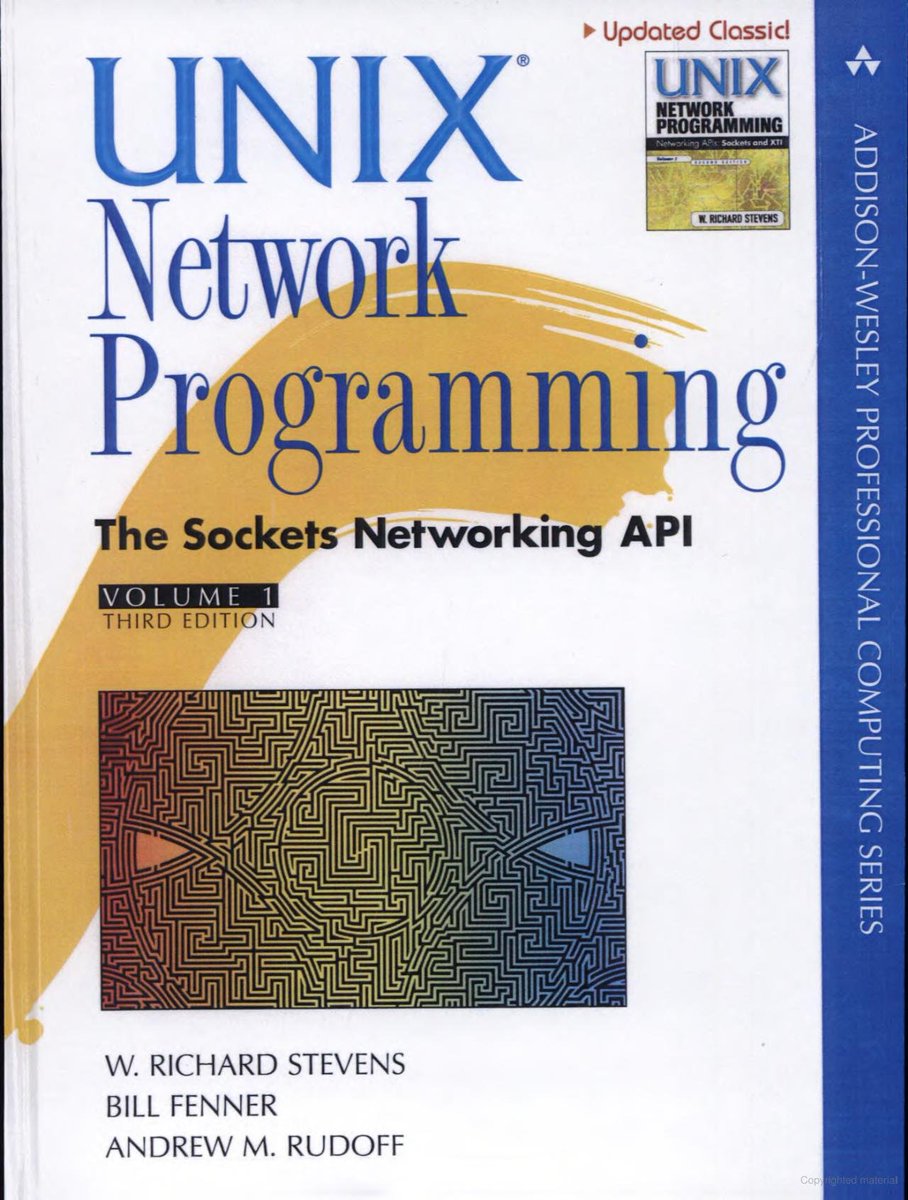
Unix Network Programming, Volume 1: The Sockets Networking API, 3rd Edition, is god-tier for learning C socket programming. It covers TCP/IP, UDP, SCTP, raw sockets, and IPC under System V and BSD UNIX.

I've added a thread with some goated resources.
🧵0/n Image 🧵1/n
Here are some free online computer networking courses that complement the book.

1) CS 144 Introduction to Computer Networking - Stanford University, Fall 2013


2) Computer Networking: A Top-Down Approach


3) Computer Communication Networks, Rensselaer Polytechnic Institute - Fall 2001


4) Audio/Video Recordings and Podcasts of Professor Raj Jain's Lectures - Washington University in St. Louis


5) Computer Networks, Tanenbaum, Wetherall Computer Networks 5e - Video Lectures


6) CSEP 561 - PMP Network Systems, Fall 2013 - University of Washington


7) CSEP 561 – Network Systems, Autumn 2008 - University of Washington


8) Computer Networks - IIT Kharagpur


9) Introduction to Data Communications 2013, Steven Gordon - Thammasat University, Thailand


10) Introduction to Complex Networks - RIT


11) Structural Analysis and Visualization of Networks


12) Data Communication - IIT Kharagpur


13) Error Correcting Codes - IISC Bangalore


14) Information Theory and Coding - IIT Bombay


15) Complex Network : Theory and Application - IIT Kharagpur


16) Advanced 3G and 4G Wireless Mobile Communications - IIT Kanpur


17) Broadband Networks: Concepts and Technology - IIT Bombay


18) Coding Theory - IIT Madras


19) Digital Communication - IIT Bombay


20) Digital Voice & Picture Communication - IIT Kharagpur


21) Wireless Ad Hoc and Sensor Networks - IIT Kharagpur


22) Internetworking with TCP/IP by Prof. Dr. Christoph Meinel - HPI


23) CS798: Mathematical Foundations of Computer Networking - University of Waterloo
scs.stanford.edu/10au-cs144/
youtube.com/playlist?list=…
ecse.rpi.edu/Homepages/kous…
cse.wustl.edu/~jain/videos.h…
youtube.com/user/ProfRajJa…
media.pearsoncmg.com/ph/streaming/e…
courses.cs.washington.edu/courses/csep56…
nptel.ac.in/courses/106105…
youtube.com/playlist?list=…
leonidzhukov.net/hse/2015/netwo…
nptel.ac.in/courses/106105…
nptel.ac.in/courses/117108…
nptel.ac.in/courses/117101…
nptel.ac.in/courses/106105…
nptel.ac.in/courses/117104…
nptel.ac.in/courses/117101…
nptel.ac.in/courses/117106…
nptel.ac.in/courses/117101…
nptel.ac.in/courses/117105…
nptel.ac.in/courses/106105…
youtube.com/playlist?list=…
May 17, 2024 4 tweets 2 min read
Prof. John Guttag from MIT outlines standard algorithms in computer science you should be familiar with, including brute force, divide-and-conquer, and advanced methods such as successive approximation and Newton-Raphson.

🧵1/3 🧵2/3
Source:
youtube.com/playlist?list=…
May 16, 2024 5 tweets 2 min read
10/10 Book recomendations for C systems programming.

Book 1:

The Linux Programming Interface (TLPI) by Michael Kerrisk is goated for learning Linux systems programming in C. The book has over 200 example programs.

🧵1/5Image
Image
Key topics:

- Efficient file I/O
- Signals, clocks, and timers
- Process creation and execution
- Secure programming
- POSIX threads for multithreading
- Shared libraries
- Interprocess communication
- Network programming with sockets
🧵2/5
May 14, 2024 18 tweets 21 min read
Computer Systems: A Programmer's Perspective" provides a detailed look at how computer systems function, focusing on system-level programming in C and x86 assembly.

This is a large thread covering the book materials, including 17 video lectures that will be added over time. Image Required Reading:

CMU Systems Programming book:
The C Programming Language by Kernighan and Ritchie: amazon.com/Computer-Syste…
amazon.com/Programming-La…