
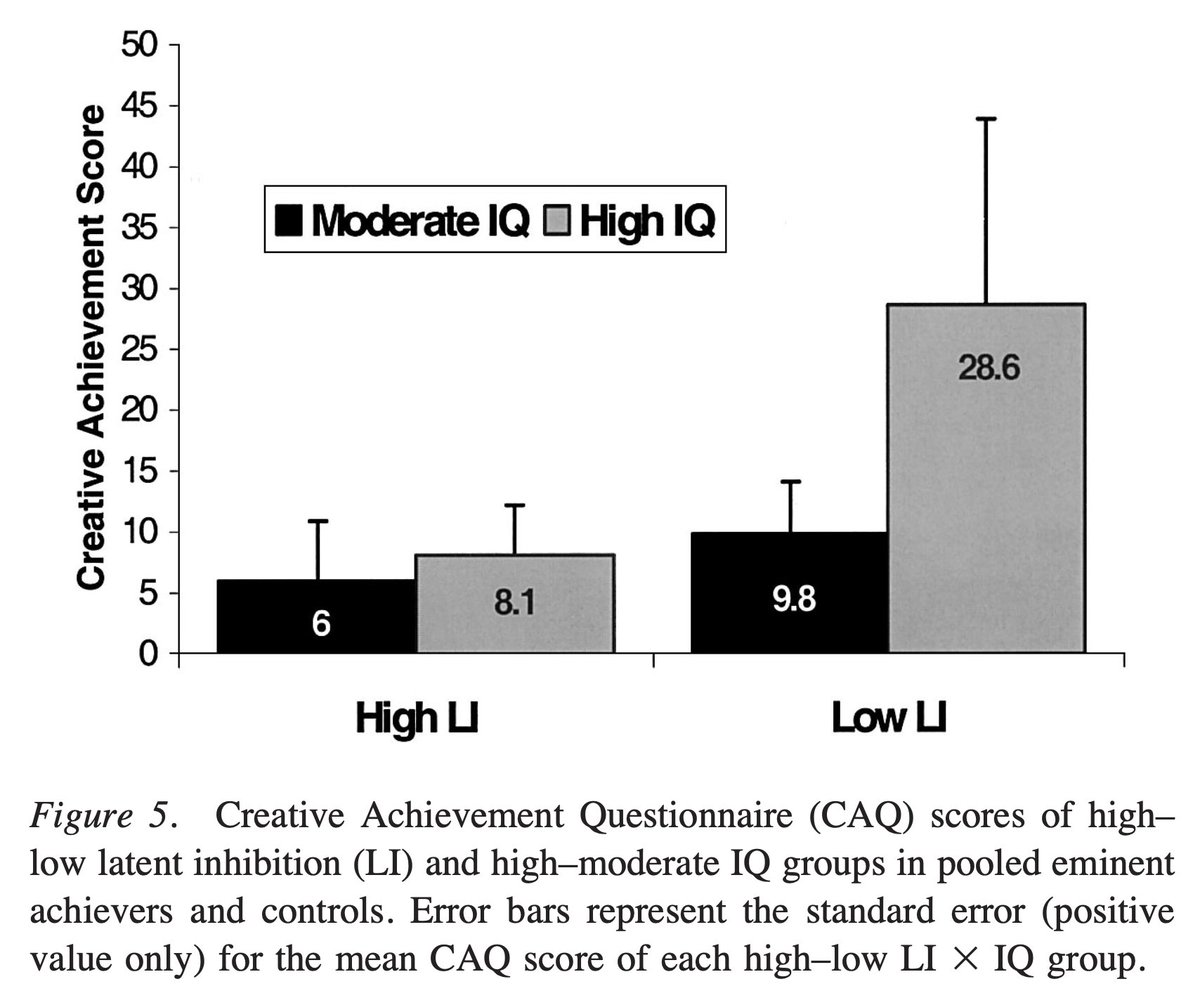
 When brilliant minds pay attention to a priori irrelevant information, they discover novel connections. Eminent young creators were 7x more likely to have low latent inhibition
 Graph explanation: The study compares two ways of measuring individualism–collectivism. We can see that the new one (y-axis) predicts reality better
 ↘️
↘️
 ↘️
↘️
 My insight is based on a 2024 systematic review of the Gender-Equality Paradox. It summarizes 27 meta-analyses and large-scale studies, as well as 54 other studies journals.sagepub.com/doi/10.1177/17…
 “Wokism arises from a population unusually selfless”
 My insight is based on a recent systematic review of the Gender-Equality Paradox. It summarizes 27 meta-analyses and large-scale studies as well as 54 other studies
 Full figure with x-axis
 “The rich are richer than the


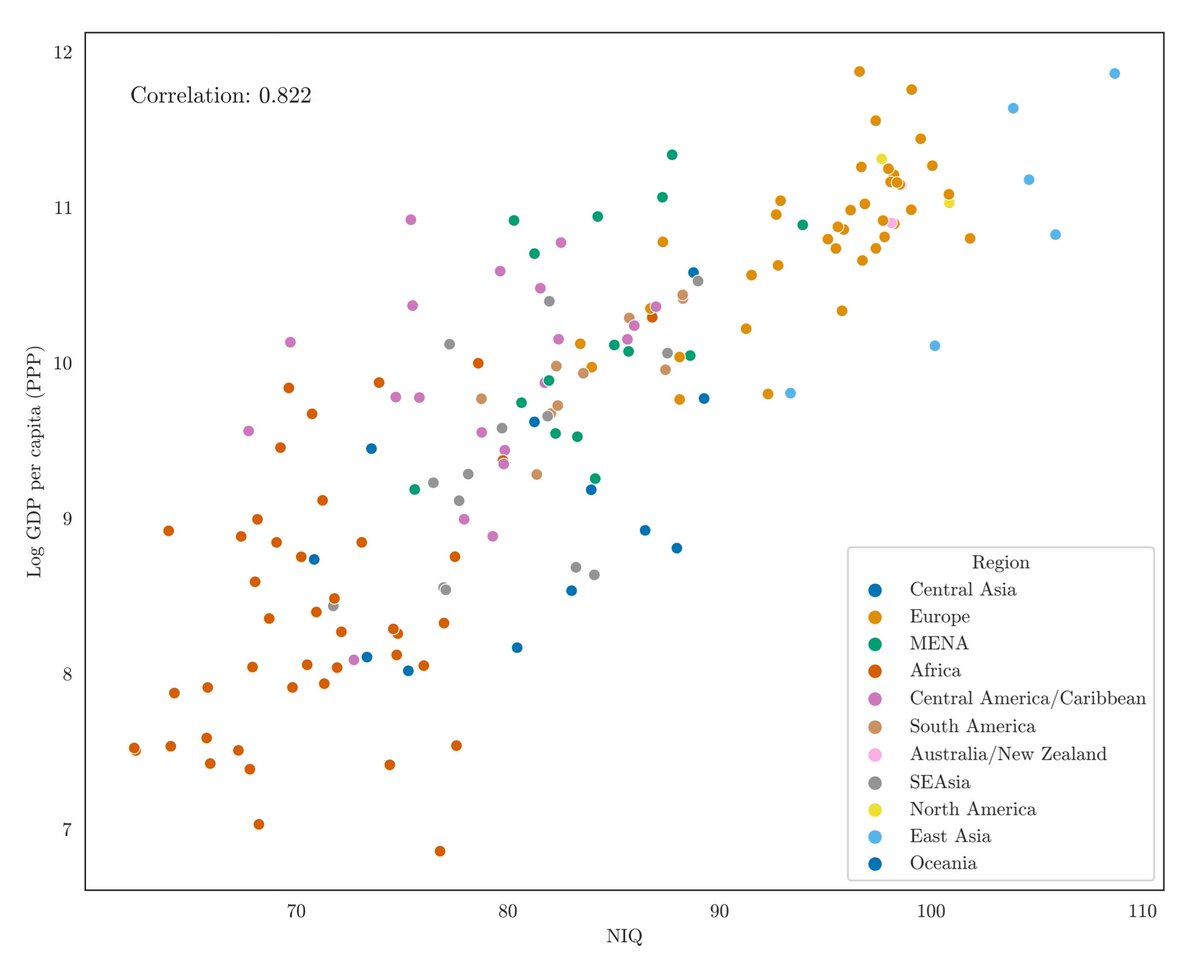 And the Y-axis is a log scale, the real relationship is exponential! It looks more like this one
 Source, original graph and data.

 The Wokeness frequency distributions come from these items, in this study (n = 5,878):

 Social trust is the expectation that people will act in ways that are predictable, fair, and aligned with mutual benefit, even in the absence of formal contracts or enforcement mechanisms. It allows large-scale cooperation and leads to more stable, pleasant, and rich societies
 250 years after the start of the Industrial Revolution, the 40 countries with the highest quality of life are still European (38) and East Asian (2). Why is that?

 For Affluent Wimpy Whites, Leftism serves not a survival but a spiritual purpose—sacrificing the future of civilization for the benefit of others gives meaning to their atheistic, hedonic life. A paradoxically very Christian gesture, without the personal cost [2/4]
 Them: “Just be kind!”
 Data is from Harvard economist Raj Chetty's study of 20 million Americans from adolescence to adulthood.
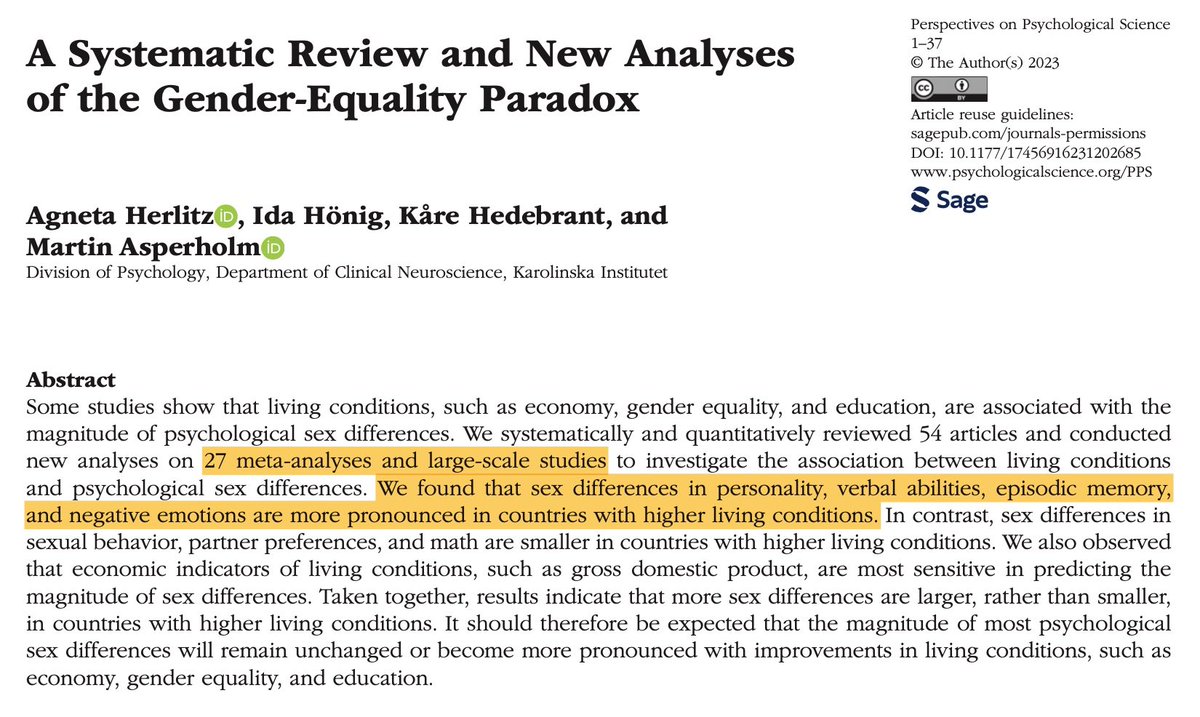 This insight comes from a recent systematic review on the Gender Equality Paradox. It summarizes 27 meta-analyses and large-scale studies as well as 54 other studies.


 Greece, Ireland, Italy, Sweden


 Examples: