𝓼𝓪𝓷𝓴𝓪𝓻 Profile picture
What if I slept a little more and forgot about all this nonsense
Dec 4 5 tweets 3 min read
Operation 𝘛𝘳𝘪𝘥𝘦𝘯𝘵 - December 4, 1971.
The night the Arabian Sea turned into a battlefield… and the Indian Navy rewrote naval warfare forever.
A thread 🧵👇 Image 1/n

As dusk fell on December 3, 1971, the Pakistan Air Force opened the first salvo, bombing six Indian airfields at 5:45 PM. Within hours, the Indian Air Force hit back with Canberra strikes. The Indo-Pak War had begun and in the shadows of the sea, India’s "Killer Squadron" was quietly preparing its own thunderstorm.

That same night, three sleek, lethal Osa-I missile boats - INS Nipat, INS Nirghat and INS Veer slipped out of Mumbai harbour. On December 4, two Petya class frigates, INS Katchall and INS Kiltan, joined them to form a strike team never before seen in Indian naval history:
Operation Trident.

With radio silence, Russian coded communication, and pitch-black waters as their cover, the squadron moved like ghosts - west, then north toward their target: Karachi, the heavily guarded fortress of the Pakistan Navy.Image
Nov 22 4 tweets 4 min read
𝘛𝘩𝘦 𝘝𝘪𝘴𝘪𝘰𝘯𝘢𝘳𝘺 𝘉𝘦𝘯𝘨𝘢𝘭 𝘍𝘰𝘳𝘨𝘰𝘵 :

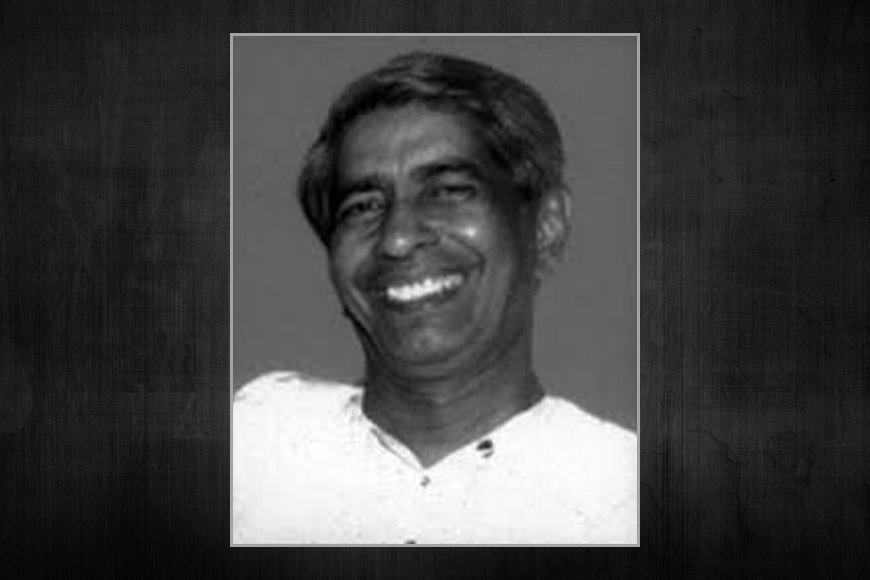
In the early years of his life, He seemed destined for a polished corporate future. A high ranking officer in a distinguished British owned company, he earned a generous salary and lived with an air of quiet sophistication. He wore immaculate three piece suits, and in his hand one always found a tin of 555 cigarettes.
But behind this carefully assembled world lay a quieter, fiercer longing - the intoxicating pull of cinema.Image It was this passion that made him walk away from corporate certainty and step into the unpredictable world of filmmaking. The 555 gave way to humble Charminar, but Rajen Tarafdar never blamed fate for this shift in fortune. Instead, he embraced the struggle with the stubborn dignity of an artist. And from that struggle emerged a remarkable body of work- 𝘈𝘯𝘵𝘢𝘳𝘪𝘬𝘴𝘩𝘢, 𝘎𝘢𝘯𝘨𝘢, 𝘈𝘬𝘢𝘴𝘩𝘤𝘩𝘰𝘺𝘢, 𝘑𝘪𝘣𝘢𝘯 𝘒𝘢𝘩𝘪𝘯𝘪, 𝘉𝘢𝘯𝘨𝘭𝘢𝘥𝘦𝘴𝘩, 𝘗𝘢𝘭𝘢𝘯𝘬𝘢, and 𝘕𝘢𝘨𝘱𝘢𝘴𝘩.
Each film bore the unmistakable signature of a man who breathed art.

Yet, irony hangs heavy over Rajen Tarafdar’s legacy. Despite his immense talent, he made barely seven films in a career that spanned three decades. Critics and gossipmongers claimed he was reckless with money. But was he?
To bring imagination to life on screen, to allow ideas to blossom into cinematic reality, demands a certain generosity of budget. Satyajit Ray, Tapan Sinha, Ajay Kar - all benefited from producers willing to believe in their vision. Tarafdar, however, was not always afforded the same luxury.Image
Image
Image
Image
Nov 18 7 tweets 5 min read
Someone claimed yesterday that Raja Rammohan Roy, in collusion with the British, acted against the Indigo Rebellion in Bengal. The irony is striking, because Raja Rammohan died in 1833, while the Indigo Rebellion erupted in 1859,a full 25 years later. So the real question is: what were the other members of the Bengali intelligentsia doing during that crucial period? Let’s take a closer look.
A Thread 🧵 👇Image 1/n
The Story of 𝘕𝘪𝘭 𝘋𝘢𝘳𝘱𝘢𝘯 and a Fearless Priest

A tale of a playwright, a people’s cry, and a foreigner who chose truth over comfort.

In 1860, a slim book printed in Dhaka shook the foundations of British indigo rule in Bengal. It bore no author’s name, yet everyone knew the fiery spirit behind it- Dinabandhu Mitra, born Gandharba Narayan in a humble household of 24 Parganas, later renamed by the strength of his own ideals.

By day, he served as the Inspecting Postmaster of Dhaka Division. By night, he observed the brutalities committed in the indigo fields of Nadia, Jessore, Dhaka and Mymensingh - scenes that would burn themselves into the pages of his masterpiece,

“Nil Darpan” (The Indigo Mirror)

- one of the boldest creations of the Bengal Renaissance.

So powerful was his mind that Bankim Chandra once wrote:

"Had Dinabandhu not been born a Bengali, he would have risen to the Postmaster General long before his death. But just as the stain of coal remains after countless washings, so too does the black skin conceal a thousand virtues."Image
Sep 19 12 tweets 6 min read
It was the 1930s. Bengal was brimming with some of the finest ideas across every sphere . Arts, culture, social reform, music, literature, politics, and science.
In that charged era, on the first moonlit night of autumn, while the great city of Calcutta still slept, a select few men and women would be escorted in motorcars through the gas-lit streets to the newly built radio station. Among them was a humble railway clerk, destined to become a legend. His booming baritone and soul-stirring stotra patha etching an immortal place in history.
A Thread 🧵Image 1/

Like Christmas carols in the UK, 𝘔𝘢𝘩𝘪𝘴𝘩𝘢𝘴𝘩𝘶𝘳𝘢𝘮𝘢𝘳𝘥𝘪𝘯𝘪 - the legendary radio program has become an inseparable part of Bengali culture over the decades before the start of Sharod Utsab. Waking up at 4 a.m. to the thunderous recitals of mythology surrounding Debi Durga, the mighty slayer of demons, on the first day of Debi Paksha has always been more than a ritual. It is not merely a religious tradition but an event woven into the very fabric of our Puja culture , an awakening of spirit, faith, and festivity.Image
Sep 17 9 tweets 5 min read
On this Viswakarma Puja day, let’s remember a Bengali entrepreneur who truly deserves a place in our collective memory and in the lessons we pass on to the younger generation. His name was Hemendra Mohan Bose,100 years ago, Bengal knew him simply as H. Bose, a name synonymous with innovation, enterprise, and vision.
A Thread 🧵Image 1/
The Bose family of Mymensingh was truly illustrious. Padmalochan Bose’s three sons - Hara Mohan, Ananda Mohan, and Mohini Mohan-were each brilliant and pioneering in their own way. Ananda Mohan went on to become India’s first Wrangler, while Mohini Mohan was among the earliest Indians to travel to the USA to qualify in the field of homeopathy. Hara Mohan, a student of law, rose to the position of Munsif in a government court. From this remarkable lineage was born Hemendra Mohan, one of Hara Mohan’s four sons, in the year 1864.Image
Sep 9 5 tweets 3 min read
“The time has changed… Jatin’s name may be crowded out of the list of the national heroes… but the story of Balasore Jungle… done by a master artist… may attain the grandeur of an epic poem.”
- M N Roy

On this day, 110 years ago, four brave young Bengalis fought valiantly for their motherland under the heroic leadership of Bagha Jatin in the epic Battle of Buri Balam.
A Thread 🧵Image 1/
In the early 20th century, Bengal’s revolutionary soul roared with Bagha Jatin at its helm. A fearless leader known for wrestling a tiger bare-handed , this man would become a symbol of armed resistance.

Jatin wasn’t just brawn , he was a strategic genius. By 1905, he’d founded Chhatra Bhandar, a student co-op that served as a façade for revolutionary planning and recruitment.Image
Sep 6 6 tweets 3 min read
“He is the most dangerous conspirator in or out of India… the brains behind it all,” wrote Somerset Maugham in his spy novel Ashenden: The British Agent.
The character he described Chandra Lal was inspired by a real man: Birendranath Chattopadhyaya, a fiery Indian revolutionary who gave sleepless nights to the British. So desperate were they to catch him that they sent an agent, Donald Gullick, to lure him out of neutral Switzerland. But fate turned the tables , before they could cross into France, both Chattopadhyaya and Gullick were arrested by Swiss police on suspicion of spying for Germany and deported.
A Thread 🧵Image 1/ Meet Birendranath “Chatto” Chattopadhyaya
Born 31 October 1880 in Hyderabad into a prominent Bengali Brahmin family, he was the brother of poet-musician Harindranath and famed activist-poet Sarojini Naidu.

He studied in Madras and Calcutta before heading to Oxford in 1902 and training at Middle Temple. In London, he joined the nationalist India House and contributed to The Indian Sociologist , the hotbed of anti-colonial ideas.Image
Aug 26 17 tweets 8 min read
70 years ago, on this day, a film was released that remains one of the most important movies in the history of cinema. What's incredible is that the movie was directed by a self-taught director, with the help of a first-time cinematographer and a cast of largely amateur artists, all on a shoestring budget. The making of the movie is itself a testament to human resilience. Here's a short thread 🧵.Image 1/16
"Pather Panchali" first appeared as a serialized story in a Kolkata journal in 1928. Written by Bibhutibhushan Bandyopadhyay, "Pather Panchali" remained one of his most sought-after creations among all his works. Satyajit Ray's first challenge was to acquire the rights to the story from Banerjee's widow, Rama Bandyopadhyay. She received him warmly, being an admirer of his father Sukumar's work. She granted him the copyright in principle, with no financial arrangements discussed.Image
Jul 26 11 tweets 5 min read
The erstwhile Bengal boasts numerous "firsts" across various fields of our lives. One such pioneering figure was Dr. Murari Mohan Mukherjee (1914-1988), a trailblazer in plastic surgery in our country, who received his training in England. He was instrumental in establishing the first independent civilian plastic surgery department at SSKM Hospital in Kolkata. On his death anniversary today, I'd like to share a different story - a true account of a brutal crime that sensationalized Kolkata at the time, where Dr. Mukherjee utilized his plastic surgery skills to aid the police in apprehending the perpetrator.
A thread 🧵 👇Image 1/9
On the foggy morning of January 30th, 1954, a municipal cleaner discovered three blood-soaked newspaper-wrapped packets near a public toilet outside the Keoratala crematorium. The packets had human finger-like objects protruding from torn edges. The police were informed, and officers from the nearby Tollygunge Police Station soon arrived. Upon inspection, they found chopped-up human pieces inside the packets. The gruesome discovery continued, as by afternoon, they were informed about the recovery of more packets containing additional body parts. Shockingly, one packet contained a fetus.
Jun 15 9 tweets 4 min read
Long before Satyajit Ray's "Pather Panchali" or Ritwik Ghatak's "Nagarik", there was Nemai Ghosh's "Chinnamul" (The Uprooted), one of the first Indian films to embrace Neorealism like never before.
A Thread 🧵 Image
Image
1/6

While movies with propagandist motives may soon hit the screens to exploit the buried wounds of Bengalis for electoral gain, Nemai Ghosh's "Chinnamul" was an honest attempt to portray the plight of common people in Bengal during those turbulent times. The region was reeling from the devastating Bengal famine, followed by brutal communal riots just before partition.Image
May 9 7 tweets 4 min read
"শুন নলিনী, খোল গো আঁখি,
ঘুম এখনো ভাঙ্গিল না কি!
দেখ, তোমারি দুয়ার-’পরে
সখি এসেছে তোমারি রবি।"
On this Rabindra Jayanti, let's revisit a chapter from the life of Rabindranath Tagore, one of the greatest thinkers and poets of the 20th century. A poignant tale of lost love, unfulfilled dreams, and longing.
A thread 🧵Image
Image
1/5
Before he became the poet laureate Rabindranath Tagore, the young Rabi met a beautiful young girl, Annapurna Turkhad, his 'Anna', in the household of Dr. Atmaram Pandurang Turkhadekar, a renowned physician, social reformer, and founder of Prarthana Samaj. It was 1878, and young Rabi was bound for England. His elder brother, Satyendranath, had arranged for Rabi to stay with Dr. Pandurang to refine his English and etiquette.
In Pic : Dr Atmaram Pandurang & Satyendra Nath TagoreImage
Image
Mar 7 4 tweets 3 min read
𝘛𝘩𝘦 𝘕𝘰𝘣𝘦𝘭 𝘓𝘢𝘶𝘳𝘦𝘢𝘵𝘦 𝘢𝘯𝘥 𝘛𝘩𝘦 𝘗𝘳𝘪𝘮𝘦 𝘔𝘪𝘯𝘪𝘴𝘵𝘦𝘳 ❤️
A Thread 🧵 👇
1/4
Not many know that Indira Gandhi was a big admirer of Colombian Nobel laureate Gabriel Garcia Marquez's literary works. Marquez's iconic novel "One Hundred Years of Solitude," which has sold over 25 million copies worldwide since its publication in 1967, was a favorite of hers. According to retired diplomat Rangarajan Viswanathan, Indira Gandhi, then the Prime Minister, was among the first to congratulate Marquez after he won the Nobel Prize in 1982.Image
Image
2/4
The same year Indira Gandhi met Fidel Castro in Moscow at Soviet leader Leonid Brezhnev's funeral, she requested Castro to bring his friend Gabriel Garcia Marquez to India during the Non-Aligned Summit in 1983. When Castro and Marquez arrived in New Delhi, Mrs. Gandhi first received Castro with ceremonial honors, while Marquez waited on the plane. She then climbed the ladder to personally greet Marquez inside the plane. Marquez was pleasantly surprised to hear Mrs. Gandhi speak French and remarked that she looked like a woman from Aracataca, his birthplace.Image
Feb 26 5 tweets 3 min read
What connects Sir Richard Attenborough to the Bengali actor Tarun Kumar, brother of the legendary Uttam Kumar? Here's a fascinating story.
A Thread 🧵 👇 Image
Image
1/4
In 1947, Agatha Christie wrote a short radio play as a birthday present for Queen Mary, the consort of King George V. Later, she developed the short play into a full-fledged play and gifted the rights to her grandson, Mathew Prichard, as a birthday gift. Under this contract, there was a clause stipulating that no film adaptation could be produced until the West End production of the play had been closed for six months.Image
Feb 17 7 tweets 4 min read
As social media is abuzz with discussions about the recently released movie "Chaava" and the alleged brutality of Mughal Emperor Aurangzeb towards Shambhaji Maharaj, let's take a look at our own backyard in Bengal, where the Maratha invaders plundered, ravaged, and murdered the riches of Bengal for 10 long years. A famous Bengali lullaby, "Khoka ghumalo, para juralo, Bargi elo deshe," still hauntingly depicts the brutality of the Maratha invasion of Bengal.
A Small Thread 🧵Image
Image
1/6
It was Raghuji Bhosle of Nagpur, a Maratha chieftain, who, subdued by the superior talent of another Maratha warlord, Baji Rao, and failing to gain attention from Shahuji Maharaj, shifted his focus towards the Bengal Subah. His opportunity to plunder the subah arose when relatives of Nawab Sarfaraj Khan sought his assistance in exacting revenge on their arch-rival, Nawab Alivardi Khan.
Jan 26 8 tweets 4 min read
The Unsung Heroes who designed the Constitution -
The Indian Constitution holds the distinction of being the longest written constitution in the world, and it's also remarkably rich in illustrations. With 22 parts featuring hand-painted images and intricate borders adorning its pages. Here are those unknown heroes who designed the Constitution of The Republic..Image When the first draft of the Constitution was ready for printing, Prime Minister Nehru approached Shri Prem Narain Raizada with a unique proposal: to handwrite the Constitution in a flowing italic style. Nehru also inquired about Raizada's fee for this extraordinary task. Raizada's response was remarkable: "Not a single penny. By the grace of God, I have all that I need and am content with my life." However, he did make a humble request: he asked that his name be inscribed on every page of the Constitution, and on the final page, he wished to include the name of his grandfather, from whom he had learned the art of calligraphy.Image
May 16, 2024 5 tweets 2 min read
What connects Charlie Chaplin,Guru Dutt and R D Burman ?
Here is an interesting story.
In the year 1958, Guru Dutt decided to adopt Wilkie Collins’s timeless novel Woman in White for the screen with Waheeda Rahman in the lead. Image He also roped in 19 years old Pancham as composer much to the dismay of S D Burman who feared it was too soon for his son to take on project as an independent music composer. Titled “Raaz”, the movie was shelved after shooting few reels as Guru Dutt lost interest in that project.
Nov 19, 2023 10 tweets 3 min read
“Getting Salil to work was the most difficult task. Everything would happen, except the actual work.” Remembered Gulzar about Salil Chaudhury in his memoir .
A Thread (1/n) Image Bimal Roy was filming “Kabuliwala” and Gulzar was his assistant . Gulzar just returned from Kolkata after shooting few sequences for the Title shots. 2/n Image