Karl Pfleger Profile picture
Jul 10, 2020 9 tweets 3 min read Read on X
1/9 Big recent updates to #VitaminD #COVID19 evidence & thus now also to my review agingbiotech.info/vitamindcovid19: 3 highly cited preprints are out but even better studies replace them, including finally a large study of records from a big org. Main take-homes remain the same. Details:
2/9 2 preprints including very cited n=780 Indonesian study now withdrawn from SSRN. Another (Alipio's) suspected of being fraud. Details in section 9 of the review. All 3 removed from my 1pager summary agingbiotech.info/vitamindcovid1…. I now apply a new standard for preprints with data:
3/9 For preprints with D & C19 case data, I only include if author affiliations can be web-verified & authors have relevant pre-2020 publication records. With the 3 preprints removed, the evidence was still compelling. Now I've added 3 additional studies to the 1pager & review:
4/ On low-D correlation to C19 severity: Merzon etal's Israel study of 782 C19+ cases & De Smet etal's Belgium study of 186 cases now added to Panagioteu etal's UK study of 134 cases (& the handful of n<50 studies). Now 1100+ cases w/ low-D correlated to 3 measures of severity:
5/9 hospitalization vs. not, intensive-treatment-unit admission vs. only hospitalization, & chest CT categorization of severity. Together the data suggests low D worsens progression at multiple disease stages. See section 8. Already strong causality evidence also a bit better:
6/ Added Kohlmeier's Mendelian randomization study, which is 1-step better than typical group correlation studies by considering race & latitude. Confounders that could explain this data seem far less likely (eg racial economic disadvantages worsening w/ latitude moving north).
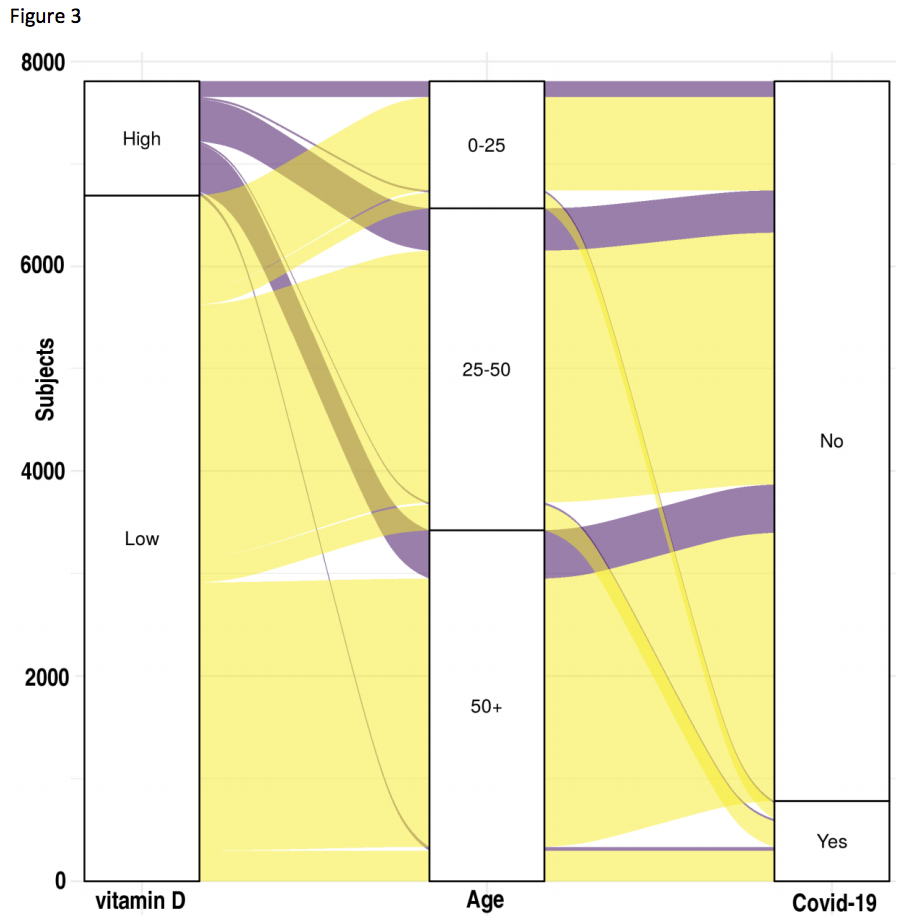
7/9 Merzon's study worth special attention as the 1st study from an org w/ many records. 14k/730k patients C19 tested, 7807/14k had 25OHD. Controlling for more confounders than any other studies so far, adjusted OR of infection 1.5 & OR of hospitalization if infected 1.95. So
8/9 overall low D patients had ~3x odds of hospitalization for C19. On low-D correlation to infection risk (vs case severity): With D'Avolio's & Meltzer's studies overall evidence now tilted against Hastie's & Darling's UK Biobank papers w/ the too-old D tests. See section 11.
9/9 Merzon's Fig-3 shows how few D>30ng/ml cases get hospitalized, esp. at younger ages. How many fewer deaths if everyone had adequate D? More orgs w/ many patient records need to publish data like this & add later measures of severity/outcome. NHS, Kaiser, VA, etc. Who's next? Image

• • •

Missing some Tweet in this thread? You can try to force a refresh

 

Keep Current with Karl Pfleger

Karl Pfleger Profile picture

Stay in touch and get notified when new unrolls are available from this author!

Read all threads

This Thread may be Removed Anytime!

PDF

Twitter may remove this content at anytime! Save it as PDF for later use!

Try unrolling a thread yourself!

how to unroll video
  1. Follow @ThreadReaderApp to mention us!

  2. From a Twitter thread mention us with a keyword "unroll"
@threadreaderapp unroll

Practice here first or read more on our help page!

More from @KarlPfleger

Feb 11, 2025
High vs low protein intake for long-term health & longevity remains controversial even among experts. Recs range from <=0.8-2.2g/kg, 10-30+% cals f/ protein.

Here's a quick collection of refs, thoughts, & summaries synthesizing many prior conversations & lines of research..... Image
Image
High level summary is science on both sides:

Aging science: Protein restriction (PR) consistently extends health/lifespan in model species. Protein ↑ mTOR & mTOR inhibition ↑ lifespan.

Sports science: More protein improves body composition (↑ muscle) in humans short-term.
Experts on both sides.
Low protein:
Valter Longo, Luigi Fontana, Dean Ornish, Michael Greger, ...
High protein:
Peter Attia, Matt Kaeberlein, many that come more from the sports/performance optimization fields, ...
(Not meant to be comprehensive lists)
Read 25 tweets
Sep 16, 2024
Short report: The state of the mitochondria portion of the aging biotech field:

50 companies!
$1.4+B raised
700+ people
150+ clinical trials

many MoAs/targets:
mitophagy, transplant, fission, NAD+, UrolithinA, CD38, PINK1, PPARδ, DRP1, USP30, Complex 1, OMA1, & more

Read on: Image
Why is this important?
Mitochondria are central to aging:
It's one of both the original 9 Hallmarks & 7 SENS areas.
It's one of the subareas most directly tied to other subareas.
It's one of the subareas with the most direct relevance to a wide variety of age-related diseases. Image
This is also a sneak preview of part of the in-progress big update/overhaul of , now 40-50% done overall. Everything described in this thread comes directly from this database. The full new version will replace the current list when closer to 100% done.AgingBiotech.info/companies
Read 22 tweets
Aug 26, 2024
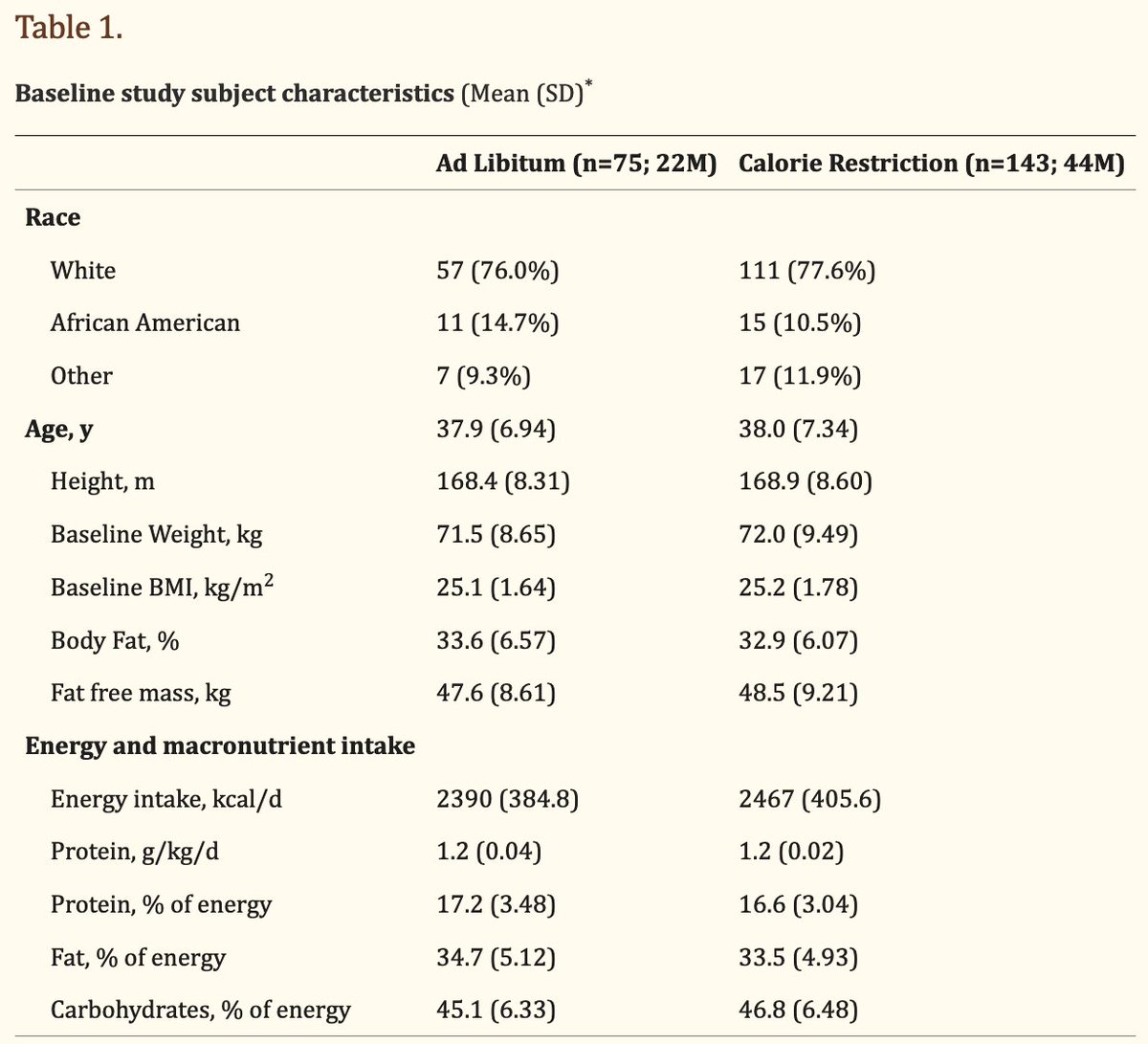
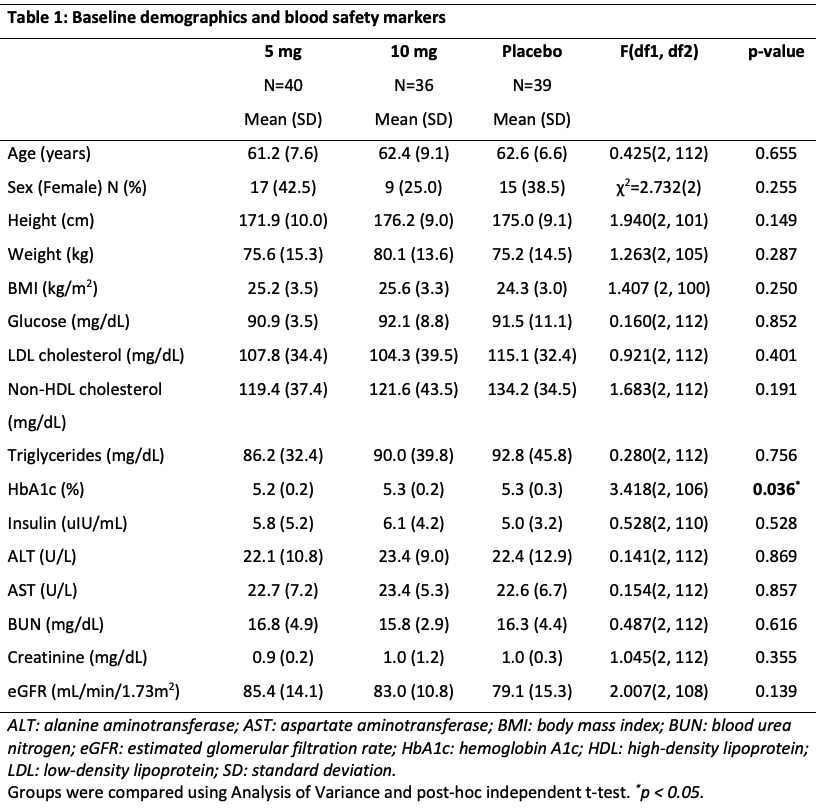
New PEARL rapamycin study vs CALERIE mild (12%) CR study 🧵:

CR & rapa both ↓mTOR. But frustrating the designs aren't more apples-apples. Many things improved by 1 not reported in other. (Also unfortunate for both we don't have more direct biomarkers of mTOR pathway activity.) Image
We want to estimate long-term benefit. What do these 2 short (relative to lifespan) 1-2yr studies tell us?
What metrics can we directly compare?
See below...
(Links to all papers included below too.)
Frustrating study diffs:

Eg very diff ages: ~38 (CALERIE), ~62 (PEARL)

Frustrating metric diffs:
CR improved BMI, bodyfat%, BP, insulin, & pace of aging, all unreported for PEARL. (End BMI not in any table. Visceral fat reported but not total fat.)
Image
Image
Read 25 tweets
Jul 1, 2024
Direct-to-consumer aging clocks give very inconsistent answers. I tried TruDiagnostic, Elysium, GlycanAge, & reg blood draw for PhenoAge on same day in Feb & from same venous blood draw at LabCorp, except Elysium's uses saliva which I did right before going to LabCorp. Notes: 🧵
I chose these 4 clocks for the same-day comparison since they are most respected & used clocks avail to consumers currently. Specific reasons for each:

@TruDiagnostic: team (eg @RyanSmithEpiAge, @VarunDw, @EverythingEpi) comes & presents at aging confs regularly, its the basis for the leaderboard Bryan Johnson's team maintains, they licensed DunedinPACE, & they provided an intrinsic vs extrinsic split per the mix change of immune cell types issue @alantomusiak from Eric Verdin's lab identified recently as a problem with most clocks.

Elysium briefly had @DrMorganLevine as advisor & she supposedly helped develop the 100k+ cpg site Index test, which should be robust to the test-retest variability issue that her recent PC clock paper identified as a problem with most clocks. (TruDiagnostic's clock is also supposed to be robust wrt this issue.)

@GlycanAge: team (@GordanLauc, @entreprylexia) also comes & presents at aging confs & its based on a completely different signal.

PhenoAge (also from @DrMorganLevine) is a gen2 clock that's widely used even clinically by notable longevity expert doctors, & it was easy to add with just a basic blood draw.
Not gonna give all details on which # from which clock but top lines results were all over the place. The 4 age point estimates: 20, 40, 50, 55.
This was a bigger spread than I expected.

2 tests give rate of aging & these also had a big range: 0.77 & 0.95.
Read 13 tweets
Dec 6, 2023
Data from the new TargetD trial suggests that prior vitamin D trials were flawed:

Many people, even professionals, still think vitamin D was a false profit that was disproven by big RCTs. This view is very flawed, for several reasons. A brief history:news-medical.net/news/20231113/…
For decades, thousands of studies have shown reliable correlation of low vitamin D levels & bad health outcomes. Scientifically, the proper way to test the hypothesis that this correlation is causal is RCTs that meaningfully alter the low vitamin D status & then measure outcomes.
Heaney in 2014 published trial design guidelines for nutrients saying essentially the above.

Rule 4 was "The hypothesis to be tested must be that a change in nutrient status (not just a change in diet) produces the sought-for effect."academic.oup.com/nutritionrevie…
Read 20 tweets
Aug 30, 2022
Highly recommend the most recent good review of mechanisms of action of vitamin D affecting Covid risk pubmed.ncbi.nlm.nih.gov/35308241/
by notable Irish researchers who've published in the area throughout the pandemic.

Notable: Directly addresses satisfying Hill's Criteria for causation.
Image is Fig 2: "Molecular pathways in the pathology of Covid-19 thought to be affected by vitamin D"

That's a lot of diff Covid related biology affected by vitamin D!

Great job @RoseAnnekenny1 & co

Some direct quotes f/ the main text of the paper are worth repeating here:

🧵
"Applying the Bradford-Hill criteria [..] the collective literature supports a causal association between low vitamin D status, SARS-CoV-2 infection, and severe COVID-19 [..] A biologically plausible rationale exists for these findings"
Read 19 tweets

Did Thread Reader help you today?

Support us! We are indie developers!


This site is made by just two indie developers on a laptop doing marketing, support and development! Read more about the story.

Become a Premium Member ($3/month or $30/year) and get exclusive features!

Become Premium

Don't want to be a Premium member but still want to support us?

Make a small donation by buying us coffee ($5) or help with server cost ($10)

Donate via Paypal

Or Donate anonymously using crypto!

Ethereum

0xfe58350B80634f60Fa6Dc149a72b4DFbc17D341E copy

Bitcoin

3ATGMxNzCUFzxpMCHL5sWSt4DVtS8UqXpi copy

Thank you for your support!

Follow Us!

:(