In India, journalists who cover #corruption may pay with their lives. Between 1992 & 2016, the @pressfreedom recorded 27 cases of journalists murdered in direct retaliation for their work. The CPJ is investigating an additional 25 cases. [THREAD] 👇 ruralindiaonline.org/library/resour…
Between 2007-2016, at least 58 activists – those who regularly file requests under the Right to Information Act – have been killed, and more than 250 have been harassed or assaulted. 2/4 #PressFreedom
Small-town journalists are more vulnerable to attack and whose legitimacy is questioned when they are threatened or killed. In the case studies, this report focuses on it is hard to find a single reporter who was working for an English outlet of a large corporate media house. 3/4
#UttarPradesh accounted for more than 70 per cent of the total recorded attacks on journalists in India in 2014. 4/4
• • •
Missing some Tweet in this thread? You can try to
force a refresh

‘Who knew the lack of rain could kill my art?’ (a thread)
Three decades ago, no one wanted to teach a young Sanjay Kamble how to work with bamboo.
Today, when he wants to teach everyone his dying craft, no one wants to learn.
“It’s ironic how times have changed,” the 50-year-old says.
With the bamboo that grows in his one-acre field, Kamble mainly crafts irlas – a kind of raincoat used by paddy farmers in this region in western Maharashtra.
“My lungs feel like stone. I can barely walk,” says Manik Sardar.
In November, 2022, the 55-year-old was diagnosed with silicosis – an incurable pulmonary disease. “I have no interest in the upcoming elections,” he continues,
“I am only worried about my family’s condition.”
Naba Kumar Mandal is also a patient of silicosis. He adds, “elections are about false promises. For us, voting is a routine task. No matter who comes to power, things will not change for us.”
“I reach here by 8:45 a.m. and we start work by nine. By the time I am home, it is 7-7:30 in the evening,” says Madan Pal. ‘Here,’ is the tiny carrom board factory in Suraj Kund Sports Colony in Meerut city, Uttar Pradesh.
Karan, 32, who has been working here for 10 years, inspects each stick of wood and segregates those that are damaged and will be returned.
“It is not difficult to make a board, but it is not easy to make the coins glide on the playing surface.”
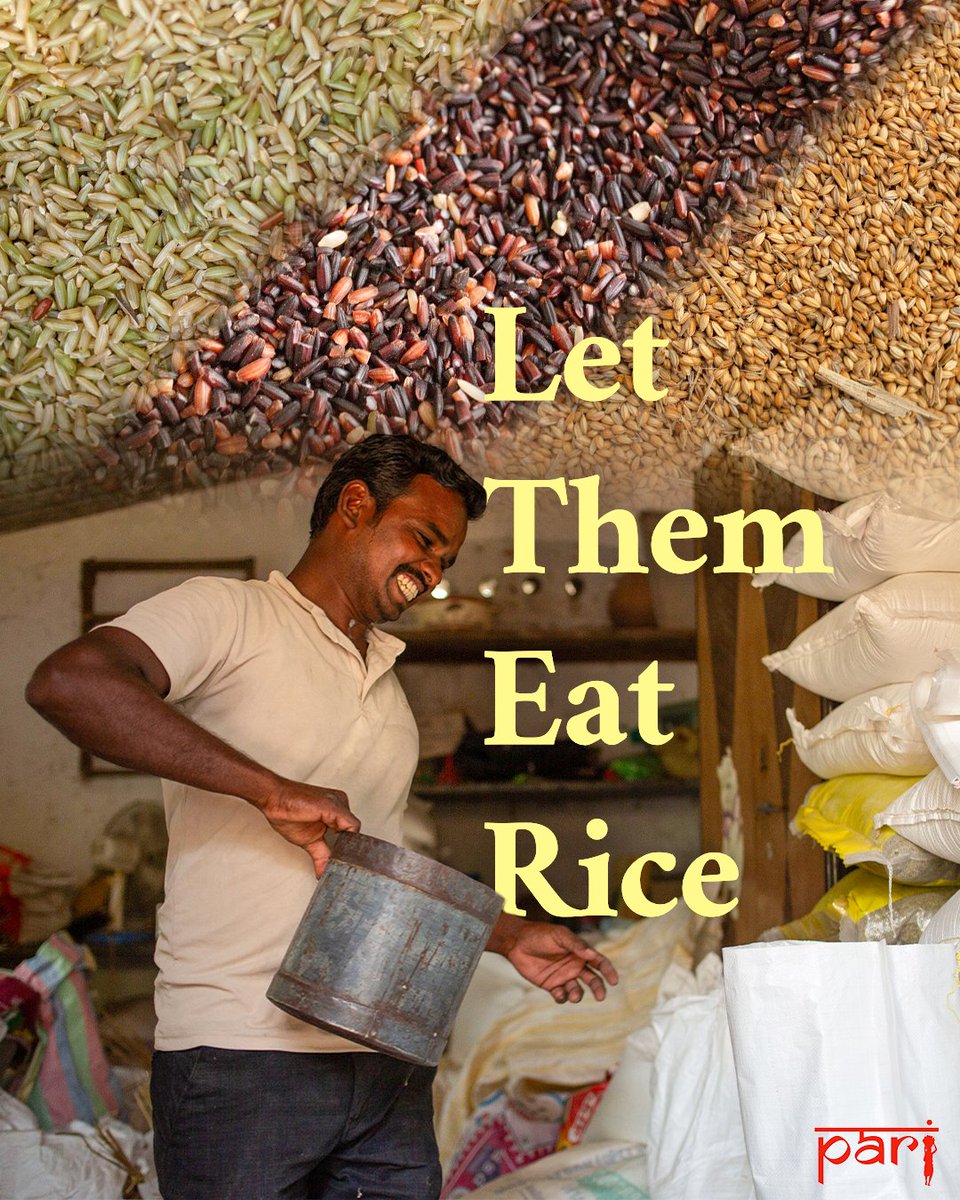
Lenindhasan, or Lenin– as he is called – and his friends, are trying to replace modern rice varieties and resist mono-cropping. Their plan is to restore lost diversity. And to germinate a rice revolution.
It's a different kind of revolution, led by another kind of Lenin.
Lenin cultivates 30 varieties of rice. He sells another 15 raised by fellow farmers. And he conserves 80 types of paddy seeds. All this, in his family’s six-acre farm in Tamil Nadu’s Tiruvanamalai district.
It seems as if he’s been farming and selling paddy for decades. But it’s only been six years.
Before he became a farmer, Lenin was a corporate employee in Chennai, with two degrees and a good salary.
Life has only become harder in the last 10 years (A thread)
India's poorest homes continue to rely on minor forest produce like mahua and tendu leaves, along with the assured Mahatma Gandhi National Rural Employment Guarantee (MGNREGA) programme.
As they prepare for voting today in the General Elections 2024, Adivasi villagers here in Arattondi village say their lives have only become harder in the last 10 years...