

This remarkable study seems not to have gotten the attention it deserves.
medrxiv.org/content/10.110…
1. It finds antibody seroprevalence of 47% in Tokyo by late August! One of the highest reported rates in the world.
medrxiv.org/content/10.110…
1. It finds antibody seroprevalence of 47% in Tokyo by late August! One of the highest reported rates in the world.
2. And this by a study where anyone with symptoms was excluded from the study and in a place with a vanishingly small rate of covid illness or death. 
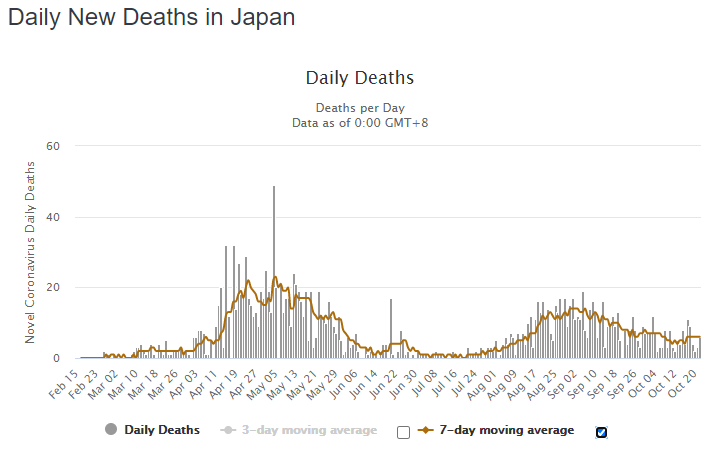
3. The all-import question here is how could such a high level of measured infection lead to such a tiny amount of illness or death?
It can't be anything related to measures to control the virus, it apparently was spreading like mad.
It can't be anything related to measures to control the virus, it apparently was spreading like mad.
4. So what could it be? Surely the answer is come kind of widespread resistance in the population. From what?
And does the same factor, whatever it is, explain the remarkably low level of covid illness and death in all of east Asia? How about in Africa?
And does the same factor, whatever it is, explain the remarkably low level of covid illness and death in all of east Asia? How about in Africa?
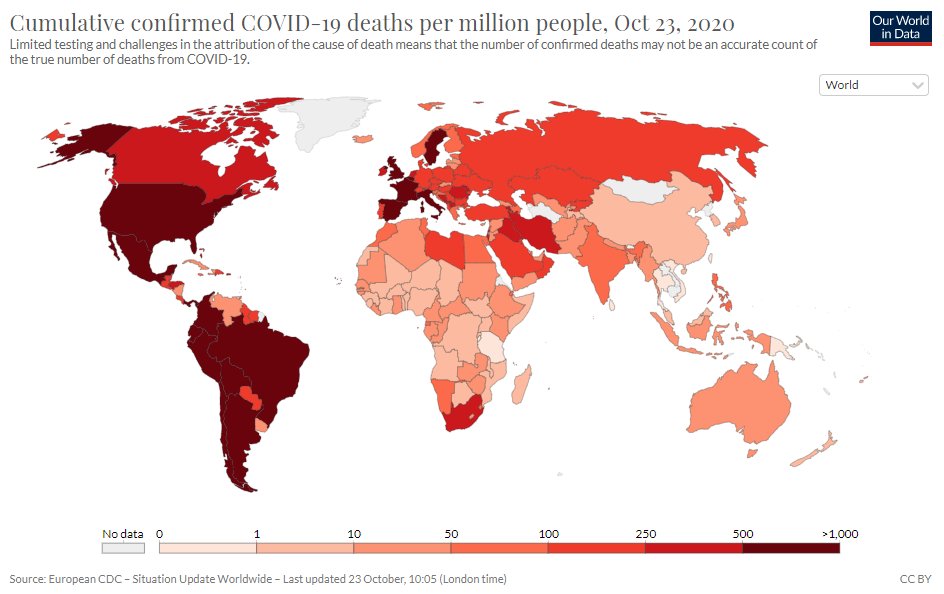
5. The strong geographical pattern of low deaths in east Asia and Africa has been apparent for a while, but this study strongly suggests that lack of deaths may be NOT because of a lack of infected people, it is just that hardly anyone is getting sick. At least in Tokyo!
6. @gummibear737 you are the only person I've seen to offer any possible explanation of this geographical pattern - you suggested previous exposure to other coronaviruses as a possible reason. Because of bats!
Anyone else? @CarlosdelRio7? @boriquagato ? @BallouxFrancois ?
Anyone else? @CarlosdelRio7? @boriquagato ? @BallouxFrancois ?
7. The other astounding outcome of this study is rapid rate of disappearance of positive antibody test results in individuals who were tested twice, about 1 month apart. This implies a potentially very significant underestimate of virus spread through antibody tests worldwide.
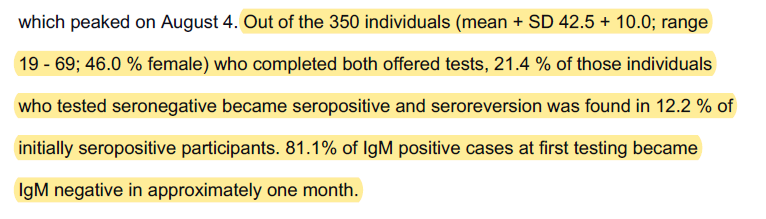
8. Which of course implies a potentially large under-estimate of the degree of immunity which has developed in various populations.
Both these findings seem pretty earth-shattering to me. Why have we not heard more about this study?
Both these findings seem pretty earth-shattering to me. Why have we not heard more about this study?
• • •
Missing some Tweet in this thread? You can try to
force a refresh


