1/ Rich insights on enabling socio-emotional maturity in children from @docbhooshan and @ramgvallath in our adda on Sat, Nov 7. Hope the brief highlights will motivate you to watch the full conversation. Some nuggets in this thread..
2/ @docbhooshan -Flexibility in values is critical. Reality at different levels of human interaction is different e.g. family, school, nation. The ability to hold parallel & even conflicting views about rules of interaction at these levels is a sign of socio-emotional maturity
3/ @ramgvallath -The ability to handle failure, regulate emotions and express them appropriately and influence others' emotions are signs of emotional and social maturity- signs of these can be seen even in children and effective leaders in organizations have these qualities
4/ @docbhooshan If you can't label a specific shade of emotion, it is like you're frozen, unable to crawl out of the way of a speeding train. A rich emotional vocabulary is critical to coping with challenges... & stories are a powerful way to develop this in children
5/ @ramgvallath If respect can be inculcated in children, 75% of the job is done. Imparting respect involves modelling it in interactions, communicating all the time... having rich dinner table conversations as a regular practice...
1/ We are excited to launch 'Appreciation Bytes for the Curious' (ABCs)- these are one-off live sessions by experts that inform, satisfy curiosity and provoke thinking. These interactive ABCs are for curious children as well as adults (specified for each ABC)
2/ The first 'Appreciation Byte for the Curious' (ABC) is by @rohit11 at 4 PM, Sat, Oct 17 and is targeted at parents and educators. For more details and to register, visit genwise.in/events-3/are-y…
3/ @leslee_lazar , neuroscientist from IIT Gandhinagar does the 2nd ABC (Appreciation Byte for the Curious) on Sat, Oct 31 at 4 PM on the neuroscience of touch. 13+ incl adults genwise.in/events-3/touch…
1/ Join us Sat, Sep 19 in our 12th Adda on 'The role of hands-on work in learning'. The panelists are- Himadri Das (co-founder, @repaircafebang ), Murali (Maya Organic), & @seensomewhere (Electronic Systems Architect, Cradlewise). Register at genwise.in/education-addas
2/ This interactive session runs from 1130 AM to 1230 PM. While hands-on work and skills are clearly important in skill-based activities like crafts, playing sports, playing a musical instrument etc., we believe that hands-on work is also relevant to learning 'academic subjects'
3/ This adda explores questions like- In what ways are hands-on work and learning theoretically, related to each other? Does one enhance the other? What can parents and teachers do to help students develop hands-on skills and integrate hands-on work/ doing into academic work?
1/ It was an insightful Saturday morning with @anustup_nayak@uc59 & @ainvvy sharing their views on learning & conceptual understanding. Some highlights from the conversation in this thread. Watch any or all of the four 2-min highlights here- bit.ly/ConceptAddaHig…
2/ @ainvvy made a distinction between procedural fluency & conceptual understanding. He pointed out how conceptual understanding involves 'binding facts & abstracting ideas' as opposed to just using an algorithm. e.g.- In free fall, what % of total time has elapsed half way?
3/ @uc59 shared some advantages of conceptual understanding- 'When approaching a problem, having a unified picture of diverse ideas allows you to rule out a large number of possibilities that are just plain wrong'. e.g. being able to see that the sum 1095 + 9785 + 75 ends with 5
1/ A Dutch Scientist, Van Helmont conducted an investigation on this question in the 1600s. The prevailing theory at the time was that plants grew by eating soil. He weighed a willow tree and weighed dry soil. He planted the tree, watered it and then left it for 5 years.
2/ He then re-weighed the tree, which had increased in mass by over 12 stone. He dried the soil and weighed it, showing that the soil was almost the same mass. He concluded that the tree grew by drinking water. (source: BBC BiteSize) Van Helmont was wrong though...
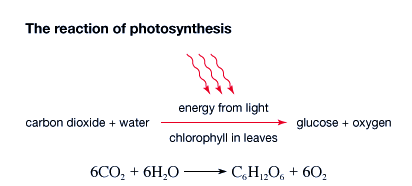
3/ A few hundred years later, we know that most of the mass of a tree/ plant is from the CO2 in the air- that becomes starch/ cellulose through the process of photosynthesis. Yet, this is counterintuitive because of our deep rooted primitive notion that 'gases do not have mass'
1/ 85+ kids have attended Jerry's courses on mathematical thinking since April 2020. They have fallen in love with exploring mathematical thought processes in an environment that is simultaneously challenging and supportive. 15 of the children have taken 2 or more courses
2/ His next course on Fractals & Dynamics starts Aug 28. Speaking about the applications of this topic, Jerry says-"Dynamics are useful in studying weather, the environment, financial systems, and a host of
other phenomena..
3/ And since dynamical processes lead to fractal images, they are also useful in art and design. For example, movie and game producers can use software that relies on fractal geometry to create artificial landscapes like the one shown here..
1/ 'Is Liberal Arts a Good Choice for Students?' is the discussion topic in our 6th EduAdda on Sat, July 11 at 1130 AM. The 45 min conversation will start with the panel comprising @ngkabra@RadG_Dodo & @aditipar To attend, register at bit.ly/EdnAddas
2/ If you can't wait till Saturday, you can start reading Navin's blog post on this question right away at bit.ly/NavinLibArts
3/ Watch the highlights of the last adda on interdisciplinarity- bit.ly/EduAdda5Highli…. @RadG_Dodo speaks about the importance of examining multiple perspectives- in the example of water- how a biologist and chemist look at this differently, and the need to integrate these.