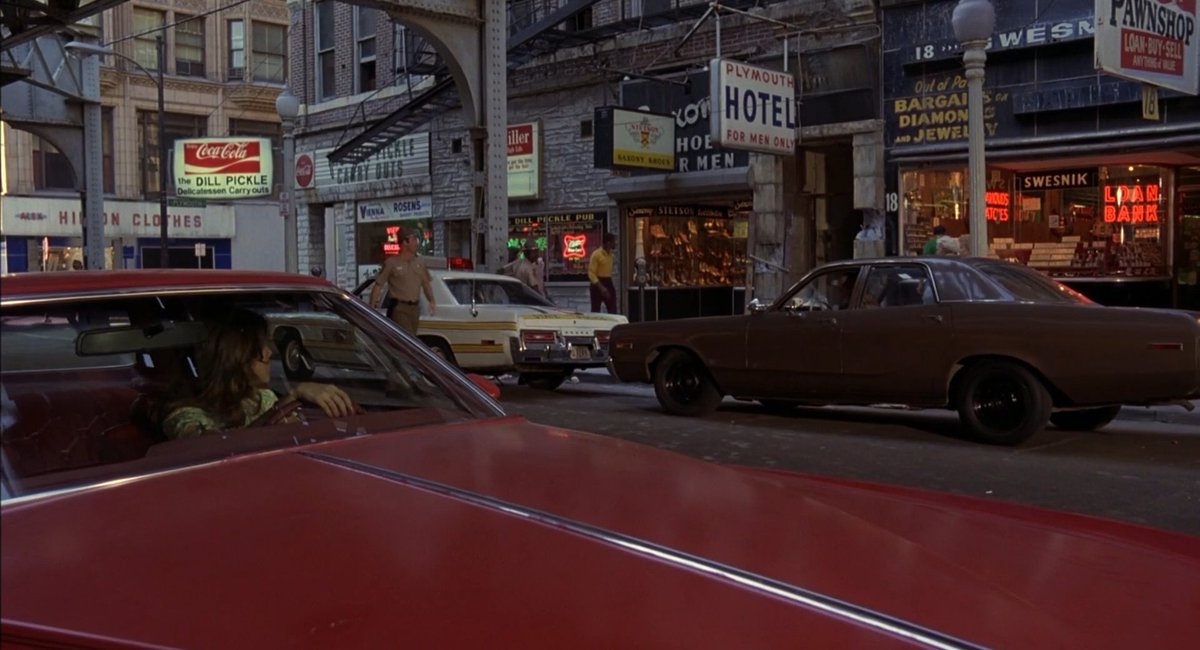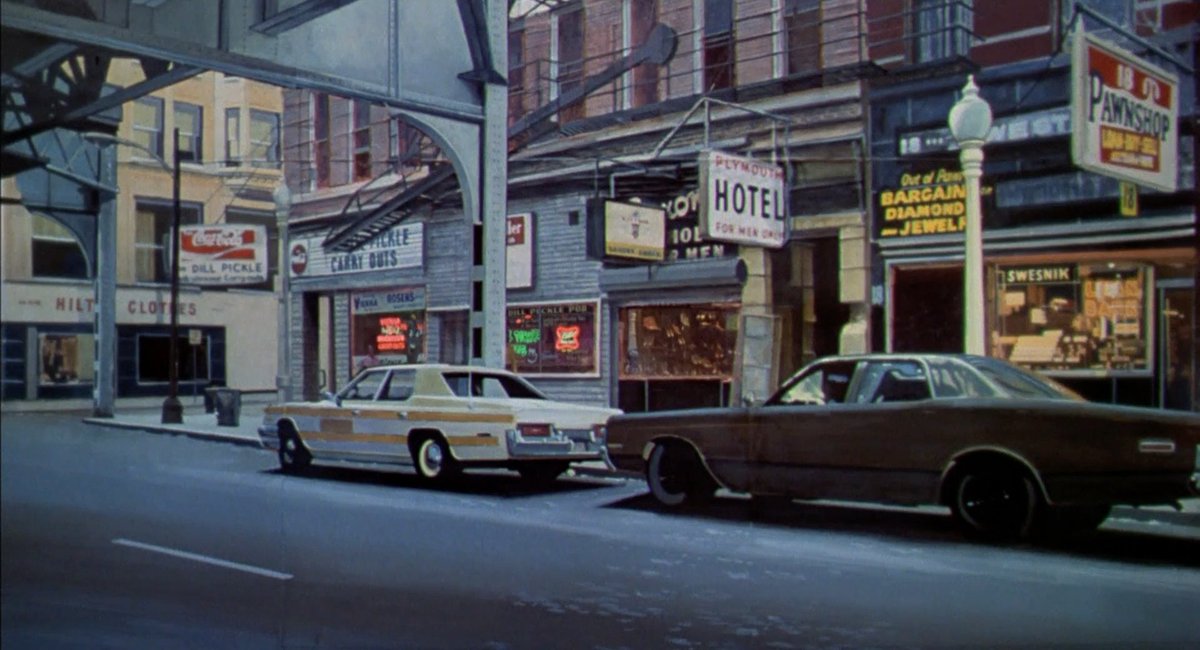
This quick shot from the prologue of "Terminator 2" is arguably one of the most important, unsung shots in the history of pre-digital visual effects, marrying multiple techniques into a single shot.
Ok, I'll try breaking this down. It's gonna get confusing, so buckle up.
On screen left, that's a two-foot tall (1/3 scale) go-motion puppet (animated by Peter Kleinow) on a 1/3 scale rubble miniature, which was animated and photographed with a rear screen projection...
On screen left, that's a two-foot tall (1/3 scale) go-motion puppet (animated by Peter Kleinow) on a 1/3 scale rubble miniature, which was animated and photographed with a rear screen projection...
... of a miniature set and explosion. The camera is locked off. On screen right is another 1/3 scale go-motion puppet against a rear screen projector, projecting more miniatures shot by Fantasy II. Now, the foreground Terminators.
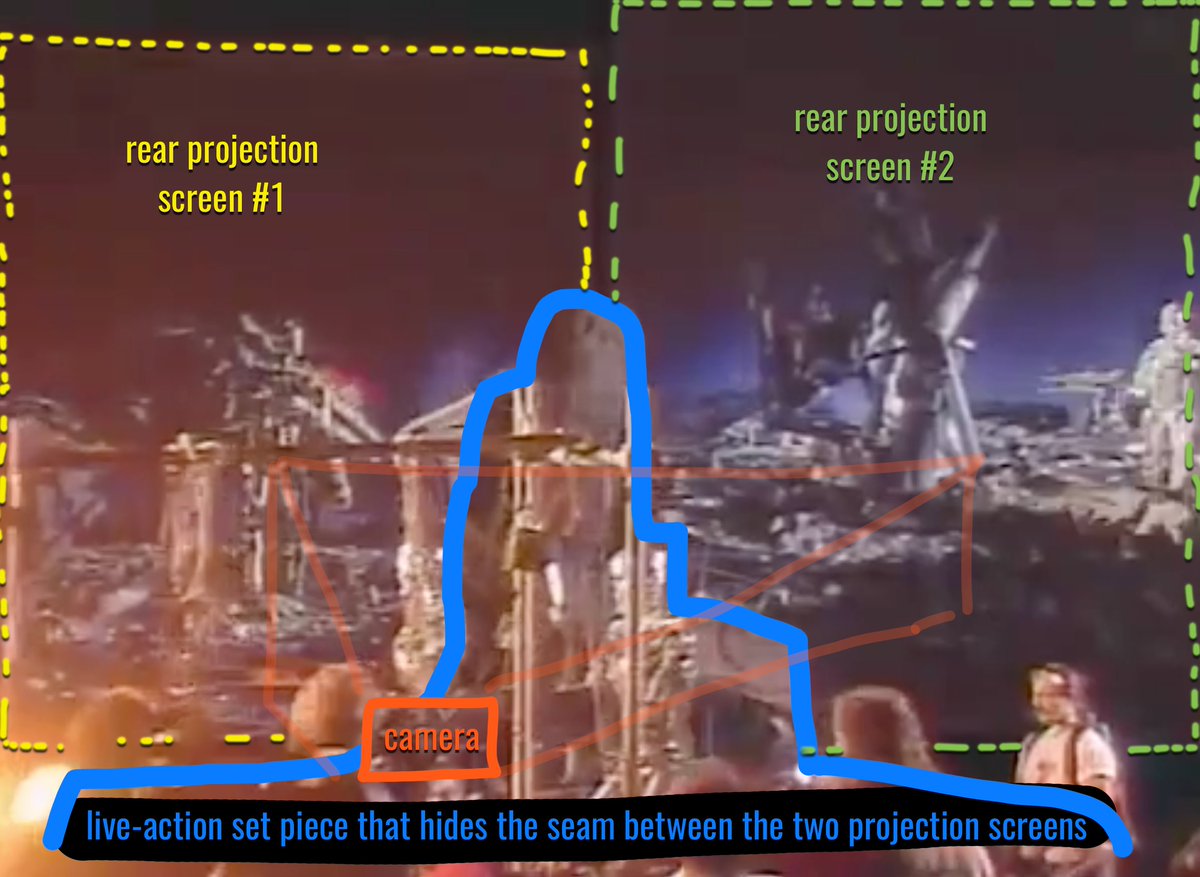
The FG robots are full-scale animatronics built by Stan Winston Studio, and are operated in real time, along with offscreen flash bulbs and live sparks and smoke. The go-motion composites are being rear-projected on two separate screens, live in front of the full-scale robots!
Each Terminator (and a background HK) is firing lasers, so an additional optical step was required: lasers, muzzle flashes and fake interactive light were all animated by rotoscope artists using cell animation techniques.
Things that help sell the effect: the live-action set pieces, hiding the seams of the two projection screens. Also, notice the animated laser blasts traveling across the screen, tying the imagery together. Plus the honest, human-operated camera movement of the live-action.
Here's how the shot fits in the sequence.
There's so much amazing stuff in "Terminator 2".
There's so much amazing stuff in "Terminator 2".
to sum up: two separate go-motion puppets animated against miniature photography rear projected, which are rear projected on two screens in front of a full-scale set with sparks/smoke and two full-scale animatronic endoskeletons with tons of animated laser blasts
whew! i did it!
whew! i did it!
Found two great pieces of video of this shot being created.
First, here's Peter Kleinow animating the two-foot tall (1/3 scale) endoskeleton, against the rear-projected Fantasy II miniature background.
First, here's Peter Kleinow animating the two-foot tall (1/3 scale) endoskeleton, against the rear-projected Fantasy II miniature background.
Second, here's what it looked like photographing the full-scale endoskeletons against the two separate rear projection screens. These two clips are probably from rehearsals, since there's no sparks and smoke moving through frame.
My attempt to help make sense of this last video image for y'all. 

• • •
Missing some Tweet in this thread? You can try to
force a refresh