Last month saw the publication of my novel ATTACK SURFACE, the third book in the multi-bestselling Little Brother series. For the launch, @torbooks and I threw an eight-part seminar series in collaboration with eight outstanding indie bookstores.
Each event featured me and two guest co-hosts discussing themes from the book, ranging from politics and protest to cyberpunk to information security to intersectionalism, race and surveillance.
2/
Now, the booksellers involved have begun to post their recordings, and I'm pleased to present them to you! I'll be doing one a day for the next eight days (assuming the stores' posting schedule keeps up!).
3/
I'm also folding these daily releases into my podcast feed. If you'd prefer that, use your podcatcher to subscribe to The Cory Doctorow Podcast, or sign up through the RSS feed:
Yesterday, Canadian Innovation Minister @NavdeepSBains introduced the Digital Charter Implementation Act, which proposes a national privacy standard for Canada akin to Europe's #GDPR.
The law is complex and will undergo many changes, but its two most salient features are:
I. The right to refuse to have your data collected and used; and
II. The right to have your data deleted if you change your mind.
With still penalties for companies that don't comply.
2/
The latter is self-explanatory, but the former is really interesting. Since the early days of packaged software, the tech industry has operated on the basis of a fictional consent: "By being stupid enough to be my customer (open this box, click this link, etc), you agree..."
3/
The "shitty technology adoption curve" describes the arc of oppressive technology: when you have a manifestly terrible idea, you can't ram it down the throats of rich, powerful people who get to say no. You have to find people whose complaints no one will listen to.
1/
So our worst tech ideas start out with prisoners, asylum seekers and mental patients, spread to children and blue collar workers, and ascend the privilege gradient to the wealthy and powerful as they are normalized and have their roughest corners sanded down.
2/
For example: If you ate your dinner under the unblinking gaze of a networked, remote-monitored video-camera 20 years ago, it was because you were in a supermax prison. Today, it's because you've been unwise enough to buy home cameras from Amazon, Google, or Apple.
3/
Today, on the Attack Surface Lectures - a series of 8 panels at 8 indie bookstores that @torbooks and I ran to launch the third Little Brother novel in Oct: Race, Surveillance, and Tech with @culturejedi and @mer__edith, hosted by @Booksmith.
1/
You can also watch this without Youtube surveillance on the @internetarchive:
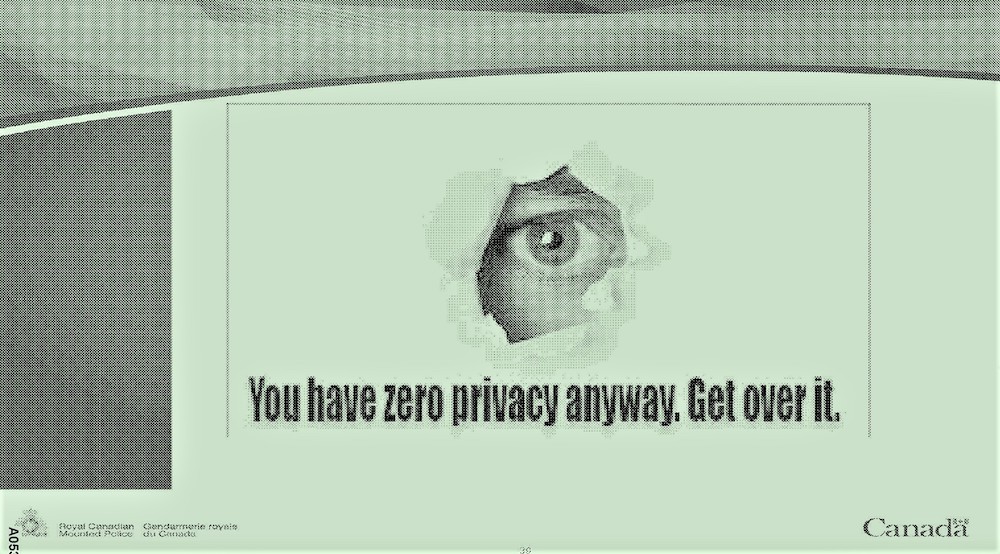
When you think of the @rcmpgrcpolice, you probably imagine the romantic sight of guys in archaic red brocaded uniforms doing close-order drill on horses while waving Canadian flags.
1/
The reality is that the RCMP is a police force grounded in racial violence and genocide, which has not improved noticeably over the following century, adding dirty tricks, antidemocratic political oppression and domestic surveillance to its portfolio.
The RCMP lie about this. It's not just the official lie of good-guy Mounties patrolling the hinterlands for bandits and American gunrunners - it's a string of ongoing, highly specific, contemporary lies about the force's illegal conduct.
3/
One of the machine learning researchers I follow closely is @petewarden, who writes extensively about the hardware side of ML, something we hear very little about beyond vague accounts of the power-consumption and carbon footprints of cloud-based GPUs.
1/
Last month, Warden presented a talk predicting that there would be " tens or hundreds of billions of [embedded ML] devices over the next few years."
In a followup, Warden explains: the rise of Tinyml (a machine learning framework for low-powered, embedded processors) and the trends in hardware point to a near-future scenario where a $0.50 CPU replicates today's high-power, networked based speech recognition systems.
3/