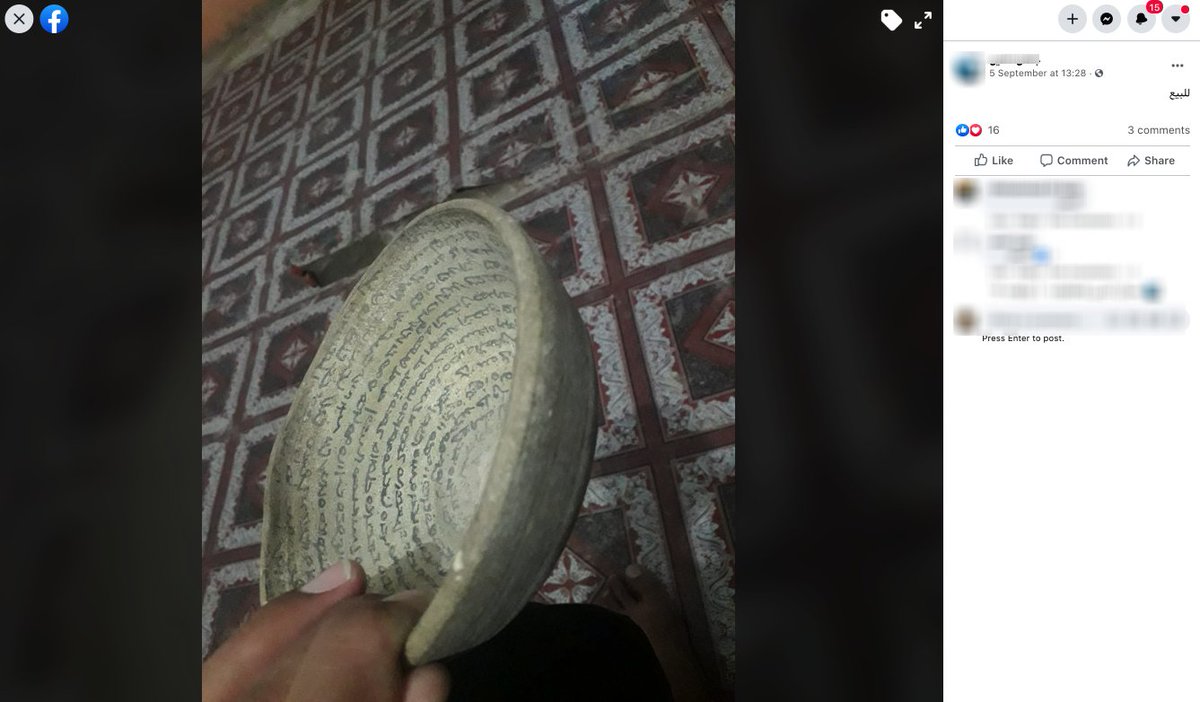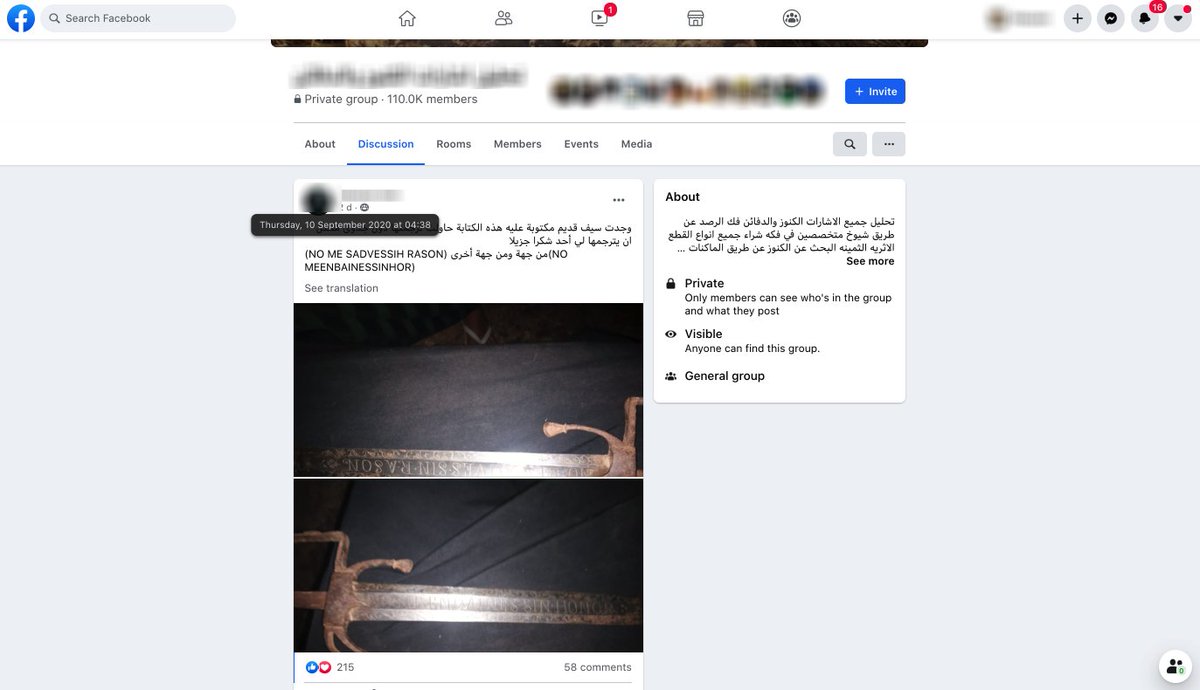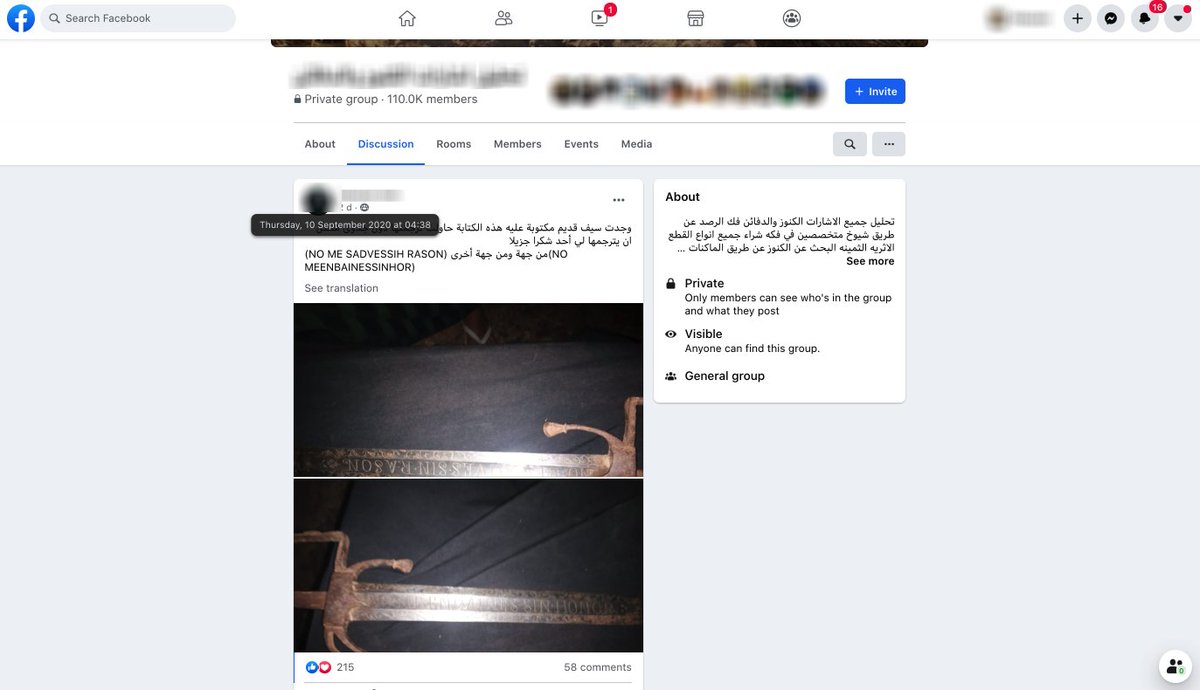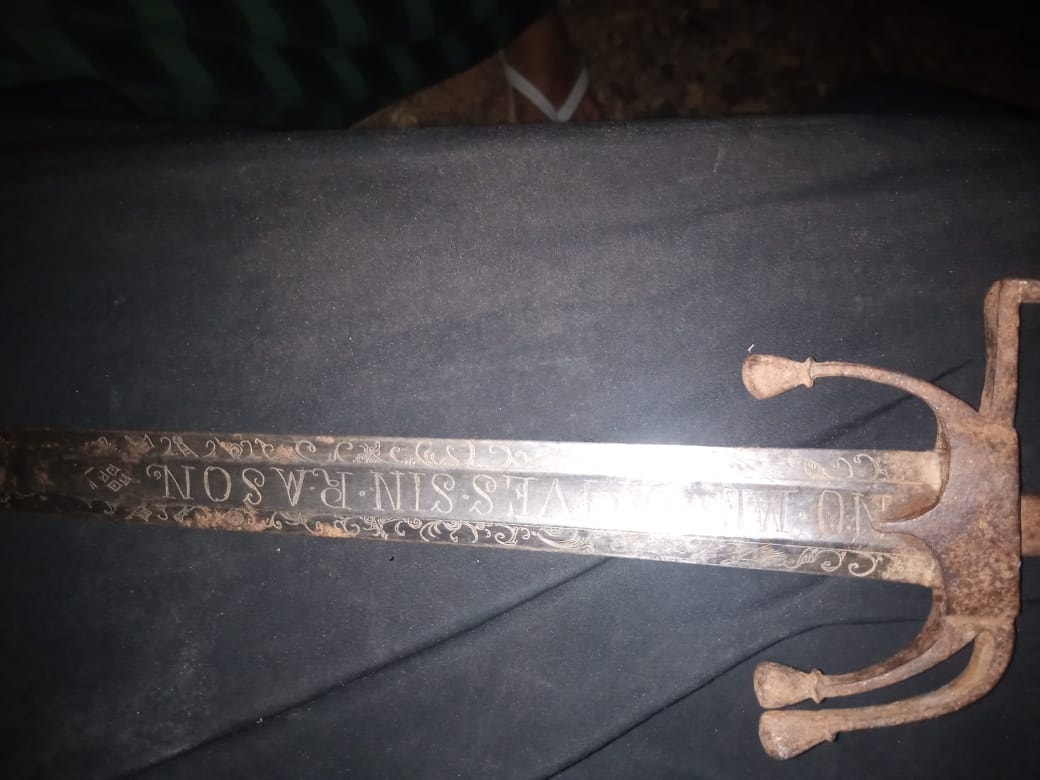
THREAD: Today Zuck faced a lot of questions about FB hate speech. But the platform is also hosting criminal activity.
In the case of antiquities war crime, Facebook is actually *facilitating* it.
We'll show how once trafficker in Libya is using FB to maximize potential buyers
In the case of antiquities war crime, Facebook is actually *facilitating* it.
We'll show how once trafficker in Libya is using FB to maximize potential buyers

A user who lists his location as Darnah, Libya is a prime example of how Facebook has rapidly accelerated transnational trafficking in conflict zones.
This Libya-based user recently posted Libyan antiquities for sale across multiple Facebook groups for antiquities trafficking
This Libya-based user recently posted Libyan antiquities for sale across multiple Facebook groups for antiquities trafficking
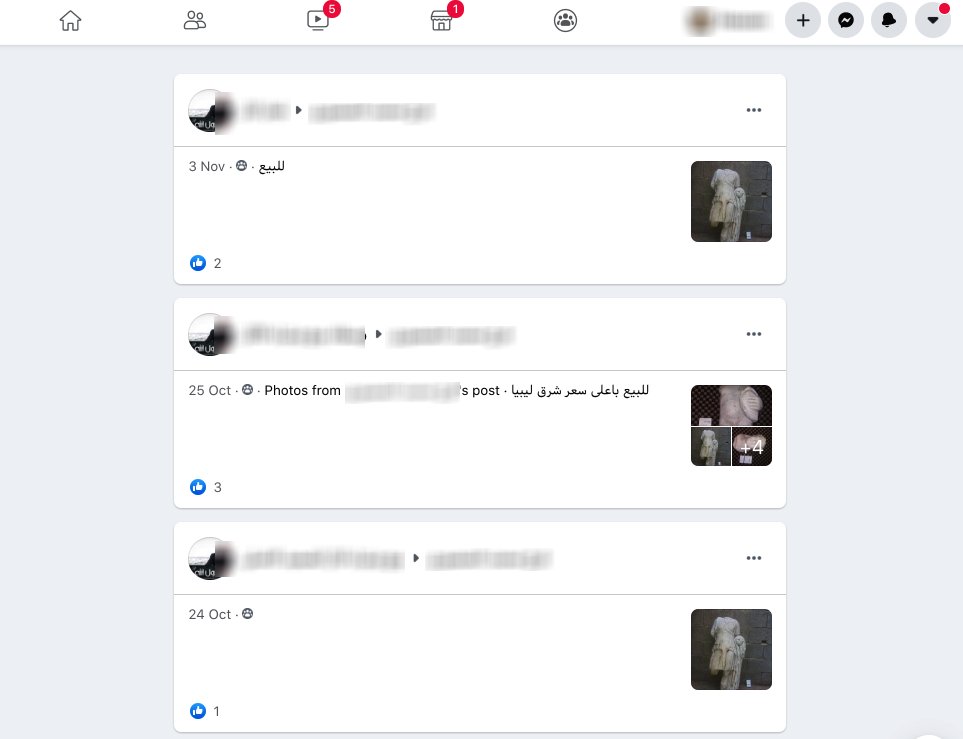

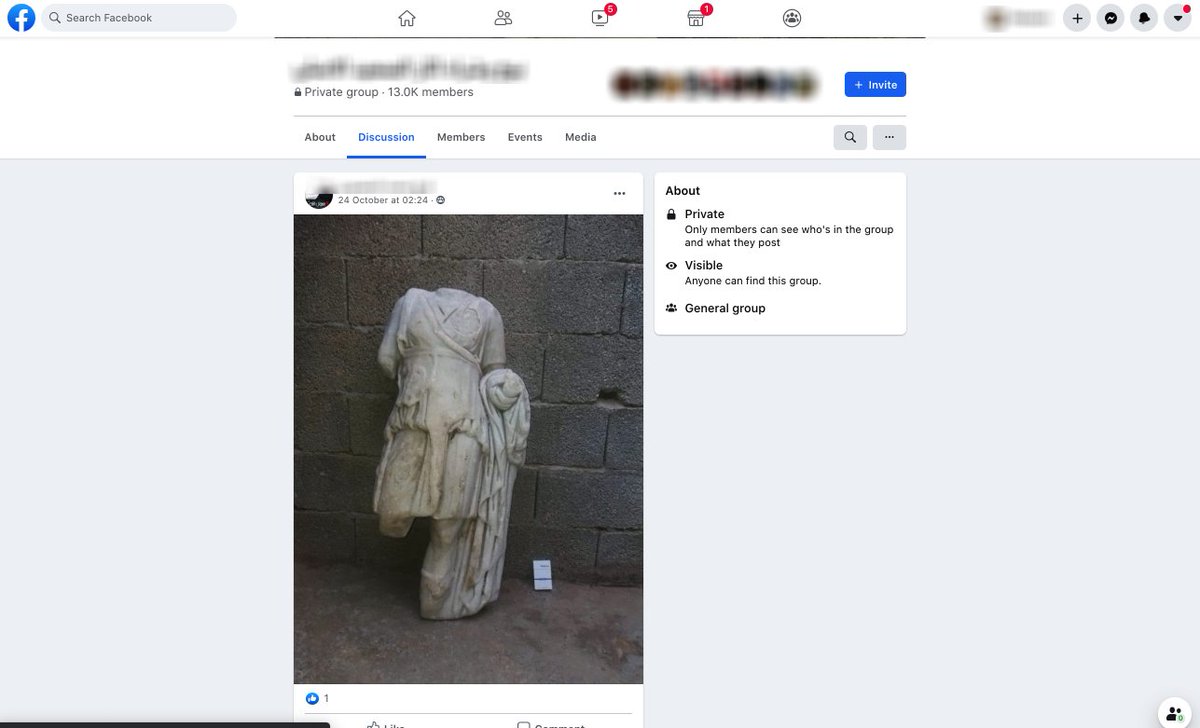
The user's authored his first post on October 24 in a Facebook antiquities trafficking group with roughly 13,000 members.
His post included no text, only a photo of a statue.
This is often a signal to other users that the pictured item is for sale. (see atharproject.org/report2019/)
His post included no text, only a photo of a statue.
This is often a signal to other users that the pictured item is for sale. (see atharproject.org/report2019/)
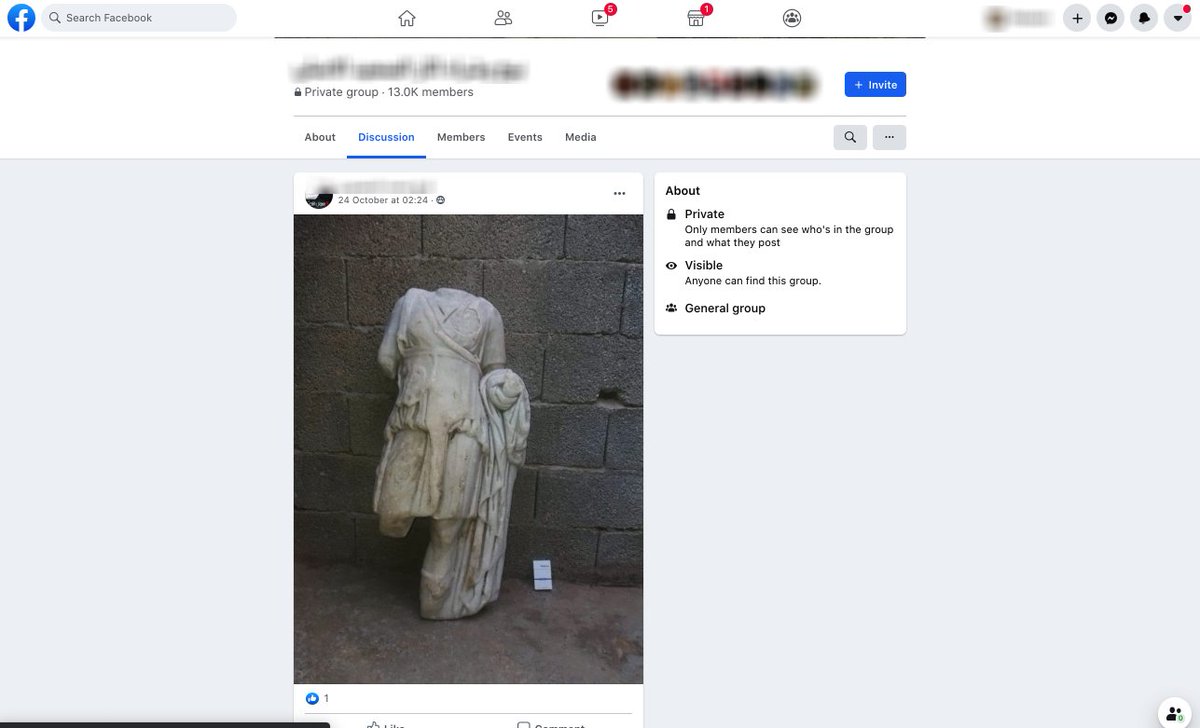
Facebook data shows that the user had only joined the group one day before he posted the Greco-Roman statue.
Note: While his post included no text, the Facebook group's Arabic name explicitly includes the phrase "antiquities for sale", Items in posts are assumed to be for sale
Note: While his post included no text, the Facebook group's Arabic name explicitly includes the phrase "antiquities for sale", Items in posts are assumed to be for sale
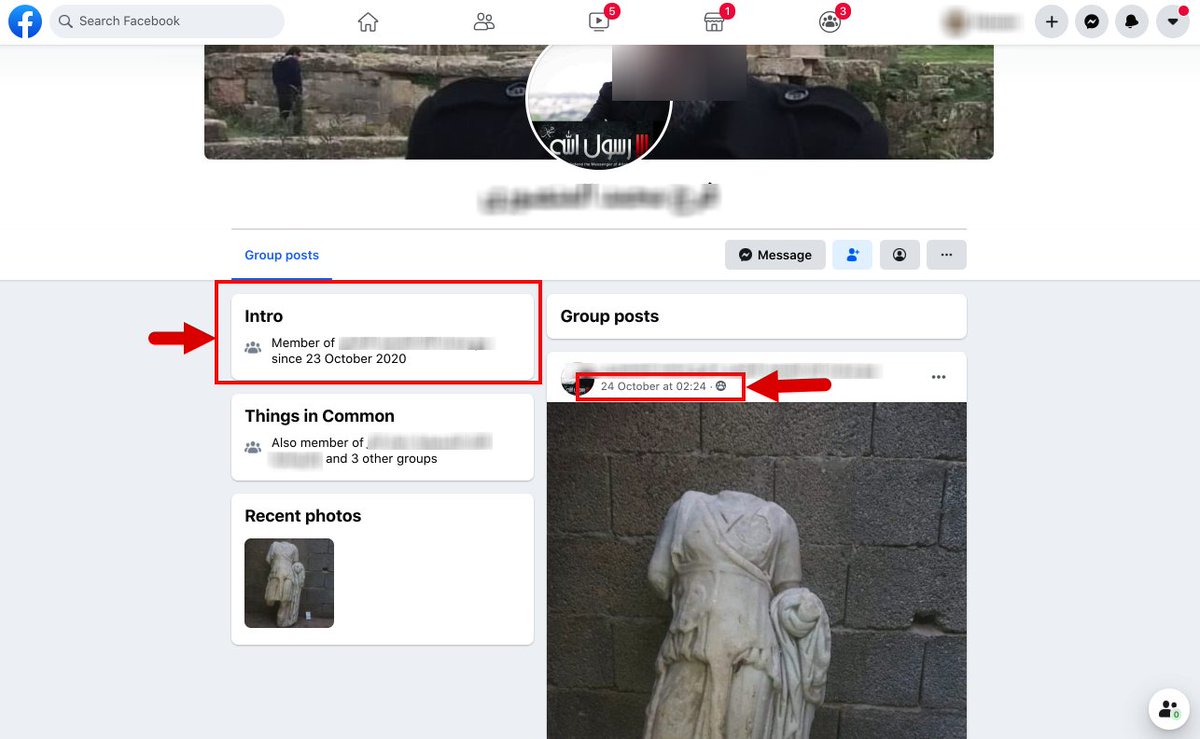
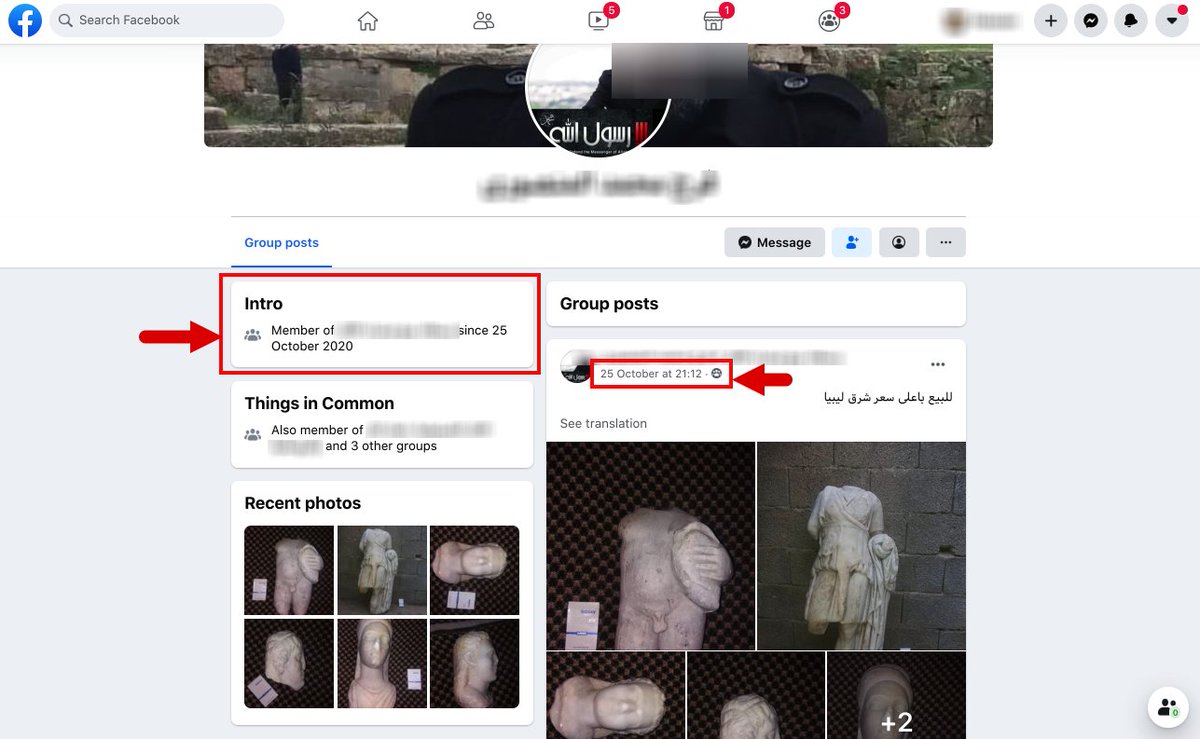
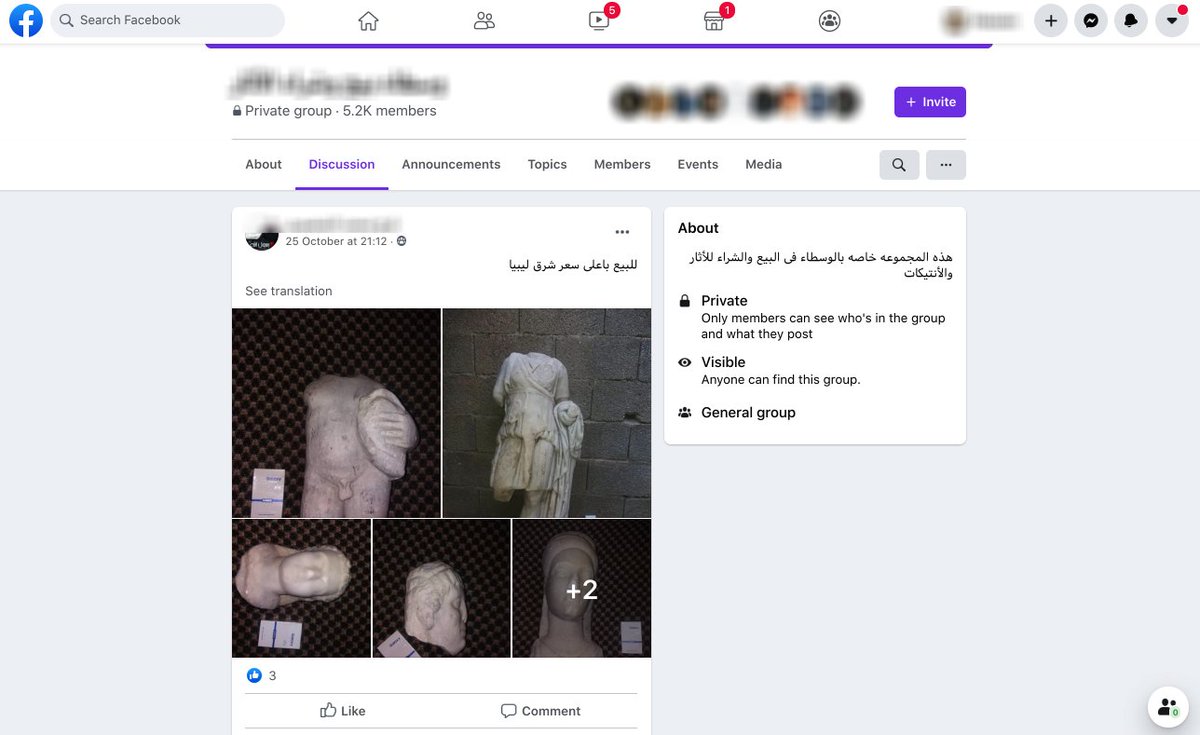
On October 25 the same user in Darnah posted the Greco-Roman statue along with several other statue pieces in another Facebook antiquities trafficking group with roughly 5,200 members.
His post explicitly states that the artifacts are "for sale" and available in Libya.
His post explicitly states that the artifacts are "for sale" and available in Libya.
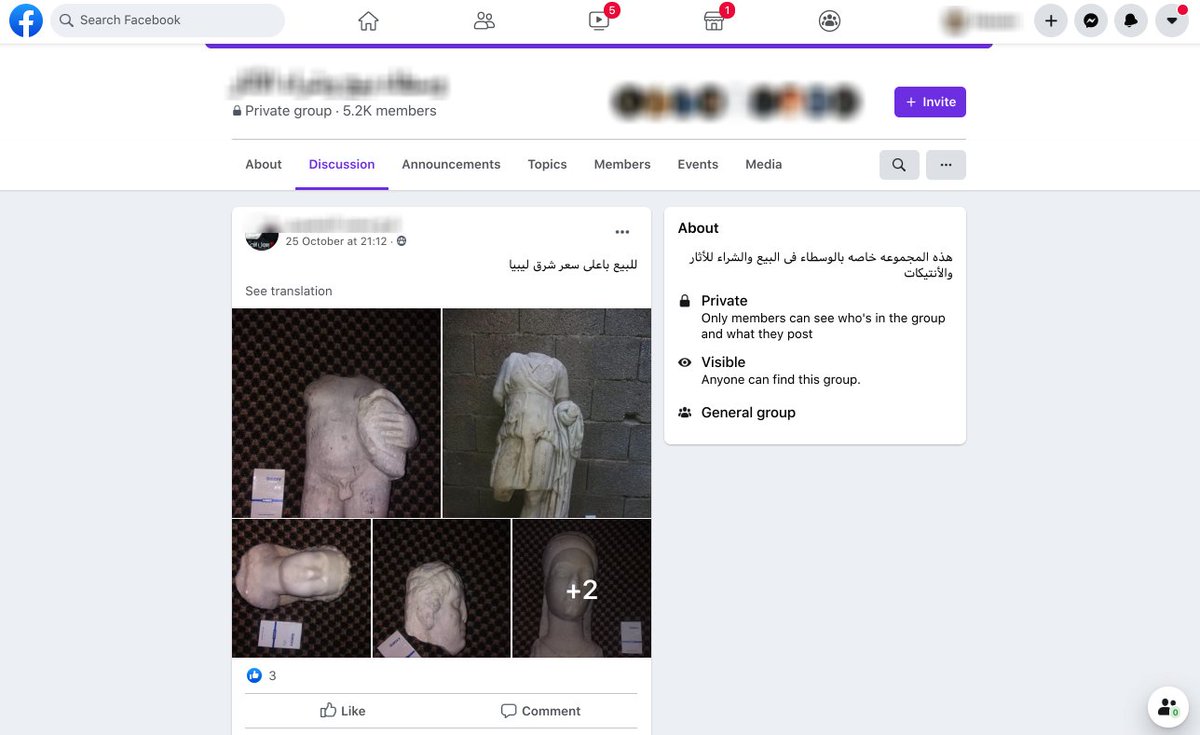
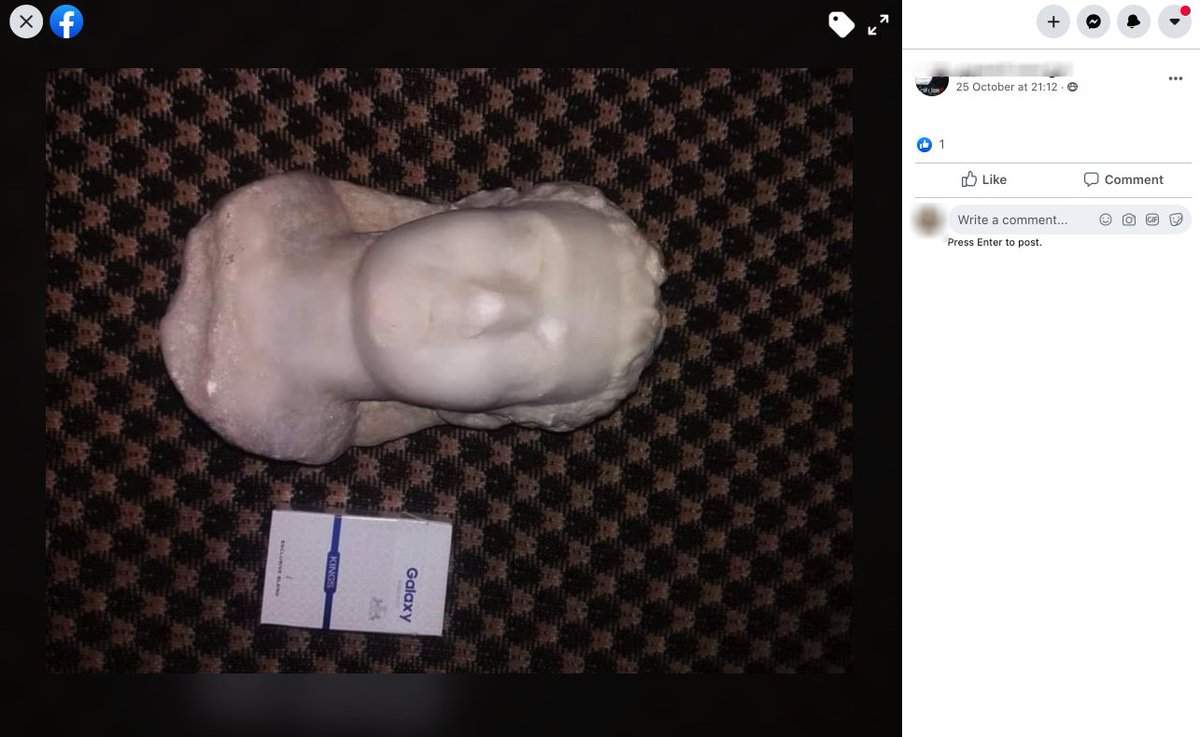
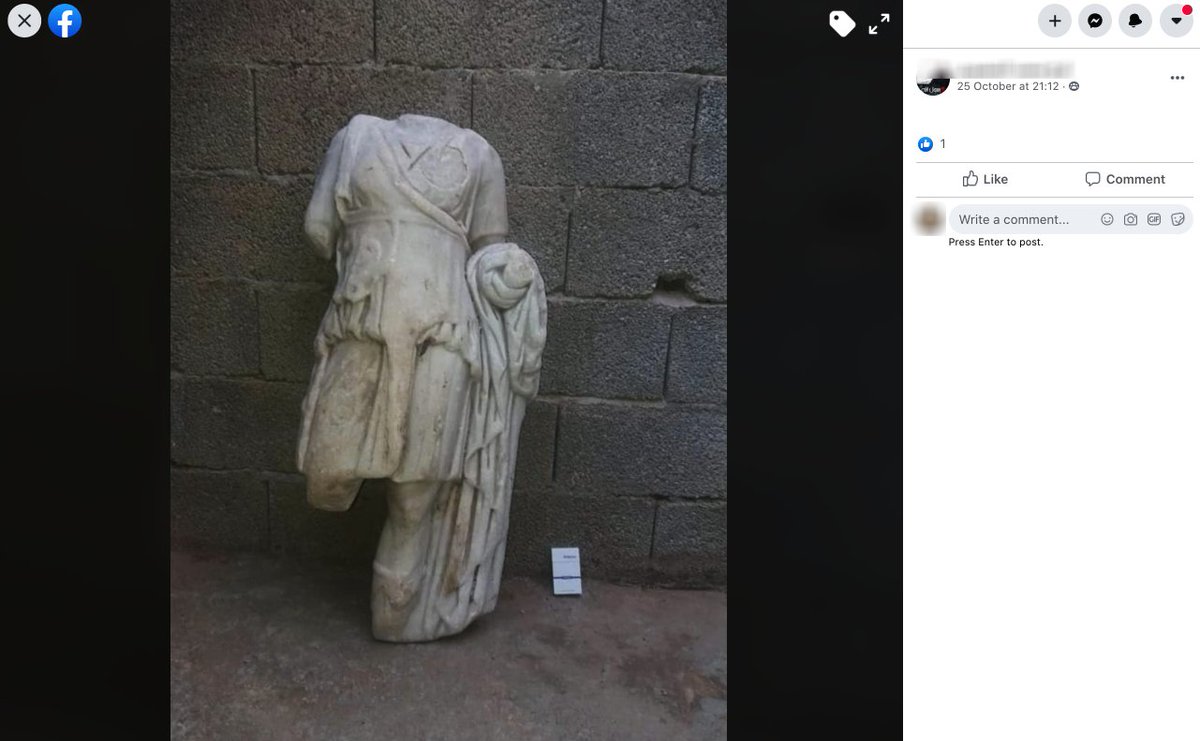
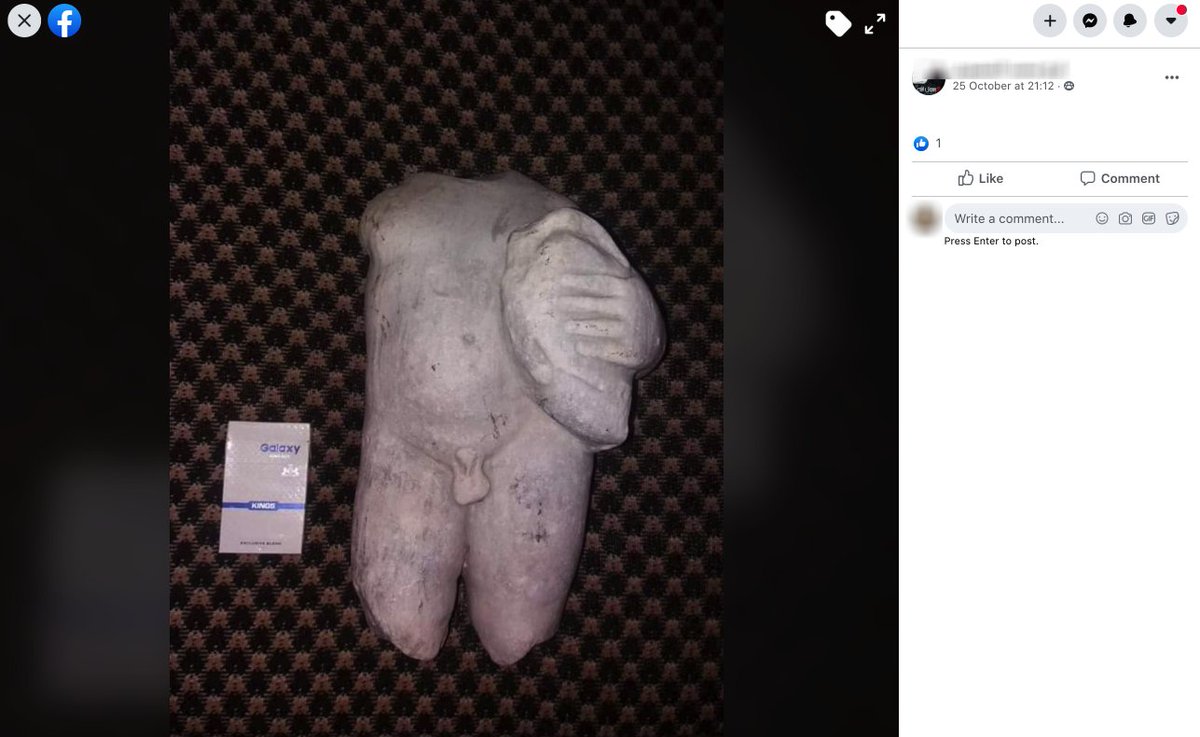
Facebook data shows that the user had joined the 5,200 member group the same day that he posted to offer the Greco-Roman statue and artifacts for sale.
The group with 5,200 members was just created months earlier in May 2020.
The group was created amid a surge in antiquities looting and trafficking posts on Facebook.
Facebook banned trafficking of antiquities one month after this group was created. The group was never touched.
The group was created amid a surge in antiquities looting and trafficking posts on Facebook.
Facebook banned trafficking of antiquities one month after this group was created. The group was never touched.

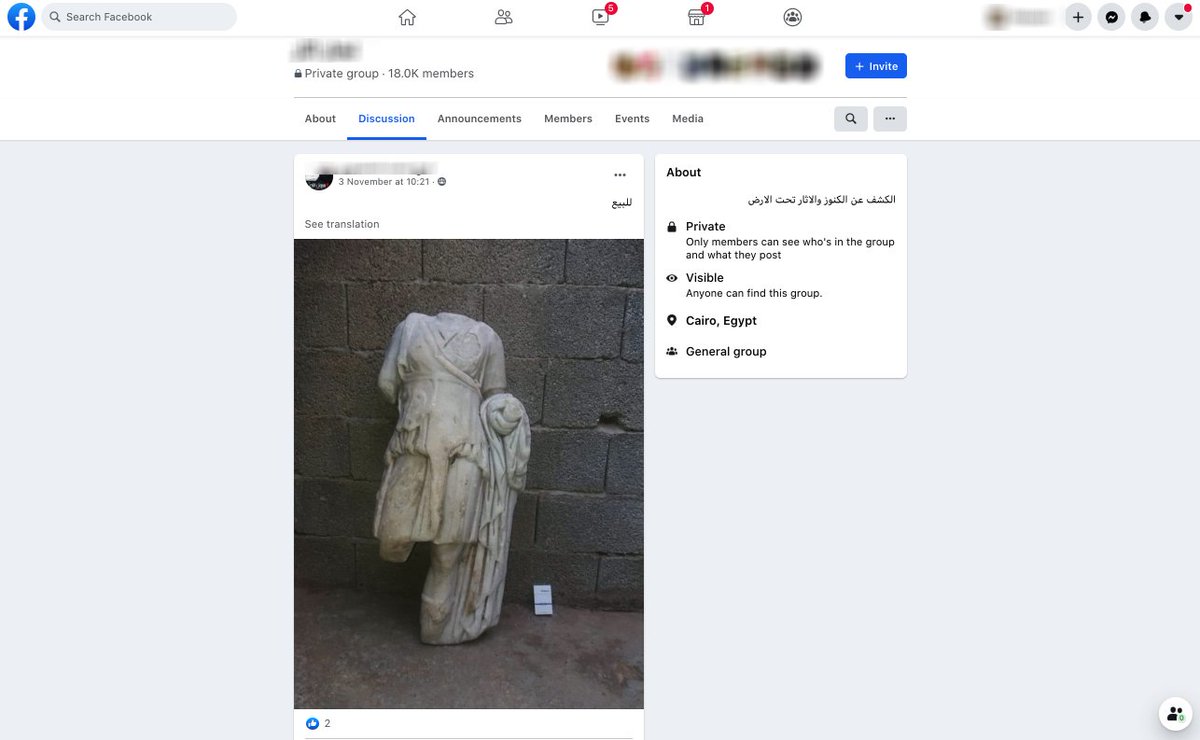
On November 3 the same user in Darnah posted the larger piece of his Greco-Roman statues in yet another Facebook antiquities trafficking group, this one with roughly 18,000 members.
His post explicitly states that the statue is "for sale."
His post explicitly states that the statue is "for sale."
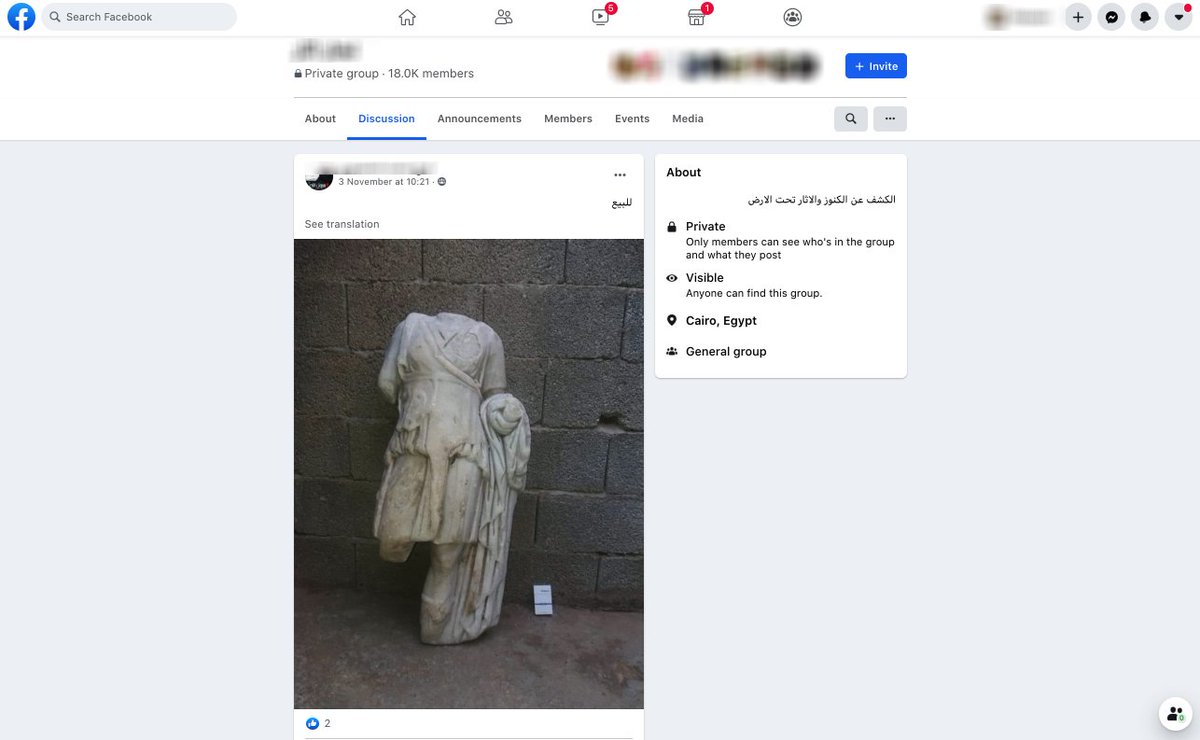
Unlike the other groups, the user had joined this group several days before he posted any content.
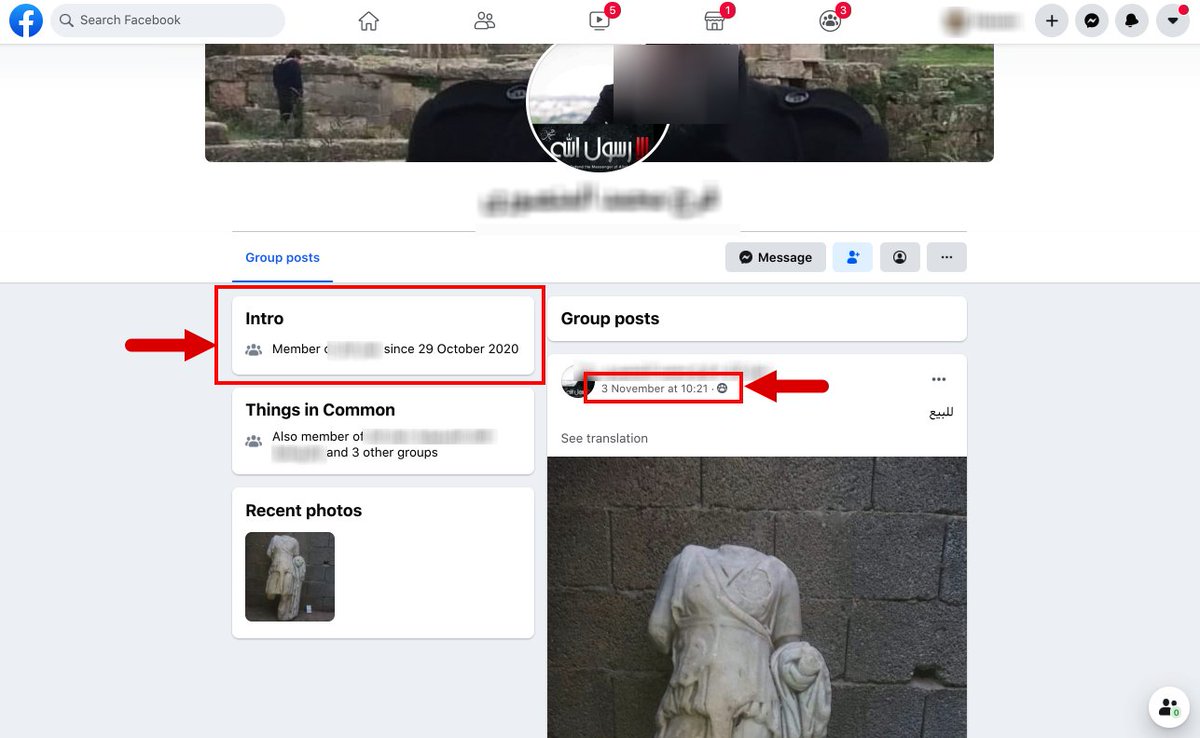
Darnah, Libya, where this user's profile says he is based, is mired in conflict.
Just earlier this week, ISIS militants claimed responsibility for two bombs that injured at least 18 people in Darnah. thenationalnews.com/world/mena/isi…
Just earlier this week, ISIS militants claimed responsibility for two bombs that injured at least 18 people in Darnah. thenationalnews.com/world/mena/isi…
During conflicts of the 20th century, trafficking antiquities out of a war zone would take time.
But thanks to Facebook, a trafficker in conflict can ensure that his looted pieces are seen by thousands of potential buyers in a matter of days.
This is FB facilitating a war crime
But thanks to Facebook, a trafficker in conflict can ensure that his looted pieces are seen by thousands of potential buyers in a matter of days.
This is FB facilitating a war crime
Facebook's policy banning antiquities sales is seriously flawed—any enforcement on Facebook's end means erasure of critical war crimes evidence.
In @ForeignAffairs, ATHAR's @alazmamr @AnthroPaulicy call for Facebook to create a digital war crimes archive foreignaffairs.com/articles/middl…
In @ForeignAffairs, ATHAR's @alazmamr @AnthroPaulicy call for Facebook to create a digital war crimes archive foreignaffairs.com/articles/middl…
• • •
Missing some Tweet in this thread? You can try to
force a refresh