People outside of India don't fully understand the “𝐉𝐈𝐎 𝐞𝐟𝐟𝐞𝐜𝐭" and how transformational that was (and will be) for 𝐈𝐧𝐝𝐢𝐚.
JIO is a telecom company that launched in 2016 and did something radical...
JIO is a telecom company that launched in 2016 and did something radical...
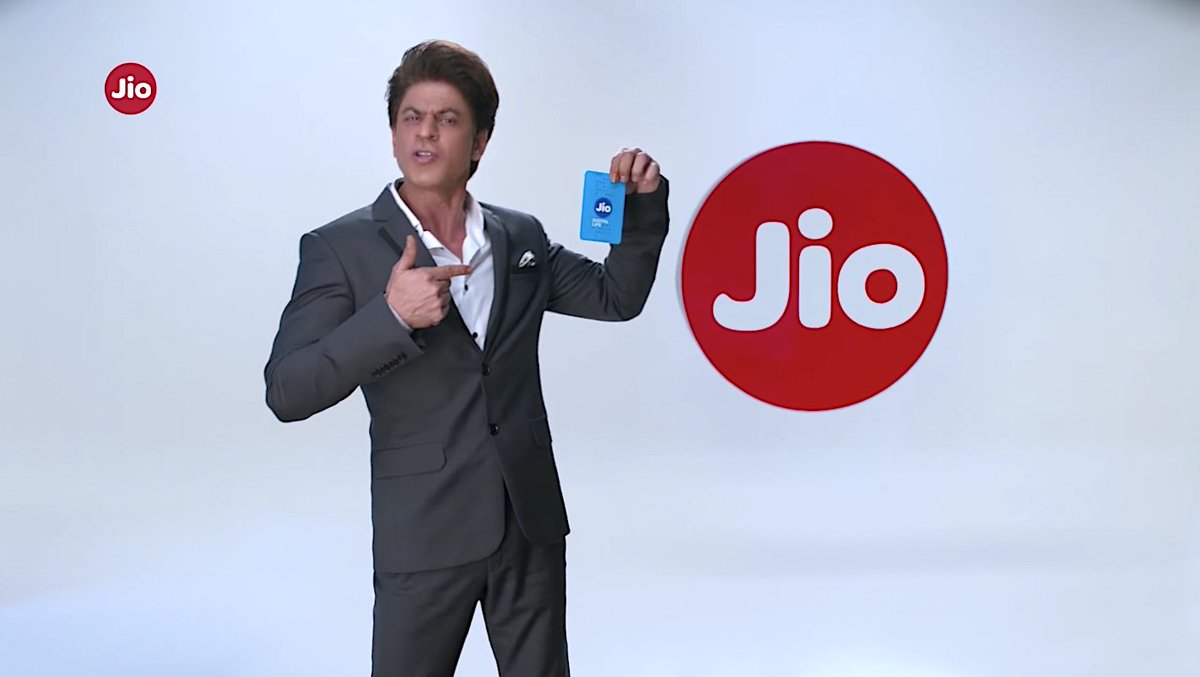
JIO gave Indians 𝐮𝐧𝐥𝐢𝐦𝐢𝐭𝐞𝐝 𝟒𝐆 𝐢𝐧𝐭𝐞𝐫𝐧𝐞𝐭 for FREE.
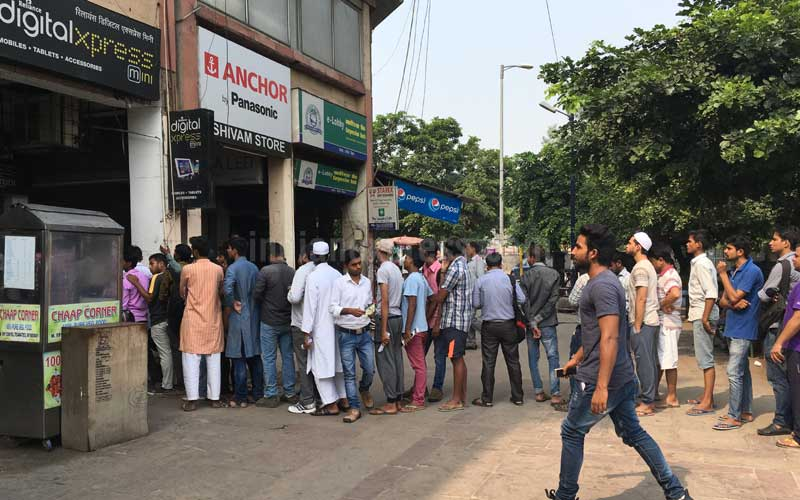
So of course, Indians went crazy! They waited in long lines to get their JIO SIM card.
So of course, Indians went crazy! They waited in long lines to get their JIO SIM card.
Around the same time, cheap mobile phones were also becoming available.
These two factors (𝐜𝐡𝐞𝐚𝐩 𝐢𝐧𝐭𝐞𝐫𝐧𝐞𝐭 + 𝐜𝐡𝐞𝐚𝐩 𝐡𝐚𝐫𝐝𝐰𝐚𝐫𝐞) brought millions of Indians online starting in 2016, including people living in rural villages.
These two factors (𝐜𝐡𝐞𝐚𝐩 𝐢𝐧𝐭𝐞𝐫𝐧𝐞𝐭 + 𝐜𝐡𝐞𝐚𝐩 𝐡𝐚𝐫𝐝𝐰𝐚𝐫𝐞) brought millions of Indians online starting in 2016, including people living in rural villages.

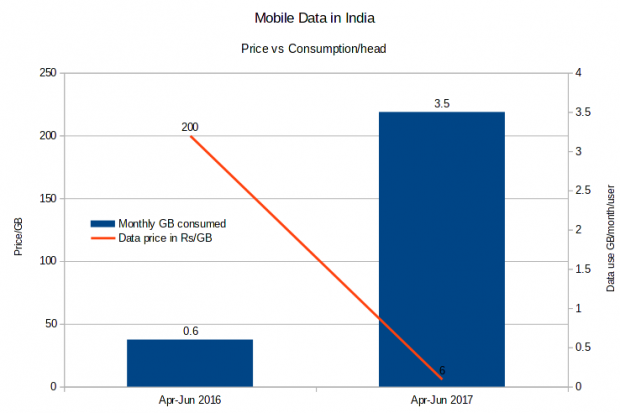
Then starting in 2017, JIO stopped giving away data for free. They started charging for data, but kept data prices at an 𝐢𝐧𝐬𝐚𝐧𝐞𝐥𝐲 𝐥𝐨𝐰 𝐜𝐨𝐬𝐭 (e.g. $3 a month for 50GB).
Indians had already been hooked to the Internet, so a majority of users continued to use it.
Indians had already been hooked to the Internet, so a majority of users continued to use it.
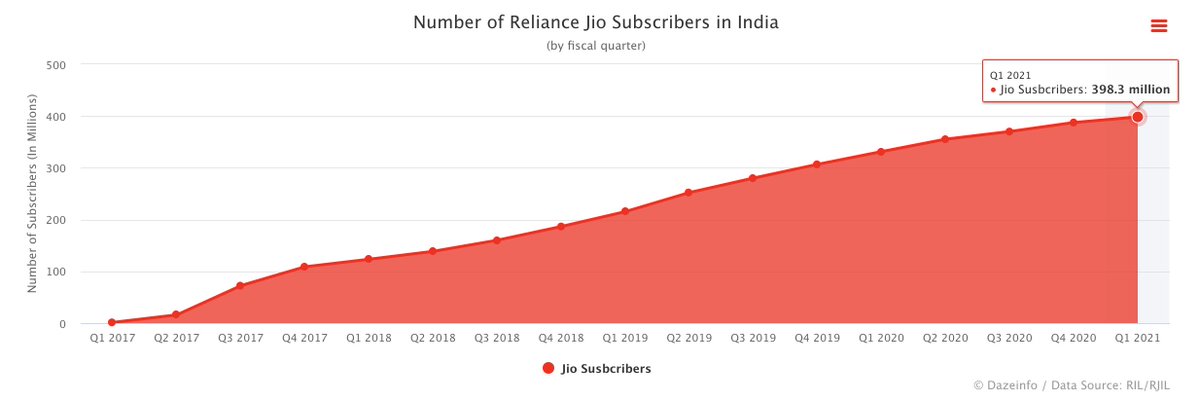
JIO went from having zero customers in 2016 to now having 𝟒𝟎𝟎 𝐦𝐢𝐥𝐥𝐢𝐨𝐧 subscribers.
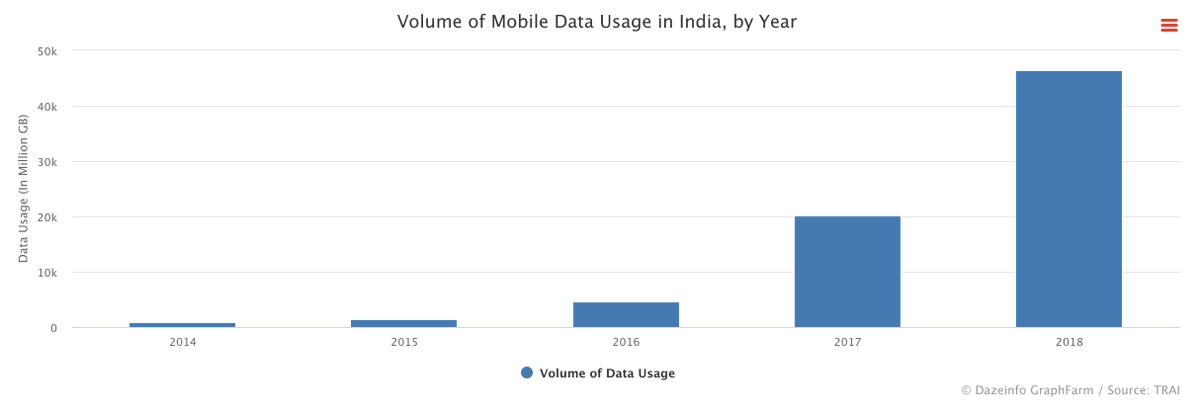
And Indians have gone from consuming just 700 MB of data per month to 11 GB.
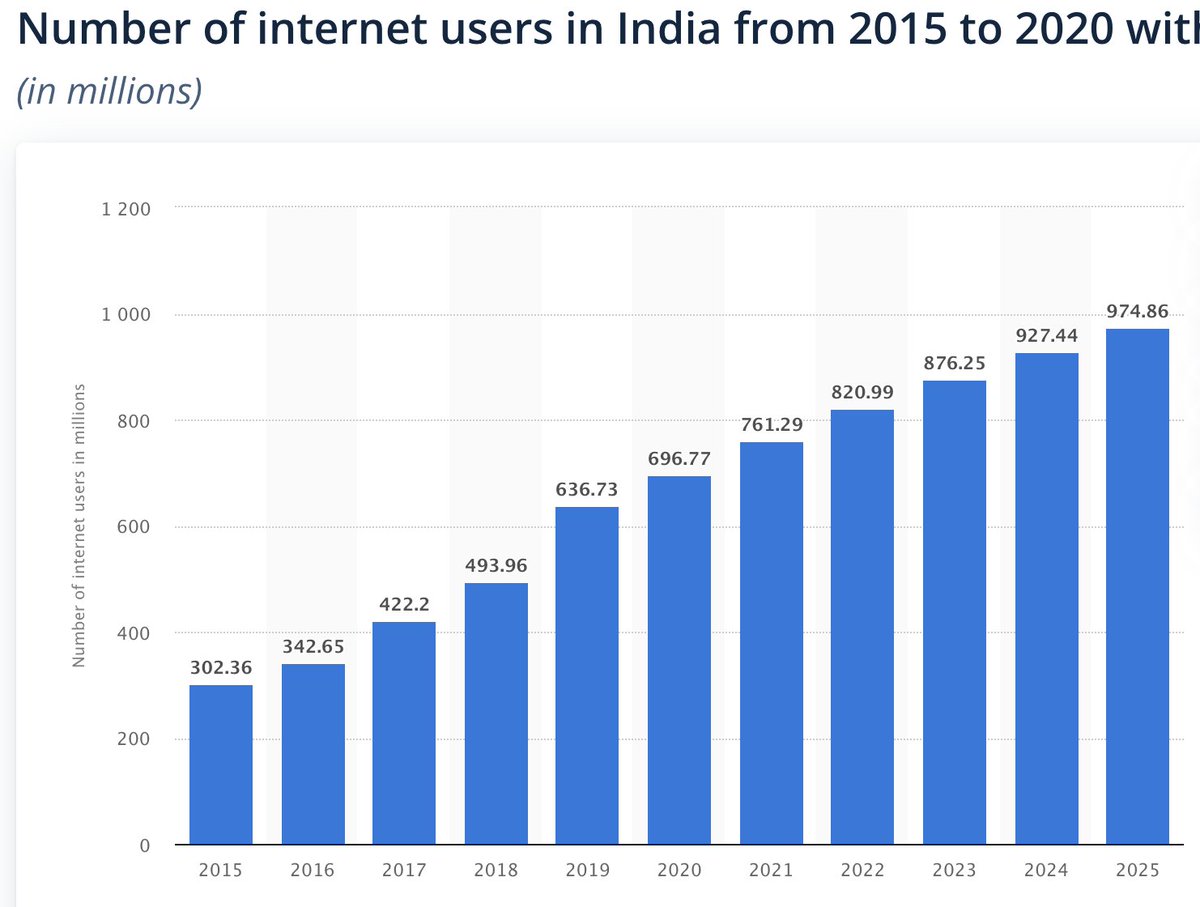
In 2020, India had nearly 𝟕𝟎𝟎 𝐦𝐢𝐥𝐥𝐢𝐨𝐧 𝐢𝐧𝐭𝐞𝐫𝐧𝐞𝐭 𝐮𝐬𝐞𝐫𝐬 and this is expected to grow to 974 million users by 2025.
Hence, the digital economy in India exploded.
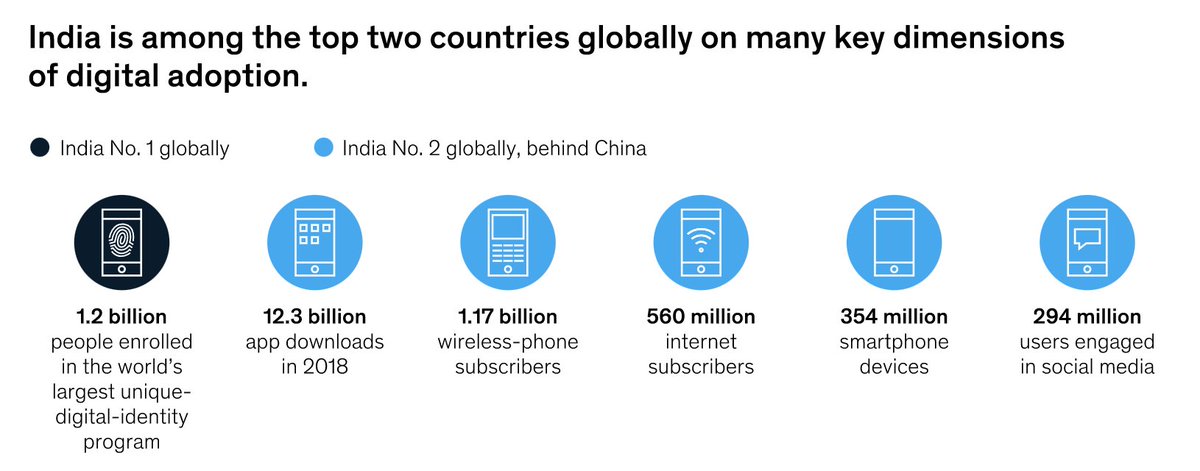
The JIO effect immensely helped many Silicon Valley social networks as well.
For example, 𝐘𝐨𝐮𝐓𝐮𝐛𝐞 is now the de facto streaming service for Indians.
For example, 𝐘𝐨𝐮𝐓𝐮𝐛𝐞 is now the de facto streaming service for Indians.
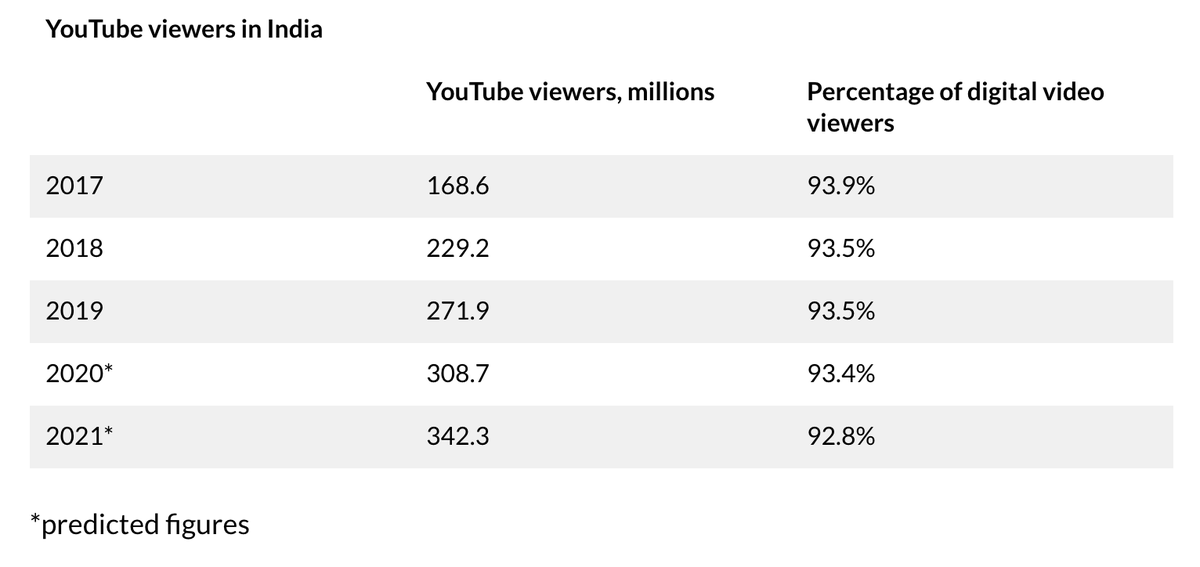
Indians love Bollywood (songs and films) and YouTube perfectly serves that need.
In fact, 𝐓-𝐬𝐞𝐫𝐢𝐞𝐬 (which is now India's largest record label) became more popular on YouTube than 𝐏𝐞𝐰𝐃𝐢𝐞𝐏𝐢𝐞 last year.
In fact, 𝐓-𝐬𝐞𝐫𝐢𝐞𝐬 (which is now India's largest record label) became more popular on YouTube than 𝐏𝐞𝐰𝐃𝐢𝐞𝐏𝐢𝐞 last year.
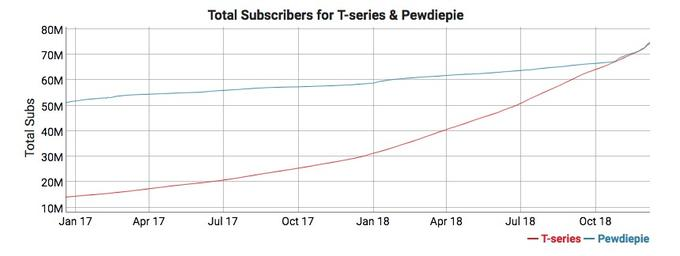
95% of YouTube content is India consumed in local languages, and now, 𝟐 𝐨𝐟 𝐭𝐡𝐞 𝐓𝐨𝐩 𝟑 𝐘𝐨𝐮𝐓𝐮𝐛𝐞 𝐜𝐡𝐚𝐧𝐧𝐞𝐥𝐬 𝐚𝐫𝐞 𝐢𝐧 𝐇𝐢𝐧𝐝𝐢...
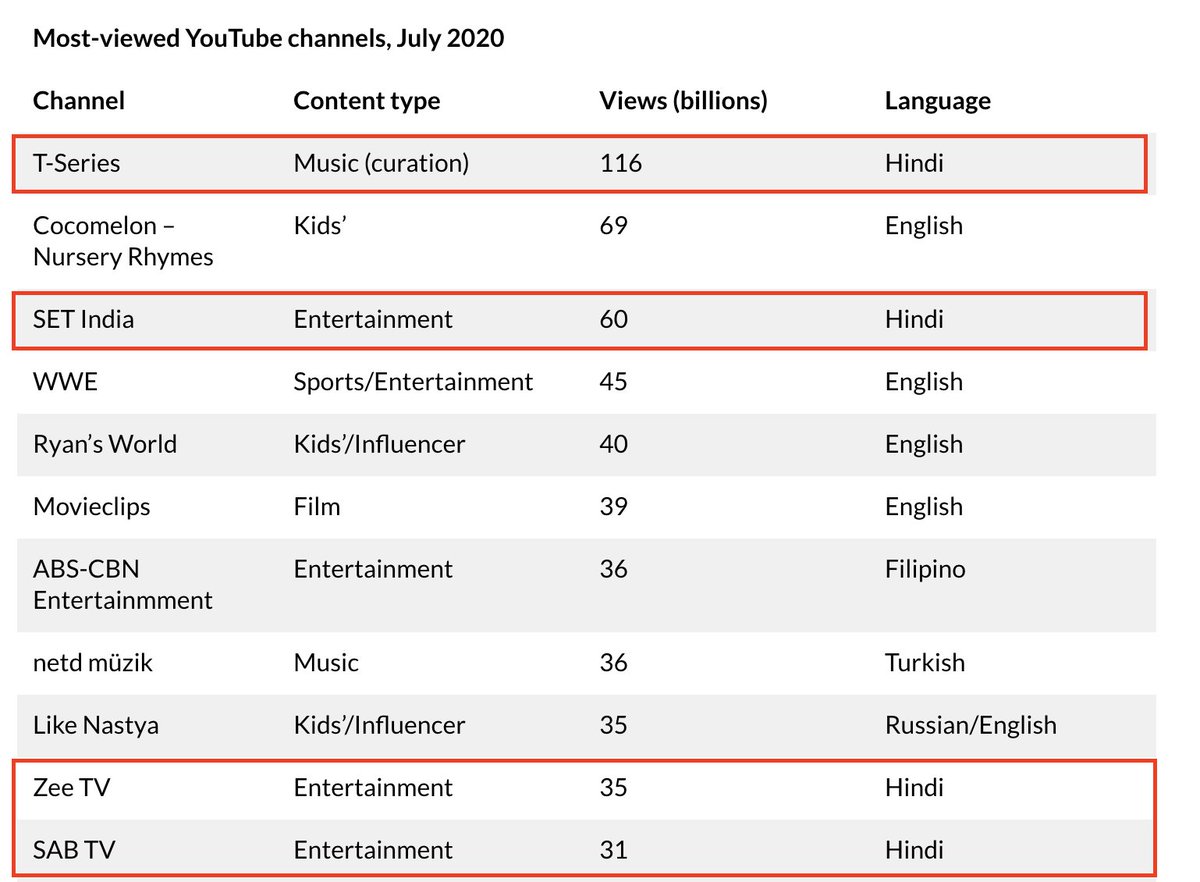
If we look at YouTube channels with over 10 million subscribers (ranked by country)
𝐈𝐧𝐝𝐢𝐚 𝐫𝐚𝐧𝐤𝐬 𝐚𝐬 #𝟐
𝐈𝐧𝐝𝐢𝐚 𝐫𝐚𝐧𝐤𝐬 𝐚𝐬 #𝟐

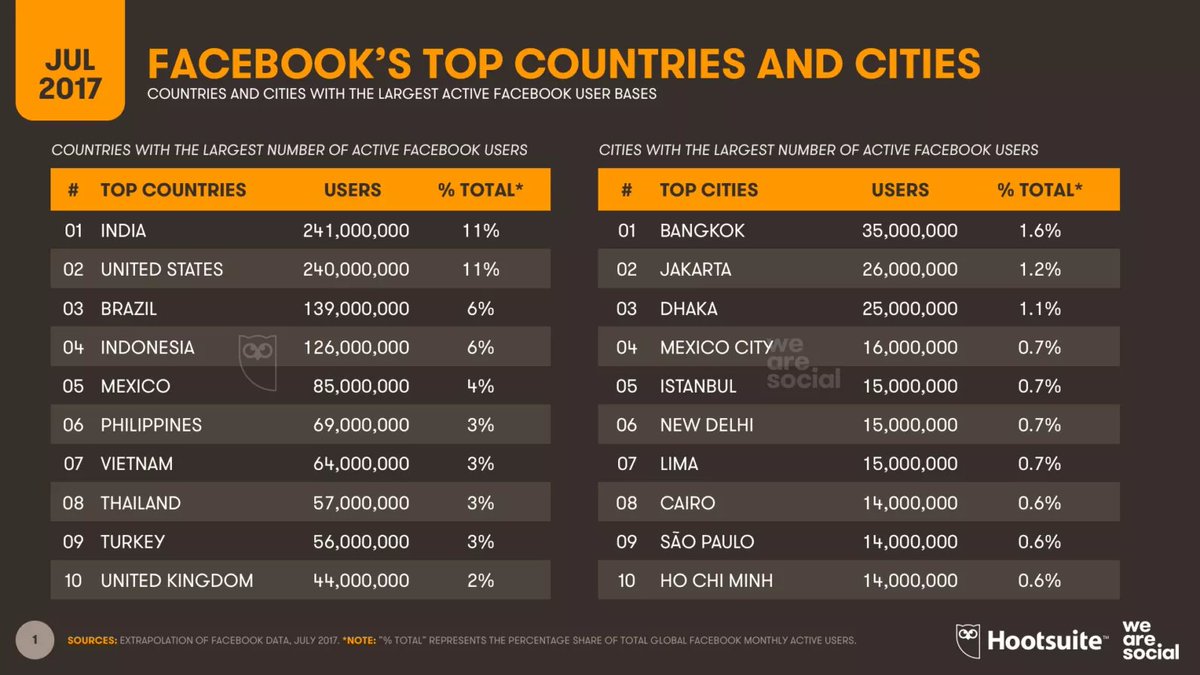
Another company to benefit from the JIO effect is 𝐅𝐚𝐜𝐞𝐛𝐨𝐨𝐤.
India was the 𝐛𝐢𝐠𝐠𝐞𝐬𝐭 𝐠𝐫𝐨𝐰𝐭𝐡 𝐦𝐚𝐫𝐤𝐞𝐭 𝐢𝐧 𝐞𝐯𝐞𝐫𝐲 𝐬𝐢𝐧𝐠𝐥𝐞 𝐪𝐮𝐚𝐫𝐭𝐞𝐫 𝐬𝐢𝐧𝐜𝐞 𝐭𝐡𝐞 𝐭𝐡𝐢𝐫𝐝 𝐪𝐮𝐚𝐫𝐭𝐞𝐫 𝐨𝐟 𝟐𝟎𝟏𝟔 (according to call transcripts)
India was the 𝐛𝐢𝐠𝐠𝐞𝐬𝐭 𝐠𝐫𝐨𝐰𝐭𝐡 𝐦𝐚𝐫𝐤𝐞𝐭 𝐢𝐧 𝐞𝐯𝐞𝐫𝐲 𝐬𝐢𝐧𝐠𝐥𝐞 𝐪𝐮𝐚𝐫𝐭𝐞𝐫 𝐬𝐢𝐧𝐜𝐞 𝐭𝐡𝐞 𝐭𝐡𝐢𝐫𝐝 𝐪𝐮𝐚𝐫𝐭𝐞𝐫 𝐨𝐟 𝟐𝟎𝟏𝟔 (according to call transcripts)
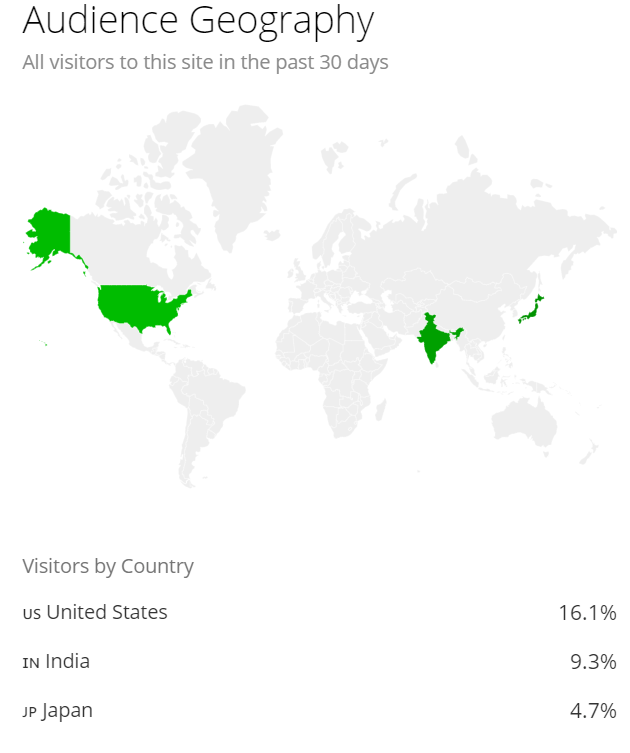
Facebook now has more users in India than any other country:
𝐆𝐨𝐨𝐠𝐥𝐞 also massively benefited from the JIO effect.
In 2016, Google reported in their call transcript that "𝟑𝟎𝟎 𝐦𝐢𝐥𝐥𝐢𝐨𝐧 𝐧𝐞𝐰 𝐮𝐬𝐞𝐫𝐬 𝐚𝐝𝐨𝐩𝐭𝐞𝐝 𝐀𝐧𝐝𝐫𝐨𝐢𝐝 𝐝𝐞𝐯𝐢𝐜𝐞𝐬 𝐟𝐫𝐨𝐦 𝐜𝐨𝐮𝐧𝐭𝐫𝐢𝐞𝐬 𝐥𝐢𝐤𝐞 𝐈𝐧𝐝𝐢𝐚 𝐚𝐧𝐝 𝐁𝐫𝐚𝐳𝐢𝐥."
In 2016, Google reported in their call transcript that "𝟑𝟎𝟎 𝐦𝐢𝐥𝐥𝐢𝐨𝐧 𝐧𝐞𝐰 𝐮𝐬𝐞𝐫𝐬 𝐚𝐝𝐨𝐩𝐭𝐞𝐝 𝐀𝐧𝐝𝐫𝐨𝐢𝐝 𝐝𝐞𝐯𝐢𝐜𝐞𝐬 𝐟𝐫𝐨𝐦 𝐜𝐨𝐮𝐧𝐭𝐫𝐢𝐞𝐬 𝐥𝐢𝐤𝐞 𝐈𝐧𝐝𝐢𝐚 𝐚𝐧𝐝 𝐁𝐫𝐚𝐳𝐢𝐥."
Google and JIO are now working to jointly develop an entry-level affordable smartphone.
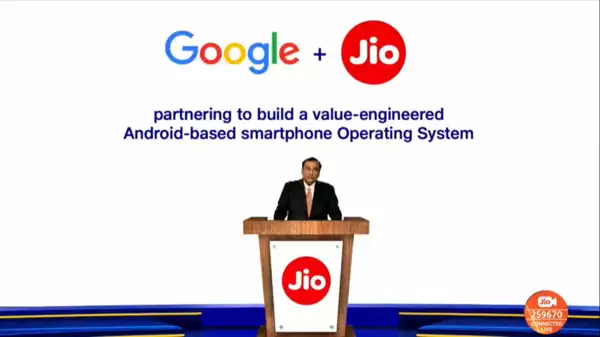
Google also plans to invest $10 billion in India to "𝐚𝐜𝐜𝐞𝐥𝐞𝐫𝐚𝐭𝐞 𝐚𝐝𝐨𝐩𝐭𝐢𝐨𝐧 𝐨𝐟 𝐝𝐢𝐠𝐢𝐭𝐚𝐥 𝐬𝐞𝐫𝐯𝐢𝐜𝐞𝐬 𝐢𝐧 𝐭𝐡𝐞 𝐤𝐞𝐲 𝐨𝐯𝐞𝐫𝐬𝐞𝐚𝐬 𝐦𝐚𝐫𝐤𝐞𝐭"
techcrunch.com/2020/07/13/goo…
techcrunch.com/2020/07/13/goo…
Overall, the JIO effect which started in 2016 brought a majority of Indians online over the least four years, and has paved the way for a breakout decade for India.
• • •
Missing some Tweet in this thread? You can try to
force a refresh