As primary schools and some secondary schools in England and re-open tomorrow, the situation is unprecedented. The rate of confirmed infection in children is at its highest level yet. The situation is very different from last time there was a debate about school openings 1/n
I think schools should close until case numbers are lower and it has been demonstrated that current restrictions can send the emerging new virus variant into decline. 2/n
I agree that schools should be last to close and first to open. However the current situation can hardly be described as safe, especially for older and vulnerable staff. Staff should be offered vaccines soon. 3/n
Rotas need to be organised to protect older and vulnerable staff. Mass testing will help, but it will need some weeks to get well organised, and to be proven in this difficult context. 4/n
I agree with all those who have said that this is a complex issue, with every course of action involving trading off harms. However, the epidemic situation has changed since these trade-offs were last properly considered. 5/n
New preprint: "PopART-IBM, a highly efficient stochastic individual-based simulation model of generalised HIV epidemics developed in the context of the HPTN 071 (PopART) trial" with Mike Pickles, @dr_anne_cori@p_robot and friends. 1/n medrxiv.org/content/10.110…
A few years we found we needed an agent based model to simulate interventions against the HIV pandemic in southern Africa, and ended up developing a new one. We found that with heterogeneities and detailed interventions, ABMs were more parsimonious than compartmental models. 2/n
So we set out to develop a model that was, to paraphrase, "as simple as necessary, but no simpler". We wanted it to be computationally efficient so as to be able to do parameter sweeps and inference. Here it is 3/n github.com/BDI-pathogens/…
“England 'risks Covid-19 surge' without test-and-trace safety net” I agree, and am concerned about rapid easing of lockdown. 1/n. theguardian.com/world/2020/may…
The ONS reports around 8,000 new infections per day, and that has not been declining quickly. 2/n ons.gov.uk/peoplepopulati…
The central estimate for the number people positive for currently shedding virus is 148,000 people for 27 April to 10 May, 137,000 people for 4 May to 17 May and 133,000 people for 11 May to 24 May. This indicates R very close to 1 during May. 3/n ons.gov.uk/peoplepopulati…
Digital contact tracing may contribute to epidemic suppression of COVID. What are the trade-offs in choosing centralised or decentralised systems? . 1/n
There are three broad aims to be optimised: prevention of infection and disease, minimisation of disruptive requests to isolate, and maximisation of privacy. 2/n
A clear assessment requires acknowledging that we don't know as much as we’d like about the details of how this virus spreads. And nor do we know enough about the context of how this intervention fits in broader public health measures that will get us safely out of lockdown. 3/n
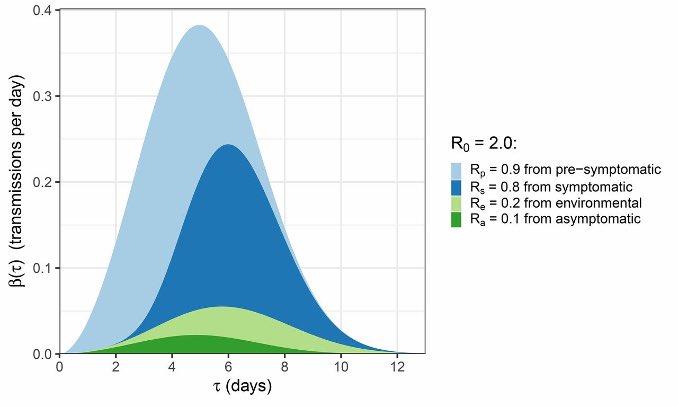
Isolation, contact tracing, and quarantine are proven methods of infection control, but for COVID-19 conventional tracing is too slow. 50% of transmissions happen before symptoms, so the epidemic is always a step ahead. 2/
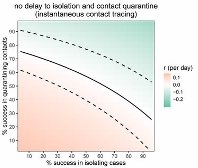
Because it is near instantaneous, digital contact tracing changes that: if people install an app that ‘remembers’ contacts for them, and those contacts are instantly notified on diagnosis, this cuts a week of the whole process of contact tracing. 3/
"Sustainable containment of COVID-19 using smartphones in China: Scientific and ethical underpinnings for implementation of similar approaches in other settings"