
"Your mind will give back to you exactly what you put into it."
~ James Joyce
~ James Joyce
"There's many a true word spoken in jest."
~ James Joyce
~ James Joyce
"Mistakes are the portals of discovery."
~ James Joyce
~ James Joyce
"People trample over flowers, yet only to embrace a cactus."
~ James Joyce
~ James Joyce
"Fall if you will, but rise you must."
~ James Joyce
~ James Joyce
"Absence, the highest form of presence."
"Shut your eyes and see."
~ James Joyce
"Shut your eyes and see."
~ James Joyce

"Love loves to love love."
~ James Joyce
~ James Joyce
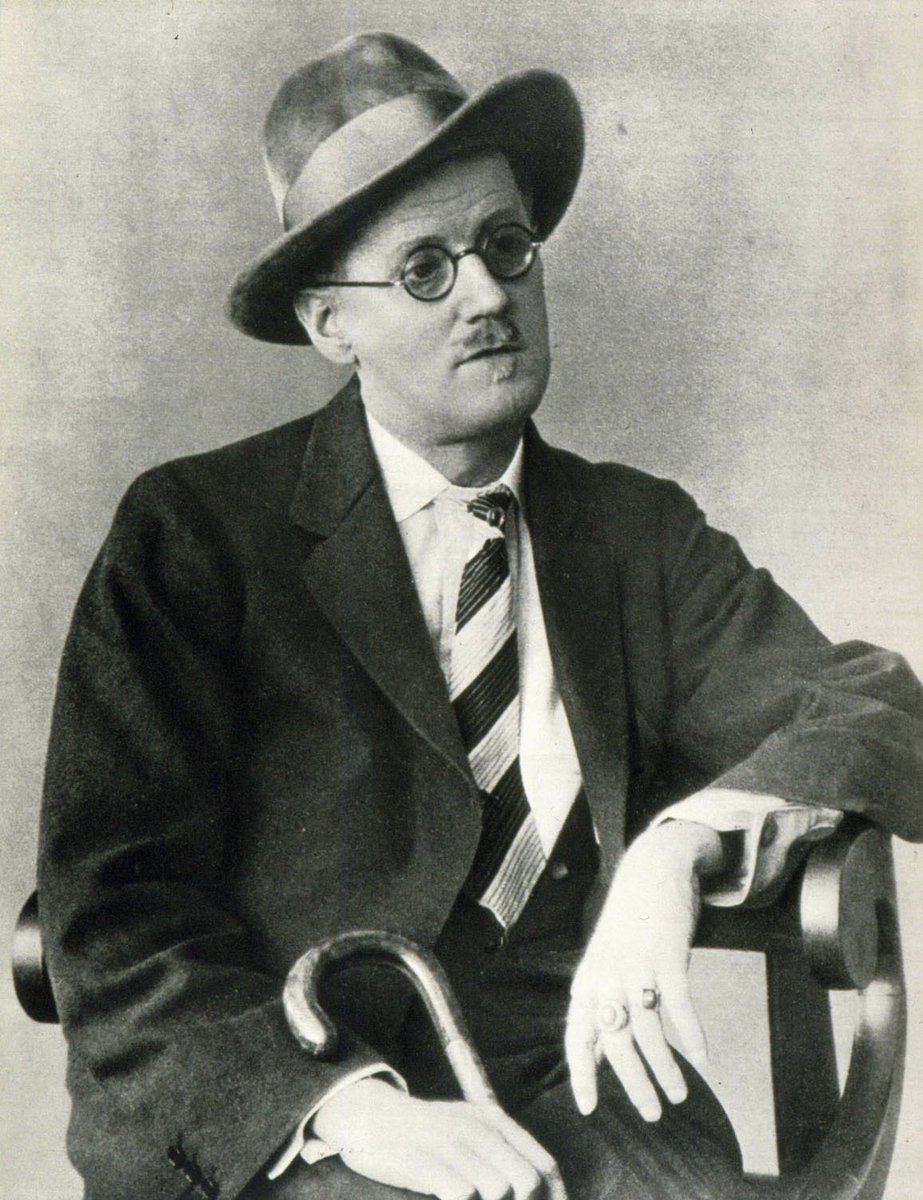
"But we are living in a sceptical and, if I may use the phrase, a thought-tormented age: and sometimes I fear that this new generation, educated or hyper-educated as it is, will lack those qualities of humanity, of hospitality, of kindly humour which belonged to an older day." JJ

"Ask no questions and you'll hear no lies."
~ James Joyce
~ James Joyce
"All fiction is autobiographical fantasy."
~ James Joyce
~ James Joyce
"They lived and laughed and loved and left."
~ James Joyce
~ James Joyce
"Beware the horns of a bull, the heels of the horse, and the smile of an Englishman."
~ James Joyce
~ James Joyce
"To learn one must be humble. But life is the great teacher."
~ James Joyce
~ James Joyce

"Jesus was a bachelor and never lived with a woman. Surely living with a woman is one of the most difficult things a man has to do, and he never did it."
~ James Joyce
~ James Joyce
"The supreme question about a work of art is out of how deep a life does it spring."
~ James Joyce
~ James Joyce


"All things are inconstant except the faith in the soul, which changes all things and fills their inconstancy with light."
~ James Joyce
~ James Joyce

"Children must be educated by love, not punishment."
~ James Joyce
~ James Joyce

"Better pass boldly into that other world, in the full glory of some passion, than fade and wither dismally with age."
~ James Joyce
~ James Joyce
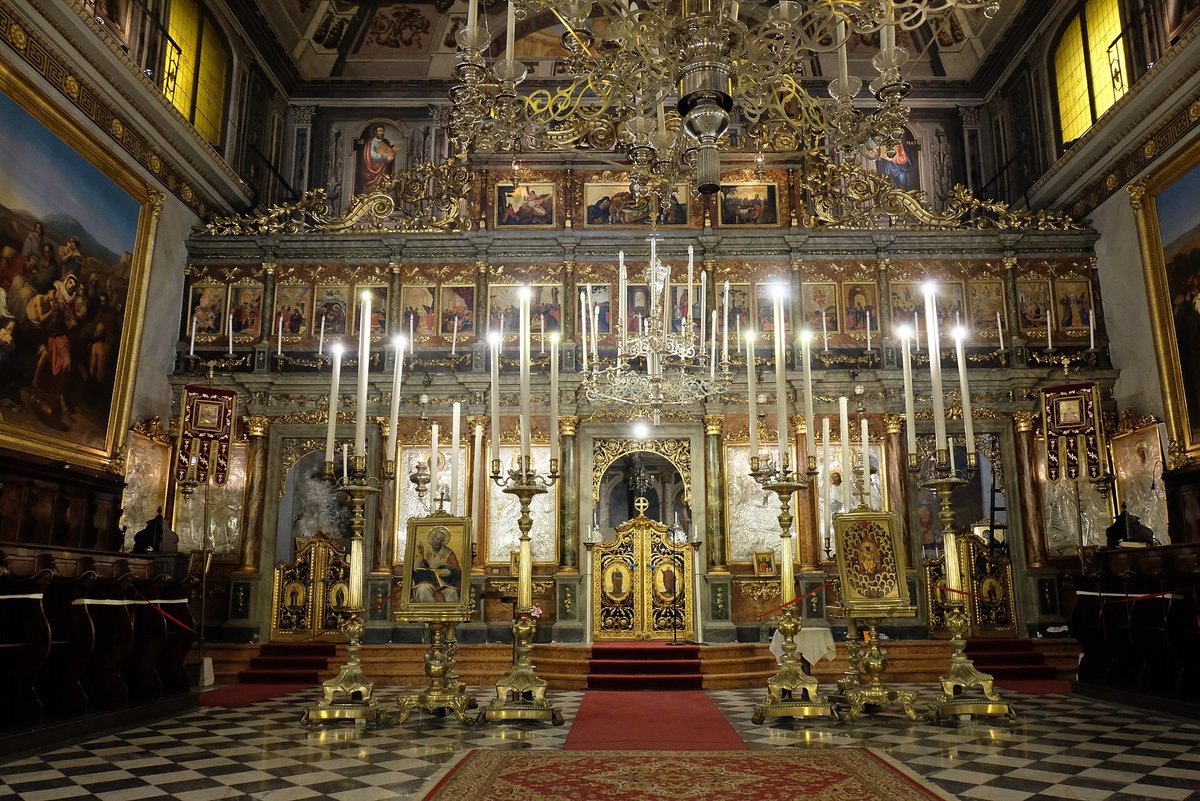
The interior of the Church of San Nicolò in Trieste, which greatly inspired Joyce
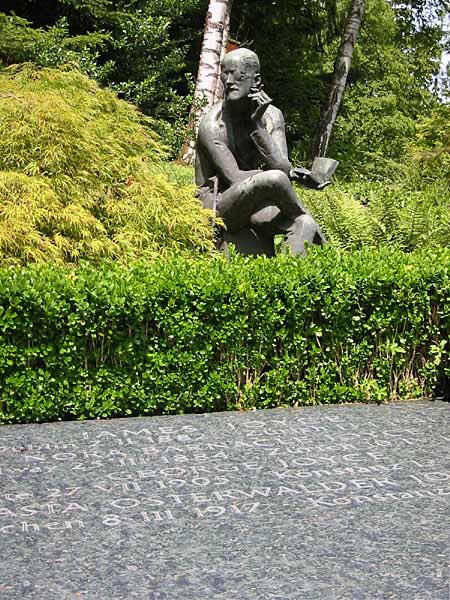
Grave of James Joyce in Zürich-Fluntern
“My mind rejects the whole present social order and Christianity—home, the recognised virtues, classes of life and religious doctrines. ... By doing this I made myself a beggar, but I retained my pride. Now I make open war upon it by what I write and say and do.”

L. Strong, W.T. Noon, R. Boyle... have argued that Joyce, later in life, reconciled with the faith he rejected earlier in life, and that his parting with the faith was succeeded by a not so obvious reunion, and that Ulysses and Finnegans Wake are essentially Catholic expressions.
Likewise, Hugh Kenner and T. S. Eliot believed they saw between the lines of Joyce's work the outlook of a serious Christian and that beneath the veneer of the work lies a remnant of Catholic belief and attitude.
Joyce attended Catholic Mass and Orthodox Divine Liturgy, especially during Holy Week, purportedly for aesthetic reasons. One friend reported that Joyce cried "secret tears" upon hearing Jesus' words on the cross and another suggested that he was a "believer at heart".
Andrew Gibson: "The modern James Joyce may have vigorously resisted the oppressive power of Catholic tradition. But there was another Joyce who asserted his allegiance to that tradition, and never left it, or wanted to leave it, behind him."
Gibson argues that Joyce "remained a Catholic intellectual if not a believer" since his thinking remained influenced by his cultural background, even though he lived apart from that culture.He acknowledged the debt he owed to his early Jesuit training.
• • •
Missing some Tweet in this thread? You can try to
force a refresh