Financial awareness about the importance of saving and investing in India is increasing at the fastest rate ever, especially among millennials. Of course, stock markets doing well and lower bank FD rates are helping. But there are also a few structural changes afoot here. 1/4
Historically financial products have been sold hard & mostly in person. Products mostly sold based on promises of high returns (sales pitches in person leave no audit trail). Chances of sale higher if customer is less aware of what is being sold, so no incentive to educate 2/4
New age online financial services firms can't sell greed to acquire customers because it leaves a trail (SMS, emails, notifications). So businesses are forced to turn financial products into a "pull-product" to acquire clients. Which means having to educate customers. 3/4
This is why we @Rainmatterin think it's too early for digital-first wealth platforms in India, at least until the current crop of millenials are older & richer. It's Tough to compete digitally when the offline-only competition can sell greed which typically clinches the deal. 4/4
• • •
Missing some Tweet in this thread? You can try to
force a refresh
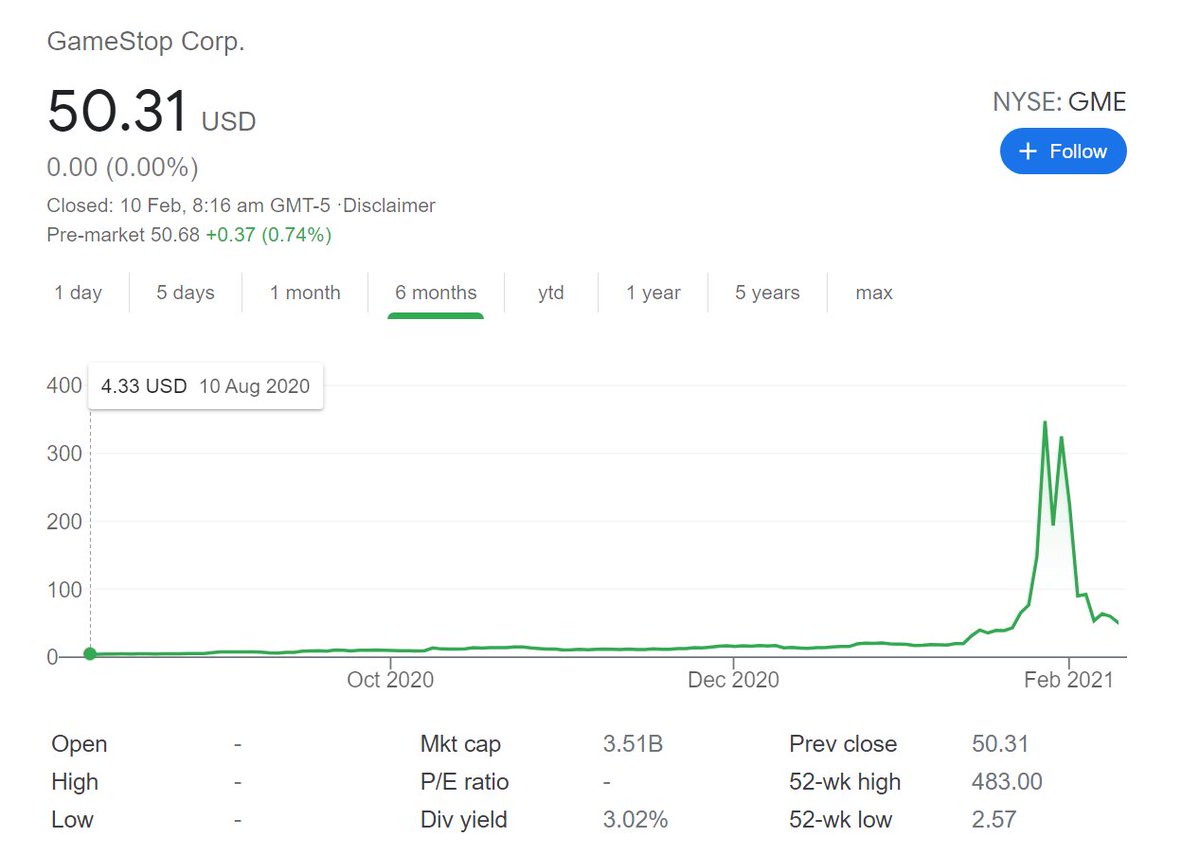
In the Gamestop saga, the media has loved telling the story of how Retail made a lot of money from Hedge funds. The reality is entirely different, almost everyone apart from retail has probably made money or benefited from this. 1/8
Firstly, yes, a couple of Hedge funds were sitting on large losses on Gamestop shorts. Now that stock is at $50, the losses also would be a fraction, if the shorts still held. What no one is talking about are other hedge funds who made billions in the retail frenzy. 2/8
Almost everyone and their parents seem to have wanted to participate in some form. Not only the brokerage firms who added a record number of accounts benefited, but News/TV/Social media itself must have gained a lot of views and hence earned handsomely. 3/8
We have a habit of looking west and thinking what they do must be right. With all the craziness going on in the US capital markets, I thought it will be a good time to share some of the reasons why India is way better in terms of capital market regulations. 1/n
In US, hedge funds can leverage unlimited & run positions worth hundreds of $billions bringing in systemic risk. In India, no one can hold overnight positions more than ~5 times leverage (SPAN+Exposure for F&O, VAR+ELM for stocks). Even intraday leverages are now capped 2/n
In US your stock holdings are held by the brokers (held in book or street name, also the reason for the large stock lending market). If a broker goes down, your securities is at risk as well. In India, they sit in your Demat with NSDL/CDSL, ring-fenced from any broker risk 3/n
Almost unreal that we could represent Zerodha on the cover of Forbes. Some personal lessons from the many highs & many lows in this 20-year journey working, trading, trying to build different types of businesses, & more. 1/10 tradingqna.com/t/personal-les…
Businesses can be built in multiple ways. Don't try to cut-copy-paste what others are doing - it mostly won’t work. Do what feels right to you. Your instincts on what is right will work better when you build a business/career around what you love. 2/10
The odds of finding what you love is higher when you take a shot at as many new things as possible. Most of us will not be lucky to find this love amongst the books in schools and colleges. 3/10
#Scam1992TheHarshadMehtaStory - a thread on everything that has changed since then in the world of Indian stockbroking. 1/8
Today the settlement cycle is 2 days & SEBI is hinting at a 1-day cycle soon (first few countries in the world). Back then, it was 14 days (the time within which you have to pay full money and take delivery of stocks or deliver stocks if sold). 2/8
Today, a customer can’t buy stocks without the minimum money in the account or sell without stocks in Demat. This reduces the systemic risk from aggressive brokers who were compromising risk for business. There was no such rule back then. 3/8